Routeyst
Opening your next page…
Routeyst
Opening your next page…
Your next day out
Finding your places to explore…
Loading your city’s local sights and outing ideas.
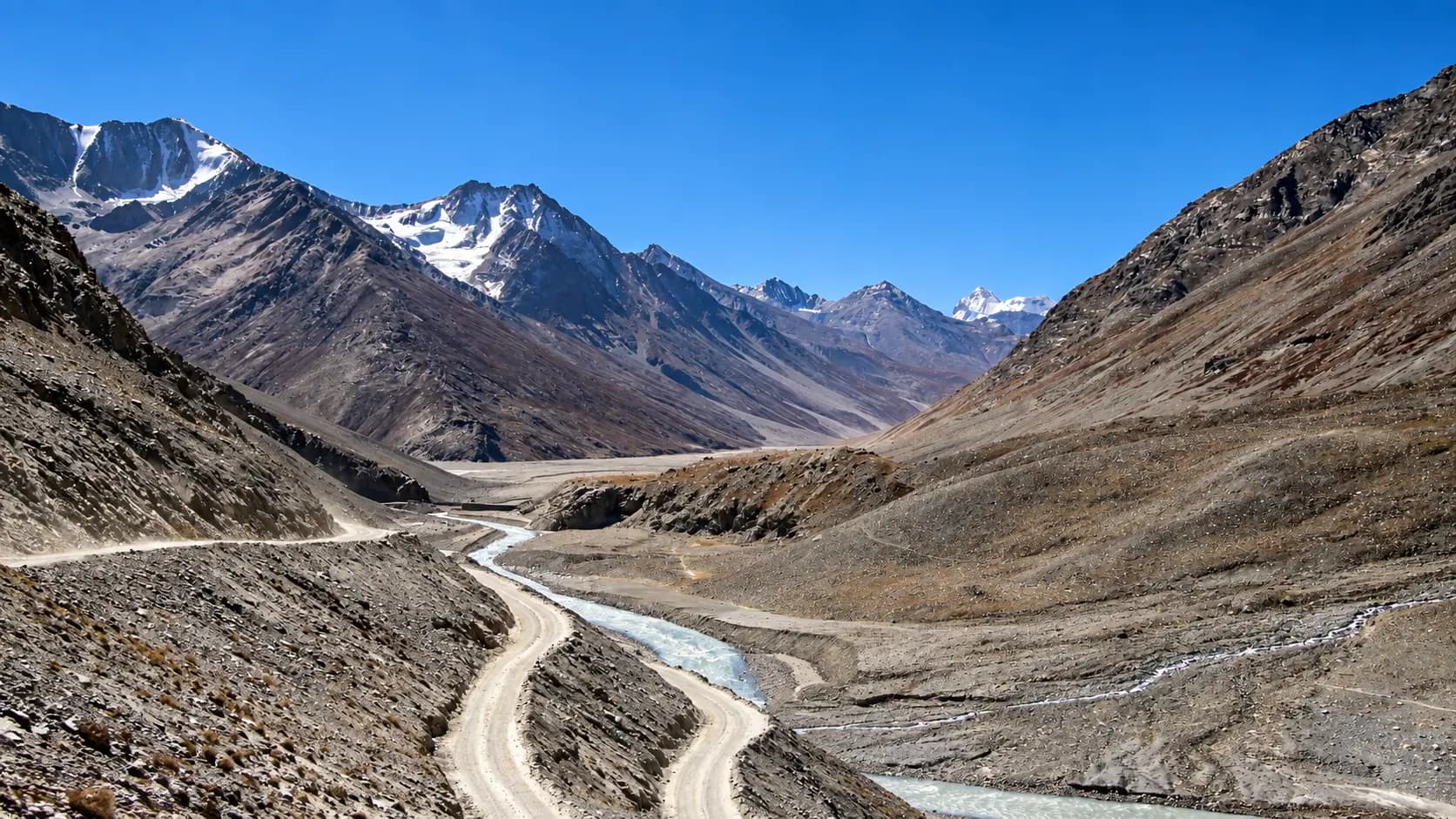
Choose a starting point, find local sights or an out-of-town idea within a stated 200 km road distance.
Make it your kind of day
Choose a starting point and your ideas appear automatically. Switch to Out of town whenever you fancy going further.
Jammu and Kashmir · Local sights
Cradled in the lush, mountain-ringed Kashmir Valley at an elevation of 1,585 metres (5,200 feet), Srinagar - the summer capital of Jammu and Kashmir - is a city of extraordinary poetic beauty, master craftsmanship, and…
Cradled in the lush, mountain-ringed Kashmir Valley at an elevation of 1,585 metres (5,200 feet), Srinagar - the summer capital of Jammu and Kashmir - is a city of extraordinary poetic beauty, master craftsmanship, and centuries-old imperial heritage. Flanked by the serpentine meanders of the Jhelum River and the shimmering expanse of Dal Lake against the soaring rocky cliffs of the Zabarwan mountain range, Srinagar invites deep, leisurely exploration. Right within the city limits, you can board a handcrafted wooden Shikara from Boulevard Road to cruise past historic cedar houseboats, explore the dawn floating vegetable markets, and stop at the Mughal island of Char Chinar. Along the eastern shoreline, the imperial gardens of the Mughal emperors cascade down the mountain slopes: Nishat Bagh (the 1633 "Garden of Joy" with its twelve cascading terraces) and Shalimar Bagh (the 1619 "Abode of Love" built by Emperor Jahangir for Empress Nur Jahan, centered on its black marble pavilion). On the tranquil northwestern bank of the lake shines the immaculate white marble dome of Hazratbal Dargah, enshrining the sacred Moi-e-Muqqadas relic of Prophet Muhammad. For sweeping 360-degree panoramas of the valley, ascend the 243 stone steps to the ancient 9th-century Shankaracharya Temple crowning Gopadari Hill. To experience the living soul of Kashmiri culture, wander through Shehr-e-Khaas (Downtown Old City) to admire the 378 monumental deodar pillars of Jamia Masjid, the painted wooden jewel of Khanqah-e-Moula, and vibrant copperware guild alleys, or venture 22 km east into the Zabarwan foothills to observe the critically endangered Hangul (Kashmir Stag) at Dachigam National Park.
Beyond the urban basin, Srinagar serves as the supreme gateway to the alpine wonderlands of the western Himalayas - all within a verified one-way road distance of 90 kilometres. Just 30 km northwest in Ganderbal district lies Manasbal Lake, the deepest freshwater lake in Kashmir, famous for vast fields of pink lotus blossoms in summer and Empress Nur Jahan’s 17th-century Jharokha Bagh. Heading 47 km southwest into Budgam district reveals the peaceful, uncommercialized pastures of Yusmarg ("Meadow of Jesus") and the frothing torrents of the Doodhganga River gorge. To the west in Baramulla district lies Gulmarg (50 km), Asia's premier winter ski capital and alpine meadow bowl, where the world-renowned Gulmarg Gondola whisks travelers to the 3,980-metre snowline of Apharwat Peak. Following the rushing Sindh River 80 km northeast brings you to Sonamarg ("Meadow of Gold") in Ganderbal district, where the permanent ice of Thajiwas Glacier hangs beneath granite peaks on the historic Silk Route to Ladakh. Meanwhile, travelling 90 km southeast along the Lidder River in Anantnag district leads into Pahalgam ("Valley of Shepherds"), with its emerald fairways of Betaab Valley, the pastoral tranquility of Aru, the hilltop meadows of Baisaran, and the ancient stone sanctuary of Mamleshwar.
Explore local sights and the nearby visitor area. Maps opens a place search; check the visitor entrance and current access.
7 of 7 places · Open details without losing your list
Not sure? Pick 2–3 places to compare.
Pairing 1: The Imperial Dal Lake Mughal Circuit
Pairing 2: Spiritual Heritage & Panoramas
Pairing 3: North Valley Lakes & Mughal Balconies
Pairing 4: Zabarwan Foothills Wildlife & Mughal Splendour
Planning your day
Yes, advance online booking is strictly mandatory. The Jammu and Kashmir Cable Car Corporation (jammukashmircablecar.com) caps daily passenger volumes on both Phase 1 (Kongdoori) and Phase 2 (Apharwat Peak) to ensure high-altitude passenger safety. During the peak summer (April to June) and winter ski seasons (December to March), tickets sell out weeks in advance. Physical tickets are rarely available at the counter, so attempting to purchase on the spot often results in disappointment.
Shankaracharya Temple sits on the strategic 1,850-metre summit of Gopadari Hill overlooking the entire administrative and civic expanse of Srinagar. Because of its sensitive high-altitude vantage point and strategic overview of government installations, the complex is guarded as a high-security zone by the Central Reserve Police Force (CRPF). To preserve both institutional security and religious sanctity, all electronic devices - including mobile phones, smartwatches, cameras, power banks, and electronic car keys - are strictly prohibited past the security checkpoint.
No. Under long-standing regional transport agreements regulated by the Anantnag District Administration, outside taxis from Srinagar or other districts are permitted to drop passengers at hotels or the central taxi stand in Pahalgam, but are not permitted to conduct local sightseeing tours to Betaab Valley, Aru Valley, and Chandanwari. Visitors must hire a locally registered union taxi or licensed pony from the Pahalgam taxi stand for these inner valley circuits.
The floating vegetable market operates exclusively at first light of dawn, typically between 5:00 AM and 7:00 AM (varying slightly between summer and winter). Local farmers from the Mirbahri community paddle narrow wooden skiffs (shikaras) laden with freshly harvested produce - such as lotus roots (nadru), knol-khol, turnips, and collard greens - into a secluded backwater canal near the floating reed gardens. It is an authentic wholesale barter and cash trade between local farmers, not an artificial tourist display. Visitors must hire a shikara by 5:00 AM or 5:30 AM from Boulevard Road to reach the market before trading concludes.
The rutting (mating) season of the critically endangered Hangul (Kashmir Stag) takes place in autumn, from late September through mid-November. During these weeks, mature male stags develop magnificent 10-to-12-tined antlers and descend from the high alpine meadows into Lower Dachigam. Their deep, resonant mating calls (bugling) reverberate across the forested valley against the spectacular golden backdrop of autumn foliage, making autumn the most exciting time for wildlife enthusiasts to visit Dachigam.
Your friend receives the same starting point, outing type and filters. No sign-in needed.
Make room for a longer journey
Hubs and guides from our wider collection, ordered with local and geographically closer places first. These are not limited to 200 km and are not road-distance estimates.
Open a place for its researched visitor notes. Confirm current charges and access before travelling.
Dal Lake borders the eastern half of Srinagar city. The primary access corridor is Boulevard Road, a scenic multi-lane waterfront avenue stretching from Dalgate (Ghat 1) past Nehru Park (Ghat 12 - 17) and Chashme Shahi to the Nishat Foreshore Road. From Lal Chowk in central Srinagar, Dalgate is just 3 km northeast (approx. 10 minutes drive by auto-rickshaw, taxi, or city bus). Taxis and shared cabs run constantly along Boulevard Road. Paid municipal parking lots are available opposite Dalgate, Nehru Park, and Nishat Bagh.
Fees, visiting hours and entry rules may change. Confirm the latest details with the official operator or local authority before travelling.
Nishat Bagh is located on the eastern bank of Dal Lake along the scenic Boulevard/Foreshore Road, approximately 11 km northeast of Lal Chowk and about 8 km from Dalgate. It is easily reachable by taxi, auto-rickshaw, or private car from central Srinagar in 20 to 30 minutes. Regular city buses and shared cabs run along Boulevard Road connecting Lal Chowk and Dalgate with Nishat bazaar. Travelers can also arrive in style by hiring a Shikara from any Boulevard Road ghat and docking directly at the historic water gate opposite Nishat Bagh. Paved municipal vehicle parking is available directly across Foreshore Road from the main entrance.
Fees, visiting hours and entry rules may change. Confirm the latest details with the official operator or local authority before travelling.
Shalimar Bagh is located approximately 14 km northeast of Lal Chowk in central Srinagar and about 3 km north of Nishat Bagh along the Foreshore Road. It is easily accessible by private car, taxi, or auto-rickshaw in 30 to 40 minutes from central Srinagar. Regular HRTC city buses and shared passenger cabs ply continuously between Lal Chowk / Dalgate and Shalimar village bazaar. Alternatively, visitors can take a scenic Shikara ride across Dal Lake and disembark at the historic imperial boat canal that directly connects the lake to the outer garden gates. Ample paved parking is available outside the main gate.
Fees, visiting hours and entry rules may change. Confirm the latest details with the official operator or local authority before travelling.
Hazratbal is situated on the northwestern bank of Dal Lake, approximately 10 km northeast of Lal Chowk and about 6 km north of the Old City (Shehr-e-Khaas). It is readily accessible by private vehicle, taxi, or auto-rickshaw in 25 to 35 minutes via the University of Kashmir road corridor. Regular city buses and shared cabs operate continuously between Lal Chowk, Batamaloo, and the Hazratbal bus terminal. Alternatively, travelers can hire a Shikara from Boulevard Road or Nigeen Lake and arrive directly at the historic lakeside ghat steps of the shrine. Ample vehicle parking is available in the paved plaza outside the main gate.
Fees, visiting hours and entry rules may change. Confirm the latest details with the official operator or local authority before travelling.
Shankaracharya Temple is located about 5 km east of Lal Chowk and directly south of Dal Lake's Boulevard Road. A well-paved, winding 5.5 km forest road begins near Dalgate / Nehru Park and ascends steadily through pine and cedar woods to the vehicle terrace at the base of the stairs (driving time is approx. 15 to 20 minutes from Dalgate). Taxis and auto-rickshaws can be hired from anywhere in Srinagar directly to the upper parking terrace. Note that the lower security barrier at the foot of the hill typically restricts private uphill vehicle ascent after 5:00 PM.
Fees, visiting hours and entry rules may change. Confirm the latest details with the official operator or local authority before travelling.
Shehr-e-Khaas begins approximately 3 to 4 km northwest of Lal Chowk. Visitors can take an auto-rickshaw or taxi from Lal Chowk or Dalgate across the Jhelum to Nowhatta (for Jamia Masjid) or Zaina Kadal (for Khanqah-e-Moula), taking about 15 to 25 minutes depending on market traffic. Because streets inside the old quarters are narrow, larger tourist buses cannot enter; private cars should park in the designated municipal parking lot outside Nowhatta or near Maharaj Ganj. Shared mini-buses and auto-rickshaws ply continuously between Lal Chowk and Nowhatta.
Fees, visiting hours and entry rules may change. Confirm the latest details with the official operator or local authority before travelling.
Dachigam National Park is located in Srinagar district, roughly 22 km east of Lal Chowk and about 10 km beyond Shalimar Bagh. Private taxis and cars follow the Dal Lake Foreshore Road past Nishat and Shalimar, continuing through Harwan garden to the Dachigam main forest checkpoint (approx. 45 to 55 minutes drive). Local HRTC buses run from Lal Chowk to Harwan village, from where the park entrance is a 2 km auto-rickshaw hop or taxi ride. Ample designated vehicle parking is provided outside the outer wildlife checkpost.
Fees, visiting hours and entry rules may change. Confirm the latest details with the official operator or local authority before travelling.
Browse cities by state · 85 starting points
Open a state, then choose your starting city. Local sights load automatically.
Out-of-town ideas vary in distance. Check your outward and return journey, time at the destination and breaks before deciding whether you need a stay.
Maps may identify a landscape rather than its visitor entrance. Check parking, walks, boat transfers and entry permission with the local operator.
Use the guide for practical context and visit weather for the available three-day forecast. Neither is a live opening or safety confirmation.