Old Manali
Discover Old Manali in Himachal Pradesh.
Location
Manali Kullu, Himachal Pradesh
A closer look
Your visit, at a glance.
Manali Kullu, Himachal Pradesh
GET TO KNOW THE PLACE
Perched on the terraced, orchard-draped mountain slopes rising steeply above the rushing waters of the Manalsu River, approximately two and a half kilometers northwest of the…
The story of Old Manali
Perched on the terraced, orchard-draped mountain slopes rising steeply above the rushing waters of the Manalsu River, approximately two and a half kilometers northwest of the bustling commercial center of New Manali in Himachal Pradesh’s Kullu District, lies Old Manali. While modern Manali has expanded rapidly into a noisy, high-density transit and shopping hub dominated by multi-story concrete hotels and vehicular traffic, Old Manali retains an authentic, atmospheric mountain soul. It presents a captivating living synthesis of ancient Himalayan mythology, indigenous vernacular wood-and-stone architecture, tranquil terraced apple farming, and a world-renowned bohemian traveler culture that has flourished here since the late twentieth century.
The village is historically and spiritually anchored by the sacred Manu Maharishi Temple, widely regarded as the only temple on earth dedicated to Sage Manu - the legendary progenitor of humankind and author of the ancient Hindu code of laws, Manusmriti. The very name "Manali" is a direct linguistic evolution of the ancient Sanskrit compound Manu-Alaya, literally translating to the "Abode of Manu." Rising through groves of Himalayan cedar (Cedrus deodara), weeping willows, and ancient apple orchards, Old Manali’s steep, winding stone-paved lanes lead travelers past magnificent multi-story Kathkuni houses, rustic wooden cow-barns, independent artisanal bakeries, vibrant open-air garden cafes playing acoustic folk tunes, and small craft ateliers. Whether you are embarking on an alpine trek toward the high ridges of Lama Dugh, immersing yourself in Vedic deluge lore, or sipping French press coffee while gazing across snow-capped Himalayan summits, Old Manali delivers one of the most distinctive cultural experiences in northern India.
Start here. Open a tile for the full details.
Why goRead details
Old Manali offers a profoundly different sensory and cultural atmosphere than almost any other destination in the upper Beas Valley. Travelers who cross the historic Manalsu River bridge leave behind the honking tourist taxis, souvenir vendors, and crowded shopping arcades of The Mall, stepping into an organic mountain settlement where traditional agrarian rhythms still govern daily life alongside a flourishing creative community.
When to visitRead details
Old Manali experiences a temperate Himalayan mountain climate with four distinctly beautiful seasons, each offering a completely unique visual and experiential character.
Entry & permissionsRead details
Fees, visiting hours and entry rules may change. Confirm the latest details with the official operator or local authority before travelling.
A clear understanding of village entry policies, operating hours for temples and cafes, and conservation rules will ensure an effortless and respectful visit.
Admission Charges and Public Access
- Village & Temple Entry: Completely Free. There is no entry ticket, toll, or municipal admission fee required to enter Old Manali village, walk along public streets, or explore the sacred courtyard and prayer hall of the historic Manu Maharishi Temple.
- Voluntary Offerings: Devotees wishing to offer traditional puja items (prasad, flowers, incense, or coconuts) at the Manu Temple can purchase them from small village flower stalls for ₹30 to ₹70. Voluntary monetary donations can be placed directly into sealed temple charity boxes (hundi) maintained by the local temple committee.
- Independent Commercial Services: Cafes, bakeries, guesthouses, adventure gear rentals, and taxi services operate on their own independent commercial menus and price lists.
Operating Hours
Facility / Section | Operating Days | Operating Hours | Operational Notes |
|---|---|---|---|
Old Manali Village Streets | All 7 Days (Monday to Sunday) | Daylight visits recommended; confirm any after-dark access | Public village pathways and orchard tracks remain open continuously |
Manu Maharishi Temple | All 7 Days | 06:00 to 20:00 (Summer) / 07:00 to 19:00 (Winter) | Morning aarti at ~07:00; evening aarti at ~18:30; sanctum doors close overnight |
Artisan Bakeries & Cafes | All 7 Days | 09:00 to 23:00 | Breakfast service starts around 09:00; strict outdoor music cutoff at 22:00 |
Handloom Craft Boutiques | All 7 Days | 10:00 to 21:00 | Extended evening shopping during peak summer months (May - June) |
Manali Club House | All 7 Days | 10:00 to 19:00 | Operated by Himachal Tourism; nominal entry fee for indoor gaming facilities |
Permissions, Photography, and Trekking Regulations
- Handheld Photography: Casual smartphone photography, handheld digital photography, and personal travel videography are completely permitted throughout the public streets, apple orchards, and outer courtyards without any fee or permit.
- Temple Interior Etiquette: Photography inside the immediate inner sanctum of Manu Temple during active priestly rituals is restricted out of respect for worshippers.
- High-Altitude Trekking Permissions: Day hikes through the apple orchards or to nearby villages require no permits. However, if undertaking the strenuous high-altitude alpine trek to Lama Dugh (3,017 m) or continuing beyond toward the Pir Panjal passes, hikers should inform their guesthouse host and register at the local forest division post in Manali for mountain safety tracking.
- Drone Operations & Commercial Filming: Operating unmanned aerial vehicles (drones) over Old Manali village, the dense deodar canopy, and adjacent residential homesteads is strictly prohibited without prior written clearance from the District Magistrate, Kullu, and local civil aviation authorities. Commercial photography or film shoots require statutory municipal and district permissions.
Plan your visitRead details
Reaching Old Manali requires navigating the regional transit network of Himachal Pradesh’s Kullu Valley before making the short final ascent from New Manali.
Explore the full guide - choose a topic below.
Why visit?
Old Manali offers a profoundly different sensory and cultural atmosphere than almost any other destination in the…Explore detailsClose details
Old Manali offers a profoundly different sensory and cultural atmosphere than almost any other destination in the upper Beas Valley. Travelers who cross the historic Manalsu River bridge leave behind the honking tourist taxis, souvenir vendors, and crowded shopping arcades of The Mall, stepping into an organic mountain settlement where traditional agrarian rhythms still govern daily life alongside a flourishing creative community.
1. The Mythological Cradle of Humankind & Sage Manu
To understand Old Manali is to understand the ancient Hindu story of cosmic renewal. According to classical Puranic literature, when a catastrophic deluge (pralaya) threatened to wipe out all earthly life, Lord Vishnu manifested in his first divine incarnation as Matsya - the cosmic fish. Matsya instructed the pious sage King Manu (Satyavrata) to build a colossal wooden ark and gather the seeds of all plants, pairs of all living creatures, the sacred Vedas, and the Seven Holy Sages (Saptarishis).
As torrential waters inundated the continents, Matsya guided Manu’s ark across the churning primeval ocean until it came to rest against the highest peaks of the Himalayas (Himavan). When the floodwaters receded, Manu stepped out onto the fertile mountain shelf overlooking the upper Beas basin. Here, atop the high bluff of present-day Old Manali, Manu resumed intense meditation, performed Vedic sacrifices (yajnas), and recreated mortal humankind. The mountain village was consecrated as Manu-Alaya ("Home of Manu"), from which the town of Manali derives its name. For spiritual pilgrims and lovers of world mythology, standing at the spot where Indian lore places the rebirth of global civilization carries a rare, evocative resonance.
2. The Ancient Manu Maharishi Temple
Crowning the highest residential terrace of the village stands the majestic Manu Temple. While shrines and temples dedicated to Lord Shiva, Vishnu, Rama, Krishna, and Goddess Durga exist across every corner of India, authentic temples consecrated specifically to Sage Manu are virtually non-existent outside this village.
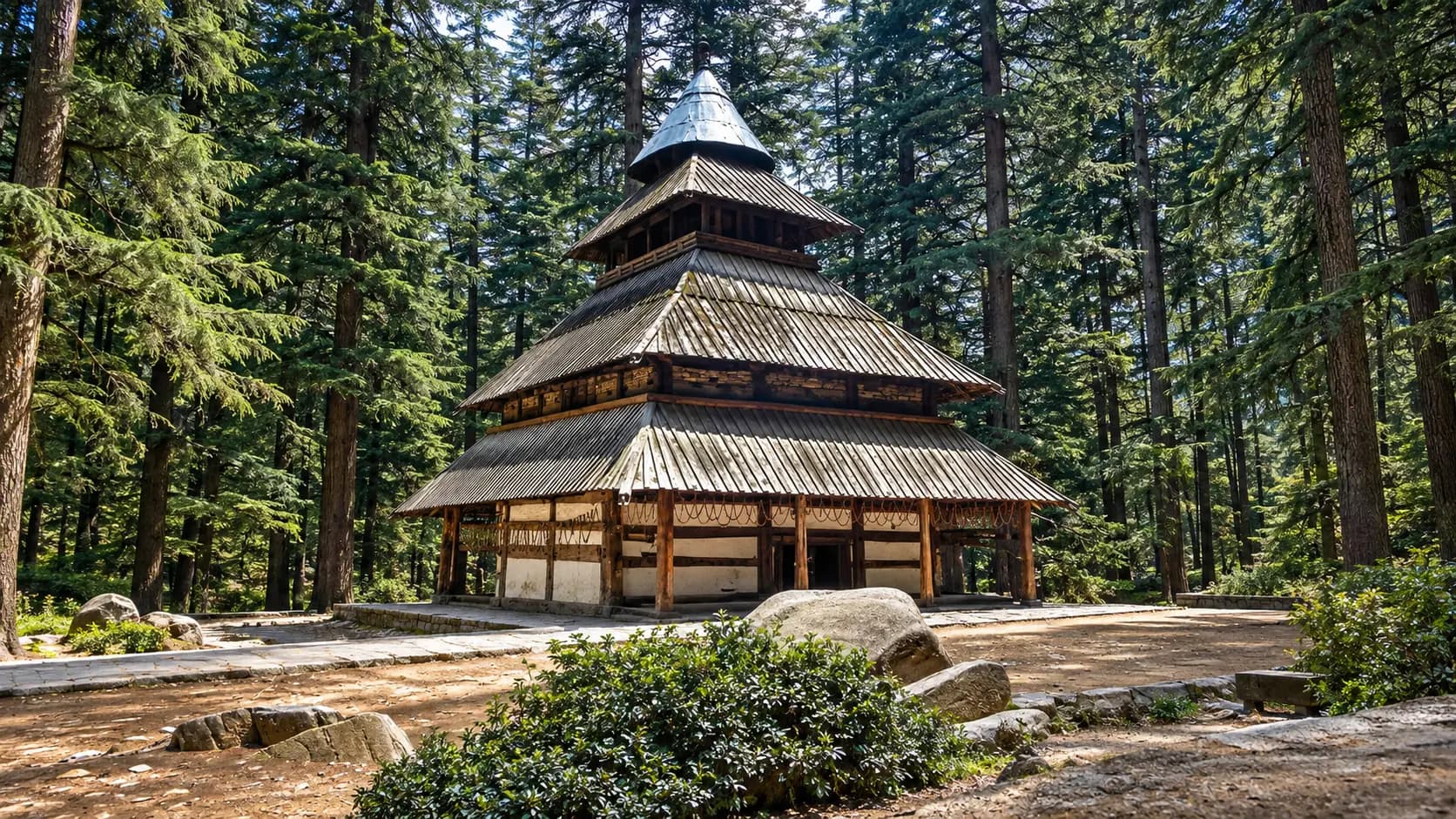
Rebuilt upon an ancient stone sanctum where Sage Manu is said to have engaged in penance, the present temple is a grand multi-tiered architectural monument combining traditional stone masonry with hand-carved deodar timber. Rising to a soaring tiered shikhara and conical pagoda roof capped by a gleaming brass finial (kalasha), the temple features exquisitely sculpted wooden doorways, open-air stone courtyards, and a deeply peaceful sanctum containing a consecrated stone manifestation of the revered sage. Devotees from throughout Himachal Pradesh journey here to seek divine blessings for moral discernment, intellectual clarity, ancestral peace, and familial harmony.
3. Splendid Kathkuni Vernacular Architecture
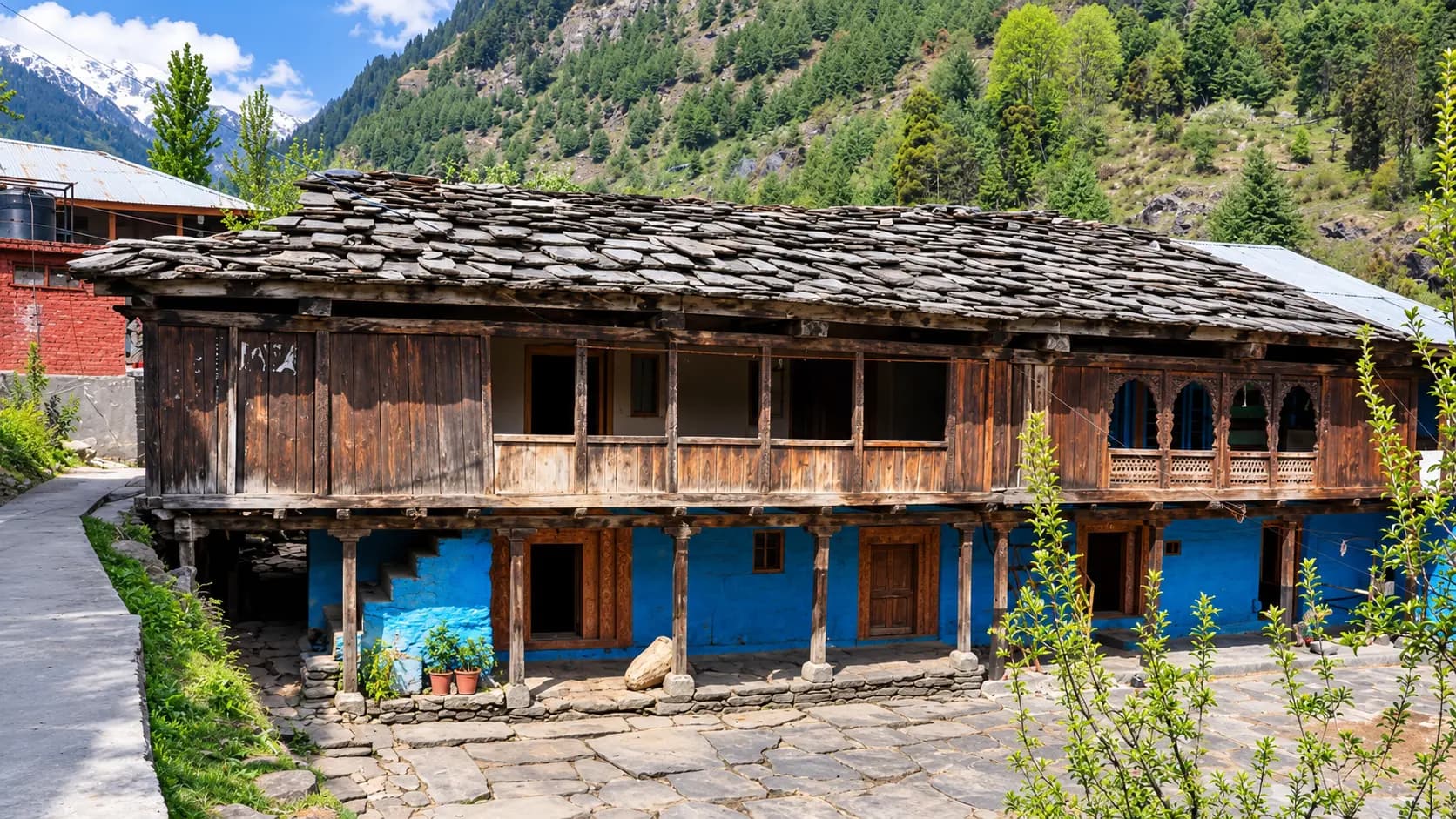
Old Manali remains one of the finest living repositories of Kathkuni architecture in the Kullu Valley. This centuries-old indigenous building technique - evolved to withstand severe Himalayan earthquakes, monsoon cloudbursts, and heavy winter snowpacks - uses alternating, interlocking courses of hand-hewn Himalayan cedar beams and dry-laid river and mountain stone, constructed entirely without cement, mortar, or steel fasteners.
Wandering through the village’s upper alleys reveals traditional three-story homesteads designed with remarkable functional wisdom:
- The Ground Level (Oberi): Built with thick, un-mortared stone walls to stable cattle, goats, and sheep. The body heat generated by the livestock rises through the timber floorboards to naturally warm the living quarters above during freezing sub-zero winter nights.
- The Middle Level (Manjhli): Used primarily as a granary and dry storage space for dried apples, maize, kidney beans (rajma), and winter firewood.
- The Upper Living Level (Dhab or Paur): Constructed predominantly of wood, featuring wide, cantilevered balconies encircled by decorative wooden lattices (jali) and carved floral cornices. This floor catches maximum sunlight and provides sweeping vistas over the valley.
- The Slate Roof (Phattar): Heavy, overlapping mountain slate stones cut by hand from local quarries form a durable, weatherproof roof capable of supporting immense winter snow loads while naturally deflecting driving monsoon rains.
4. Terraced Apple Orchards and Agricultural Harmony
Long before travelers and backpackers discovered Old Manali, the village was celebrated as an agricultural paradise. Introduced to the Kullu Valley in the late nineteenth and early twentieth centuries by British settlers like Captain R.C. Lee, apple cultivation revolutionized the local rural economy.
Old Manali is enveloped on all sides by centuries-old, terraced apple orchards interspersed with walnut trees, weeping willows, and plum trees. Visiting during April and May treats you to a dreamlike spectacle: thousands of fruit trees erupt into delicate clouds of white, cream, and blush-pink blossoms buzzing with Himalayan honeybees. In late summer and autumn (August through October), the orchards bend beneath the weight of deep-crimson Royal Delicious, crisp Golden Delicious, and rich Red Chief apples. Strolling along the dirt pathways running between dry-stone field boundaries, with the crisp mountain breeze rustling through apple leaves, is a profoundly rejuvenating sensory experience.
5. A Legendary Bohemian & Backpacker Crossroads
Beginning in the late 1960s and accelerating through the 1980s and 1990s, Old Manali emerged as one of the premier stops on the international "Hippie Trail" and backpacking circuit across Asia. Drawn by the village’s idyllic climate, dramatic alpine scenery, cheap traditional wooden homestays, and relaxed local pace of life, independent travelers from Israel, Europe, North America, Japan, and urban India created a thriving multicultural community.
Today, Old Manali possesses a unique, cosmopolitan bohemian character found nowhere else in Himachal Pradesh:
- Artisanal Cafes & World Cuisine: Tiny family-run establishments and open-air garden cafes serve freshly baked sourdough bread, wood-fired Neapolitan pizzas, Israeli shakshuka, Tibetan momos, Korean kimchi stews, organic salads, and locally sourced Himachali trout.
- Music & Creative Arts: Acoustic guitarists, folk violinists, sitar players, and traveling poets frequently perform informal live sessions under the deodar trees.
- Handicrafts & Boutiques: Quaint roadside boutiques sell hand-knit Kullvi woolen socks, sheepskin waistcoats, handloom pashmina shawls, antique brass jewellery, incense, leather journals, and local mountain honey.
What to expect
Visiting Old Manali is an immersive, multi-layered experience.Explore detailsClose details
Visiting Old Manali is an immersive, multi-layered experience. Knowing what to expect regarding village topography, walking conditions, and local lifestyle will help you make the most of your time.
1. Crossing the Manalsu Nala: The Gateway to the Village
Your journey into Old Manali begins at the historic Old Manali Bridge, which spans the roaring, boulder-strewn chasm of the Manalsu Nala - a raging snow-fed mountain river that originates in the high glaciers beneath the Rohtang crest and empties into the Beas River below.
- The Threshold: Stepping onto the bridge marks an immediate psychological transition. Behind you lie the bumper-to-bumper car horns and concrete commercial hotels of New Manali. Ahead, the road begins to climb into a lush green amphitheater of towering cedar trees, rustic wooden structures, and terraced gardens.
- The Riverbanks: Directly beneath the bridge, massive granite boulders line the riverbanks. Fishermen try their luck for wild brown and rainbow trout, while travelers sit along the rocks listening to the thunderous white-water rapids.
2. Navigating the Central Spine Lane
Once past the bridge, the topography changes dramatically:
- Steep, Narrow Gradient: The main artery of Old Manali is a single, narrow, paved stone-and-concrete lane that climbs continuously uphill for approximately 1.2 kilometers from the riverbank (elevation ~2,010 meters) to the Manu Temple terrace (elevation ~2,110 meters).
- Traffic and Congestion: Because the lane was originally laid out for foot traffic and pack mules, it is barely wide enough for a single small passenger car. When two vehicles meet, gridlock frequently ensues. Walking is by far the most enjoyable, efficient, and respectful way to navigate the village.
- Vibrant Streetscape: The lower and middle sections of the lane are densely lined with multi-colored shop fronts, open-air juice bars, travel agency desks offering trekking permits, motorcycle rental garages, and cafes adorned with vibrant murals, dreamcatchers, and wooden lanterns.
3. The Traditional Village Core & Cultural Respect
As you ascend higher along the road, the commercial cafes gradually give way to the traditional residential heart of the village:
- Living Farmsteads: Old Manali is an active agricultural settlement, not a movie set. You will pass local Kullvi women dressed in traditional patterned headscarves (dhatu) and woolen coats (pattu) carrying woven bamboo baskets (kilta) loaded with fresh cow fodder, firewood, or freshly harvested apples.
- Cattle Encounters: Cows and sheep roam freely through the stone alleys and courtyards, possessing undisputed right-of-way. Travelers should yield space calmly and never startle domestic animals.
- Community Courtyards: Old women sit together on hand-woven grass mats in open-air stone courtyards, deftly spinning raw sheep's wool on traditional wooden drop-spindles (takli) or sorting dried red chili peppers and corn cobs under the autumn sun.
4. The Sacred Precinct of Manu Temple
At the top of the village hill lies a serene, spacious stone-flagged courtyard housing the Manu Maharishi Temple.
- Shoe Removal Protocol: Visitors must remove their shoes at the stone perimeter steps before entering the temple terrace. Leather items (such as belts, leather wallets, and leather jackets) are traditionally discouraged inside the inner sanctum.
- Atmosphere of Reverence: Inside, the air smells of burning cedar incense (dhoop), fresh marigold garlands, and clarified butter (ghee) lamps. The resident Brahmin priest chants ancient Sanskrit shlokas and distributes sacred holy water (charanamrit) and sweets (prasad) to visitors.
- Panoramic Viewing Deck: The stone terrace behind the temple offers unobstructed, 360-degree panoramic views across the entire upper Kullu Valley, showcasing the snow-dusted summits of the Pir Panjal Range, the steep forested bluffs of Solang, and the distant cascading waterfalls tumbling down the mountain cliffs.
5. Day-to-Night Village Transformation
Old Manali undergoes a magical transformation as daylight fades:
- Golden Hour: Between 16:30 and 18:00, the setting sun casts a warm, honey-colored glow across the wooden Kathkuni balconies and apple orchards. The snow peaks across the valley turn brilliant shades of pink and amber.
- Evening Ambience: As night falls and the mountain chill sets in, fairy lights, warm brass lanterns, and small firewood braziers (tandoors) are lit inside the garden cafes. The aroma of woodsmoke, freshly baked apple crumble, and aromatic herbal chai fills the cool mountain air, accompanied by the gentle strumming of acoustic guitars.
Things to do in and around Old Manali
Old Manali is far more than a single sightseeing stop; it is an ideal base for slow travel, cultural discovery…Explore detailsClose details
Old Manali is far more than a single sightseeing stop; it is an ideal base for slow travel, cultural discovery, and outdoor mountain adventures.
1. Explore the Historic Manu Temple
Spend at least an hour thoroughly exploring the architecture, woodcarvings, and spiritual atmosphere of the Manu Maharishi Temple:
- Examine the Woodcarvings: Take time to admire the masterfully carved deodar lintels and wooden pillars depicting traditional Vedic motifs, floral garlands, lotus rosettes, and guardian lions (vyalas).
- Participate in Morning or Evening Aarti: Check the current visiting hours and permitted access with the site operator before departure; ceremonies, closures and visitor sessions can affect access.
- Contemplate the Deluge Legend: Read the inscribed stone plaques in the courtyard that explain the historical lore of King Manu’s ark and the origins of the Kullu civilization.
2. Hike to the Alpine Meadows of Lama Dugh (Day Trek)
For hiking enthusiasts, Old Manali serves as the direct trailhead for one of the finest, most rewarding day treks in Himachal Pradesh: the Lama Dugh Trek.
- Trail Overview: Beginning directly behind the village near the Hadimba forest perimeter, the trail climbs steeply through pristine, virgin forests of towering deodar cedar, chestnut, oak, and silver fir.
- The Ascent: The hike involves a rigorous elevation gain of roughly 1,000 meters over 5 to 6 kilometers, taking approximately 3 to 4 hours of steady uphill walking.
- The Summit Ridge (3,017 m): Upon breaking through the tree line, you emerge onto the breathtaking alpine plateau of Lama Dugh (literally "Llama Meadow"). This rolling high-altitude pasture is grazed by migratory Gaddi shepherds and their flocks during summer.
- Spectacular Mountain Panorama: From Lama Dugh, you enjoy awe-inspiring, up-close views of the towering glaciated peaks of the Pir Panjal and Great Himalayan ranges, including Indrasan (6,221 m), Deo Tibba (6,001 m), and the entire jagged crest of the Solang peaks.
- Logistics: Carry at least 2 liters of drinking water and packed trail food, wear sturdy trekking boots with deep tread, and start before 08:00 in the morning to return safely before sunset.
3. Walk the Terraced Apple Orchard Trails to Club House and Goshal
Escape the central village lane by exploring the quiet, scenic footpaths that branch off into the terraced agricultural zones:
- The Goshal Village Path: Follow the dirt trail winding northward through apple orchards along the river bluff toward the tiny, unspoiled traditional hamlet of Goshal. This scenic walk offers peaceful views of stone farmsteads, crystal-clear irrigation streams, and grazing livestock without any commercial shops.
- The Forest Circuit to Hadimba Temple: A shaded dirt trail leads from the southern edge of Old Manali through ancient cedar groves directly to the historic Hadimba Temple in Dhungari (a gentle 15-minute walk). Combining both destinations on foot makes for a quintessential heritage circuit.
- Manali Club House: Located near the riverbank just below Old Manali, the Himachal Tourism-operated Club House provides recreational activities including roller skating, billiards, table tennis, and a scenic riverside restaurant.
4. Discover Bohemian Cafes and Artisanal Bakeries
Sampling the eclectic culinary scene of Old Manali is an essential part of the village experience:
- Artisanal Coffee & Bakeries: Indulge in freshly baked European pastries, German pretzels, flaky croissants, and homemade apple crumbles made with locally picked fruit. Local cafes take great pride in their specialty coffee, offering expertly extracted espresso, pour-overs, and French press brews using premium Indian arabica beans from Chikmagalur.
- Wood-Fired Pizza & Mediterranean Delicacies: Several wood-fired pizzerias in Old Manali bake authentic thin-crust Neapolitan pizzas topped with fresh buffalo mozzarella, mountain herbs, and sun-dried tomatoes. You will also find exceptional Middle Eastern platters featuring creamy hummus, warm pita bread, falafel, and labneh.
- Authentic Himachali Cuisine: Seek out local homestays or traditional eateries serving authentic Kullvi dishes, including Siddu (steamed wheat flour dumplings stuffed with crushed walnuts, poppy seeds, and spices, served drenched in melted desi ghee), spicy trout curry, and slow-cooked Pahadi mutton.
5. Shop for Authentic Mountain Handlooms and Crafts
Old Manali offers a distinctive, laid-back shopping experience far removed from the mass-produced plastic souvenirs of Mall Road:
- Handloom Kullvi Woolens: Purchase genuine hand-knit woolen caps (topis) featuring colorful geometric borders, pure sheep’s wool socks, woolen fingerless gloves, and hand-woven pashmina and merino wool shawls.
- Local Organic Produce: Look for shops selling small-batch organic forest honey, dried wild morel mushrooms (gucchi - one of the world's most prized and expensive edible fungi), cold-pressed apricot oil, apple cider vinegar, and homemade berry preserves.
- Handmade Leather & Tibetan Silver: Browse independent boutiques offering hand-tooled leather diaries, antique brass singing bowls, hand-painted Tibetan thangka scrolls, and sterling silver turquoise jewellery.
6. Relax Along the Rocky Banks of Manalsu Nala
The rushing mountain torrent of Manalsu Nala provides a tranquil natural sanctuary right at the entrance of the village:
- Boulder Meditation & Reading: Find a flat, sun-warmed granite boulder along the riverbank to read a book, journal, or practice meditation while enveloped by the hypnotic white noise of rushing Himalayan water.
- Angling & Fly Fishing: The cold, oxygen-rich waters of Manalsu Nala and the nearby Beas River support healthy populations of brown trout (Salmo trutta) and rainbow trout (Oncorhynchus mykiss). Anglers can obtain daily sport fishing permits from the Fisheries Department counter in Manali to enjoy catch-and-release fly fishing amidst stunning mountain scenery.
How to reach
Reaching Old Manali requires navigating the regional transit network of Himachal Pradesh’s Kullu Valley before…Explore detailsClose details
Reaching Old Manali requires navigating the regional transit network of Himachal Pradesh’s Kullu Valley before making the short final ascent from New Manali.
By Foot from New Manali (Recommended)
Walking is by far the most enjoyable and stress-free way to reach Old Manali:
- The Route: From The Mall or the Inter-State Bus Stand in New Manali, walk north along Circuit House Road or the main Manali-Leh road for approximately 1.5 kilometers until reaching the intersection leading down to the Old Manali Bridge.
- Distance & Duration: Total walking distance is roughly 2 to 2.5 kilometers, taking a pleasant 20 to 30 minutes at a leisurely pace.
- Scenic Highlights: The route offers lovely views of the rushing Beas River, towering deodar trees around the Circuit House, and glimpses of traditional Himachali timber homesteads along the way.
By Auto-Rickshaw or Local Taxi
For travelers carrying heavy luggage or traveling with elderly family members:
- Auto-Rickshaws: Green-and-yellow three-wheeled auto-rickshaws operate continuously from the main auto stand on The Mall in New Manali. Confirm the current charge and what it includes with the operator or service provider. Visitor admission, vehicles, parking, activities and accommodation can have separate charges.
- Local Taxis: Small Maruti Alto and hatchback taxis operate from the Manali Taxi Operators Union stand. Confirm the current charge and what it includes with the operator or service provider. Visitor admission, vehicles, parking, activities and accommodation can have separate charges.
Driving & Private Vehicle Warnings
If you are driving your own private car or rental vehicle:
- Severe Road Narrowness: The road leading into and through Old Manali is a single-lane concrete track with blind turns, steep gradients, and open drainage culverts.
- Lack of Public Parking: Old Manali has virtually no public parking facilities. The few parking spaces that exist belong strictly to private hotels or are reserved for local village residents. Parking along the roadside will block traffic and invite immediate traffic police towing and heavy fines.
- Strong Recommendation: Park your vehicle in one of the large designated multi-story municipal parking structures in New Manali (such as the Mall Road or Model Town parking garages) and proceed to Old Manali on foot or via auto-rickshaw.
Air, Rail, and Inter-State Bus Connectivity
- Nearest Airport (Bhuntar - KUU): Located near Kullu, approximately 52 kilometers south of Old Manali. Operates daily scheduled ATR-72 turboprop flights connecting directly to New Delhi’s Indira Gandhi International Airport (DEL) and Chandigarh International Airport (IXC), weather permitting. Confirm the current charge and what it includes with the operator or service provider. Visitor admission, vehicles, parking, activities and accommodation can have separate charges.
- Nearest Broad-Gauge Railhead (Chandigarh - CDG): The primary major railhead connecting to Delhi, Mumbai, and Kolkata, located roughly 312 kilometers south (8 to 9 hours by road).
- Inter-State Luxury Buses (HRTC & Private): Himachal Road Transport Corporation (HRTC) operates regular high-end Volvo and Scania air-conditioned multi-axle buses daily from ISBT Kashmiri Gate in New Delhi (12 to 14 hours, overnight journey) and ISBT Sector 43 in Chandigarh (8 to 9 hours). All inter-state buses terminate at the Manali Inter-State Bus Stand, just 2.5 kilometers from Old Manali.
Best time to visit
Old Manali experiences a temperate Himalayan mountain climate with four distinctly beautiful seasons, each…Explore detailsClose details
Old Manali experiences a temperate Himalayan mountain climate with four distinctly beautiful seasons, each offering a completely unique visual and experiential character.
Season / Period | Daytime Temp | Nighttime Temp | Atmospheric Highlights & Seasonal Realities |
|---|---|---|---|
Spring (March to April) | 14°C to 20°C | 2°C to 7°C | Apple orchards burst into magnificent white-and-pink blossoms; snow begins melting from high ridges; crisp mountain air and clear sunny skies. |
Summer (May to June) | 18°C to 27°C | 8°C to 14°C | Peak tourist season; delightfully cool mountain retreat from plains heat; cafes in full swing; ideal conditions for hiking to Lama Dugh. |
Monsoon (July to August) | 16°C to 24°C | 12°C to 16°C | Heavy rainfall; valley turns lush, emerald-green; misty cloudscapes; risk of road landslides along national highways; river surges violently. |
Autumn (September to November) | 12°C to 22°C | 0°C to 6°C | Golden harvest season; apple trees heavy with deep-red fruit; crystal-clear Himalayan skies with brilliant visibility; crisp autumn chill. |
Winter (December to February) | 2°C to 10°C | -6°C to -1°C | Enchanting winter snow wonderland; village roofs draped in heavy snow; cozy wood-fired tandoor fires; chilly nights; icy road conditions. |
Spring (March to April): The Season of Apple Blossoms
Spring is arguably the most enchanting time to visit Old Manali for nature lovers and photographers. The winter snow melts from the village rooftops, the weather warms pleasantly, and hundreds of terraced apple orchards erupt into stunning carpets of delicate blossoms. The village is peaceful, unhurried, and blissfully free of the heavy tourist crowds that arrive in late May.
Summer (May to June): Peak Mountain Retreat
Summer brings vibrant energy and bustling life. As temperatures in Delhi, Punjab, and the northern plains soar past 42°C, Old Manali enjoys daytime temperatures hovering around a pleasant 22°C to 25°C. Open-air cafes are packed with travelers, live music reverberates from garden terraces, and high-altitude hiking trails like Lama Dugh become fully accessible. However, this is also the most crowded time of the year; accommodation rates peak and early booking is essential.
Monsoon (July to August): Lush Greenery and Travel Caution
The southwest monsoon brings heavy rainfall to the Kullu Valley. While Old Manali becomes intensely atmospheric - draped in swirling alpine mists, emerald-green moss, and cascading waterfalls - travelers must exercise caution. The Manalsu River swells into a raging brown torrent, and major approach roads (such as the Chandigarh-Manali NH-21 highway) can experience temporary landslide blockages. If visiting during the monsoon, carry robust waterproof rain gear, waterproof boots, and allow extra travel days in your itinerary.
Autumn (September to November): Golden Foliage and Mountain Clarity
Autumn is an extraordinary season of abundance and crystalline mountain views. The monsoon rains cease by early September, washing the atmosphere crystal clear and providing the sharpest, most breathtaking vistas of the snow-clad Pir Panjal summits. Apple harvests are completed, walnut and weeping willow foliage turns brilliant shades of gold and amber, and daytime temperatures are wonderfully crisp and sunny.
Winter (December to February): Snow Wonderland and Fireplace Magic
Between late December and mid-February, Old Manali receives multiple heavy spells of snowfall, transforming the multi-tiered pagoda roofs and traditional Kathkuni timber homes into a picture-postcard alpine dreamscape. Temperatures drop well below freezing at night, requiring heavy woolen clothing, thermal base layers, and down jackets. While many seasonal cafes close their doors for the winter, cozy guesthouses with traditional wood-fired stoves (bukhari) provide an unforgettable romantic winter hideaway.
Safety, local culture and village etiquette
Old Manali is a welcoming and exceptionally safe mountain community.Explore detailsClose details
Old Manali is a welcoming and exceptionally safe mountain community. However, because it is an ancient residential village with deep-rooted cultural values, observing thoughtful local etiquette is vital.
1. Yielding Right-of-Way to Livestock and Agrarian Rhythms
Remember that Old Manali is first and foremost a working agricultural community. Cows, oxen, and sheep traverse the narrow village lanes daily as they move between barns and grazing pastures. Always step aside calmly against the stone walls to let animals pass without making sudden movements or loud noises. Never block barn doorways or disturb fodder piles stored outside village homes.
2. Respecting Privacy in Village Homesteads
The magnificent Kathkuni wooden houses and carved balconies are private family residences, not open museum exhibits.
- Courtyard Etiquette: Never enter private stone courtyards or peer through ground-floor stable windows without explicit invitation from the homeowners.
- Photography Consent: Always ask polite verbal permission before taking photographs of village elders, women working in the fields, or children playing in the streets. A friendly smile and a warm "Namaste" or "Radhe Radhe" go a very long way.
3. Temple Protocol at Manu Maharishi Temple
To show proper reverence at this centuries-old sacred sanctuary:
- Footwear & Leather: Always remove your shoes at the designated entrance racks before stepping onto the sacred stone courtyard. Avoid wearing exposed leather items inside the inner prayer hall.
- Modest Attire: Dress respectfully when visiting the temple precinct. Avoid revealing clothing such as sleeveless tank tops, beachwear, or short shorts; shoulders and knees should be modestly covered.
- Clockwise Circumambulation: When walking around the main temple shikhara or sacred stone altars, always walk in a clockwise direction (pradakshina), keeping the sanctum on your right side.
4. Environmental Responsibility and Plastic Waste
Old Manali faces significant ecological pressures from modern tourism. The village has limited municipal waste processing capacity, and plastic litter poses a grave threat to local livestock and waterways:
- Zero Littering: Carry all your personal waste (candy wrappers, plastic water bottles, snack packets) back to your guesthouse or deposit them in designated municipal trash bins.
- Refillable Water Bottles: Instead of buying single-use plastic water bottles, carry a reusable stainless steel flask and refill it using filtered drinking water dispensers available at local cafes and hotels.
- Stay on Marked Footpaths: When hiking through apple orchards or ascending toward Lama Dugh, stick strictly to established walking trails to prevent soil erosion and avoid damaging delicate farm crops.
5. Nighttime Quiet Hours
Old Manali is a peaceful residential sanctuary where farming families rise at dawn to tend their cattle and orchards. While the village has a lively evening cafe scene, municipal regulations and village panchayat rules enforce strict outdoor music cutoffs at 22:00 (10:00 PM). Respect this tradition by keeping voices low when walking through residential alleys late at night.
Accessibility and visitor amenities
Understanding the physical terrain and available infrastructure of Old Manali ensures a comfortable…Explore detailsClose details
Understanding the physical terrain and available infrastructure of Old Manali ensures a comfortable, well-prepared trip.
Steep Terrains and Mobility Realities
Old Manali is situated on a steep, continuous hillside with substantial elevation changes:
- Physical Exertion: Reaching the upper village and Manu Temple requires climbing steep paved lanes and rustic stone steps. It demands a moderate level of cardiovascular fitness.
- Wheelchair & Stroller Accessibility: Unfortunately, due to steep gradients, uneven stone paving, high thresholds, and narrow alleys, Old Manali is not wheelchair-friendly and is difficult to navigate with wheeled baby strollers. Travelers with limited mobility can hire a small local taxi to drop them at the road head near the upper village, but final access to the temple still requires walking up a flight of stone steps.
Water and Public Restroom Facilities
- Drinking Water: Purified, filtered drinking water is readily available in all reputable cafes, bakeries, and guesthouses. Clean natural mountain spring water taps (chashmas) can also be spotted along the village pathways, though visitors with sensitive stomachs should stick to filtered or boiled water.
- Public Restrooms: Clean, maintained public restroom blocks are available near the Manu Temple entrance complex and close to the Club House bridge area.
Medical Facilities and Pharmacies
- Local Clinics: Several small private medical clinics and retail pharmacies operate along the main lane of Old Manali, stocking common over-the-counter travel medications (antacids, painkillers, band-aids, altitude sickness medication like Diamox).
- Civil Hospital Manali: For serious medical emergencies, the government-run Civil Hospital Manali is located on Mall Road in New Manali (approx. 2.5 km away), equipped with 24-hour emergency casualty services, ambulances, and basic surgical facilities.
Mobile Network and Digital Connectivity
- Mobile Cellular Coverage: Excellent 4G and 5G mobile network coverage is provided throughout Old Manali by major Indian telecom operators, including Jio and Airtel. Voice calls and high-speed mobile data work reliably in both the village and along lower forest paths.
- Wi-Fi Connectivity: Virtually all cafes, bakeries, hostels, and guesthouses offer complimentary high-speed optical fiber Wi-Fi, making Old Manali one of the most popular workation and digital nomad hubs in the Indian Himalayas.
Entry, timings and permissions
Fees, visiting hours and entry rules may change.Explore detailsClose details
Fees, visiting hours and entry rules may change. Confirm the latest details with the official operator or local authority before travelling.
A clear understanding of village entry policies, operating hours for temples and cafes, and conservation rules will ensure an effortless and respectful visit.
Admission Charges and Public Access
- Village & Temple Entry: Completely Free. There is no entry ticket, toll, or municipal admission fee required to enter Old Manali village, walk along public streets, or explore the sacred courtyard and prayer hall of the historic Manu Maharishi Temple.
- Voluntary Offerings: Devotees wishing to offer traditional puja items (prasad, flowers, incense, or coconuts) at the Manu Temple can purchase them from small village flower stalls for ₹30 to ₹70. Voluntary monetary donations can be placed directly into sealed temple charity boxes (hundi) maintained by the local temple committee.
- Independent Commercial Services: Cafes, bakeries, guesthouses, adventure gear rentals, and taxi services operate on their own independent commercial menus and price lists.
Operating Hours
Facility / Section | Operating Days | Operating Hours | Operational Notes |
|---|---|---|---|
Old Manali Village Streets | All 7 Days (Monday to Sunday) | Daylight visits recommended; confirm any after-dark access | Public village pathways and orchard tracks remain open continuously |
Manu Maharishi Temple | All 7 Days | 06:00 to 20:00 (Summer) / 07:00 to 19:00 (Winter) | Morning aarti at ~07:00; evening aarti at ~18:30; sanctum doors close overnight |
Artisan Bakeries & Cafes | All 7 Days | 09:00 to 23:00 | Breakfast service starts around 09:00; strict outdoor music cutoff at 22:00 |
Handloom Craft Boutiques | All 7 Days | 10:00 to 21:00 | Extended evening shopping during peak summer months (May - June) |
Manali Club House | All 7 Days | 10:00 to 19:00 | Operated by Himachal Tourism; nominal entry fee for indoor gaming facilities |
Permissions, Photography, and Trekking Regulations
- Handheld Photography: Casual smartphone photography, handheld digital photography, and personal travel videography are completely permitted throughout the public streets, apple orchards, and outer courtyards without any fee or permit.
- Temple Interior Etiquette: Photography inside the immediate inner sanctum of Manu Temple during active priestly rituals is restricted out of respect for worshippers.
- High-Altitude Trekking Permissions: Day hikes through the apple orchards or to nearby villages require no permits. However, if undertaking the strenuous high-altitude alpine trek to Lama Dugh (3,017 m) or continuing beyond toward the Pir Panjal passes, hikers should inform their guesthouse host and register at the local forest division post in Manali for mountain safety tracking.
- Drone Operations & Commercial Filming: Operating unmanned aerial vehicles (drones) over Old Manali village, the dense deodar canopy, and adjacent residential homesteads is strictly prohibited without prior written clearance from the District Magistrate, Kullu, and local civil aviation authorities. Commercial photography or film shoots require statutory municipal and district permissions.
Nearby places to consider
Old Manali’s strategic position in the upper Kullu Valley makes it effortless to combine your visit with several…Explore detailsClose details
Old Manali’s strategic position in the upper Kullu Valley makes it effortless to combine your visit with several celebrated natural, cultural, and outdoor attractions:
1. Hadimba Temple (Approx. 1.2 km Southeast)
Located just a 15-minute walk away through the ancient Dhungari deodar forest, this magnificent 16th-century four-tiered wooden pagoda temple was built in 1553 CE by Raja Bahadur Singh. Dedicated to Goddess Hidimba from the epic Mahabharata, it is an ASI Centrally Protected Monument featuring master relief woodcarvings and an ancient natural rock cave sanctum.
2. Vashisht Village & Hot Sulphur Springs (Approx. 4 km Northeast)
Perched on the steep eastern valley wall across the Beas River, the ancient village of Vashisht is renowned for its natural geothermal sulfur springs. The mineral-rich hot waters are channeled into stone public bathing tanks within the historic stone Vashisht Temple, dedicated to the sage Vashistha. Nearby stands the historic timber-carved Rama Temple.
3. Jogini Waterfall (Approx. 5 km Northeast)
A spectacular sacred multi-tiered cascade plunging over a 150-meter granite cliff into a deep mountain pool. Accessible via a scenic 45-minute walking trail that winds through pine forests and apple orchards starting from Vashisht village, Jogini Falls is an unmissable half-day hike.
4. Solang Valley (Approx. 13 km North)
The premier adventure tourism hub of the Kullu region, nestled beneath glaciated peaks. Solang Valley offers paragliding, zorbing, ATV quad biking, a scenic cable car ropeway ascending to 3,200 meters, and Himachal Pradesh's primary public ski and snowboarding slopes during the snowy winter months.
5. Van Vihar National Park (Approx. 2.5 km Southeast)
A tranquil municipal cedar park situated along the rushing banks of the Beas River right next to Manali Mall Road. Features towering deodar trees, paved riverside walking tracks, an artificial boating pond, and stone benches overlooking the roaring river rapids.
In pictures
The practical bits
Before you go.
Plan ahead
To experience the very best of Old Manali while avoiding traffic bottlenecks and mid-day heat, review these four…Explore detailsClose details
To experience the very best of Old Manali while avoiding traffic bottlenecks and mid-day heat, review these four essential preparation blocks covering footwear, timing, transport, and cultural exploration:
Footwear Strategy and Hill Walking
Wear sturdy, broken-in walking shoes or trail sneakers with aggressive rubber tread.Explore detailsClose details
Wear sturdy, broken-in walking shoes or trail sneakers with aggressive rubber tread. The main village lane climbs more than 100 meters of vertical elevation over 1.2 kilometers on uneven stone paving that can become slick when wet with rain or morning dew. Because you will need to take off your shoes at the entrance of Manu Temple, choosing comfortable footwear that slips on and off easily is highly recommended.
Early Morning Exploration for Tranquility
Plan to explore the village between 07:30 and 10:00 in the morning.Explore detailsClose details
Plan to explore the village between 07:30 and 10:00 in the morning. During these early hours, the village is magical: sunlight streams through the apple orchards, temple bells chime across the valley, local farmers tend to their morning livestock duties, and the narrow lanes are completely free of vehicles and tourist day-trippers. You will have the sacred courtyard of Manu Temple entirely to yourself for quiet contemplation.
Vehicle-Free Travel Plan
Leave private cars and large rental vehicles parked at your hotel or inside the public multi-story municipal…Explore detailsClose details
Leave private cars and large rental vehicles parked at your hotel or inside the public multi-story municipal parking lots in New Manali. The single-lane road crossing into Old Manali suffers from severe vehicular gridlock between 11:00 and 18:00 during peak summer months. Opt instead to walk across the historic Manalsu bridge or take a short auto-rickshaw ride to the bridge threshold.
Combine Village Stroll with Hadimba Forest Walk
Maximize your sightseeing by pairing Old Manali with a visit to the neighboring Hadimba Temple.Explore detailsClose details
Maximize your sightseeing by pairing Old Manali with a visit to the neighboring Hadimba Temple. Instead of taking roads, take the serene, signposted 15-minute forest dirt trail connecting the southern corner of Old Manali with the Dhungari deodar cedar woods. This creates a seamless, scenic half-day walking loop combining both of upper Manali’s greatest cultural landmarks without spending a minute in traffic.
Suggested 4-Hour Old Manali Walking Itinerary
08:00 - 08:30: Scenic Walk Across Manalsu River
Begin your walk from New Manali, crossing the historic Old Manali Bridge over the roaring Manalsu River.Explore detailsClose details
Begin your walk from New Manali, crossing the historic Old Manali Bridge over the roaring Manalsu River. Pause on the bridge to admire the massive granite river boulders and snowy mountain peaks framing the valley.
08:30 - 09:30: Ascend the Village Spine to Manu Temple
Check the current visiting hours and permitted access with the site operator before departure; ceremonies…Explore detailsClose details
Check the current visiting hours and permitted access with the site operator before departure; ceremonies, closures and visitor sessions can affect access. Admire the three-story Kathkuni timber homes, slate roofs, and terraced apple orchards along the way.
09:30 - 10:15: Manu Maharishi Temple Visit
Arrive at the hilltop sanctuary of Manu Temple.Explore detailsClose details
Arrive at the hilltop sanctuary of Manu Temple. Remove your shoes, explore the wood-and-stone architecture, witness the morning prayer rituals, and enjoy 360-degree panoramic views across the upper Kullu Valley from the outer terrace.
10:15 - 11:00: Orchard Path & Old Village Alleys
Follow the tranquil dirt pathways winding westward through traditional apple orchards toward the rustic hamlet of…Explore detailsClose details
Follow the tranquil dirt pathways winding westward through traditional apple orchards toward the rustic hamlet of Goshal. Observe traditional sheep wool spinning and listen to birdsong in the apple trees.
11:00 - 12:00: Artisanal Brunch & Live Coffee
Check the current visiting hours and permitted access with the site operator before departure; ceremonies…Explore detailsClose details
Check the current visiting hours and permitted access with the site operator before departure; ceremonies, closures and visitor sessions can affect access. Enjoy an espresso or fresh mountain herbal tea paired with a warm cinnamon roll, wood-fired pizza, or traditional stuffed Pahadi siddu before continuing your afternoon adventures.
A few things you might wonder
Common questions about visiting Old Manali. Fees, visiting hours and ceremonies are researched details that may change; confirm current arrangements with the operator before travelling.
What is the historical meaning behind the name 'Old Manali'?
Is the Manu Temple in Old Manali the only temple dedicated to Sage Manu in India?
Can vehicles and tourist buses easily drive into Old Manali?
Is there an admission fee to enter Old Manali village or the Manu Temple?
What are the opening and closing hours for the Manu Temple?
What is Kathkuni architecture, and how is it seen in Old Manali?
Explore more in Manali Kullu
Discover other destinations around this hub
More Hubs in Himachal Pradesh
Continue exploring other travel hubs in this state
Planning a trip to Manali Kullu?