Atal Tunnel
Complete travel guide to Atal Tunnel near Manali. Certified world's longest tunnel above 10,000 ft, connecting Kullu to Sissu in Lahaul Valley. Rules & tips.
Location
Manali Kullu, Himachal Pradesh
A closer look
Your visit, at a glance.
Manali Kullu, Himachal Pradesh
GET TO KNOW THE PLACE
Carved straight through the solid granite and shifting fault lines of the mighty Pir Panjal Range in Himachal Pradesh, the Atal Tunnel is widely recognized as one of the most…
The story of Atal Tunnel
Carved straight through the solid granite and shifting fault lines of the mighty Pir Panjal Range in Himachal Pradesh, the Atal Tunnel is widely recognized as one of the most audacious civil engineering triumphs of modern Asia. Measuring an astounding 9.02 kilometers (5.60 miles) in length at an altitude hovering above 3,000 meters (10,000 feet) above sea level, this colossal subterranean highway has been officially certified by the prestigious World Book of Records as the "World's Longest Highway Tunnel Above 10,000 Feet". Bored directly underneath the legendary, blizzard-scoured Rohtang Pass (3,978 m / 13,050 ft), the tunnel establishes a historic all-weather lifeline between the lush, cedar-scented valleys of Kullu and the once-isolated, cold desert mountain redoubts of Lahaul and Spiti.
Before the tunnel was dedicated to the nation by Prime Minister Narendra Modi on October 3, 2020, traversing from Manali into the Lahaul Valley was an unpredictable, grueling ordeal. Motorists had to conquer the treacherous hairpin switchbacks of the Rohtang Pass, navigating landslides, axle-deep mud, blinding blizzards, and summer traffic gridlocks that routinely stranded travelers for ten to twelve hours. For nearly six months every winter, Rohtang was buried under twenty to thirty feet of snow, completely severing the residents of Lahaul from the rest of the civilized world. Today, the Atal Tunnel reduces that journey to an effortless, climate-controlled, ten-minute glide through the heart of the mountain. In doing so, it has revolutionized strategic military logistics toward the northern frontiers of Ladakh while giving birth to one of the most breathtaking tourist corridors in the Indian Himalayas.
Start here. Open a tile for the full details.
Why goRead details
Whether visited as an architectural and engineering marvel, a scenic road-trip gateway, or the portal to an otherworldly Himalayan geography, driving through the Atal Tunnel is an essential bucket-list experience for any traveler in northern India.
When to visitRead details
Because the Atal Tunnel operates year-round, travelers can experience two completely distinct types of mountain vacations depending on the season selected: the lush, high-altitude road trips of summer and autumn, or the snowy wonderland adventures of winter.
Entry & permissionsRead details
Fees, visiting hours and entry rules may change. Confirm the latest details with the official operator or local authority before travelling.
A clear understanding of the operational schedules, toll-free status, and strict traffic safety laws enforced inside the tunnel will prevent legal penalties and ensure a safe transit.
Toll Charges and Entry Fees
- Tunnel Transit Toll: Completely Free. There is no toll tax, user fee, or gate charge levied by the Border Roads Organisation or the Government of Himachal Pradesh for driving through the Atal Tunnel.
- Permit Regulations: Confirm current permit requirements for your planned activities. Unlike the old Rohtang Pass highway - which requires a mandatory National Green Tribunal (NGT) environmental permit capped at daily vehicle quotas - the Atal Tunnel requires zero permits for passenger cars, tourist taxis, or private motorbikes traveling into Lahaul Valley.
- Note on Local Municipal Taxes: Non-Himachal registered private vehicles entering the Kullu district may be charged a nominal municipal green entry tax (approx. ₹100 - ₹200) at the outer entry barrier near Manali, but this is entirely separate from the tunnel.
Operating Hours
Facility / Section | Operating Days | Operating Hours | Operational Notes |
|---|---|---|---|
Atal Tunnel Carriageway | All 7 Days (Monday to Sunday) | 24 Hours Daily | Open year-round; subject to brief weather or avalanche suspensions |
South Portal Viewing Area | All 7 Days | Daylight Hours | Parking bays and photo points available outside the tube |
North Portal & Sissu Lookouts | All 7 Days | Daylight Hours | Cafes, restrooms, and activity centers operate 08:30 to 18:30 |
BRO Maintenance Intervals | Scheduled (Weekly) | 01:00 to 04:00 (Midnight) | Brief nocturnal closures for deep cleaning and jet-fan inspections |
Strict Traffic Safety Laws and Penalties
The Himachal Pradesh Police and the Border Roads Organisation enforce zero-tolerance traffic safety rules inside the tunnel tube to prevent catastrophic collisions and carbon monoxide entrapment:
- Speed Limits: A strict minimum speed of 40 km/h and a maximum speed of 80 km/h is enforced throughout the 9.02-kilometer tube.
- Absolute No-Overtaking Rule: Motorists must maintain their single lane. Overtaking or crossing the central double-white line is strictly illegal and automatically detected by laser radar cameras.
- Absolute Ban on Stopping & Selfies: Stopping, parking, pulling over, or stepping out of vehicles inside the tunnel tube to take photos or selfies is strictly prohibited. Violators face immediate heavy fines (ranging from ₹2,000 to ₹10,000), vehicle impoundment, and potential arrest under the Motor Vehicles Act.
- Maintain Safe Following Distance: Keep a mandatory minimum following distance of at least 50 meters from the vehicle ahead.
- Headlights Mandatory: Switch on low-beam headlights before entering the tunnel; ensure fog lamps are operational during winter.
Plan your visitRead details
The South Portal of the Atal Tunnel is located in Dhundi within the Manali Sub-Division of Kullu District, approximately 28 kilometers north of Manali town. It is effortlessly accessible via private vehicles, tourist taxis, and public transit.
Hydration and High-Altitude Awareness
Both portals sit above 3,000 meters (10,000 feet). While a short day trip does not pose severe altitude sickness risks for most travelers, sensitive individuals or young children may experience mild headaches, shortness of breath, or dehydration due to the dry mountain air. Drink plenty of water throughout the journey, avoid heavy, oily meals before driving, and move at a relaxed pace when walking around Sissu Waterfall or the North Portal riverbeds.
Explore the full guide - choose a topic below.
Why visit?
Whether visited as an architectural and engineering marvel, a scenic road-trip gateway, or the portal to an…Explore detailsClose details
Whether visited as an architectural and engineering marvel, a scenic road-trip gateway, or the portal to an otherworldly Himalayan geography, driving through the Atal Tunnel is an essential bucket-list experience for any traveler in northern India.
A World-Record Engineering Feat Built Against All Odds
The construction of the Atal Tunnel by the Border Roads Organisation (BRO) under Project Deepak stands as an epic saga of human grit overcoming extreme alpine geology. Conceptualized as early as 1983 and championed by former Prime Minister Atal Bihari Vajpayee in 2000, actual excavation began in 2010. Engineers and miners battled temperatures plunging to -30°C in winter, massive avalanches that obliterated surface camps, toxic subterranean gas pockets, and severe water ingress.
The greatest challenge occurred at the infamous Seri Nullah fault zone, where an underground glacial aquifer unleashed a terrifying torrent of up to 140 liters of water and crushed rock per second, causing massive cave-ins and halting tunnel boring for months. Overcoming these insurmountable challenges required the deployment of the New Austrian Tunnelling Method (NATM), heavy-duty rock bolting, steel rib supports, and automated seismic monitoring. To drive through this smoothly paved, brightly illuminated 9.02-kilometer subterranean corridor is to witness the zenith of modern engineering triumphing over the raw fury of the Himalayas.
The Phenomenon of Instant Geographic Transition
Perhaps the most thrilling aspect of traversing the Atal Tunnel is the radical, mind-bending ecological and visual metamorphosis that occurs between its two portals.
- The South Portal (Kullu District): Entering the tunnel at Dhundi (3,060 m), you are surrounded by the classical lush scenery of the Beas River basin: towering forests of dark green deodar cedars, dense silver firs, tumbling mountain streams, and moist, cloudy air hanging over the alpine meadows of Solang Valley.
- The North Portal (Lahaul District): After approximately ten to twelve minutes of driving through the brightly lit tunnel, you emerge into daylight at Sissu (3,080 m) to find yourself in an entirely different planet. The air is instantly crisp, dry, and thin; the lush green forests have completely vanished, replaced by the stark, raw, moon-like grandeur of the trans-Himalayan cold desert. Looming directly above you are the colossal barren brown cliffs of the Chandra River valley, hanging glaciers dropping sheer ice shelves into turquoise streams, and the majestic cascade of the Sissu Waterfall. Few places on Earth offer such a complete transformation of climate, ecology, and landscape in less than fifteen minutes.
Gateway to the Untamed Wonders of Lahaul
Historically, exploring the valley of Lahaul was reserved for rugged adventure motorbikers and long-distance mountaineers heading toward Leh. The opening of the Atal Tunnel has democratized access to this pristine Buddhist mountain realm. From the North Portal, visitors can easily embark on unforgettable day trips or multi-day journeys to explore:
- Sissu: The immediate village outside the North Portal, famous for the magnificent Sissu Waterfall, willow-fringed alpine wetlands, Sissu Lake boating, and winter ice-skating rinks.
- Gondhla Fort: A towering eight-storey royal wooden and stone castle dating to the early 18th century, perched dramatically above the Chandra River.
- Tandi: The sacred confluence (sangam) where the snowmelt waters of the Chandra and Bhaga rivers merge to form the Chandrabhaga (Chenab) River.
- Keylong & Ancient Monasteries: The administrative capital of Lahaul, surrounded by ancient Tibetan Buddhist gompas including the 12th-century Kardang Monastery and Shashur Monastery, celebrated for their priceless thangkas and sacred monastic dances (cham).
Unparalleled Winter Wonderland Tourism
During the peak winter months from December to March, when the southern slopes of Manali receive periodic snow, the northern end of the tunnel at Sissu becomes a weather-dependent, deep snow paradise. Travelers can enjoy snowmobiling, cross-country skiing, snowball fights, and zip-lining over frozen rivers against the backdrop of towering glaciated peaks, returning to the comfort of their heated Manali hotels on the very same afternoon.
What to expect
Driving through the Atal Tunnel is a modern, high-speed, and technologically controlled experience.Explore detailsClose details
Driving through the Atal Tunnel is a modern, high-speed, and technologically controlled experience. Understanding the sequence of the route, the safety features inside the tube, and the layout of the portals will ensure a safe and enjoyable journey.
1. The Approach: Manali to the South Portal (Dhundi)
The drive begins in Manali town, following National Highway 3 (the Leh-Manali Highway) northward alongside the roaring torrents of the upper Beas River.
- The Route: The highway winds past the adventure hub of Solang Valley, crossing newly constructed double-lane concrete bridges and climbing steadily through dense forests of oak and pine. The road is well-engineered with broad curves, protective crash barriers, and clear signboards.
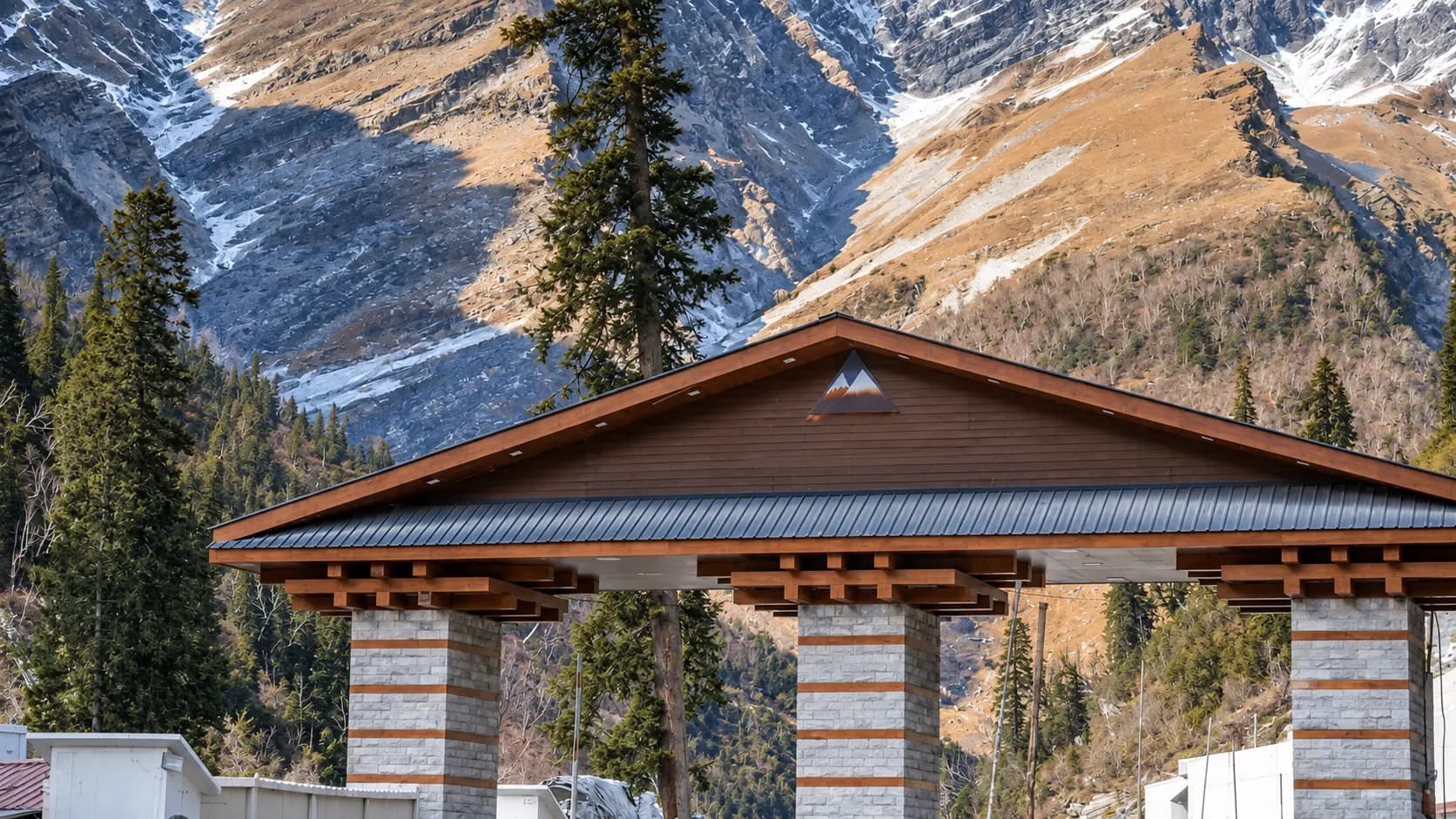
- South Portal Complex (Dhundi): Situated at an elevation of roughly 3,060 meters, the South Portal features an imposing architectural entry portal built of dressed mountain stone, flanked by an administrative control center, dedicated traffic police booths, emergency recovery vehicles, and public viewing areas where motorists can pause to take photographs before entering the tunnel.
2. Inside the 9.02-Kilometer Tunnel Tube
Passing beneath the monumental entrance lintel, your vehicle enters the brightly illuminated, horseshoe-shaped concrete tunnel.
- Dimensions & Roadway: The tunnel features a wide, 8.0-meter two-lane asphalt carriageway with 1.0-meter elevated emergency pedestrian sidewalks on either side and an overhead clearance of 5.525 meters, easily accommodating tall tourist coaches and heavy military transport trucks.
- Illumination & Visibility: High-efficiency, non-glare LED luminaires run along both walls, ensuring crystal-clear visibility without shadows. The tunnel interior is remarkably clean, bright, and modern, resembling a futuristic subterranean transit system.
- Ventilation & Air Quality: As you drive, you will notice massive jet fans suspended from the high vaulted ceiling. The tunnel utilizes a state-of-the-art semi-transverse mechanical ventilation system that continuously expels vehicular exhaust fumes through overhead air ducts, ensuring carbon monoxide and nitrogen dioxide levels remain well below international safety thresholds.
- Sensory Experience: The drive through the tube takes approximately 8 to 12 minutes at the mandated speed limit (40 - 80 km/h). Inside, ambient temperatures remain relatively stable year-round (hovering between 10°C and 18°C), providing warmth in midwinter and cool respite during summer.
3. Integrated Emergency Safety Infrastructure
The Atal Tunnel incorporates one of the most sophisticated fire, life safety, and disaster management networks ever installed in a mountain highway:
- Emergency Egress Tunnel: Built directly underneath the main road surface is a full-scale secondary evacuation tunnel. In the event of a catastrophic fire or vehicular collision in the main carriageway, heavy fire-rated steel escape doors located every 500 meters along the tunnel wall allow motorists to descend stairs into this smoke-free, pressurized emergency tunnel and walk safely to the portals.
- Fire Safety Systems: High-pressure fire hydrants with water hoses are installed every 60 meters along the entire 9.02-kilometer length.
- Emergency Telephones: Dedicated SOS telephone call boxes connecting directly to the central control rooms are positioned every 150 meters.
- CCTV & Automatic Incident Detection (AIDS): High-definition surveillance cameras are mounted every 60 meters. The automated system instantly flags halted vehicles, wrong-way driving, pedestrians, or smoke, alerting emergency response teams within seconds.
- In-Tunnel Radio Broadcasts: If your car stereo is tuned to local FM radio frequencies, the tunnel's re-broadcast network allows control room operators to transmit emergency safety announcements directly through your car speakers.
4. Emerging at the North Portal (Sissu / Teling)
Emerging from the North Portal (3,080 m) into the wide valley of Lahaul is a jaw-dropping visual shock.
- The Setting: The North Portal opens onto a sprawling bridge crossing the Chandra River near Sissu. Wide parking bays, souvenir stalls, local food shacks serving steaming thukpa and momos, and clean public restroom complexes are located near the bridge.
- Sissu Waterfall Lookout: Directly opposite the portal road, across the turquoise Chandra River, plunges the magnificent Sissu Waterfall, cascading down hundreds of feet of sheer rock face. Visitors can walk along the riverbanks, cross the suspension footbridge into Sissu village, or relax in local alpine cafes.
Best time to visit
Because the Atal Tunnel operates year-round, travelers can experience two completely distinct types of mountain…Explore detailsClose details
Because the Atal Tunnel operates year-round, travelers can experience two completely distinct types of mountain vacations depending on the season selected: the lush, high-altitude road trips of summer and autumn, or the snowy wonderland adventures of winter.
Summer and Monsoon (May to September) - Prime Sightseeing & Transit Season
Summer and early autumn provide the most comfortable weather for long mountain drives and exploring the deep valleys of Lahaul.
- Weather & Temperatures: In the Kullu Valley, daytime temperatures range between 20°C and 28°C. Upon passing through the tunnel into Lahaul, daytime temperatures are cooler and crisper, averaging 16°C to 22°C under brilliant sunshine, with refreshing mountain breezes.
- Trans-Himalayan Road Trips: This is the primary window for epic overland journeys continuing north from the tunnel toward Keylong, Jispa, Baralacha La, and onward to Leh in Ladakh.
- Monsoon Shadow Effect: An extraordinary phenomenon of the Atal Tunnel during the monsoon months (July and August) is the rain shadow transition. While the south portal in Manali may be experiencing torrential rain and thick clouds, driving through the tunnel frequently delivers you into sunny, clear, rain-free skies at Sissu, as the Pir Panjal Range blocks the bulk of the monsoon clouds from penetrating into Lahaul.
Autumn (September to October) - Crystalline Skies and Golden Willows
Autumn is universally favored by photographers and nature lovers.
- Visual Splendor: The poplar and willow groves of Sissu and the Chandra Valley turn an intense, dazzling golden-yellow. The glacial waters of the Chandra River run a clear, deep turquoise-blue, and snow begins to dust the highest peaks of the Dhauladhar and Pir Panjal ranges.
- Conditions: Crisp, dry daytime air (14°C - 18°C) with brisk evening temperatures (2°C - 6°C). Road surfaces are dry and traffic is unhurried.
Winter (November to April) - The Snow Adventurer’s Paradise
Winter offers the most dramatic, magical contrast of the year.
- Snow Contrast: While Manali town at 2,050 meters may experience only occasional snow, the North Portal at Sissu (3,080 m) is blanketed under thick, powdery snowpacks from December through March.
- Activities: Sissu transforms into a winter sports playground featuring snowmobiling, sledding, snow-tubing, and guided snow hikes across frozen river flats.
- Safety Realities: Daytime temperatures at the North Portal hover around -2°C to 6°C, plummeting to -15°C at night. Black ice can form on the portal approach roads; four-wheel-drive vehicles (4x4) or tire snow chains are strictly enforced by Himachal Pradesh Police during and immediately after fresh snowfalls.
How to reach
The South Portal of the Atal Tunnel is located in Dhundi within the Manali Sub-Division of Kullu District…Explore detailsClose details
The South Portal of the Atal Tunnel is located in Dhundi within the Manali Sub-Division of Kullu District, approximately 28 kilometers north of Manali town. It is effortlessly accessible via private vehicles, tourist taxis, and public transit.
By Private Car, SUV, or Motorbike from Manali
Driving to the Atal Tunnel is one of the smoothest, most enjoyable mountain drives in Himachal Pradesh:
- Route: From Manali, take National Highway 3 (Leh-Manali Highway) heading north through Bahang, Nehru Kund, Palchan, and past the Solang Valley junction toward Dhundi.
- Distance & Travel Time: The 28-kilometer drive is on a newly paved, double-lane all-weather highway and takes approximately 45 to 60 minutes under standard traffic conditions.
- Signage: Excellent directional signage installed by the Border Roads Organisation guides motorists smoothly to the South Portal.
By Taxi from Manali (Taxi Union Transfers)
- Local Taxis: Hundreds of local union cabs (Maruti Alto, Swift Dzire, Innova, and Mahindra Scorpio) depart daily from the Manali main taxi stand, the Mall Road, and private hotels.
- Standard Itineraries: Confirm the current charge and what it includes with the operator or service provider. Visitor admission, vehicles, parking, activities and accommodation can have separate charges.
By Public Bus (Himachal Road Transport Corporation - HRTC)
For budget travelers, the state transport corporation operates highly affordable daily bus services through the tunnel:
- Regular Services: Electric and ordinary HRTC buses depart from the Manali Inter-State Bus Stand throughout the morning heading toward Sissu, Keylong, Trilokinath, and Udaipur in Lahaul.
- Fare & Experience: Confirm the current charge and what it includes with the operator or service provider. Visitor admission, vehicles, parking, activities and accommodation can have separate charges.
Air and Long-Distance Rail Connections
- Bhuntar Airport (Kullu-Manali Airport - KUU): The nearest airport, located approximately 78 kilometers south of the South Portal (approx. 2.5 hours drive via the four-lane Kullu-Manali highway). Operates direct daily flights to New Delhi and Chandigarh via Alliance Air.
- Chandigarh International Airport (IXC) / Railhead (CDG): Located approximately 340 kilometers south. The primary transit hub for travelers arriving by broad-gauge rail or long-distance flights, connected to Manali via luxury overnight Volvo buses (approx. 8 - 9 hours) or private highway cabs.
Entry, timings and permissions
Fees, visiting hours and entry rules may change.Explore detailsClose details
Fees, visiting hours and entry rules may change. Confirm the latest details with the official operator or local authority before travelling.
A clear understanding of the operational schedules, toll-free status, and strict traffic safety laws enforced inside the tunnel will prevent legal penalties and ensure a safe transit.
Toll Charges and Entry Fees
- Tunnel Transit Toll: Completely Free. There is no toll tax, user fee, or gate charge levied by the Border Roads Organisation or the Government of Himachal Pradesh for driving through the Atal Tunnel.
- Permit Regulations: Confirm current permit requirements for your planned activities. Unlike the old Rohtang Pass highway - which requires a mandatory National Green Tribunal (NGT) environmental permit capped at daily vehicle quotas - the Atal Tunnel requires zero permits for passenger cars, tourist taxis, or private motorbikes traveling into Lahaul Valley.
- Note on Local Municipal Taxes: Non-Himachal registered private vehicles entering the Kullu district may be charged a nominal municipal green entry tax (approx. ₹100 - ₹200) at the outer entry barrier near Manali, but this is entirely separate from the tunnel.
Operating Hours
Facility / Section | Operating Days | Operating Hours | Operational Notes |
|---|---|---|---|
Atal Tunnel Carriageway | All 7 Days (Monday to Sunday) | 24 Hours Daily | Open year-round; subject to brief weather or avalanche suspensions |
South Portal Viewing Area | All 7 Days | Daylight Hours | Parking bays and photo points available outside the tube |
North Portal & Sissu Lookouts | All 7 Days | Daylight Hours | Cafes, restrooms, and activity centers operate 08:30 to 18:30 |
BRO Maintenance Intervals | Scheduled (Weekly) | 01:00 to 04:00 (Midnight) | Brief nocturnal closures for deep cleaning and jet-fan inspections |
Strict Traffic Safety Laws and Penalties
The Himachal Pradesh Police and the Border Roads Organisation enforce zero-tolerance traffic safety rules inside the tunnel tube to prevent catastrophic collisions and carbon monoxide entrapment:
- Speed Limits: A strict minimum speed of 40 km/h and a maximum speed of 80 km/h is enforced throughout the 9.02-kilometer tube.
- Absolute No-Overtaking Rule: Motorists must maintain their single lane. Overtaking or crossing the central double-white line is strictly illegal and automatically detected by laser radar cameras.
- Absolute Ban on Stopping & Selfies: Stopping, parking, pulling over, or stepping out of vehicles inside the tunnel tube to take photos or selfies is strictly prohibited. Violators face immediate heavy fines (ranging from ₹2,000 to ₹10,000), vehicle impoundment, and potential arrest under the Motor Vehicles Act.
- Maintain Safe Following Distance: Keep a mandatory minimum following distance of at least 50 meters from the vehicle ahead.
- Headlights Mandatory: Switch on low-beam headlights before entering the tunnel; ensure fog lamps are operational during winter.
Nearby places to consider
The strategic placement of the Atal Tunnel allows travelers to seamlessly connect the attractions of the upper…Explore detailsClose details
The strategic placement of the Atal Tunnel allows travelers to seamlessly connect the attractions of the upper Kullu Valley with the newly opened destinations of lower Lahaul:
1. Solang Valley (Approx. 14 km South of South Portal)
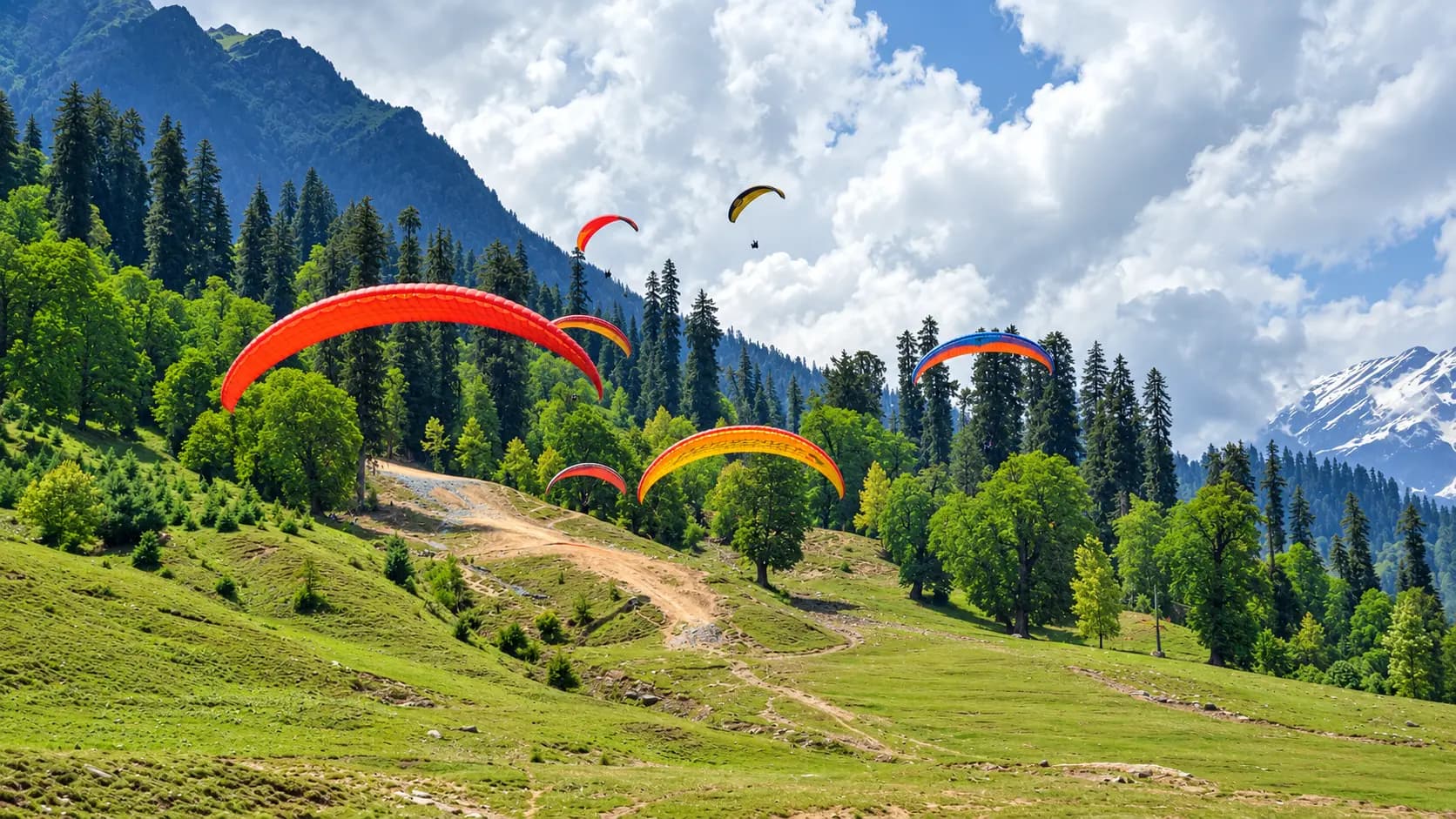
Situated halfway between Manali and the South Portal, Solang Valley is the adventure capital of the Kullu region. Surrounded by snow-dusted peaks, it offers paragliding, zorbing, ATV quad biking, horse riding, and a modern cable car ropeway ascending to Mount Phatru at 3,200 meters. In winter, its gentle slopes become Himachal’s primary public ski and snowboarding training ground.
2. Sissu Waterfall & Lake (Approx. 6 km West of North Portal)
Located immediately down the highway from the North Portal, Sissu is the postcard-perfect jewel of lower Lahaul. Highlights include the magnificent Sissu Waterfall plunging over 50 meters from a hanging cliff, the tranquil alpine waters of Sissu Lake offering paddle boating, camping meadows along the riverbanks, and groves of weeping willows and silver poplars.
3. Rohtang Pass (Approx. 22 km via Old Highway)
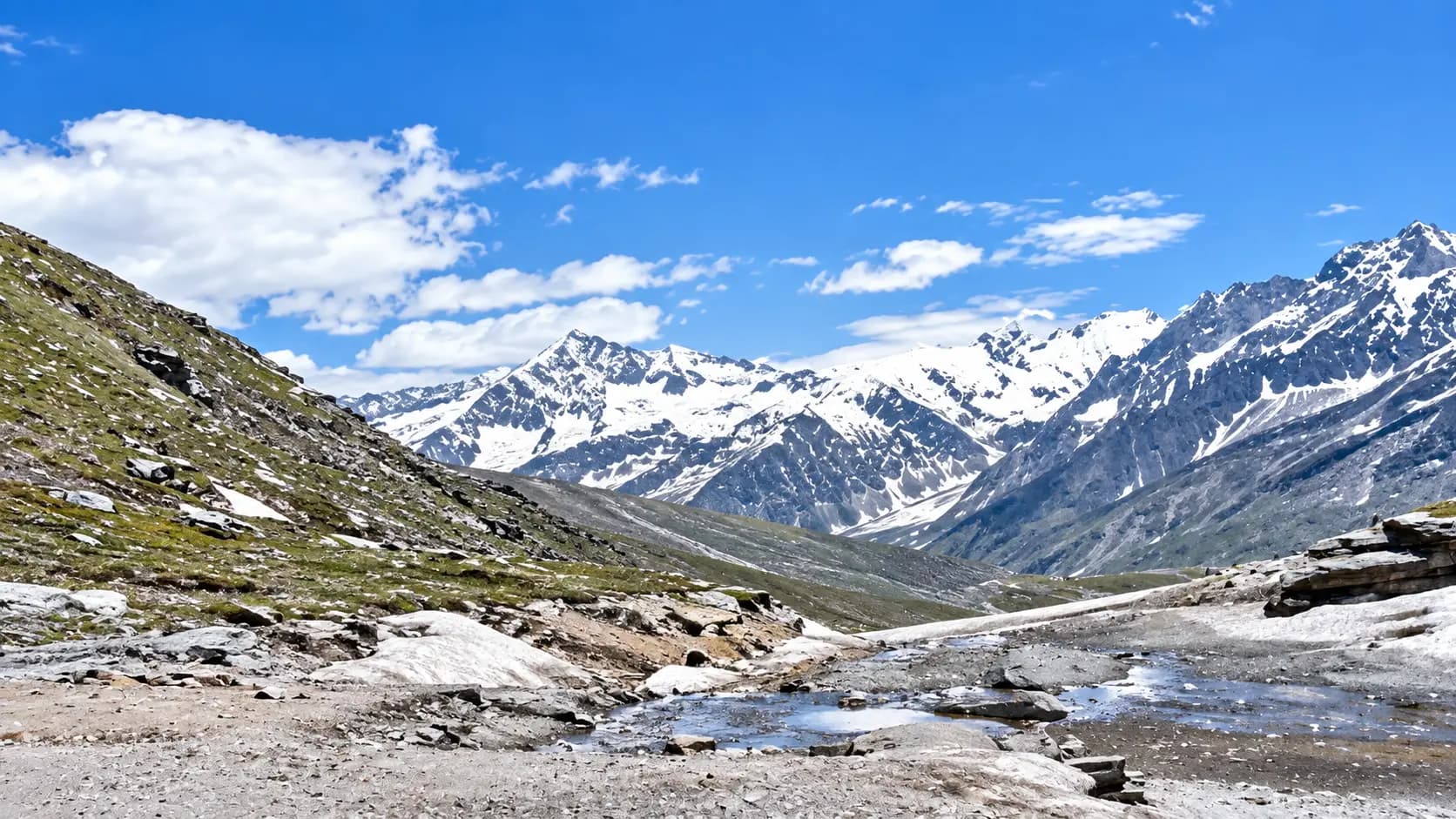
For travelers who still wish to experience the wild, high-altitude majesty of the historic mountain pass above the tunnel, the old winding Rohtang highway branches off near Marhi. At 3,978 meters (13,050 feet), Rohtang Pass provides raw glacial panoramas, massive snowbanks well into midsummer, and historic cairns marking the ancient trade route into Central Asia. (Note: Visiting Rohtang Pass requires a separate NGT online permit).
4. Nehru Kund & Gulaba (Approx. 18 km Southeast)
Located along the original Rohtang highway, Nehru Kund is a clear natural spring named after India’s first Prime Minister, Jawaharlal Nehru, who favored its sweet waters during his visits to Manali. Further up the road lies Gulaba, a picturesque alpine meadow surrounded by fragrant deodar woods that serves as the base camp for the high-altitude trek to Bhrigu Lake.
5. Old Manali & Hadimba Temple (Approx. 28 km South)
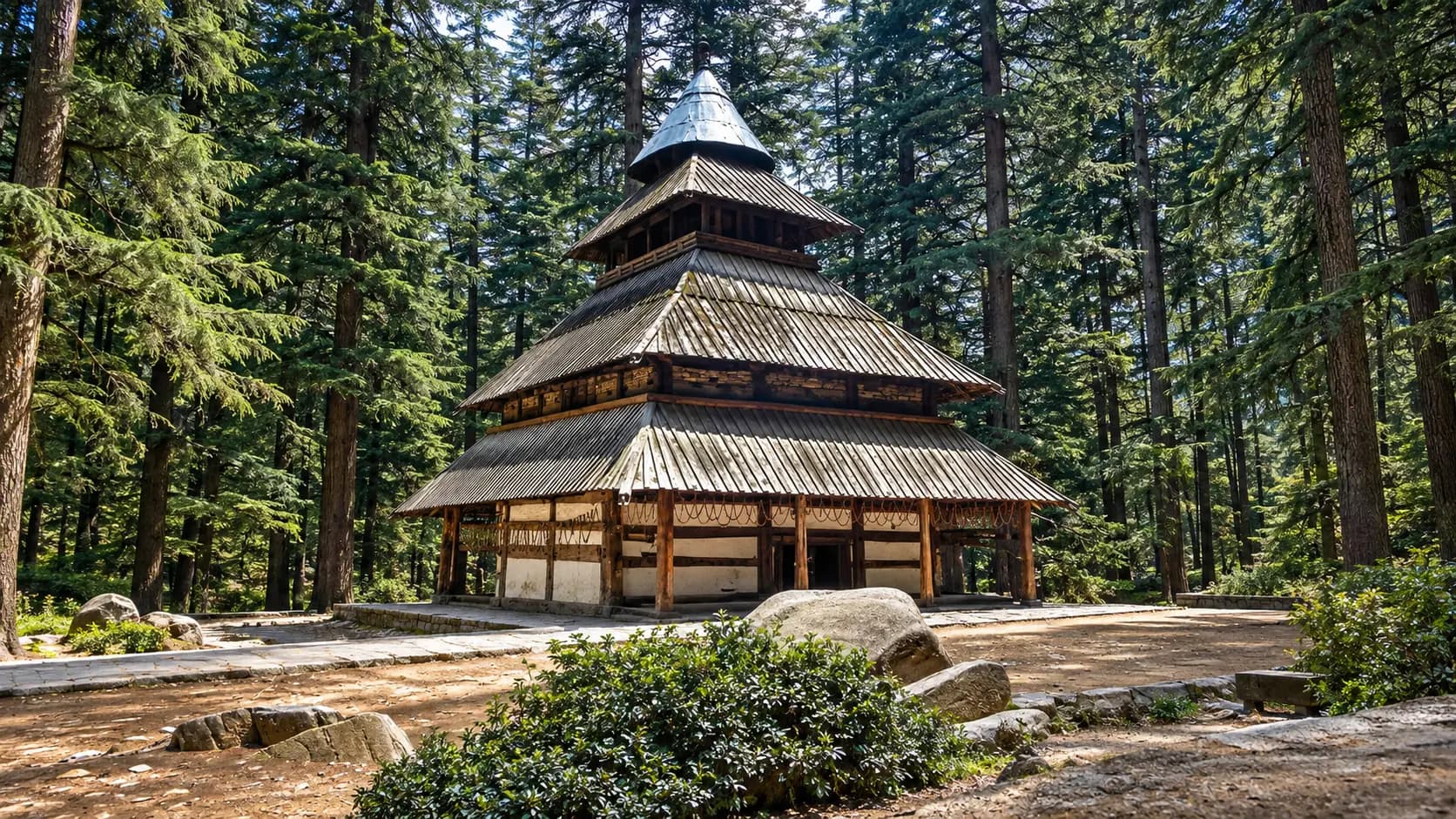
Back in the Kullu Valley, historic Old Manali offers a bohemian walking enclave filled with traditional Kathkuni timber-and-stone houses, riverside cafes, and live acoustic music. Nearby stands the four-tiered wooden pagoda of the 16th-century Hadimba Temple, nestled within a majestic grove of ancient deodars.
In pictures
The practical bits
Before you go.
Plan ahead
To make the most of your journey through the Atal Tunnel and avoid common traveler pitfalls, review these four…Explore detailsClose details
To make the most of your journey through the Atal Tunnel and avoid common traveler pitfalls, review these four essential preparation blocks covering traffic rules, clothing, altitude acclimatization, and seasonal road conditions:
Strict Adherence to Tunnel Driving Protocols
Approach the tunnel with disciplined driving habits.Explore detailsClose details
Approach the tunnel with disciplined driving habits. Switch your vehicle's headlights to low-beam, roll up all windows, and switch your air conditioning system to internal air recirculation to prevent outside exhaust fumes from entering the cabin. Maintain a steady speed between 50 and 60 km/h, keep a 50-meter gap from the car ahead, and remember that CCTV cameras monitor every inch of the roadway. Save all photography for the designated viewing areas located outside the portals.
Layered Clothing for the Trans-Himalayan Temperature Drop
Dress in warm, flexible layers.Explore detailsClose details
Dress in warm, flexible layers. Even in midsummer (June and July), stepping out of the tunnel at the North Portal (Sissu) exposes you to brisk, high-altitude alpine winds and temperatures that are frequently 6°C to 10°C colder than Manali. Carry a windproof jacket, fleece sweater, and sunglasses in your vehicle. During winter visits, pack heavy down jackets, insulated gloves, woolen caps, and waterproof snow boots.
Hydration and High-Altitude Awareness
Both portals sit above 3,000 meters (10,000 feet).Explore detailsClose details
Both portals sit above 3,000 meters (10,000 feet). While a short day trip does not pose severe altitude sickness risks for most travelers, sensitive individuals or young children may experience mild headaches, shortness of breath, or dehydration due to the dry mountain air. Drink plenty of water throughout the journey, avoid heavy, oily meals before driving, and move at a relaxed pace when walking around Sissu Waterfall or the North Portal riverbeds.
Winter Road Readiness and 4x4 Requirements
If traveling between late December and mid-March, verify daily road and weather advisories issued by the District…Explore detailsClose details
If traveling between late December and mid-March, verify daily road and weather advisories issued by the District Magistrate of Lahaul & Spiti before departing Manali. Following fresh snowfalls, police checkpoints at Solang Valley restrict entry exclusively to four-wheel-drive (4x4) vehicles or vehicles equipped with steel tire snow chains. Never attempt to drive across hard-packed snow or black ice in a standard two-wheel-drive car on highway tires.
Suggested Full-Day Circuit: Manali to Sissu & Keylong (Approx. 6 Hours)
08:30 - 09:30: Scenic Drive to South Portal
Depart Manali after breakfast.Explore detailsClose details
Depart Manali after breakfast. Enjoy the morning mountain drive past Solang Valley and through the pine-scented slopes of Dhundi, arriving at the South Portal of the Atal Tunnel.
09:30 - 09:45: The 10-Minute Mountain Crossing
Enter the South Portal.Explore detailsClose details
Enter the South Portal. Experience the smooth, futuristic drive through the 9.02-kilometer tunnel, observing the engineering marvel of the jet fans and illuminated arches.
09:45 - 11:30: Exploring Sissu Waterfall & Lake
Emerge into the cold desert landscape of the North Portal.Explore detailsClose details
Emerge into the cold desert landscape of the North Portal. Park your vehicle near Sissu village. Walk across the suspension footbridge over the turquoise Chandra River to the base of the thundering Sissu Waterfall. Stroll around Sissu Lake and take in the hanging glaciers.
11:30 - 13:00: Drive to Gondhla Fort & Tandi Confluence
Continue 20 kilometers deeper into the Lahaul Valley along the banks of the Chandra River.Explore detailsClose details
Continue 20 kilometers deeper into the Lahaul Valley along the banks of the Chandra River. Marvel at the imposing historical stone tower of Gondhla Fort, then stop at Tandi to view the sacred confluence of the Chandra and Bhaga rivers.
13:00 - 14:15: Traditional Lahauli Lunch in Keylong
Drive into Keylong, the administrative capital of Lahaul.Explore detailsClose details
Drive into Keylong, the administrative capital of Lahaul. Savor authentic Himalayan cuisine - sample piping-hot buckwheat pancakes (chilra), steamed mutton momos, hearty thukpa, and local butter tea at a traditional family eatery.
14:15 - 16:00: Return Transit to Manali
Begin the return drive south along the highway, re-entering the North Portal and gliding back through the Atal…Explore detailsClose details
Begin the return drive south along the highway, re-entering the North Portal and gliding back through the Atal Tunnel to arrive back in Manali town by late afternoon.
A few things you might wonder
Common questions about visiting Atal Tunnel. Fees, visiting hours and ceremonies are researched details that may change; confirm current arrangements with the operator before travelling.
How long is the Atal Tunnel, and what is its world record?
Is there a toll fee or special permit required to drive through the tunnel?
Can vehicles stop or take photos inside the tunnel?
What are the speed limits and transit time through the tunnel?
How does the weather change between the South Portal and the North Portal?
Is the Atal Tunnel open during the winter months?
Explore more in Manali Kullu
Discover other destinations around this hub
More Hubs in Himachal Pradesh
Continue exploring other travel hubs in this state
Planning a trip to Manali Kullu?