Routeyst
Opening your next page…
Routeyst
Opening your next page…
Your next day out
Finding your places to explore…
Loading your city’s local sights and outing ideas.
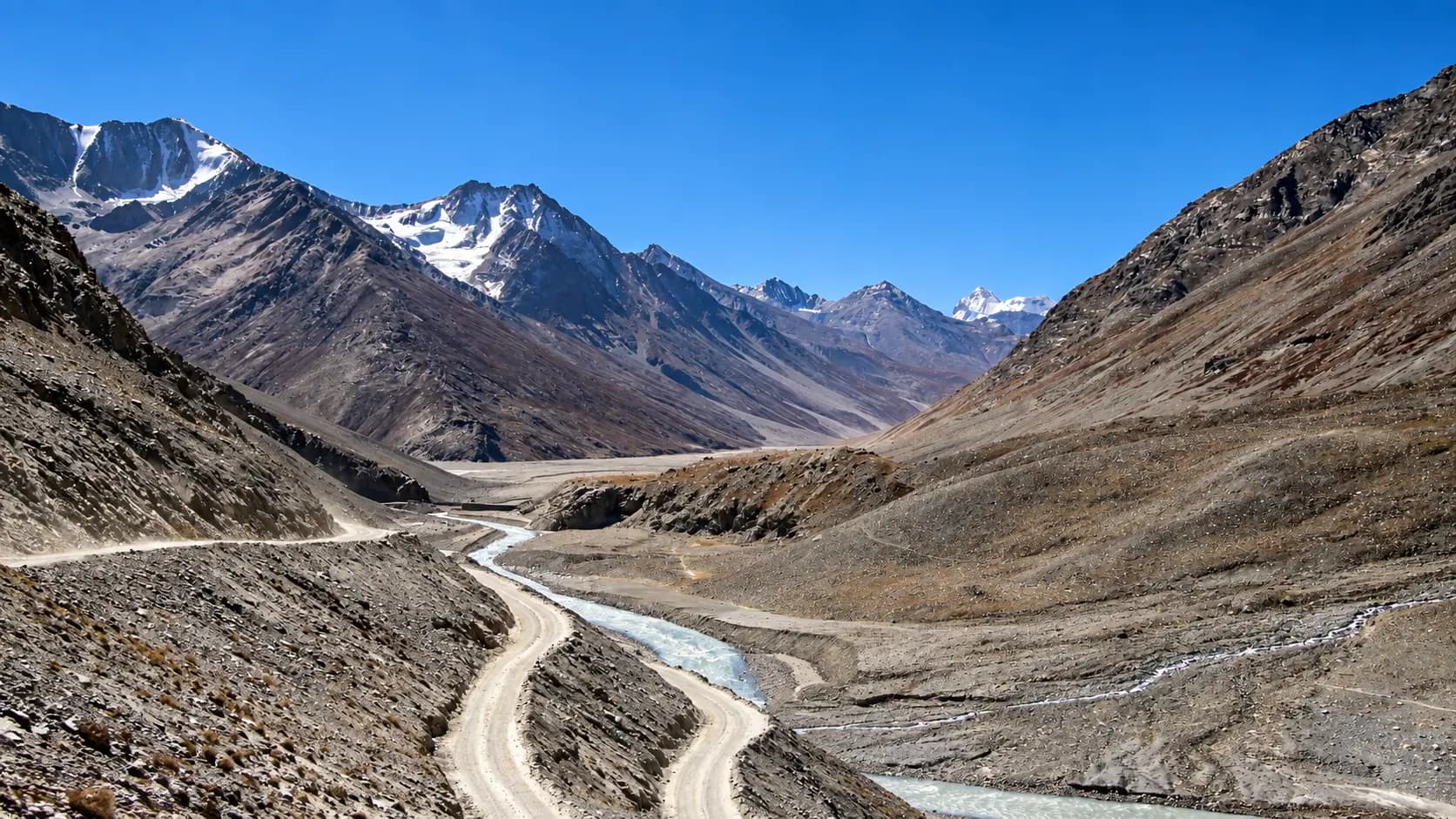
Choose a starting point, find local sights or an out-of-town idea within a stated 200 km road distance.
Make it your kind of day
Choose a starting point and your ideas appear automatically. Switch to Out of town whenever you fancy going further.
Jammu and Kashmir · Local sights
Celebrated throughout history as the "City of Temples" and the winter capital of Jammu and Kashmir, Jammu commands a dramatic geographical position where the fertile plains of the Punjab transition abruptly into the rugged…
Celebrated throughout history as the "City of Temples" and the winter capital of Jammu and Kashmir, Jammu commands a dramatic geographical position where the fertile plains of the Punjab transition abruptly into the rugged, pine-carpeted Shivalik foothills. Within the urban core, the city divides across the natural gorge of the sacred Tawi River. On the western bank lies the historic walled quarter, crowned by the soaring gold-plated shikharas of the 19th-century Raghunath Temple and the sprawling 14-acre royal courtyards of Mubarak Mandi Palace, alongside the unique French-chateau-style Amar Mahal Palace displaying its 120-kg solid gold throne. Across the river on the eastern cliffs rises the ancient 3,000-year-old stone citadel of Bahu Fort, enshrining the city's guardian deity Bawe Wali Mata, descending gracefully into the stepped Mughal-style fountains and giant subterranean fish aquarium of Bagh-e-Bahu.
Beyond the city perimeter, Jammu acts as the prime gateway to some of the most spiritually profound, historically layered, and ecologically rich destinations in the Western Himalayas. All five recommended outside destinations lie well within a 110 km road radius along high-quality national and state highways. To the northwest along the Chenab River lies Akhnoor Fort and the sacred coronation ghat of Jia Pota (28 km). To the northeast and east, the Shivalik hills shelter the twin Ramsar-designated freshwater sanctuaries of Surinsar Lake (40 km) and Mansar Lake (60 km). Heading north into Reasi district brings pilgrims to the base camp of Katra and the sacred 12 km mountain trek to the Holy Cave Shrine of Shri Mata Vaishno Devi (45 km). Further north along National Highway 44, the four-lane highway and the 9-km Chenani-Nashri Tunnel whisk travelers up to the alpine pine meadows, winter snow slopes, and modern Skyview gondola of Patnitop at 2,024 metres elevation (110 km).
Explore local sights and the nearby visitor area. Maps opens a place search; check the visitor entrance and current access.
5 of 5 places · Open details without losing your list
Not sure? Pick 2–3 places to compare.
Planning your day
Both the Amar Mahal Palace Museum (housing the 120-kg gold throne) and the Dogra Art Museum (inside the Pink Hall at Mubarak Mandi) are strictly closed on Mondays. If visiting on a Monday, focus your local sightseeing on Raghunath Temple, Bahu Fort (Bawe Wali Mata), and the Bagh-e-Bahu gardens and aquarium, all of which remain open daily.
Yes, but it depends heavily on your transit mode. Katra base camp is only 45 km (approx. 1 hour) from Jammu along a fast four-lane expressway. Pilgrims who pre-book helicopter tickets from Katra to Sanjichhat or use ponies/battery cars can ascend to Bhawan, complete darshan, and return to Katra and Jammu within 10 to 14 hours. However, pilgrims undertaking the entire 24 km round-trip trek on foot typically require an overnight stay in Katra or at the Bhawan complex.
While both lakes are part of the same Ramsar wetland complex, their visitor experience is completely distinct. Mansar Lake is a larger, livelier destination with active pedal boating, family dining, souvenir shops, softshell tortoise feeding, and the popular Sheshnag Temple. Surinsar Lake, located 16 km away, is a tranquil, motor-free conservation sanctuary where boating and swimming are prohibited; it is famous for its summer floating lotus blossoms, migratory bird island, and peaceful nature walks.
Yes. Thanks to the 9-km Chenani-Nashri Tunnel (Dr. Syama Prasad Mookerjee Tunnel) on NH 44, the treacherous landslide-prone lower passes are bypassed, keeping highway connectivity open year-round. Travelers can park at Sanget Valley and take the 10-minute Skyview Gondola ropeway directly up to the snowy meadows of Patnitop, completely avoiding snowbound mountain roads.
Your friend receives the same starting point, outing type and filters. No sign-in needed.
Make room for a longer journey
Hubs and guides from our wider collection, ordered with local and geographically closer places first. These are not limited to 200 km and are not road-distance estimates.
Open a place for its researched visitor notes. Confirm current charges and access before travelling.
Temple rituals and heritage operations are administered by the Dharmarth Trust of Jammu & Kashmir (founded by Maharaja Gulab Singh in 1846).
The temple is centrally situated in Raghunath Bazaar in the heart of Old Jammu city, approximately 1 km east of Indira Chowk and 4.5 km northwest of Jammu Tawi Railway Station.
Visitor entrance and transit:
Fees, visiting hours and entry rules may change. Confirm the latest details with the official operator or local authority before travelling.
Fort conservation is overseen by the Directorate of Archaeology and Museums, Jammu and Kashmir, while temple rituals are managed by the local temple committee.
Bahu Fort is located in the Gorkha Nagar / Bahu area on the left (eastern) bank of the Tawi River, approximately 4 km east of Raghunath Bazaar and 3.5 km northeast of Jammu Tawi Railway Station.
Visitor entrance and transit:
Fees, visiting hours and entry rules may change. Confirm the latest details with the official operator or local authority before travelling.
The garden is maintained by the Department of Floriculture, Gardens & Parks, Jammu, while the aquarium is operated by the Department of Fisheries, Government of Jammu and Kashmir.
Bagh-e-Bahu is located directly adjacent to Bahu Fort on the eastern bank of the Tawi River, approximately 4 km east of Raghunath Bazaar and 3.5 km from Jammu Tawi Railway Station.
Visitor entrance and transit:
Fees, visiting hours and entry rules may change. Confirm the latest details with the official operator or local authority before travelling.
The museum and its collections are maintained by the Hari-Tara Charitable Trust under the patronage of Dr. Karan Singh.
Amar Mahal is located along Palace Road in the Ramnagar / Civil Lines area of northern Jammu, approximately 3.5 km north of Raghunath Bazaar and 7 km northwest of Jammu Tawi Railway Station.
Visitor entrance and transit:
Fees, visiting hours and entry rules may change. Confirm the latest details with the official operator or local authority before travelling.
Heritage conservation is executed by the Mubarak Mandi Jammu Heritage Society (MMJHS) under the Department of Culture, Government of Jammu and Kashmir.
Mubarak Mandi is located in the Panjtirthi neighborhood in northern Old Jammu, approximately 2 km north of Raghunath Bazaar and 5.5 km from Jammu Tawi Railway Station.
Visitor entrance and transit:
Fees, visiting hours and entry rules may change. Confirm the latest details with the official operator or local authority before travelling.
Browse cities by state · 85 starting points
Open a state, then choose your starting city. Local sights load automatically.
Out-of-town ideas vary in distance. Check your outward and return journey, time at the destination and breaks before deciding whether you need a stay.
Maps may identify a landscape rather than its visitor entrance. Check parking, walks, boat transfers and entry permission with the local operator.
Use the guide for practical context and visit weather for the available three-day forecast. Neither is a live opening or safety confirmation.