Tsuglagkhang Complex (Dalai Lama Temple)
Visit the Tsuglagkhang Complex in McLeodganj. Comprehensive guide to the Dalai Lama Temple, Namgyal Monastery, Tibet Museum, debates, timings, and Kora path.
Location
Dharamshala McLeodganj, Himachal Pradesh
A closer look
Your visit, at a glance.
Dharamshala McLeodganj, Himachal Pradesh
GET TO KNOW THE PLACE
Perched on a forested mountain spur overlooking the deep valleys of the Kangra foothills in McLeodganj (Upper Dharamshala), the Tsuglagkhang Complex is one of the most…
The story of Tsuglagkhang Complex (Dalai Lama Temple)
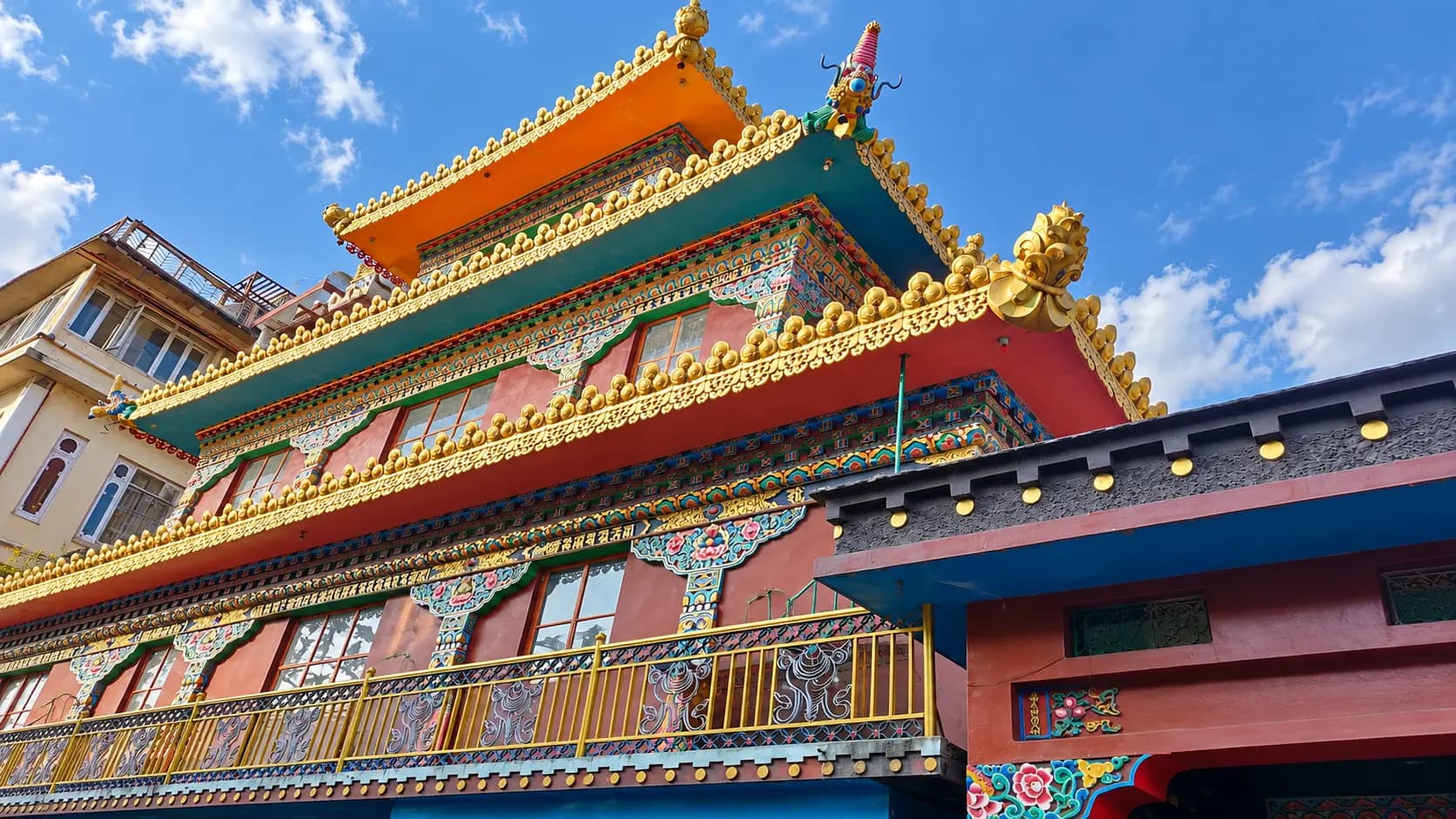
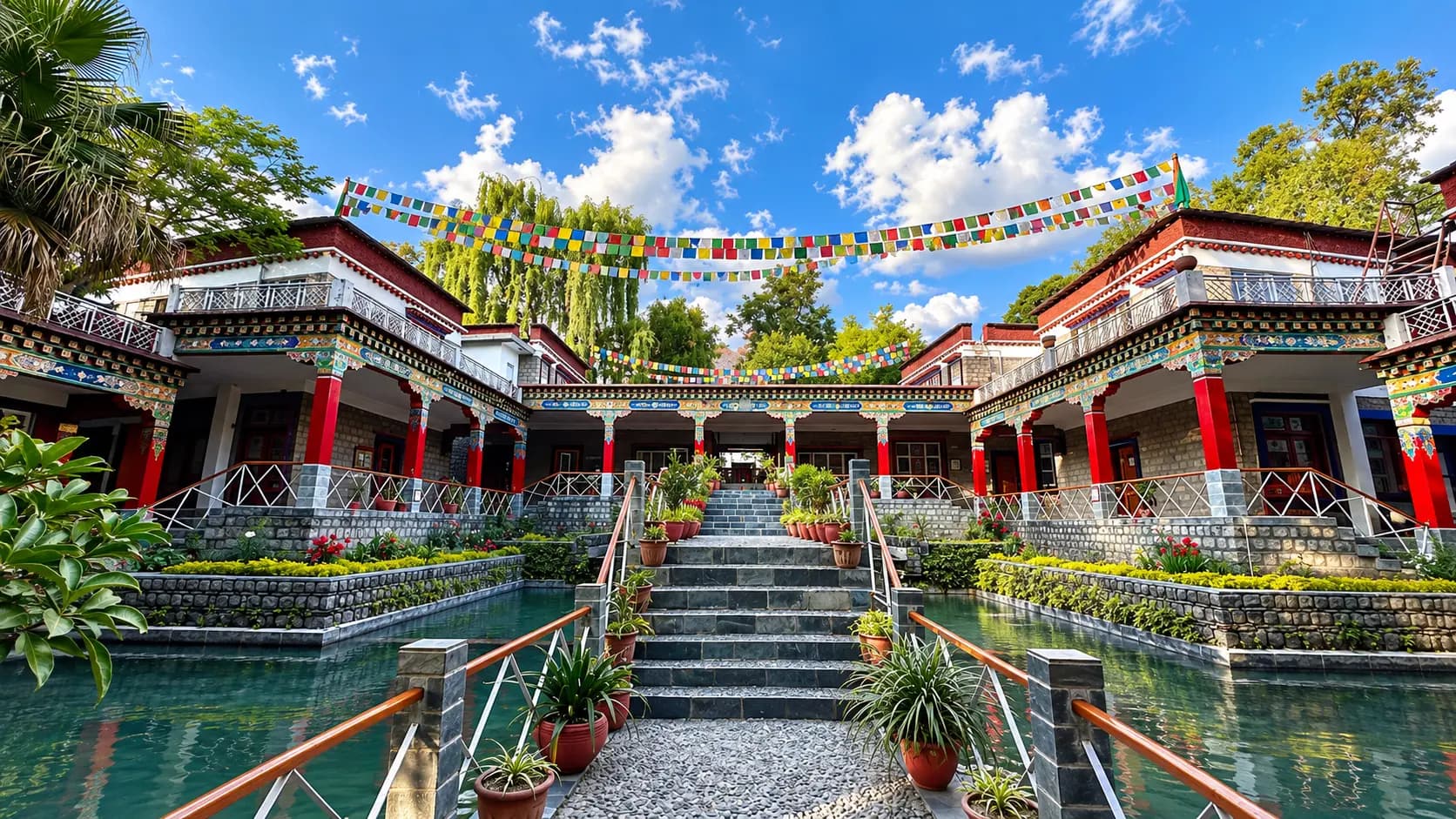
Perched on a forested mountain spur overlooking the deep valleys of the Kangra foothills in McLeodganj (Upper Dharamshala), the Tsuglagkhang Complex is one of the most spiritually charged and culturally significant pilgrimage destinations on Earth. Known universally across the globe as the Dalai Lama Temple Complex, this modest yet deeply resonant sanctuary serves as the official seat, spiritual headquarters, and residence in exile of His Holiness the 14th Dalai Lama (Tenzin Gyatso), the Nobel Peace Prize laureate and spiritual leader of Tibetan Buddhism. Since 1960, following the Dalai Lama’s perilous escape across the snow-bound Himalayan passes from occupied Tibet, this complex has formed the beating heart of "Little Lhasa" - the global capital of Tibetan culture, philosophy, and democratic statehood in exile.
Unlike grand, ancient monuments defined primarily by weathered stone architecture, the Tsuglagkhang Complex is a living, pulsating spiritual universe. Within its open-air courtyards and sun-drenched verandas, ancient traditions that trace their lineage directly back to classical Nalanda University in ancient India are practiced with rigorous intellectual precision. Here, maroon-robed monks of the personal Namgyal Monastery engage in animated philosophical debates punctuated by dramatic hand-claps; elder Tibetan pilgrims spin rows of brass prayer wheels as they chant ancient mantras along the forested Kora circumambulation trail; and travelers, diplomats, and seekers from every continent gather in quiet contemplation before towering gilded statues of Shakyamuni Buddha and Avalokiteshvara. Seamlessly integrating the sacred temple, the monastic college, the Central Tibetan Administration's Tibet Museum, and the residential quarters of His Holiness, the Tsuglagkhang provides an unforgettable encounter with the resilience of the human spirit.
Start here. Open a tile for the full details.
Why goRead details
For travelers visiting Himachal Pradesh, spending time within the Tsuglagkhang Complex is often the most profound and emotionally transformative highlight of their journey. It offers an open window into living Tibetan Buddhist culture that cannot be experienced anywhere else in the world.
When to visitRead details
Because McLeodganj sits at an elevation of 1,770 meters in the Dhauladhar foothills, seasonal weather patterns and daily monastic schedules play an essential role in planning your visit.
Entry & permissionsRead details
Fees, visiting hours and entry rules may change. Confirm the latest details with the official operator or local authority before travelling.
A clear understanding of the institutional visiting hours, security protocols, and event schedules ensures a seamless and respectful pilgrimage experience.
Admission Charges
- Complex & Temple Admission: Completely Free. There is no entry fee, gate toll, or mandatory donation required to enter the Tsuglagkhang Complex, Namgyal Monastery, or the Kora path.
- The Tibet Museum Admission: Free. Operated as an open public educational institution by the Central Tibetan Administration. Voluntary donations supporting refugee oral history archives are accepted.
- Monastic Debates: Free of charge to all visitors who observe respectful silence.
Operating Hours
Facility / Section | Operating Days | Timings | Operational Notes |
|---|---|---|---|
Tsuglagkhang Temple Complex | All 7 Days (Monday to Sunday) | 05:00 to 19:00 | Open daily throughout the year |
Monastic Philosophical Debates | Monday to Friday (Weekdays) | ~14:00 to 16:00 | Held in the central courtyard; open to public observation |
The Tibet Museum | Tuesday to Sunday | 09:00 to 17:00 | Closed on Mondays; video documentary screenings at 11:00 & 15:00 |
Sacred Kora Path | All 7 Days | Sunrise to Sunset | Paved forest circuit around the complex; unlit after dark |
Dalai Lama Administrative Office | Monday to Friday | 09:00 to 17:00 | Closed on Tibetan national holidays and weekends |
Security Regulations and Prohibited Items
Due to the paramount security requirements surrounding the residence of His Holiness the Dalai Lama, security protocols at the entrance gate are strict and non-negotiable:
- Mandatory Bag Checks: All bags must pass through physical manual inspection and electronic metal-detection scanners.
- Strictly Barred Items: Lighters, matchboxes, cigarettes, vape devices, pocket knives, swiss army tools, and drones are strictly prohibited. If found, security officers will confiscate them at the gate. Pack only essential personal items.
- Mobile Phones & Cameras: Smartphones, compact cameras, and mirrorless or DSLR cameras are permitted inside the complex. However, mobile phones must be switched to silent mode.
Etiquette and Dress Code
Because the Tsuglagkhang is an active, sacred Buddhist monastery, visitors must observe respectful decorum:
- Modest Attire: Dress conservatively with shoulders, chest, and knees fully covered (avoid tank tops, shorts, mini-skirts, or revealing gym wear).
- Shoe Removal: Footwear must be removed and placed on the wooden storage shelves outside the main prayer hall before entering.
- Clockwise Movement: When exploring the temple halls, circling altars, or walking the Kora path, always move in a clockwise direction.
- Silence and Reverence: Maintain quiet, contemplative voices inside the prayer halls; never point your feet directly at Buddha statues, sacred thrones, or meditating monks (sit cross-legged or with feet tucked under).
Plan your visitRead details
The Tsuglagkhang Complex is located at the southern terminus of Temple Road in McLeodganj (Upper Dharamshala), within the Dharamshala Sub-Division of Kangra District. Positioned approximately 9 kilometers uphill from Dharamshala town, it is easily reachable via multiple modes of transport.
Explore the full guide - choose a topic below.
Why visit?
For travelers visiting Himachal Pradesh, spending time within the Tsuglagkhang Complex is often the most profound…Explore detailsClose details
For travelers visiting Himachal Pradesh, spending time within the Tsuglagkhang Complex is often the most profound and emotionally transformative highlight of their journey. It offers an open window into living Tibetan Buddhist culture that cannot be experienced anywhere else in the world.
The Spiritual Epicenter of His Holiness the Dalai Lama
The Tsuglagkhang Complex is the primary venue where His Holiness the 14th Dalai Lama conducts public religious discourses, Buddhist initiations (wang), interfaith dialogues, and global press conferences when he is in residence. When public teachings are scheduled, thousands of devotees from Ladakh, Spiti, Nepal, Bhutan, Mongolia, North America, Europe, and East Asia converge upon the temple courtyard, sitting shoulder to shoulder with local Indian residents and international backpackers. Even during periods when His Holiness is not actively teaching, the palpable aura of peace, mindfulness, and loving-kindness that permeates the temple halls provides a powerful antidote to the anxieties of modern urban life.
The Animated Dialectical Debates of Namgyal Monastery
One of the most extraordinary intellectual spectacles in Asia takes place every weekday afternoon in the tree-shaded courtyard of the complex: monastic philosophical debate (tsodpa). Originating in the monastic universities of ancient India and preserved with fanatical devotion in Tibet, debate is the primary pedagogical method through which Tibetan Buddhist monks test their understanding of complex metaphysical texts on logic, epistemology, and the nature of reality.
Dressed in flowing maroon and saffron robes, senior and junior monks pair up. The challenger stands over the seated defender, firing rigorous logical syllogisms. Every challenge is driven home by a physical gesture of explosive energy: a high foot-stomp accompanied by a sharp, rhythmic double-hand clap that symbolizes the lightning strike of wisdom cutting through the darkness of ignorance. To watch dozens of monks debating simultaneously in an open-air courtyard, their voices rising in intense debate, is a mesmerizing sensory and intellectual experience open to all respectful visitors.
Sacred Masterpieces of Tibetan Art and Preserved Relics
The inner sanctum of the Tsuglagkhang houses sacred artistic treasures that embody the deep spiritual history of Tibet:
- Shakyamuni Buddha: The central altar is crowned by a colossal, 9-foot gilded bronze statue of Buddha Shakyamuni seated in the bhumisparsha mudra (earth-touching gesture), radiating solemn serenity.
- The Rescued Head of Chenrezig (Avalokiteshvara): To the left of the Buddha stands a breathtaking, silver-and-gilt statue of Avalokiteshvara, the Bodhisattva of Compassion, depicted with eleven heads and a thousand arms. This sacred statue holds immense historic and emotional weight: the original 7th-century statue of Avalokiteshvara in the Jokhang Temple in Lhasa was desecrated during the Cultural Revolution in 1966. Courageous Tibetans smuggled broken fragments of the clay-and-silver head through the Himalayan snows to Dharamshala, where they were consecrated inside this new statue in 1970, bridging the sacred lineage between ancient Lhasa and exile in India.
- Guru Padmasambhava: To the right sits a resplendent, ornate statue of Guru Rinpoche, the 8th-century tantric master who conquered indigenous mountain demons and established Buddhism across Tibet.
The Sacred Kora: Meditative Forest Circumambulation
Directly below the main temple terrace lies the Kora, a stone-paved pedestrian trail that circles the forested hill around the entire Tsuglagkhang and the private compound of the Dalai Lama. Following the Buddhist practice of pradakshina (clockwise circumambulation), walking the 1.5-kilometer Kora amidst rustling pine boughs and fluttering prayer flags is a deeply moving experience. The path is lined with hundreds of brightly painted wooden and brass prayer wheels, carved slate mani stones bearing the compassionate mantra "Om Mani Padme Hum", and a cliffside rock shrine dedicated to the protective deity Nechung where fragrant juniper boughs burn continuously.
The Tibet Museum: Truth and History in Exile
Located immediately inside the entrance complex, The Tibet Museum - inaugurated by the Department of Information and International Relations of the Central Tibetan Administration - presents an unvarnished, scholarly, and moving historical account of Tibet's modern history. Through rare archival photographs, documentary video footage, original treaties, personal artifacts of refugees who crossed the Himalayas on foot, and recorded oral histories, the museum tells the story of Tibet's ancient sovereignty, the 1959 national uprising, the human cost of the Chinese occupation, and the remarkable reconstruction of a functioning democracy in exile.
What to expect
Visiting the Tsuglagkhang Complex is an immersive experience characterized by active devotion, quiet…Explore detailsClose details
Visiting the Tsuglagkhang Complex is an immersive experience characterized by active devotion, quiet contemplation, and intellectual energy. Because it is an active monastery, a diplomatic headquarters, and a major pilgrimage center, understanding the layout and daily rhythm ensures a smooth, respectful visit.
1. Entrance and Airport-Style Security Screening
The main entrance gate is located at the southern terminus of Temple Road.
- Security Checkpoint: All visitors must pass through a mandatory security screening checkpoint operated jointly by the Himachal Pradesh Police and the private security staff of the Dalai Lama. You will step through metal-detector door frames, undergo physical hand-held wand scans, and submit all handbags and backpacks for physical inspection.
- Prohibited Items: Lighters, matches, cigarettes, pocket knives, scissors, drones, and large metallic tripods are strictly prohibited and will be confiscated at the gate. Pack lightly and carry only your phone, wallet, and camera.
2. The Main Courtyard and Ground-Floor Facilities
Passing through the gate brings you onto a wide concrete and flagstone courtyard surrounded by multi-storey administrative and monastic buildings.
- The Debate Courtyard: Positioned on the left beneath the shade of mature cedar trees. On weekday afternoons (14:00 to 16:00), this space fills with dozens of debating monks. Spectators can sit quietly on surrounding stone benches to watch and photograph the proceedings.
- The Tibet Museum: Situated on the right side of the entrance gate. A modern, climate-controlled two-storey gallery featuring curated historical exhibits, a memorial hall, and a documentary screening theater.
3. The Tsuglagkhang (Main Prayer Hall)
Ascending a wide flight of stone steps leads to the elevated first-floor terrace, offering sweeping views of the pine-clad Kangra Valley to the south.
- Shoe Storage: Before stepping onto the polished stone floor of the main temple terrace, you must remove your footwear and place it on the extensive wooden shoe racks provided outside. Socks are permitted and highly recommended during winter when the stone pavement is chilly.
- The Inner Sanctum: Entering through the tall double doors brings you into the grand, carpeted prayer hall. In the center stands the high, brocade-draped golden throne (Simhasana) of His Holiness the Dalai Lama. Behind the throne rise the colossal gilded statues of Buddha Shakyamuni, Avalokiteshvara, and Guru Padmasambhava. Pilgrims walk clockwise around the perimeter of the room, offering prostrations, placing white silk offering scarves (khatas) before the altars, and spinning rows of small bronze prayer wheels set into the walls.
- The Kalachakra Temple: Situated directly adjacent to the main hall, this secondary temple is dedicated to the Kalachakra esoteric teachings. The walls are covered in intricate Menri-style frescoes depicting 722 deities of the mandala, centered around an ornate three-dimensional sand-mandala pavilion.
4. Walking the Sacred Kora
To access the forested circumambulation path, take the descending stone steps located on the southwest exterior flank of the complex.
- Path Profile: The path is a 1.5-kilometer paved stone trail that circles the wooded hillside beneath the Dalai Lama's private residence. It takes approximately 30 to 45 minutes at a relaxed walking pace.
- Circumambulation Etiquette: Always walk the trail in a clockwise direction, matching the flow of local pilgrims. As you walk, reach out with your right hand to gently spin the hundreds of rotating brass prayer wheels installed along the path, which are believed to send blessings of peace into the surrounding mountains.
Best time to visit
Because McLeodganj sits at an elevation of 1,770 meters in the Dhauladhar foothills, seasonal weather patterns…Explore detailsClose details
Because McLeodganj sits at an elevation of 1,770 meters in the Dhauladhar foothills, seasonal weather patterns and daily monastic schedules play an essential role in planning your visit.
Spring and Summer (March to June) - Peak Cultural Season
Spring and early summer provide warm, sunlit mountain days and a bustling international atmosphere.
- Weather & Temperatures: Daytime temperatures average 20°C to 27°C, offering refreshing mountain air while the Indian plains below suffer from extreme summer heat.
- Public Teachings: This period frequently coincides with scheduled public teachings and religious discourses by His Holiness the Dalai Lama, drawing thousands of international visitors.
- Visuals: Rhododendrons bloom in early spring across the surrounding hillsides, and the snow caps on the Dhauladhar Range glisten in brilliant sunshine.
Autumn (September to November) - Crisp Mountain Serenity
Autumn is universally favored by scholars, meditation practitioners, and photographers.
- Atmospheric Conditions: The departure of the monsoon brings crystalline, cloudless skies and low humidity. Crisp, cool daytime temperatures (16°C - 22°C) make walking the outdoor Kora path deeply enjoyable.
- Lighting: The soft golden autumn light creates exceptional conditions for photographing the temple courtyard, spinning prayer wheels, and the Dhauladhar peaks.
Winter (December to February) - Cold and Contemplative
Winter brings cold, crisp weather, occasional snow flurries, and deep spiritual quiet.
- Ambiance: Tourism footfalls drop significantly, leaving the temple complex to resident monks and dedicated Tibetan pilgrims who travel from across India during winter to perform prostrations.
- Temperatures: Daytime conditions are sunny but brisk (10°C - 15°C), plunging rapidly to near freezing (0°C - 4°C) after sunset. Warm thermal clothing, woolen shawls, and thick socks for temple visits are essential.
Monsoon (July to August) - Lush but Wet
McLeodganj receives some of the heaviest rainfall in the Himalayas during the southwest monsoon.
- Visiting Realities: Dense mountain fog and heavy downpours are common. While the Kora path can be slick and muddy, the main temple halls and the Tibet Museum are fully covered, offering dry, atmospheric retreats.
Daily Timing Strategy
- Morning (06:00 to 09:00): Experience quiet personal meditation and walk the Kora trail alongside elder Tibetan pilgrims who chant mantras in the misty morning light.
- Afternoon (14:00 to 16:30): The quintessential time to visit if your goal is to witness the vibrant, intellectual monastic debates in the central courtyard.
- Evening (17:30 to 18:30): Enjoy the sunset over the Kangra Valley from the upper temple terrace while listening to monks chant evening prayers.
How to reach
The Tsuglagkhang Complex is located at the southern terminus of Temple Road in McLeodganj (Upper Dharamshala)…Explore detailsClose details
The Tsuglagkhang Complex is located at the southern terminus of Temple Road in McLeodganj (Upper Dharamshala), within the Dharamshala Sub-Division of Kangra District. Positioned approximately 9 kilometers uphill from Dharamshala town, it is easily reachable via multiple modes of transport.
On Foot from McLeodganj Chowk (Main Square)
For visitors staying in McLeodganj, walking to the temple complex is effortless and highly recommended:
- Route: From the central McLeodganj Chowk (Main Square), take Temple Road heading southward. The street is a bustling, colorful pedestrian thoroughfare lined with Tibetan handicraft shops, bookstores, singing bowl ateliers, and bakeries.
- Distance & Time: The walk is roughly 500 to 600 meters (a gentle 7 to 10-minute downhill stroll). Private vehicle access along Temple Road is heavily restricted, making walking the most practical option.
By Skyway Ropeway (Dharamshala Skyway)
For travelers based in lower Dharamshala, the modern Dharamshala Skyway provides the fastest, most scenic transit connection:
- Route: An aerial monocable ropeway connecting the Inter-State Bus Terminal (ISBT) in Dharamshala directly to the McLeodganj bus terminal.
- Travel Time: The ropeway covers the 1.8-kilometer aerial distance in just 5 minutes, soaring high over pine forests and bypassing the congested mountain road switchbacks.
- Fare & Connection: Confirm the current charge and what it includes with the operator or service provider. Visitor admission, vehicles, parking, activities and accommodation can have separate charges. From the upper ropeway station in McLeodganj, it is an easy 5-minute walk down Temple Road to the Tsuglagkhang Complex.
By Taxi and Auto-Rickshaw from Dharamshala
- From Dharamshala (Kotwali Bazaar / ISBT): Private Maruti Alto taxis and local cabs operate continuously from the Dharamshala taxi union stand. The 9-kilometer uphill drive via Forsyth Ganj and St. Confirm the current charge and what it includes with the operator or service provider. Visitor admission, vehicles, parking, activities and accommodation can have separate charges.
- Auto-Rickshaws: Confirm the current charge and what it includes with the operator or service provider. Visitor admission, vehicles, parking, activities and accommodation can have separate charges.
By Air (Kangra Airport, Gaggal - DHM)
- Proximity: Kangra Airport at Gaggal is situated approximately 18 kilometers southwest of the Tsuglagkhang Complex.
- Flight Connections: Scheduled daily turboprop flights operated by IndiGo, SpiceJet, and Alliance Air connect Gaggal directly with New Delhi (Indira Gandhi International Airport) and Chandigarh.
- Airport Transfers: Confirm the current charge and what it includes with the operator or service provider. Visitor admission, vehicles, parking, activities and accommodation can have separate charges.
By Rail (Broad-Gauge Railhead & Heritage Toy Train)
- Pathankot Junction (PTK) / Pathankot Cantt (PTKC): Located approximately 90 kilometers west in Punjab, Pathankot is the primary broad-gauge railhead connected to New Delhi, Mumbai, Jammu, and Amritsar via major express trains. Direct HRTC interstate buses and taxis connect Pathankot to Dharamshala/McLeodganj in 3 to 3.5 hours.
- Kangra Valley Narrow-Gauge Toy Train: For a leisurely heritage journey, the scenic 762mm toy train connects Pathankot to Kangra Mandir Station (approx. 25 km south of McLeodganj).
By Inter-State Bus (HRTC Volvo & Private Sleepers)
Direct luxury air-conditioned Volvo buses operated by the Himachal Road Transport Corporation (HRTC) and private operators run daily overnight routes from New Delhi (ISBT Kashmere Gate) and Chandigarh (ISBT Sector 43) directly to the McLeodganj Bus Stand (travel time: 10 - 12 hours from Delhi; 6 - 7 hours from Chandigarh).
Entry, timings and permissions
Fees, visiting hours and entry rules may change.Explore detailsClose details
Fees, visiting hours and entry rules may change. Confirm the latest details with the official operator or local authority before travelling.
A clear understanding of the institutional visiting hours, security protocols, and event schedules ensures a seamless and respectful pilgrimage experience.
Admission Charges
- Complex & Temple Admission: Completely Free. There is no entry fee, gate toll, or mandatory donation required to enter the Tsuglagkhang Complex, Namgyal Monastery, or the Kora path.
- The Tibet Museum Admission: Free. Operated as an open public educational institution by the Central Tibetan Administration. Voluntary donations supporting refugee oral history archives are accepted.
- Monastic Debates: Free of charge to all visitors who observe respectful silence.
Operating Hours
Facility / Section | Operating Days | Timings | Operational Notes |
|---|---|---|---|
Tsuglagkhang Temple Complex | All 7 Days (Monday to Sunday) | 05:00 to 19:00 | Open daily throughout the year |
Monastic Philosophical Debates | Monday to Friday (Weekdays) | ~14:00 to 16:00 | Held in the central courtyard; open to public observation |
The Tibet Museum | Tuesday to Sunday | 09:00 to 17:00 | Closed on Mondays; video documentary screenings at 11:00 & 15:00 |
Sacred Kora Path | All 7 Days | Sunrise to Sunset | Paved forest circuit around the complex; unlit after dark |
Dalai Lama Administrative Office | Monday to Friday | 09:00 to 17:00 | Closed on Tibetan national holidays and weekends |
Security Regulations and Prohibited Items
Due to the paramount security requirements surrounding the residence of His Holiness the Dalai Lama, security protocols at the entrance gate are strict and non-negotiable:
- Mandatory Bag Checks: All bags must pass through physical manual inspection and electronic metal-detection scanners.
- Strictly Barred Items: Lighters, matchboxes, cigarettes, vape devices, pocket knives, swiss army tools, and drones are strictly prohibited. If found, security officers will confiscate them at the gate. Pack only essential personal items.
- Mobile Phones & Cameras: Smartphones, compact cameras, and mirrorless or DSLR cameras are permitted inside the complex. However, mobile phones must be switched to silent mode.
Etiquette and Dress Code
Because the Tsuglagkhang is an active, sacred Buddhist monastery, visitors must observe respectful decorum:
- Modest Attire: Dress conservatively with shoulders, chest, and knees fully covered (avoid tank tops, shorts, mini-skirts, or revealing gym wear).
- Shoe Removal: Footwear must be removed and placed on the wooden storage shelves outside the main prayer hall before entering.
- Clockwise Movement: When exploring the temple halls, circling altars, or walking the Kora path, always move in a clockwise direction.
- Silence and Reverence: Maintain quiet, contemplative voices inside the prayer halls; never point your feet directly at Buddha statues, sacred thrones, or meditating monks (sit cross-legged or with feet tucked under).
Nearby places to consider
McLeodganj and the surrounding Dhauladhar slopes offer a wealth of cultural, scenic, and historical landmarks…Explore detailsClose details
McLeodganj and the surrounding Dhauladhar slopes offer a wealth of cultural, scenic, and historical landmarks that can be seamlessly combined with a visit to the Dalai Lama Temple:
1. Library of Tibetan Works and Archives (LTWA) (Approx. 2.5 km South)
Located at Gangchen Kyishong, the headquarters of the Central Tibetan Administration midway between Dharamshala and McLeodganj, the LTWA is one of the world's premier repositories of Tibetan Buddhist literature. It houses over 80,000 priceless manuscripts, wooden printing blocks, and ancient thangkas rescued from Tibet, alongside a museum of rare sacred bronze artifacts.
2. St. John in the Wilderness Church (Approx. 1.8 km Southwest)
Situated along the winding road between McLeodganj and Forsyth Ganj, this historic neo-Gothic stone church was erected by the British colonial administration in 1852 within a dense, misty forest of ancient deodar cedars. It features exquisite Belgian stained-glass windows depicting John the Baptist and houses the ornate memorial tomb of Lord Elgin, the Viceroy of India who died in Dharamshala in 1863.
3. Bhagsu Waterfall & Bhagsunath Temple (Approx. 2.5 km East)
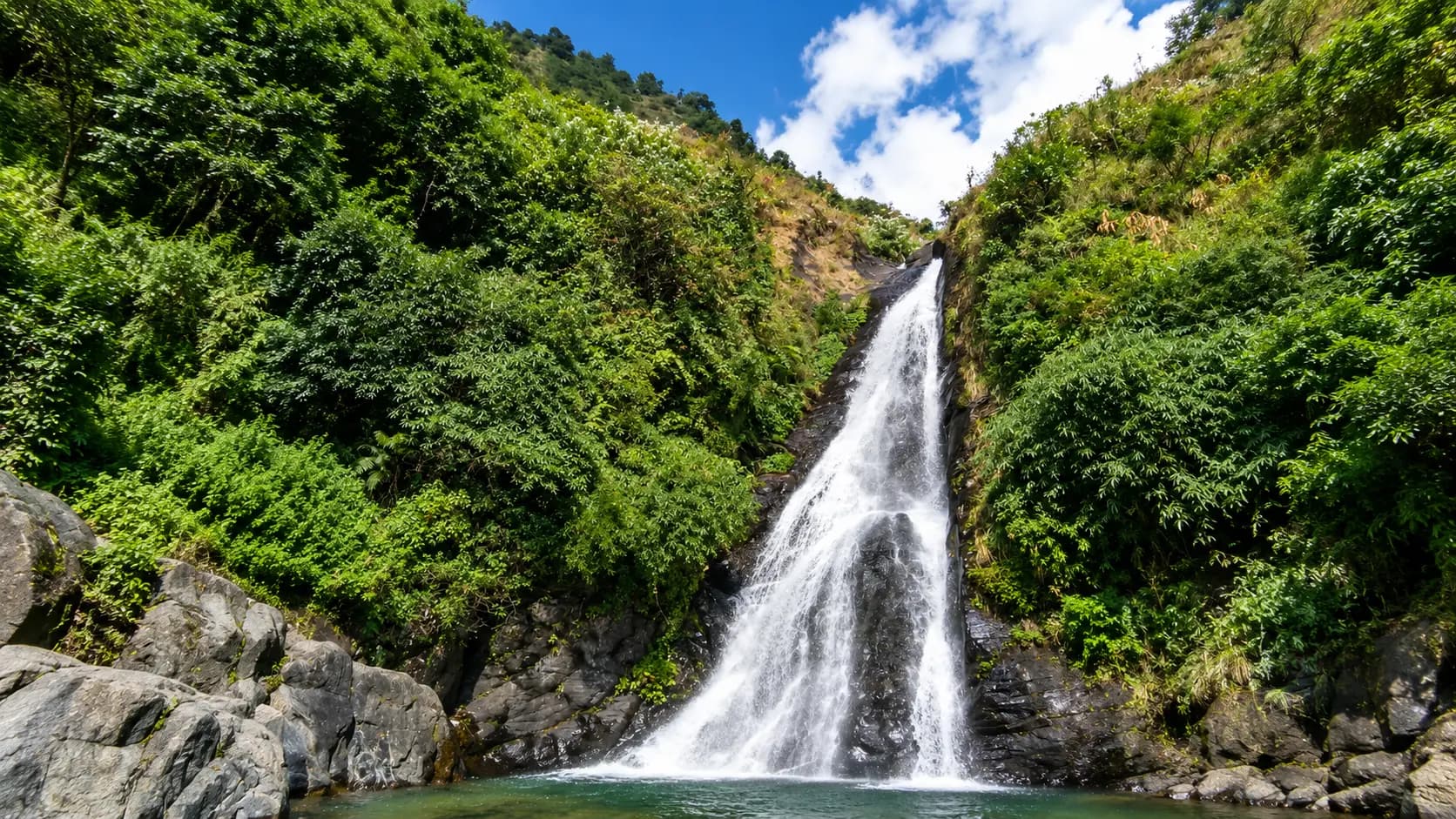
Located a short walk or auto-rickshaw ride from McLeodganj, Bhagsu features an ancient Shiva temple whose sacred natural springs feed twin bathing tanks (kunds), alongside a 20-meter mountain cascade plunging down granite rock faces of the Dhauladhars, topped by the iconic, bohemian Shiva Cafe.
4. Dharamkot Village (Approx. 2 km North)
Perched higher up the mountain ridge at an elevation of 2,150 meters, Dharamkot is a tranquil, vehicle-free village renowned as the yoga and meditation haven of the Dhauladhars. Its pine-shaded forest trails are lined with organic vegan bakeries, meditation centers (including Tushita Meditation Centre), and pottery studios.
5. Norbulingka Institute (Approx. 16 km Southeast)
Located in Village Sidhpur near Dharamshala, this magnificent cultural center is dedicated to preserving traditional Tibetan master crafts. Modeled after the Dalai Lama’s summer palace in Lhasa, its serene Japanese-inspired water gardens, koi ponds, and active craft workshops showcase master thangka painters, copper statue casters, and woodcarvers at work.
In pictures
The practical bits
Before you go.
Plan ahead
To maximize your spiritual, cultural, and educational experience while visiting the Tsuglagkhang Complex, review…Explore detailsClose details
To maximize your spiritual, cultural, and educational experience while visiting the Tsuglagkhang Complex, review these four essential preparation blocks covering timing, footwear, security, and teaching registrations:
Mid-Afternoon Timing for Monastic Debates
Plan your visit to arrive at the complex between 13:30 and 14:00 on a weekday (Monday through Friday).Explore detailsClose details
Plan your visit to arrive at the complex between 13:30 and 14:00 on a weekday (Monday through Friday). This allows you to explore the quiet interior prayer hall and circumambulate the Buddha statues before heading down to the central courtyard to witness the dynamic, high-energy monastic philosophical debates that kick off around 14:00.
Pack Light for Frictionless Security Clearance
Streamline your security screening by carrying a minimalist daypack.Explore detailsClose details
Streamline your security screening by carrying a minimalist daypack. Leave lighters, matchboxes, tobacco products, pocket knives, and bulky camera tripods at your hotel, as they will be confiscated by Himachal Pradesh Police and CTA security officers at the gate. Bring only your smartphone, wallet, camera, a light sweater, and a reusable water bottle.
Slip-On Footwear and Warm Socks
Wear comfortable walking shoes that can be easily slipped on and off, as you will need to remove your footwear…Explore detailsClose details
Wear comfortable walking shoes that can be easily slipped on and off, as you will need to remove your footwear before entering the Tsuglagkhang main prayer hall and the Kalachakra Temple. During the cooler autumn, winter, and spring months (October through April), the polished stone terrace flags can feel freezing cold underfoot; wear a pair of thick, warm woolen socks to walk comfortably.
Public Teaching Registration in Advance
If your journey coincides with scheduled public teachings by His Holiness the 14th Dalai Lama, you must register…Explore detailsClose details
If your journey coincides with scheduled public teachings by His Holiness the 14th Dalai Lama, you must register in advance through the official Office of His Holiness the Dalai Lama website (dalailama.com). Physical teaching passes must be collected in person at the branch security office in McLeodganj by presenting your original passport or government ID card. During teaching days, arrive at the complex by 06:00, bring a cushion for seated concrete floors, and carry an FM radio with earphones to tune into live multilingual translations (English, Hindi, Chinese, etc.).
Suggested Half-Day Spiritual & Cultural Itinerary (Approx. 4 Hours)
13:00 - 13:45: The Tibet Museum
Arrive at the complex gate, pass through security, and begin your visit at The Tibet Museum.Explore detailsClose details
Arrive at the complex gate, pass through security, and begin your visit at The Tibet Museum. Spend 45 minutes exploring the photographic archives, listening to oral histories of the 1959 exodus, and watching the short historical documentary screening.
13:45 - 14:15: Tsuglagkhang Main Temple
Remove your shoes and enter the main prayer hall.Explore detailsClose details
Remove your shoes and enter the main prayer hall. Walk clockwise past the golden throne of the Dalai Lama, pay respects before the 9-foot Buddha Shakyamuni, and view the rescued sacred head of Avalokiteshvara. Conclude by viewing the Kalachakra mandala murals in the adjoining hall.
14:15 - 15:30: Monastic Debates in the Courtyard
Move to the courtyard outside Namgyal Monastery.Explore detailsClose details
Move to the courtyard outside Namgyal Monastery. Find a comfortable seat on the stone steps to observe the animated dialectical debates of the monks, listening to the sharp, energetic claps and philosophical challenges.
15:30 - 16:30: The Sacred Kora Walk
Descend to the southwest gate and embark on the 1.5-kilometer Kora trail.Explore detailsClose details
Descend to the southwest gate and embark on the 1.5-kilometer Kora trail. Walk clockwise beneath the cedar and pine canopy, gently spinning the brass prayer wheels, admiring the colorful mani stones, and pausing at the cliffside Nechung shrine.
16:30 - 17:00: Sunset Tea on Temple Road
Complete the Kora loop back to the main gate.Explore detailsClose details
Complete the Kora loop back to the main gate. Stroll up Temple Road to an open-air rooftop Tibetan cafe to enjoy freshly brewed butter tea (po cha) or sweet spiced ginger tea paired with steamed vegetable momos while watching the sun set over the Kangra Valley.
A few things you might wonder
Common questions about visiting Tsuglagkhang Complex (Dalai Lama Temple). Fees, visiting hours and ceremonies are researched details that may change; confirm current arrangements with the operator before travelling.
Can visitors see His Holiness the Dalai Lama at the Tsuglagkhang Complex?
What are the ticket prices and opening hours for the complex?
What is the dress code and etiquette inside the Dalai Lama Temple?
When do the famous monastic debates take place, and can tourists watch?
What is the Kora path, and how do I walk it?
What items are prohibited inside the complex due to security?
Explore more in Dharamshala Mcleodganj
Discover other destinations around this hub
More Hubs in Himachal Pradesh
Continue exploring other travel hubs in this state
Planning a trip to Dharamshala McLeodganj?