Hadimba Temple
Visit Hadimba Temple in Manali. Comprehensive guide to the 16th-century Kathkuni wooden pagoda, Mahabharata history, Dhungri forest, timings, and entry.
Location
Manali Kullu, Himachal Pradesh
A closer look
Your visit, at a glance.
Manali Kullu, Himachal Pradesh
GET TO KNOW THE PLACE
Enshrouded in the misty, twilight calm of the ancient Dhungari deodar forest, approximately two kilometers uphill from the bustling commercial markets of Manali in Himachal…
The story of Hadimba Temple
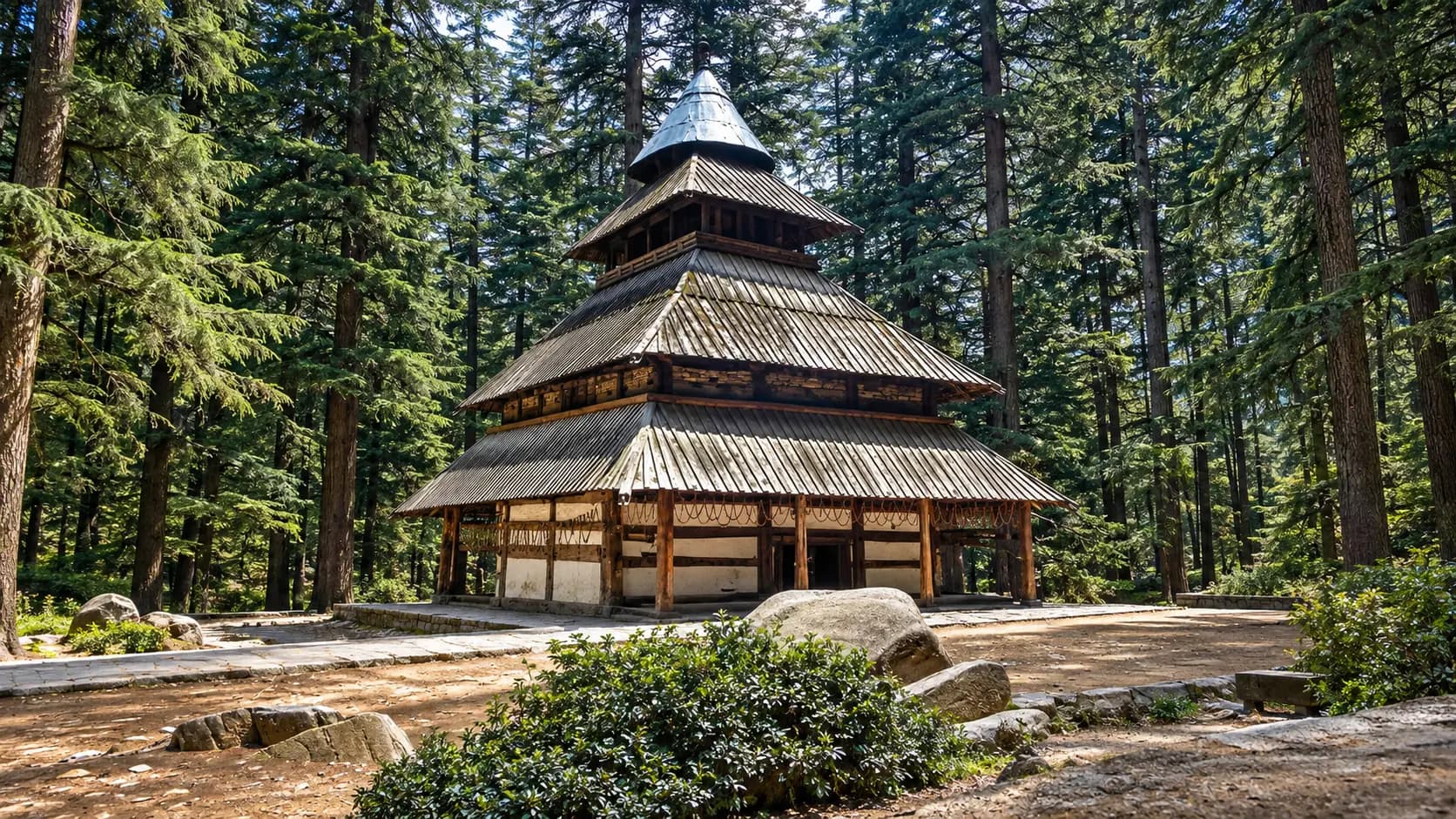
Enshrouded in the misty, twilight calm of the ancient Dhungari deodar forest, approximately two kilometers uphill from the bustling commercial markets of Manali in Himachal Pradesh’s Kullu District, stands one of the most enigmatic and visually captivating architectural treasures of the Western Himalayas: the Hadimba Temple (locally venerated as Dhungari Temple or Hidimba Devi Temple). Rising like a mystical timber pagoda through a canopy of colossal, centuries-old Himalayan cedars (Cedrus deodara), this four-tiered wooden sanctuary dates back to the sixteenth century, representing the zenith of indigenous Kathkuni architecture - a sophisticated seismic-resistant construction tradition native to the Himachal hills.
Unlike conventional Hindu temples dedicated to classical deities of the Vedic pantheon, Hadimba Temple is dedicated to a mythological figure celebrated in the ancient Sanskrit epic Mahabharata: Goddess Hidimba, the demoness-turned-deity (rakshasi) who became the wife of the mighty Pandava prince Bhima and mother to the tragic warrior-hero Ghatotkacha. Revered across the Kullu Valley as a supreme forest guardian and the divine patroness of the royal house of Kullu, Hadimba is worshipped not in the form of a sculpted marble or bronze idol, but through an ancient, sacred rock cave over which the temple was erected. Declared a Centrally Protected Monument of National Importance under the Archaeological Survey of India (ASI, Shimla Circle), Hadimba Temple offers travelers a breathtaking encounter with deep epic lore, Himalayan pagan shamanism, and peerless woodcraft.
Start here. Open a tile for the full details.
Why goRead details
For cultural historians, architecture enthusiasts, and mountain travelers, Hadimba Temple is an unmissable spiritual and sensory highlight of the upper Beas River basin. It anchors Manali's modern identity in thousands of years of epic mythology and unique Himalayan folk religion.
When to visitRead details
Because Hadimba Temple sits at an altitude of 2,060 meters within a sheltered mountain forest, it can be visited comfortably throughout the year, with each season offering a unique visual and cultural charm.
Entry & permissionsRead details
Fees, visiting hours and entry rules may change. Confirm the latest details with the official operator or local authority before travelling.
A clear understanding of the temple’s operational hours, free entry status, and cultural preservation guidelines will ensure a seamless visit.
Admission Charges and Ticketing
- Temple & Forest Admission: Completely Free. There is no entry ticket, gate fee, or toll required to visit Hadimba Temple, worship inside the sanctum, or explore the surrounding Dhungari deodar forest.
- Voluntary Offerings: Devotees wishing to offer traditional puja items (prasad, coconuts, incense, or red ceremonial cloths) can purchase them from authorized stalls outside the gate for ₹30 to ₹100. Voluntary monetary donations can be dropped directly into the locked metal charity boxes (hundi) maintained by the temple management committee.
Operating Hours
Facility / Section | Operating Days | Timings | Operational Notes |
|---|---|---|---|
Hadimba Temple Sanctum | All 7 Days (Monday to Sunday) | 08:00 to 18:00 | Opens for morning aarti; sanctum doors close at 18:00 |
Ghatotkacha Tree Shrine | All 7 Days | Daylight visits recommended; confirm any after-dark access | Open-air forest shrine accessible at all times |
Dhungari Deodar Forest | All 7 Days | Sunrise to Sunset | Forest pathways unlit after dark; walking after dusk discouraged |
Municipal Parking Lot | All 7 Days | 07:30 to 18:30 | Managed by municipal parking attendants |
Permissions, Photography, and Filming Regulations
- Handheld Personal Photography: Photography and amateur videography using smartphones, compact digital cameras, and mirrorless or DSLR cameras are fully permitted throughout the Dhungari forest, the temple exterior courtyard, and around the Ghatotkacha shrine without any fee.
- Sanctum Interior Etiquette: Photography inside the immediate natural rock cave sanctum is officially restricted out of respect for worshippers and ongoing priestly rituals.
- Tripods and Commercial Cinematography: As an ASI Centrally Protected Monument, the use of professional tripods, portable lighting equipment, and commercial video production teams requires prior written permission and commercial fee payment through the Archaeological Survey of India Shimla Circle portal (
asishimlacircle.bih.nic.in). - Drone Operations: Flying unmanned aerial vehicles (drones) over Hadimba Temple, the dense deodar forest canopy, and the adjacent Manali urban settlement is strictly prohibited without prior written clearance from the District Magistrate, Kullu, and local police authorities.
Plan your visitRead details
Hadimba Temple is located in the Dhungari forest within the Manali Sub-Division of Kullu District, approximately 2 kilometers uphill from the Manali Mall Road and the Inter-State Bus Stand. It is easily reachable by foot, local transit, and private vehicles.
Explore the full guide - choose a topic below.
Why visit?
For cultural historians, architecture enthusiasts, and mountain travelers, Hadimba Temple is an unmissable…Explore detailsClose details
For cultural historians, architecture enthusiasts, and mountain travelers, Hadimba Temple is an unmissable spiritual and sensory highlight of the upper Beas River basin. It anchors Manali's modern identity in thousands of years of epic mythology and unique Himalayan folk religion.
A Rare Sanctuary Dedicated to a Mahabharata Forest Deity
Throughout the length and breadth of India, shrines dedicated to characters traditionally cast as demons (asuras or rakshasas) in classical Sanskrit literature are exceedingly rare. In the indigenous spiritual worldview of the Kullu hills, however, moral boundaries are fluid and deeply entwined with the untamed forces of nature.
According to the Adi Parva of the Mahabharata, when the five Pandava brothers and their mother Kunti escaped the burning lacquer palace at Varnavata, they wandered into the wild, trackless forests of the Himalayas. The region of modern Manali was ruled by the forest demon Hidimb and his sister Hidimba. Scenting human intruders, Hidimb ordered his sister to lure them into a trap. Instead, upon beholding the immense strength and noble countenance of Prince Bhima, Hidimba fell deeply in love. Defying her brother, she aided Bhima in a duel in which Hidimb was slain. With Kunti’s blessing, Bhima and Hidimba were wed on the condition that Bhima would depart once a son was born. That son, Ghatotkacha, grew to possess magical aerial powers and later turned the tide of the Kurukshetra war before sacrificing his life. Following Bhima’s departure, Hidimba withdrew into the deepest recesses of the Dhungari woods, performing severe spiritual austerities (tapasya) atop a massive rock until her demonic heritage was burned away, transforming her into a benevolent guardian goddess (devi) whose divine power (shakti) continues to bless the valley.
An Architectural Masterpiece of Indigenous Kathkuni Art
Hadimba Temple is one of the grandest and best-preserved examples of the Kathkuni (literally "wood-and-corner") architectural style. Developed over centuries to withstand the severe earthquakes and heavy winter snowfalls of the seismic-prone Himalayas, Kathkuni buildings are constructed without using a single grain of cement, lime mortar, or metal nails.
The walls are built by laying alternating courses of dressed mountain stone and massive hand-hewn logs of Himalayan deodar cedar. The timbers are interlocked at the corners using wooden pegs and lap joints, creating a flexible, semi-elastic structural matrix that absorbs earthquake ground vibrations through internal friction rather than cracking. Over 470 years since its construction in 1553 CE, and despite withstanding the catastrophic 1905 Kangra earthquake that flattened modern masonry buildings across Himachal Pradesh, Hadimba Temple has stood completely undamaged.
The Four-Tiered Pagoda and Intricate Woodcarvings
The exterior of Hadimba Temple resembles an East Asian pagoda, reflecting the profound cross-cultural aesthetic exchanges that traversed the trans-Himalayan trade routes between India, Tibet, and East Asia.
- The Roof Tiers: The structure rises to an imposing height of roughly 24 meters (80 feet). The lower three tiers are square-shaped timber roofs thatched with overlapping wooden shingles supported by carved wooden brackets. The fourth, uppermost tier is a circular conical canopy clad in brass and copper, capped by an ornate gilded water urn (kalasha) and a shining trident.
- Master Woodcarving: The main wooden entrance doorway is an extraordinary masterpiece of medieval wood sculpture. The lintel, jambs, and door leaves are carved in dense high-relief depicting Lord Ganesha, Durga slaying the buffalo demon Mahishasura, Lord Vishnu seated upon Garuda, celestial dancers (apsaras), the Navagrahas (nine planetary deities), foliate arabesques, and intertwined serpent motifs (nagas).
- Historic Epigraphy: Carved directly into the wooden doorframe is a priceless, authentic Sanskrit inscription in the ancient Sharda script, recording that the temple was commissioned and consecrated in the year 1553 CE (Saka 1475) by Raja Bahadur Singh, the ruler of Kullu, establishing the definitive historical provenance of the sanctuary.
Animal Antler Offerings and Pagan Shamanic Traditions
Adding a striking, primal dimension to the temple’s exterior are the hundreds of bleached horns and antlers of wild ibex, mountain goats, and barking deer fastened across the wooden walls and along the roof eaves. Offered by local villagers, hunters, and pastoral shepherds over centuries, these horns represent tokens of gratitude for safe mountain crossings, successful hunts, and livestock protection. They offer a tangible link to the animistic and shamanic roots of Himalayan religious life, where the spirits of the forest and the sacred animals are honored alongside classical Hindu deities.
The Sacred Atmosphere of Dhungari Deodar Forest
The temple does not exist in isolation; it is deeply rooted in the primordial ecology of the Dhungari Forest. The cedar trees surrounding the shrine are among the oldest, tallest, and most massive living deodars in India, with some specimens measuring over six meters in girth and soaring forty meters into the sky. Walking along the needle-strewn earthen trails beneath this cathedral of ancient trees, as sunlight filters in misty shafts through the deodar canopy, creates an atmosphere of profound stillness, timelessness, and reverence.
What to expect
Visiting Hadimba Temple is an atmospheric, multi-layered experience.Explore detailsClose details
Visiting Hadimba Temple is an atmospheric, multi-layered experience. Understanding the layout of the complex, the sacred customs inside the inner sanctum, and the seasonal festival crowds will ensure a rich and respectful visit.
1. Arrival through the Dhungari Woods
The approach to the temple begins at the outer Dhungari vehicular barrier.
- The Forest Path: Visitors leave the road and walk approximately 150 meters along a stone-flagged pedestrian pathway that winds through the towering deodar grove. The air is cool, fragrant with the scent of cedar resin and pine needles.
- Outer Bazaar & Photo Spots: Outside the forest gate, local vendors sell wooden handicrafts, wool shawls, and religious offerings (prasad, coconuts, and flower garlands). You will also see local shepherds dressed in traditional Kullvi wool attire offering photo opportunities with domesticated Himalayan yaks and fluffy Angora rabbits.
2. The Main Pagoda Courtyard
Emerging from the trees brings you into the wide, stone-paved clearing housing the four-tiered wooden temple.
- Exterior Circumambulation: Before entering, walk clockwise around the exterior perimeter. Examine the ancient Kathkuni timber joints, admire the carved wooden eaves depicting floral garlands, and observe the vast array of ibex horns mounted on the outer timber beams.
- Shoe Removal Protocol: Visitors must remove their shoes and place them on designated wooden racks near the entrance steps before stepping onto the raised wooden threshold. Socks are permitted and advisable during winter.
3. The Inner Sanctum (The Rock Cave)
Stepping through the carved wooden portal brings you into the cool, dark, and incense-perfumed interior of the temple.
- The Sacred Rock: Unlike typical Hindu temples with elevated marble pedestals and carved stone statues, the interior of Hadimba Temple contains no freestanding sculpted idol. The entire temple was constructed directly over an immense natural granite boulder protruding from the mountain floor.
- Charan Paduka: In the center of the dark cavernous floor, dimly illuminated by brass oil lamps and burning camphor, is a natural depression in the rock revered as the footprints of Goddess Hadimba (charan paduka). A small, 3-inch brass idol representing the face of the goddess is placed reverently upon the rock, draped in red silk and marigolds. Devotees bow, touch their foreheads to the stone, and receive sacred ash (vibhuti) or holy water from the resident temple priest.
4. The Ghatotkacha Tree Shrine
Located approximately 70 meters through the deodar trees behind the main temple stands the open-air shrine of Ghatotkacha, Hadimba’s warrior son.
- The Shrine: Unlike his mother's pagoda, Ghatotkacha's shrine has no walls or roof. It consists of an ancient, massive deodar tree trunk surrounded by a raised stone platform.
- Martial Offerings: The tree trunk is hung with dozens of iron tridents, heavy iron battle chains, wooden maces, and antlers offered by local devotees. In Kullvi folk tradition, Ghatotkacha is revered as a fierce, protective warrior deity who wards off malevolent spirits, sickness, and negative energies from the valley.
5. The Annual Dhungri Mela (May Festival)
If you visit in mid-May (the month of Jyeshtha), the quiet forest transforms into the most vibrant folk festival in upper Kullu:
- Birthday Celebration: The Dhungri Mela is a three-day celebration commemorating Goddess Hadimba's birthday.
- Arrival of the Devtas: The highlight of the fair is the ceremonial arrival of wooden palanquins carrying the local deities (devtas) from neighboring villages - including Kartik Swami, Lord Shiva, and local village protector gods. Carried on the shoulders of village devotees dressed in traditional Chola tunics and Kullu caps, the palanquins sway and dance to the wild music of long brass horns (karnals), oboe-like pipes (shehnais), and kettle drums (nagaras). Thousands of local villagers gather on the forested slopes to perform traditional circular Natti dances and enjoy fairground stalls.
Best time to visit
Because Hadimba Temple sits at an altitude of 2,060 meters within a sheltered mountain forest, it can be visited…Explore detailsClose details
Because Hadimba Temple sits at an altitude of 2,060 meters within a sheltered mountain forest, it can be visited comfortably throughout the year, with each season offering a unique visual and cultural charm.
Spring and Summer (March to June) - Ideal Sightseeing & Festival Season
Spring and early summer provide warm, sunlit mountain days and the most vibrant cultural atmosphere.
- Weather & Temperatures: Daytime temperatures range between 18°C and 26°C under clear skies, offering a refreshing mountain respite from the sweltering northern plains.
- Floral Splendor: Fresh green deodar shoots emerge, wild iris flowers bloom along the forest floor, and the weather is ideal for leisurely walks between the temple and Old Manali.
- Dhungri Mela: Visiting in mid-May allows you to witness the authentic spectacle of the Dhungri Mela festival.
- Crowd Levels: May and June witness peak domestic tourist footfalls. To experience the temple in quiet reverence, arrive early in the morning before 08:30 or during the late afternoon after 16:30.
Autumn (September to November) - Crisp Air and Peaceful Serenity
Autumn is universally favored by photographers, spiritual seekers, and international travelers.
- Atmospheric Clarity: Following the monsoon rains, the mountain air is crystal-clear and fragrant. The ancient cedar woods are peaceful, and golden sunlight filters dramatically through the tall trees.
- Temperatures: Crisp, pleasant daytime conditions (15°C - 22°C), dropping to brisk temperatures of 5°C - 10°C after dark, requiring warm woolen shawls or jackets.
Winter (December to February) - The Fairy-Tale Snow Experience
Winter transforms the pagoda temple and the Dhungari forest into an enchanting, cinematic winter postcard.
- Snowfall: Frequent winter snowfalls drape the four pagoda roofs and the surrounding cedar boughs in thick blankets of pristine white snow.
- Photographic Drama: The dark, weathered Kathkuni timber and ancient shingles set against the brilliant white snow create one of the most famous photographic compositions in the Himalayas.
- Conditions: Daytime temperatures hover around 4°C to 12°C under bright sun, plunging to -4°C to 2°C at night. Wear warm woolen socks and boots with good traction, as the stone pathways can be covered in packed snow or frost.
Monsoon (July to August) - Mystic Greenery but Slippery Paths
The southwest monsoon brings heavy rain, lush mosses, and swirling mountain mists.
- Ambiance: The ancient deodar trees become blanketed in emerald-green mosses and hanging ferns; low-lying clouds drift like smoke through the forest canopy, creating a deeply mystical, otherworldly atmosphere.
- Trail Caution: Stone steps become slick with wet moss and pine needles; wear closed-toe walking shoes with solid rubber traction and carry an umbrella.
How to reach
Hadimba Temple is located in the Dhungari forest within the Manali Sub-Division of Kullu District, approximately…Explore detailsClose details
Hadimba Temple is located in the Dhungari forest within the Manali Sub-Division of Kullu District, approximately 2 kilometers uphill from the Manali Mall Road and the Inter-State Bus Stand. It is easily reachable by foot, local transit, and private vehicles.
On Foot from Manali Mall Road (The Scenic Forest Walk)
For most travelers with basic fitness, walking to Hadimba Temple is an enjoyable and refreshing experience:
- Route: From the central Mall Road / Model Town area, walk uphill toward Circuit House Road and follow the clearly signposted Hadimba Temple Road.
- Distance & Time: The walk is approximately 1.8 to 2.0 kilometers uphill along a paved, shaded mountain road lined with deodars and traditional guesthouses. It takes roughly 20 to 25 minutes at an easy walking pace.
By Auto-Rickshaw and Local Taxi
- From Mall Road / Manali Bus Stand: Three-wheeled green auto-rickshaws and local Maruti Alto cabs operate continuously from the main taxi union stand and Mall Road crossings.
- Travel Time & Fare: A direct drive up to the Dhungari parking gate takes roughly 5 to 8 minutes. Confirm the current charge and what it includes with the operator or service provider. Visitor admission, vehicles, parking, activities and accommodation can have separate charges.
By Private Car & Parking Information
- Driving Route: Driving to the temple is straightforward along the paved municipal road. Follow the road signs ascending from Circuit House toward Dhundi/Dhungari.
- Surface Parking: A designated municipal surface parking lot is situated directly outside the outer gate of the Dhungari forest, about 100 meters from the temple. Confirm the current charge and what it includes with the operator or service provider. Visitor admission, vehicles, parking, activities and accommodation can have separate charges. During peak summer weekends (May - June), this lot fills up quickly; arriving before 09:30 is strongly recommended if driving.
Air and Railway Transit Connections
- Bhuntar Airport (Kullu-Manali Airport - KUU): The closest aviation facility, located approximately 50 kilometers south along the four-lane Beas highway. Direct daily scheduled flights (operated by Alliance Air) connect Bhuntar with New Delhi (DEL) and Chandigarh. Confirm the current charge and what it includes with the operator or service provider. Visitor admission, vehicles, parking, activities and accommodation can have separate charges.
- Inter-State Volvo Buses (HRTC): Direct luxury air-conditioned overnight Volvo buses run daily from New Delhi (ISBT Kashmere Gate) and Chandigarh (ISBT Sector 43), arriving directly at the Manali Inter-State Bus Stand (travel time: 10 - 12 hours from Delhi; 7 - 8 hours from Chandigarh).
- Railhead (Chandigarh - CDG): The primary broad-gauge railway junction connecting to Delhi, Mumbai, and Kolkata, located roughly 310 kilometers south (8 - 9 hours by road).
Entry, timings and permissions
Fees, visiting hours and entry rules may change.Explore detailsClose details
Fees, visiting hours and entry rules may change. Confirm the latest details with the official operator or local authority before travelling.
A clear understanding of the temple’s operational hours, free entry status, and cultural preservation guidelines will ensure a seamless visit.
Admission Charges and Ticketing
- Temple & Forest Admission: Completely Free. There is no entry ticket, gate fee, or toll required to visit Hadimba Temple, worship inside the sanctum, or explore the surrounding Dhungari deodar forest.
- Voluntary Offerings: Devotees wishing to offer traditional puja items (prasad, coconuts, incense, or red ceremonial cloths) can purchase them from authorized stalls outside the gate for ₹30 to ₹100. Voluntary monetary donations can be dropped directly into the locked metal charity boxes (hundi) maintained by the temple management committee.
Operating Hours
Facility / Section | Operating Days | Timings | Operational Notes |
|---|---|---|---|
Hadimba Temple Sanctum | All 7 Days (Monday to Sunday) | 08:00 to 18:00 | Opens for morning aarti; sanctum doors close at 18:00 |
Ghatotkacha Tree Shrine | All 7 Days | Daylight visits recommended; confirm any after-dark access | Open-air forest shrine accessible at all times |
Dhungari Deodar Forest | All 7 Days | Sunrise to Sunset | Forest pathways unlit after dark; walking after dusk discouraged |
Municipal Parking Lot | All 7 Days | 07:30 to 18:30 | Managed by municipal parking attendants |
Permissions, Photography, and Filming Regulations
- Handheld Personal Photography: Photography and amateur videography using smartphones, compact digital cameras, and mirrorless or DSLR cameras are fully permitted throughout the Dhungari forest, the temple exterior courtyard, and around the Ghatotkacha shrine without any fee.
- Sanctum Interior Etiquette: Photography inside the immediate natural rock cave sanctum is officially restricted out of respect for worshippers and ongoing priestly rituals.
- Tripods and Commercial Cinematography: As an ASI Centrally Protected Monument, the use of professional tripods, portable lighting equipment, and commercial video production teams requires prior written permission and commercial fee payment through the Archaeological Survey of India Shimla Circle portal (
asishimlacircle.bih.nic.in). - Drone Operations: Flying unmanned aerial vehicles (drones) over Hadimba Temple, the dense deodar forest canopy, and the adjacent Manali urban settlement is strictly prohibited without prior written clearance from the District Magistrate, Kullu, and local police authorities.
Nearby places to consider
Hadimba Temple is centrally positioned in upper Manali, making it effortless to combine your visit with several…Explore detailsClose details
Hadimba Temple is centrally positioned in upper Manali, making it effortless to combine your visit with several of the region’s most captivating cultural and outdoor attractions:
1. Old Manali Village & Manu Temple (Approx. 1.2 km Northwest)
Located a short 15-minute walk downhill from the Dhungari forest, Old Manali presents a stark, delightful contrast to the bustling modern town. Its narrow, winding stone alleys are lined with traditional Kathkuni timber homes, independent bookshops, clothing boutiques, and laid-back music cafes. At the top of the village stands the historic Manu Temple, the only temple in India dedicated to the ancient sage Manu, who is revered as the progenitor of mankind according to Hindu scriptures.
2. Museum of Himachal Culture & Folk Art (Approx. 150 m North)
Situated just outside the Hadimba Temple complex in Dhungari, this small, well-curated private museum showcases the traditional material culture of Himachal Pradesh. Exhibits include miniature replicas of ancient wooden temples and forts, traditional handloom costumes, musical instruments, wooden agricultural tools, antique brass masks of village devtas (mohras), and vintage photographs.
3. Vashisht Hot Springs & Temples (Approx. 4.5 km Northeast)
Located across the roaring Beas River on a steep eastern hillside, the village of Vashisht is famous for its natural geothermal sulfur springs. The hot mineral waters are channeled into stone bathing tanks inside the ancient stone Vashisht Temple, dedicated to the Vedic sage Vashistha. Nearby stands the carved wooden temple of Lord Rama.
4. Solang Valley (Approx. 13 km North)
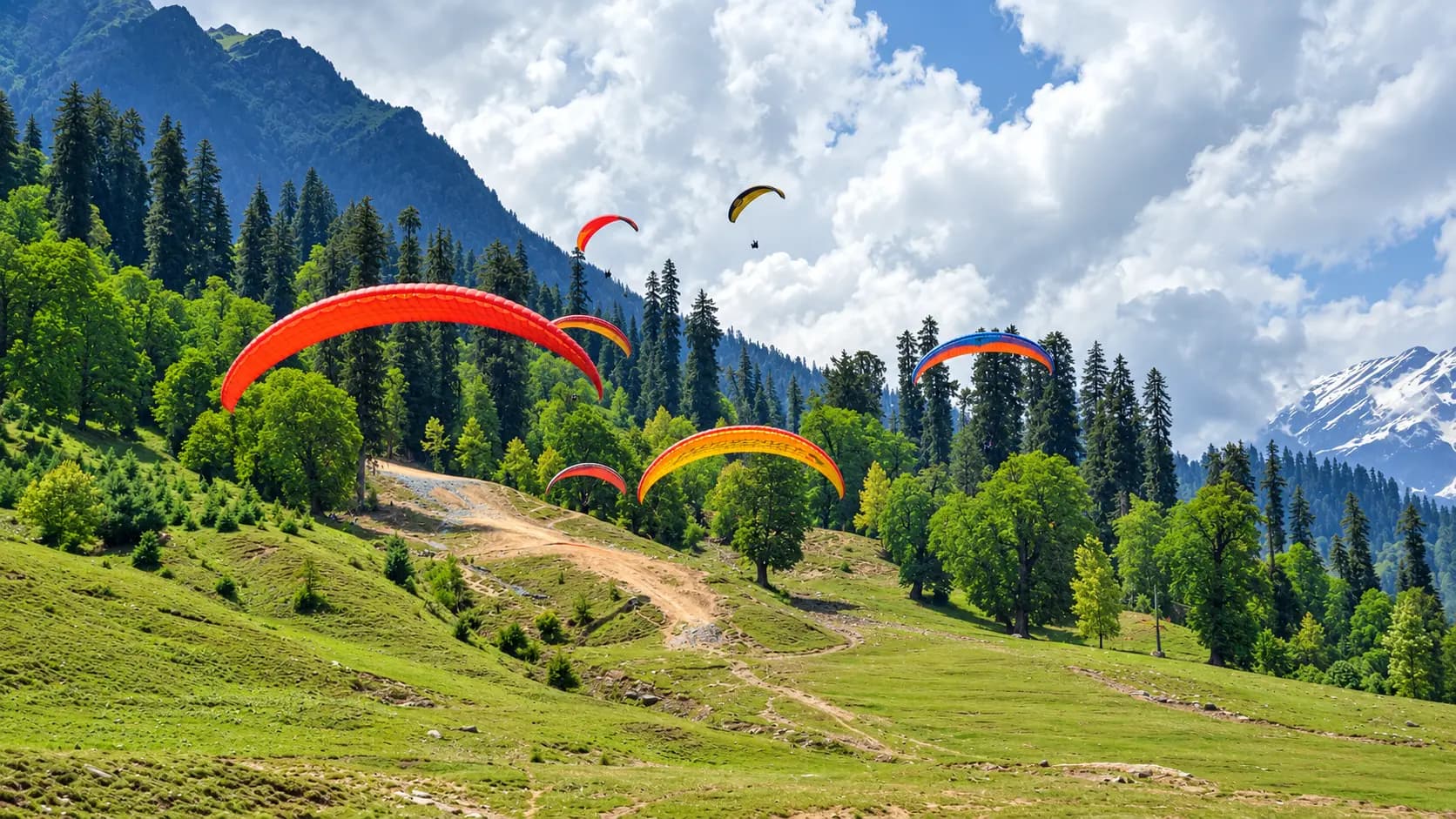
The premier outdoor adventure center of the Kullu region, nestled beneath snow-capped peaks. Offers paragliding, zorbing, ATV quad biking, a scenic cable car ropeway ascending to 3,200 meters, and Himachal’s primary public ski and snowboarding slopes during the winter months.
5. Van Vihar National Park (Approx. 2 km Southeast)
Located along the banks of the Beas River right next to Manali Mall Road, Van Vihar is a manicured municipal cedar park. Featuring towering deodar trees, paved walking paths, an artificial boating pond, and stone benches overlooking the rushing rapids of the Beas River, it is an ideal spot for a peaceful afternoon family picnic.
In pictures
The practical bits
Before you go.
Plan ahead
To maximize your spiritual and cultural experience at Hadimba Temple while avoiding tourist congestion, review…Explore detailsClose details
To maximize your spiritual and cultural experience at Hadimba Temple while avoiding tourist congestion, review these four essential preparation blocks covering timing, footwear, local crafts, and respectful conduct:
Early Morning or Late Afternoon Arrival
Plan your visit to arrive at the temple between 08:00 and 09:00 in the morning, or after 16:30 in the late…Explore detailsClose details
Plan your visit to arrive at the temple between 08:00 and 09:00 in the morning, or after 16:30 in the late afternoon. The temple is one of the most popular tourist sites in Manali, and large tour bus groups frequently crowd the courtyard between 10:30 and 15:30. Arriving early guarantees tranquil forest serenity, birdsong echoing through the deodars, soft morning light filtering through the trees, and zero queuing to enter the sacred cave sanctum.
Footwear Strategy and Warm Socks
Wear comfortable, supportive walking shoes for the uphill approach and forested stone pathways.Explore detailsClose details
Wear comfortable, supportive walking shoes for the uphill approach and forested stone pathways. Because you will need to remove your footwear before stepping onto the raised wooden entrance deck of the temple, wear slip-on shoes or sandals that are easy to remove and put back on. During the cold autumn and winter months (October through March), the stone and wood deck can feel freezing underfoot; wear a pair of thick woolen socks to walk comfortably.
Combine with a Walk to Old Manali
Instead of hiring a taxi back down to Mall Road, follow the scenic, signposted walking trail that leads from the…Explore detailsClose details
Instead of hiring a taxi back down to Mall Road, follow the scenic, signposted walking trail that leads from the western corner of the Dhungari forest directly into Old Manali (a gentle 10 to 15-minute downhill walk). This tranquil route winds through traditional apple orchards and rustic Kathkuni village houses, bringing you straight into Old Manali’s charming bohemian cafe quarter.
Respectful Sanctuary Demeanor
Remember that Hadimba Temple is an active, sacred place of worship for the local communities of the Kullu Valley.Explore detailsClose details
Remember that Hadimba Temple is an active, sacred place of worship for the local communities of the Kullu Valley. Maintain quiet, respectful voices inside the temple courtyard and prayer cave. Never touch the ancient carved wooden lintels with dirty hands or climb onto the fragile animal antlers mounted on the walls. When walking around the temple or sacred trees, always circumambulate in a clockwise direction (pradakshina).
Suggested 3-Hour Heritage & Forest Circuit
08:30 - 09:00: Forest Walk to Hadimba Temple
Walk uphill from Manali Mall Road through Circuit House Road and enter the Dhungari deodar forest.Explore detailsClose details
Walk uphill from Manali Mall Road through Circuit House Road and enter the Dhungari deodar forest. Enjoy the crisp morning air and the scent of cedar pine needles.
09:00 - 09:45: Temple Exploration & Worship
Remove your shoes and step into the temple.Explore detailsClose details
Remove your shoes and step into the temple. Pay respects before the sacred rock cave and the footprints of Goddess Hadimba. Step outside to examine the Kathkuni architecture, the Sharda script Sanskrit inscription from 1553 CE, and the carved mythological deities on the entrance portal.
09:45 - 10:15: Ghatotkacha Shrine & Forest Stroll
Check the current visiting hours and permitted access with the site operator before departure; ceremonies…Explore detailsClose details
Check the current visiting hours and permitted access with the site operator before departure; ceremonies, closures and visitor sessions can affect access. Marvel at the ancient deodar trunks, observe the martial tridents and antlers, and enjoy peaceful meditation beneath the trees.
10:15 - 10:45: Stroll to Old Manali Village
Follow the shaded path winding westward through apple orchards into Old Manali.Explore detailsClose details
Follow the shaded path winding westward through apple orchards into Old Manali. Walk past traditional stone-and-wood Himachali homes with carved balconies and slate roofs.
10:45 - 11:30: Artisanal Coffee & Tibetan Bakery
Check the current visiting hours and permitted access with the site operator before departure; ceremonies…Explore detailsClose details
Check the current visiting hours and permitted access with the site operator before departure; ceremonies, closures and visitor sessions can affect access. Enjoy a freshly brewed French press coffee, hot cinnamon roll, or authentic Tibetan thukpa while reflecting on the morning's cultural discoveries.
A few things you might wonder
Common questions about visiting Hadimba Temple. Fees, visiting hours and ceremonies are researched details that may change; confirm current arrangements with the operator before travelling.
Who is Goddess Hadimba, and what is her connection to the Mahabharata?
When was Hadimba Temple built, and who commissioned it?
What is unique about the temple's architecture?
Is there an entry fee to visit Hadimba Temple?
What are the visiting hours for the temple?
What is the Dhungri Mela festival?
Explore more in Manali Kullu
Discover other destinations around this hub
More Hubs in Himachal Pradesh
Continue exploring other travel hubs in this state
Planning a trip to Manali Kullu?