Bhagsu Waterfall
Visit Bhagsu Waterfall near McLeodganj, Dharamshala. Comprehensive guide to the hiking trail, Bhagsunag Temple, Shiva Cafe, timings, and mountain safety.
Location
Dharamshala McLeodganj, Himachal Pradesh
A closer look
Your visit, at a glance.
Dharamshala McLeodganj, Himachal Pradesh
GET TO KNOW THE PLACE
Nestled on the rugged southern slopes of the Dhauladhar Range in the upper reaches of the Kangra Valley, Bhagsu Waterfall (locally celebrated as Bhagsunag Falls) is one of the…
The story of Bhagsu Waterfall
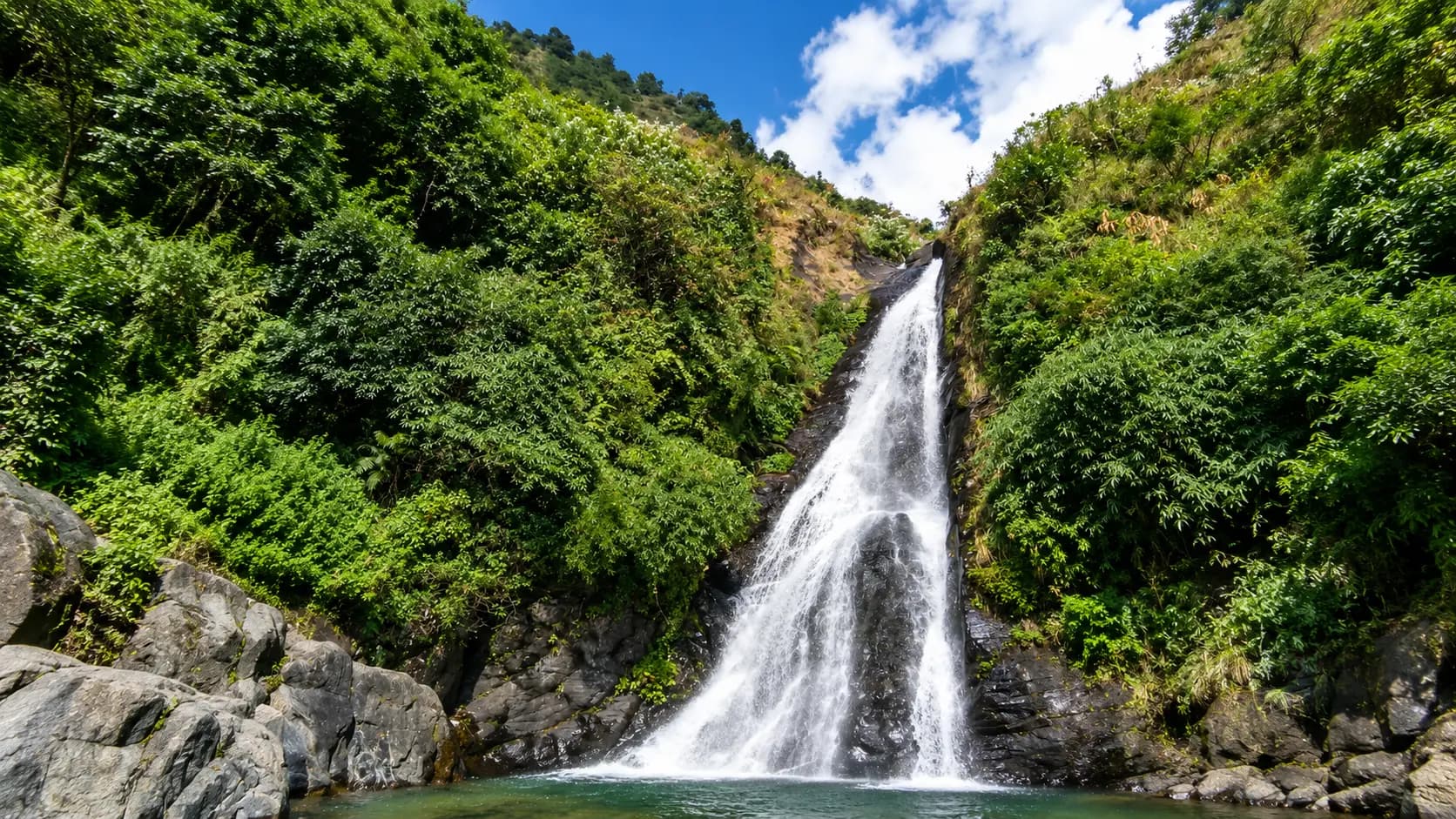
Nestled on the rugged southern slopes of the Dhauladhar Range in the upper reaches of the Kangra Valley, Bhagsu Waterfall (locally celebrated as Bhagsunag Falls) is one of the most iconic natural landmarks of the Dharamshala-McLeodganj region. Tumbling approximately 20 meters (65 feet) down a sheer face of jagged dark grey granite, this perennial mountain cataract is fed by pristine glacial meltwaters and high-altitude natural springs originating high in the craggy cirques beneath the Triund ridge and the towering Indrahar Pass. At an elevation of approximately 2,050 meters above sea level, the waterfall offers an invigorating mountain excursion that perfectly captures the dramatic verticality of Himachal Pradesh’s Outer Himalayas.
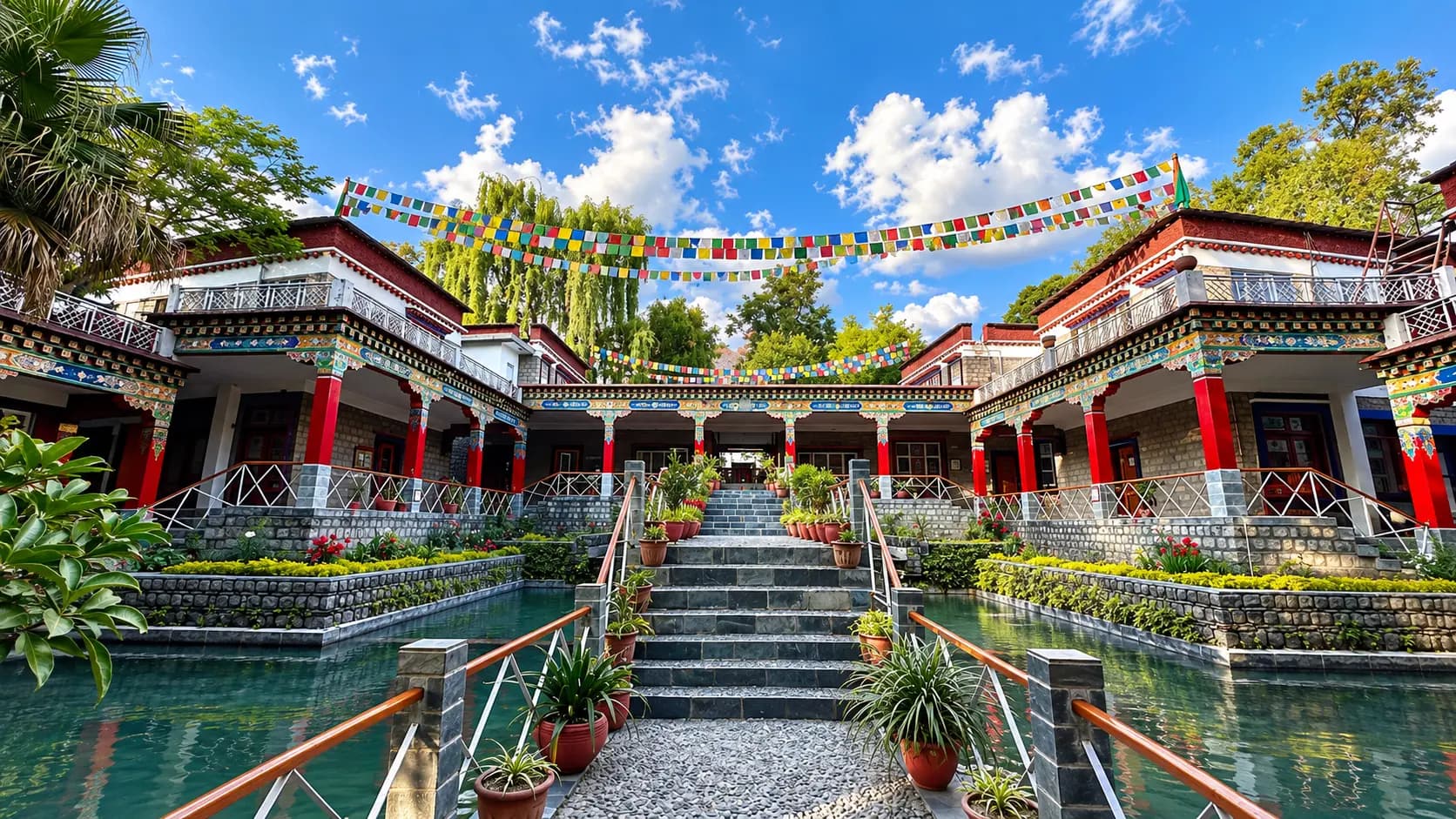
What elevates Bhagsu Waterfall beyond a simple roadside nature spot is its deep integration into the local spiritual, historical, and bohemian fabric of the upper Dharamshala hill tract. The journey begins at the ancient Bhagsunath Temple - a revered shrine dedicated to Lord Shiva whose sacred twin water tanks (kunds) have refreshed pilgrims, wandering saddhus, and Himalayan shepherds for over five centuries. From the temple courtyard, a scenic stone-flagged pedestrian pathway winds for roughly one kilometer along the contoured valley wall, passing village slate-roofed cottages, terraced corn patches, vibrant prayer flag arrays, and breezy hillside tea shacks before arriving at the thundering cascade. Continuing higher along rugged stone switchbacks brings hikers to the famous Shiva Cafe, perched on the rocky bluff above the falls, where panoramic views across the sprawling Kangra Valley unfold under the watchful gaze of the snow-streaked Dhauladhar peaks.
Start here. Open a tile for the full details.
Why goRead details
Whether visited as an easy half-day nature walk from McLeodganj, a spiritual pilgrimage stop, or the introductory acclimatization leg of longer treks into the higher Himalayas, Bhagsu Waterfall provides an essential Himalayan experience suitable for diverse travelers.
When to visitRead details
The climate of upper Dharamshala is classified as subtropical highland, transitioning into a temperate mountain climate with distinct seasonal rhythms. Selecting the appropriate season and time of day is crucial for balancing trail safety, water volume, and mountain visibility.
Entry & permissionsRead details
Fees, visiting hours and entry rules may change. Confirm the latest details with the official operator or local authority before travelling.
A clear understanding of site regulations and hours ensures a smooth and hassle-free mountain visit.
Entry Fees and Charges
- Waterfall & Trail Admission: Completely Free. There is no entrance ticket, toll, or municipal entry fee required to access Bhagsu Waterfall, the pedestrian hiking trail, or the surrounding hillsides.
- Bhagsunath Temple Admission: Free. Devotional offerings (prasad, coconuts, or flowers) and bathing in the public kunds are free of charge. Voluntary donations can be placed inside locked temple charity boxes.
- Municipal Vehicle Parking Fees: If arriving by private car or motorbike, paid parking is enforced at the Bhagsu Nag taxi stand lot by the Municipal Corporation Dharamshala (approx. ₹50 - ₹100 for four-wheelers, ₹20 for two-wheelers).
Operating Timings
Location / Activity | Operating Days | Timings | Operational Notes |
|---|---|---|---|
Waterfall Pedestrian Trail | All 7 Days (Monday to Sunday) | 06:00 to 18:30 (Daylight Hours) | Strictly avoid hiking in darkness; path is unlit and lacks safety barriers |
Bhagsunath Temple | All 7 Days | 05:00 to 20:30 | Morning and evening aarti ceremonies open to visitors |
Trailside Cafes & Refreshment Stalls | Daily | 08:00 to 18:30 | Select cafes operate later in peak summer months |
Shiva Cafe (Upper Plateau) | Daily | 09:00 to 19:00 | Closes near sunset; patrons must descend before darkness |
Permissions, Photography, and Drone Regulations
- Handheld Photography: Non-commercial personal photography and amateur videography using smartphones, GoPro cameras, and mirrorless or DSLR cameras are unrestricted throughout the trail, temple plaza, and waterfall area.
- Commercial Shoots: Filming feature movies, music videos, or commercial advertisements requires prior statutory clearance from the District Magistrate, Kangra, and the Municipal Corporation Dharamshala.
- Drone Filming: Operating unmanned aerial vehicles (drones) is strictly regulated across the Dharamshala-McLeodganj tract due to the proximity of the Tibetan Government-in-Exile administrative headquarters and sensitive security installations. Drones flown without formal police and administrative permits are subject to confiscation.
Plan your visitRead details
Bhagsu Waterfall is located in Bhagsu Nag village within the Dharamshala Sub-Division of Kangra District, approximately 2 kilometers east of McLeodganj main square and 9 kilometers uphill from Dharamshala town. It is easily accessible via road, local mountain transit, and scenic walking trails.
Monsoon Flash Flood and Bouldering Caution
Exercise extreme vigilance around the plunge pool and riverbed, particularly during the monsoon months (July to September). Granite boulders near the cataract are perpetually slick with invisible algae films. Never attempt to wade into the swift central current or swim in the pool when water volume is high, as hidden underwater rocks and sudden flash-flood surges from high-elevation cloudbursts pose fatal drowning hazards.
Suggested Half-Day Itinerary: Bhagsu & Dharamkot (Approx. 4 Hours)
Explore the full guide - choose a topic below.
Why visit?
Whether visited as an easy half-day nature walk from McLeodganj, a spiritual pilgrimage stop, or the introductory…Explore detailsClose details
Whether visited as an easy half-day nature walk from McLeodganj, a spiritual pilgrimage stop, or the introductory acclimatization leg of longer treks into the higher Himalayas, Bhagsu Waterfall provides an essential Himalayan experience suitable for diverse travelers.
A Powerful Confluence of Nature and Sacred Mythology
In the folk traditions of the Kangra hills, natural springs and mountain torrents are never merely hydrological phenomena; they are physical manifestations of divine intervention. According to local lore recorded in regional gazetteers, King Bhagsu ruled this mountain realm during an ancient, devastating drought. Desperate to relieve the suffering of his starving subjects, the king climbed to the sacred alpine lake of Nag Dal (situated at 4,100 meters on the Dhauladhar ridge) and surreptitiously collected sanctified water in an animal skin vessel.
Upon discovering the theft, Nag Devta (the Serpent God and divine guardian of the high waters) pursued the monarch across the mountains, confronting him on the cliffs above present-day Bhagsu. A fierce, celestial battle ensued. Mortally wounded by the Serpent God’s arrows, the dying King Bhagsu surrendered the vessel and begged for divine forgiveness, asking only that his name be permanently remembered alongside the deity so that his people might never thirst again. Deeply moved, Lord Shiva manifested on the battlefield, reconciled the king and the serpent, and decreed that perennial springs of pure, life-giving water would flow eternally from the rock face. Today, the waterfall and the temple complex below stand as a living testament to that legendary reconciliation.
Accessible Himalayan Hiking for All Fitness Levels
Unlike the strenuous, high-altitude alpine ascents of Triund or Indrahar Pass, which demand rigorous physical stamina and full-day commitments, the hike to Bhagsu Waterfall is accessible to families, casual walkers, and novice trekkers. Commencing from the Bhagsunag taxi stand, the trail is well paved with local quartzite and slate flags, rising gently through an elevation gain of approximately 200 meters over a distance of one kilometer. Along the route, sturdy stone benches, protective parapet walls along steeper drop-offs, and numerous open-air cafes offering ginger-lemon-honey tea, fresh pomegranate juice, and hot noodle bowls ensure that travelers can pace their ascent comfortably while soaking in the mountain ambiance.
Gateway to Bohemian Mountain Cafe Culture and Upper Trails
Beyond the main viewing platform, Bhagsu Waterfall serves as the springboard for exploring the distinct bohemian and artistic lifestyle that has flourished around upper Bhagsu and neighboring Dharamkot. Following the winding dirt path ascending the steep ridge above the waterfall leads directly to Shiva Cafe, an iconic travelers' institution decorated with psychedelic wall murals, outdoor stone seating, and chillout music that has hosted international backpackers, yoga practitioners, and mountain lovers since the late 1990s. From this elevated vantage point, adventurous hikers can continue upward along rougher goat tracks leading to secluded alpine streams, hidden meditation caves, and connecting forest trails that loop through dense oak woodlands into Dharamkot village.
Spectacular Photographic Vistas
The amphitheater of Bhagsu Waterfall provides extraordinary opportunities for landscape and nature photography. In the early morning, as the sun crests the eastern Dhauladhar ridgelines, low-angled light catches the airborne mist created by the cataract, frequently generating brilliant miniature rainbows across the plunge pool. Looking southward away from the falls, the view opens dramatically across the terraced green spurs of the Kangra foothills, the red-painted roofs of the McLeodganj cantonment, and the vast, sunlit plains of northern Punjab shimmering on the horizon.
What to expect
Visiting Bhagsu Waterfall is a multi-stage walking excursion that transitions from a bustling temple square…Explore detailsClose details
Visiting Bhagsu Waterfall is a multi-stage walking excursion that transitions from a bustling temple square through a scenic valley trail to a natural mountain gorge. Knowing what to expect regarding terrain, physical exertion, and crowd patterns ensures a comfortable outing.
1. The Trailhead and Bhagsunath Temple Complex
The excursion begins at the Bhagsu Nag village square, situated at an elevation of roughly 1,850 meters. The square is anchored by the historic Bhagsunath Temple, a sacred complex whose origin dates back several centuries, though its extant stone and plaster architecture reflects extensive reconstruction following the catastrophic 1905 Kangra earthquake.
- The Sacred Kunds: Flanking the temple entrance are two open stone bathing tanks fed continuously by ice-cold, perennial spring water channeled through ornate carved tiger-head stone spouts (makara-mukhas). Devotees and pilgrims take ritual purification dips in the cold waters before offering worship at the inner sanctum, which houses a revered black stone Shiva Lingam.
- The Gorkha Heritage: A memorial plaque and temple inscriptions commemorate the profound historical association between the shrine and the soldiers of the 1st Gorkha Rifles, whose regimental headquarters was established in Dharamshala in the 1860s. The Gorkha community raised funds to restore the shrine and construct the surrounding masonry bathing tanks, embedding their martial and spiritual legacy into the very foundations of Bhagsu.
2. The Valley Trail to the Waterfall
From the northern corner of the temple plaza, the paved stone footpath to the waterfall branches out along the western flank of the gorge.
- Path Condition: The path spans approximately 1,000 to 1,200 meters. The first 600 meters are relatively broad and paved with smooth slate and stone slabs, featuring mild to moderate inclines. As the trail approaches the falls, it narrows and incorporates several flights of shallow stone steps. Steel handrails are installed along some of the steeper drop-offs facing the tumbling Bhagsunag stream (nallah) below.
- Flora & Scenery: The hillside is clad in dense clusters of Himalayan deodar cedars (Cedrus deodara), ban oak (Quercus leucotrichophora), weeping willows, and blooming rhododendron thickets in early spring. Strings of multi-colored Tibetan Buddhist prayer flags flutter between tree branches, infusing the walk with Himalayan serenity.
- Hillside Cafes & Kiosks: Every few hundred meters, small mountain stalls and open-air cafes offer refreshments, packaged mineral water, roasted corn on the cob (bhutta), fresh fruit juices, and local handicrafts, including wool shawls and silver jewelry.
3. The Main Waterfall Cascade
After approximately 25 to 35 minutes of steady walking, the path terminates at the concrete and stone viewing terrace directly facing the primary cataract.
- The Plunge: The water drops roughly 20 meters down a sheer vertical granite precipice into a shallow, boulder-strewn plunge pool. The volume of water fluctuates dramatically by season: from a modest, crystal-clear curtain in midwinter and early spring to a deafening, frothing torrent during the peak monsoon months of July and August.
- Rock Scrambling Caution: Many visitors climb onto the large boulders surrounding the pool to take photographs or dip their feet in the icy mountain runoff. These granite rocks are constantly coated in fine mist and algae, making them exceptionally slick. Footing requires extreme caution, and stepping into the deeper torrent during high-flow periods is strictly prohibited by local municipal authorities due to dangerous undertows and sudden upstream flash-flood surges.
4. The Upper Trail to Shiva Cafe
For travelers possessing good physical agility and footwear with solid traction, a rougher, unpaved trail ascends from the left side of the waterfall viewing platform.
- The Ascent: The trail climbs steeply over loose gravel, exposed tree roots, and uneven stone switchbacks for approximately 300 meters (a 15-minute heart-pumping climb).
- Shiva Cafe: Situated on an elevated plateau overlooking the waterfall gorge, Shiva Cafe features outdoor boulder seating, painted stone tables, and an expansive mountain view. Travelers gather here to enjoy wood-fired thin-crust pizzas, shakshuka, Israeli platters, freshly brewed mountain coffee, and herbal teas while taking in panoramic vistas of the Dhauladhar crags towering directly behind the cafe.
Best time to visit
The climate of upper Dharamshala is classified as subtropical highland, transitioning into a temperate mountain…Explore detailsClose details
The climate of upper Dharamshala is classified as subtropical highland, transitioning into a temperate mountain climate with distinct seasonal rhythms. Selecting the appropriate season and time of day is crucial for balancing trail safety, water volume, and mountain visibility.
Spring and Summer (March to June) - Ideal Hiking Weather
This period is universally considered the most pleasant and comfortable season for visiting Bhagsu Waterfall.
- Weather & Temperatures: Daytime temperatures in Bhagsu range between a delightful 18°C and 26°C, offering a refreshing mountain respite when the northern Indian plains are sweltering in extreme summer heat. Nights remain cool (12°C - 16°C).
- Trail Conditions: Pathways are completely dry, snow-free, and safe for walking. Early spring (March - April) brings blooming pink and crimson rhododendrons to the hillsides, creating a spectacular floral backdrop.
- Water Volume: Fed by active snowmelt on the higher Dhauladhar peaks, the waterfall maintains a steady, crystal-clear flow that is highly photogenic and safe to approach.
- Crowd Levels: May and June witness peak domestic tourist footfalls. To avoid crowded trails, arrive at the waterfall before 08:30 in the morning or during the late afternoon after 16:00.
Autumn (September to November) - Crisp Skies and Mountain Panoramas
Autumn is favored by seasoned hikers, photographers, and international travelers.
- Atmospheric Clarity: Following the departure of the monsoon rains in early September, the atmosphere is thoroughly cleansed of dust and haze. The Dhauladhar Range stands out in razor-sharp relief against deep azure skies, and views across the Kangra Valley are at their most expansive.
- Temperatures: Daytime conditions are crisp and sunny (15°C - 22°C), dropping to brisk temperatures of 6°C - 10°C after dark, requiring warm woolen layers for late afternoon cafe visits.
Monsoon (July to August) - Dramatic Cascades but Heightened Hazards
The Kangra Valley receives some of the heaviest rainfall in the Indian Himalayas due to the abrupt wall of the Dhauladhar Range intercepting monsoon moisture.
- Visual Drama: The waterfall roars with thunderous power, swelling into a massive, muddy torrent that sends clouds of heavy spray dozens of meters into the air. The surrounding forests turn an intensely vibrant emerald green.
- Safety Warnings: Heavy downpours bring significant natural hazards. The stone steps become dangerously slick with green algae; rockfalls can occur from the steep cliffs above; and mountain streams (nallahs) are prone to sudden, violent flash floods without warning. Visiting during torrential rain is not recommended, and swimming or wading into the pool is strictly prohibited.
Winter (December to February) - Cold and Tranquil
Winter brings cold, crisp weather and peaceful mountain solitude.
- Conditions: Daytime temperatures range from 8°C to 15°C under brilliant sunshine, but plunge rapidly to near freezing (0°C to 4°C) after sunset. While snow rarely accumulates at the waterfall level (2,050 m), the high peaks immediately above are cloaked in deep white snowpacks.
- Trail Caution: Frost and black ice can form on shaded stone steps during early morning hours; wait until the sun warms the trail around 09:30 before commencing your walk. The waterfall’s volume reduces to a slender, icy trickle, but the tranquil, uncrowded atmosphere is deeply restorative.
How to reach
Bhagsu Waterfall is located in Bhagsu Nag village within the Dharamshala Sub-Division of Kangra District…Explore detailsClose details
Bhagsu Waterfall is located in Bhagsu Nag village within the Dharamshala Sub-Division of Kangra District, approximately 2 kilometers east of McLeodganj main square and 9 kilometers uphill from Dharamshala town. It is easily accessible via road, local mountain transit, and scenic walking trails.
By Foot from McLeodganj (The Scenic Walk)
For most travelers staying in McLeodganj, walking to Bhagsu is the most enjoyable and popular approach:
- Route: From the central McLeodganj Chowk (Main Square), take the paved Bhagsu Road eastward. The road winds gently downhill through oak and pine groves, lined with bakeries, travel agencies, and Tibetan souvenir shops.
- Distance & Time: The walk from McLeodganj Chowk to the Bhagsunag Temple square is approximately 1.8 kilometers and takes 20 to 25 minutes at an easy pace. From the temple, continue another 1 km on the dedicated pedestrian path to the waterfall (total walking time: approx. 50 - 60 minutes each way).
By Auto-Rickshaw and Local Taxi
- From McLeodganj: Green-and-yellow three-wheeled auto-rickshaws and local Maruti Alto/Omni cabs operate continuously from the McLeodganj main taxi stand. Confirm the current charge and what it includes with the operator or service provider. Visitor admission, vehicles, parking, activities and accommodation can have separate charges.
- From Dharamshala (Kotwali Bazaar / ISBT): Confirm the current charge and what it includes with the operator or service provider. Visitor admission, vehicles, parking, activities and accommodation can have separate charges. Shared sumos and local buses run frequently between Dharamshala and McLeodganj, where passengers can transfer to an auto for the final 2 km to Bhagsu.
By Air (Kangra Airport, Gaggal - DHM)
- Proximity: Kangra Airport at Gaggal is the closest aviation facility, located approximately 18 kilometers southwest of Bhagsu.
- Airlines & Flights: Regular scheduled turboprop flights (Alliance Air, SpiceJet, and IndiGo) connect Gaggal directly to New Delhi (Indira Gandhi International Airport) and Chandigarh.
- Airport Taxi: Pre-paid and union taxis outside the airport terminal provide direct transfers to McLeodganj and Bhagsu Nag in 45 to 60 minutes depending on mountain traffic.
By Train (Railheads & Narrow-Gauge Heritage)
- Pathankot Junction (PTK) / Pathankot Cantt (PTKC): Located approximately 90 kilometers west in Punjab, Pathankot is the primary broad-gauge railhead connecting to Delhi, Jammu, Amritsar, and Mumbai via premier express trains. From Pathankot, travelers can take a direct state transport bus (HRTC) or hire a private taxi to Dharamshala/McLeodganj (travel time: 3 to 3.5 hours via NH 154).
- Kangra Valley Narrow-Gauge Toy Train: For a leisurely heritage journey, the scenic 762mm narrow-gauge railway connects Pathankot to Kangra Mandir Station (approx. 25 km south of Dharamshala), meandering through breathtaking rural valleys, stone gorges, and tea gardens. From Kangra town, local buses and taxis climb directly to Dharamshala and McLeodganj.
By Inter-State Bus (HRTC and Private Volvo Operators)
The Himachal Road Transport Corporation (HRTC) and numerous private operators run overnight semi-sleeper luxury Volvo and air-conditioned buses connecting major northern cities directly to McLeodganj:
- From New Delhi (Kashmere Gate ISBT): Daily overnight Volvo departures cover the 480-kilometer distance in roughly 10 to 12 hours, arriving directly at the McLeodganj Bus Stand in the early morning.
- From Chandigarh (ISBT Sector 43): Frequent direct daytime and night buses cover the 250 km journey in approximately 6 to 7 hours.
Entry, timings and permissions
Fees, visiting hours and entry rules may change.Explore detailsClose details
Fees, visiting hours and entry rules may change. Confirm the latest details with the official operator or local authority before travelling.
A clear understanding of site regulations and hours ensures a smooth and hassle-free mountain visit.
Entry Fees and Charges
- Waterfall & Trail Admission: Completely Free. There is no entrance ticket, toll, or municipal entry fee required to access Bhagsu Waterfall, the pedestrian hiking trail, or the surrounding hillsides.
- Bhagsunath Temple Admission: Free. Devotional offerings (prasad, coconuts, or flowers) and bathing in the public kunds are free of charge. Voluntary donations can be placed inside locked temple charity boxes.
- Municipal Vehicle Parking Fees: If arriving by private car or motorbike, paid parking is enforced at the Bhagsu Nag taxi stand lot by the Municipal Corporation Dharamshala (approx. ₹50 - ₹100 for four-wheelers, ₹20 for two-wheelers).
Operating Timings
Location / Activity | Operating Days | Timings | Operational Notes |
|---|---|---|---|
Waterfall Pedestrian Trail | All 7 Days (Monday to Sunday) | 06:00 to 18:30 (Daylight Hours) | Strictly avoid hiking in darkness; path is unlit and lacks safety barriers |
Bhagsunath Temple | All 7 Days | 05:00 to 20:30 | Morning and evening aarti ceremonies open to visitors |
Trailside Cafes & Refreshment Stalls | Daily | 08:00 to 18:30 | Select cafes operate later in peak summer months |
Shiva Cafe (Upper Plateau) | Daily | 09:00 to 19:00 | Closes near sunset; patrons must descend before darkness |
Permissions, Photography, and Drone Regulations
- Handheld Photography: Non-commercial personal photography and amateur videography using smartphones, GoPro cameras, and mirrorless or DSLR cameras are unrestricted throughout the trail, temple plaza, and waterfall area.
- Commercial Shoots: Filming feature movies, music videos, or commercial advertisements requires prior statutory clearance from the District Magistrate, Kangra, and the Municipal Corporation Dharamshala.
- Drone Filming: Operating unmanned aerial vehicles (drones) is strictly regulated across the Dharamshala-McLeodganj tract due to the proximity of the Tibetan Government-in-Exile administrative headquarters and sensitive security installations. Drones flown without formal police and administrative permits are subject to confiscation.
Nearby places to consider
The upper Dharamshala ridge offers a wealth of spiritual, cultural, and outdoor adventures that pair effortlessly…Explore detailsClose details
The upper Dharamshala ridge offers a wealth of spiritual, cultural, and outdoor adventures that pair effortlessly with a visit to Bhagsu Waterfall:
1. Dharamkot Village (Approx. 1.5 km Northwest)
Known as Delhi and Mumbai’s favorite Himalayan escape and a global yoga hub, Dharamkot is a tranquil village nestled higher up the ridge at an elevation of 2,150 meters. Completely removed from vehicular traffic, its narrow forest trails are lined with vegetarian cafes, falafel bakeries, meditation centers (including Tushita Meditation Centre and Dhamma Sikhara Vipassana Centre), and pottery studios. A shaded walking trail connects Bhagsu directly to Dharamkot in approximately 30 minutes.
2. Triund Trek (Approx. 8 km Trailhead / Day Hike)
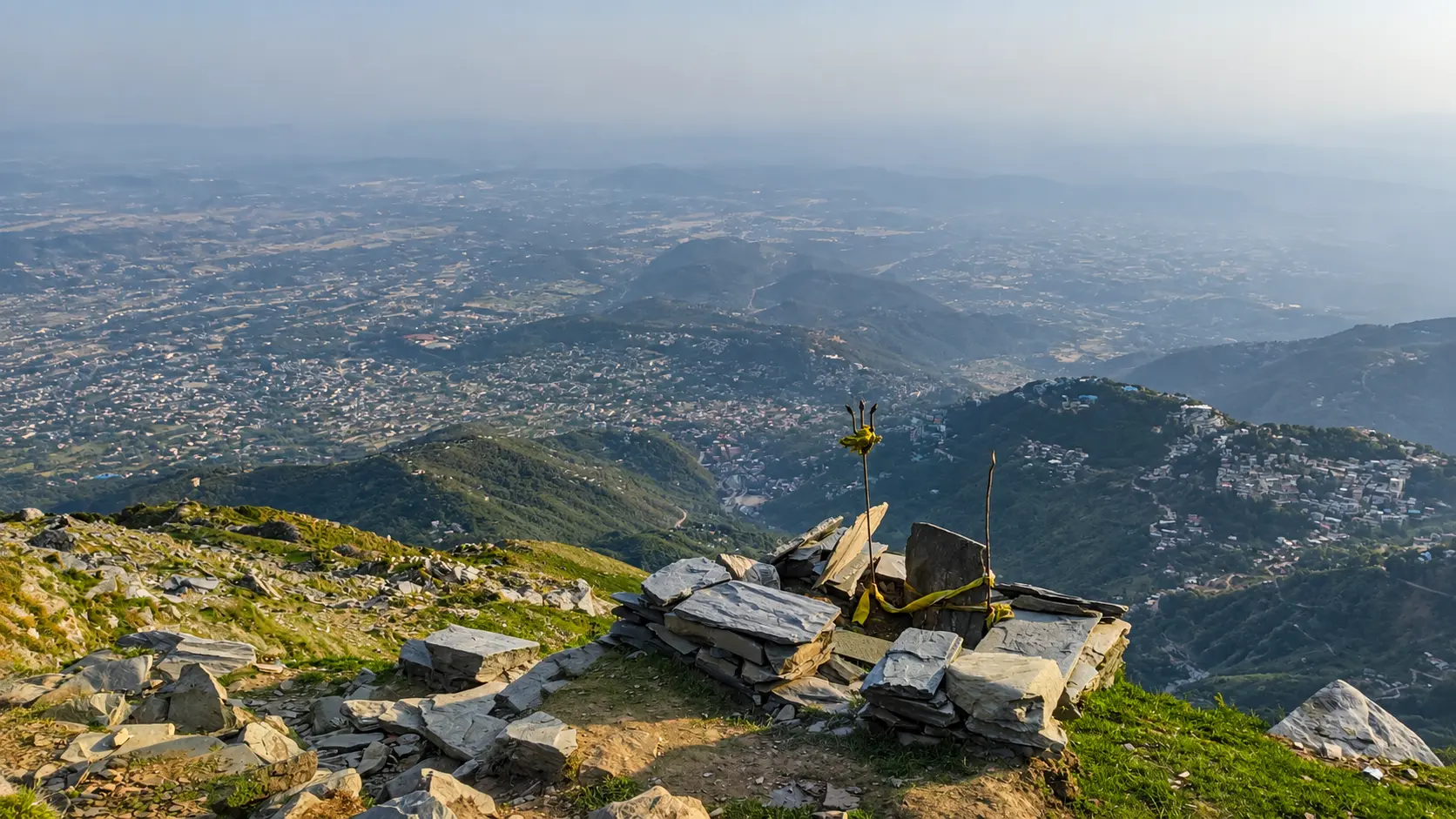
Triund is the crown jewel of Dharamshala trekking. Perched at an elevation of 2,850 meters atop a dramatic ridge directly beneath the towering rock face of the Dhauladhars, this 9-kilometer trail (starting from Galu Devi Temple above Dharamkot) offers one of the most accessible and visually spectacular ridge walks in India. The panoramic vistas of the snow-bound Moon Peak and the sheer drop into the Kangra Valley are unforgettable. A round-trip day hike requires 6 to 8 hours.
3. Tsuglagkhang Complex & Dalai Lama Temple (Approx. 2.5 km West)
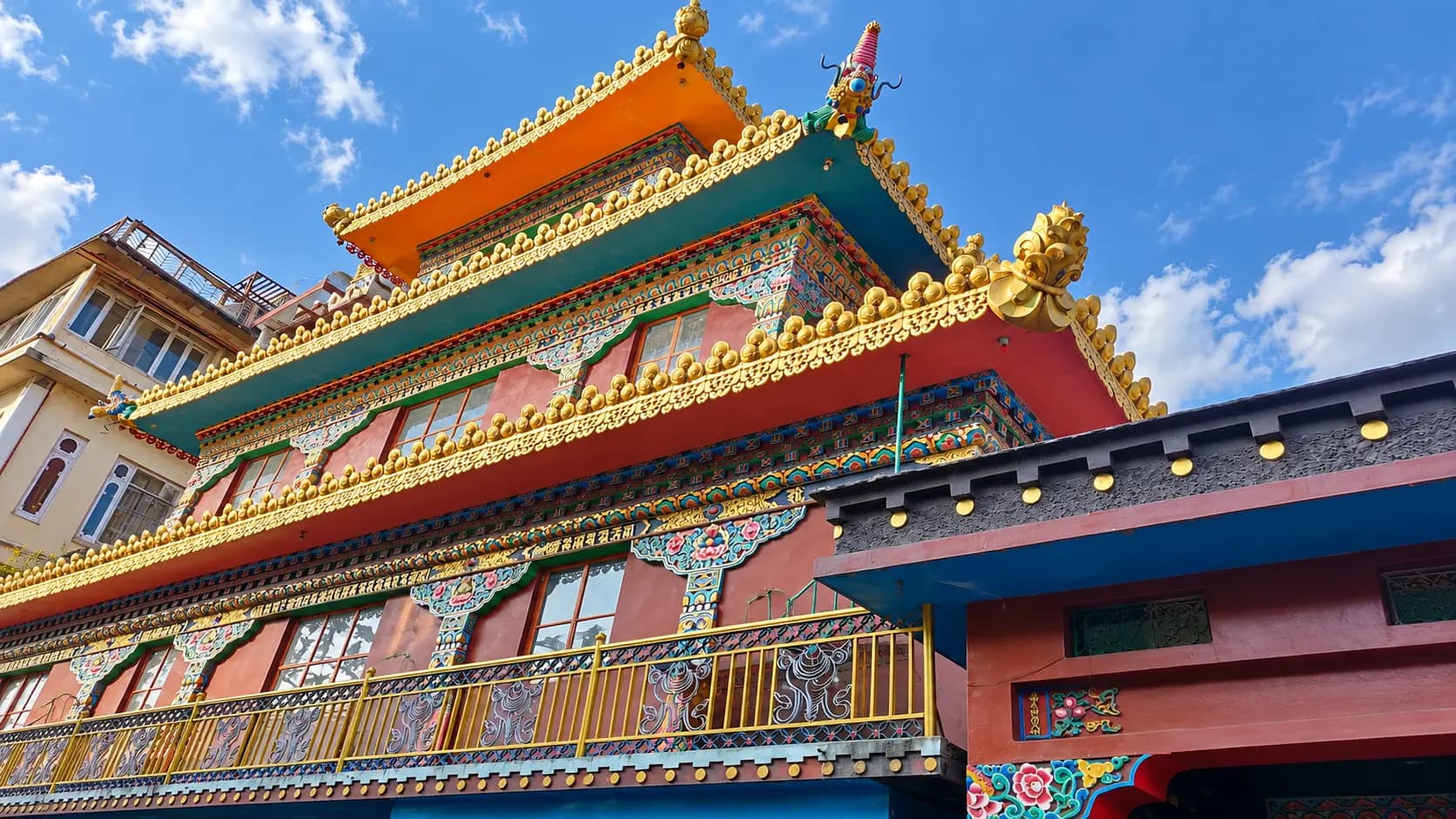
Located in southwest McLeodganj, the Tsuglagkhang Complex is the official spiritual headquarters and residence of His Holiness the 14th Dalai Lama. It houses the magnificent main Tibetan temple (Tsuglagkhang), the Namgyal Monastery, the Tibet Museum, and a sacred outer circumambulation path (Kora) lined with hundreds of prayer wheels overlooking pine-clad valleys.
4. Dal Lake and Naddi Sunset Point (Approx. 4 km Northwest)
Surrounded by dense deodar forests, Dal Lake is a small sacred mountain water body dedicated to Lord Shiva, hosting an annual pilgrimage fair in September. Two kilometers further along the ridge lies Naddi village, famous for offering the most spectacular, uninterrupted sunset vistas of the colossal Dhauladhar wall and the wide plains of Punjab below.
5. St. John in the Wilderness Church (Approx. 3 km Southwest)
Situated between Forsyth Ganj and McLeodganj deep within dense deodar forest, this neo-Gothic stone church was erected by the British in 1852. Dedicated to John the Baptist, it features exquisite nineteenth-century Belgian stained-glass windows, a stone bell tower, and the historic churchyard memorial of Lord Elgin, the Viceroy of India who died in Dharamshala in 1863.
In pictures
The practical bits
Before you go.
Plan ahead
To maximize your enjoyment and ensure complete safety while visiting Bhagsu Waterfall, review these four crucial…Explore detailsClose details
To maximize your enjoyment and ensure complete safety while visiting Bhagsu Waterfall, review these four crucial preparation blocks covering footwear, timing, hydration, and mountain safety:
Appropriate Traction Footwear
Wear sturdy, closed-toe walking shoes or trail runners equipped with deep rubber lug soles.Explore detailsClose details
Wear sturdy, closed-toe walking shoes or trail runners equipped with deep rubber lug soles. The trail consists of polished slate pavers, rough stone steps, and unpaved gravel paths that become treacherous when wet or dusted with fine mountain mud. Avoid smooth-soled fashion sneakers, flip-flops, or open sandals, which are responsible for frequent slips and ankle sprains along the rocky approaches.
Early Morning Timing to Evade Crowds
Plan your hike to arrive at the waterfall between 07:00 and 08:30 in the morning.Explore detailsClose details
Plan your hike to arrive at the waterfall between 07:00 and 08:30 in the morning. Early morning hours offer refreshing mountain air, optimal lighting for photography without harsh glare, active Himalayan birdlife, and complete freedom from the tour bus groups that typically crowd the narrow viewing terrace between 11:00 and 15:30.
Self-Supplied Hydration and Mountain Sun Protection
Although several small tea stalls line the trail, carry a reusable water bottle (at least 1 liter per person) to…Explore detailsClose details
Although several small tea stalls line the trail, carry a reusable water bottle (at least 1 liter per person) to stay hydrated during the uphill climb. The high-altitude Himalayan sun (above 2,000 meters) delivers intense ultraviolet radiation even on mild days; apply high-SPF sunscreen, wear UV-blocking sunglasses, and carry a lightweight sun hat or cap.
Monsoon Flash Flood and Bouldering Caution
Exercise extreme vigilance around the plunge pool and riverbed, particularly during the monsoon months (July to…Explore detailsClose details
Exercise extreme vigilance around the plunge pool and riverbed, particularly during the monsoon months (July to September). Granite boulders near the cataract are perpetually slick with invisible algae films. Never attempt to wade into the swift central current or swim in the pool when water volume is high, as hidden underwater rocks and sudden flash-flood surges from high-elevation cloudbursts pose fatal drowning hazards.
Suggested Half-Day Itinerary: Bhagsu & Dharamkot (Approx. 4 Hours)
07:30 - 08:00: Stroll from McLeodganj to Bhagsu
Walk east from McLeodganj Chowk along Bhagsu Road, enjoying the crisp morning air and glimpses of the rising sun…Explore detailsClose details
Walk east from McLeodganj Chowk along Bhagsu Road, enjoying the crisp morning air and glimpses of the rising sun striking the snow peaks of the Dhauladhars.
08:00 - 08:30: Bhagsunath Temple & Sacred Kunds
Enter the temple courtyard, remove your shoes, and observe the morning prayers at the ancient Shiva shrine.Explore detailsClose details
Enter the temple courtyard, remove your shoes, and observe the morning prayers at the ancient Shiva shrine. Watch fresh spring water pour from the stone tiger heads into the sacred bathing tanks.
08:30 - 09:15: Scenic Hike to Bhagsu Waterfall
Follow the paved trail along the valley contour.Explore detailsClose details
Follow the paved trail along the valley contour. Take your time climbing the stone steps, pause at scenic valley lookouts, and arrive at the base of the waterfall to feel the cold, invigorating spray of the mountain cascade.
09:15 - 10:30: Ascent to Shiva Cafe & Mountain Breakfast
Climb the rocky switchbacks above the waterfall to Shiva Cafe.Explore detailsClose details
Climb the rocky switchbacks above the waterfall to Shiva Cafe. Claim a seat on an outdoor stone terrace, sip a hot ginger-lemon-honey tea or fresh pour-over coffee, and savor freshly prepared breakfast while gazing across the vast Kangra Valley.
10:30 - 11:30: Forest Walk to Dharamkot
Instead of retracing your exact steps downhill, follow the marked mountain trail branching westward through…Explore detailsClose details
Instead of retracing your exact steps downhill, follow the marked mountain trail branching westward through peaceful oak and pine woods into the bohemian village of Dharamkot. Browse its organic cafes, yoga shalas, and quiet residential lanes before heading back down to McLeodganj.
A few things you might wonder
Common questions about visiting Bhagsu Waterfall. Fees, visiting hours and ceremonies are researched details that may change; confirm current arrangements with the operator before travelling.
How long and difficult is the hike to Bhagsu Waterfall?
Is it safe to swim or bath in Bhagsu Waterfall?
Can I visit Bhagsu Waterfall during the monsoon season?
What is the best time of day to visit the waterfall?
How do I reach Shiva Cafe, and is it worth the climb?
Is there any entry fee for Bhagsu Waterfall or the Bhagsunath Temple?
Explore more in Dharamshala Mcleodganj
Discover other destinations around this hub
More Hubs in Himachal Pradesh
Continue exploring other travel hubs in this state
Planning a trip to Dharamshala McLeodganj?