Norbulingka Institute
Visit Norbulingka Institute in Sidhpur, Dharamshala. Comprehensive guide to traditional thangka painting, woodcarving, Losel Doll Museum, tickets, and gardens.
Location
Dharamshala McLeodganj, Himachal Pradesh
A closer look
Your visit, at a glance.
Dharamshala McLeodganj, Himachal Pradesh
GET TO KNOW THE PLACE
In the fertile, lower foothills of the Kangra Valley, just seven kilometers southeast of Dharamshala in the quiet village of Sidhpur, lies an oasis of sublime beauty and cultural…
The story of Norbulingka Institute
In the fertile, lower foothills of the Kangra Valley, just seven kilometers southeast of Dharamshala in the quiet village of Sidhpur, lies an oasis of sublime beauty and cultural preservation: the Norbulingka Institute. Named after the historic Norbulingka - the legendary "Jeweled Park" summer palace of the Dalai Lamas on the outskirts of Lhasa, Tibet - this extraordinary cultural sanctuary was established to ensure that the exquisite artistic, literary, and spiritual traditions of Tibet would not merely survive in exile, but flourish with vibrant, living energy for future generations.
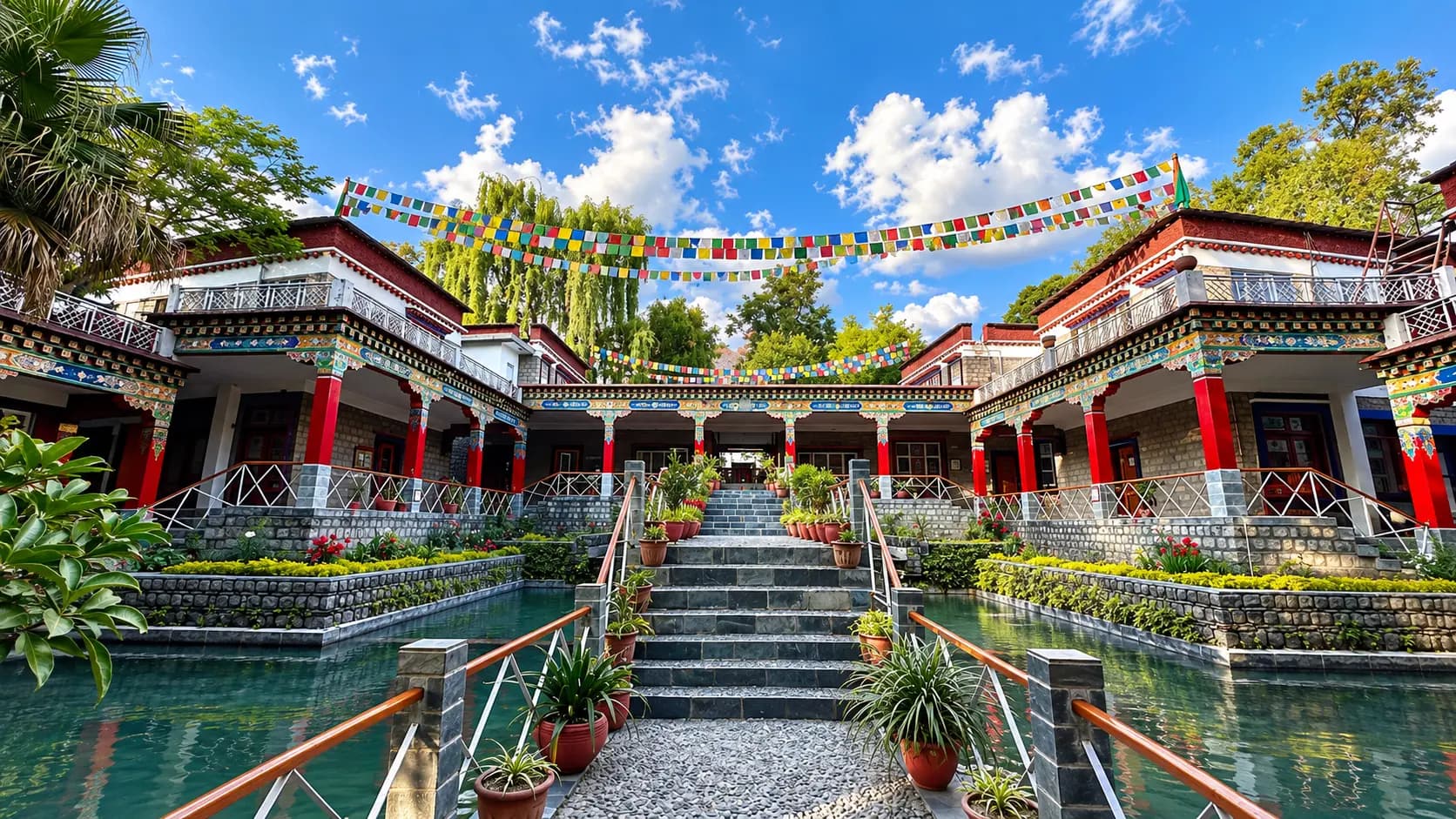
Stepping through the carved wooden gateway of Norbulingka is an immediately transformative experience. Designed through a visionary collaboration between Japanese architect Kimi Sano and Tibetan master craftsmen, the six-acre campus seamlessly merges classical Tibetan architectural proportions with the contemplative serenity of Japanese landscape design. Natural mountain streams (kuls) diverted from the rushing waters of the Dhauladhar Range cascade through hand-chiseled stone channels, tumbling over miniature waterfalls into tranquil ponds teeming with vibrant Japanese koi. Stone footpaths wind beneath weeping willows, native ban oaks, and bamboo groves, connecting open-air courtyards to active artisan workshops where master painters, coppersmiths, woodcarvers, and tailors train apprentices in complex sacred arts that date back over a thousand years. Whether approached as an art academy, a spiritual refuge, or a botanical paradise, Norbulingka stands as one of the most inspiring cultural institutions in Asia.
Start here. Open a tile for the full details.
Why goRead details
While upper Dharamshala (McLeodganj) serves as the political and spiritual epicenter of the Tibetan exile community, Norbulingka Institute is its beating artistic and artisanal heart. Visiting here offers travelers an intimate, behind-the-scenes encounter with centuries-old artistic practices that are rapidly disappearing in modern commercialized societies.
When to visitRead details
Located at an elevation of 1,300 meters in the lower Kangra Valley, Norbulingka Institute experiences a milder, more temperate climate than the high-altitude hill stations of McLeodganj and Triund, making it a comfortable destination throughout the year.
Entry & permissionsRead details
Fees, visiting hours and entry rules may change. Confirm the latest details with the official operator or local authority before travelling.
A clear understanding of the institute's ticketing guidelines, operating schedules, and artisan working hours ensures a rewarding visit.
Admission Charges
Visitor Category | Entry Fee (INR) | Inclusions |
|---|---|---|
Indian Citizens / Domestic Tourists | ₹100 | Full access to water gardens, Deden Tsuglagkhang temple, artisan workshops, Losel Doll Museum, and complimentary guided workshop tour |
Foreign Tourists | ₹200 | Full access to water gardens, Deden Tsuglagkhang temple, artisan workshops, Losel Doll Museum, and complimentary guided workshop tour |
Children (Up to 5 Years) | Free | Valid age proof recommended |
Tibetan Monastics & School Groups | Subsidized / Free | By prior institutional coordination |
Ticketing Note: Tickets are purchased at the entry ticket window immediately inside the main gate. The modest entry fee directly supports the institute's non-profit educational programs and artisan apprentice stipends.
Operating Timings
Facility / Section | Days of Operation | Timings | Operational Notes |
|---|---|---|---|
Institute Gates & Water Gardens | All 7 Days (Monday to Sunday) | 09:00 to 17:30 | Open daily throughout the year |
Deden Tsuglagkhang Temple | All 7 Days | 09:00 to 17:30 | Visitors must remove footwear before entering the temple hall |
Traditional Craft Workshops | Monday to Saturday | 09:00 to 12:3013:30 to 17:30 | Closed on Sundays: Artisans observe Sunday rest; workshops are quiet, though buildings remain open |
Losel Doll Museum | All 7 Days | 09:00 to 17:30 | Photography inside the museum is strictly prohibited |
Norling Cafe & Restaurant | All 7 Days | 09:30 to 18:30 | Serves breakfast, lunch, coffee, and afternoon tea |
Showroom & Gift Shop | All 7 Days | 09:00 to 17:30 | Major credit cards and UPI digital payments accepted |
Permissions, Photography, and Filming Guidelines
- Personal Handheld Photography: Still photography using handheld smartphones, mirrorless bodies, and DSLR cameras is permitted throughout the outdoor water gardens, temple exterior, and artisan workshops without fee.
- Temple Interior Etiquette: Photography inside the Deden Tsuglagkhang is generally permitted for personal use, provided no flash is used and ongoing prayer rituals or meditation sessions are not disturbed.
- Losel Doll Museum Photography Ban: Photography and videography inside the Losel Doll Museum are strictly prohibited to protect the delicate, natural vegetable-dyed fabrics and miniature wax figures from light degradation.
- Tripods and Commercial Video: The use of tripods, commercial video production rigs, fashion portfolio shoots, and documentary filming requires prior written permission from the Norbulingka Institute Administrative Director.
- Drone Filming: Operating drones over the Norbulingka campus and the surrounding Sidhpur valley is strictly illegal under local district administration security regulations.
Plan your visitRead details
Norbulingka Institute is situated in Village Sidhpur, within the Dharamshala Sub-Division of Kangra District. Located approximately 7 kilometers southeast of Dharamshala town and 16 kilometers southeast of McLeodganj, it is easily reachable via private vehicles, taxis, and public transit.
Explore the full guide - choose a topic below.
Why visit?
While upper Dharamshala (McLeodganj) serves as the political and spiritual epicenter of the Tibetan exile…Explore detailsClose details
While upper Dharamshala (McLeodganj) serves as the political and spiritual epicenter of the Tibetan exile community, Norbulingka Institute is its beating artistic and artisanal heart. Visiting here offers travelers an intimate, behind-the-scenes encounter with centuries-old artistic practices that are rapidly disappearing in modern commercialized societies.
A Living Ark of Sacred Himalayan Arts
Following the Chinese invasion of Tibet in 1950 and the widespread destruction of monasteries and cultural artifacts during the Cultural Revolution, centuries of accumulated knowledge in Buddhist iconography, sacred painting, and bronze sculpture were threatened with total extinction. In 1988, under the direct chairmanship of His Holiness the 14th Dalai Lama, and through the tireless vision of Kalon Kelsang Gyatso and Tenzin Choegyal (Ngari Rinpoche), Norbulingka was founded as a self-sustaining trust to rescue and revive these traditions.
Unlike static museums where historical artifacts sit behind glass display cases, Norbulingka is a dynamic, functioning guild. Here, master artisans - many of whom escaped Tibet carrying memories of ancient lineage techniques - pass down their sacred knowledge to young Tibetan apprentices through rigorous, multi-year training programs lasting from six to thirteen years. Visitors are welcomed into the workshops, where they can stand alongside artisans, observe the meticulous preparation of natural mineral pigments, watch the shaping of glowing sheets of copper, and witness the birth of sacred art with their own eyes.
Architectural Masterpiece Blending Tibetan and Japanese Aesthetics
The physical setting of Norbulingka is widely recognized by architectural scholars as a triumph of contextual design. Rather than constructing a monolithic concrete institutional complex, the founders engaged Japanese architect Kimi Sano to create a decentralized village campus harmoniously integrated into the natural mountain topography.
The buildings feature traditional Tibetan mud-plastered stone masonry, timber post-and-lintel framing, hand-painted wooden eaves (sheshing) decorated with lotus and geometric motifs, and gently sloping slate roofs. Intertwined with this Himalayan vernacular is the Zen-like tranquility of a Japanese water garden: moss-covered stone lanterns, arched wooden footbridges, weeping willows trailing into clear watercourses, and bubbling streams whose gentle acoustic rhythm provides a soothing acoustic backdrop to contemplation and study.
The Spiritual Magnificence of Deden Tsuglagkhang
At the highest point of the campus axis rises the institute's principal temple: the Deden Tsuglagkhang ("Seat of Happiness"). Consecrated in 1995, this sacred hall is an awe-inspiring showcase of contemporary Tibetan craftsmanship. Dominating the main altar is a colossal, 14-foot gilded copper statue of Shakyamuni Buddha, hand-beaten and assembled by master sculptor Penpa Dorjee and his team over a two-year period.
The interior walls are adorned with monumental frescoes executed using classical mineral pigments, illustrating the lives of the Fourteen Dalai Lamas, the Great Disciples of Buddha, and episodes from the Jataka tales. Suspended from the high timber ceiling are monumental hand-stitched silk appliqué thangkas measuring over thirty feet in height, their rich brocades shimmering in the soft butter-lamp glow. The temple remains an active sanctuary where resident scholars and artists gather for morning prayers and meditation.
Authentic Artisan Goods and Ethical Sustainable Commerce
For travelers seeking authentic Himalayan handicrafts, textiles, and sacred art, Norbulingka provides a certified, ethical alternative to mass-produced commercial souvenirs. Every item sold in the on-site Norbulingka Arts Centre Showroom - from miniature hand-painted thangkas and silk scarves to hand-carved Tibetan folding tables (choktses) and cast bronze incense burners - is handcrafted on-site by master artisans and certified apprentices. All proceeds generated from sales are reinvested directly into the institute to fund artisan salaries, health insurance, free vocational training, and educational scholarships for the Tibetan refugee community.
What to expect
Visiting Norbulingka Institute is a multi-sensory walking journey that combines garden contemplation, educational…Explore detailsClose details
Visiting Norbulingka Institute is a multi-sensory walking journey that combines garden contemplation, educational workshop exploration, spiritual reflection, and museum appreciation. Because the campus is compact, pedestrian-only, and thoughtfully organized along shaded stone pathways, exploring the complex is exceptionally comfortable.
1. Entrance Gate and the Japanese Water Gardens
Upon entering through the main gate, visitors leave the quiet rural lanes of Sidhpur and step into an enclosed sanctuary of lush greenery and moving water.
- The Water Channels: Natural mountain water diverted from high-altitude Dhauladhar snowmelt streams flows through an intricate network of stone-lined channels (kuls), passing under arched slate bridges and feeding multiple reflecting pools populated by colorful Japanese koi.
- Flora & Atmosphere: The gardens are planted with indigenous and exotic botanical species, including Japanese maples, weeping willows, giant bamboo, flowering azaleas, hydrangeas, and fragrant gardenias. Stone benches positioned beneath shaded arbors invite visitors to sit, listen to the water, and read or sketch in complete peace.
2. The Traditional Craft Workshops
Flanking the central watercourse are the open-sided pavilions housing the various specialized artisan divisions of the Centre for Arts. Visitors are permitted to enter quietly, watch the artisans work, and ask questions through resident guides:
- Thangka Painting Workshop: Here, apprentice painters sit on low cushions before vertical wooden easels, holding fine sable-hair brushes. Creating a single traditional thangka requires up to a full year of concentrated labor. You will see artisans grinding raw lapis lazuli, malachite, cinnabar, and gold leaf into fine mineral powders, mixing them with animal hide glue, and applying them layer by layer upon cotton canvases primed with chalk and gesso. Every line, hand gesture (mudra), and eye proportion follows strict geometric grid canons (iconometry) codified in ancient Buddhist scriptures.
- Statue Making & Metal Repoussé: In this resonant workshop, coppersmiths use wooden mallets, steel chisels, and pitch-filled iron bowls to hammer flat sheets of pure copper into complex three-dimensional forms representing Buddhist deities, lotus petals, and sacred crowns. Completed statues are hand-chiseled with minute ornamentation, assembled with silver solder, and finished using the traditional 24-karat gold mercury fire-gilding technique.
- Woodcarving & Joinery: Woodworkers shape fragrant local cedar (deodar) and teak into ornate altar tables (choktses), carved throne backs, and decorative temple pillars. True to traditional Tibetan joinery, furniture is assembled using interlocking mortise-and-tenon joints without a single steel nail or screw, ensuring pieces can withstand shifting mountain humidity without cracking.
- Silk Appliqué & Tailoring: In this quiet textile studio, master tailors cut hundreds of individual pieces of colored Chinese and Indian silk brocades, wrap them over fine horsetail hair or cotton cord, and hand-stitch them together with golden thread to produce monumental fabric thangkas and monastic vestments.
3. Deden Tsuglagkhang (The Main Temple)
At the head of the central garden walkway stands the main temple, approached via a wide stone terrace flanked by fluttering prayer flags.
- The Sanctum: Remove your footwear outside and step onto the polished timber floor. The 14-foot gilded copper Buddha sits in serene meditation on a high carved lion throne. Flanking the Buddha are images of Avalokiteshvara (the Bodhisattva of Compassion) and Manjushri (the Bodhisattva of Wisdom).
- Wall Murals: The walls are decorated with vibrant frescoes painted directly onto lime plaster by master artist Sonam Dhondup, depicting the spiritual lineage of the Dalai Lamas. A serene, quiet atmosphere prevails, enhanced by the subtle scent of juniper and sandalwood incense.
4. The Losel Doll Museum
Located adjacent to the temple, this world-class cultural museum houses a unique and poignant ethnological collection:
- The Collection: Over 150 exquisitely detailed miniature diorama dolls, hand-crafted by the Losel Craft Project (initiated by monks of Drepung Loseling Monastery in Karnataka and brought to Norbulingka).
- Cultural Representation: Standing approximately 30 to 45 centimeters tall, each doll wears authentic, miniature hand-stitched clothing made of authentic silk, wool, fur, and leather, adorned with tiny real turquoise, coral, and silver jewelry. The dioramas represent the diverse regional costumes, nomadic tribes, aristocratic court attire, folk dancers, and monastic ceremonies of Tibet’s historical regions (U-Tsang, Amdo, and Kham) as they existed before 1959.
5. Norling Cafe and Showroom
Conclude your tour by visiting the public hospitality and retail facilities:
- Norling Cafe: An open-air garden cafe set amidst flowering trees and stone water channels, offering organic vegetarian salads, artisanal pizzas, Tibetan momos, homemade cakes, fresh mountain herbal teas, and espresso drinks.
- The Showroom: Two spacious floors showcasing the finished masterpieces of the workshops. Visitors can browse museum-grade framed thangkas, bronze statues, hand-carved furniture, silk cushion covers, organic teas, and printed stationery. Shipping services are available for large art pieces.
Best time to visit
Located at an elevation of 1,300 meters in the lower Kangra Valley, Norbulingka Institute experiences a milder…Explore detailsClose details
Located at an elevation of 1,300 meters in the lower Kangra Valley, Norbulingka Institute experiences a milder, more temperate climate than the high-altitude hill stations of McLeodganj and Triund, making it a comfortable destination throughout the year.
Spring and Summer (March to June) - Ideal Garden Season
Spring and early summer provide the most vibrant and pleasant conditions for strolling through the outdoor water gardens.
- Weather: Daytime temperatures range between 20°C and 28°C under brilliant sunshine, with mild, refreshing evenings (14°C - 18°C).
- Botanical Blooms: The gardens burst into life with blooming azaleas, hydrangeas, wisteria, and flowering fruit trees, while the mountain stream channels flow crystal-clear from fresh Dhauladhar snowmelt.
- Workshop Activity: Artisan ateliers operate at full capacity, providing travelers with rich, dynamic demonstrations of stone grinding, woodcarving, and copper hammering.
Autumn (September to November) - Clear Mountain Skies
Autumn is favored by culture enthusiasts, photographers, and scholars.
- Atmospheric Clarity: Following the monsoon rains, the air is crystalline and dust-free. The snow peaks of the Dhauladhar Range provide a dazzling white backdrop towering directly behind the temple’s slate roofs.
- Temperatures: Crisp, sunny days (18°C - 24°C) make walking between the workshops and dining at the outdoor garden cafe exceptionally pleasant.
Winter (December to February) - Sunny and Serene
Unlike the freezing temperatures and biting winds of upper McLeodganj, winter at Norbulingka is sunny and mild.
- Conditions: Daytime temperatures hover around 14°C to 18°C, offering warm, sunny afternoons ideal for sitting beside the koi ponds. Nights are cold (3°C - 6°C).
- Crowd Levels: Winter weekdays are exceptionally quiet and unhurried, allowing visitors to engage in long, intimate conversations with resident artists and tour guides.
Monsoon (July to August) - Lush and Atmospheric
The Kangra Valley receives substantial rainfall during the summer monsoon.
- Experience: The Japanese water gardens turn a breathtaking, deep emerald green; moss carpets the stone lanterns, and rain patters softly against the lotus leaves and slate roofs.
- Visiting Note: All artisan workshops, the main temple, the Losel Doll Museum, and the showroom are fully enclosed and connected by covered verandas, making Norbulingka an ideal rainy-day cultural activity in the Dharamshala region.
How to reach
Norbulingka Institute is situated in Village Sidhpur, within the Dharamshala Sub-Division of Kangra District.Explore detailsClose details
Norbulingka Institute is situated in Village Sidhpur, within the Dharamshala Sub-Division of Kangra District. Located approximately 7 kilometers southeast of Dharamshala town and 16 kilometers southeast of McLeodganj, it is easily reachable via private vehicles, taxis, and public transit.
By Taxi or Auto-Rickshaw from Dharamshala and McLeodganj
- From McLeodganj: Confirm the current charge and what it includes with the operator or service provider. Visitor admission, vehicles, parking, activities and accommodation can have separate charges.
- From Dharamshala (Kotwali Bazaar / ISBT): Located just 7 kilometers away. Confirm the current charge and what it includes with the operator or service provider. Visitor admission, vehicles, parking, activities and accommodation can have separate charges.
By Public Bus (HRTC and Local Services)
- Local Bus Connectivity: Local private and HRTC feeder buses depart frequently from the Dharamshala Inter-State Bus Terminal (ISBT) heading toward Khanyara, Sidhbari, or Palampur.
- Bus Stop: Request the conductor to drop you at the Sidhpur / Norbulingka Crossing on the main road. From the roadside bus shelter, it is an easy, signposted 400-meter walk (5 minutes) along a peaceful paved village lane to the institute entrance gate.
By Air (Kangra Airport, Gaggal - DHM)
- Proximity: Kangra Airport at Gaggal is situated approximately 14 kilometers west of Norbulingka Institute, making it the most practical arrival gateway for air travelers.
- Flight Connections: Scheduled daily flights operated by Alliance Air, IndiGo, and SpiceJet link Gaggal with New Delhi (DEL) and Chandigarh.
- Airport Transfers: Confirm the current charge and what it includes with the operator or service provider. Visitor admission, vehicles, parking, activities and accommodation can have separate charges.
By Rail (Broad-Gauge Railhead & Narrow-Gauge Heritage)
- Pathankot Junction (PTK) / Pathankot Cantt (PTKC): Located approximately 90 kilometers west in Punjab, Pathankot is the primary broad-gauge railway junction connected to New Delhi, Amritsar, Mumbai, and Jammu. Regular HRTC interstate buses and taxis connect Pathankot to Dharamshala in 3 hours.
- Kangra Valley Narrow-Gauge Toy Train: Travelers taking the heritage toy train from Pathankot can alight at Kangra Mandir Station (approx. 18 km southwest) or Nagrota Bagwan Station (approx. 15 km southeast), continuing by local taxi or bus to Sidhpur.
By Private Car & Parking Information
- Driving Route: Driving to Norbulingka is very straightforward. From Dharamshala, follow the signs toward Sidhbari / Gyuto Monastery, turning east onto Khanyara Road at Sidhpur.
- Parking Facilities: A designated, paved surface parking lot is located directly outside the institute's outer perimeter gate. Ample parking space is available for private cars, self-driven motorbikes, and small tour coaches. Confirm the current charge and what it includes with the operator or service provider. Visitor admission, vehicles, parking, activities and accommodation can have separate charges.
Entry, timings and permissions
Fees, visiting hours and entry rules may change.Explore detailsClose details
Fees, visiting hours and entry rules may change. Confirm the latest details with the official operator or local authority before travelling.
A clear understanding of the institute's ticketing guidelines, operating schedules, and artisan working hours ensures a rewarding visit.
Admission Charges
Visitor Category | Entry Fee (INR) | Inclusions |
|---|---|---|
Indian Citizens / Domestic Tourists | ₹100 | Full access to water gardens, Deden Tsuglagkhang temple, artisan workshops, Losel Doll Museum, and complimentary guided workshop tour |
Foreign Tourists | ₹200 | Full access to water gardens, Deden Tsuglagkhang temple, artisan workshops, Losel Doll Museum, and complimentary guided workshop tour |
Children (Up to 5 Years) | Free | Valid age proof recommended |
Tibetan Monastics & School Groups | Subsidized / Free | By prior institutional coordination |
Ticketing Note: Tickets are purchased at the entry ticket window immediately inside the main gate. The modest entry fee directly supports the institute's non-profit educational programs and artisan apprentice stipends.
Operating Timings
Facility / Section | Days of Operation | Timings | Operational Notes |
|---|---|---|---|
Institute Gates & Water Gardens | All 7 Days (Monday to Sunday) | 09:00 to 17:30 | Open daily throughout the year |
Deden Tsuglagkhang Temple | All 7 Days | 09:00 to 17:30 | Visitors must remove footwear before entering the temple hall |
Traditional Craft Workshops | Monday to Saturday | 09:00 to 12:3013:30 to 17:30 | Closed on Sundays: Artisans observe Sunday rest; workshops are quiet, though buildings remain open |
Losel Doll Museum | All 7 Days | 09:00 to 17:30 | Photography inside the museum is strictly prohibited |
Norling Cafe & Restaurant | All 7 Days | 09:30 to 18:30 | Serves breakfast, lunch, coffee, and afternoon tea |
Showroom & Gift Shop | All 7 Days | 09:00 to 17:30 | Major credit cards and UPI digital payments accepted |
Permissions, Photography, and Filming Guidelines
- Personal Handheld Photography: Still photography using handheld smartphones, mirrorless bodies, and DSLR cameras is permitted throughout the outdoor water gardens, temple exterior, and artisan workshops without fee.
- Temple Interior Etiquette: Photography inside the Deden Tsuglagkhang is generally permitted for personal use, provided no flash is used and ongoing prayer rituals or meditation sessions are not disturbed.
- Losel Doll Museum Photography Ban: Photography and videography inside the Losel Doll Museum are strictly prohibited to protect the delicate, natural vegetable-dyed fabrics and miniature wax figures from light degradation.
- Tripods and Commercial Video: The use of tripods, commercial video production rigs, fashion portfolio shoots, and documentary filming requires prior written permission from the Norbulingka Institute Administrative Director.
- Drone Filming: Operating drones over the Norbulingka campus and the surrounding Sidhpur valley is strictly illegal under local district administration security regulations.
Nearby places to consider
Sidhpur and the lower Dharamshala valley are rich in cultural, spiritual, and natural attractions that pair…Explore detailsClose details
Sidhpur and the lower Dharamshala valley are rich in cultural, spiritual, and natural attractions that pair perfectly with a morning visit to Norbulingka:
1. Gyuto Monastery (Approx. 3.5 km South)
Located in Sidhbari, Gyuto Monastery is the renowned seat of the Gyuto Tantric College, one of the two premier tantric universities of the Gelug school of Tibetan Buddhism. The monastery is celebrated for its unique tradition of harmonic deep-throat chanting, intricate sand mandalas, and towering two-storey golden statue of Shakyamuni Buddha. It also served for many years as the temporary residence of the 17th Karmapa, Ogyen Trinley Dorje.
2. Aghanjar Mahadev Temple (Approx. 4 km East)
Tucked away in the forested foothills of Khanyara village at the foot of the Dhauladhars, this ancient Shiva temple is situated on the banks of a roaring mountain stream filled with massive white granite boulders. According to local lore, Lord Shiva appeared here to grant the warrior Arjuna the divine Pashupatastra weapon during the Mahabharata era. It offers a tranquil natural haven surrounded by rushing waters and pine forest.
3. Kangra Fort (Approx. 18 km Southwest)
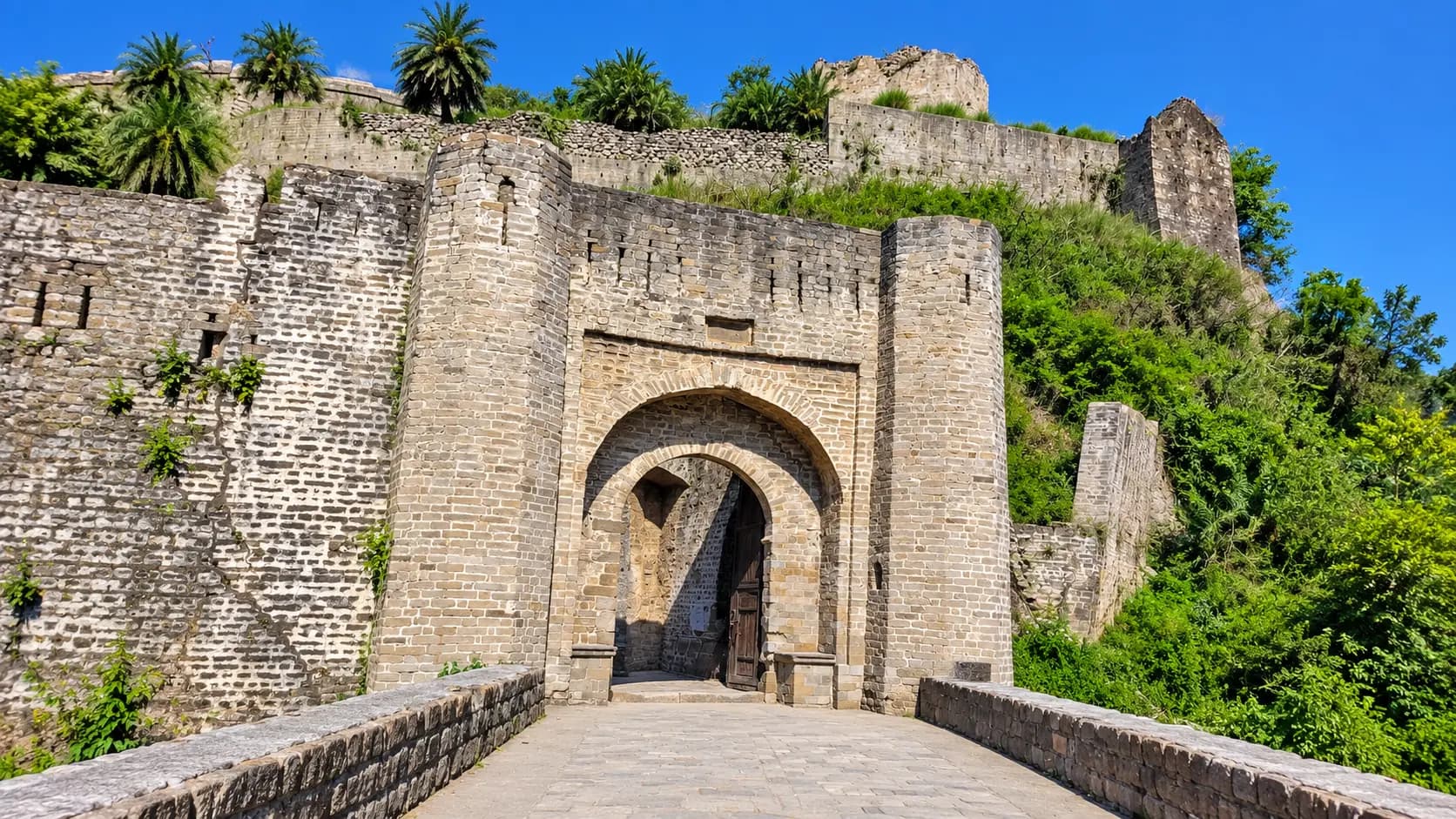
The oldest and largest fortress in the Himalayas, perched atop a sheer rocky promontory at the confluence of the Banganga and Manjhi rivers. Explore its sequential defensive gateways (Ranjit Singh, Jahangiri, and Andheri Darwazas), ancient stone temples dedicated to Goddess Ambika, and the adjacent Maharaja Sansar Chand Museum showcasing rare Kangra miniature paintings. Accessible within a 35-minute drive from Sidhpur.
4. War Memorial and Pine Groves, Dharamshala (Approx. 6 km Northwest)
Located near the entrance to Dharamshala town within serene pine and deodar forests, the Himachal Pradesh State War Memorial commemorates the gallant soldiers of the state who laid down their lives during post-independence conflicts. A network of peaceful stone walking paths leads past landscaped gardens and military exhibits to a nearby cafe.
5. Tsuglagkhang Complex & Dalai Lama Temple (Approx. 16 km Northwest)
Located in upper McLeodganj, the official spiritual headquarters and residence of His Holiness the 14th Dalai Lama. It houses the main Tibetan temple, Namgyal Monastery, the Tibet Museum, and the sacred outer circumambulation path (Kora) offering sweeping views of the Kangra Valley.
In pictures
The practical bits
Before you go.
Plan ahead
To make the most of your excursion to Norbulingka Institute, review these four essential preparation blocks…Explore detailsClose details
To make the most of your excursion to Norbulingka Institute, review these four essential preparation blocks covering timing, footwear, workshop visits, and respectful engagement:
Schedule Your Visit on a Weekday (Monday to Saturday)
To see the master craft workshops in full, vibrant operation, plan your visit between Monday and Saturday.Explore detailsClose details
To see the master craft workshops in full, vibrant operation, plan your visit between Monday and Saturday. On Sundays, master artisans and apprentices observe their weekly rest day; while the temple, gardens, doll museum, cafe, and showroom remain fully open on Sundays, the workshops will be quiet and empty of working artists.
Take Advantage of the Free Guided Workshop Tour
Upon purchasing your entry ticket, ask at the reception desk for a complimentary guided workshop tour.Explore detailsClose details
Upon purchasing your entry ticket, ask at the reception desk for a complimentary guided workshop tour. Resident staff members conduct informative 30-minute walking tours in English and Hindi, explaining the philosophical symbolism of thangka paintings, the mineral composition of pigments, the intricate physics of copper repoussé, and the history of Tibetan craftsmanship.
Dress Modestly for a Sacred Sanctuary
Because Norbulingka is an active Tibetan Buddhist monastery and cultural sanctuary, dress with modest decorum.Explore detailsClose details
Because Norbulingka is an active Tibetan Buddhist monastery and cultural sanctuary, dress with modest decorum. Shoulders, upper arms, and knees should be covered. Wear comfortable slip-on shoes or sandals, as you will need to remove your footwear before stepping onto the polished timber floors of the Deden Tsuglagkhang temple.
Allocate Time for Norling Cafe and Garden Contemplation
Avoid rushing through the institute in under an hour.Explore detailsClose details
Avoid rushing through the institute in under an hour. Plan to spend at least 2.5 to 3 hours on campus. After touring the workshops and temple, take time to sit quietly beside the koi ponds, listen to the rushing mountain streams, and enjoy an unhurried organic lunch or freshly baked cake at the open-air Norling Cafe.
Suggested 3-Hour Cultural & Artisanal Itinerary
09:30 - 10:00: Garden Stroll & Orientation
Check the current visiting hours and permitted access with the site operator before departure; ceremonies…Explore detailsClose details
Check the current visiting hours and permitted access with the site operator before departure; ceremonies, closures and visitor sessions can affect access. Admire the koi fish ponds, cross the stone bridges, and take in the harmonious architecture.
10:00 - 11:00: Guided Artisan Workshop Tour
Join a resident guide for a comprehensive tour of the Centre for Arts.Explore detailsClose details
Join a resident guide for a comprehensive tour of the Centre for Arts. Watch thangka painters grind mineral lapis lazuli into blue pigment, observe coppersmiths hammer Buddha statues from sheet metal, inspect nail-less woodcarving joinery, and see silk appliqué thangkas being hand-stitched.
11:00 - 11:30: Deden Tsuglagkhang Temple
Ascend to the main temple.Explore detailsClose details
Ascend to the main temple. Remove your footwear and spend thirty minutes admiring the 14-foot gilded Buddha, the sweeping Dalai Lama frescoes, and the monumental appliqué tapestries in silent contemplation.
11:30 - 12:15: Losel Doll Museum & Showroom
Explore the Losel Doll Museum, studying the miniature costumes and regional dioramas of pre-1959 Tibet.Explore detailsClose details
Explore the Losel Doll Museum, studying the miniature costumes and regional dioramas of pre-1959 Tibet. Browse the ground-floor showroom to appreciate finished thangkas, hand-carved furniture, and certified crafts.
12:15 - 13:00: Relaxed Lunch at Norling Cafe
Settle into a shaded outdoor table at Norling Cafe beside the stone watercourse.Explore detailsClose details
Settle into a shaded outdoor table at Norling Cafe beside the stone watercourse. Savor freshly steamed vegetarian momos, a crisp organic garden salad, or artisanal pizza paired with fresh ginger tea before departing.
A few things you might wonder
Common questions about visiting Norbulingka Institute. Fees, visiting hours and ceremonies are researched details that may change; confirm current arrangements with the operator before travelling.
What is the historical significance and purpose of Norbulingka Institute?
Are the workshops open every day, and can visitors watch the artisans work?
What are the ticket prices and visiting hours?
What is the Losel Doll Museum, and why is it special?
Is Norbulingka Institute wheelchair accessible?
How do I reach Norbulingka from McLeodganj and Dharamshala?
Explore more in Dharamshala Mcleodganj
Discover other destinations around this hub
More Hubs in Himachal Pradesh
Continue exploring other travel hubs in this state
Planning a trip to Dharamshala McLeodganj?