Triund Trek
Complete guide to Triund Trek near McLeodganj, Dharamshala. Trail route from Galu Temple, elevation, camping rules, best time, and Dhauladhar views.
Location
Dharamshala McLeodganj, Himachal Pradesh
A closer look
Your visit, at a glance.
Dharamshala McLeodganj, Himachal Pradesh
GET TO KNOW THE PLACE
Rising with dramatic verticality above the cedar-clad ridges of McLeodganj and Dharamshala in Himachal Pradesh’s Kangra District, Triund is widely celebrated as the crown jewel…
The story of Triund Trek
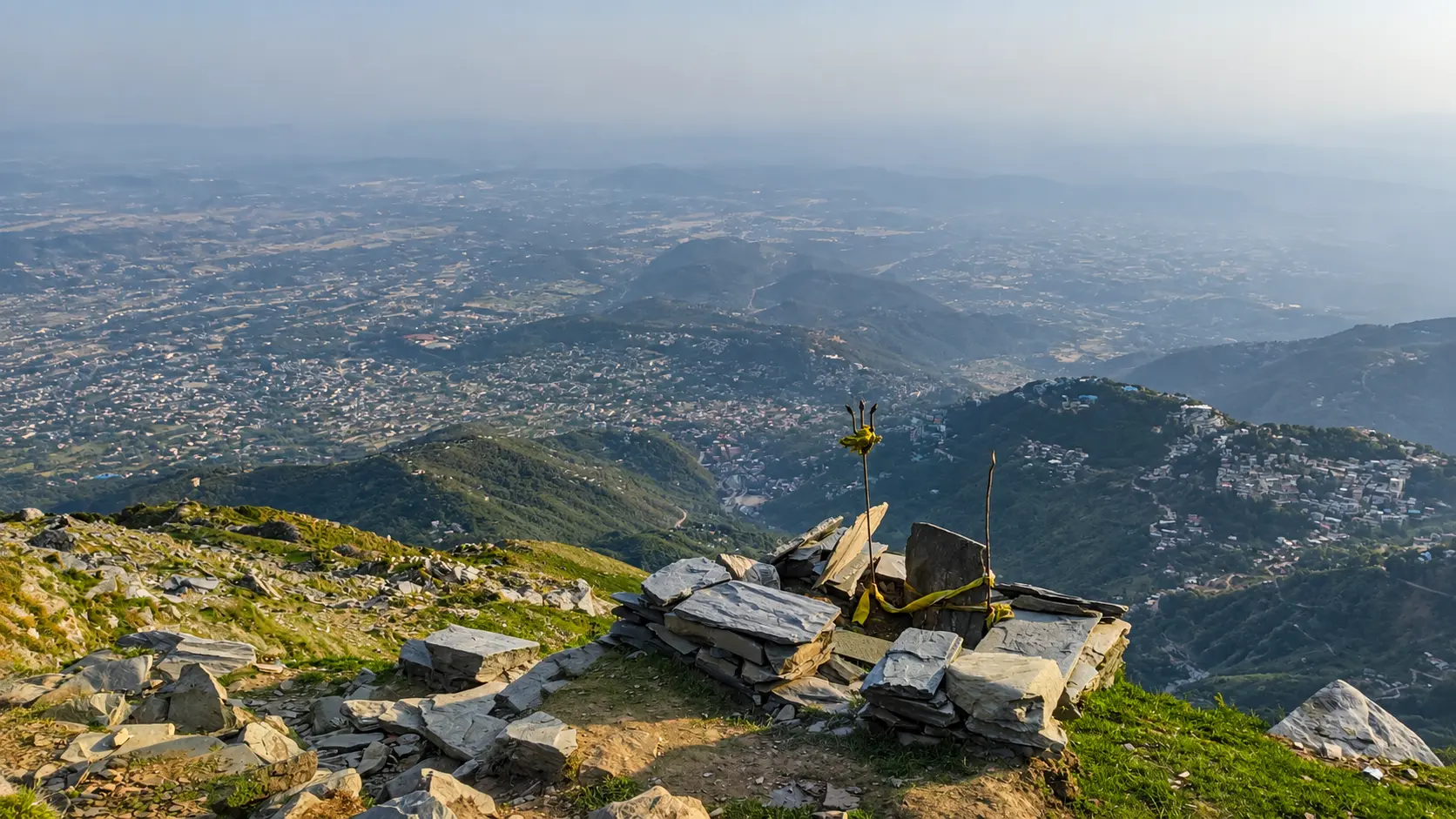
Rising with dramatic verticality above the cedar-clad ridges of McLeodganj and Dharamshala in Himachal Pradesh’s Kangra District, Triund is widely celebrated as the crown jewel of accessible Himalayan trekking. Perched at an elevation of approximately 2,850 meters (9,350 feet) on an elevated alpine ridge crest of the Dhauladhar Range, Triund offers one of the most abrupt, awe-inspiring scenic contrasts found anywhere in the Himalayas. To stand upon its wind-swept, emerald-green grassy plateau is to find oneself poised at a geographical knife-edge: to the north, the colossal, almost vertical grey granite rock wall of the Dhauladhars soars into the sky, crowned by the jagged summits of Moon Peak (4,650 m) and the treacherous approach to Indrahar Pass (4,342 m); to the south, the terrain drops precipitously away to reveal a staggering 180-degree bird’s-eye panorama across the entire terraced floor of the Kangra Valley and the distant, sun-drenched plains of northern Punjab.
Unlike extreme multi-day expeditions that require technical mountaineering equipment, porters, and weeks of acclimatization, Triund can be comfortably conquered as a moderately challenging single-day hike by anyone with basic cardiovascular fitness. Spanning roughly nine kilometers from McLeodganj main square (or six kilometers from the primary vehicular trailhead at Galu Devi Temple), the trail takes hikers on an ecological masterclass through ancient Himalayan forests of twisted ban oak (Quercus leucotrichophora), fragrant deodar cedars (Cedrus deodara), and blooming rhododendron groves before ascending through the legendary "22 Curves" (Bais Mod) onto the open alpine ridge. Managed under the strict conservation stewardship of the Himachal Pradesh Forest Department (Dharamshala Division), Triund represents the ultimate mountain adventure in the Western Himalayas - a trail where pristine nature, colonial hiking history, and raw high-altitude grandeur unite.
Start here. Open a tile for the full details.
Why goRead details
For international backpackers, domestic trekking enthusiasts, university students, and nature photographers, the Triund Trek is universally recognized as the essential mountain pilgrimage of upper Himachal Pradesh. It delivers the thrill of an authentic high-altitude Himalayan ascent within the manageable logistics of a single day.
When to visitRead details
Because Triund sits at an altitude of nearly 3,000 meters in the high Himalayas, weather conditions dictate whether the trek is an idyllic alpine paradise or a severe survival test. Understanding the seasonal rhythms is paramount for planning.
Entry & permissionsRead details
Fees, visiting hours and entry rules may change. Confirm the latest details with the official operator or local authority before travelling.
Trekking on the Triund ridge is governed by statutory conservation directives enforced by the Himachal Pradesh Forest Department to safeguard fragile sub-alpine habitats from over-tourism and plastic litter.
Admission and Permit Charges
- Day Trekkers: Completely Free. There is no entry fee, trail toll, or permit charge for single-day hikers who ascend to Triund and return to the base on the same day.
- Mandatory Galu Checkpost Registration: Every hiker - whether traveling independently or with a commercial guide - must halt at the Galu Devi Forest Checkpost. You must present an original government-issued photo ID (Aadhaar Card, Passport, Voter ID, or Driver's License) and record your name, contact details, and emergency contact in the official logbook.
- Refundable Plastic Waste Security Deposit: Forest rangers inspect backpacks and count all single-use plastic bottles, tetra paks, and packaged snack wrappers. Hikers pay a refundable environmental deposit (typically ₹200 to ₹500). Upon descending, hikers present their empty bottles and wrappers to the rangers to claim an immediate full refund.
Overnight Camping Regulations
- Wild Camping Prohibition: In compliance with environmental court directives and state forestry policies, unauthorized, wild pitching of personal tents on the Triund ridge is strictly prohibited.
- Authorized Eco-Camping: Trekkers wishing to stay overnight must either:
- Book a pre-arranged tent package through an authorized, licensed local eco-tourism operator approved by the Forest Department.
- Reserve a room or dorm bed inside the stone Himachal Pradesh Forest Rest House on Triund ridge in advance through the Divisional Forest Officer (DFO), Dharamshala Forest Division.
Operational Timings
Checkpost / Trail Section | Operating Days | Timings | Crucial Regulations |
|---|---|---|---|
Galu Devi Forest Checkpost | All 7 Days (Weather permitting) | 06:00 to 18:00 | Upward entry closes at 13:00 - 14:00 daily; no hikers are permitted to start after this cutoff |
Triund Summit Meadow | All 7 Days | Daylight visits recommended; confirm any after-dark access (Permit required for overnight stays) | Day hikers must begin descent by 14:30 to 15:00 to reach Galu before darkness |
Trailside Cafes (Magic View) | Daily | 07:00 to 17:00 | Cash and UPI (network dependent) accepted for tea and snacks |
Photography, Filming, and Drone Restrictions
- Handheld Photography: Non-commercial personal photography and amateur videography using smartphones, action cameras (GoPro), and DSLR or mirrorless cameras are permitted without restriction.
- Drone Operations: Flying unmanned aerial vehicles (drones) over the Triund trail, ridge, and Dhauladhar forest sanctuary is strictly prohibited without prior written clearance from the District Magistrate, Kangra, and the Dharamshala Forest Division.
- Commercial Filming: Producing commercial advertisements, documentaries, or feature films requires statutory permissions and filming fees through the Himachal Pradesh Tourism and Forest Departments.
Plan your visitRead details
The Triund Trek is located within the Dharamshala Sub-Division of Kangra District in Himachal Pradesh. The journey involves reaching the transit hub of McLeodganj or Dharamkot, followed by a short vehicular transfer to the Galu Devi Temple trailhead.
Explore the full guide - choose a topic below.
Why visit?
For international backpackers, domestic trekking enthusiasts, university students, and nature photographers, the…Explore detailsClose details
For international backpackers, domestic trekking enthusiasts, university students, and nature photographers, the Triund Trek is universally recognized as the essential mountain pilgrimage of upper Himachal Pradesh. It delivers the thrill of an authentic high-altitude Himalayan ascent within the manageable logistics of a single day.
Unsurpassed Proximity to the Mighty Dhauladhar Wall
In most Himalayan trekking regions, reaching an elevation that provides close-up vistas of glaciated granite peaks requires three to four days of arduous valley marching. The geological structure of the Dhauladhar Range - known poetically as the "White Mountain Wall" - is uniquely steep; the range rises directly out of the Kangra Valley floor without the intervention of lower intermediate sub-ranges.
At Triund (2,850 m), you are positioned directly at the base of this colossal granite mass. The sheer rock faces and snow-streaked couloirs of the high peaks feel close enough to touch. As the morning mist rolls back, the monolithic bulk of Moon Peak and the jagged ridges leading toward the high passes of Chamba appear with overwhelming, cinematic clarity. For landscape photographers and mountaineers, this close-range perspective is virtually unmatched anywhere else in India at a comparable elevation.
The Historic "22 Curves" and Forest Trail Immersion
The journey up to Triund is as rewarding as the destination itself. Commencing beneath the sacred bells of the Galu Devi Temple, the trail winds through an enchanted forest canopy that has stood undisturbed for centuries.
- Botanical Progression: In the lower sections, towering Himalayan deodars scent the crisp mountain air. As the altitude climbs past 2,400 meters, deodars give way to twisted, moss-draped ban oaks and dense groves of Rhododendron arboreum. Between late March and early May, these rhododendron trees burst into vibrant canopies of crimson, scarlet, and delicate pink blossoms, blanketing the forest floor in floral confetti.
- The Magic View Midpoint: Approximately halfway through the ascent, perched dramatically on an exposed rocky spur, stands Magic View Cafe. Established in 1984, it is recognized as the oldest trailside tea stall on the mountain. Pausing here on wooden benches to sip freshly brewed ginger-lemon-honey tea while watching birds of prey ride the valley thermals is a cherished ritual of the trek.
- The Final Test: The final kilometer is famously known as Bais Mod ("The Twenty-Two Curves"). This challenging section consists of twenty-two steep, stone-flagged switchbacks cut into a rocky gully. While demanding on the quadriceps and lungs, rounding the final, twenty-second corner and abruptly emerging onto the vast, flat, sun-drenched meadow of Triund Top elicits an unforgettable surge of triumph and euphoria.
Acclimatization Stepping-Stone to Epic Alpine Crossings
For aspiring high-altitude trekkers, Triund serves as the indispensable foundational acclimatization stage for longer, more strenuous Himalayan routes. From the Triund ridge, the trail continues northward toward Snowline (Laka Got, at 3,300 meters) and the glaciated moraines of the Khabrotu meadow. Beyond Laka Got lies the demanding technical crossing of Indrahar Pass (4,342 meters), a historic Gaddi shepherd trading route connecting the Kangra Valley to the remote, wild tribal valley of Bharmour in Chamba District. By climbing to Triund and returning to McLeodganj in a day, trekkers can test their stamina, assess their body's response to altitude, and break in mountain boots before undertaking multi-day expeditions.
A Sunset and Star-Gazing Spectacle
The optical drama witnessed from Triund during twilight is legendary. In the late afternoon, as the sun descends toward the western horizon, the entire Kangra Valley beneath you is flooded in golden, amber, and deep violet hues. The sprawling lights of Dharamshala town, Kotwali Bazaar, and the distant Pong Dam reservoir begin to twinkle like a fallen galaxy. Meanwhile, the towering snow peaks behind the ridge catch the last alpine rays (alpenglow), glowing in intense fiery orange and pink before fading into cold cobalt blue. On clear, moonless nights, the absence of urban light pollution transforms the sky above Triund into an astonishing canopy of millions of stars, with the dense band of the Milky Way arching directly over the granite peaks.
What to expect
The Triund Trek is a physically demanding day hike that requires steady endurance, sensible pacing, and respect…Explore detailsClose details
The Triund Trek is a physically demanding day hike that requires steady endurance, sensible pacing, and respect for shifting mountain weather. Knowing the layout of the trail and the facilities available at each stage will ensure a safe and triumphant experience.
1. The Trailhead at Galu Devi Temple (~2,100 m)
While some hikers start walking directly from the central McLeodganj Chowk (adding an extra 3 km of uphill walking along asphalt and concrete roads through Dharamkot), the official mountain trail begins at the Galu Devi Temple.
- The Setting: Perched on a quiet forested saddle above Dharamkot, Galu features a quaint stone temple dedicated to the protective mountain goddess Galu Devi, alongside a small taxi turn-around point and a couple of mountain cafes.
- The Forest Department Checkpost: All hikers must halt at the mandatory Himachal Pradesh Forest Department Checkpost. Forest rangers inspect personal identification, record trekker details in the official register, and conduct a strict environmental waste check. Confirm the current charge and what it includes with the operator or service provider. Visitor admission, vehicles, parking, activities and accommodation can have separate charges.
2. The Lower Forest Section: Galu to Magic View (~2,100 m to ~2,500 m)
The first half of the trek covers approximately 3.5 kilometers and takes roughly 1.5 to 2 hours of steady walking.
- Path Characteristics: The trail is wide, well-trodden, and features a gentle, gradual gradient. It contours around the western flank of the mountain, shaded by dense canopies of oak and rhododendron. The path is largely made of packed dirt, smooth quartzite stones, and exposed tree roots.
- Scenic Lookouts: Occasional clearings through the trees provide striking views back down toward Dharamkot, Bhagsu village, and the Tibetan institutions of Gangchen Kyishong. Himalayan whistling thrushes, grey treepies, and playful langur monkeys are frequently seen in the trees.
- The Midpoint Cafes: Around the 3.5-kilometer mark, you will arrive at a rocky promontory hosting Magic View Cafe and Best View Cafe. These rustic stone shacks serve bottled water, hot tea, instant noodles, and energy snacks. It is the customary rest stop where hikers catch their breath, rehydrate, and prepare for the steeper climb ahead.
3. The Upper Ascent: The 22 Curves (~2,500 m to ~2,850 m)
The second half of the trek covers roughly 2.5 kilometers but accounts for the majority of the elevation gain and physical effort, taking between 1.5 and 2.5 hours.
- The Gradient: Past the midpoint cafes, the trail becomes noticeably rockier, steeper, and more exposed. The forest canopy thins out, leaving hikers exposed to the elements.
- Bais Mod (22 Curves): The final section consists of twenty-two marked stone switchbacks that zigzag steeply up a rugged granite ridge. The path requires careful stepping over loose rocks and uneven stone boulders. Hikers should maintain a steady, rhythmic breathing pace, avoid rushing, and take brief standing rests to let heart rates normalize.
4. The Summit Ridge of Triund (~2,850 m)
Rounding the final switchback brings you abruptly onto the expansive, rolling alpine meadow of Triund Top.
- The Meadow Landscape: A broad, open grassy saddle running east to west, dotted with grazing sheep, prayer flag arrays, and massive granite boulders. In spring and summer, the meadow is blanketed in green turf and alpine buttercups; in midwinter, it is cloaked in deep white snow.
- The Forest Rest House: On the eastern knoll of the ridge stands the historic stone Forest Rest House, built by the British colonial administration and now maintained by the Himachal Pradesh Forest Department.
- Summit Facilities: Several seasonal tea stalls operate along the southern edge of the meadow, serving hot dal chawal, rajma, Maggi noodles, and warm beverages. Basic dry-pit toilets are situated behind the ridge. There is no running tap water and no commercial electrical grid on Triund; water is hauled up daily on mule-back from natural springs lower down the mountain.
Best time to visit
Because Triund sits at an altitude of nearly 3,000 meters in the high Himalayas, weather conditions dictate…Explore detailsClose details
Because Triund sits at an altitude of nearly 3,000 meters in the high Himalayas, weather conditions dictate whether the trek is an idyllic alpine paradise or a severe survival test. Understanding the seasonal rhythms is paramount for planning.
Spring and Pre-Monsoon (April to June) - Prime Trekking Season
Spring and early summer are universally celebrated as the premier months for the Triund Trek.
- Weather & Temperatures: Daytime temperatures on the ridge are exceptionally pleasant, ranging between 16°C and 22°C under clear, sunlit skies. Nights remain cool (6°C - 11°C).
- Trail Conditions: The path is completely dry, free of snow, and easy to navigate. Early spring (April) features blooming rhododendron forests that paint the lower mountain in vivid shades of crimson.
- Crowd Footfalls: May and June witness peak domestic tourist crowds, particularly on weekends. To avoid crowded trails and packed summit meadows, begin your trek on a weekday morning at 06:30.
Autumn (September to November) - Crystal Skies and Golden Grasses
Autumn is the favored season for photographers, experienced trekkers, and international travelers.
- Atmospheric Clarity: Following the monsoon rains, the atmosphere is scrubbed clean of all haze and dust. The Dhauladhar granite wall stands out in sharp, high-definition contrast against cobalt-blue skies. Panoramic views across the Kangra Valley extend for over 80 kilometers.
- Temperatures: Crisp, cool daytime hiking conditions (12°C - 18°C), dropping sharply to near freezing (2°C - 5°C) after sunset. Warm thermal innerwear, fleece jackets, and windproof gloves are mandatory for late afternoon visits.
Winter (December to March) - The Snow Trek Challenge
Winter transforms Triund into a magical, white Himalayan wonderland.
- Conditions: From late December through February, the upper half of the trail and the entire Triund meadow are blanketed in snow (ranging from 1 to 4 feet in depth). Daytime temperatures range from 5°C to 12°C under bright sun, but plummet to -5°C to 0°C at night.
- Safety Equipment: Trekking in winter requires microspikes or crampons for walking across hard-packed ice on the 22 Curves, gaiters, trekking poles, and heavy insulated mountaineering clothing. The Forest Department frequently shuts the checkpost during active blizzards.
Monsoon (July to August) - High Hazard Season
The Kangra Valley experiences heavy, torrential monsoon rainfall.
- Severe Hazards: Trekking to Triund during the peak monsoon is strongly discouraged by district authorities. Heavy rains turn the trail into a slick mud chute; the steep switchbacks of the 22 Curves become dangerously slippery; loose boulders frequently tumble from higher cliffs; and mountain leeches are active in the lower oak woods. Dense cloud banks frequently engulf the ridge, reducing visibility to less than 10 meters and completely obscuring the mountain views.
How to reach
The Triund Trek is located within the Dharamshala Sub-Division of Kangra District in Himachal Pradesh.Explore detailsClose details
The Triund Trek is located within the Dharamshala Sub-Division of Kangra District in Himachal Pradesh. The journey involves reaching the transit hub of McLeodganj or Dharamkot, followed by a short vehicular transfer to the Galu Devi Temple trailhead.
Reaching the Trailhead at Galu Devi Temple
Hikers have two primary options for reaching the start of the trail:
-
Option A: Taxi to Galu Devi Temple (Recommended):
- From McLeodganj main taxi stand or your hotel in Dharamkot, hire a local 4x4 or Maruti Alto taxi to Galu Devi Temple.
- The road is a narrow, bumpy mountain track of approximately 3 kilometers from McLeodganj (or 2 km from Dharamkot) that winds through dense pine and oak woods. Confirm the current charge and what it includes with the operator or service provider. Visitor admission, vehicles, parking, activities and accommodation can have separate charges. This saves you roughly an hour of uninspiring uphill road walking, conserving your physical stamina for the mountain trail.
-
Option B: Walking from McLeodganj or Dharamkot:
- From McLeodganj Chowk, walk north up the road past the regional bus stand into Dharamkot village (1.5 km; 25 minutes).
- Continue past the primary school and through the quiet upper forest trails following directional painted signboards to Galu Devi Temple (another 1.5 km; 30 minutes).
Reaching Dharamshala and McLeodganj (Transit Hubs)
- By Air (Kangra Airport, Gaggal - DHM): Kangra Airport at Gaggal is the nearest aviation hub, located approximately 22 kilometers southwest of the Galu trailhead. Direct daily scheduled flights (operated by IndiGo, SpiceJet, and Alliance Air) link Gaggal with New Delhi (DEL) and Chandigarh. Confirm the current charge and what it includes with the operator or service provider. Visitor admission, vehicles, parking, activities and accommodation can have separate charges.
- By Overnight Bus (HRTC Volvo & Private Coaches): Direct, comfortable overnight semi-sleeper luxury Volvo buses operated by Himachal Road Transport Corporation (HRTC) depart daily from New Delhi (ISBT Kashmere Gate) and Chandigarh (ISBT Sector 43), arriving directly at the McLeodganj Bus Stand in the early morning (travel time: 10 - 12 hours from Delhi; 6 - 7 hours from Chandigarh).
- By Train (Pathankot Railhead): Pathankot Junction (PTK) and Pathankot Cantt (PTKC) in Punjab represent the closest broad-gauge railway stations, located roughly 95 kilometers west. Major express trains (including the Vande Bharat and Jammu Mail) connect Pathankot with Delhi, Amritsar, and Mumbai. From Pathankot, direct buses and private cabs reach Dharamshala in 3 to 3.5 hours.
Entry, timings and permissions
Fees, visiting hours and entry rules may change.Explore detailsClose details
Fees, visiting hours and entry rules may change. Confirm the latest details with the official operator or local authority before travelling.
Trekking on the Triund ridge is governed by statutory conservation directives enforced by the Himachal Pradesh Forest Department to safeguard fragile sub-alpine habitats from over-tourism and plastic litter.
Admission and Permit Charges
- Day Trekkers: Completely Free. There is no entry fee, trail toll, or permit charge for single-day hikers who ascend to Triund and return to the base on the same day.
- Mandatory Galu Checkpost Registration: Every hiker - whether traveling independently or with a commercial guide - must halt at the Galu Devi Forest Checkpost. You must present an original government-issued photo ID (Aadhaar Card, Passport, Voter ID, or Driver's License) and record your name, contact details, and emergency contact in the official logbook.
- Refundable Plastic Waste Security Deposit: Forest rangers inspect backpacks and count all single-use plastic bottles, tetra paks, and packaged snack wrappers. Hikers pay a refundable environmental deposit (typically ₹200 to ₹500). Upon descending, hikers present their empty bottles and wrappers to the rangers to claim an immediate full refund.
Overnight Camping Regulations
- Wild Camping Prohibition: In compliance with environmental court directives and state forestry policies, unauthorized, wild pitching of personal tents on the Triund ridge is strictly prohibited.
- Authorized Eco-Camping: Trekkers wishing to stay overnight must either:
- Book a pre-arranged tent package through an authorized, licensed local eco-tourism operator approved by the Forest Department.
- Reserve a room or dorm bed inside the stone Himachal Pradesh Forest Rest House on Triund ridge in advance through the Divisional Forest Officer (DFO), Dharamshala Forest Division.
Operational Timings
Checkpost / Trail Section | Operating Days | Timings | Crucial Regulations |
|---|---|---|---|
Galu Devi Forest Checkpost | All 7 Days (Weather permitting) | 06:00 to 18:00 | Upward entry closes at 13:00 - 14:00 daily; no hikers are permitted to start after this cutoff |
Triund Summit Meadow | All 7 Days | Daylight visits recommended; confirm any after-dark access (Permit required for overnight stays) | Day hikers must begin descent by 14:30 to 15:00 to reach Galu before darkness |
Trailside Cafes (Magic View) | Daily | 07:00 to 17:00 | Cash and UPI (network dependent) accepted for tea and snacks |
Photography, Filming, and Drone Restrictions
- Handheld Photography: Non-commercial personal photography and amateur videography using smartphones, action cameras (GoPro), and DSLR or mirrorless cameras are permitted without restriction.
- Drone Operations: Flying unmanned aerial vehicles (drones) over the Triund trail, ridge, and Dhauladhar forest sanctuary is strictly prohibited without prior written clearance from the District Magistrate, Kangra, and the Dharamshala Forest Division.
- Commercial Filming: Producing commercial advertisements, documentaries, or feature films requires statutory permissions and filming fees through the Himachal Pradesh Tourism and Forest Departments.
Nearby places to consider
The upper Dharamshala trekking corridor offers several magnificent natural and cultural landmarks that can be…Explore detailsClose details
The upper Dharamshala trekking corridor offers several magnificent natural and cultural landmarks that can be explored in conjunction with Triund:
1. Snowline & Laka Got Meadow (Approx. 3 km North of Triund)
For adventurous trekkers, the trail continues past Triund Top, ascending another 3 kilometers across rocky alpine terrain to Laka Got (also known as Snowline Cafe, at ~3,300 meters). Situated in a glacial moraine basin directly beneath the vertical crags of the Dhauladhar wall, Laka Got retains snow patches well into late June. It serves as the base camp for serious mountaineers tackling Indrahar Pass.
2. Dharamkot Village (Approx. 2 km South of Galu Trailhead)
Located on the forested ridge directly below the Galu Devi Temple, Dharamkot is an internationally famous bohemian village known as Himachal’s yoga and meditation capital. Free of heavy vehicular traffic, its peaceful footpaths are lined with vegan bakeries, falafel cafes, pottery workshops, and renowned spiritual centers such as the Tushita Meditation Centre and Dhamma Sikhara Vipassana Centre.
3. Bhagsu Waterfall & Shiva Cafe (Approx. 3.5 km Southeast via Forest Trail)
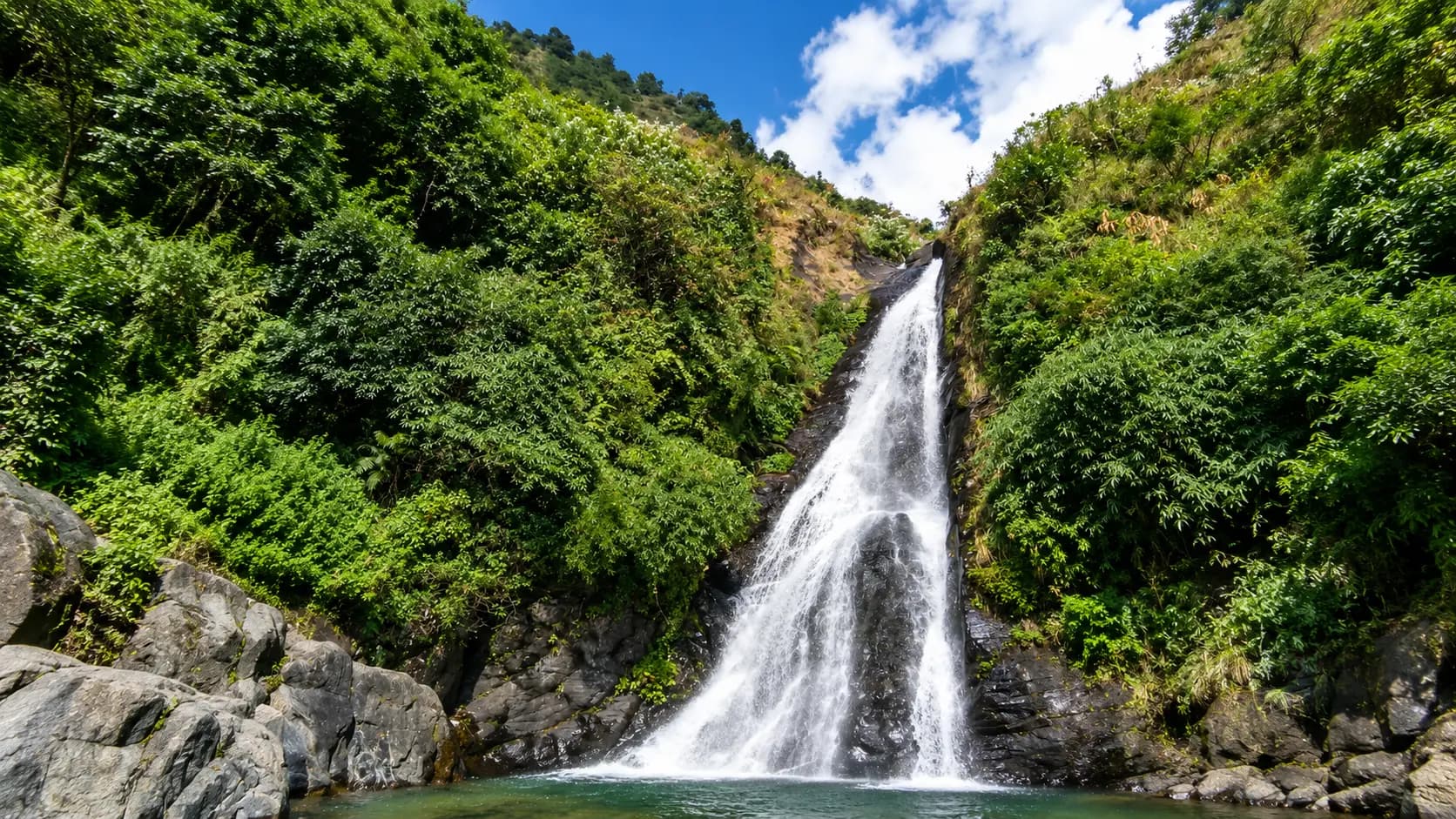
A picturesque 20-meter mountain cascade plunging down granite rock faces above Bhagsu Nag village. Reached via a scenic stone trail from the historic Bhagsunag Shiva Temple, with the iconic Shiva Cafe perched on the upper plateau offering outdoor boulder seating and panoramic valley views.
4. Naddi Sunset Point & Village (Approx. 4 km West of Galu)
Perched on an elevated western ridge beyond Dal Lake, Naddi village is renowned for offering the most spectacular, unobstructed panoramic sunset vistas of the colossal Dhauladhar mountain wall, alongside bird's-eye views across the distant Punjab plains.
5. Tsuglagkhang Complex & Dalai Lama Temple (Approx. 5 km South in McLeodganj)
The official residence and spiritual seat of His Holiness the 14th Dalai Lama in southwest McLeodganj. Houses the main Tibetan temple, Namgyal Monastery, the Tibet Museum, and a sacred circumambulation path (Kora) lined with hundreds of prayer wheels overlooking forested valleys.
In pictures
The practical bits
Before you go.
Plan ahead
Conquering Triund safely and comfortably requires methodical preparation.Explore detailsClose details
Conquering Triund safely and comfortably requires methodical preparation. Review these four indispensable preparation blocks covering pacing, gear, water management, and weather vigilance:
Early Morning Start (06:30 to 07:30)
Begin your trek from Galu Devi Temple as early as possible, ideally between 06:30 and 07:30 in the morning.Explore detailsClose details
Begin your trek from Galu Devi Temple as early as possible, ideally between 06:30 and 07:30 in the morning. An early start allows you to complete the bulk of the steep climb before the midday sun heats the exposed switchbacks. Furthermore, an early arrival on the ridge (around 10:30 - 11:00) guarantees clear mountain views before the afternoon valley thermal clouds roll up to veil the high peaks, and ensures you have ample time to relax before the mandatory 14:30 descent.
Footwear and Layered Mountain Clothing
Wear durable, broken-in hiking boots or trail running shoes with aggressive rubber tread soles and ankle support.Explore detailsClose details
Wear durable, broken-in hiking boots or trail running shoes with aggressive rubber tread soles and ankle support. The trail is paved with sharp, uneven quartzite stones that will quickly bruise feet in thin-soled sneakers. Dress in versatile moisture-wicking layers: a breathable synthetic t-shirt for the uphill climb, a lightweight fleece for the breezy summit meadow, and a compact windproof/waterproof jacket in your daypack. Temperatures on the ridge drop by 8°C to 10°C compared to McLeodganj.
Hydration Strategy and Trekking Poles
Carry a minimum of 1.5 to 2 liters of drinking water per person.Explore detailsClose details
Carry a minimum of 1.5 to 2 liters of drinking water per person. Confirm the current charge and what it includes with the operator or service provider. Visitor admission, vehicles, parking, activities and accommodation can have separate charges. A pair of adjustable trekking poles is strongly recommended; poles reduce knee and joint strain by up to 25% during the steep, rocky descent down the 22 Curves.
Daylight Discipline and No Night Hiking
Under no circumstances should you attempt to descend the Triund trail in total darkness without mountain rescue…Explore detailsClose details
Under no circumstances should you attempt to descend the Triund trail in total darkness without mountain rescue experience. The upper switchbacks are flanked by sheer drop-offs, and mountain fog can disorient hikers within minutes. Always carry a reliable LED headlamp or flashlight (do not rely solely on your phone's battery), and ensure you leave Triund Top no later than 14:30 to 15:00 to reach Galu Devi Temple before sunset.
Suggested Single-Day Itinerary: The Classic Triund Day Hike (Approx. 7.5 Hours)
06:30 - 07:00: Taxi Transfer to Trailhead
Depart McLeodganj or Dharamkot by taxi, arriving at the Galu Devi Temple parking area. -Explore detailsClose details
Depart McLeodganj or Dharamkot by taxi, arriving at the Galu Devi Temple parking area.
07:00 - 07:15: Forest Checkpost Registration
Register at the Galu Forest Checkpost, verify your ID, pay the refundable plastic security deposit, and commence…Explore detailsClose details
Register at the Galu Forest Checkpost, verify your ID, pay the refundable plastic security deposit, and commence the hike.
07:15 - 09:00: Shaded Forest Ascent
Walk through the tranquil oak and rhododendron forest, maintaining a steady, comfortable pace.Explore detailsClose details
Walk through the tranquil oak and rhododendron forest, maintaining a steady, comfortable pace. Enjoy birdsong and early morning sunlight filtering through the deodar boughs.
09:00 - 09:30: Midpoint Break at Magic View Cafe
Reach the 3.5 km mark.Explore detailsClose details
Reach the 3.5 km mark. Rest on the wooden benches at Magic View Cafe, rehydrate, and enjoy a steaming cup of ginger-lemon tea while soaking in the valley views.
09:30 - 11:00: Conquering the 22 Curves
Tackle the rocky switchbacks of Bais Mod.Explore detailsClose details
Tackle the rocky switchbacks of Bais Mod. Take short standing pauses every five switchbacks to breathe deeply and hydrate.
11:00 - 13:30: Triumph on Triund Top
Emerge onto the summit meadow.Explore detailsClose details
Emerge onto the summit meadow. Marvel at the colossal granite face of Moon Peak. Walk to the highest knoll near the Forest Rest House for panoramic photos. Savor a hot plate of freshly cooked rajma chawal or Maggi from a ridge-top stall and relax on the grass.
13:30 - 14:30: Optional Stroll Toward Snowline
If feeling energetic, take an optional 30-minute walk along the ridge trail heading toward Laka Got for even…Explore detailsClose details
If feeling energetic, take an optional 30-minute walk along the ridge trail heading toward Laka Got for even closer views of the glacial moraines.
14:30 - 17:00: Controlled Mountain Descent
Begin the descent.Explore detailsClose details
Begin the descent. Use your trekking poles to cushion your knees as you navigate the rocky switchbacks. Walk steadily down through the forest.
17:00 - 17:15: Checkpost Exit & Deposit Refund
Reach Galu Devi Temple, show your collected plastic wrappers to the forest rangers, collect your security deposit…Explore detailsClose details
Reach Galu Devi Temple, show your collected plastic wrappers to the forest rangers, collect your security deposit refund, and board your taxi back to McLeodganj.
A few things you might wonder
Common questions about visiting Triund Trek. Fees, visiting hours and ceremonies are researched details that may change; confirm current arrangements with the operator before travelling.
How difficult is the Triund Trek, and can beginners complete it?
How long does it take to complete the trek?
Is wild camping permitted on Triund Top, and how can I stay overnight?
What is the environmental plastic deposit rule at the Galu Checkpost?
Are food and drinking water available along the trail and at the top?
Can I do the Triund Trek during the winter months?
Explore more in Dharamshala Mcleodganj
Discover other destinations around this hub
More Hubs in Himachal Pradesh
Continue exploring other travel hubs in this state
Planning a trip to Dharamshala McLeodganj?