Routeyst
Opening your next page…
Routeyst
Opening your next page…
Your next day out
Finding your places to explore…
Loading your city’s local sights and outing ideas.
Choose a starting point, find local sights or an out-of-town idea within a stated 200 km road distance.
Make it your kind of day
Choose a starting point and your ideas appear automatically. Switch to Out of town whenever you fancy going further.
Maharashtra · Out of town
Pune, historically known as the cultural capital of Maharashtra and the seat of the Peshwas, occupies an exceptional geographical position at the confluence of the Mula and Mutha rivers on the Deccan plateau, flanked by the…
Pune, historically known as the cultural capital of Maharashtra and the seat of the Peshwas, occupies an exceptional geographical position at the confluence of the Mula and Mutha rivers on the Deccan plateau, flanked by the rugged crestline of the Western Ghats (Sahyadris). This distinct topography allows weekenders to choose between rich urban heritage experiences within the city and breathtaking mountain, fortress, and lakeside adventures outside.
Within Pune's urban perimeter, local outings celebrate Maratha military valor, Peshwa architecture, freedom struggle milestones, and lush botanical gardens. You can explore the historic heart of the old city (Peths) centered around Shaniwar Wada, Lal Mahal, and Dagdusheth Ganpati, immerse yourself in exquisite craft at Raja Dinkar Kelkar Museum, pay respects at Mahatma Gandhi's memorial at Aga Khan Palace, or enjoy the tranquility of the Japanese-style Pune-Okayama Garden. Closer to the southern urban fringes, Khadakwasla Dam and the formidable ramparts of Sinhagad Fort bridge the gap between city relaxation and mountain hiking.
Beyond Pune, the dramatic Sahyadri mountain passes and valleys offer an unparalleled collection of weekend outings, all strictly under 125 km (well within the 200 km limit):
Out-of-town ideas use a stated road distance of up to 200 km from the researched starting point; confirm your actual route. Some need an overnight stay. Maps opens a place search; check the visitor entrance and current access.
5 of 5 places · Open details without losing your list
Not sure? Pick 2–3 places to compare.
Planning your day
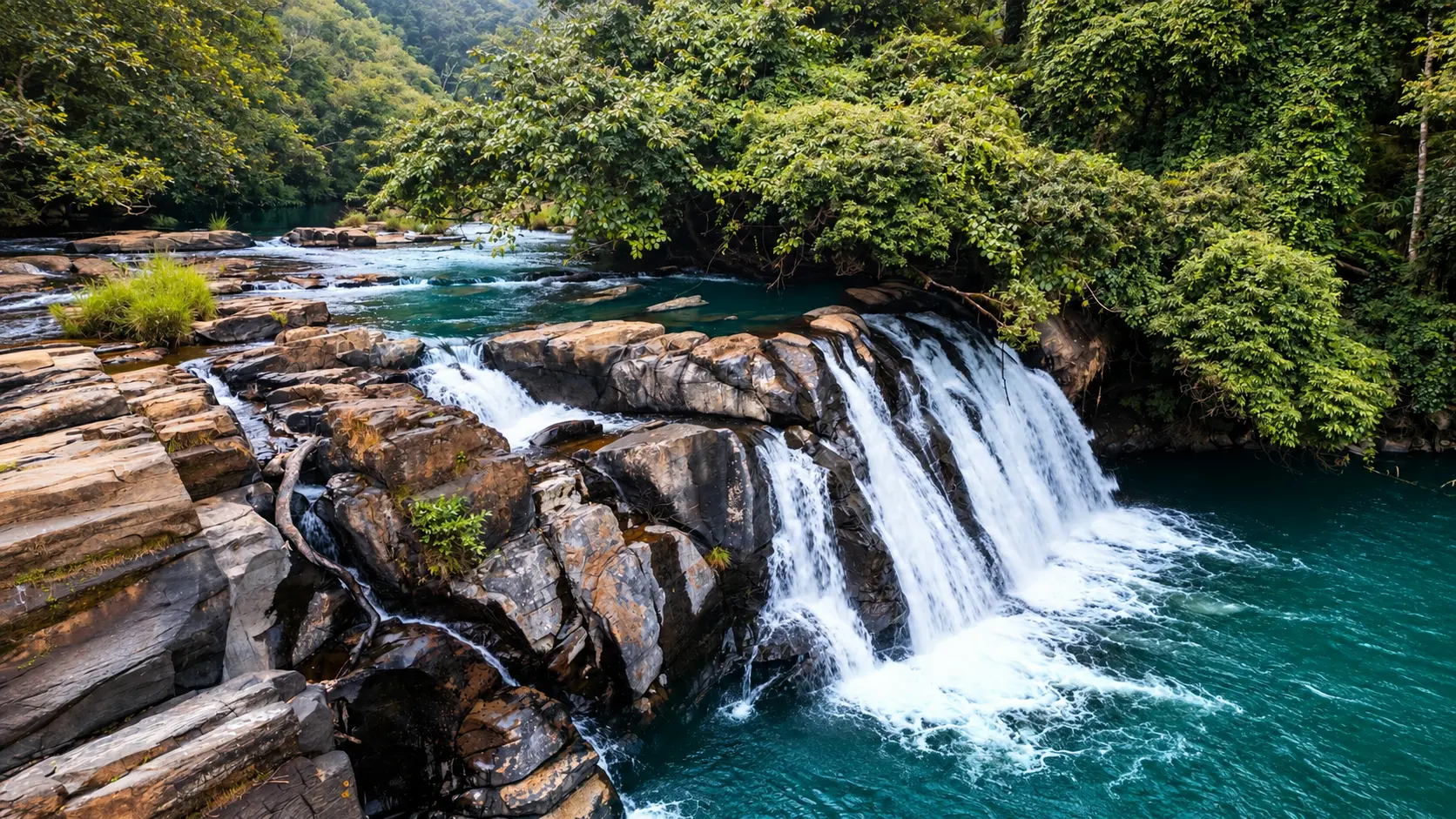
The definitive monsoon road trip from Pune is the Mulshi Dam and Tamhini Ghat corridor (SH 70). During July and August, the ghat transforms into an emerald paradise with hundreds of cascades tumbling down towering basalt cliffs directly alongside the roadway, dense cloud banks rolling through the mountain passes, and numerous scenic lakeside cafes overlooking Mulshi Lake.
For beginners and families with children, Sinhagad Fort is the most accessible choice, as a motorable road ascends almost to the fort gates, followed by an easy 15-minute stone staircase walk equipped with railings. For those seeking an introduction to trekking, Lohagad Fort (accessed from Lohagadwadi base) is also ideal, featuring well-laid stone steps, intact gateways, and gentle slopes compared to the rugged ascents of Torna or Rajgad.
While a high-altitude ridgeline traverse (the 'Rajgad-Torna Range Trek') connects the two fortresses across a grueling 12-to-14 km mountain ridge, undertaking both forts in a single day is strictly an extreme endurance challenge recommended only for experienced mountaineers with local guides. Casual weekenders should dedicate a full separate day to each fort to properly explore their vast ramparts, citadels, and machis.
On peak monsoon and winter weekends, the single-lane ghat road leading up to Sinhagad experiences severe vehicular congestion. Pune authorities frequently restrict private cars at Donje base and operate PMPML electric shuttle buses to manage traffic. To ensure a smooth visit, start before 6:30 AM, wear shoes with strong wet-weather grip, and beware of food-snatching monkeys near the entrance gates.
Your friend receives the same starting point, outing type and filters. No sign-in needed.
Make room for a longer journey
Hubs and guides from our wider collection, ordered with local and geographically closer places first. These are not limited to 200 km and are not road-distance estimates.
Open a place for its researched visitor notes. Confirm current charges and access before travelling.
Rajgad Fort is located in Velhe taluka, roughly 50 to 55 km southwest of Pune city center (Shaniwar Wada).
Fees, visiting hours and entry rules may change. Confirm the latest details with the official operator or local authority before travelling.
Torna Fort is situated in Velhe taluka, roughly 65 km southwest of Pune city center (Shaniwar Wada).
Fees, visiting hours and entry rules may change. Confirm the latest details with the official operator or local authority before travelling.
Purandar Fort is located near Saswad, roughly 45 to 50 km south of Pune city center (Shaniwar Wada).
Fees, visiting hours and entry rules may change. Confirm the latest details with the official operator or local authority before travelling.
Panshet Dam is situated approximately 42 to 45 km southwest of Shaniwar Wada in Pune.
Fees, visiting hours and entry rules may change. Confirm the latest details with the official operator or local authority before travelling.
Mulshi Dam is situated roughly 45 to 50 km west of Pune (Shaniwar Wada), while the heart of Tamhini Ghat extends approximately 65 to 75 km west.
Fees, visiting hours and entry rules may change. Confirm the latest details with the official operator or local authority before travelling.
Lohagad and Visapur are situated in Maval taluka, roughly 55 to 60 km northwest of Pune city center (Shaniwar Wada) and 12 km east of Lonavala.
Fees, visiting hours and entry rules may change. Confirm the latest details with the official operator or local authority before travelling.
Lonavala and Khandala are located in Maval taluka, Pune district, 85 to 90 km southeast of CSMT. The drive takes approximately 1.5 to 2 hours from South Mumbai via the Mumbai - Pune Expressway (Yashwantrao Chavan Expressway) or the scenic Old Mumbai - Pune Highway (NH 48) climbing the historic Bhor Ghat pass. Lonavala Railway Station (LNL) is a major mainline junction served by dozens of daily express trains and intercity services originating from CSMT and Dadar (taking 2 to 2.5 hours). Frequent MSRTC express buses ply between Mumbai and Pune, stopping at the Lonavala highway bypass. Taxis, auto-rickshaws, and rental two-wheelers are widely available at Lonavala railway station for local sightseeing. Ample parking is available at hotels, viewpoints, and cave sites.
Fees, visiting hours and entry rules may change. Confirm the latest details with the official operator or local authority before travelling.
Jejuri is situated in Purandar taluka, roughly 48 to 50 km southeast of Pune city center (Shaniwar Wada).
Fees, visiting hours and entry rules may change. Confirm the latest details with the official operator or local authority before travelling.
Shivneri Fort is located just 3 km outside the town of Junnar, approximately 90 to 95 km north of Pune city center (Shaniwar Wada).
Fees, visiting hours and entry rules may change. Confirm the latest details with the official operator or local authority before travelling.
Bhimashankar is located in Khed (Rajgurunagar) taluka, roughly 110 km northwest of Pune city center (Shaniwar Wada).
Fees, visiting hours and entry rules may change. Confirm the latest details with the official operator or local authority before travelling.
Wai is located in Satara district, approximately 85 km south of Pune city center (Shaniwar Wada).
Fees, visiting hours and entry rules may change. Confirm the latest details with the official operator or local authority before travelling.
Panchgani is approximately 100 km south of Pune (Shaniwar Wada), while Mahabaleshwar is roughly 120 km south.
Fees, visiting hours and entry rules may change. Confirm the latest details with the official operator or local authority before travelling.
Browse cities by state · 85 starting points
Open a state, then choose your starting city. Local sights load automatically.
Out-of-town ideas vary in distance. Check your outward and return journey, time at the destination and breaks before deciding whether you need a stay.
Maps may identify a landscape rather than its visitor entrance. Check parking, walks, boat transfers and entry permission with the local operator.
Use the guide for practical context and visit weather for the available three-day forecast. Neither is a live opening or safety confirmation.