Murudeshwar Temple
Comprehensive visitor guide to Murudeshwar Temple in Uttara Kannada. Discover the 123-foot Shiva statue, 20-storey Raja Gopura lift, timings, beach, and Netrani diving.
Location
Gokarna & Murudeshwar, Karnataka
A closer look
Your visit, at a glance.
Gokarna Murudeshwar, Karnataka
GET TO KNOW THE PLACE
Perched dramatically upon the rocky promontory of Kanduka Giri, thrusting directly into the surging turquoise waters of the Arabian Sea on three sides, Murudeshwar Temple…
The story of Murudeshwar Temple
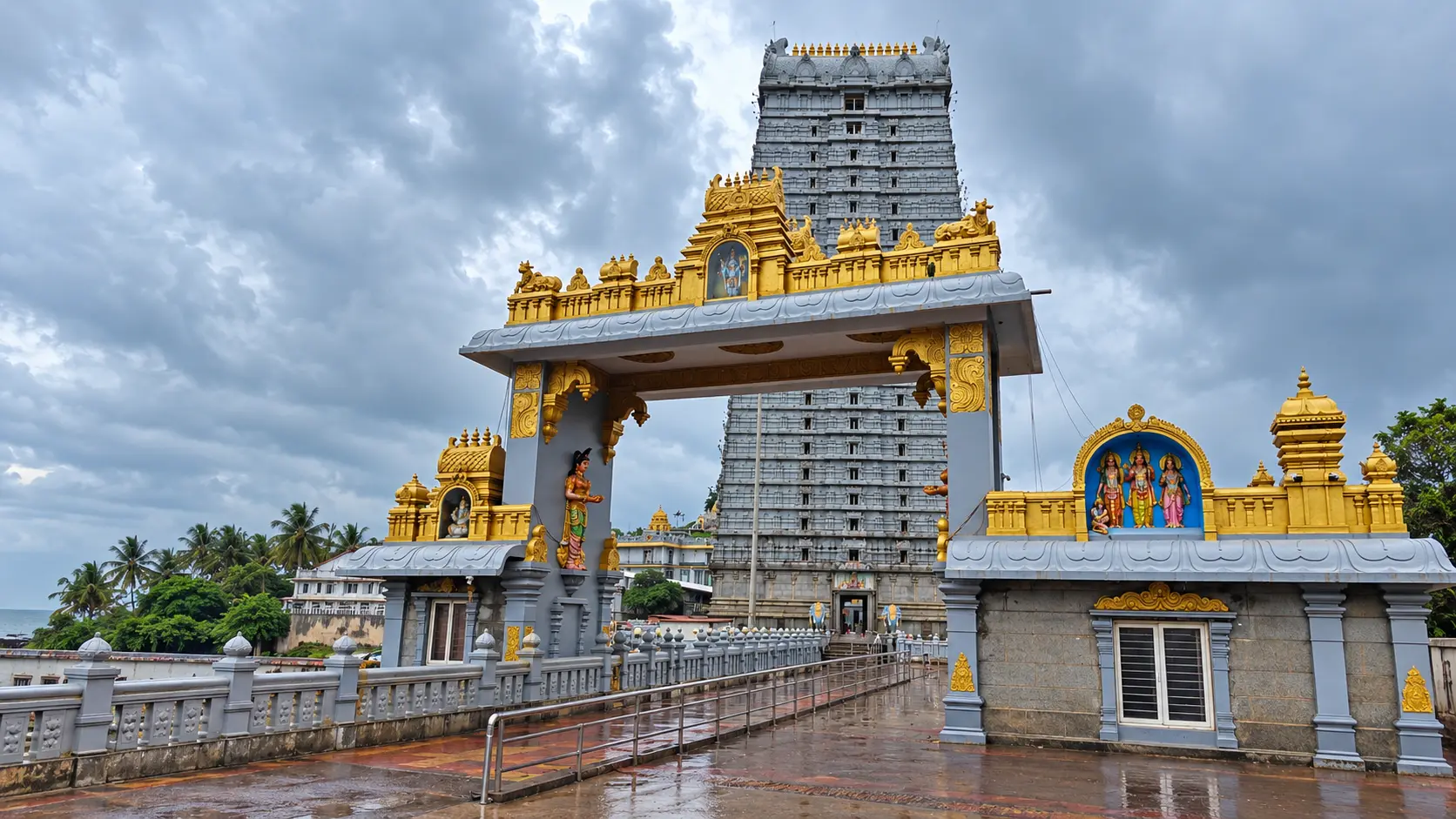
Perched dramatically upon the rocky promontory of Kanduka Giri, thrusting directly into the surging turquoise waters of the Arabian Sea on three sides, Murudeshwar Temple represents one of the most visually stunning and spiritually celebrated pilgrimage complexes in southern India. Located in Bhatkal Taluk of Karnataka's coastal Uttara Kannada district, this sacred sanctuary unites ancient Puranic mythology with breathtaking contemporary temple engineering. Rising majestically above the azure sea horizon stands the world's second-tallest statue of Lord Shiva - a colossal 123-foot (37.5-meter) seated cosmic monolith that glints like burnished bronze in the Konkan sunshine. Guarding the landward entrance to this seaside acropolis is the monumental 20-storey, 237.5-foot-tall (72.4-meter) Raja Gopura, among the loftiest pyramidal temple entrance towers in Asia, uniquely outfitted with high-speed passenger elevators that whisk visitors to an 18th-floor observation gallery commanding unforgettable 360-degree aerial panoramas across the sea, coastline, and Western Ghats.
Yet beneath these modern engineering marvels lies a deep, primordial sacred bedrock. In Hindu theology, Murudeshwar is venerated as one of the sacred Pancha Kshetras (five holy coastal linga abodes) intrinsically linked to the legendary narrative of the Atmalinga (Pranalinga) of Lord Shiva. According to the Shiva Purana, when the rakshasa king Ravana attempted to violently uproot the divine linga that had been grounded by Lord Ganesha at Gokarna, the sacred cloth covering (vastra) wrapped around the relic was ripped away and hurled across the sky, landing upon Kanduka Hill to establish the sanctified ground of Mrideshwara, corrupted over millennia to Murudeshwar. Today, this vibrant destination effortlessly harmonizes orthodox Agamic temple worship with coastal leisure, pristine crescent beaches, water sports, and boat departures for world-class coral reef scuba diving at nearby Netrani Island, making it an indispensable highlight of Karnataka's coastal travel corridor.
Start here. Open a tile for the full details.
Why goRead details
Murudeshwar Temple presents a rare, multifaceted blend of monumental art, sacred lore, and marine coastal spectacle:
When to visitRead details
Because Murudeshwar combines outdoor coastal exploration, open hill climbing, and marine water sports, timing your visit according to coastal seasonal cycles is critical for maximum comfort:
Entry & permissionsRead details
Fees, visiting hours and entry rules may change. Confirm the latest details with the official operator or local authority before travelling.
A complete summary of daily temple hours, specialized attraction tariffs, and administrative guidelines:
Attraction / Service | Operating Schedule | Tariff / Fees | Practical Visiting Notes |
|---|---|---|---|
Murudeshwar Temple Complex | 06:00 to 13:00 & 15:00 to 20:30 Daily | Free Entry (₹0) | General admission and public circumambulatory queue (sarvadarshan) are completely free of charge. |
Sanctum Closure Window | 13:00 to 15:00 Daily | The inner sanctum is closed for afternoon naivedya and deity rest; courtyard grounds remain accessible. | |
Raja Gopura Passenger Lift | 06:00 to 12:30 & 15:00 to 19:30 Daily | ₹20 to ₹30 per adult | High-speed elevator to the 18th-floor observation deck. Children under 5 ride free. Tickets at gopura base. |
Bhukailasa Cave Museum | 06:30 to 12:30 & 15:00 to 19:30 Daily | ₹10 to ₹20 per visitor | Located directly beneath the Shiva statue. Air-cooled gallery with multilingual audio-visual dioramas. |
Free Annadana Prasadam | 12:30 to 14:00 Daily | Free (₹0) | Free traditional South Indian vegetarian lunch served to all pilgrims in the temple dining hall. |
Dress Code and Sanctum Guidelines
The temple administration maintains strict decorum to preserve the sanctity of this ancient pilgrimage center:
- Permitted Attire: Men may wear traditional dhotis, cotton trousers, or standard jeans paired with shirts or kurtas outside the sanctum. Inside the inner sanctum sanctorum during special abhishekams, men are traditionally requested to remove their shirts and remain bare-chested. Women must wear traditional Indian attire: sarees, salwar kameez, or modest full-length dresses.
- Prohibited Attire: Shorts, bermudas, three-quarters, mini-skirts, sleeveless tops, crop tops, and transparent beachwear are strictly prohibited within the temple complex, the Raja Gopura, and the Cave Museum. Visitors coming directly from Murudeshwar Beach must change into appropriate clothing before entering the sacred gates.
- Footwear: All footwear must be deposited at designated, token-managed shoe stands located at the base of the Raja Gopura before ascending Kanduka Hill. Footwear is strictly prohibited beyond the gopura portal.
- Photography and Electronics: Handheld still photography and smartphone pictures of the colossal Shiva statue, external sculptures, and coastal vistas from Kanduka Hill and the Raja Gopura 18th floor are fully permitted. However, photography and video recording inside the inner sanctum sanctorum are strictly forbidden. Unmanned aerial vehicles (drones) are prohibited without prior written clearance from the local administration.
Plan your visitRead details
Murudeshwar enjoys exceptional connectivity via rail, road, and air, serving as a prime destination along Karnataka's central coastal corridor.
Explore the full guide - choose a topic below.
Why visit?
Murudeshwar Temple presents a rare, multifaceted blend of monumental art, sacred lore, and marine coastal…Explore detailsClose details
Murudeshwar Temple presents a rare, multifaceted blend of monumental art, sacred lore, and marine coastal spectacle:
- The World's Second-Tallest Shiva Statue: Rising 123 feet (37.5 meters) from the summit of Kanduka Hill, the four-armed seated murti of Lord Shiva in serene padmasana meditation is an artistic masterpiece. Sculpted over two years by master craftsman Kashinath of Shivamogga and positioned so that the morning sun directly illuminates its metallic surface while the Arabian Sea serves as its infinite natural backdrop, it is one of the most photographed religious icons in modern India.
- Elevator Ascent in the 237.5-Foot Raja Gopura: Towering over the coastal highway, the 20-storey Raja Gopura is not merely a traditional Dravidian gopuram adorned with thousands of sculpted mythological stucco figures; it houses modern high-speed passenger elevators. In less than a minute, visitors are transported to the 18th floor, stepping onto an enclosed observation deck that provides breath-taking, bird's-eye views of the colossal Shiva statue, the rolling surf of Murudeshwar Beach, and the coastal backwaters.
- Sacred Pancha Kshetra Enshrining the Atmalinga Cloth: As one of the five holy coastal lingas forged from the fragments of the cosmic Atmalinga, the ancient sanctum sanctorum houses a self-manifested (swayambhu) stone linga embedded within a subterranean rock hollow. Devotees witness the sacred linga illuminated by brass camphor lamps during traditional Agamic pujas conducted by hereditary coastal priests.
- The Subterranean Bhukailasa Cave Museum: Directly underneath the colossal Shiva statue lies the Bhukailasa Cave Museum, an air-cooled underground gallery featuring life-sized, animated fiberglass dioramas and dramatic sound-and-light narratives that bring the epic story of Ravana, Lord Ganesha, and the Atmalinga vividly to life for visitors of all generations.
- Gateway to World-Class Scuba Diving at Netrani Island: Murudeshwar is the premier departure point for boat-based scuba diving and snorkeling expeditions to Netrani Island (Pigeon Island), located 19 km offshore. Netrani's coral reefs, home to butterflyfish, barracudas, moray eels, stingrays, and whale sharks, provide the finest marine visibility in peninsular India.
- Harmonious Synthesis of Beach Holiday and Sacred Pilgrimage: Flanking the temple promontory to the north is the clean, sweeping crescent of Murudeshwar Beach. Pilgrims and tourists alike can seamlessly transition from early morning sanctum prayers and gopura views to beachfront camel rides, jet skiing, speed boating, fresh coastal seafood dining, and peaceful Arabian Sea sunset walks.
What to expect
Approaching Murudeshwar along National Highway 66, travelers are greeted by an unforgettable sight miles before…Explore detailsClose details
Approaching Murudeshwar along National Highway 66, travelers are greeted by an unforgettable sight miles before reaching the town: the towering crown of the Raja Gopura and the gleaming silhouette of the 123-foot Shiva statue soaring above the coconut tree canopy. Turning westward down the grand four-lane boulevard passing beneath an ornate welcome arch, the road descends directly toward the sea, terminating at the bustling plaza that anchors the temple complex, beach promenade, and hospitality enclave.
The atmosphere is vibrant, celebratory, and bustling with activity. Pilgrims from across Karnataka, Maharashtra, Andhra Pradesh, and Kerala mingle with international backpackers and domestic families. Fragrant scents of crushed camphor, jasmine flower strings, and sea salt permeate the warm coastal breeze. Broad granite steps and paved ramps wind upward around Kanduka Hill, leading visitors through concentric zones of worship, monumental sculpture, and panoramic lookouts.
[ Murudeshwar Beach Promenade ]
                 │
                 ▼
[ 20-Storey Raja Gopura (Elevator to 18th Floor) ]
                 │
                 ▼
[ Ancient Inner Sanctum (Submerged Atmalinga Shivalinga) ]
                 │
                 ▼
[ Kanduka Hill Summit: 123-Foot Colossal Shiva Statue ]
      ├── Bhukailasa Underground Cave Museum
      ├── Geeta Upadesha Chariot Tableaux
      ├── Surya Deva 7-Horse Sun Chariot
      └── 360-Degree Arabian Sea Cliffside Lookouts
The Mythological Legacy of the Atmalinga Covering
The metaphysical sacredness of Murudeshwar is rooted directly in the dramatic conclusion of the Atmalinga legend recounted in the Shiva Purana and regional sthala-purana. The demon king Ravana of Lanka, having propitiated Lord Shiva on Mount Kailash through extreme austerities, obtained the divine Atmalinga under the strict divine covenant that he must never let the stone touch the earth before reaching Lanka. At Gokarna, Lord Ganesha disguised as a young cowherd outwitted Ravana, placing the heavy linga upon the ground while Ravana was performing his evening sandhyavandana prayers in the sea, causing the relic to become rooted irrevocably into the bedrock.
Returning from the waters and realizing he had been deceived, Ravana erupted into incandescent rage. He seized the grounded linga with all twenty hands, straining with cosmic fury to pull it from the earth. The immense tension tore the sacred accessories of the linga apart, scattering them across the western coastline of Karnataka to establish the celebrated Pancha Kshetras:
- Gokarna (Mahabaleshwara): Where the core root of the Atmalinga remained permanently embedded in the earth.
- Sajjeshwara: Where the ornate lid/covering of the linga casket was flung (near Karwar).
- Dhareshwara: Where the binding sacred thread or cord of the linga fell (near Kumta).
- Gunavanthe: Where the ornamental cloth wrapping the linga landed (near Honnavar).
- Murudeshwara: Where the sacred cloth covering (vastra) that draped the linga fell upon the high promontory of Kanduka Giri.
Ravana's thrown cloth struck Kanduka Hill, sanctifying the rock and consecrating the submerged swayambhu linga as Mrideshwara - a title invoking Shiva as the benevolent deity who purifies and transforms. For millennia, local fishermen, coastal seafarers, and regional kings worshipped at the small stone shrine on Kanduka Giri, seeking protection from shipwrecks, monsoon storms, and maritime perils.
The Colossal 123-Foot Shiva Statue
The visual centerpiece of modern Murudeshwar is the gargantuan, seated statue of Lord Shiva perched on the crest of Kanduka Hill. Commissioned and funded by the renowned industrialist, educationist, and philanthropist Dr. R. N. Shetty (founder of the RNS Group), the monument was designed to stand as a beacon of universal peace, spiritual discipline, and modern Indian craftsmanship.
Crafted over two continuous years by master sculptor Kashinath of Shivamogga alongside a team of thirty skilled artisans, the statue measures an astounding 123 feet (37.5 meters) in height, making it the second-tallest effigy of Lord Shiva in the world (surpassed only by the Vishwas Swaroopam statue in Nathdwara, Rajasthan). Engineered from high-strength reinforced cement concrete (RCC) with a specialized metallic surface coating, the statue is designed to withstand the brutal saline winds, corrosive sea spray, and violent tropical cyclonic storms of the Arabian Sea.
The deity is sculpted in the classic padmasana (lotus posture) of deep yogic meditation. He possesses four majestic arms: his upper right hand holds the cosmic drum (damaru), his upper left hand grasps the divine trident (trishula), his lower right hand is raised in the soothing gesture of fearlessness (abhaya mudra), and his lower left hand rests gently in meditation upon his lap. The crescent moon gleams from his matted locks, the serpent Vasuki coils gracefully around his neck, and a tiger skin is draped around his waist. Positioned precisely so that the rising sun directly strikes the statue's face and chest, the bronze-toned surface blazes with a radiant golden glow against the deep blue canvas of the morning ocean. Wide landscaped terraces and manicured gardens surround the statue base, allowing thousands of pilgrims to walk in reverent circumambulation while enjoying refreshing maritime sea breezes.
The Monumental 20-Storey Raja Gopura and the 18th-Floor Panoramic View
Framing the eastern entrance to the temple acropolis is the staggering Raja Gopura, unveiled in May 2008. Soaring to a height of 237.5 feet (72.4 meters) across twenty distinct architectural tiers, it ranks as one of the tallest gopurams in the entire world, rivaling the famous towers of Srirangam and Madurai.
Constructed in the grand tradition of South Indian Dravidian temple architecture, the outer facade of the Raja Gopura is adorned with thousands of intricately sculpted and vibrantly painted plaster statues depicting scenes from the Shiva Purana, Ramayana, and Mahabharata. Two monumental life-sized concrete elephants stand guard at the foot of the gopura steps.
What makes the Murudeshwar Raja Gopura completely unique among Indian temple towers is its interior engineering:
- The base of the gopura incorporates two modern high-speed passenger elevators. Confirm the current charge and what it includes with the operator or service provider. Visitor admission, vehicles, parking, activities and accommodation can have separate charges.
- Stepping out into the high-altitude gallery, visitors peer through arched, stone-grilled viewing windows that open out in all four cardinal directions.
- Looking west, one enjoys an unmatched, bird's-eye view of the colossal Shiva statue framed by the boundless expanse of the Arabian Sea. Looking north, the sweeping golden arc of Murudeshwar Beach curves gracefully toward the horizon with tiny fishing boats dotting the surf. Looking east, the lush green coastal plain stretches toward the distant, mist-shrouded ridges of the Western Ghats.
The observation deck provides one of the single most breathtaking panoramic viewing experiences anywhere along the Indian coastline.
The Ancient Sanctum Sanctorum and Living Temple Rituals
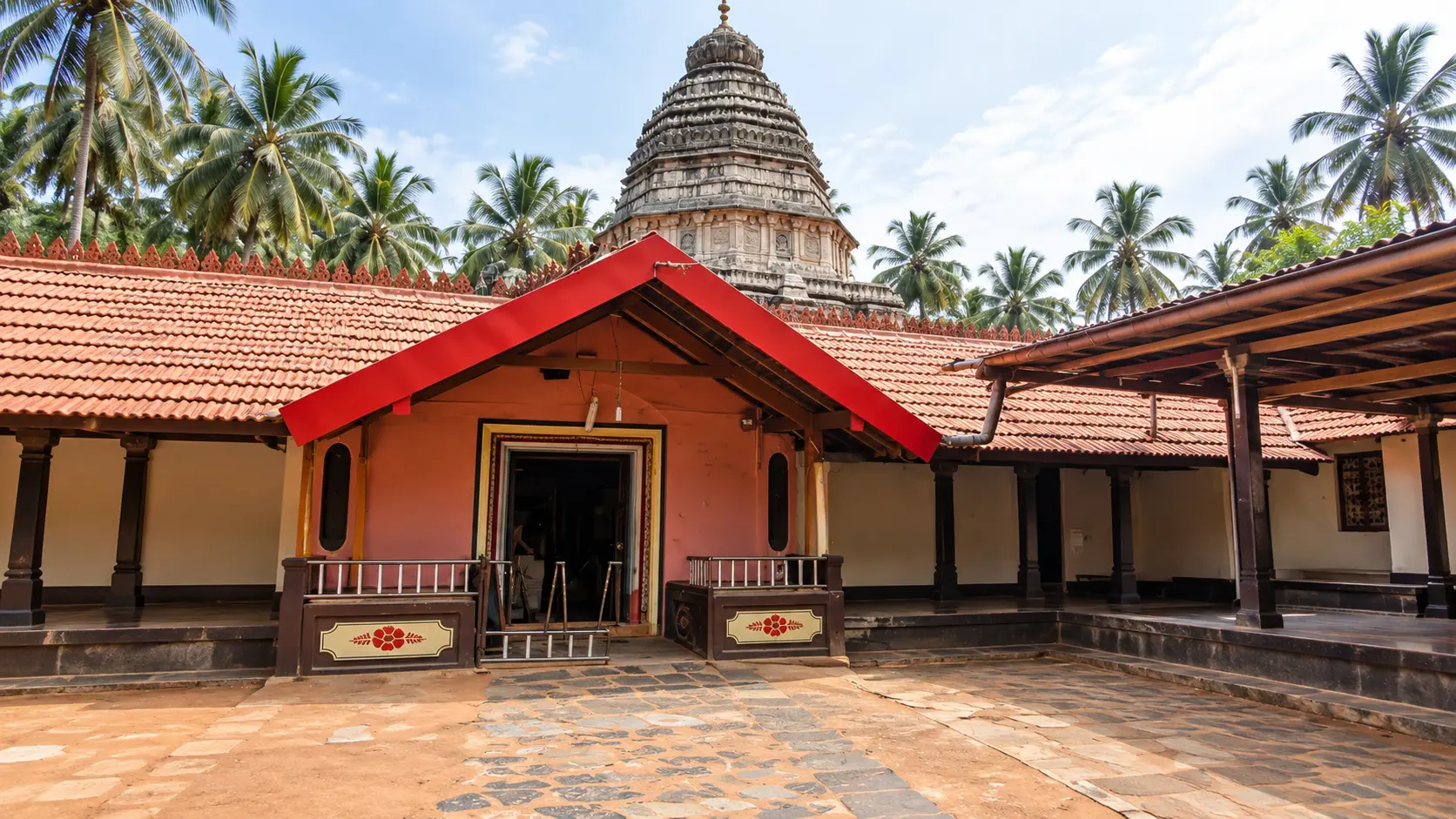
Beneath the towering modern monuments lies the ancient inner sanctum of the Sri Mrideshwara Temple. While the exterior pavilions have been renovated with polished granite slabs and sculpted stone columns, the core garbhagriha preserves its ancient sanctified sanctity.
Inside the cool, dimly lit sanctum, the primary deity is the Atmalinga fragment, embedded deep within a subterranean square stone pit (peetha) in the floor. Devotees are escorted in orderly queues through the pillared assembly hall (mukhamantapa). As pilgrims reach the sanctum threshold, the temple archakas (hereditary priests) hold aloft a multi-wicked brass oil lamp (aarati), casting shimmering golden light into the stone hollow to reveal the sacred swayambhu linga. Devotees receive teertha (holy water) and bilva patra leaves as divine blessings.
Check the current visiting hours and permitted access with the site operator before departure; ceremonies, closures and visitor sessions can affect access. A deeply cherished tradition is the daily Annadana (free food distribution): every afternoon between 12:30 and 14:00, the temple's vast dining hall serves thousands of visiting pilgrims a wholesome, delicious, and completely free vegetarian feast featuring traditional coastal boiled rice, spiced sambar, rasam, vegetable palya, and sweet payasa.
Bhukailasa Cave Museum and Sculptural Gardens
Directly beneath the raised plinth supporting the colossal Shiva statue lies an ingenious cultural attraction: the Bhukailasa Underground Cave Museum. Entering through an arched rock opening, visitors descend into a cool, air-conditioned artificial cavern carved with textured artificial stalactites and natural rock formations.
Inside, visitors walk along a winding subterranean corridor illuminated by dramatic theatrical spotlights. The museum presents a series of elaborate, life-sized, three-dimensional fiberglass and clay tableaux featuring sound effects and multilingual voice narrations. The dioramas recreate the entire mythological saga of Ravana's penance on Mount Kailash, Lord Shiva conferring the Atmalinga, Narada's divine warnings, the trick played by the boy-Ganesha, Ravana's titanic struggle to uproot the stone at Gokarna, and the scattering of the sacred fragments along the Konkan shore. It provides an engaging, educational experience that enchants both young children and adult history enthusiasts.
Across the landscaped terraces of Kanduka Hill, visitors will also encounter several other monumental sculptural ensembles:
- The Geeta Upadesha Chariot: A magnificent, life-sized bronze-colored sculpture depicting Lord Krishna holding the reins of a four-horse war chariot while delivering the immortal teachings of the Bhagavad Gita to the bow-wielding warrior prince Arjuna on the battlefield of Kurukshetra.
- The Surya Deva Sun Chariot: A dynamic sculpture illustrating the Sun God Surya riding his golden celestial chariot drawn by seven galloping horses, symbolizing the seven rays of light and the seven days of the week.
- Ravana and Ganesha Statues: A life-sized tableau on the hill slope depicting the dramatic moment when the disguised boy-Ganesha places the Atmalinga upon the earth while Ravana watches in helpless horror.
Murudeshwar Beach and Coastal Adventure Hub
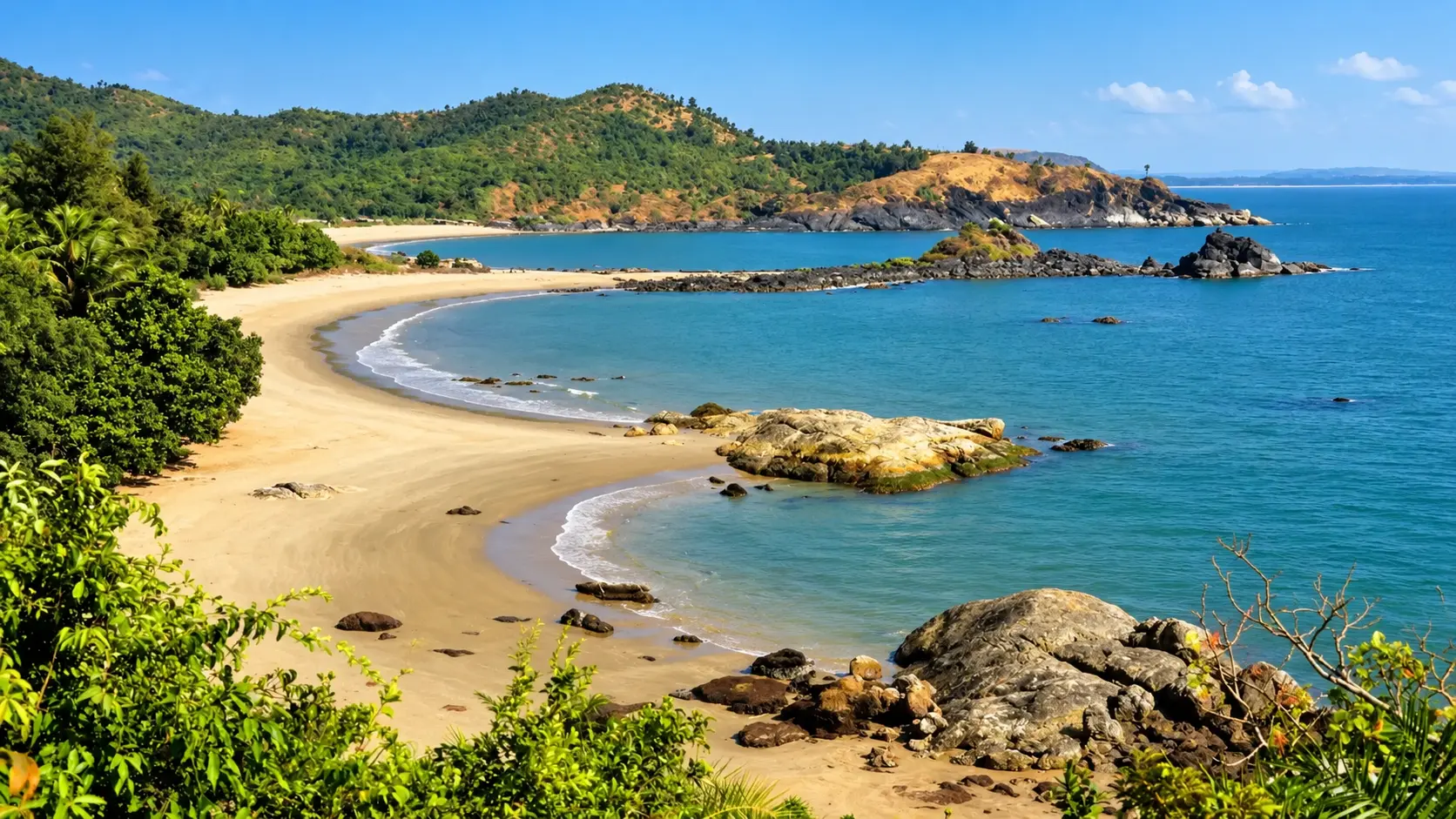
Curving immediately northward from the foot of Kanduka Hill lies Murudeshwar Beach, a wide, 2-kilometer expanse of clean, golden sand lapped by gentle to moderate Arabian Sea waves. Because the promontory of Kanduka Hill acts as a natural breakwater against southern currents, the waters near the temple are generally calmer than exposed ocean beaches, making it a popular spot for wading, family walks, and sea bathing.
Along the beach promenade, local operators provide an array of popular water sports during the post-monsoon and winter months (October to May):
- Jet Skiing: High-speed tandem rides across the bay fronting the temple.
- Banana Boat & Bumper Rides: Fun, thrilling group rides pulled by high-speed motorboats.
- Speedboat Cruises: Short offshore boat rides that loop around Kanduka Hill, providing photographers with a spectacular, water-level perspective of the colossal Shiva statue and Raja Gopura rising straight out of the ocean cliffside.
- Beachfront Amenities: Shaded umbrellas, tender coconut vendors, camel and pony rides, and rows of beachside stalls serving spicy roasted corn, fresh fish thalis, and coastal Karnataka snacks.
Best time to visit
Because Murudeshwar combines outdoor coastal exploration, open hill climbing, and marine water sports, timing…Explore detailsClose details
Because Murudeshwar combines outdoor coastal exploration, open hill climbing, and marine water sports, timing your visit according to coastal seasonal cycles is critical for maximum comfort:
[ October to February: Peak Season ]
Comfortable weather (20°C - 32°C), calm seas, clear blue skies.
Optimal for Raja Gopura views, beach water sports, and Netrani scuba diving.
                │
                ▼
[ March to May: Summer Season ]
Intense heat (up to 36°C) and heavy marine humidity.
Early morning (06:00 - 09:30) and late afternoon (16:30 - 20:30) visits essential.
                │
                ▼
[ June to September: Southwest Monsoon ]
Torrential rainfall (3,500+ mm), rough surging seas, dramatic wave crashes.
Inland temple and cave museum open; water sports and boat diving strictly closed.
Post-Monsoon and Winter Season (October to February)
This is the undisputed premier window to visit Murudeshwar. With the departure of the southwest monsoon by early October, the coastal climate becomes exceptionally pleasant, with daytime temperatures hovering comfortably between 20°C and 32°C. The humidity drops significantly, days are blessed with clear azure skies, and refreshing sea breezes sweep across Kanduka Hill.
The Arabian Sea becomes calm and clear, allowing all beachfront water sports to operate at full capacity. Crucially, this is the prime operating window for Netrani Island scuba diving expeditions, with underwater visibility reaching an outstanding 15 to 30 meters. Climbing the open terraces around the Shiva statue and waiting for the Raja Gopura elevator can be enjoyed without physical exhaustion. Festive energy peaks during Kartika Purnima in November and Maha Shivaratri in February/March. Because this is the peak tourist season, advance booking of sea-facing hotels is strongly recommended.
Summer Season (March to May)
Summer in coastal Uttara Kannada brings intense heat and heavy, moisture-laden humidity. Afternoon temperatures routinely reach 34°C to 36°C, with the heat index feeling significantly higher due to tropical ocean evaporation. The stone and concrete walkways across Kanduka Hill absorb heat rapidly, making barefoot walking between the sanctum and statue terraces uncomfortably hot between 11:00 and 16:00.
Check the current visiting hours and permitted access with the site operator before departure; ceremonies, closures and visitor sessions can affect access. Hydration with fresh tender coconut water and sugarcane juice is essential.
Southwest Monsoon (June to September)
The Southwest Monsoon transforms the coastline into an awe-inspiring, elemental spectacle. Uttara Kannada receives over 3,500 mm of torrential rain during this period. Massive ocean swells driven by gale-force winds crash violently against the rocky laterite base of Kanduka Hill, sending plumes of white sea spray soaring dozens of feet into the air.
While beach swimming, jet skiing, and boat trips to Netrani Island are strictly banned by district maritime authorities during the monsoon due to hazardous marine conditions, the temple complex remains fully accessible and deeply atmospheric. Visiting the 18th-floor observation gallery of the Raja Gopura during an overcast monsoon squall - watching dark rain curtains sweep across the churning, leaden sea - is an unforgettable experience. The surrounding Western Ghats foothills turn a brilliant, electric green, and nearby waterfalls such as Apsara Konda and Jog Falls swell to their thundering best.
How to reach
Murudeshwar enjoys exceptional connectivity via rail, road, and air, serving as a prime destination along…Explore detailsClose details
Murudeshwar enjoys exceptional connectivity via rail, road, and air, serving as a prime destination along Karnataka's central coastal corridor.
Rail Connections
The Konkan Railway passes directly through Murudeshwar, offering one of the most scenic and convenient transit modes:
- Murudeshwar Railway Station (Station Code: MRDW): Situated just 2.5 km east of the temple complex. A well-maintained station where numerous long-distance express, superfast, and passenger trains make scheduled halts. Notably, the prestigious Mangaluru Central - Madgaon Vande Bharat Express stops here, offering rapid, air-conditioned transit from Goa, Udupi, and Mangaluru. Other major trains halting at Murudeshwar include the Matsyagandha Express (Mumbai LTT - Mangaluru), the Netravati Express, the Panchaganga Superfast Express (from Bengaluru via Hassan and Kumta), and the Marusagar Express. Confirm the current charge and what it includes with the operator or service provider. Visitor admission, vehicles, parking, activities and accommodation can have separate charges.
- Bhatkal Railway Station (Station Code: BKL): Located approximately 16 km south of Murudeshwar. Serves as a larger junction with additional halts for all long-distance trains, connected to Murudeshwar by frequent express buses and highway taxis (journey time ~20 minutes).
Road Routes and Highway Network
Murudeshwar is located immediately adjacent to National Highway 66 (NH-66) - the four-lane coastal expressway connecting Panvel (Mumbai), Goa, coastal Karnataka, and Kerala. At the Murudeshwar highway junction, a broad, divided boulevard lined with streetlights and an ornate welcome archway leads westward for just 1.5 km directly to the temple plaza.
- From Bengaluru (~465 km, 9 to 11 hours): The standard driving route follows NH-48 through Tumakuru, Chitradurga, and Davanagere to Haveri, then branches westward via Sirsi, descending Devimane Ghat to Kumta, and turning south onto NH-66 directly to Murudeshwar. An alternative scenic route runs via Shivamogga, Sagara, Jog Falls, and Honnavar. KSRTC operates regular daily Non-AC Sleeper, Rajahamsa, and luxury Airavat Club Class multi-axle Volvo overnight buses departing from Kempegowda Bus Station (Majestic) directly to Murudeshwar.
- From Mangaluru (~160 km, 3 to 3.5 hours): Travel northward along the smooth four-lane NH-66 corridor via Udupi, Kundapura, and Byndoor. Frequent express buses and private taxis ply this scenic coastal highway continuously.
- From Gokarna (~78 km, 1.5 to 2 hours): Drive south along NH-66 past Kumta, the Aghanashini River bridge, Mirjan Fort, and Honnavar. This route forms a classic single-day coastal heritage corridor.
- From Panaji / South Goa (~190 km, 4 to 4.5 hours): Follow NH-66 south through Margao, Canacona, Karwar, and Ankola to Murudeshwar.
Air Travel Access
Travelers arriving by domestic or international flights can utilize three primary aviation hubs:
- Mangaluru International Airport (IXE): Located approximately 160 km south of Murudeshwar. Mangaluru is the closest and most convenient airport, operating extensive daily domestic flights to Mumbai, Bengaluru, Chennai, Hyderabad, and Delhi, alongside direct international flights to major Gulf destinations. Pre-paid airport taxis make the northward coastal drive along NH-66 to Murudeshwar in approximately 3.5 hours.
- Goa Dabolim Airport (GOI): Located approximately 190 km north of Murudeshwar. Offers extensive domestic flights and seasonal international charters. Highway drive time via NH-66 is approximately 4 to 4.5 hours.
- Hubballi Airport (HBX): Located approximately 200 km northeast in northern Karnataka. Serviced by domestic flights from Bengaluru, Mumbai, and Hyderabad. Taxis descend the Western Ghats via Yellapur and Kumta in roughly 4 hours.
Entry, timings and permissions
Fees, visiting hours and entry rules may change.Explore detailsClose details
Fees, visiting hours and entry rules may change. Confirm the latest details with the official operator or local authority before travelling.
A complete summary of daily temple hours, specialized attraction tariffs, and administrative guidelines:
Attraction / Service | Operating Schedule | Tariff / Fees | Practical Visiting Notes |
|---|---|---|---|
Murudeshwar Temple Complex | 06:00 to 13:00 & 15:00 to 20:30 Daily | Free Entry (₹0) | General admission and public circumambulatory queue (sarvadarshan) are completely free of charge. |
Sanctum Closure Window | 13:00 to 15:00 Daily | The inner sanctum is closed for afternoon naivedya and deity rest; courtyard grounds remain accessible. | |
Raja Gopura Passenger Lift | 06:00 to 12:30 & 15:00 to 19:30 Daily | ₹20 to ₹30 per adult | High-speed elevator to the 18th-floor observation deck. Children under 5 ride free. Tickets at gopura base. |
Bhukailasa Cave Museum | 06:30 to 12:30 & 15:00 to 19:30 Daily | ₹10 to ₹20 per visitor | Located directly beneath the Shiva statue. Air-cooled gallery with multilingual audio-visual dioramas. |
Free Annadana Prasadam | 12:30 to 14:00 Daily | Free (₹0) | Free traditional South Indian vegetarian lunch served to all pilgrims in the temple dining hall. |
Dress Code and Sanctum Guidelines
The temple administration maintains strict decorum to preserve the sanctity of this ancient pilgrimage center:
- Permitted Attire: Men may wear traditional dhotis, cotton trousers, or standard jeans paired with shirts or kurtas outside the sanctum. Inside the inner sanctum sanctorum during special abhishekams, men are traditionally requested to remove their shirts and remain bare-chested. Women must wear traditional Indian attire: sarees, salwar kameez, or modest full-length dresses.
- Prohibited Attire: Shorts, bermudas, three-quarters, mini-skirts, sleeveless tops, crop tops, and transparent beachwear are strictly prohibited within the temple complex, the Raja Gopura, and the Cave Museum. Visitors coming directly from Murudeshwar Beach must change into appropriate clothing before entering the sacred gates.
- Footwear: All footwear must be deposited at designated, token-managed shoe stands located at the base of the Raja Gopura before ascending Kanduka Hill. Footwear is strictly prohibited beyond the gopura portal.
- Photography and Electronics: Handheld still photography and smartphone pictures of the colossal Shiva statue, external sculptures, and coastal vistas from Kanduka Hill and the Raja Gopura 18th floor are fully permitted. However, photography and video recording inside the inner sanctum sanctorum are strictly forbidden. Unmanned aerial vehicles (drones) are prohibited without prior written clearance from the local administration.
Nearby places to consider
Murudeshwar serves as a prime coastal anchor, offering convenient access to dramatic waterfalls, historic river…Explore detailsClose details
Murudeshwar serves as a prime coastal anchor, offering convenient access to dramatic waterfalls, historic river estuaries, ancient fortresses, and sacred temples:
                         [ Mirjan Fort & Gokarna ]
                       (Historic laterite citadel, 56 - 78 km)
                                    ▲
                                    │
[ Netrani Island ] ◄─────── [ Murudeshwar ] ───────► [ Idagunji Ganapathi ]
(Premier scuba diving,              │                 (Ancient 1,500-yr shrine,
 19 km offshore)                    │                       20 km north)
                                    ▼
                         [ Apsara Konda & Honnavar ]
                       (Waterfall, boardwalks & estuary,
28 - 30 km north)- Murudeshwar Beach (Adjacent to Temple): A lively 2-km arc of clean sand offering safe bathing, camel rides, boat cruises around the temple cliffs, jet skiing, and vibrant seaside dining serving fresh Konkan fish thalis.
- Netrani Island (Pigeon Island) (~19 km offshore): An uninhabited, coral-fringed rocky island in the Arabian Sea recognized as Karnataka's premier scuba diving and snorkeling paradise, boasting 15 - 30 meter underwater visibility and encounters with reef sharks, stingrays, and vibrant coral fish.
- Idagunji Maha Ganapathi Temple (~20 km north): A revered 1,500-year-old pilgrimage shrine dedicated to Lord Ganesha, depicted in a rare standing dvibhuja (two-handed) monolithic murti holding a modaka and lotus bud, drawing over a million devotees annually.
- Apsara Konda Falls and Hilltop Garden (~28 km north near Honnavar): A picturesque natural freshwater cascade tumbling into a serene green pond, traditionally believed to be the bathing pool of celestial nymphs (apsaras), set within a scenic park overlooking the Arabian Sea coastline.
- Sharavathi Mangrove Boardwalk, Honnavar (~30 km north): A magnificent, elevated wooden walking boardwalk meandering through dense, protected tidal mangrove forests along the Sharavathi River estuary, accompanied by serene boating tours.
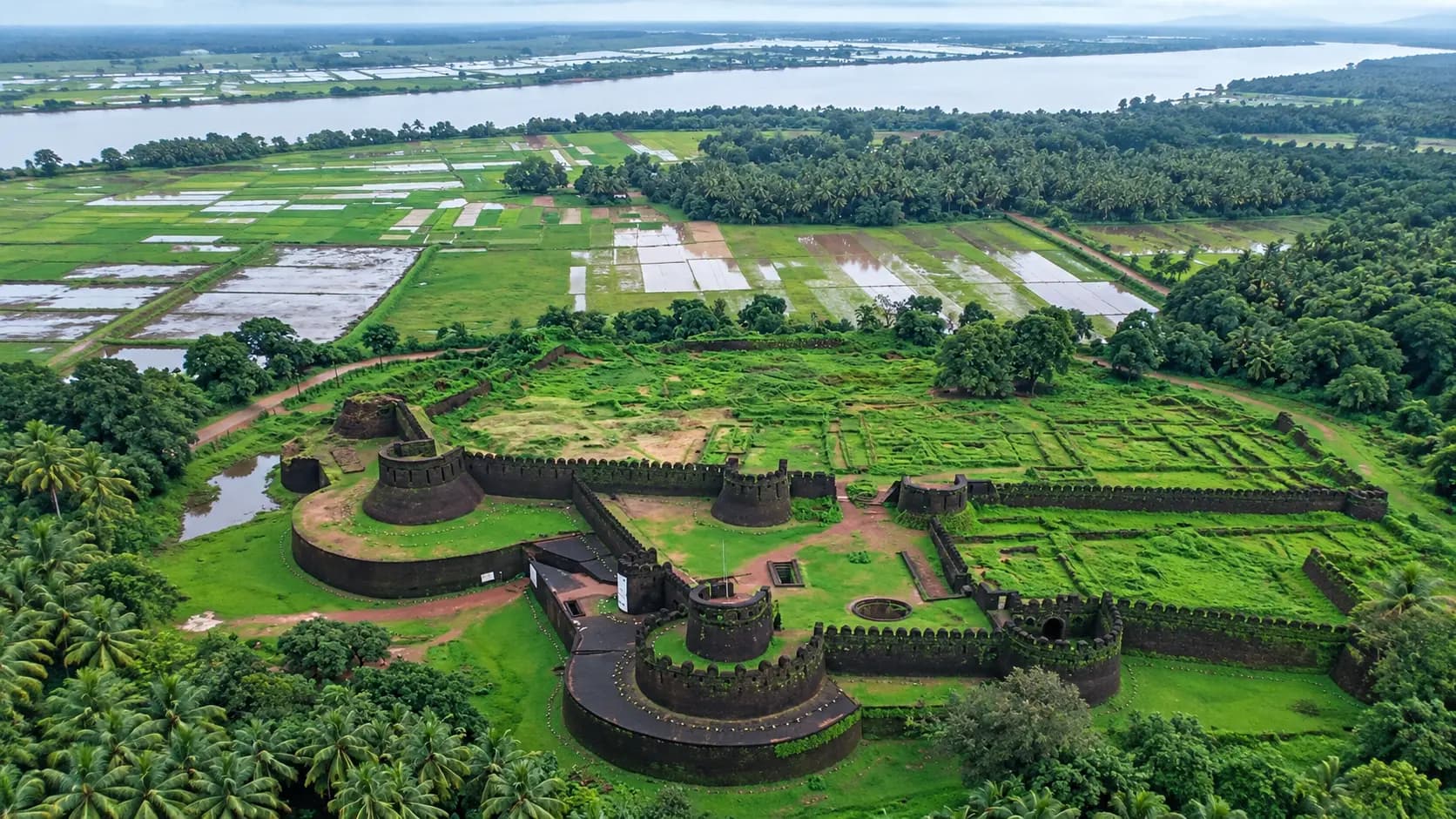
- Mirjan Fort (~56 km north near Kumta): An imposing 16th-century coastal fortress built from massive dark laterite stones by Queen Chennabhairadevi ("The Pepper Queen"), celebrated for its double-walled ramparts, nine historic wells, and post-monsoon emerald-green velvet moss blanket.
- Gokarna Town and Beaches (~78 km north): The sacred home of the 4th-century CE Mahabaleshwar Temple enshrining the primary root Atmalinga, Kotiteertha stepwell, and the iconic coastal trekking trail connecting Kudle, Om, Half Moon, and Paradise beaches.
- Bhatkal Port and Historic Jain Basadis (~18 km south): A historic maritime port town known for its unique Mudbhatkal Jain temple complex, ancient stone basadis with intricately chiseled pillars, and distinct coastal Navayathi cultural heritage.
In pictures
The practical bits
Before you go.
Plan ahead
To ensure a seamless, fulfilling visit to Murudeshwar Temple, keep these five essential preparation guidelines in…Explore detailsClose details
To ensure a seamless, fulfilling visit to Murudeshwar Temple, keep these five essential preparation guidelines in mind:
Raja Gopura Lift Timing Strategy
Check the current visiting hours and permitted access with the site operator before departure; ceremonies…Explore detailsClose details
Check the current visiting hours and permitted access with the site operator before departure; ceremonies, closures and visitor sessions can affect access.
Sanctum and Temple Complex Dress Compliance
Visitors must observe modest attire standards by avoiding shorts, sleeveless tops, and beachwear, ensuring men…Explore detailsClose details
Visitors must observe modest attire standards by avoiding shorts, sleeveless tops, and beachwear, ensuring men have shirts that can be easily removed if participating in special inner sanctum rituals and women are dressed in sarees or salwar kameez.
Netrani Island Scuba Diving Scheduling
Travelers wishing to undertake boat-based scuba diving or snorkeling at Netrani Island must book with certified…Explore detailsClose details
Travelers wishing to undertake boat-based scuba diving or snorkeling at Netrani Island must book with certified dive operators at least one day in advance, plan trips exclusively between October and May when seas are calm, and ensure they have a full 6-to-7-hour block allocated for the boat transit and dive rotations.
Afternoon Temple Intermission Coordination
Check the current visiting hours and permitted access with the site operator before departure; ceremonies…Explore detailsClose details
Check the current visiting hours and permitted access with the site operator before departure; ceremonies, closures and visitor sessions can affect access.
Sun Protection and Coastal Heat Management
Check the current visiting hours and permitted access with the site operator before departure; ceremonies…Explore detailsClose details
Check the current visiting hours and permitted access with the site operator before departure; ceremonies, closures and visitor sessions can affect access.
A few things you might wonder
Common questions about visiting Murudeshwar Temple. Fees, visiting hours and ceremonies are researched details that may change; confirm current arrangements with the operator before travelling.
How tall is the colossal Shiva statue at Murudeshwar and who built it?
What are the opening timings and daily schedules of Murudeshwar Temple?
How does the passenger lift in the Raja Gopura work and what does it cost?
What is the mythological origin of Murudeshwar and its connection to the Atmalinga?
Can non-swimmers participate in scuba diving at Netrani Island from Murudeshwar?
What is the dress code enforced at Murudeshwar Temple and Raja Gopura?
How far is Murudeshwar from Gokarna and Bangalore, and how can I travel between them?
Is there an entry fee to visit Murudeshwar Temple?
Explore more in Gokarna Murudeshwar
Discover other destinations around this hub
More Hubs in Karnataka
Continue exploring other travel hubs in this state
Planning a trip to Gokarna Murudeshwar?