Tungabhadra Dam
Complete visitor guide to Tungabhadra Dam near Hosapete in Vijayanagara district. Explore Vaikuntha hilltop, Japanese gardens, musical fountain, timings, and routes.
Location
Hampi Badami, Karnataka
A closer look
Your visit, at a glance.
Hampi Badami, Karnataka
GET TO KNOW THE PLACE
Spanning the mighty Tungabhadra River just six kilometres northwest of Hosapete in Karnataka's Vijayanagara district, the Tungabhadra Dam - revered locally as Pampa Sagar -…
The story of Tungabhadra Dam
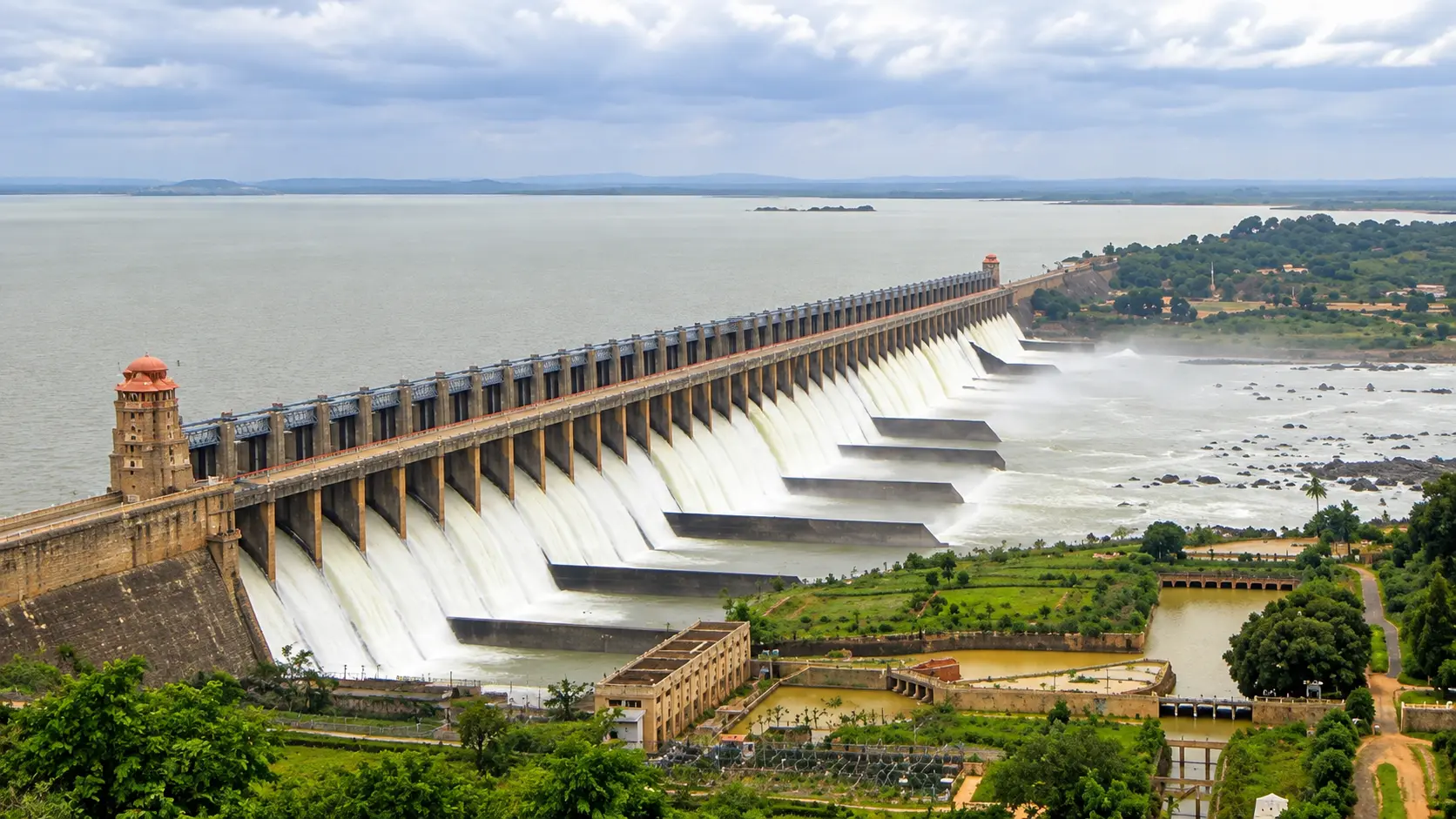
Spanning the mighty Tungabhadra River just six kilometres northwest of Hosapete in Karnataka's Vijayanagara district, the Tungabhadra Dam - revered locally as Pampa Sagar - stands as one of the most monumental and transformative civil engineering achievements of post-independence India. Inaugurated in 1953 under the pioneering leadership of the legendary civil engineer Thirumalai Iyengar and overseen jointly by the central and state governments, this colossal composite masonry-and-earthen structure tamed a turbulent river, turned hundreds of thousands of hectares of drought-prone Deccan scrubland into lush agricultural oases, and created an inland freshwater sea covering over 378 square kilometres (146 square miles).
Beyond its vital economic role as the hydraulic lifeblood of northern Karnataka, Andhra Pradesh, and Telangana - providing irrigation to vast fields of sugarcane, paddy, and cotton, while generating hydroelectric power - Tungabhadra Dam has evolved into one of the premier leisure destinations in the region. Located only 20 kilometres southwest of the UNESCO World Heritage monuments of Hampi, the dam complex offers visitors a delightful contrast to ancient stone ruins: sweeping aerial panoramas from the summit of the Vaikuntha Hilltop Viewpoint, terraced walks through the meticulously landscaped Japanese Gardens, and an enchanting evening spectacle where the Musical Dancing Fountain bursts into dynamic, multi-coloured illumination choreographed to classical and patriotic rhythms.
Whether you are watching the thunderous roar of millions of gallons of water plunging through the dam's 33 massive radial crest gates during the peak monsoon season, enjoying a peaceful sunset over the vast expanse of Pampa Sagar as local fishing boats drift against the crimson sky, or taking a relaxed family stroll through cool, shaded gardens, Tungabhadra Dam is an indispensable highlight of any journey through the Hampi-Badami heritage circuit.
Start here. Open a tile for the full details.
Why goRead details
The Tungabhadra Dam complex combines monumental post-colonial hydraulic architecture with scenic natural beauty and vibrant family leisure:
When to visitRead details
The experience of visiting Tungabhadra Dam changes dramatically across the seasons, influenced by rainfall in the Western Ghats and the seasonal agricultural irrigation calendar.
Entry & permissionsRead details
Fees, visiting hours and entry rules may change. Confirm the latest details with the official operator or local authority before travelling.
Visiting Tungabhadra Dam is governed by clear ticketing policies and strict national critical infrastructure security guidelines:
+-----------------------------------------------------------------------------------+
|                        TUNGABHADRA DAM TARIFFS & SCHEDULE                         |
+-----------------------------------------------------------------------------------+
| Operational Category   | Regulation / Tariff Details                              |
+------------------------+----------------------------------------------------------+
| General Park Hours     | 08:30 to 20:30 daily throughout the year                 |
+------------------------+----------------------------------------------------------+
| Vaikuntha Hill Access  | 09:00 to 18:30 (Closes strictly at dusk for security)   |
+------------------------+----------------------------------------------------------+
| Musical Fountain Show  | 19:15 to 20:00 daily (Weekdays);                         |
|                        | 19:15 to 20:30 (Weekends/Holidays with multiple shows)   |
+------------------------+----------------------------------------------------------+
| Garden Admission Fee   | ₹20 per adult; ₹10 per child (aged 5 - 12); Under 5 free   |
+------------------------+----------------------------------------------------------+
| Musical Fountain Fee   | ₹20 to ₹25 per person                                    |
+------------------------+----------------------------------------------------------+
| Hilltop Shuttle Bus    | ₹20 to ₹30 per passenger round-trip                      |
+------------------------+----------------------------------------------------------+
| Vehicle Parking        | ₹30 for two-wheelers; ₹50 for cars; ₹100 for buses       |
+------------------------+----------------------------------------------------------+
| Drone Regulations      | Commercial and recreational drone flights are strictly   |
|                        | prohibited across the entire dam perimeter & reservoir   |
+-----------------------------------------------------------------------------------+
Admission Tariffs, Show Timings, and Security Protocols
Tickets for general garden entry, the musical fountain show, and the Vaikuntha hilltop mini-bus shuttle are sold at physical ticket booths located at the main visitor entrance gate. Both cash and digital UPI payments (Google Pay, PhonePe, Paytm) are widely accepted.
Because Tungabhadra Dam is classified as a vital national critical infrastructure installation under the protection of the Central Industrial Security Force (CISF) and the Karnataka State Police, visitors must observe strict security protocols:
- Crest Wall Access Prohibited: Walking across the active crest of the spillway dam wall or venturing near the intake sluices and hydroelectric powerhouses is strictly prohibited for the general public.
- Drone Ban: The flying of unmanned aerial vehicles (drones) anywhere within the dam zone, garden grounds, or over the reservoir waters is strictly banned without high-level clearance from the Ministry of Home Affairs and the Tungabhadra Board. Violations result in immediate confiscation of gear and police detention.
- Swimming Prohibited: Swimming, bathing, or cliff diving into the downstream river waters or the reservoir foreshore is strictly prohibited due to dangerous undertows and sudden water releases.
Plan your visitRead details
Tungabhadra Dam enjoys exceptional transport connectivity, situated immediately adjacent to Hosapete, the primary commercial and railway hub of Vijayanagara District.
Footwear and accessibility considerations
Exploring the gardens and hilltop viewpoint involves a fair amount of walking along paved footpaths, stone terraces, and garden lawns. Wear comfortable walking shoes or walking sandals. For elderly travelers or visitors with limited mobility, the board-operated mini-bus shuttle is an excellent amenity that eliminates the need to climb the steep 1.5-kilometre hill road to Vaikuntha. The lower Japanese Gardens are largely flat and wheelchair-accessible along the main paved promenades.
Explore the full guide - choose a topic below.
Why visit?
The Tungabhadra Dam complex combines monumental post-colonial hydraulic architecture with scenic natural beauty…Explore detailsClose details
The Tungabhadra Dam complex combines monumental post-colonial hydraulic architecture with scenic natural beauty and vibrant family leisure:
- Monumental Mid-Century Engineering Feat: Standing 49.5 metres high and stretching nearly 2.44 kilometres across the river valley, the dam is an extraordinary testament to Indian civil engineering. Built primarily with solid granite stone masonry rather than modern reinforced concrete, it exemplifies the transition from classical masonry craftsmanship to modern mega-dam hydrology.
- The 33 Crest Gates Monsoon Spectacle: When the upstream reservoirs of the Western Ghats fill to capacity during the southwest monsoon (July to September), dam engineers hoist open the 33 massive radial crest gates. The resulting sight - a deafening, foaming wall of white water cascading down the spillway into the river gorge below - is one of the most awe-inspiring industrial spectacles in South India.
- The Panoramic Vaikuntha Hilltop Viewpoint: Perched high on a rocky granite bluff overlooking the southern abutment of the dam, the Vaikuntha hilltop provides an unobstructed 360-degree aerial panorama. Visitors look out over the boundless blue expanse of Pampa Sagar stretching toward the horizon, the forested ridges of the Sandur hills, and the curving masonry wall of the dam below.
- The Japanese Gardens and Landscaped Terraces: Downstream of the dam wall lies an expansive horticultural park designed in the traditional Japanese aesthetic, featuring terraced lawns, rockeries, cascading miniature waterfalls, arched wooden footbridges, and ornamental flower beds that offer refreshing respite from the dry Deccan sun.
- The Evening Musical Dancing Fountain: As dusk descends over the reservoir, the park's state-of-the-art musical fountain arena comes alive. Illuminated by brilliant rainbow-coloured underwater floodlights, powerful vertical water jets and oscillating plumes dance in precise synchronization to beloved Indian instrumental music, classical ragas, and patriotic anthems.
- Illuminated Dam Crest Light Show: During festive occasions, national holidays, and major weekend evenings, the entire 2.4-kilometre superstructure of the dam and its cascading spillways are illuminated with dynamic multicoloured architectural lighting, creating a magical ribbon of light across the night sky.
- Perfect Complement to Hampi Heritage Touring: Located just 20 minutes from Hosapete and 35 minutes from Hampi Bazaar, the dam provides an ideal, relaxing afternoon-to-evening retreat after spending hot morning hours exploring ancient stone temples.
What to expect
Visiting Tungabhadra Dam is an enjoyable, multi-tiered excursion that combines hilltop viewpoints, garden…Explore detailsClose details
Visiting Tungabhadra Dam is an enjoyable, multi-tiered excursion that combines hilltop viewpoints, garden promenades, and evening entertainment. The visitor complex is situated primarily on the southern bank of the river within Hosapete Taluk of Vijayanagara District:
+-----------------------------------------------------------------------------------+
|                        TUNGABHADRA RESERVOIR (PAMPA SAGAR)                        |
|                               (378 sq km Water Basin)                             |
+-----------------------------------------------------------------------------------+
                                         │
                 [ 33 Radial Crest Gates Spillway Wall (2.44 km) ]
                                         │
        +--------------------------------+--------------------------------+
        |                                                                 |
[Vaikuntha Hilltop]                                             [Lower Dam Base]
(Panoramic Viewpoint,                                                     │
 Guesthouse, Sunset Vista)                                        [Japanese Gardens]
        │                                                       (Terraced Lawns & Rockeries)
  (Mini-Bus Shuttle)                                                      │
        │                                                       [Musical Fountain Arena]
        +───────────────────────── [Main Entry Gate] ───────────── (Evening Water Show)
                                         │
                          [ NH-67 Highway to Hosapete (6 km) ]
The Multipurpose Engineering Giant of the Deccan
The physical dimensions of Tungabhadra Dam reflect the grand vision of early independent India's infrastructure development. Spanning a natural gorge formed by granite hills where the Tungabhadra River leaves the Sandur basin, the dam is a composite structure comprising:
- A central gravity masonry spillway dam constructed of precision-dressed granite stone blocks bonded with specialized surki mortar, measuring 1,770 metres in length;
- Flanking composite earthen dykes and rockfill saddle dams that extend the total barrier length to 2,441 metres (nearly 2.5 kilometres);
- A maximum height of 49.5 metres (162 feet) above the deepest riverbed foundation;
- A spillway crest equipped with 33 massive radial gates, each measuring 18.3 metres wide by 6.1 metres high (60 ft by 20 ft), capable of discharging extreme design floods exceeding 650,000 cusecs (cubic feet per second).
Behind this massive barrier lies the Pampa Sagar Reservoir, which inundates an area of 378 square kilometres across three districts when filled to its Full Reservoir Level of 497.7 metres (1,633 feet above sea level). The reservoir acts as a regional inland sea, moderating local temperatures, supporting inland fisheries, and sustaining vital bird habitats for resident and migratory waterfowl.
+-----------------------------------------------------------------------------------+
|                        DAM TECHNICAL & HYDROLOGICAL DATA                          |
+-----------------------------------------------------------------------------------+
| Metric                     | Specification / Dimension                            |
+----------------------------+------------------------------------------------------+
| Total Crest Length         | 2,441 metres (1,770 m masonry + earthen dykes)       |
+----------------------------+------------------------------------------------------+
| Maximum Height             | 49.5 metres (162 feet)                               |
+----------------------------+------------------------------------------------------+
| Spillway Crest Gates       | 33 radial gates (60 ft x 20 ft each)                 |
+----------------------------+------------------------------------------------------+
| Full Reservoir Level (FRL) | 497.7 metres (1,633.0 feet) above sea level          |
+----------------------------+------------------------------------------------------+
| Water Spread Area at FRL   | 378.8 square kilometres (146.25 square miles)        |
+----------------------------+------------------------------------------------------+
| Storage Capacity           | Designed 133 TMC; current live capacity ~101 TMC     |
+----------------------------+------------------------------------------------------+
| Beneficiary States         | Karnataka, Andhra Pradesh, and Telangana             |
+-----------------------------------------------------------------------------------+
Vaikuntha Hilltop Viewpoint: The Panoramic Reservoir Vista
Rising steeply immediately south of the dam abutment is the rocky granite ridge known as Vaikuntha Hill. This elevated promontory is home to the VIP Vaikuntha Guest House and several open-air observation pavilions surrounded by manicured gardens.
Confirm the current charge and what it includes with the operator or service provider. Visitor admission, vehicles, parking, activities and accommodation can have separate charges.
From the summit observation parapets, the view is breathtaking:
- Looking westward, the vast blue expanse of Pampa Sagar extends as far as the eye can see, dotted with rocky islands and framed by the purple silhouettes of distant hill ranges.
- Looking directly downward, visitors get an unparalleled bird's-eye perspective of the massive curving masonry wall of the dam, the powerhouses at its base, and the turbulent frothing water issuing into the river canal below.
- Watching the sunset from Vaikuntha Hill is considered one of the finest evening experiences in the Hosapete area. As the sun dips toward the horizon, the reservoir waters turn molten gold and crimson, casting long dramatic shadows across the rugged granite crags.
The Japanese Gardens and Landscaped Grounds
Situated on the flat valley floor directly downstream of the dam wall, the Japanese Gardens offer acres of tranquil, beautifully maintained green space. Commissioned to enhance the tourism value of the site, the gardens were designed by expert landscape horticulturists drawing inspiration from classical East Asian stroll gardens.
Key features of the gardens include:
- Terraced Lawns and Topiary: Broad, manicured emerald lawns bordered by neatly sculpted hedges, decorative ornamental topiary, and flowerbeds blooming with seasonal bougainvillea, cannas, and roses.
- Rockeries and Water Features: Ingeniously arranged granite boulders interspersed with small artificial streams, cascading rockeries, and arched pedestrian footbridges that cross shallow reflection pools.
- Shaded Promenades: Wide paved avenues lined with towering royal palms, shade-giving banyan and neem trees, and comfortable stone benches where visitors can relax during the late afternoon.
- Picnic Areas: Open grassy zones where families gather to enjoy afternoon snacks, take photographs, and let children play in a safe, vehicular-free environment.
Musical Dancing Fountain and Evening Illumination
The undisputed crowd favourite at Tungabhadra Dam is the Musical Dancing Fountain, situated in a dedicated outdoor amphitheatre within the garden complex.
Every evening as darkness falls (typically starting at 19:15), hundreds of visitors take their seats on tiered stone benches surrounding a large circular water basin. The show features:
- Choreographed Hydrotechnics: Dozens of computer-controlled submersible pumps, oscillating water nozzles, and high-pressure vertical geyser jets propel plumes of water up to twenty metres into the air.
- Dynamic Lighting: A spectrum of high-intensity multi-coloured LED and underwater halogen lights illuminates the moving water jets in vibrant shades of emerald, amber, ruby, violet, and sapphire.
- Musical Choreography: The water movements are choreographed to rhythmic soundtracks spanning classical Indian ragas, popular Kannada and Hindi instrumental melodies, and stirring patriotic anthems.
- Sound and Light Presentation: During holiday weekends, a complementary sound-and-light narration explains the history of the Tungabhadra project, the life of Thirumalai Iyengar, and the cultural heritage of the Vijayanagara Empire.
The Deer Park, Aquarium, and Family Attractions
In addition to the main gardens and musical fountain, the lower tourist complex houses several family-friendly attractions:
- Spotted Deer Park: A shaded, fenced woodland sanctuary near the garden entrance housing a resident herd of gentle spotted deer (Axis axis). Visitors can observe the deer grazing beneath the canopy, and children enjoy watching fawns resting near the watering troughs.
- Freshwater Aquarium: A modest indoor aquarium exhibiting regional freshwater fish species collected from the Tungabhadra and Krishna river basins, alongside colourful ornamental tropical fish.
- Souvenir Stalls and Eateries: Near the main bus boarding area, numerous small local stalls offer hot tea, fresh tender coconut water, ice creams, traditional snacks (such as mirchi bajji and puffed rice mandakki), and locally crafted stone and wooden souvenirs.
Best time to visit
The experience of visiting Tungabhadra Dam changes dramatically across the seasons, influenced by rainfall in the…Explore detailsClose details
The experience of visiting Tungabhadra Dam changes dramatically across the seasons, influenced by rainfall in the Western Ghats and the seasonal agricultural irrigation calendar.
+-----------------------------------------------------------------------------------+
|                        SEASONAL VISITING MATRIX FOR TB DAM                        |
+-----------------------------------------------------------------------------------+
| Season        | Months          | Dam Status & Conditions     | Travel Experience |
+---------------+-----------------+-----------------------------+-------------------+
| Peak Monsoon  | July to         | Full reservoir level;       | Spectacular;      |
| Water Surge   | October         | 33 crest gates hoisted open;| deafening roar of |
|               |                 | roaring flood discharges    | plunging water    |
+---------------+-----------------+-----------------------------+-------------------+
| Pleasant      | November to     | High water levels; crisp    | Ideal for garden  |
| Winter Season | February        | sunny days (18°C - 30°C);     | strolls, hilltop  |
|               |                 | cool evenings (14°C - 18°C)   | sunsets & fountain|
+---------------+-----------------+-----------------------------+-------------------+
| Dry Summer    | March to        | Low water level; scorching  | Harsh; visit late |
|               | June            | heat (38°C - 42°C); gates     | afternoon (after  |
|               |                 | closed; arid landscape      | 16:30 PM) only    |
+-----------------------------------------------------------------------------------+
Monsoon Spectacle & Crest Gate Discharge (July to October)
The monsoon months represent the absolute peak visual dramatic season at Tungabhadra Dam. As relentless rainfall drenches the upper catchment areas of the Tunga and Bhadra rivers in the Western Ghats (around Kudremukh and Shimoga), millions of cusecs of floodwater pour into Pampa Sagar.
When the reservoir reaches its Full Reservoir Level (497.7 m), the statutory Tungabhadra Board orders the opening of the 33 crest gates. Seeing the gates hoisted open - releasing thunderous torrents of water that plunge down the spillway glacis into the riverbed, sending towering plumes of spray and mist hundreds of feet into the air - is an awe-inspiring spectacle that attracts tens of thousands of visitors from across Karnataka and neighboring states. Rainbows frequently form across the spray in the morning sunlight, creating incredible photo opportunities.
Pleasant Winter Touring & Illuminated Evenings (November to February)
For visitors primarily interested in relaxing garden walks, scenic hilltop photography, and comfortable evening entertainment, the winter season from November to February is ideal.
- Daytime temperatures range comfortably between 18°C and 30°C with clear skies and gentle breezes.
- The reservoir remains largely full and picturesque following the monsoon rains.
- The evening musical fountain show and garden illumination operate in crisp, cool nighttime air, making it a delightful, comfortable conclusion to a day of sightseeing.
Summer Season & Diminished Water Levels (March to June)
During the hot summer months from March to June, the Deccan sun beats down intensely, with daytime temperatures routinely exceeding 40°C. As massive volumes of water are discharged through the irrigation canals to sustain summer crops across the plains, the water level of Pampa Sagar steadily recedes, exposing wide muddy foreshores and submerged rock formations.
If visiting during summer:
- Avoid the site entirely during the blistering midday hours (11:00 AM to 16:00 PM).
- Arrive at the dam complex around 16:30 or 17:00 PM to take the shuttle up to Vaikuntha Hill for sunset, followed by a cool evening stroll through the gardens and the 19:15 PM musical fountain show.
How to reach
Tungabhadra Dam enjoys exceptional transport connectivity, situated immediately adjacent to Hosapete, the primary…Explore detailsClose details
Tungabhadra Dam enjoys exceptional transport connectivity, situated immediately adjacent to Hosapete, the primary commercial and railway hub of Vijayanagara District.
+-----------------------------------------------------------------------------------+
|                        CONNECTIVITY & DISTANCE MATRIX                             |
+-----------------------------------------------------------------------------------+
| Hub / Landmark              | Distance | Transit Mode & Travel Time               |
+-----------------------------+----------+------------------------------------------+
| Hosapete Town & Bus Stand   | 6 km     | 10 - 15 mins via NH-67; local town buses   |
|                             |          |Confirm the current charge and what it includes with the operator or service provider. Visitor admission, vehicles, parking, activities and accommodation can have separate charges.|
+-----------------------------+----------+------------------------------------------+
| Hosapete Junction (HPT)     | 6 km     | 10 - 15 mins; primary South Western Rail   |
| Railway Station             |          | gateway with express trains to BLR & Goa |
+-----------------------------+----------+------------------------------------------+
| Hampi UNESCO Monument Zone  | 20 km    | 30 - 35 mins via Hampi-Hosapete Road;      |
|                             |          | hired autos, rental scooters, and taxis  |
+-----------------------------+----------+------------------------------------------+
| Jindal Vijayanagar Airport  | 40 km    | 45 - 50 mins via NH-67; direct regional    |
| (VDY - Toranagallu)         |          | flights to Bengaluru & Hyderabad         |
+-----------------------------+----------+------------------------------------------+
| Hubballi Airport (HBX)      | 140 km   | 2.5 - 3 hours via 4-lane NH-67; major      |
|                             |          | commercial airline hub                   |
+-----------------------------+----------+------------------------------------------+
| Bengaluru International BLR | 340 km   | 6 - 7 hours via 4-lane NH-48 / NH-50       |
+-----------------------------------------------------------------------------------+
Rail Connections via Hosapete Junction (HPT)
Hosapete Junction (station code: HPT) is located just six kilometres southeast of the dam entrance. It is a major junction on the South Western Railway, served by numerous express and luxury trains:
- Hampi Express (Train 16591/16592): Daily overnight train connecting Mysuru, Bengaluru City (KSR Bengaluru), and Hosapete, arriving conveniently in the early morning.
- Vande Bharat Express: Modern semi-high-speed daytime rail link connecting Bengaluru (Yesvantpur) to Hosapete in approximately 5 hours.
- Amaravathi Express / Vasco Express: Directly links Hosapete with Margao and Vasco da Gama in Goa across the Western Ghats.
- Hyderabad & Vijayawada Expresses: Provide direct daily connections to Telangana and Andhra Pradesh.
Confirm the current charge and what it includes with the operator or service provider. Visitor admission, vehicles, parking, activities and accommodation can have separate charges.
Road Transit & Highway Approaches
Tungabhadra Dam sits right off National Highway 67 (NH-67), which links Hubballi in the west with Hosapete and Ballari in the east.
- From Hosapete (6 km): Head northwest along NH-67 across the bypass overpass; well-marked signage directs traffic down the tree-lined access road directly into the main dam visitor parking area.
- From Hampi (20 km): Take the Hampi - Hosapete main road into Hosapete town, then follow NH-67 northwest to the dam (approx. 35 minutes by car or rental moped).
- From Bengaluru (340 km): Follow NH-48 north past Tumakuru to Chitradurga, then branch onto the 4-lane divided NH-50 straight to Hosapete, continuing 6 km past town onto NH-67.
- KSRTC Bus Connectivity: Confirm the current charge and what it includes with the operator or service provider. Visitor admission, vehicles, parking, activities and accommodation can have separate charges.
Regional Air Connectivity
- Jindal Vijayanagar Airport (VDY / Vidyanagar): Located approximately 40 kilometres southeast at Toranagallu, this private airstrip hosts commercial scheduled regional flights connecting directly to Bengaluru and Hyderabad. Pre-booked private taxis to TB Dam take roughly 50 minutes.
- Hubballi Airport (HBX): Situated 140 kilometres west, Hubballi is a major regional airport offering daily nonstop flights to Bengaluru, Mumbai, Delhi, Hyderabad, and Chennai. Taxis take approximately 2.5 to 3 hours via the well-maintained 4-lane NH-67.
Entry, timings and permissions
Fees, visiting hours and entry rules may change.Explore detailsClose details
Fees, visiting hours and entry rules may change. Confirm the latest details with the official operator or local authority before travelling.
Visiting Tungabhadra Dam is governed by clear ticketing policies and strict national critical infrastructure security guidelines:
+-----------------------------------------------------------------------------------+
|                        TUNGABHADRA DAM TARIFFS & SCHEDULE                         |
+-----------------------------------------------------------------------------------+
| Operational Category   | Regulation / Tariff Details                              |
+------------------------+----------------------------------------------------------+
| General Park Hours     | 08:30 to 20:30 daily throughout the year                 |
+------------------------+----------------------------------------------------------+
| Vaikuntha Hill Access  | 09:00 to 18:30 (Closes strictly at dusk for security)   |
+------------------------+----------------------------------------------------------+
| Musical Fountain Show  | 19:15 to 20:00 daily (Weekdays);                         |
|                        | 19:15 to 20:30 (Weekends/Holidays with multiple shows)   |
+------------------------+----------------------------------------------------------+
| Garden Admission Fee   | ₹20 per adult; ₹10 per child (aged 5 - 12); Under 5 free   |
+------------------------+----------------------------------------------------------+
| Musical Fountain Fee   | ₹20 to ₹25 per person                                    |
+------------------------+----------------------------------------------------------+
| Hilltop Shuttle Bus    | ₹20 to ₹30 per passenger round-trip                      |
+------------------------+----------------------------------------------------------+
| Vehicle Parking        | ₹30 for two-wheelers; ₹50 for cars; ₹100 for buses       |
+------------------------+----------------------------------------------------------+
| Drone Regulations      | Commercial and recreational drone flights are strictly   |
|                        | prohibited across the entire dam perimeter & reservoir   |
+-----------------------------------------------------------------------------------+
Admission Tariffs, Show Timings, and Security Protocols
Tickets for general garden entry, the musical fountain show, and the Vaikuntha hilltop mini-bus shuttle are sold at physical ticket booths located at the main visitor entrance gate. Both cash and digital UPI payments (Google Pay, PhonePe, Paytm) are widely accepted.
Because Tungabhadra Dam is classified as a vital national critical infrastructure installation under the protection of the Central Industrial Security Force (CISF) and the Karnataka State Police, visitors must observe strict security protocols:
- Crest Wall Access Prohibited: Walking across the active crest of the spillway dam wall or venturing near the intake sluices and hydroelectric powerhouses is strictly prohibited for the general public.
- Drone Ban: The flying of unmanned aerial vehicles (drones) anywhere within the dam zone, garden grounds, or over the reservoir waters is strictly banned without high-level clearance from the Ministry of Home Affairs and the Tungabhadra Board. Violations result in immediate confiscation of gear and police detention.
- Swimming Prohibited: Swimming, bathing, or cliff diving into the downstream river waters or the reservoir foreshore is strictly prohibited due to dangerous undertows and sudden water releases.
Nearby places to consider
Tungabhadra Dam is located within easy reach of world-class heritage ruins, wildlife sanctuaries, and historical…Explore detailsClose details
Tungabhadra Dam is located within easy reach of world-class heritage ruins, wildlife sanctuaries, and historical citadels:
                          [ Anegundi & Kishkindha ]
                        (Rural heritage & Hanuman hill, 25 km NE)
                                     ▲
                                     │
[ Munirabad & Koppal Fort ] ◄─── [ TB Dam ] ───► [ Hampi UNESCO Site ]
(Historic town & hilltop citadel,    │           (Imperial Vijayanagara ruins,
  10 - 35 km northwest)                │             20 km northeast)
                                     ▼
                          [ Daroji Bear Sanctuary ]
(Sloth bear habitat & watchtower, 30 km E)- Hampi UNESCO World Heritage Site (~20 km northeast): The legendary 14th-to-16th-century imperial capital of the Vijayanagara Empire. Sprawling across 41 square kilometres of surreal granite boulders, must-see landmarks include the Virupaksha Temple, the iconic Stone Chariot and musical pillars of the Vitthala Temple, the Lotus Mahal, and the monumental Elephant Stables.
- Daroji Sloth Bear Sanctuary (~30 km east): An 82-square-kilometre protected wilderness encompassing rocky granite scrubland dedicated to the conservation of the Indian sloth bear (Melursus ursinus). A high cliff watchtower offers exceptional sightings between 14:30 and 18:00 PM as wild bears emerge from natural caves to feed.
- Anegundi & Anjanadri Hill (~25 km northeast): The idyllic rural hamlet on the northern bank of the Tungabhadra River, identified with the mythical monkey kingdom of Kishkindha. Climb the 575 whitewashed stone steps of Anjanadri Hill to the revered birthplace of Lord Hanuman for a stunning 360-degree sunset vista.
- Koppal Fort (~35 km northwest): A formidable historic hilltop fortress rebuilt and strengthened by Tipu Sultan in 1786 with the assistance of French military engineers, renowned as one of the strongest defensive citadels in northern Karnataka.
- Chitradurga Fort (~130 km south): The celebrated "Stone Fortress of Seven Circles" (Elusuttina Kote), featuring concentric ramparts, 18 ancient temples, massive rock granaries, and secret passages built amidst giant granite boulders.
In pictures
The practical bits
Before you go.
Plan ahead
To maximize your enjoyment and ensure a smooth experience at Tungabhadra Dam, keep the following practical tips…Explore detailsClose details
To maximize your enjoyment and ensure a smooth experience at Tungabhadra Dam, keep the following practical tips in mind:
Ideal afternoon-to-evening scheduling
The most rewarding way to experience Tungabhadra Dam is to plan your visit for the late afternoon and early…Explore detailsClose details
The most rewarding way to experience Tungabhadra Dam is to plan your visit for the late afternoon and early evening. Check the current visiting hours and permitted access with the site operator before departure; ceremonies, closures and visitor sessions can affect access. Spend an hour soaking in the panoramic reservoir views and photographing the golden sunset over Pampa Sagar between 17:30 and 18:15 PM. Descend back to the garden level by 18:30 PM, enjoy a relaxed 45-minute stroll through the Japanese Gardens as evening lights come on, and take your seat in the amphitheatre for the 19:15 PM Musical Fountain Show.
Timing your visit around the musical fountain
The musical fountain show is the premier evening attraction and operates on a strict schedule, typically…Explore detailsClose details
The musical fountain show is the premier evening attraction and operates on a strict schedule, typically beginning promptly at 19:15 PM. On Saturday and Sunday evenings, public holidays, and during the peak winter tourist season, the amphitheatre fills up rapidly. Plan to enter the fountain arena by 19:00 PM to secure prime center-row seats on the tiered stone benches, which provide the best vantage point for viewing the synchronized water choreography and rainbow lighting effects.
Footwear and accessibility considerations
Exploring the gardens and hilltop viewpoint involves a fair amount of walking along paved footpaths, stone…Explore detailsClose details
Exploring the gardens and hilltop viewpoint involves a fair amount of walking along paved footpaths, stone terraces, and garden lawns. Wear comfortable walking shoes or walking sandals. For elderly travelers or visitors with limited mobility, the board-operated mini-bus shuttle is an excellent amenity that eliminates the need to climb the steep 1.5-kilometre hill road to Vaikuntha. The lower Japanese Gardens are largely flat and wheelchair-accessible along the main paved promenades.
Combining with Hampi and local accommodation
Tungabhadra Dam pairs perfectly with a full day of heritage touring in Hampi.Explore detailsClose details
Tungabhadra Dam pairs perfectly with a full day of heritage touring in Hampi. Because Hampi's ancient ruins can be physically exhausting under the morning sun, returning to Hosapete for a midday rest and lunch, followed by an easy evening excursion to the dam, provides balanced pacing. If you wish to stay directly adjacent to the water, the Karnataka State Tourism Development Corporation (KSTDC) operates Hotel Mayura Vijayanagara, located right at the TB Dam site, offering pleasant garden-facing rooms, a restaurant, and serene surroundings.
A few things you might wonder
Common questions about visiting Tungabhadra Dam. Fees, visiting hours and ceremonies are researched details that may change; confirm current arrangements with the operator before travelling.
Where is Tungabhadra Dam located and how far is it from Hampi?
What are the primary attractions to see at Tungabhadra Dam?
What time does the Musical Dancing Fountain show start?
Can visitors walk on the top of the Tungabhadra Dam wall?
How do visitors get to the top of Vaikuntha Hill?
What are the entry ticket fees and parking charges at the dam?
When is the best time of year to see water being released from the dam gates?
Is accommodation available near Tungabhadra Dam?
Explore more in Hampi Badami
Discover other destinations around this hub
More Hubs in Karnataka
Continue exploring other travel hubs in this state
Planning a trip to Hampi Badami?