Mahabaleshwar Temple
Comprehensive visitor guide to Mahabaleshwar Temple in Gokarna, Uttara Kannada. Details on the holy Atmalinga, darshan timings, dress code, rituals, history, and transport.
Location
Gokarna & Murudeshwar, Karnataka
A closer look
Your visit, at a glance.
Gokarna Murudeshwar, Karnataka
GET TO KNOW THE PLACE
Rising from the historic Brahmin agraharas of Gokarna town just a few hundred paces from the Arabian Sea, the Mahabaleshwar Temple stands as one of the most venerable and…
The story of Mahabaleshwar Temple
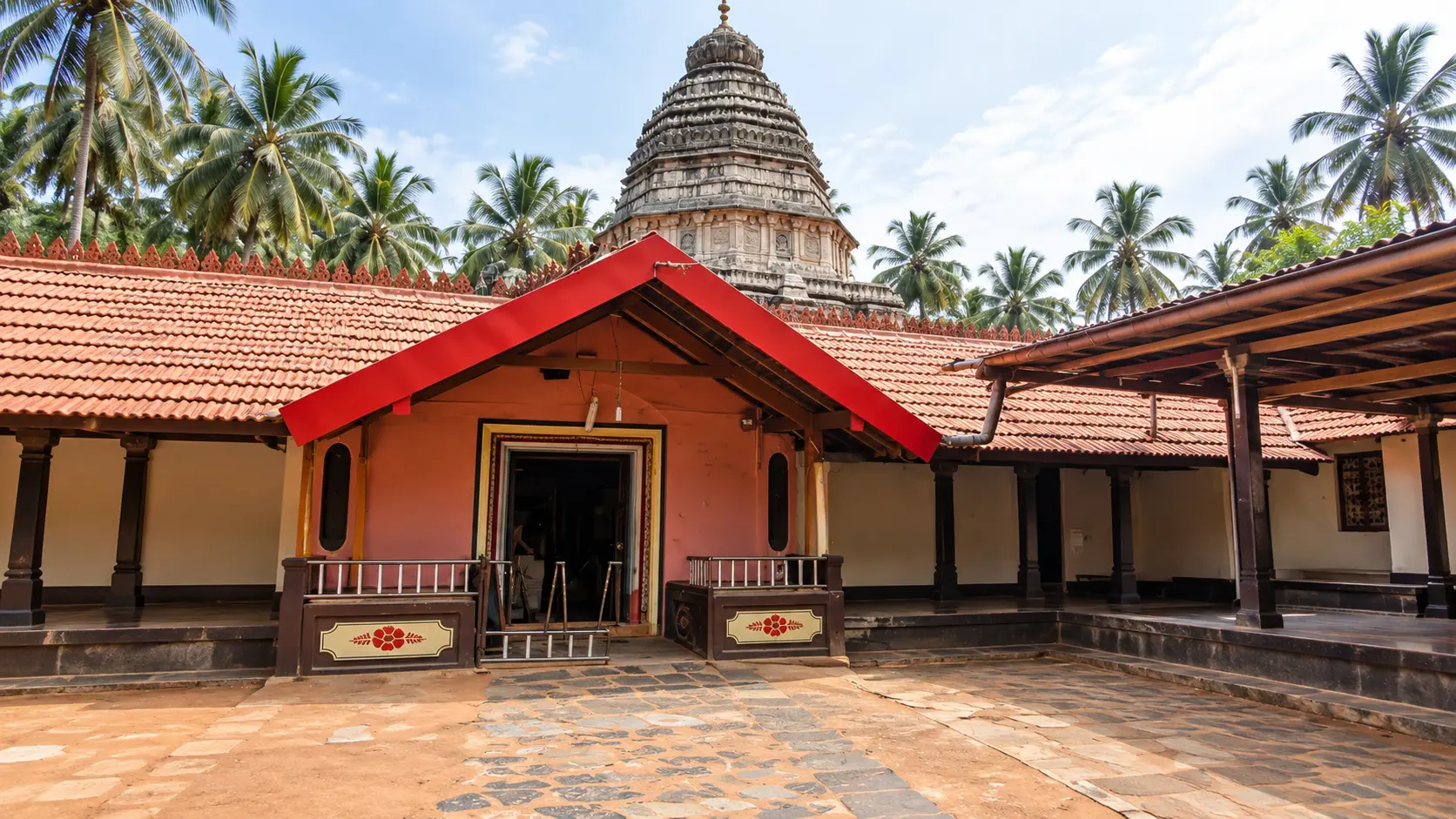
Rising from the historic Brahmin agraharas of Gokarna town just a few hundred paces from the Arabian Sea, the Mahabaleshwar Temple stands as one of the most venerable and metaphysically potent Shiva shrines in southern India. Celebrated across ancient Puranic literature as Dakshina Kashi - the Kashi or Varanasi of the South - this sacred sanctuary enshrines the divine Atmalinga (also known as the Pranalinga), believed to be the personal cosmic essence of Lord Shiva himself. Flanked by coconut palms, fragrant flower stalls, and centuries-old tile-roofed ancestral dwellings, the temple presents a profound architectural and devotional counterpoint to the sun-drenched beaches and backpacker enclaves that rim the surrounding headlands. Here along Karnataka's central Konkan coast in Uttara Kannada district, pilgrimage traditions unbroken for more than fifteen hundred years continue to govern daily life, offering travelers and spiritual seekers a rare immersion into authentic Agamic ritualism, sacred geography, and living temple culture.
Unlike highland temple fortresses or sprawling dynastic temple-cities, Mahabaleshwar Temple is intimately woven into the maritime coastal landscape. Devotees routinely begin their morning pilgrimage standing knee-deep in the rolling surf of Gokarna Main Beach, cleansing body and mind in the Arabian Sea before walking barefoot along Car Street to seek blessings. The physical linga itself is not an elevated ornamental pillar, but a primordial, submerged rock relic ensconced within a sunken square granite cavity in the sanctum floor. To touch its consecrated summit during sparsha darshan - a privilege granted to initiated pilgrims who adhere to the sanctum's strict traditional dress code - is considered by orthodox Shaivite belief to confer absolute spiritual absolution (mukti). Understanding the history, spatial choreography, living rituals, and practical logistics of visiting Mahabaleshwar Temple allows travelers to appreciate this extraordinary monument not merely as a sightseeing stop, but as the pulsating spiritual epicentre of coastal Karnataka.
Start here. Open a tile for the full details.
Why goRead details
The compelling spiritual and historical appeal of Mahabaleshwar Temple stems from a confluence of deep antiquity, peerless mythological stature, and an unaltered living pilgrimage culture that has endured across dynamic imperial transitions:
When to visitRead details
Gokarna's coastal geography creates distinct seasonal conditions that deeply influence temple visiting comfort, pilgrimage crowd density, and surrounding regional travel. Planning a visit around these climatic phases ensures a rich and fulfilling experience:
Entry & permissionsRead details
Fees, visiting hours and entry rules may change. Confirm the latest details with the official operator or local authority before travelling.
A clear understanding of the daily temple schedule, ticketing procedures, and administrative protocols guarantees a serene, reverent visit without procedural delays:
Darshan Session | Operating Timings | Specific Ceremonies & Notes |
|---|---|---|
Morning Session | 06:00 to 12:30 | Nirmalya Darshan, morning Panchamrita Abhisheka, general Sparsha Darshan, and noon Mahamangalarati. Sanctum closes promptly at 12:30 for afternoon naivedya. |
Midday Intermission | 12:30 to 17:00 | Sanctum closed for public entry; temple gates remain accessible for quiet courtyard circumambulation. |
Evening Session | 17:00 to 20:00 / 20:30 | Evening Pradosha prayers, Bilvarchana, evening Mangalarati, and night Shayana Aarati. Timing extends to 21:00 on festive Mondays and Shivaratri. |
Admission Tariffs and Special Sevas
- General Public Darshan: Admission into the temple complex and the standard circumambulatory queue (sarvadarshan) is completely free of charge for all devotees regardless of nationality or background.
- Special Sevas and Ritual Archana: Devotees wishing to sponsor personalized religious offerings - such as Rudrabhisheka, Panchamrita Abhisheka, Ksheera Abhisheka (milk offering), Bilva Patra Archana, or expedited Sparsha Darshan - must obtain an official computerized receipt at the dedicated Temple Seva Counter located inside the northern courtyard. Official seva tariffs range nominally from ₹50 to ₹1,500 depending on the complexity of materials and priestly participation.
- Bona Fide Priestly Assistance: While hereditary priests (archakas) assist pilgrims with ritual sankalpa and archana inside the sanctum, visitors are advised to transact exclusively through the temple's authorized administrative counters to avoid unregulated solicitation by private touts on Car Street.
Strict Sanctum Dress Code Guidelines
The temple administration strictly enforces traditional Vedic dress regulations for entry into the inner sanctum sanctorum (garbhagriha):
- Men: Must wear a traditional, unstitched cotton or silk dhoti (panche in Kannada, veshti or mundu). Wearing shirts, vests, t-shirts, banians, or inner undershirts inside the inner sanctum is strictly prohibited - men must remain bare-chested. Trousers, jeans, shorts, Bermuda shorts, track pants, and headgear are strictly forbidden. Dhotis and angavastrams can be purchased or rented from dozens of shops lining Car Street for a nominal fee.
- Women: Must wear traditional modest Indian attire: a saree or a traditional salwar kameez / churidar paired with a properly draped dupatta. Western clothing - including jeans, trousers, shorts, skirts, sleeveless blouses, tight athletic wear, and crop tops - is strictly prohibited from entering the sanctum.
- Footwear: All shoes, sandals, and leather articles (including leather belts in certain inner chambers) must be removed before entering the temple compound. Free and token-managed shoe deposit stalls operate outside the main eastern portal on Car Street.
- Photography and Electronics: Photography, video recording, and mobile phone operation are strictly prohibited inside the inner sanctum, navaranga hall, and adjacent shrine enclosures. Mobile phones must be switched off or placed on silent mode. Commercial photography or drone videography over the temple complex and Car Street requires explicit prior written permission from the Uttara Kannada District Administration and Temple Trust.
Plan your visitRead details
Gokarna's strategic location along the central Konkan coast provides straightforward road and rail access from major metropolitan hubs across Karnataka, Goa, and Maharashtra.
Monsoon Coastal Navigation and Sea Bathing Caution
Travelers visiting between June and September must heed safety advisories posted by the district coastal police, strictly avoiding deep swimming in the rough Arabian Sea surf during the monsoon while carrying sturdy umbrellas, waterproof cases for electronics, and non-slip sandals for navigating slick granite temple courtyards.
Explore the full guide - choose a topic below.
Why visit?
The compelling spiritual and historical appeal of Mahabaleshwar Temple stems from a confluence of deep antiquity…Explore detailsClose details
The compelling spiritual and historical appeal of Mahabaleshwar Temple stems from a confluence of deep antiquity, peerless mythological stature, and an unaltered living pilgrimage culture that has endured across dynamic imperial transitions:
- Enshrinement of the Cosmic Atmalinga: Foremost among all attractions is the sanctum's presiding relic: the primordial Atmalinga. According to the Shiva Purana, this holy emblem represents Shiva's indwelling divine soul, extracted through the fierce austerity of the demon king Ravana and anchored immovably into Gokarna's coastal soil through the divine intervention of Lord Ganesha and Lord Vishnu. It is revered as the original root linga, from which all other regional coastal Shaivite shrines derive their consecrated sanctity.
- One of Karnataka's Seven Sacred Muktisthalas: In traditional regional theology, Gokarna is honoured alongside Udupi, Kollur Mookambika, Kukke Subrahmanya, Kumbhasi, Koteshwara, and Shankaranarayana as one of the seven paramount Muktisthalas (abodes of liberation). Devotees travel from across the Indian subcontinent to perform sacred ancestral rites (shraddha and tarpanam) along the steps of the sacred Kotiteertha tank and seek spiritual emancipation.
- Kadamba and Vijayanagara Architectural Antiquity: With foundational origins tracing back to the 4th century CE under King Mayurasharma of the Kadamba dynasty, the temple complex showcases classic coastal Dravidian granite craftsmanship. Later expansions carried out by the royal architects of the Vijayanagara Empire and the Keladi Nayakas of Ikkeri added finely chiseled pillared mantapas, stone nandi pavilions, and sheltered circumambulatory corridors designed to endure the fierce maritime elements.
- The Unique Sparsha Darshan Experience: In sharp contrast to most major historic temples across southern India where devotees are restricted to viewing the sanctum deity from a distant barricade, Mahabaleshwar Temple permits initiated male and female pilgrims to approach the sunken sanctum floor cavity (peetha) and personally touch the sacred crown of the Atmalinga during designated ritual windows, providing an intensely personal devotional experience.
- Living Ritual Ecology and Ancient Festivals: Gokarna is one of the few places in peninsular India where the ancient tradition of temple chariot festivals (Rathotsava) remains a magnificent communal spectacle. During the annual nine-day Maha Shivaratri Brahmotsava, thousands of devotees unite to pull two colossal carved wooden chariots - the massive Brahma Ratha and the smaller Chikka Ratha - along the sandy sweep of Car Street under the shadow of coastal skies.
- Harmonious Integration with Wilderness Coastlines: Situated within walking distance of Gokarna Beach and just a short trek across rocky forested promontories to Kudle Beach and the world-famous Om Beach, Mahabaleshwar Temple provides an extraordinary travel juxtaposition, enabling visitors to pair profound heritage exploration with scenic coastal trekking and marine adventure.
What to expect
Visiting Mahabaleshwar Temple is an intense, multi-sensory immersion into an active, highly disciplined coastal…Explore detailsClose details
Visiting Mahabaleshwar Temple is an intense, multi-sensory immersion into an active, highly disciplined coastal pilgrimage complex. Car Street, the broad stone-paved thoroughfare leading westward toward the sea, sets the stage with the scents of camphor, burning ghee lamps, fresh jasmine garlands, and wet sand. Pilgrims in unstitched traditional cotton dhotis mingle with local Vedic scholars, shopkeepers selling copper puja vessels, and visiting coastal fishing families.
The temple itself presents a restrained, timeless exterior of weathered grey coastal granite blocks, darkened by centuries of monsoon rain and salt mist. Stepping through the outer portal (dwarashala), visitors leave the midday glare of the Konkan coast behind and enter a cool, shadowy realm illuminated primarily by brass oil lamps (deepastambhas) and flickering candelabras. The atmosphere is filled with the sonorous, rhythmic chanting of the Sri Rudram and Chamakam, the resonance of brass bells, and the reverberation of conch shells blown during the morning and evening aarati ceremonies.
The Mythological Foundation of the Atmalinga
To understand the spatial layout and emotional intensity of the temple, one must understand the legendary drama recorded in the regional sthala-purana. As recounted in the epic traditions, the ten-headed rakshasa king Ravana performed severe austerities on Mount Kailash to propitiate Lord Shiva, desiring to make his capital of Lanka impregnable against gods and mortals alike. Pleased with Ravana's unwavering asceticism, Shiva granted him his most precious possession: the primordial Atmalinga. However, the deity attached a momentous, immutable caveat: Ravana was strictly forbidden from placing the linga upon the ground during his southward journey. If the relic touched the earth anywhere along the path, it would instantly take root and remain anchored permanently at that exact spot.
Terrified by the prospect of an invincible Lanka, the celestial deities (devas) appealed to Lord Vishnu and Lord Ganesha for deliverance. As Ravana approached the coastal shores of Gokarna at dusk, Vishnu cast his divine discus (Sudarshana Chakra) across the sun, creating an artificial twilight that led the punctilious Brahmin king to believe that sunset had arrived, obliging him to perform his mandatory evening ablutions and prayers (sandhyavandana). Perplexed as to how he could perform the water rituals while holding the divine stone, Ravana noticed a young cowherd boy wandering along the sandbanks - Lord Ganesha in disguised form. Ravana implored the boy to hold the Atmalinga momentarily while he bathed in the sea, warning him under no circumstances to let it touch the ground.
The disguised Ganesha agreed, but laid down his own condition: he would call Ravana's name three times, and if Ravana failed to return by the third call, he would place the linga on the earth. Ravana hurried into the waves to perform his oblations, whereupon Ganesha called his name three times in rapid succession. Receiving no immediate response, Ganesha placed the heavy stone upon the earth, where it instantaneously rooted deep into the bedrock of the world.
Emerging from the water and realizing he had been outwitted, Ravana rushed ashore in uncontrollable fury. He seized the divine linga with all twenty hands, straining with cosmic strength to dislodge it from the soil. The immense force of his pulling distorted the stone, contorting its crown into the twisted form of a cow's ear - giving the holy town its eternal name, Gokarna (literally, "Cow's Ear"). The stone resisted all extraction, earning the deity the title of Mahabaleshwara - the "Lord of Supreme, Unconquerable Might." In his violent struggle, various accessories of the linga were shattered and flung across the surrounding Konkan landscape: the casket's covering fell at Sajjeshwara, the cord fell at Dhareshwara, the wrapping cloth fell at Gunavanthe, and the primary ornament fell at Kanduka Hill in Murudeshwar, establishing the celebrated network of coastal Shaivite kshetras. Conceding defeat, Ravana bowed before the rooted linga, worshipped it, and bestowed upon it the title of Mahabaleshwara before returning chastened to Lanka.
Sacred Geography and the Sequential Pilgrimage Circuit
Traditional Agamic protocol dictates that a pilgrimage to Mahabaleshwar Temple should not be undertaken as an isolated visit to a single monument. Rather, it constitutes an interconnected four-stage ritual journey across the sacred geography of Gokarna:
[ Stage 1: Samudra Snana ]
(Purifying bath in the Arabian Sea at Gokarna Main Beach)
                │
                ▼
[ Stage 2: Maha Ganapati Temple ]
(Paying homage to the boy-Ganesha who anchored the Atmalinga)
                │
                ▼
[ Stage 3: Kotiteertha Tank ]
(Ablutions, reflection, and ancestral rites at the sacred stepwell)
                │
                ▼
[ Stage 4: Mahabaleshwar Temple Sanctum ]
(Sparsha Darshan and archana before the eternal Atmalinga)- Stage 1: Samudra Snana (Gokarna Main Beach): Devotees begin early in the morning by walking to the western terminus of Car Street where the sand meets the rolling waves of the Arabian Sea. Here, pilgrims participate in samudra snana - a ceremonial bath in the ocean waters. Considered an essential act of physical and ritual purification, the sea bath symbolizes the cleansing of worldly taints before approaching the divine presence.
- Stage 2: Maha Ganapati Temple: Situated merely 50 meters northeast of the Mahabaleshwar complex, this historic granite shrine is dedicated to the boy-Ganesha who outsmarted Ravana. Orthodox tradition insists that no prayer at Mahabaleshwar can bear fruit unless the pilgrim first pays homage to Lord Ganapati. Inside the small sanctum stands an extraordinary, five-foot-tall standing murti of two-handed Ganesha, carved from monolithic black granite. Remarkably, the murti features a pronounced circular depression or indentation on the crown of the head - believed to be the physical dent left when the enraged Ravana struck the young boy with his fist upon finding the linga placed on the ground.
- Stage 3: Kotiteertha (The Tank of a Crore Springs): Located approximately 300 meters east of the temple, Kotiteertha is a vast, quadrangular freshwater masonry tank covering several acres, surrounded by tiers of stone steps, shaded coconut groves, and traditional priestly settlements (agraharas). Associated with the mythological footprint of Garuda and believed to contain holy waters originating from a crore (koti) sacred springs, the tank is the epicentre for conducting pitru tarpana (ancestral offerings) and peaceful meditative circumambulation.
- Stage 4: Mahabaleshwar Temple Inner Sanctum: Purified by the sea, blessed by Ganesha, and grounded by the waters of Kotiteertha, the devotee finally enters the portals of Mahabaleshwar Temple to stand before the submerged Atmalinga.
Architectural Anatomy and the Sanctum Experience
The Mahabaleshwar Temple is an exemplary specimen of coastal Dravidian temple architecture, engineered to withstand the relentless salt-laden gales and torrential monsoon deluges of the Arabian Sea. Constructed from heavy, close-grained grey coastal granite, the complex unfolds through distinct concentric enclosures:
- The Entrance Mantapa and Dhwajasthambha: The entrance from Car Street leads through a pillared porch into an open granite-flagged courtyard centered around a towering brass-plated flagpole (dhwajasthambha) and a monolithic granite shrine housing Nandi the bull, positioned in perpetual adoration facing the western doorway of the sanctum.
- The Mukhamantapa (Navaranga Hall): Entering the interior sanctum structure, visitors step into a spacious pillared assembly hall (mukhamantapa). Supported by robust, square-section granite columns embellished with subtle bas-relief carvings of Shaivite deities, floral medallions, and epic motifs from the Ramayana, this hall serves as the waiting area where lines of devotees assemble for darshan. The stone roof slabs are carefully pitched to shed torrential monsoon rains, while small clerestory stone grilles admit soft shafts of daylight.
- The Garbhagriha (Sanctum Sanctorum): At the heart of the complex lies the square garbhagriha, enveloped in cool, damp granite masonry. The central focus is unique: unlike typical Shiva temples where a tall cylindrical stone linga rises from an elevated circular yoni peetha, the Mahabaleshwar Atmalinga is embedded deep within the bedrock floor. Devotees peer downward into a square sunken stone cavity (peetha). Within this recess rests the irregular, rounded black stone summit of the Atmalinga, featuring a subtle cleft representing the cow's ear (gokarna). During major morning worship hours, a gold-plated mask (kavacha) and floral wreaths adorning the linga are temporarily lifted by the hereditary priests to facilitate sparsha darshan, enabling devotees to reach down and place their fingertips upon the consecrated stone.
- Subsidiary Shrines: Within the walled temple precinct (prakara) stand several revered ancillary shrines, including a shrine dedicated to Goddess Parvati (worshipped here as Gokarna Nayaki or Taamragowri), holding a bronze balance scale that weighs the spiritual merit of Gokarna against the holy city of Kashi, as well as shrines dedicated to Kalabhairava, Lord Dattatreya, and Lord Chandikeshwara.
Cultural Atmosphere, Festivals, and the Historic Rathotsava
The cultural rhythm of Gokarna is inextricably tied to the ritual calendar of Mahabaleshwar Temple. Daily life in the surrounding streets moves in cadence with the ringing of the temple's brass bells at 06:00, the midday naivedya offerings at 12:30, the evening reopening at 17:00, and the final shayana aarati at 20:00.
The zenith of the temple's religious and communal expression occurs during the annual Maha Shivaratri festival, celebrated in the Hindu month of Magha/Phalguna (typically February or March). Across nine days of grand celebrations (Brahmotsava), the coastal town swells with over one hundred thousand pilgrims, ascetics, and cultural travelers. The festival culminates in the spectacular Rathotsava (Chariot Procession). Two monumental multi-tiered wooden chariots - the gigantic Brahma Ratha (dedicated to Lord Mahabaleshwar) and the smaller Chikka Ratha (dedicated to Lord Ganapati) - are adorned with colorful applique tapestries, fluttering temple banners, and massive garlands of marigolds and jasmine. Thousands of pilgrims seize the colossal coir ropes and haul the lumbering wooden chariots through the packed expanse of Car Street, accompanied by the thunder of traditional chande drums, brass trumpets, and ecstatic chants of "Hara Hara Mahadev!" Bananas, coins, and sacred flowers are tossed toward the towering chariot roofs by the surging crowd in an unforgettable expression of collective devotional joy.
Another magical period is Kartika Purnima in November, when the temple precinct and the steps of Kotiteertha are illuminated by tens of thousands of terracotta oil lamps (deepotsava), casting shimmering golden reflections across the dark night waters.
Best time to visit
Gokarna's coastal geography creates distinct seasonal conditions that deeply influence temple visiting comfort…Explore detailsClose details
Gokarna's coastal geography creates distinct seasonal conditions that deeply influence temple visiting comfort, pilgrimage crowd density, and surrounding regional travel. Planning a visit around these climatic phases ensures a rich and fulfilling experience:
[ October to February: Peak Season ]
Comfortable coastal weather (20°C - 32°C), calm seas, vibrant festivals.
Ideal for combining temple worship with beach walks and heritage excursions.
                │
                ▼
[ March to May: Summer Season ]
Intense heat (up to 36°C) and oppressive humidity.
Check the current visiting hours and permitted access with the site operator before departure; ceremonies, closures and visitor sessions can affect access.
                │
                ▼
[ June to September: Southwest Monsoon ]
Torrential rain (3,500+ mm), rough seas, lush greenery.
Atmospheric temple rituals with thin crowds; beach swimming strictly closed.
Post-Monsoon and Winter Season (October to February)
This is universally acknowledged as the finest window to visit Mahabaleshwar Temple and the Gokarna coastline. As the retreating monsoon clears by early October, daytime temperatures settle into a pleasant range between 20°C and 32°C, accompanied by crisp morning breezes, lower humidity, and cloudless azure skies. The Arabian Sea calms completely, rendering early morning samudra snana refreshing and safe for pilgrims.
The cultural calendar during this period is exceptionally rich. The Deepotsava celebrations of Kartika Masa illuminate the town in November, followed by the electrifying energy of Maha Shivaratri in February or early March. Travelers during this season can seamlessly combine morning and evening temple visits with daytime exploration of Kudle Beach, Om Beach, and coastal boat cruises. However, because this is also the primary domestic and international tourism season, temple queue lines on weekends and festival days can extend significantly, and nearby accommodation should be reserved well in advance.
Summer Season (March to May)
Summer on the Konkan coast brings intense solar radiation and escalating humidity. Daytime temperatures regularly climb to between 32°C and 36°C, with the heat index feeling significantly higher due to moisture from the adjacent ocean. Check the current visiting hours and permitted access with the site operator before departure; ceremonies, closures and visitor sessions can affect access.
Travelers visiting during these months should plan their temple activities strictly during the cooler peripheral hours: entering the sanctum between 06:00 and 08:30 in the morning or returning between 17:30 and 20:00 in the evening. While the midday heat is taxing, summer offers the advantage of substantially shorter darshan queues and lower lodging tariffs throughout Gokarna. Ample hydration with tender coconut water, available in abundance along Car Street, is essential.
Southwest Monsoon (June to September)
The arrival of the Southwest Monsoon transforms Gokarna into a dramatic, rain-swept coastal wonderland. Uttara Kannada is one of the wettest districts in peninsular India, receiving between 3,200 mm and 3,800 mm of torrential rainfall across four months. Heavy downpours, booming thunderstorms, and roaring surf dominate the coastline.
For spiritual travelers seeking profound solitude, the monsoon offers a deeply atmospheric encounter with Mahabaleshwar Temple. The crowds disperse, leaving the ancient granite halls resonant with the soothing sound of falling rain and echoing Vedic chants. The surrounding Western Ghats foothills, coastal cliffs, and forest groves turn an intense, luminous emerald green. However, practical travel constraints during the monsoon are substantial: the Arabian Sea is extremely rough and hazardous, prompting local authorities to ban swimming and water activities; sea-facing trails between beaches become dangerously slick; and continuous rainfall demands reliable waterproof gear. The monsoon is also prime season for pairing temple visits with inland waterfall excursions, such as the roaring Vibhuti Falls (~50 km inland) and the rain-washed limestone spires of Yana Caves.
How to reach
Gokarna's strategic location along the central Konkan coast provides straightforward road and rail access from…Explore detailsClose details
Gokarna's strategic location along the central Konkan coast provides straightforward road and rail access from major metropolitan hubs across Karnataka, Goa, and Maharashtra.
Air Travel Connections
While Gokarna does not possess its own airport, several domestic and international aviation hubs provide convenient access across scenic coastal highway drives:
- Goa Dabolim Airport (GOI): Located approximately 140 km north of Gokarna. Dabolim offers extensive domestic flight connectivity across India as well as seasonal international charter flights. Pre-paid airport taxis make the southward journey along NH-66 to Gokarna in approximately 3.5 to 4 hours.
- Manohar International Airport, Mopa, Goa (GOX): Located approximately 170 km north of Gokarna in northern Goa. A modern international facility with direct flights from major Indian metros. Travel time to Gokarna via taxi is approximately 4 to 4.5 hours via the coastal highway corridor.
- Hubballi Airport (HBX): Situated approximately 145 to 150 km northeast in the northern Karnataka interior. Hubballi operates regular direct flights to Bengaluru, Mumbai, Hyderabad, and Delhi. The scenic drive descends the Western Ghats along NH-52 and NH-66 via Yellapur and Ankola in roughly 3.5 hours.
- Mangaluru International Airport (IXE): Located approximately 230 km south. Serviced by extensive domestic flights and direct Middle Eastern Gulf connections. The scenic drive northward along the coastal NH-66 corridor via Udupi, Kundapura, and Murudeshwar requires approximately 4.5 to 5 hours.
Rail Network Connectivity
The legendary Konkan Railway passes directly behind Gokarna, offering one of the most scenic and efficient ways to arrive:
- Gokarna Road Railway Station (GOK): Situated approximately 9 to 10 km east of the temple complex in a rural valley setting. Several key passenger, express, and intercity trains halt here, including the Matsyagandha Express (connecting Mumbai LTT and Mangaluru) and local Karwar - Madgaon passenger shuttles. Auto-rickshaws and local shuttle buses meet every arriving train, charging regulated tariffs for the 15-to-20-minute transfer into Gokarna town.
- Kumta Railway Station (KT): Located approximately 32 km south of Gokarna. Kumta serves as the premier railway junction for the taluk, where nearly all premier superfast and express trains make scheduled halts - including the popular overnight Panchaganga Superfast Express from Bengaluru (KSR Bengaluru / Yesvantpur), the Netravati Express, the Mangala Lakshadweep Express, and the Marusagar Express. Taxis and frequent KSRTC feeder buses operate continuously between Kumta station and Gokarna bus stand (journey time ~45 minutes).
- Ankola Railway Station (ANKL): Situated approximately 26 km north of Gokarna, offering an alternative railhead with frequent road transit links southward along NH-66.
Road Routes and Intercity Bus Corridors
Gokarna is effortlessly connected to India's national highway grid via National Highway 66 (NH-66), the multi-lane coastal expressway linking Mumbai, Goa, coastal Karnataka, and Kerala. Travelers diverge from NH-66 at Madangeri Junction, continuing westward along State Highway 73 for an easy 9 km drive directly into Gokarna town.
- From Bengaluru (~485 km, 9 to 11 hours): The standard driving route follows NH-48 through Tumakuru, Chitradurga, and Davanagere to Haveri, then branches westward via Sirsi and the winding forested ghats of Devimane Ghat to Kumta, joining NH-66 north to Madangeri and Gokarna. Alternatively, private cars can travel via Shivamogga, Sagara, and Honnavar. KSRTC operates multiple daily Rajahamsa, Non-AC Sleeper, and luxury Airavat Club Class multi-axle Volvo overnight buses departing from Kempegowda Bus Station (Majestic) and Shantinagar Bus Stand directly to Gokarna.
- From Panaji / South Goa (~140 km, 3.5 hours): Follow NH-66 south through Margao, Canacona, crossing the Goa - Karnataka border at Polem, proceeding past Karwar and Ankola to Madangeri junction. Regular Kadamba and KSRTC interstate buses ply this corridor continuously.
- From Mangaluru (~235 km, 5 hours): Drive north along the four-lane coastal NH-66 passing through Udupi, Kundapura, Bhatkal, Honnavar, and Kumta to Madangeri. Frequent express buses connect Mangaluru's KSRTC terminal with Gokarna.
- From Hubballi / Dharwad (~145 km, 3.5 hours): Travel southwest along NH-52 descending the forested Arbail Ghat via Yellapur to Ankola, then turn south onto NH-66 to Madangeri.
Entry, timings and permissions
Fees, visiting hours and entry rules may change.Explore detailsClose details
Fees, visiting hours and entry rules may change. Confirm the latest details with the official operator or local authority before travelling.
A clear understanding of the daily temple schedule, ticketing procedures, and administrative protocols guarantees a serene, reverent visit without procedural delays:
Darshan Session | Operating Timings | Specific Ceremonies & Notes |
|---|---|---|
Morning Session | 06:00 to 12:30 | Nirmalya Darshan, morning Panchamrita Abhisheka, general Sparsha Darshan, and noon Mahamangalarati. Sanctum closes promptly at 12:30 for afternoon naivedya. |
Midday Intermission | 12:30 to 17:00 | Sanctum closed for public entry; temple gates remain accessible for quiet courtyard circumambulation. |
Evening Session | 17:00 to 20:00 / 20:30 | Evening Pradosha prayers, Bilvarchana, evening Mangalarati, and night Shayana Aarati. Timing extends to 21:00 on festive Mondays and Shivaratri. |
Admission Tariffs and Special Sevas
- General Public Darshan: Admission into the temple complex and the standard circumambulatory queue (sarvadarshan) is completely free of charge for all devotees regardless of nationality or background.
- Special Sevas and Ritual Archana: Devotees wishing to sponsor personalized religious offerings - such as Rudrabhisheka, Panchamrita Abhisheka, Ksheera Abhisheka (milk offering), Bilva Patra Archana, or expedited Sparsha Darshan - must obtain an official computerized receipt at the dedicated Temple Seva Counter located inside the northern courtyard. Official seva tariffs range nominally from ₹50 to ₹1,500 depending on the complexity of materials and priestly participation.
- Bona Fide Priestly Assistance: While hereditary priests (archakas) assist pilgrims with ritual sankalpa and archana inside the sanctum, visitors are advised to transact exclusively through the temple's authorized administrative counters to avoid unregulated solicitation by private touts on Car Street.
Strict Sanctum Dress Code Guidelines
The temple administration strictly enforces traditional Vedic dress regulations for entry into the inner sanctum sanctorum (garbhagriha):
- Men: Must wear a traditional, unstitched cotton or silk dhoti (panche in Kannada, veshti or mundu). Wearing shirts, vests, t-shirts, banians, or inner undershirts inside the inner sanctum is strictly prohibited - men must remain bare-chested. Trousers, jeans, shorts, Bermuda shorts, track pants, and headgear are strictly forbidden. Dhotis and angavastrams can be purchased or rented from dozens of shops lining Car Street for a nominal fee.
- Women: Must wear traditional modest Indian attire: a saree or a traditional salwar kameez / churidar paired with a properly draped dupatta. Western clothing - including jeans, trousers, shorts, skirts, sleeveless blouses, tight athletic wear, and crop tops - is strictly prohibited from entering the sanctum.
- Footwear: All shoes, sandals, and leather articles (including leather belts in certain inner chambers) must be removed before entering the temple compound. Free and token-managed shoe deposit stalls operate outside the main eastern portal on Car Street.
- Photography and Electronics: Photography, video recording, and mobile phone operation are strictly prohibited inside the inner sanctum, navaranga hall, and adjacent shrine enclosures. Mobile phones must be switched off or placed on silent mode. Commercial photography or drone videography over the temple complex and Car Street requires explicit prior written permission from the Uttara Kannada District Administration and Temple Trust.
Nearby places to consider
A pilgrimage to Mahabaleshwar Temple serves as the ideal springboard for discovering the diverse heritage sites…Explore detailsClose details
A pilgrimage to Mahabaleshwar Temple serves as the ideal springboard for discovering the diverse heritage sites, ancient rock sanctuaries, and scenic coastal shores of Uttara Kannada:
                          [ Yana Caves ]
                 (3,000-yr karst monoliths, 52 km)
                                ▲
                                │
[ Mirjan Fort ] ◄─── [ Mahabaleshwar Temple ] ───► [ Kudle & Om Beach ]
(Laterite citadel,            (Gokarna)           (Scenic rocky coast,
  22 km south)                  │                     3 - 6 km west)
                                ▼
                     [ Murudeshwar Temple ]
                 (Tall Shiva statue & gopura,
78 km south)- Maha Ganapati Temple (Adjacent, ~50 m): Located just steps from Mahabaleshwar's entrance, this small granite sanctuary enshrines the five-foot monolithic standing murti of two-handed Ganesha, complete with the legendary cleft on his crown where Ravana struck him. A mandatory first stop for all traditional pilgrims.
- Kotiteertha Sacred Tank (~300 m east): A serene, multi-acre stone-stepped freshwater tank fed by natural subterranean springs, bordered by historic mutts, shrines, and towering coconut palms. It provides an evocative setting for early morning reflection, Vedic chanting, and ancestral rituals.
- Gokarna Main Beach (~200 m west): The town's direct sea frontage where Car Street meets the ocean. While more crowded and commercialized than the tourist coves, it remains the vital cultural setting for ritual sea bathing (samudra snana) and picturesque sunset views over the Arabian Sea.
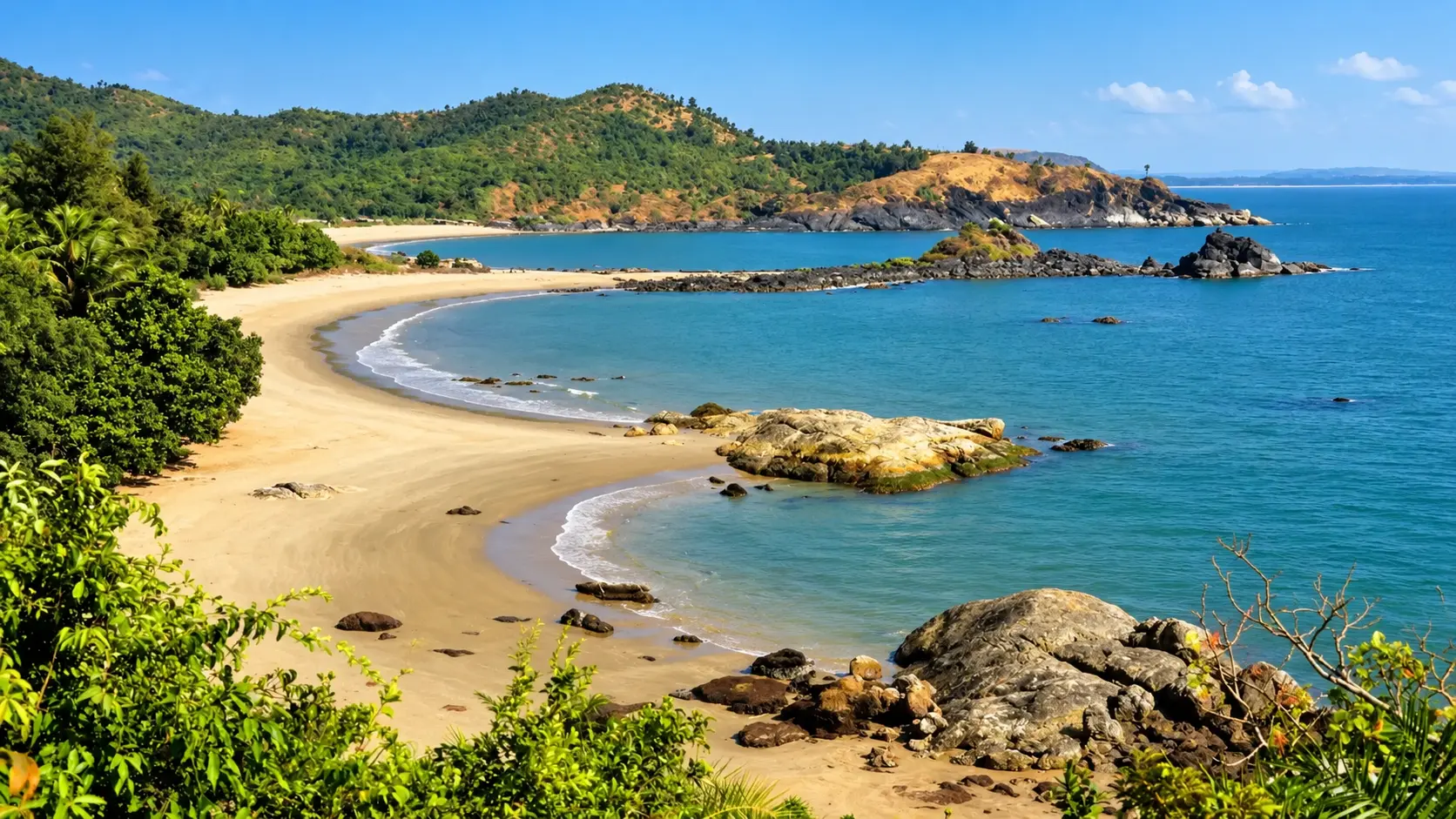
- Kudle Beach and Om Beach (~3 km to ~6 km south): Gokarna's celebrated crescent-shaped coastal havens. Om Beach, famously shaped like the sacred Hindu "Om" (ॐ) symbol when viewed from above, features dramatic rock headlands, seaside cafes, boat safaris to spot humpback dolphins, and seasonal water sports. Connected to Kudle, Half Moon, and Paradise beaches via the iconic Gokarna Beach Trek.
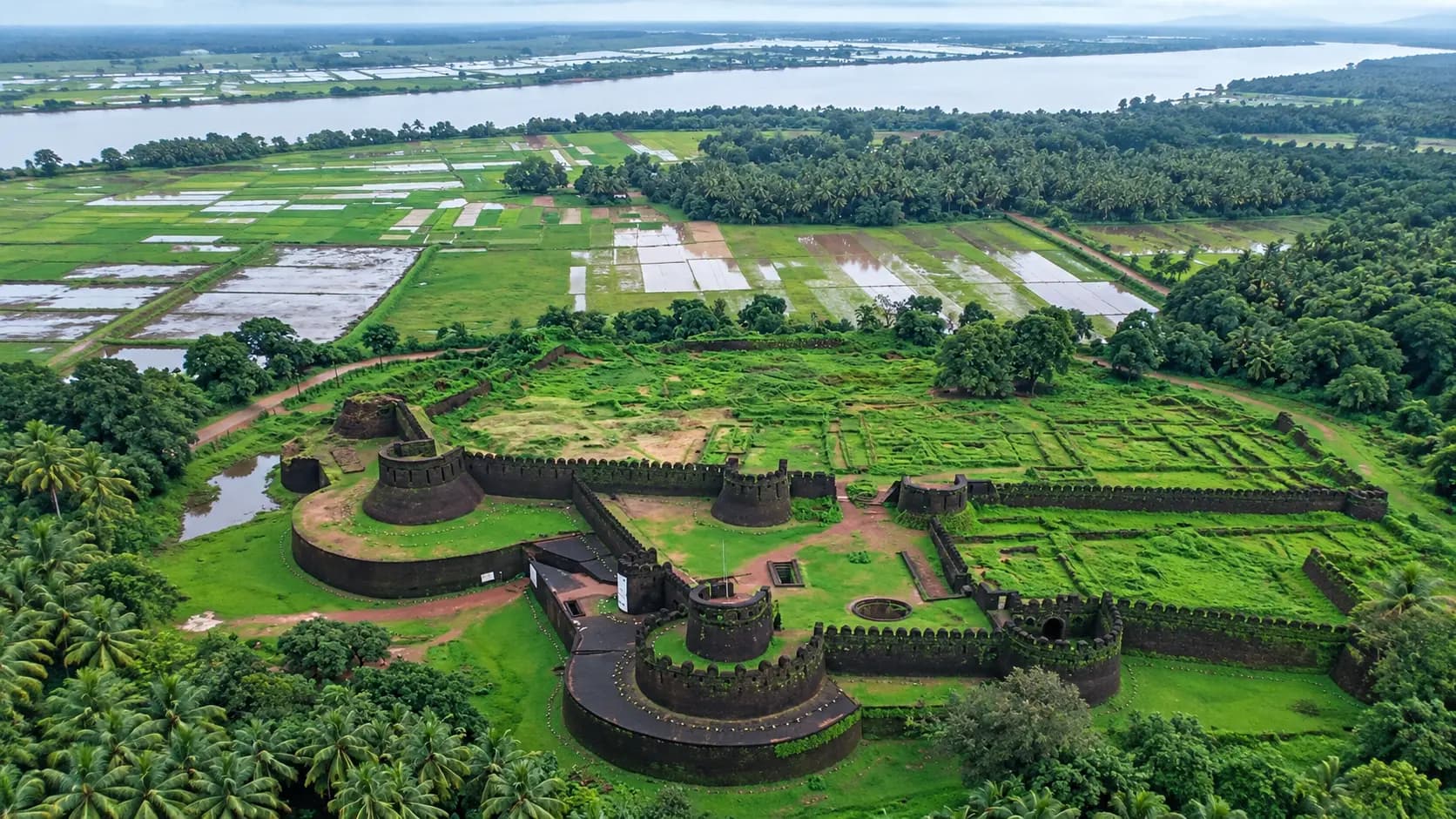
- Mirjan Fort (~22 km south near Kumta): An imposing 16th-century coastal fortress built from massive dark laterite stones, renowned for its double-walled battlements, high watchtowers, arched portals, and circular bastions. Historians associate the fort with Queen Chennabhairadevi (the legendary "Pepper Queen" of Gerusoppa), who ruled the lucrative coastal spice trade for over five decades under the Vijayanagara aegis.
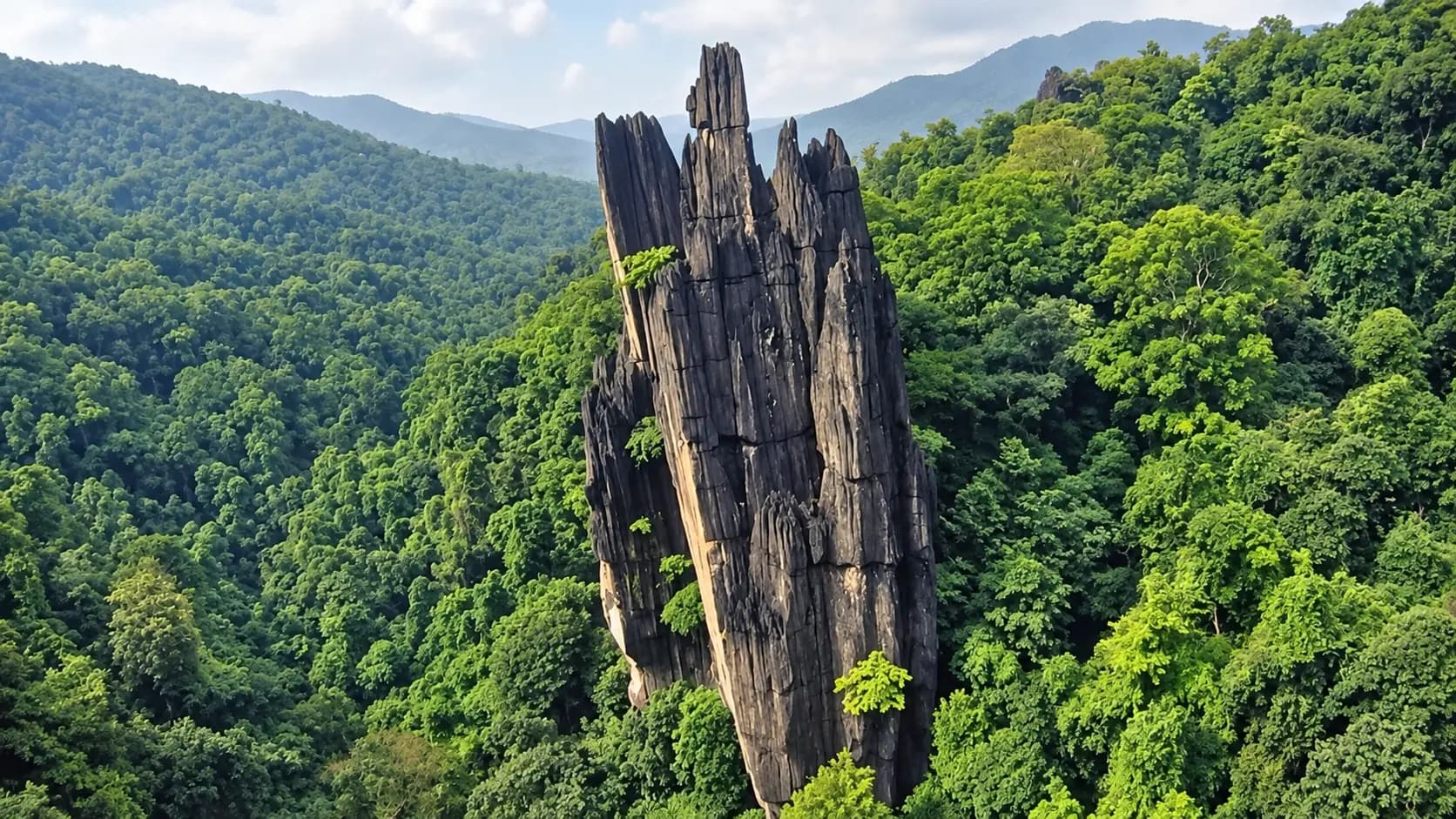
- Yana Caves (~52 km southeast in the Western Ghats): A breathtaking geological and pilgrimage sanctuary hidden within the dense evergreen rainforests of the Sahyadri mountains. Two colossal black crystalline karst limestone monoliths - Bhairaveshwara Shikhara (120 meters tall) and Mohini Shikhara (90 meters tall) - tower above the forest canopy. A natural cave beneath Bhairaveshwara Shikhara enshrines a self-manifested (swayambhu) linga trickling with perennial spring water.
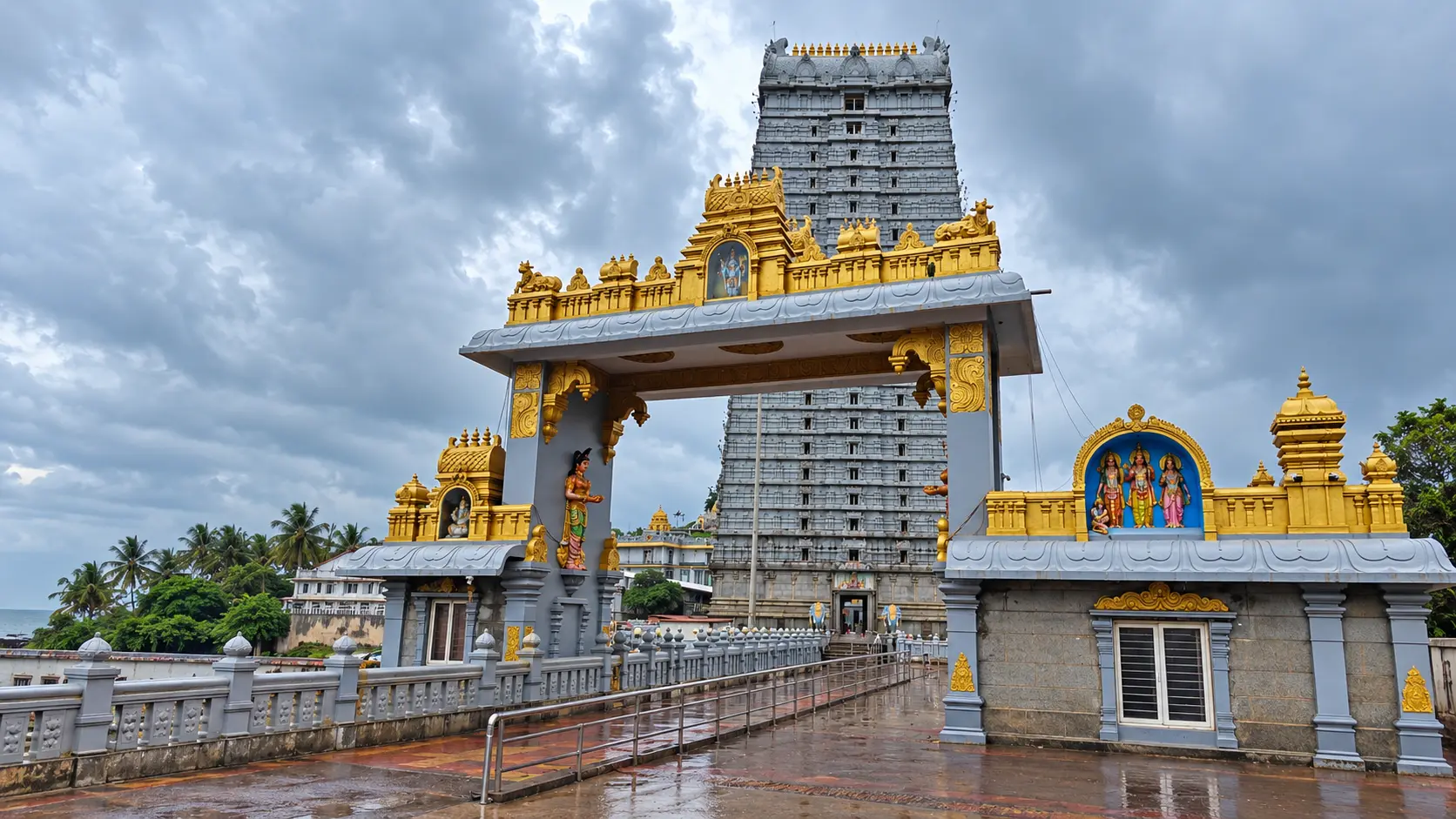
- Murudeshwar Temple and Raja Gopura (~78 km south): Situated on the Kanduka Giri promontory surrounded on three sides by the Arabian Sea, Murudeshwar houses another sacred fragment of the Atmalinga casket. The complex is world-famous for its colossal 123-foot statue of Lord Shiva - the second-tallest in the world - and its towering 20-storey, 237-foot-tall Raja Gopura equipped with a passenger lift offering sweeping panoramic views of the sea and coastline.
In pictures
The practical bits
Before you go.
Plan ahead
To make the most of your spiritual journey to Mahabaleshwar Temple, keep these four essential preparation…Explore detailsClose details
To make the most of your spiritual journey to Mahabaleshwar Temple, keep these four essential preparation guidelines in mind:
Traditional Temple Attire Compliance
Devotees must pack or locally procure appropriate traditional attire prior to entering the queue, as security…Explore detailsClose details
Devotees must pack or locally procure appropriate traditional attire prior to entering the queue, as security personnel and temple priests will strictly turn away men wearing shirts, trousers, or western shorts and women wearing western clothing at the inner sanctum threshold.
Sequential Ritual Circuit Observance
Check the current visiting hours and permitted access with the site operator before departure; ceremonies…Explore detailsClose details
Check the current visiting hours and permitted access with the site operator before departure; ceremonies, closures and visitor sessions can affect access.
Monsoon Coastal Navigation and Sea Bathing Caution
Travelers visiting between June and September must heed safety advisories posted by the district coastal police…Explore detailsClose details
Travelers visiting between June and September must heed safety advisories posted by the district coastal police, strictly avoiding deep swimming in the rough Arabian Sea surf during the monsoon while carrying sturdy umbrellas, waterproof cases for electronics, and non-slip sandals for navigating slick granite temple courtyards.
Queue Management and Festive Surge Planning
Check the current visiting hours and permitted access with the site operator before departure; ceremonies…Explore detailsClose details
Check the current visiting hours and permitted access with the site operator before departure; ceremonies, closures and visitor sessions can affect access.
Footwear Custody and Temple Street Navigation
Shoes, sandals, and leather belts must be deposited at authorized counters at the entrance of Car Street rather…Explore detailsClose details
Shoes, sandals, and leather belts must be deposited at authorized counters at the entrance of Car Street rather than left unattended near the portals, allowing comfortable barefoot walking along the sacred stone-paved lanes connecting the temple, Kotiteertha, and the beach.
A few things you might wonder
Common questions about visiting Mahabaleshwar Temple. Fees, visiting hours and ceremonies are researched details that may change; confirm current arrangements with the operator before travelling.
What is the religious significance of the Atmalinga at Mahabaleshwar Temple?
What is the strict dress code enforced at Mahabaleshwar Temple in Gokarna?
What are the daily opening timings for darshan at Mahabaleshwar Temple?
Why are pilgrims required to visit the Maha Ganapati Temple before entering Mahabaleshwar Temple?
Is there an entry fee to visit Mahabaleshwar Temple or perform pujas?
Which railway station provides the best connectivity to Gokarna and the temple?
What role does Kotiteertha play in the pilgrimage to Gokarna?
How should visitors prepare for the annual Maha Shivaratri celebrations at Gokarna?
Explore more in Gokarna Murudeshwar
Discover other destinations around this hub
More Hubs in Karnataka
Continue exploring other travel hubs in this state
Planning a trip to Gokarna Murudeshwar?