Routeyst
Opening your next page…
Routeyst
Opening your next page…
Your next day out
Finding your places to explore…
Loading your city’s local sights and outing ideas.
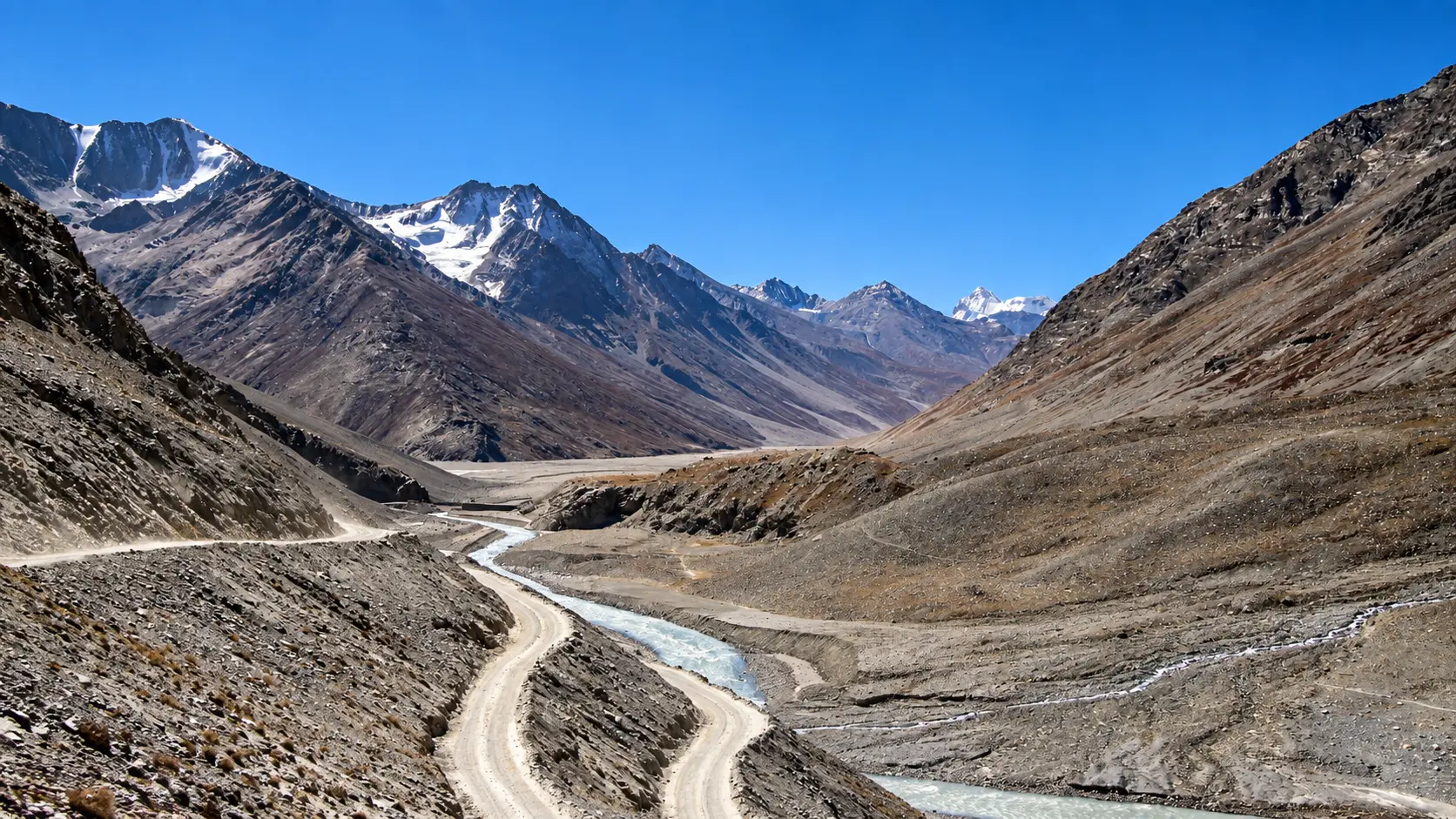
Choose a starting point, find local sights or an out-of-town idea within a stated 200 km road distance.
Make it your kind of day
Choose a starting point and your ideas appear automatically. Switch to Out of town whenever you fancy going further.
Rajasthan · Out of town
Cradled in a natural amphitheater of the ancient Aravalli range in central Rajasthan, Ajmer is a storied pilgrimage and heritage crossroad where centuries of Chauhan Rajput chivalry, supreme Sufi mysticism, and imperial Mughal…
Cradled in a natural amphitheater of the ancient Aravalli range in central Rajasthan, Ajmer is a storied pilgrimage and heritage crossroad where centuries of Chauhan Rajput chivalry, supreme Sufi mysticism, and imperial Mughal diplomacy interweave. The historic core is exceptionally compact and walkable: spiritual seekers congregate at the 13th-century marble sanctuary of the Ajmer Sharif Dargah, architecture enthusiasts explore the soaring 12th-century arched screens and 124 carved stone pillars of Adhai Din Ka Jhonpra, history buffs tour the 1570 red-sandstone citadel of Akbari Fort (where Britain’s first diplomatic treaty with Mughal India was negotiated in 1616), and art lovers marvel at the dazzling two-storey golden diorama of Ayodhya inside Soniji ki Nasiyan. In the evening, the entire city gathers along the cool, scenic embankment of the 12th-century Ana Sagar Lake to admire Emperor Shah Jahan’s gleaming white marble pavilions (Baradaris).
Venturing beyond the city boundaries leads into diverse surrounding districts along smooth national expressways. Just across the rocky Nag Pahar ridge lies the sacred, tranquil oasis of Pushkar (~14 km) with its holy lake and world-famous Brahma Temple. Northeast along NH48 lies the artistic principality of Kishangarh (~28 km), renowned for its Bani Thani miniature painting school and striking white marble canyons, and the vast white expanse of Sambhar Salt Lake (~92 km). Southwestward lies the 1835 British-planned fortified town of Beawar (~54 km), famous for artisanal paper-thin sesame tilpatti and the festive Badshahi Mela, while the traditional hand-block printing village of Bagru (~105 km) offers immersive artisan textile craft experiences.
Out-of-town ideas use a stated road distance of up to 200 km from the researched starting point; confirm your actual route. Some need an overnight stay. Maps opens a place search; check the visitor entrance and current access.
2 of 2 places · Open details without losing your list
Not sure? Pick 2–3 places to compare.
Planning your day
Yes, combining Ajmer and Pushkar is the most natural and popular travel circuit in the region. They are separated by only 14 kilometres across the Nag Pahar mountain pass, taking roughly 25 to 30 minutes by car, taxi, or local bus. Many travelers spend the morning exploring the Dargah Sharif, Adhai Din Ka Jhonpra, and Akbari Fort in Ajmer, and transfer to Pushkar by early afternoon to enjoy the peaceful lake ghats, Brahma Temple, and sunset desert cafes.
All visitors must cover their heads at all times within the Dargah courtyards and sanctum (cloth caps, rumals, and scarves are sold widely in Dargah Bazaar; hats are not permitted). Modest attire covering shoulders and knees is mandatory for both men and women. Shoes must be deposited at the free Chappal Stand counters outside the gates. Mobile phones should be kept silent; photography inside the inner sanctum sanctorum of Gharib Nawaz is strictly prohibited. Beware of aggressive informal touts and pressure for large cash donations.
While many famous Jain temples in Rajasthan (such as Ranakpur or Dilwara) are celebrated for intricate white marble stone carving, Soniji ki Nasiyan is entirely unique for its Swarna Nagari ("City of Gold") - a massive, two-storey museum hall housing an astonishing 3D architectural model of the celestial city of Ayodhya hand-carved in teakwood and completely covered with over 1,000 kilograms of pure gold leaf, gemstones, and glass mirrors.
The best period is during the winter months from November to February, when thousands of migratory birds - including greater and lesser flamingos, pelicans, and waders - inhabit the shallow hypersaline waters, and cool daytime temperatures make walking along the dazzling white salt flats pleasant. Avoid the hot summer months (April to June) when surface temperatures on the dry salt bed become extreme.
Your friend receives the same starting point, outing type and filters. No sign-in needed.
Make room for a longer journey
Hubs and guides from our wider collection, ordered with local and geographically closer places first. These are not limited to 200 km and are not road-distance estimates.
Open a place for its researched visitor notes. Confirm current charges and access before travelling.
Access to the Pushkar Lake ghats and Brahma Temple is completely free of charge. The Brahma Temple is open daily in two sessions:
Located in Pushkar, approximately 145 km southwest of central Jaipur (Badi Chaupar). The drive takes roughly 2.5 to 3 hours via the six-lane National Highway 48 past Kishangarh to Ajmer (approx. 135 km), then crossing the scenic Nag Pahar mountain pass via the Pushkar Ghat road (State Highway 58) for the final 14 km. Regular express buses and luxury taxis connect Jaipur directly to Pushkar. The nearest major railway junction is Ajmer Junction (15 km away). Ample vehicle parking is available at designated municipal grounds outside the town gates.
Fees, visiting hours and entry rules may change. Confirm the latest details with the official operator or local authority before travelling.
The Marble Slurry Dumping Yard is open daily from 10:00 AM to 5:00 PM (or 6:00 PM in summer). Entry to the dumping yard is free of charge, but visitors must collect a mandatory entry gate pass/token from the Kishangarh Marble Association office located at the entrance road before driving onto the grounds. Casual personal photography with mobile phones and consumer cameras is permitted with the entry pass; formal commercial film shoots, professional drone videography, and bridal photoshoots require prior written permission and regulated fee payment to the Marble Association. Phool Mahal Palace is privately operated as a heritage retreat; interior access requires dining or room reservations. Details can change.
Located in Kishangarh town, approximately 105 km southwest of central Jaipur (Badi Chaupar). The drive takes roughly 1.5 to 2 hours via the six-lane National Highway 48 (Jaipur - Ajmer Expressway), which is one of Rajasthan's smoothest and fastest highway corridors. Kishangarh Airport (approx. 15 km away) connects regional flights, and Kishangarh Railway Station is well-served by express trains from Jaipur. A private car or hired taxi is essential for navigating between the dumping yard, lake, and painting studios.
Fees, visiting hours and entry rules may change. Confirm the latest details with the official operator or local authority before travelling.
Access to Beawar town, its historic gates, markets, and public gardens is completely free and open daily. Sweetshops, traditional haveli workshops, and market bazaars typically operate from 9:00 AM to 9:00 PM. Tilpatti is sold by weight, typically priced between ₹250 and ₹450 per kilogram depending on whether it is prepared with refined sugar, organic jaggery (gur), or enriched with almonds and pistachios. Photography of market scenes and sweetmaking is warmly welcomed by local shopkeepers.
Situated in the newly established Beawar district (historically part of Ajmer-Merwara), approximately 52 to 55 km southwest of central Ajmer. From central Ajmer, drive southwest along National Highway 48 / NH58 via Saradhna and Mangliyawas. The highway is a smooth, wide four-lane expressway taking approximately 50 to 65 minutes by private car or hired taxi. Frequent express buses run every 15 to 20 minutes between Ajmer Central Bus Stand and Beawar Bus Stand (a 1-hour ride). Beawar Railway Station is an active junction on the Delhi-Ahmedabad main line, with frequent daily passenger and superfast train connections to Ajmer and Jaipur. Dedicated parking lots operate near Subhash Udyan and outside Chang Gate.
Fees, visiting hours and entry rules may change. Confirm the latest details with the official operator or local authority before travelling.
Access to the public viewing embankments, dikes, and Shakambhari Mata Temple is completely free and open year-round during daylight hours. No government entry permits or wildlife fees are required for general visitors. Heritage narrow-gauge trolley rides operated through Sambhar Heritage Resort or Sambhar Salts Ltd carry separate operational charges (typically Rs. 500 to Rs. 1,000 per person depending on group size and availability). Commercial film shoots, vehicle advertisements, and drone photography require written permission from the district administration. Details can change.
Located in Sambhar town, approximately 75 to 80 km west of central Jaipur (Badi Chaupar). The drive takes roughly 1.5 to 2 hours by private car or hired taxi via the Jaipur - Jobner - Sambhar road (State Highway 19 corridor) or via NH 48 branching off at Dudu. Sambhar Lake railway station is connected by daily local trains from Jaipur Junction, though a private car provides the necessary mobility to explore the dispersed viewpoints and the Shakambhari temple.
Fees, visiting hours and entry rules may change. Confirm the latest details with the official operator or local authority before travelling.
Walking through Bagru village and visiting artisan family showrooms is free of charge. Most home workshops and cooperative printing units operate Monday through Saturday from 9:30 AM to 6:00 PM (many units observe a weekly off on Sundays or during local village festivals). Private structured tours and hands-on printing masterclasses charge separate participant fees (typically Rs. 1,000 to Rs. 2,500 per person depending on materials and duration). Photography of the artisans and drying fields is generally welcomed, but ask for polite permission before photographing individuals up close. Details can change.
Located in the town of Bagru along National Highway 48 (Jaipur - Ajmer highway), roughly 30 km southwest of central Jaipur (Badi Chaupar). Accessible in 45 to 60 minutes via private taxi, rental car, or app-based cab. Regular Rajasthan State Road Transport Corporation (RSRTC) buses and local private minibuses running between Jaipur and Ajmer stop at the Bagru bypass junction on NH 48, from where autorickshaws take visitors 1.5 km into Chhipa Mohalla. Ample parking is available in the open communal ground near the artisan quarter.
Fees, visiting hours and entry rules may change. Confirm the latest details with the official operator or local authority before travelling.
Browse cities by state · 85 starting points
Open a state, then choose your starting city. Local sights load automatically.
Out-of-town ideas vary in distance. Check your outward and return journey, time at the destination and breaks before deciding whether you need a stay.
Maps may identify a landscape rather than its visitor entrance. Check parking, walks, boat transfers and entry permission with the local operator.
Use the guide for practical context and visit weather for the available three-day forecast. Neither is a live opening or safety confirmation.