Mehrangarh Fort
Comprehensive visitor guide to Mehrangarh Fort in Jodhpur, Rajasthan. Explore the 1459 Rathore citadel, Phool Mahal, Sheesh Mahal, museum galleries & entry fees.
Location
Jodhpur, Rajasthan
A closer look
Your visit, at a glance.
Jodhpur, Rajasthan
GET TO KNOW THE PLACE
Towering like an invincible titan above the sea of indigo-blue houses that form the historic city of Jodhpur in Western Rajasthan, Mehrangarh Fort - traditionally known as…
The story of Mehrangarh Fort
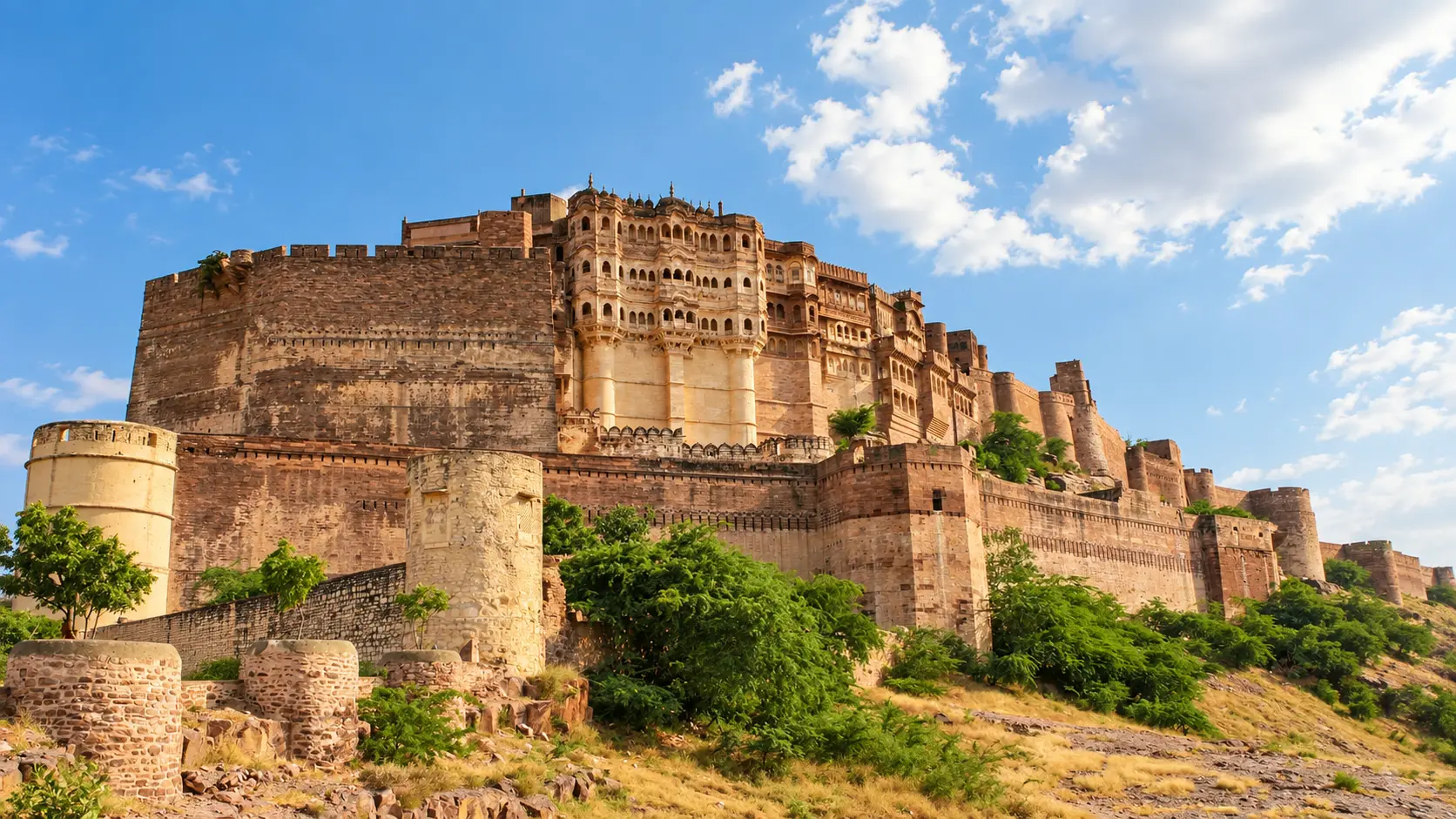
Towering like an invincible titan above the sea of indigo-blue houses that form the historic city of Jodhpur in Western Rajasthan, Mehrangarh Fort - traditionally known as Mihirgarh (the "Citadel of the Sun") - is widely acknowledged as one of the largest, most formidable, and most exquisitely preserved fortress complexes in Asia. Perched atop an isolated, perpendicular 400-foot (122-metre) volcanic cliff known as Bhaurcheeria ("The Mountain of Birds"), the fort’s colossal red sandstone walls rise so naturally from the dark Precambrian bedrock that it is nearly impossible to tell where the natural volcanic rock ends and the hand-carved Rajput battlements begin.
Commissioned in 1459 CE by Rao Jodha, the 15th Rathore ruler of Marwar who relocated his capital from Mandore to found the planned city of Jodhpur, Mehrangarh served as the political seat and sovereign military redoubt of the Rathore dynasty for over five centuries. British author Rudyard Kipling, upon gazing up at its sheer ramparts, famously marveled that it seemed "a palace that might have been built by Titans and colored by the morning sun."
Today, under the exemplary leadership of the Mehrangarh Museum Trust and the stewardship of titular Maharaja Gaj Singh II of Marwar-Jodhpur, the citadel has been transformed into a world-class cultural institution. Within its towering walls lie palace courtyards, jewel-box royal apartments painted in pure gold leaf, the revered 1460 Chamunda Devi Temple, historic cannon batteries overlooking the blue city, and the subcontinent's most dazzling museum collection of royal decorative arts, weapons, and palanquins.
Start here. Open a tile for the full details.
Why goRead details
Mehrangarh Fort is widely considered the gold standard of heritage preservation and visitor experience in India:
When to visitRead details
Visiting an expansive outdoor stone citadel perched atop a desert ridge demands careful attention to seasonal weather patterns.
Entry & permissionsRead details
Fees, visiting hours and entry rules may change. Confirm the latest details with the official operator or local authority before travelling.
Visiting Mehrangarh Fort is an exceptionally well-managed experience overseen by the Mehrangarh Museum Trust:
- Operating Hours:
- The fort gates, palace courtyards, and museum galleries are open daily from 09:00 AM to 17:00 PM.
- The Chamunda Devi Temple remains accessible until 18:00 PM for evening prayers.
- Admission Charges:
- Indian Citizens: ₹100 per adult; ₹50 for students (valid student identification card required).
- Foreign Nationals: ₹600 per adult; ₹400 for foreign students. (Foreign adult ticket includes an award-winning electronic audio guide headset available in English, French, German, Spanish, Italian, and Japanese).
- Passenger Elevator / Lift: ₹50 per person one-way. Recommended for elderly visitors or those with limited mobility, whisking you from the lower gate courtyard directly up to the top palace terrace.
- Photography Fees: Still cameras / smartphones ₹100; professional video equipment ₹200.
- Rules and Regulations:
- Strict Drone Ban: Flying drones over Mehrangarh Fort, its ramparts, or the adjoining Rao Jodha Desert Rock Park is strictly prohibited under city police and museum security guidelines.
- Temple Decorum: Footwear must be removed at the shoe counter outside the Chamunda Devi Temple courtyard.
- Accessibility: Mehrangarh is one of the most accessible historic forts in India, featuring modern passenger elevators, accessible ramps, and wheelchairs available upon request at the entrance.
Plan your visitRead details
Mehrangarh Fort is centrally located in Jodhpur and is easily accessible from any part of the city.
Explore the full guide - choose a topic below.
Why visit?
Mehrangarh Fort is widely considered the gold standard of heritage preservation and visitor experience in India…Explore detailsClose details
Mehrangarh Fort is widely considered the gold standard of heritage preservation and visitor experience in India:
- A Monumental 15th-Century Citadel of Titans: Rising 122 metres above the plains, Mehrangarh’s sheer vertical sandstone bastions and imposing gates present an unforgettable sight from anywhere in Jodhpur. Walking up its massive stone ramps, surrounded by centuries of siege history and impregnable military defenses, is an awe-inspiring experience.
- The Opulent Gilded Phool Mahal (Flower Palace): Built in the 18th century by Maharaja Abhai Singh, the Phool Mahal is arguably the most breathtaking private reception chamber in Rajasthan. Every square inch of its ornate wooden ceiling and arched walls is coated in pure, burnished gold leaf and adorned with fine miniature paintings depicting the 36 classical musical ragas.
- The World-Class Mehrangarh Museum Galleries: Curated to international museum standards, the fort’s exhibits are second to none in Asia. Marvel at the Mahadol palanquin (a solid gold-plated royal sedan chair captured in 1730 from the Governor of Gujarat), Shah Jahan’s gifted silver elephant howdah, Rao Jodha’s massive broadswords, and priceless jewel-inlaid daggers.
- The Poignant Royal Sati Handprints at Loha Pol: Flanking the inner iron portal of Loha Pol are 31 carved lead hand impressions - the poignant memorial palm marks left by the royal queens and consorts of Marwar as they departed the fort for the last time to commit sati on their husbands' funeral pyres, including the 15 widows of Maharaja Man Singh in 1843.
- Breathtaking Panoramas Over the "Blue City": Walking along the high western ramparts of the fort - lined with legendary medieval bronze cannons like the roaring Kilkila, Shambhu Baan, and Gajni Khan - offers an iconic aerial view looking down across thousands of cubical blue-washed houses, winding bazaar lanes, and the colossal Umaid Bhawan Palace in the eastern distance.
- Rao Jodha Desert Rock Park: Spread over 70 hectares of volcanic rhyolite terrain adjoining the base of the fort, this award-winning ecological sanctuary showcases the hardy, beautiful flora of the Thar Desert growing over 750-million-year-old rock formations, complete with peaceful hiking trails and botanical interpretive signage.
What to expect
Visiting Mehrangarh Fort is an engaging, multi-hour journey through centuries of Rathore royal lifestyle…Explore detailsClose details
Visiting Mehrangarh Fort is an engaging, multi-hour journey through centuries of Rathore royal lifestyle, defensive architecture, and devotional traditions.
Ascending Through the Seven Epic Gates
Visitors approach the fort via a scenic, winding hill road leading to the main entrance parking area near Jai Pol. To enter the inner palace sanctuary, travelers walk up a broad, rising stone ramp that threads through seven successive fortified gates (pols), each built to mark a significant historical victory or siege:
- Jai Pol (Victory Gate): Constructed in 1806 by Maharaja Man Singh to commemorate the defeat of the invading armies of Jaipur and Bikaner.
- Fateh Pol: Erected in 1707 by Maharaja Ajit Singh following his triumphant recapture of Jodhpur from the Mughal armies of Aurangzeb.
- Dedh Kamgra Pol: Its outer masonry still bears the deep impact craters and fractures left by cannonballs fired by invading Jaipur forces in the 1807 siege.
- Loha Pol (Iron Gate): A heavy, spike-reinforced timber gate guarding the final entrance to the royal palace. Beside the door archway are the moving, sacred palm marks (sati handprints) of Rathore queens, revered with vermilion offerings by local devotees.
- Suraj Pol (Sun Gate): The ceremonial gate that opens directly onto the inner royal courtyards, where morning sunlight pours through carved sandstone screens.
The Palatial Courtyards & Period Rooms
Passing through Suraj Pol brings you into Singar Chowk (Coronation Courtyard), paved in sandstone flagstones and enclosed by three-storey facades of carved jaali fretwork so delicate they resemble lace. In the center of the courtyard stands an elevated white marble coronation throne, where every Maharaja of Marwar has been crowned on a sacred gaddi since the 15th century.
From Singar Chowk, the self-guided audio tour leads through a sequence of restored royal apartments:
- Moti Mahal (Pearl Palace): Built by Raja Sur Singh around 1600 CE. Its walls are finished with chuna plaster made from crushed mother-of-pearl and polished sea shells, giving the entire room an iridescent, glowing pearl-like sheen. Above the hall, five hidden lattice balconies allowed the royal queens in purdah to observe court durbars in complete seclusion.
- Sheesh Mahal (Hall of Mirrors): An exquisite chamber lined with convex mirror glass mosaics, floral plasterwork, and reverse-painted glass panels depicting Radha and Krishna dancing the Raslila.
- Phool Mahal (Flower Palace): The crowning jewel of the palace complex. Bathed in amber light, its golden ceiling, ornate filigree brackets, and stained glass windows create an atmosphere of pure royal majesty.
- Takhat Vilas: The expansive bedroom suite of Maharaja Takhat Singh (reigned 1843 - 1873). The painted wooden ceiling beams, Victorian colored-glass baubles, traditional swinging canvas punkah fans, and hand-painted folk murals showcase the vibrant transition of 19th-century royal taste.
Chamunda Devi Temple and the Artillery Ramparts
After touring the palace museum, follow the outer southern ramparts toward the Chamunda Devi Temple. Established in 1460 CE by Rao Jodha, who transferred the sacred black-stone idol of Goddess Chamunda from Mandore to the new fortress, the shrine remains the supreme patron deity of Jodhpur. Check the current visiting hours and permitted access with the site operator before departure; ceremonies, closures and visitor sessions can affect access.
Just beyond the temple, the ramparts widen into a dramatic open artillery battery. Mounted on ornate iron carriages are legendary 17th-century brass cannons - including the massive Kilkila cannon - pointing outward over the edge of the cliff. From this dizzying vantage point, you look straight down upon the azure cube-houses of the old Brahmin quarter (Brahmpuri), confirming why Jodhpur is celebrated as the "Blue City".
Best time to visit
Visiting an expansive outdoor stone citadel perched atop a desert ridge demands careful attention to seasonal…Explore detailsClose details
Visiting an expansive outdoor stone citadel perched atop a desert ridge demands careful attention to seasonal weather patterns.
Seasonal Breakdown
- Winter (October to March) - The Golden Season: Winter is the most comfortable and rewarding season to visit Jodhpur. Days are sunny, dry, and mild, with temperatures hovering between 14°C and 26°C. The dry desert air and gentle breezes make climbing the stone ramps and exploring the open ramparts an absolute delight.
- Monsoon (July to September) - Dramatic Skies & Washed Stone: While Jodhpur receives relatively modest monsoon rainfall, passing rainstorms transform the rocky slopes of Rao Jodha Desert Rock Park into green scrubland. The sandstone of the fort takes on a rich, saturated red tone, and dramatic storm clouds rolling over the Blue City provide spectacular photography conditions.
- Summer (April to June) - Fierce Desert Heat: Summer in Western Rajasthan is intensely hot, with dry desert winds (loo) pushing daytime temperatures between 40°C and 44°C. The exposed stone courtyards radiate fierce heat between 11:00 AM and 16:00 PM. If visiting in summer, enter precisely at 09:00 AM to tour the air-conditioned museum halls before midday heat peaks.
Cultural Festivals
- Rajasthan International Folk Festival (RIFF) - October: Held annually around Sharad Purnima (the brightest full moon of autumn), RIFF transforms Mehrangarh Fort into a world stage for root-level folk musicians, Sufi qawwals, and international jazz artists performing on open-air fort terraces from sunrise to midnight.
- World Sacred Spirit Festival (February): A mesmerizing musical gathering bringing together sacred devotional singers, Persian lute players, and Rajasthani Manganiyar masters within the illuminated courtyards of the fort.
How to reach
Mehrangarh Fort is centrally located in Jodhpur and is easily accessible from any part of the city.Explore detailsClose details
Mehrangarh Fort is centrally located in Jodhpur and is easily accessible from any part of the city.
By Air
- Jodhpur Airport (JDH): Situated approximately 10 kilometres south of the fort hill. Jodhpur has regular direct domestic flights from New Delhi, Mumbai, Bengaluru, Hyderabad, and Ahmedabad. Pre-paid airport taxis and app-based cabs (Uber/Ola) take roughly 25 to 35 minutes to reach the fort entrance via High Court Road and Nagori Gate.
By Train
- Jodhpur Junction Railway Station (JU): Located approximately 6 kilometres south of the fort. Jodhpur is a major division of North Western Railway, served by premier high-speed express trains including the Vande Bharat Express (to Jaipur/Delhi), Suryanagari Express (to Mumbai), and Mandore Express. Taxis and auto-rickshaws take 15 to 20 minutes from the station to the fort gates.
By Road & Local Transit
- By Taxi and Auto-Rickshaw: App-based cabs (Uber/Ola) and local auto-rickshaws operate widely throughout Jodhpur. Confirm the current charge and what it includes with the operator or service provider. Visitor admission, vehicles, parking, activities and accommodation can have separate charges.
- Walking from the Old Blue City: For energetic travelers staying in the old heritage quarter near Navchokiya or Brahmpuri, a winding, picturesque stone foot-trail ascends from the base of the blue houses directly up the hill to Fateh Pol (approx. 15 to 20 minutes of steep uphill walking).
- Driving & Parking: The fort approach road is a well-paved two-lane mountain highway. Ample organized paid parking is available in the large paved clearing directly outside Jai Pol.
Entry, timings and permissions
Fees, visiting hours and entry rules may change.Explore detailsClose details
Fees, visiting hours and entry rules may change. Confirm the latest details with the official operator or local authority before travelling.
Visiting Mehrangarh Fort is an exceptionally well-managed experience overseen by the Mehrangarh Museum Trust:
- Operating Hours:
- The fort gates, palace courtyards, and museum galleries are open daily from 09:00 AM to 17:00 PM.
- The Chamunda Devi Temple remains accessible until 18:00 PM for evening prayers.
- Admission Charges:
- Indian Citizens: ₹100 per adult; ₹50 for students (valid student identification card required).
- Foreign Nationals: ₹600 per adult; ₹400 for foreign students. (Foreign adult ticket includes an award-winning electronic audio guide headset available in English, French, German, Spanish, Italian, and Japanese).
- Passenger Elevator / Lift: ₹50 per person one-way. Recommended for elderly visitors or those with limited mobility, whisking you from the lower gate courtyard directly up to the top palace terrace.
- Photography Fees: Still cameras / smartphones ₹100; professional video equipment ₹200.
- Rules and Regulations:
- Strict Drone Ban: Flying drones over Mehrangarh Fort, its ramparts, or the adjoining Rao Jodha Desert Rock Park is strictly prohibited under city police and museum security guidelines.
- Temple Decorum: Footwear must be removed at the shoe counter outside the Chamunda Devi Temple courtyard.
- Accessibility: Mehrangarh is one of the most accessible historic forts in India, featuring modern passenger elevators, accessible ramps, and wheelchairs available upon request at the entrance.
Nearby places to consider
Mehrangarh Fort is surrounded by world-class royal monuments, natural parks, and historic water architecture: -…Explore detailsClose details
Mehrangarh Fort is surrounded by world-class royal monuments, natural parks, and historic water architecture:
- Jaswant Thada (approx. 1 km downhill): A breathtaking royal cenotaph built in 1899 from intricately carved sheets of pure Makrana marble that glow with golden translucence when illuminated by the sun.
- Rao Jodha Desert Rock Park (adjoining the fort gates): A 70-hectare restored ecological sanctuary showcasing indigenous Thar desert flora and walking trails over 750-million-year-old volcanic rhyolite cliffs.
- Toorji ka Jhalra (approx. 1.5 km south in old city): A spectacular 18th-century royal stepwell featuring 200 feet of hand-carved stone steps, submerged shrines, and popular heritage cafes.
- Clock Tower (Ghanta Ghar) & Sardar Market (approx. 1.8 km south): The vibrant commercial heart of Jodhpur, famous for hand-spun spices, Mathaniya red chilies, handicrafts, and world-famous makhania lassi.
- Umaid Bhawan Palace (approx. 6 km southeast): One of the world’s largest private royal residences, built between 1928 and 1943 in golden Chittar sandstone, featuring a lavish royal museum, luxury hotel, and the private residence of the Jodhpur royal family.
In pictures
The practical bits
Before you go.
Plan ahead
To maximize your experience of Mehrangarh Fort and avoid crowds, keep the following structured recommendations in…Explore detailsClose details
To maximize your experience of Mehrangarh Fort and avoid crowds, keep the following structured recommendations in mind:
Utilize the Award-Winning Audio Guide
Mehrangarh’s official audio guide is universally praised as one of the best museum audio tours in the world.Explore detailsClose details
Mehrangarh’s official audio guide is universally praised as one of the best museum audio tours in the world. Narrated with dramatic historical reenactments, authentic royal music, and commentary by the Maharaja himself, the guide brings the empty stone halls to vivid life. Confirm the current charge and what it includes with the operator or service provider. Visitor admission, vehicles, parking, activities and accommodation can have separate charges.
Arrive at 09:00 AM for Empty Courtyards
Tour buses and large school groups typically arrive between 11:00 AM and 14:30 PM.Explore detailsClose details
Tour buses and large school groups typically arrive between 11:00 AM and 14:30 PM. Check the current visiting hours and permitted access with the site operator before departure; ceremonies, closures and visitor sessions can affect access.
Explore Rao Jodha Desert Rock Park Afterwards
Do not leave the hill immediately after touring the fort palace.Explore detailsClose details
Do not leave the hill immediately after touring the fort palace. Walk down to the adjoining Rao Jodha Desert Rock Park (located just outside the main gate). Spending 45 minutes walking along its well-marked canyon trails through volcanic gullys reveals the ancient, rugged desert ecology of the Thar and offers breathtaking low-angle views looking up at the sheer fort ramparts.
Combine with Jaswant Thada and Stepwells
Mehrangarh Fort pairs seamlessly with neighboring heritage landmarks.Explore detailsClose details
Mehrangarh Fort pairs seamlessly with neighboring heritage landmarks. Just 1 kilometre down the hill road sits Jaswant Thada, the ethereal 1899 white marble royal cenotaph often called the "Taj Mahal of Marwar". In the afternoon, descend into the old city to visit the restored 1740 Toorji ka Jhalra stepwell for a refreshing cold coffee at a stepwell cafe.
A few things you might wonder
Common questions about visiting Mehrangarh Fort. Fees, visiting hours and ceremonies are researched details that may change; confirm current arrangements with the operator before travelling.
Where is Mehrangarh Fort located and who built it?
How high is Mehrangarh Fort above Jodhpur?
What are the opening hours and ticket prices for Mehrangarh Fort?
What is the meaning of the name "Mehrangarh"?
What are the sati handprints at Loha Pol?
What can visitors see inside the Mehrangarh Museum?
Is Mehrangarh Fort wheelchair accessible?
What is the best time of year to visit Mehrangarh Fort?
Planning a trip to Jodhpur?