Triveni Ghat
Comprehensive visitor guide to Triveni Ghat in Rishikesh, Dehradun District, Uttarakhand. Discover evening Maha Aarti, triple river confluence, rituals, and tips.
Location
Rishikesh Haridwar, Uttarakhand
A closer look
Your visit, at a glance.
Rishikesh Haridwar, Uttarakhand
GET TO KNOW THE PLACE
Flanked by the shimmering, swift-flowing turquoise waters of the sacred Ganges River at an elevation of 340 metres (1,115 feet) above sea level in the historic municipal heart of…
The story of Triveni Ghat
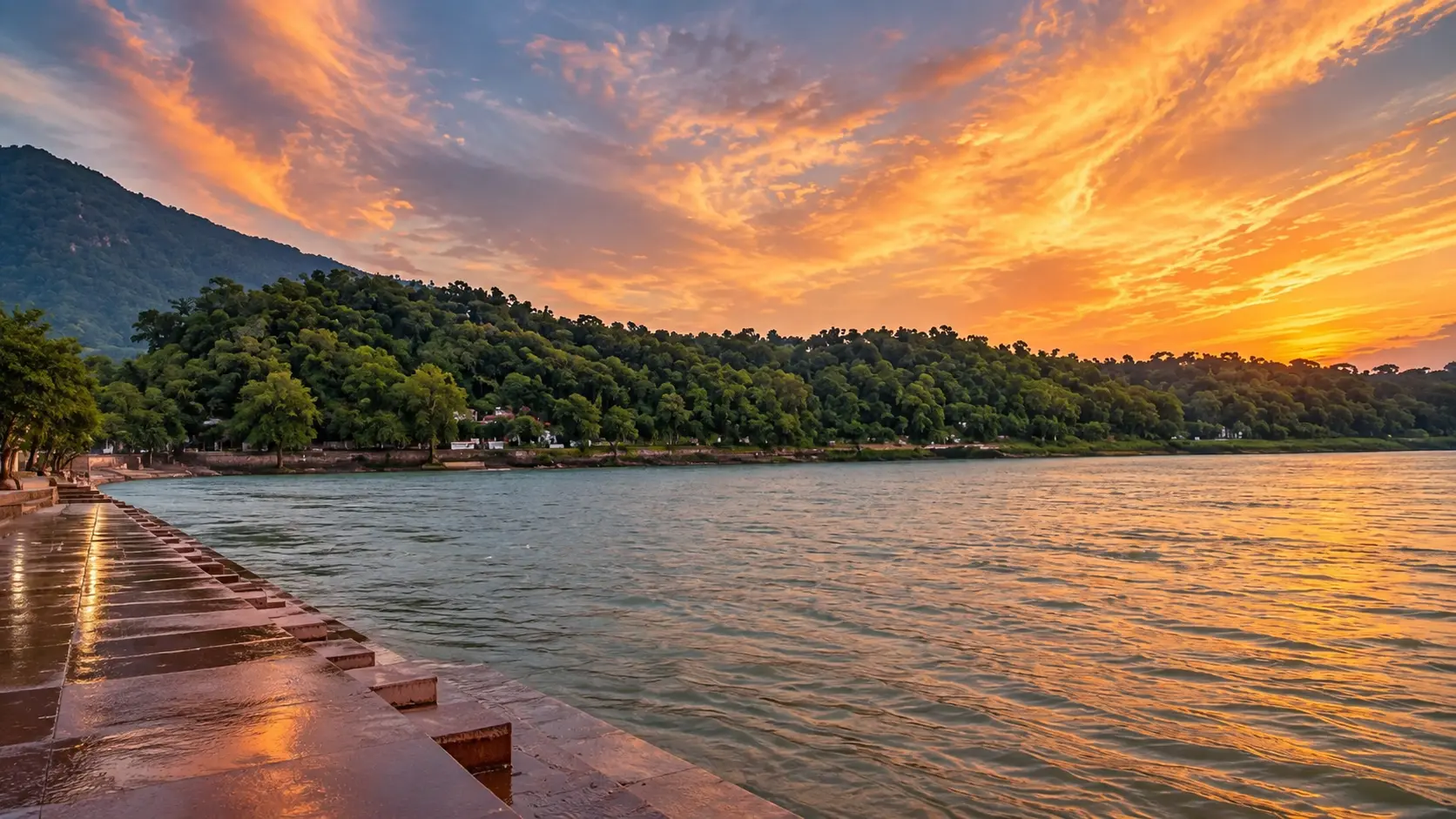
Flanked by the shimmering, swift-flowing turquoise waters of the sacred Ganges River at an elevation of 340 metres (1,115 feet) above sea level in the historic municipal heart of Rishikesh in Dehradun District, Uttarakhand, Triveni Ghat is universally venerated as the largest, most sacred bathing embankment, the preeminent spiritual sanctuary, and the vibrant civic core of Rishikesh. While the northern sectors of Tapovan and Swargashram are renowned for bohemian cafes and yoga retreats, Triveni Ghat remains the authentic, pulsating lifeblood of traditional Indian spirituality, where devotion, ritual worship, and everyday communal life have unfolded in uninterrupted continuity for thousands of years.
The sacred nomenclature of the ghat is derived from two ancient Sanskrit roots: Tri (meaning "three") and Veni (meaning "braid" or "confluence of rivers"). According to Hindu sacred geography, Triveni Ghat marks the holy, mystical confluence of three revered watercourses: the sacred Ganga, the holy Yamuna, and the invisible, subterranean Saraswati. Puranic scriptures proclaim that a devout pilgrim who immerses themselves in the cold, purifying waters at this tripartite junction cleanses the accumulated transgressions of countless lifetimes, attains mental serenity, and secures spiritual liberation (moksha). Throughout the morning hours, the ghat echoes with the rhythmic chanting of Vedic mantras as families perform sacred life-cycle ceremonies, including the sacred thread ceremony (Upanayana), tonsure rituals (Mundan), and ancestral offerings (Pind Daan and Shraddha) to ensure peace for departed ancestors.
Triveni Ghat is deeply steeped in the epic narratives of the Ramayana and the Mahabharata. Ancient lore records that after the war in Lanka, Lord Rama performed penance along these very riverbanks to absolve himself of the karmic burden of slaying Ravana, a Brahmin. In Mahabharata traditions, after Lord Krishna was fatally wounded by the hunter Jara’s poisoned arrow in the forests of Bhalka Tirtha, the Pandava brothers carried his divine mortal remains to the sacred confluence of the Ganges and Chandrabhaga near Triveni Ghat to perform his solemn funeral rites and immerse his ashes. Celebrating this profound philosophical connection, the ghat plaza features the monumental Gita Chariot (Gita Updesh), a breathtaking life-size bronze and stone sculpture depicting Lord Krishna serving as charioteer to the warrior Arjuna, expounding the immortal wisdom of the Bhagavad Gita amidst four galloping stallions. Just 500 metres behind the ghat stands the ancient Shri Bharat Mandir, founded in the 8th century CE by Adi Shankaracharya and celebrated as the oldest surviving religious sanctum in Rishikesh.
As dusk descends over the Himalayan foothills, Triveni Ghat becomes the stage for one of India's most spiritually magnificent spectacles: the Maha Aarti. Organized daily with clockwork precision by the Ganga Seva Samiti, the ceremony begins as temple bells chime and Vedic priests clad in immaculate saffron robes ascend elevated marble platforms along the water’s edge. Accompanied by the deep resonance of conch shells (shankha), the rhythmic clattering of brass cymbals, thunderous drums, and the unified chanting of the Ganga Lahari, the priests lift colossal, multi-tiered brass lamps filled with burning camphor and clarified butter (ghee). In sweeping, synchronized circular arcs, they offer the blazing flames to the living river Goddess. Devotees on both banks release thousands of tiny, biodegradable leaf boats (donas) brimming with fragrant marigold flowers, rose petals, and flickering cotton-wick lamps, transforming the dark surface of the holy river into a celestial constellation of drifting golden stars.
Start here. Open a tile for the full details.
Why goRead details
Triveni Ghat provides an authentic, visually dazzling encounter with the living spiritual soul of Rishikesh:
When to visitRead details
Triveni Ghat is active and welcoming all 365 days of the year, with distinct seasonal variations:
Entry & permissionsRead details
Fees, visiting hours and entry rules may change. Confirm the latest details with the official operator or local authority before travelling.
Visiting Triveni Ghat is completely free, open, and accessible to people of all backgrounds:
- Free Public Admission: Entry to Triveni Ghat, the bathing embankments, the Gita Chariot plaza, and the daily Maha Aarti is completely free of charge. There are no entrance fees, tickets, or registration formalities.
- Daily Operating Hours: The ghat remains Daylight visits recommended; confirm any after-dark access a day, 7 days a week. Pilgrims can visit at any time of day or night to meditate, pray, or sit quietly beside the sacred waters.
- Maha Aarti Timings (Conducted by Ganga Seva Samiti):
- Summer Season (May to August): Approximately 19:00 to 19:45 (begins as the sun sets).
- Winter Season (October to February): Approximately 17:30 to 18:30.
- Spring and Autumn (March-April & September): Approximately 18:15 to 19:00.
- Footwear and Cleanliness Rules: You must remove your footwear before stepping onto the marble bathing steps. Managed shoe storage stands operate at the gate for a nominal fee of ₹10 per pair. Using chemical soaps, shampoos, detergents, or discarding plastic wrappers into the river is strictly prohibited by municipal bylaws to safeguard water purity.
- Photography and Drone Regulations: Photography and personal mobile video recording from the steps during the aarti are permitted. However, flying camera drones over Triveni Ghat is strictly banned by district security authorities.
Plan your visitRead details
Located in the very heart of downtown Rishikesh on the western bank of the Ganges, Triveni Ghat is exceptionally well connected:
Explore the full guide - choose a topic below.
Why visit?
Triveni Ghat provides an authentic, visually dazzling encounter with the living spiritual soul of Rishikesh: -…Explore detailsClose details
Triveni Ghat provides an authentic, visually dazzling encounter with the living spiritual soul of Rishikesh:
- Experience the Spellbinding Evening Maha Aarti: Witness the majestic twilight ritual where towering multi-tiered brass lamps illuminate the sacred river, while thousands of devotees join in passionate chorus, temple bells ring in ecstasy, and the scent of burning camphor and incense fills the cool night air.
- Float a Sacred Flower Diya down the Ganges: Purchase a traditional leaf boat filled with golden marigolds, fragrant red roses, and a burning ghee lamp, make a silent heartfelt wish or prayer for loved ones, and gently launch it into the flowing river currents.
- Take a Purifying Holy Dip at the Tri-River Confluence: Immerse yourself in the cold, crystal-clear, mineral-rich mountain waters of the Ganges at the confluence of the Ganga, Yamuna, and mythical Saraswati, using the sturdy iron safety chains to steady yourself against the invigorating river current.
- Marvel at the Monumental Gita Chariot Sculpture: Admire the grand, life-size sculpture in the ghat plaza depicting Lord Krishna driving the four-horse chariot of Arjuna, capturing the iconic moment of the divine discourse of the Bhagavad Gita.
- Explore Ancient Shrines and Bustling Heritage Bazaars: Walk just a few paces from the ghat to visit the 8th-century Bharat Mandir, explore colourful street bazaars filled with Ayurvedic herbs, brass prayer lamps, and sandalwood beads, and savor legendary local sweets like hot rabri-jalebi.
What to expect
Visiting Triveni Ghat is an intensely sensory, culturally immersive, and spiritually stirring journey: - The…Explore detailsClose details
Visiting Triveni Ghat is an intensely sensory, culturally immersive, and spiritually stirring journey:
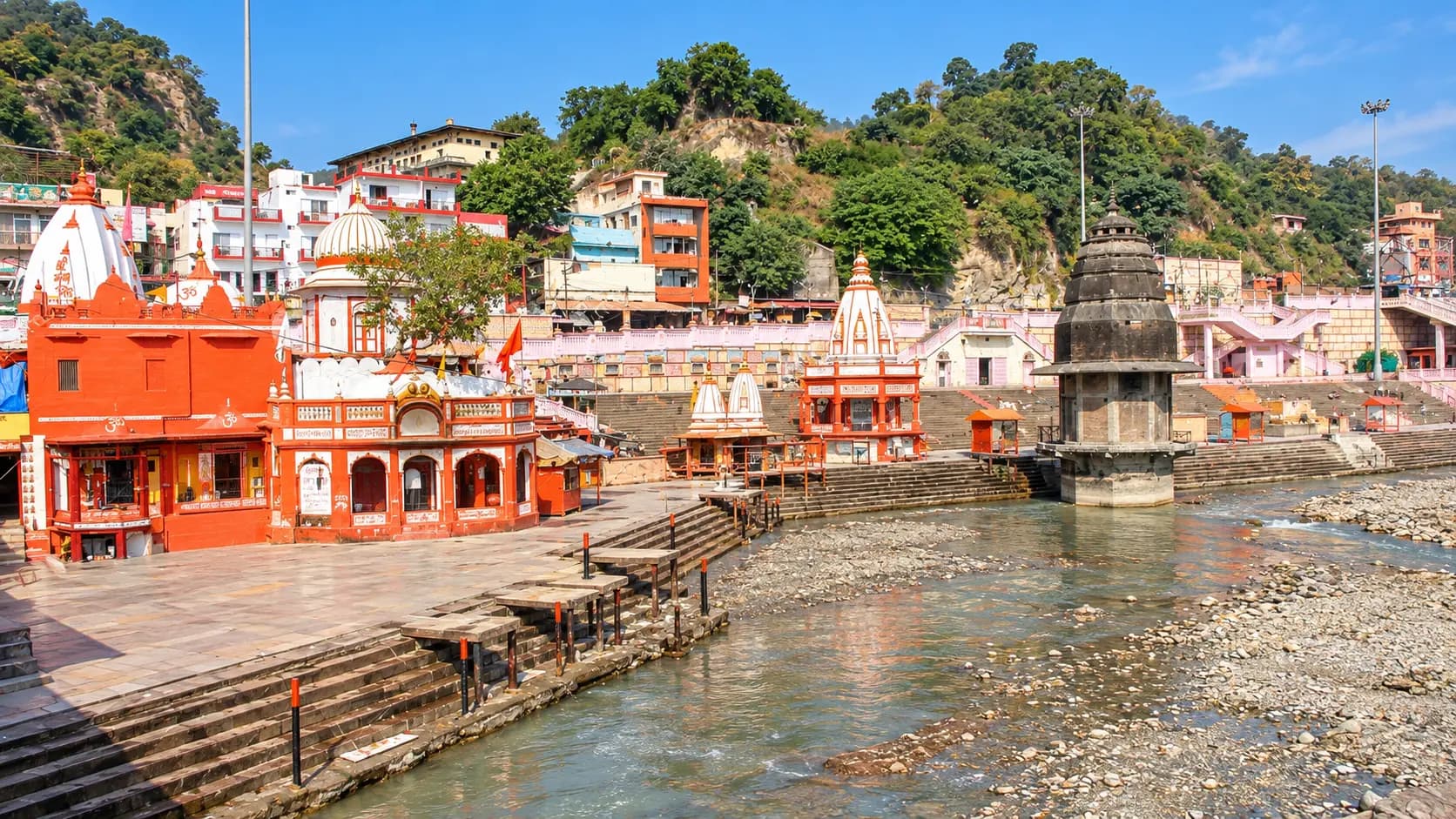
- The Grandeur of the Stepped Embankment: Triveni Ghat is an expansive, amphitheatre-like complex of wide concrete and white marble steps cascading down to the water’s edge. The steps are broad, clean, and meticulously maintained by municipal sanitation workers and volunteers from the Ganga Seva Samiti.
- Footwear Protocol and Sacred Decorum: The entire riverfront terrace is revered as a consecrated temple precinct. Visitors must remove all footwear (shoes, sandals, slippers) at the upper boundary before stepping onto the marble stairs. Managed shoe stalls are stationed at the main archway, providing safe storage for a nominal fee.
- Morning Serenity vs. Evening Splendor: The ghat possesses two distinct personalities. Early mornings (06:00 to 08:30) are quiet and serene, filled with meditating sadhus, pilgrims taking silent holy baths, and priests chanting quiet mantras. Check the current visiting hours and permitted access with the site operator before departure; ceremonies, closures and visitor sessions can affect access.
- Safety Chains and Swift River Currents: The Ganges flows with substantial volume and swift currents past Triveni Ghat. Heavy iron chains and brass safety railings are permanently installed along the submerged bathing steps. Bathers must hold firmly to these chains while dipping into the water to ensure complete safety.
Best time to visit
Triveni Ghat is active and welcoming all 365 days of the year, with distinct seasonal variations: - Crisp and…Explore detailsClose details
Triveni Ghat is active and welcoming all 365 days of the year, with distinct seasonal variations:
- Crisp and Refreshing Autumn/Winter (October to March): Widely celebrated as the absolute finest season to visit Triveni Ghat. Days are sunny, dry, and mild, with daytime temperatures hovering comfortably between 14°C and 25°C. The waters of the Ganges are at their absolute clearest and most vibrant jade-green. Check the current visiting hours and permitted access with the site operator before departure; ceremonies, closures and visitor sessions can affect access. Warm shawls or jackets are recommended for the evening.
- Pleasant Spring (March to April): The weather is delightfully warm (20°C to 30°C) with blossoming trees and clear mountain skies. March is particularly vibrant, coinciding with major festivals like Holi and the International Yoga Festival, bringing festive energy to the ghat.
- Invigorating Summer (May to June): Daytime temperatures can reach 35°C to 40°C. However, evenings bring refreshing mountain breezes off the river, and taking a dip in the chilly snow-fed waters during the heat of midday is immensely restorative. Evening aartis take place later, around 19:00 to 19:45.
- Monsoon Surges (July to August): Heavy monsoon rains transform the Ganges into a roaring, silt-laden brown torrent. The river often rises high up the lower steps of the ghat, and municipal authorities may temporarily restrict bathing to the upper railings. However, watching the sheer power of the swollen river during the evening aarti is an awe-inspiring experience.
How to reach
Located in the very heart of downtown Rishikesh on the western bank of the Ganges, Triveni Ghat is exceptionally…Explore detailsClose details
Located in the very heart of downtown Rishikesh on the western bank of the Ganges, Triveni Ghat is exceptionally well connected:
- By Train: The nearest rail terminals are Rishikesh Railway Station (RKSH), located just 1.5 kilometres west (approx. 5 minutes by auto or e-rickshaw), and Yog Nagari Rishikesh Railway Station (YNRK), situated 2.5 kilometres southwest (approx. 10 minutes by taxi). The primary rail junction is Haridwar Junction (HW), located 24 kilometres southwest (approx. 40 to 50 minutes by taxi or bus). Confirm the current charge and what it includes with the operator or service provider. Visitor admission, vehicles, parking, activities and accommodation can have separate charges.
- By Road: Rishikesh is situated directly on National Highway 7 (NH 7) and connected via the smooth four-lane NH 334 corridor to Haridwar (24 km), Dehradun (43 km), and New Delhi (230 km, approx. 4.5 to 5 hours via the Delhi - Meerut Expressway). Long-distance buses terminate at the Rishikesh central bus depot, located just 2 kilometres from Triveni Ghat.
- By Air: The closest domestic airport is Dehradun Jolly Grant Airport (DED), located just 18 kilometres northwest along a smooth four-lane highway (approx. 30 to 40 minutes by taxi). Direct flights link Dehradun to New Delhi, Mumbai, Bengaluru, Ahmedabad, and Hyderabad. Taxis are available round the clock outside the airport terminal.
- Pedestrian and Local Transit: From anywhere in downtown Rishikesh, you can easily walk or take a shared battery rickshaw through Ghat Road, Tilak Road, or the Main Bazaar directly to the grand entrance archway of Triveni Ghat.
Entry, timings and permissions
Fees, visiting hours and entry rules may change.Explore detailsClose details
Fees, visiting hours and entry rules may change. Confirm the latest details with the official operator or local authority before travelling.
Visiting Triveni Ghat is completely free, open, and accessible to people of all backgrounds:
- Free Public Admission: Entry to Triveni Ghat, the bathing embankments, the Gita Chariot plaza, and the daily Maha Aarti is completely free of charge. There are no entrance fees, tickets, or registration formalities.
- Daily Operating Hours: The ghat remains Daylight visits recommended; confirm any after-dark access a day, 7 days a week. Pilgrims can visit at any time of day or night to meditate, pray, or sit quietly beside the sacred waters.
- Maha Aarti Timings (Conducted by Ganga Seva Samiti):
- Summer Season (May to August): Approximately 19:00 to 19:45 (begins as the sun sets).
- Winter Season (October to February): Approximately 17:30 to 18:30.
- Spring and Autumn (March-April & September): Approximately 18:15 to 19:00.
- Footwear and Cleanliness Rules: You must remove your footwear before stepping onto the marble bathing steps. Managed shoe storage stands operate at the gate for a nominal fee of ₹10 per pair. Using chemical soaps, shampoos, detergents, or discarding plastic wrappers into the river is strictly prohibited by municipal bylaws to safeguard water purity.
- Photography and Drone Regulations: Photography and personal mobile video recording from the steps during the aarti are permitted. However, flying camera drones over Triveni Ghat is strictly banned by district security authorities.
Nearby places to consider
A visit to Triveni Ghat places you in the cultural core of Rishikesh, surrounded by historic temples, markets…Explore detailsClose details
A visit to Triveni Ghat places you in the cultural core of Rishikesh, surrounded by historic temples, markets, and riverfront sights:
- Shri Bharat Mandir: Located just 500 metres behind the ghat, this ancient 8th-century temple is the historical nucleus around which Rishikesh was founded, housing rare salvaged stone sculptures and an ancient banyan tree.
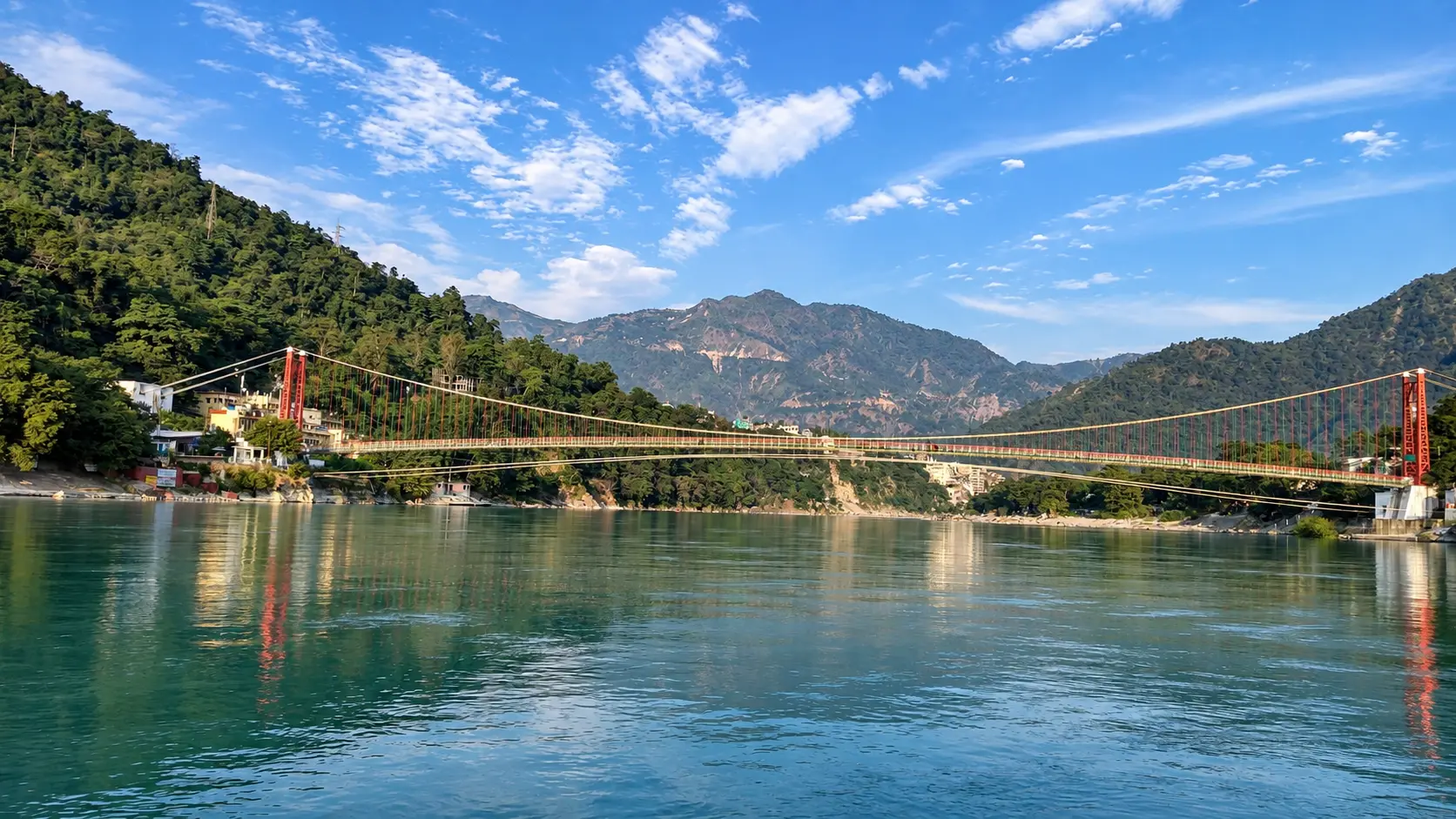
- Ram Jhula and Swargashram: Located 3 kilometres northeast, this iconic 228-metre iron suspension bridge spans the Ganges, linking downtown Rishikesh to the ashram enclave of Swargashram, Parmarth Niketan, and Geeta Bhawan.
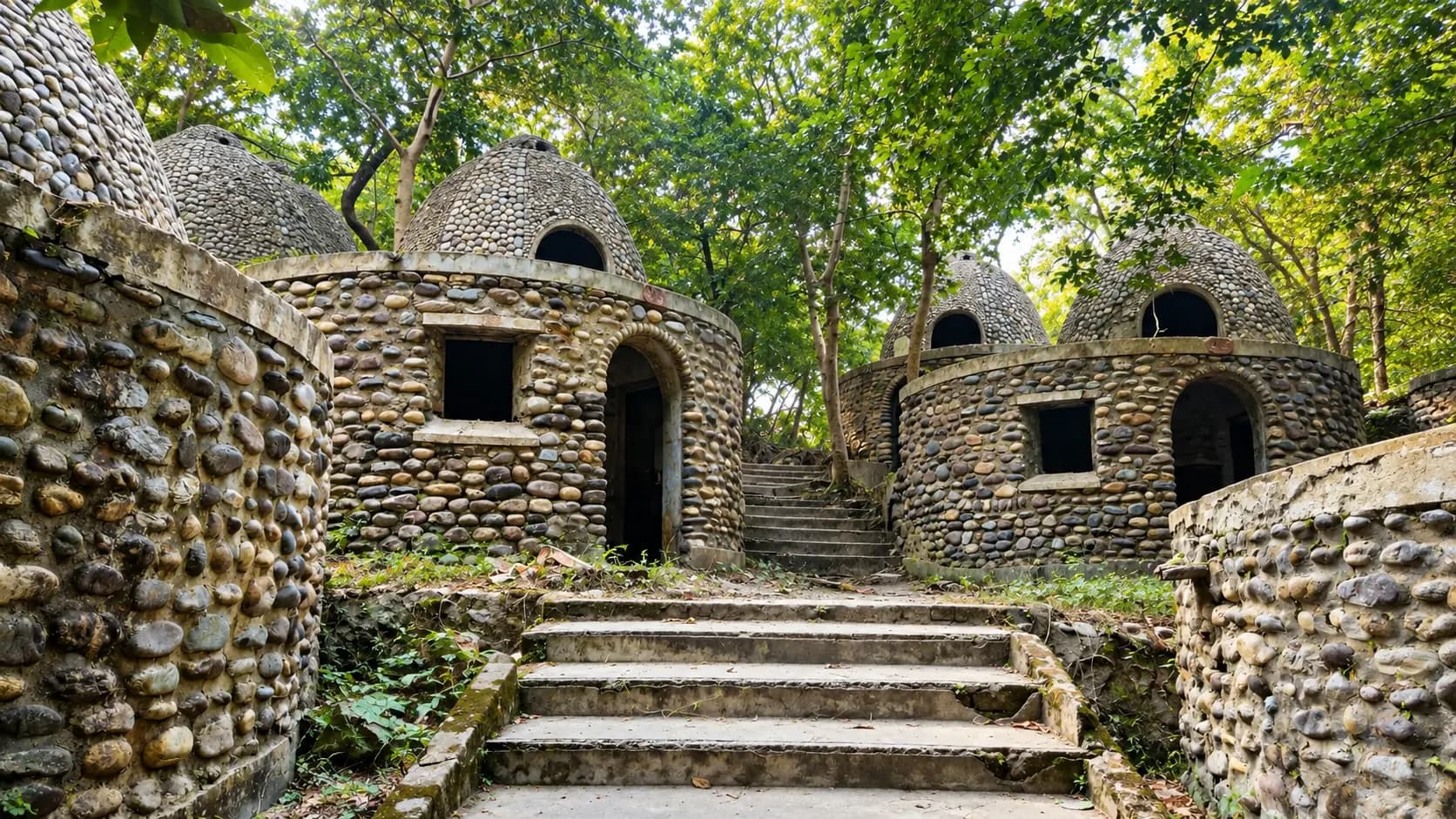
- The Beatles Ashram (Chaurasi Kutia): Located 4 kilometres northeast within Rajaji Tiger Reserve, this historic 14-acre sanctuary was where The Beatles studied meditation in 1968 and composed The White Album.
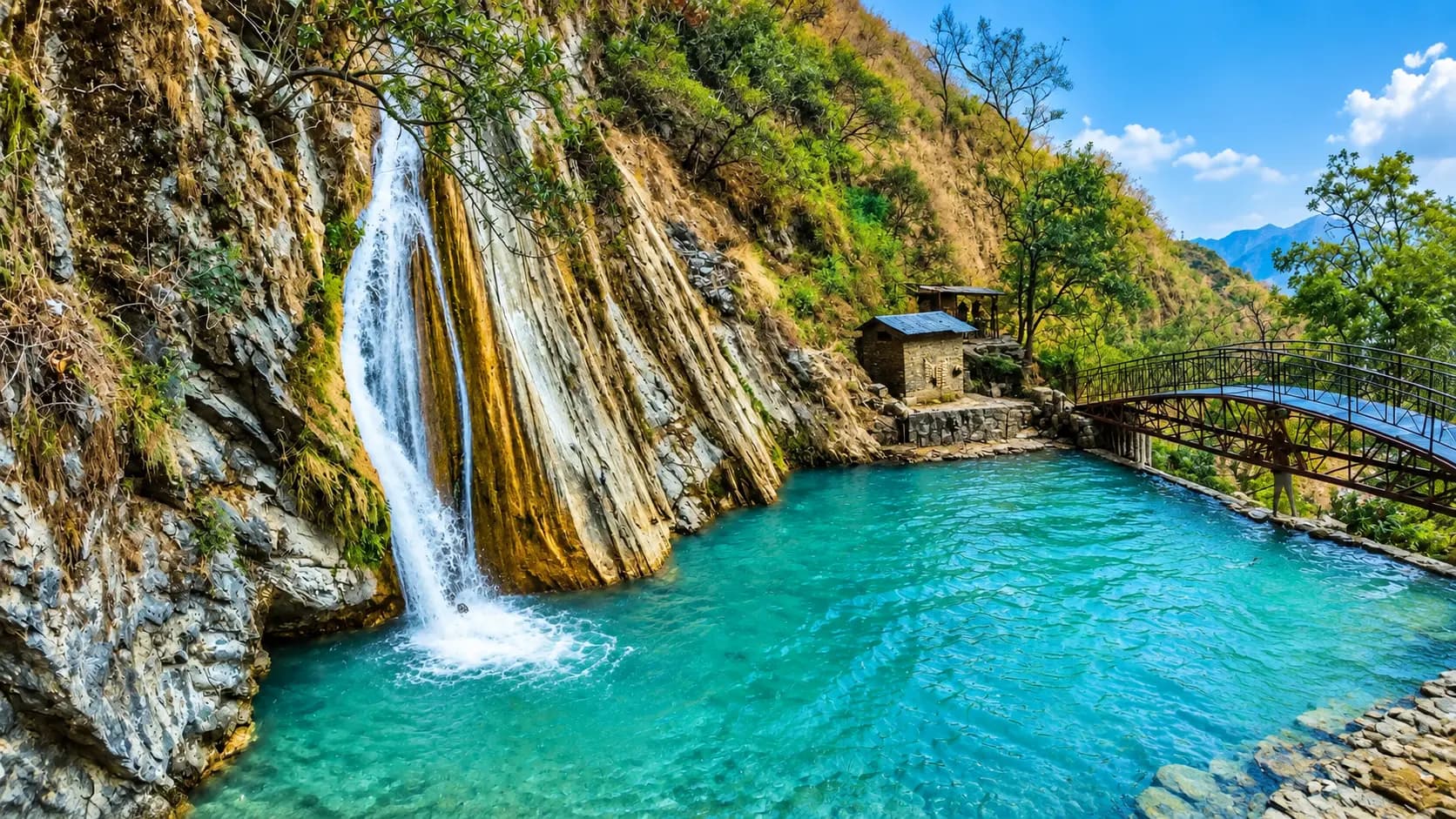
- Neer Garh Waterfall: Situated 8 kilometres northeast along the Badrinath Highway, this multi-tiered natural cascade features crystal-clear jade plunge pools tucked inside a lush jungle canyon.
- Har Ki Pauri, Haridwar: Located 24 kilometres south along NH 334, this legendary riverfront ghat is the epicenter of the Kumbh Mela, famous for its historic Brahmakund and grand evening Ganga Aarti.
In pictures
The practical bits
Before you go.
Plan ahead
A few practical tips will ensure a deeply fulfilling, peaceful, and hassle-free visit to Triveni Ghat: -Explore detailsClose details
A few practical tips will ensure a deeply fulfilling, peaceful, and hassle-free visit to Triveni Ghat:
Arrive Early to Secure a Great Seating Spot for Aarti
Because the evening Maha Aarti draws large crowds of devotees and travelers every night, the steps fill up quickly.Explore detailsClose details
Because the evening Maha Aarti draws large crowds of devotees and travelers every night, the steps fill up quickly. Check the current visiting hours and permitted access with the site operator before departure; ceremonies, closures and visitor sessions can affect access.
Take a Holy Dip in the Morning
For the most tranquil and spiritually serene experience, visit between 06:30 and 08:30 in the morning.Explore detailsClose details
For the most tranquil and spiritually serene experience, visit between 06:30 and 08:30 in the morning. The water is pristine, the air is cool, and the morning sun gently warms the marble steps. Hold fast to the heavy submerged iron chains at all times while dipping. Covered changing rooms for women are situated right behind the steps.
Bring a Small Cloth Bag for Your Footwear
During peak aarti hours, the queues at the entrance shoe stalls can be long.Explore detailsClose details
During peak aarti hours, the queues at the entrance shoe stalls can be long. Bringing a lightweight cloth drawstring bag allows you to pack your shoes inside your backpack, bypassing the shoe counter entirely and exiting quickly after the ceremony.
Combine with a Heritage Walk to Bharat Mandir
Before the evening aarti, take a short 5-minute walk (500 metres) through the bustling traditional bazaar behind…Explore detailsClose details
Before the evening aarti, take a short 5-minute walk (500 metres) through the bustling traditional bazaar behind the ghat to visit Shri Bharat Mandir, the oldest temple in Rishikesh, which houses an ancient black stone idol of Lord Vishnu consecrated by Adi Shankaracharya in 789 CE.
A few things you might wonder
Common questions about visiting Triveni Ghat. Fees, visiting hours and ceremonies are researched details that may change; confirm current arrangements with the operator before travelling.
What is the meaning of the name 'Triveni Ghat'?
What time does the evening Maha Aarti start at Triveni Ghat?
Is there an entry fee to attend the evening Aarti at Triveni Ghat?
Is it safe to bathe in the Ganges at Triveni Ghat?
What is the large chariot statue located near Triveni Ghat?
How far is Triveni Ghat from Ram Jhula and Laxman Jhula?
Explore more in Rishikesh Haridwar
Discover other destinations around this hub
More Hubs in Uttarakhand
Continue exploring other travel hubs in this state
Planning a trip to Rishikesh Haridwar?