Har Ki Pauri
Comprehensive visitor guide to Har Ki Pauri in Haridwar, Uttarakhand. Discover evening Ganga Aarti timings, Brahmakund holy snan, Kumbh Mela, and history.
Location
Rishikesh Haridwar, Uttarakhand
A closer look
Your visit, at a glance.
Rishikesh Haridwar, Uttarakhand
GET TO KNOW THE PLACE
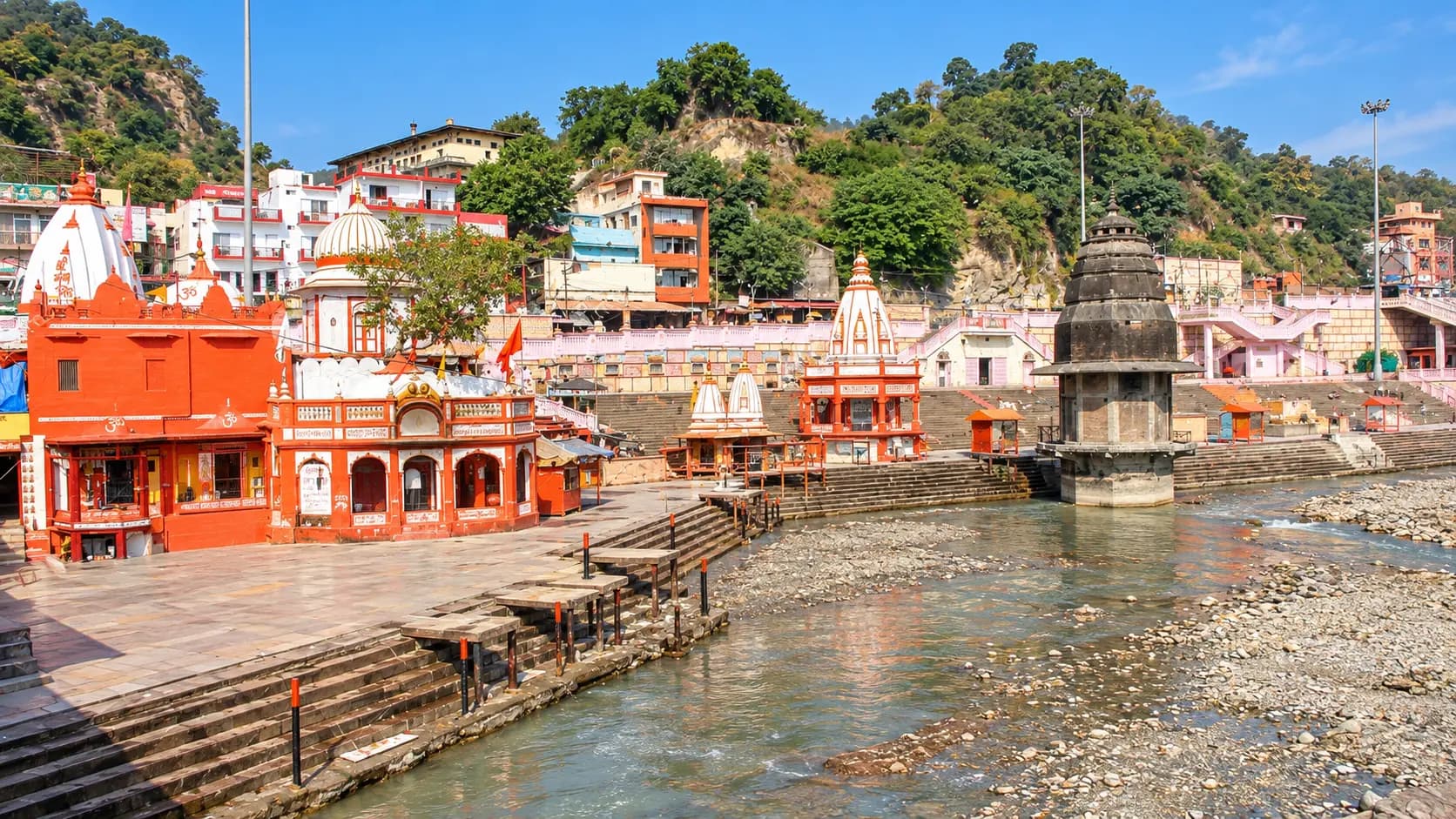
Embraced by the emerald-green, torrential waters of the sacred Ganges River at an elevation of 290 metres (951 feet) above sea level in Haridwar District, Uttarakhand, Har Ki…
The story of Har Ki Pauri
Embraced by the emerald-green, torrential waters of the sacred Ganges River at an elevation of 290 metres (951 feet) above sea level in Haridwar District, Uttarakhand, Har Ki Pauri is the spiritual focal point, the most revered riverfront ghat, and the pulsating cultural heart of the ancient pilgrimage city of Haridwar. Literally translating to "The Footsteps of the Lord" (Har denoting Lord Shiva or Lord Vishnu, and Pauri meaning steps), this hallowed stone embankment marks the precise geographical threshold where the sacred Ganga, having journeyed more than 250 kilometres down through the steep, narrow granite gorges of the Greater Himalayas, finally breaks free onto the broad, fertile alluvial plains of northern India.
The historical foundations of Har Ki Pauri date back to the 1st century BCE, when the legendary ruler King Vikramaditya of Ujjain commissioned the construction of stone bathing ghats along the riverbank in loving memory of his elder brother, the scholar-king Raja Bhartrihari. Having renounced his royal throne and worldly riches, Bhartrihari had retreated to this serene riverbank to practice intense Vedic tapasya and meditation, composing his celebrated philosophical treatises the Vairagya Shatakam and Niti Shatakam amidst the forested rocks where the sacred ghats now stand.
In Hindu sacred geography, Har Ki Pauri is revered as the epicentre of salvation (moksha). At the northern nexus of the ghat lies the sanctum of Brahmakund, the most auspicious bathing pool in all of Haridwar. According to sacred Vedic lore, during the celestial Samudra Manthan (Churning of the Cosmic Ocean) by gods and demons, the divine physician Dhanvantari emerged carrying the Kumbha (golden urn) filled with the celestial nectar of immortality (amrita). As the divine eagle Garuda flew across the heavens pursued by the asuras, precious drops of this immortal elixir spilled at four places on Earth: Ujjain, Nashik, Prayagraj, and Haridwar’s Brahmakund. This celestial event established the sacred tradition of the Kumbh Mela, celebrated every 12 years, and the Ardh Kumbh Mela, held every six years, when tens of millions of pilgrims, ascetics, Naga sadhus, and saints converge upon these stone steps to take a purifying holy dip (snan) believed to wash away the sins of lifetimes. A sacred stone embedded in the wall of the Brahmakund bears an ancient indentation venerated by millions as the celestial footprint (Charan Paduka) of Lord Vishnu himself.
Every evening at twilight, Har Ki Pauri transforms into one of the most mesmerizing, spiritually electrifying spectacles on Earth: the Maha Ganga Aarti. Organized meticulously since 1916 by the historic Shri Ganga Sabha - founded under the guidance of visionary nationalist and educationist Pandit Madan Mohan Malaviya - this ancient ritual pays reverence to the living river Goddess Ganga. As the sun sets behind the Shiwalik hills, dozens of Vedic priests dressed in radiant saffron dhoti-kurtas stand atop raised marble pedestals along the water’s edge. In synchronized devotion, they lift colossal, multi-tiered brass lamps bearing burning camphor and ghee wicks, waving them in sweeping circular arcs to the accompaniment of deafening conch shells (shankha), resonant brass bells, thunderous drums, and the soaring, unified chanting of the Ganga Lahari and Jai Gange Mata. Simultaneously, thousands of pilgrims standing on the opposite banks launch tiny handmade leaf boats (donas) crafted from banyan leaves, loaded with marigold blossoms, rose petals, and flickering ghee lamps, turning the dark river into a shimmering, flowing river of golden fire.
Start here. Open a tile for the full details.
Why goRead details
Har Ki Pauri provides an unforgettable encounter with the living spiritual traditions, timeless devotion, and monumental heritage of India:
When to visitRead details
Har Ki Pauri is active 365 days a year, with seasonal variations creating distinctly different pilgrimage atmospheres:
Entry & permissionsRead details
Fees, visiting hours and entry rules may change. Confirm the latest details with the official operator or local authority before travelling.
Pilgrimage and viewing at Har Ki Pauri are free and accessible to all:
- Entry and Aarti Fees: Visiting Har Ki Pauri, bathing in the sacred waters, and attending the evening or morning Ganga Aarti is 100% free of charge. No tickets or entrance passes are required.
- Daily Operating Hours: The ghats remain Daylight visits recommended; confirm any after-dark access a day, 7 days a week. You can visit at any time of day or night to sit by the water, pray, or take a holy bath under the stars.
- Ganga Aarti Timings (Conducted by Shri Ganga Sabha):
- Morning (Prabhat) Aarti: Held daily at sunrise, approximately 05:30 to 06:15 in summer and 06:30 to 07:00 in winter.
- Evening (Sandhya) Maha Aarti: Held daily at sunset, approximately 19:00 to 19:45 in summer (May-July) and 17:30 to 18:15 in winter (November-February).
- Footwear and Cleanliness Regulations: Footwear must be removed before crossing onto the sacred stone steps. Managed shoe storage stands charge ₹10 to ₹20 per pair, or you may place them in your own backpack. Soaps, shampoos, detergents, and plastic wrappers are strictly prohibited in the river to protect water purity.
- Photography and Drone Restrictions: Amateur photography and mobile videography from the ghat steps are permitted. However, flying camera drones over Har Ki Pauri is strictly banned by district security authorities due to high-security airspace classifications.
Plan your visitRead details
Har Ki Pauri is situated in central Haridwar, boasting world-class multi-modal transportation links:
Bathing Safety and the Golden Chain Rule
The current at Brahmakund is surprisingly swift, powerful, and cold. Never let go of the thick iron safety chains while immersing yourself in the water. Keep a firm two-handed grip on the chain at all times, and supervise children and elderly family members closely.
Explore the full guide - choose a topic below.
Why visit?
Har Ki Pauri provides an unforgettable encounter with the living spiritual traditions, timeless devotion, and…Explore detailsClose details
Har Ki Pauri provides an unforgettable encounter with the living spiritual traditions, timeless devotion, and monumental heritage of India:
- Witness the World-Renowned Maha Ganga Aarti: Experience the mesmerizing evening ritual where massive multi-tiered brass lamps are circled in worship, while temple bells chime, conch shells reverberate, and thousands of devotees join in passionate chorus across the riverbanks.
- Take a Purifying Holy Dip in Brahmakund: Immerse yourself in the cold, swift waters of the sacred Brahmakund, where the amrita of the gods fell, holding fast to the heavy iron safety chains as the sacred river cleanses both mind and spirit.
- Float a Flickering Diya on the Ganges: Purchase a traditional biodegradable leaf boat filled with fragrant rose petals, bright marigolds, and a burning cotton wick, make a silent heartfelt wish or prayer for ancestors, and watch it glide gently downstream amidst thousands of sparkling lamps.
- Pay Homage to the Footprint of Lord Vishnu: Visit the historic shrine at Brahmakund to view the venerated stone imprint believed to be the holy footprint (Charan Paduka) of Lord Vishnu, blessed during the dawn of creation.
- Explore Ancient Heritage Bazaars: Wander through Moti Bazar, Bara Bazar, and Upper Road immediately behind the ghats, exploring centuries-old wooden storefronts filled with hand-pounded ayurvedic remedies, brass pooja utensils, sandalwood beads, glass bangles, and sizzling traditional sweet shops.
What to expect
Visiting Har Ki Pauri is an intensely energetic, visually overwhelming, and deeply moving experience: - The Flow…Explore detailsClose details
Visiting Har Ki Pauri is an intensely energetic, visually overwhelming, and deeply moving experience:
- The Flow of the River and Safety Chains: The river at Har Ki Pauri flows through an engineered, canalized stone channel designed to maintain consistent, swift water flow. The current is exceptionally strong and ice-cold, descending straight from the glaciers. Heavy iron safety chains and sturdy railings are bolted permanently along every bathing step. Bathers must grip these chains firmly while taking their holy dips to avoid being swept off their feet by the powerful current.
- The Ghat Enclosure and Footwear Protocol: Har Ki Pauri is an expansive, interconnected network of stepped stone embankments, marble courtyards, pedestrian footbridges, and viewing islands (including the Clock Tower Island). The entire area is considered consecrated temple ground. You must remove all shoes, sandals, and leather goods before stepping onto the ghats; managed shoe storage stalls operate at all bridge entrances.
- Evening Aarti Gathering and Crowd Dynamics: Check the current visiting hours and permitted access with the site operator before departure; ceremonies, closures and visitor sessions can affect access. The atmosphere builds with devotional bhajans broadcasting over loudspeakers, vendors selling marigold leaf boats, and priests performing preparatory rituals.
- Purity and Spiritual Decorum: Haridwar is a revered holy town where consuming alcohol and non-vegetarian food is strictly forbidden by law. The ghats are maintained with deep reverence; visitors should dress conservatively, respect pilgrims performing ancestral rites (pind daan), and maintain peaceful decorum.
Best time to visit
Har Ki Pauri is active 365 days a year, with seasonal variations creating distinctly different pilgrimage…Explore detailsClose details
Har Ki Pauri is active 365 days a year, with seasonal variations creating distinctly different pilgrimage atmospheres:
- Crisp and Pleasant Winter (October to March): Widely regarded as the ideal season for traveling to Haridwar. Daytime temperatures range from 14°C to 24°C, with cool, crisp breezes off the river and sunny blue skies. While winter river water is freezing cold (8°C to 12°C), taking a quick holy dip followed by basking in the warm morning sunshine is deeply invigorating. Evening aartis take place earlier (approx. 17:30 to 18:00).
- Vibrant Spring (March to April): The weather is wonderfully mild (20°C to 30°C), making it a popular time for families and spiritual travelers before the peak summer heat sets in. The major spring festivals of Chaitra Navratri and Baisakhi bring festive religious processions to the ghats.
- Warm Summer (May to June): Daytime temperatures can reach 35°C to 42°C. However, summer evenings provide pleasant relief as cool river breezes sweep across the stone ghats. Taking a dip in the chilly mountain waters during the heat of midday is immensely refreshing for pilgrims.
- Monsoon and Kanwar Yatra (July to August): Heavy rains swell the Ganges into a roaring, silt-laden brown torrent. More importantly, late July and early August witness the epic Kanwar Yatra, when upwards of 30 to 40 million saffron-clad Shiva devotees (Kanwariyas) walk hundreds of kilometres on foot to collect holy Gangajal from Har Ki Pauri. The entire city enters a state of high festive fervor, with vehicular traffic diverted for weeks.
How to reach
Har Ki Pauri is situated in central Haridwar, boasting world-class multi-modal transportation links: - By Train…Explore detailsClose details
Har Ki Pauri is situated in central Haridwar, boasting world-class multi-modal transportation links:
- By Train: Haridwar Junction Railway Station (HW) is located just 2 kilometres south of Har Ki Pauri (approx. 10 to 15 minutes by e-rickshaw or auto). It is one of the most prominent rail gateways in northern India, served by numerous daily express and superfast trains including the Dehradun Shatabdi, Vande Bharat Express, Jan Shatabdi, Upasana Express, and Mussoorie Express. Confirm the current charge and what it includes with the operator or service provider. Visitor admission, vehicles, parking, activities and accommodation can have separate charges.
- By Road: Haridwar is situated along the smoothly paved National Highway 334 (Delhi - Dehradun highway). Driving from Delhi (215 km) takes approximately 4 to 5 hours via the Meerut Expressway and Roorkee bypass. State transport corporations (UTC, UPSRTC) and private deluxe Volvo buses run around the clock every 15 to 30 minutes from Delhi’s Maharana Pratap ISBT (Kashmere Gate) and Anand Vihar directly to the Haridwar Central Bus Stand (2 km from the ghat).
- By Air: The nearest airport is Dehradun Jolly Grant Airport (DED), located 38 kilometres north along a smooth four-lane highway (approx. 45 to 60 minutes by taxi). Direct flights operate daily to New Delhi, Mumbai, Bengaluru, Ahmedabad, and Hyderabad. Taxis are readily available at the airport arrivals terminal.
- Pedestrian Access at the Ghat: Vehicles are not permitted directly on the riverside ghats. Visitors walk across designated, wide pedestrian footbridges (such as the Malviya Dweep bridge) that span the canal from the main road directly to the steps of Har Ki Pauri.
Entry, timings and permissions
Fees, visiting hours and entry rules may change.Explore detailsClose details
Fees, visiting hours and entry rules may change. Confirm the latest details with the official operator or local authority before travelling.
Pilgrimage and viewing at Har Ki Pauri are free and accessible to all:
- Entry and Aarti Fees: Visiting Har Ki Pauri, bathing in the sacred waters, and attending the evening or morning Ganga Aarti is 100% free of charge. No tickets or entrance passes are required.
- Daily Operating Hours: The ghats remain Daylight visits recommended; confirm any after-dark access a day, 7 days a week. You can visit at any time of day or night to sit by the water, pray, or take a holy bath under the stars.
- Ganga Aarti Timings (Conducted by Shri Ganga Sabha):
- Morning (Prabhat) Aarti: Held daily at sunrise, approximately 05:30 to 06:15 in summer and 06:30 to 07:00 in winter.
- Evening (Sandhya) Maha Aarti: Held daily at sunset, approximately 19:00 to 19:45 in summer (May-July) and 17:30 to 18:15 in winter (November-February).
- Footwear and Cleanliness Regulations: Footwear must be removed before crossing onto the sacred stone steps. Managed shoe storage stands charge ₹10 to ₹20 per pair, or you may place them in your own backpack. Soaps, shampoos, detergents, and plastic wrappers are strictly prohibited in the river to protect water purity.
- Photography and Drone Restrictions: Amateur photography and mobile videography from the ghat steps are permitted. However, flying camera drones over Har Ki Pauri is strictly banned by district security authorities due to high-security airspace classifications.
Nearby places to consider
A visit to Har Ki Pauri places you at the threshold of Haridwar’s most sacred temples and vibrant markets: -…Explore detailsClose details
A visit to Har Ki Pauri places you at the threshold of Haridwar’s most sacred temples and vibrant markets:
- Mansa Devi Temple: Perched atop Bilwa Parvat on the Shiwalik ridge directly overlooking Har Ki Pauri, this revered wish-fulfilling goddess temple is accessible via a scenic 1.5-km trek or the thrilling Mansa Devi Udankhatola ropeway cable car.
- Chandi Devi Temple: Located on the opposite mountain peak of Neel Parvat across the Ganges, this ancient Shakti shrine established by Adi Shankaracharya offers panoramic river vistas and is reachable via ropeway.
- Maya Devi Temple: One of the oldest surviving shrines in Haridwar and an essential Shakti Peetha where Goddess Sati's heart and navel are believed to have fallen; forms the sacred Siddha Peetha triangle alongside Mansa Devi and Chandi Devi.
- Moti Bazar and Bara Bazar: Haridwar’s historic street markets beginning right at the foot of Har Ki Pauri, renowned for authentic Ayurvedic preparations, brass icons, handcrafted wooden rosaries, and legendary street food like hot kachoris and saffron rabri.
- Shanti Kunj and Bharat Mata Mandir: Located 5 km north toward Rishikesh, Shanti Kunj is the world headquarters of the All World Gayatri Pariwar, while Bharat Mata Mandir is an eight-storey spiritual shrine honouring India’s sages, heroes, and spiritual unity.
In pictures
The practical bits
Before you go.
Plan ahead
Strategic planning ensures a comfortable, reverent, and hassle-free experience at this bustling pilgrimage…Explore detailsClose details
Strategic planning ensures a comfortable, reverent, and hassle-free experience at this bustling pilgrimage landmark:
Arrive at Least One Hour Before Sunset for Aarti
Because thousands of pilgrims attend the evening Maha Aarti daily, the best seating steps on the opposite bank…Explore detailsClose details
Because thousands of pilgrims attend the evening Maha Aarti daily, the best seating steps on the opposite bank (Malviya Dweep island facing the priests) fill up rapidly. Arrive by 16:30 in winter or 17:30 in summer to claim a comfortable seated vantage point with an unobstructed line of sight.
Bathing Safety and the Golden Chain Rule
The current at Brahmakund is surprisingly swift, powerful, and cold.Explore detailsClose details
The current at Brahmakund is surprisingly swift, powerful, and cold. Never let go of the thick iron safety chains while immersing yourself in the water. Keep a firm two-handed grip on the chain at all times, and supervise children and elderly family members closely.
Modest Attire and Bathing Towels
Dress respectfully in conservative clothing that covers shoulders and knees.Explore detailsClose details
Dress respectfully in conservative clothing that covers shoulders and knees. If planning to take a holy dip, bring a change of clothes and a quick-drying towel. Dedicated covered changing rooms for women are situated directly behind the main bathing steps.
Beware of Touts and Unsolicited Priests
While the priests of Shri Ganga Sabha conduct the official public aarti, various freelance priests roam the ghats…Explore detailsClose details
While the priests of Shri Ganga Sabha conduct the official public aarti, various freelance priests roam the ghats offering private rituals, ancestral blessings, or thread-tying ceremonies, sometimes demanding substantial donations afterward. Agree on any dakshina (offering) clearly in advance, or politely decline if you prefer to simply observe.
A few things you might wonder
Common questions about visiting Har Ki Pauri. Fees, visiting hours and ceremonies are researched details that may change; confirm current arrangements with the operator before travelling.
What is the exact time of the evening Ganga Aarti at Har Ki Pauri?
Is there an entry fee or ticket required to watch the Ganga Aarti?
Why is Brahmakund at Har Ki Pauri considered so holy?
Is it safe to bathe in the river at Har Ki Pauri?
Where can I safely leave my shoes while visiting the ghat?
What is the distance between Har Ki Pauri and Rishikesh, and how do I travel between them?
Explore more in Rishikesh Haridwar
Discover other destinations around this hub
More Hubs in Uttarakhand
Continue exploring other travel hubs in this state
Planning a trip to Rishikesh Haridwar?