Hemkund Sahib
Comprehensive guide to Gurudwara Shri Hemkund Sahib in Chamoli, Uttarakhand. Explore the 4,329m high-altitude trek from Ghangaria, glacial lake, history & tips.
Location
Auli Valley of Flowers, Uttarakhand
A closer look
Your visit, at a glance.
Auli Valley of Flowers, Uttarakhand
GET TO KNOW THE PLACE
Perched at an extraordinary altitude of 4,329 metres (14,202 feet) above sea level amidst the glacial peaks of the Garhwal Himalayas in Chamoli District, Uttarakhand, Gurudwara…
The story of Hemkund Sahib
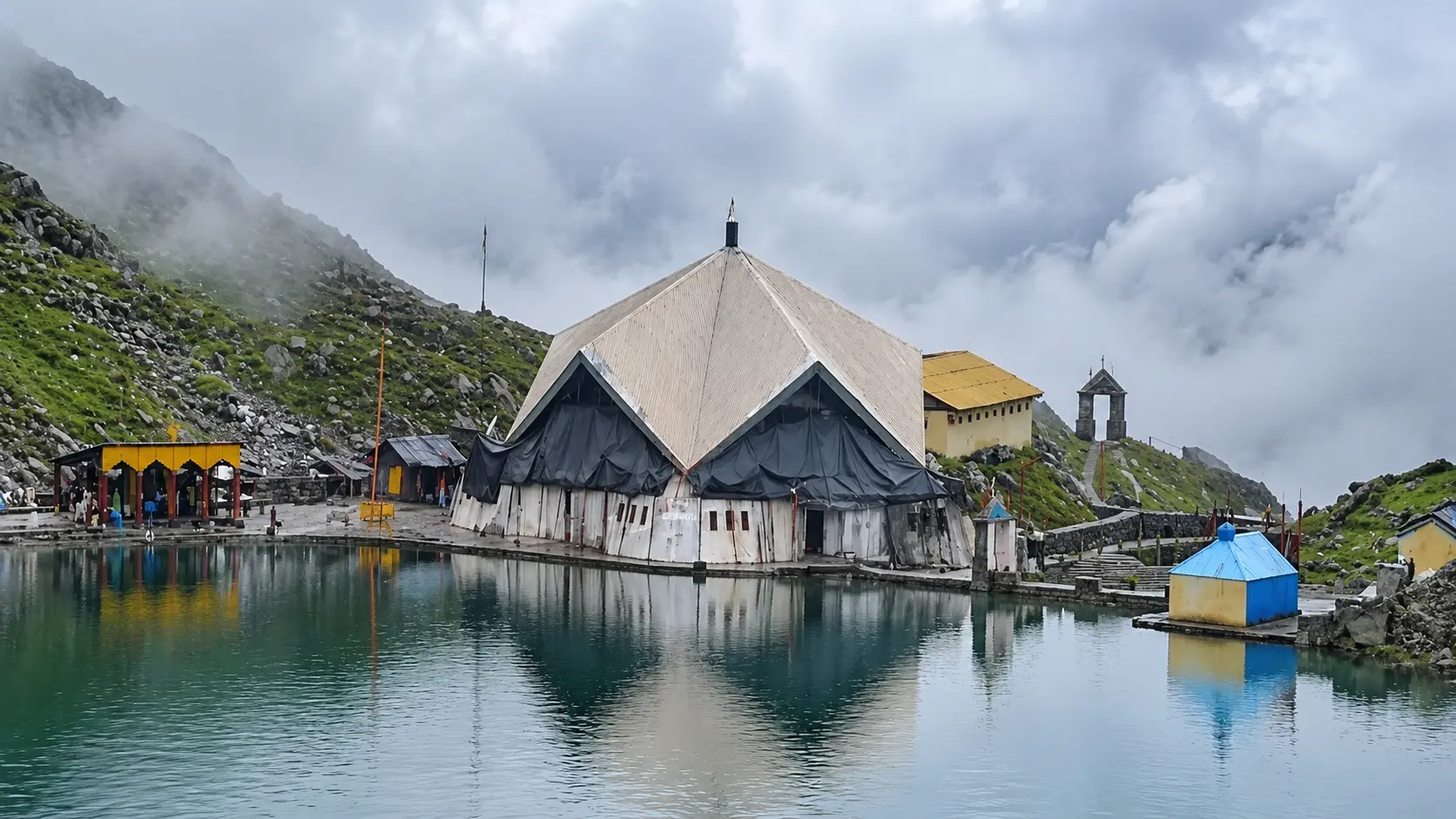
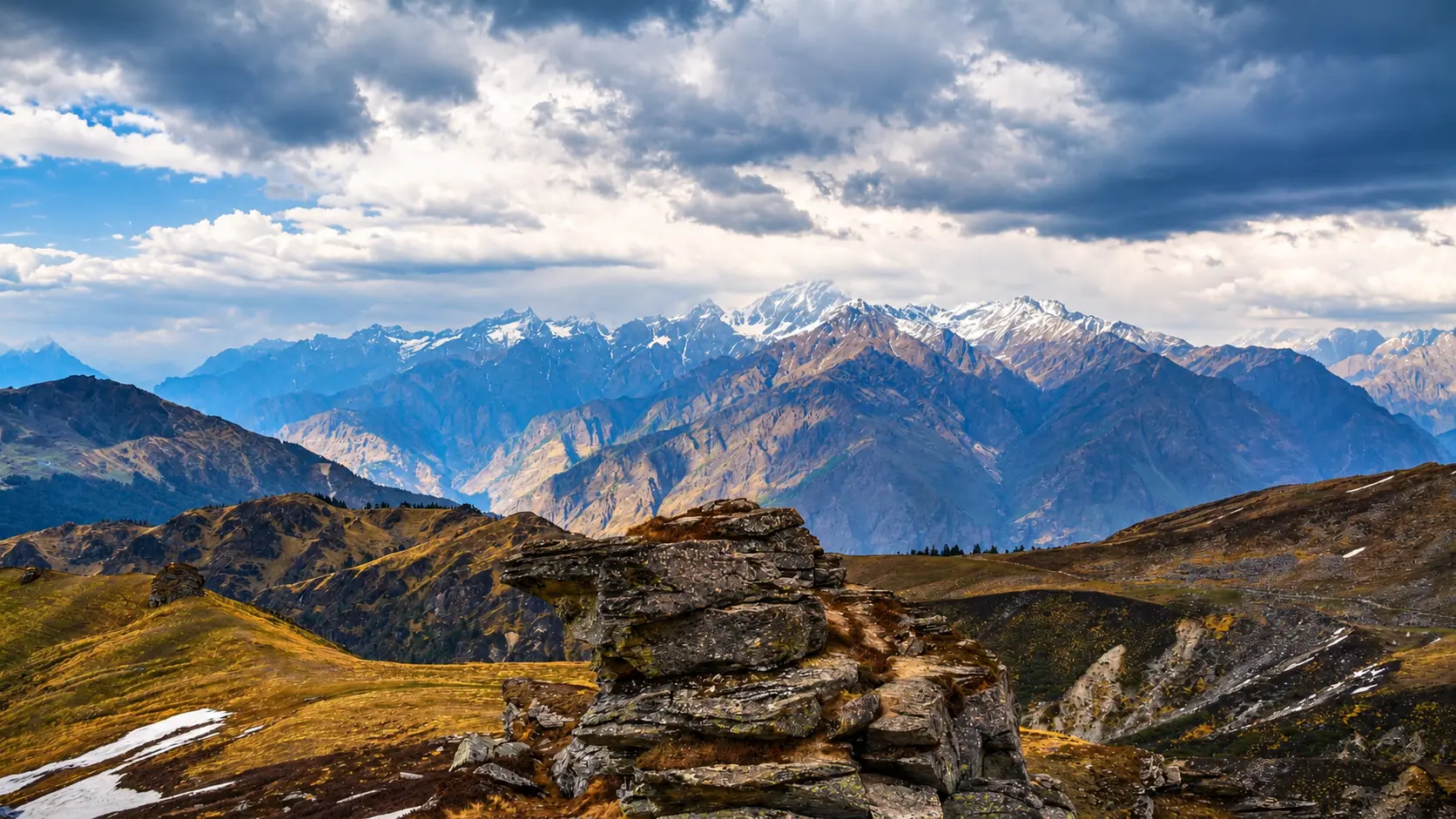
Perched at an extraordinary altitude of 4,329 metres (14,202 feet) above sea level amidst the glacial peaks of the Garhwal Himalayas in Chamoli District, Uttarakhand, Gurudwara Shri Hemkund Sahib is one of the highest, most sacred, and visually awe-inspiring places of pilgrimage on earth. Encircled by a colossal natural amphitheatre of seven jagged, snow-mantled mountain peaks - known scripturally as the Sapt Shring - and set along the banks of an emerald-blue glacial tarn, Hemkund (literally "The Basin of Snow") commands profound spiritual devotion from Sikhs and Hindus alike.
The holy shrine is inextricably linked with the sacred life of the tenth Sikh Guru, Guru Gobind Singh Ji (1666 - 1708 CE). In his celebrated autobiographical scripture, the Bachittar Natak (part of the Dasam Granth), Guru Gobind Singh describes his previous cosmic incarnation as the sage Dusht Daman ("Destroyer of Evil"), performing deep, unyielding meditation (tapasya) on the rugged slopes of a mountain lake flanked by seven peaks:
"Hemkunt Parvat Hai Jahan, Sapt Shring Sohe Tehan;
Tehan Hum Adhik Tapasya Sadhi, Maha Kaal Kalka Aradhi."
(Where stands the mountain named Hemkunt, adorned by seven peaks; there I practiced supreme meditation, contemplating the Transcendent Divinity).
For centuries, this remote glacial tarn remained shrouded in myth, visited only by local shepherds and mountain pilgrims who venerated the ancient Lokpal Temple on its shore, dedicated to Lord Lakshmana. It was not until the 1930s that Sikh scholars and soldiers - most notably Havildar Sohan Singh and Sant Baba Tara Singh - scaled the steep cliffs above the Bhyundar Valley, matching the geographic descriptions in the Dasam Granth to this exact cirque.
Today, Gurudwara Shri Hemkund Sahib features a distinctive pentagonal sanctuary engineered from reinforced concrete and structural steel arches, specifically designed by architect M.S. Siali to withstand heavy winter snow loads exceeding 15 feet. With its sacred holy dip in freezing glacial waters, steaming bowls of comforting langar, the fragrance of the rare, sacred Brahma Kamal blooming on vertical scree slopes, and the vibrant fluttering of yellow-and-blue Nishan Sahib flags against icy crags, Hemkund Sahib offers an unforgettable journey of faith, physical endurance, and sublime Himalayan grandeur.
Start here. Open a tile for the full details.
Why goRead details
- One of the World's Highest Pilgrimage Shrines: Reaching an altitude of 4,329 metres (14,202 feet), visiting Hemkund Sahib is an extraordinary physical and spiritual triumph. The crisp, thin air and sheer Himalayan wilderness elevate the spiritual resonance of the hymns echoing across the lake.
- The Sacred Glacial Tarn (Hemkund): The crystal-clear, deep glacial lake is fed directly by melting hanging glaciers from the surrounding amphitheatre. Taking a sacred dip in the freezing waters is believed to cleanse worldly impurities and grant deep spiritual tranquility.
- Encircled by the Seven Peaks (Sapt Shring): The physical setting is breathtaking. Seven sheer granite and snow peaks rise almost vertically from the water's edge, each adorned with a sacred Nishan Sahib flag fluttering proudly against the clouds.
- The Legendary Brahma Kamal Blooms: The high rocky scree surrounding Hemkund Lake is one of the world's most accessible habitats for Saussurea obvallata - the celebrated Brahma Kamal, Uttarakhand's state flower. Blooming between July and September, these luminous, translucent yellowish-green lotus-like blossoms thrive directly out of bare rock ledges.
- Historic Lokpal Lakshman Temple: Adjacent to the Gurudwara stands an ancient Hindu stone temple dedicated to Lakshmana, the brother of Lord Rama. According to regional Garhwali tradition, Lakshmana performed intense penance on these shores to regain his life force after being wounded by Meghnada in Lanka.
- Heart-Warming Langar at 14,000 Feet: After an arduous 6-kilometre climb through freezing winds, stepping into the warmth of the Gurudwara and being served piping-hot, sweet cardamom-ginger herbal tea and steaming, wholesome khichdi by dedicated volunteers (sevadars) is an experience of unconditional hospitality that touches every traveler's heart.
When to visitRead details
Due to extreme high-altitude Himalayan winters, Hemkund Sahib is accessible for only 4 to 5 months each year:
Entry & permissionsRead details
Fees, visiting hours and entry rules may change. Confirm the latest details with the official operator or local authority before travelling.
- Operating Hours:
- The Gurudwara opens at 05:00 AM and closes for the day at 14:00 PM (02:00 PM).
- Strict No-Overnight Rule: In accordance with district administration safety mandates, no pilgrim or visitor is allowed to stay overnight at Hemkund Sahib. The military and Gurudwara staff ensure that all visitors vacate the high-altitude bowl by 14:00 PM to begin the 2-to-3-hour descent back to Ghangaria before evening fog and freezing temperatures set in.
- Admission Charges:
- Admission to Gurudwara Shri Hemkund Sahib, the lake bathing ghats, and the Lokpal Temple is completely free.
- Voluntary donations (dasvandh) may be deposited at the official Gurudwara donation counters against formal receipts.
- Transport and Porter Tariffs (Government Regulated):
- Pony / Mule hire (Ghangaria to Hemkund round-trip): Approximately ₹1,500 to ₹2,500.
- Palanquin (Doli / 4 porters): Approximately ₹5,000 to ₹8,000 round-trip.
- Porter (Pitthu / Basket carrier for luggage or children): Approximately ₹800 to ₹1,500.
- Govindghat - Ghangaria Helicopter ticket: Approximately ₹3,000 to ₹4,000 one-way (subject to seasonal aviation tariffs).
- Mandatory Yatra Registration: All pilgrims and tourists traveling to Hemkund Sahib must complete mandatory biometric or online tourist registration via the official Uttarakhand Tourism portal (registrationandtouristcare.uk.gov.in) before commencing their journey. Medical fitness certificates are strongly advised for elderly travelers.
Plan your visitRead details
Reaching Hemkund Sahib involves an overland journey to Govindghat along the Badrinath Highway, followed by a two-stage high-altitude trek:
Essential High-Altitude Gear
Weather at 14,200 feet is notoriously volatile; warm sunshine can transform into freezing wind, sleet, or heavy rain within minutes. Dress in multi-layered clothing: thermal innerwear, a fleece mid-layer, a windproof and waterproof outer jacket, sturdy waterproof trekking boots with ankle support, woolen beanies, insulated gloves, and a reliable waterproof rain poncho or raincoat.
Explore the full guide - choose a topic below.
Why visit?
One of the World's Highest Pilgrimage Shrines: Reaching an altitude of 4,329 metres (14,202 feet), visiting…Explore detailsClose details
- One of the World's Highest Pilgrimage Shrines: Reaching an altitude of 4,329 metres (14,202 feet), visiting Hemkund Sahib is an extraordinary physical and spiritual triumph. The crisp, thin air and sheer Himalayan wilderness elevate the spiritual resonance of the hymns echoing across the lake.
- The Sacred Glacial Tarn (Hemkund): The crystal-clear, deep glacial lake is fed directly by melting hanging glaciers from the surrounding amphitheatre. Taking a sacred dip in the freezing waters is believed to cleanse worldly impurities and grant deep spiritual tranquility.
- Encircled by the Seven Peaks (Sapt Shring): The physical setting is breathtaking. Seven sheer granite and snow peaks rise almost vertically from the water's edge, each adorned with a sacred Nishan Sahib flag fluttering proudly against the clouds.
- The Legendary Brahma Kamal Blooms: The high rocky scree surrounding Hemkund Lake is one of the world's most accessible habitats for Saussurea obvallata - the celebrated Brahma Kamal, Uttarakhand's state flower. Blooming between July and September, these luminous, translucent yellowish-green lotus-like blossoms thrive directly out of bare rock ledges.
- Historic Lokpal Lakshman Temple: Adjacent to the Gurudwara stands an ancient Hindu stone temple dedicated to Lakshmana, the brother of Lord Rama. According to regional Garhwali tradition, Lakshmana performed intense penance on these shores to regain his life force after being wounded by Meghnada in Lanka.
- Heart-Warming Langar at 14,000 Feet: After an arduous 6-kilometre climb through freezing winds, stepping into the warmth of the Gurudwara and being served piping-hot, sweet cardamom-ginger herbal tea and steaming, wholesome khichdi by dedicated volunteers (sevadars) is an experience of unconditional hospitality that touches every traveler's heart.
What to expect
Visiting Hemkund Sahib is an intense, multi-day expedition that requires physical stamina, mental determination…Explore detailsClose details
Visiting Hemkund Sahib is an intense, multi-day expedition that requires physical stamina, mental determination, and proper mountain preparation. The trek begins from the base camp at Govindghat (1,828 m) along National Highway 7. From Govindghat, pilgrims travel 4 kilometres by road to Pulna village, where the true mountain footpath begins.
The first stage of the trek involves ascending 10 kilometres along a stone-paved trail flanking the roaring Bhyundar Ganga river to reach Ghangaria (Govind Dham, 3,048 m). Ghangaria serves as the mandatory overnight staging village; it is densely packed with pilgrim lodges, GMVN rest houses, small restaurants, and Gurudwara dormitories.
The second stage - the ascent from Ghangaria to Hemkund Sahib - is where the real physical challenge unfolds. Over a distance of just 6 kilometres, the trail climbs a staggering 1,281 metres of vertical elevation (from 3,048 m to 4,329 m). The stone-paved path climbs relentlessly in sharp, steep zig-zags along exposed mountainsides. As you ascend above the treeline (around 3,500 m), the lush birch and rhododendron forests disappear, replaced by stark alpine tundra, rock scree, and patches of perennial snow.
The air thins noticeably; pilgrims stop frequently to catch their breath, chanting "Satnam Waheguru" or "Bolo So Nihal, Sat Sri Akal" to encourage one another. For those unable to walk, sturdy mountain ponies, mules, palanquins (dolis carried by four porters), and basket porters (pitthus) are available for hire.
Suddenly, the steep gradient levels out, and the stunning pentagonal Gurudwara appears beside the glowing emerald lake, framed by sheer rocky peaks. Segregated indoor bathing ghats allow men and women to immerse themselves in the freezing waters. Inside the warm, carpeted prayer hall, the melodious sound of Gurbani Kirtan fills the air as the sacred Guru Granth Sahib is venerated. Due to extreme nighttime cold and severe hypoxia, no overnight stay is permitted; by 14:00 PM, all pilgrims must begin their 2-to-3-hour descent back to Ghangaria.
Best time to visit
Due to extreme high-altitude Himalayan winters, Hemkund Sahib is accessible for only 4 to 5 months each year: -…Explore detailsClose details
Due to extreme high-altitude Himalayan winters, Hemkund Sahib is accessible for only 4 to 5 months each year:
- Annual Yatra Window (Late May/Early June to Mid-October): The exact opening and closing dates are officially announced each spring by the Gurudwara Management Trust and the Chamoli District Administration based on winter snow accumulation and track clearance.
- June (Opening Season - Snow Walls & Frozen Lake): In early summer, the trek path is carved through massive walls of snow often 10 to 15 feet high. The lake is partially frozen, with large blue ice floes drifting across the water. Daytime temperatures hover between 4°C and 10°C, and night temperatures drop below freezing. Ideal for travelers who want to experience dramatic snow landscapes.
- July to August (Monsoon Season - Peak Blooms & Lush Greenery): While the lower valleys experience heavy monsoon rains and occasional landslides, the slopes around Hemkund come alive with vivid green moss and alpine wildflowers. This is the prime blooming season for the rare Brahma Kamal and the blue poppy. Expect frequent mountain mist, intermittent rain showers, and cool temperatures (8°C to 14°C). Waterproof rain gear is essential.
- September to October (Autumn - Clear Skies & Sharp Views): Post-monsoon autumn offers the clearest skies, crispest air, and finest visibility of the year. The lake is completely thawed, perfectly reflecting the seven snow-crested peaks. Morning temperatures are freezing, but sunny days are pleasant (5°C to 12°C). The yatra typically concludes in the second week of October as winter blizzards begin.
How to reach
Reaching Hemkund Sahib involves an overland journey to Govindghat along the Badrinath Highway, followed by a…Explore detailsClose details
Reaching Hemkund Sahib involves an overland journey to Govindghat along the Badrinath Highway, followed by a two-stage high-altitude trek:
- Stage 1: Reaching Base Camp Govindghat (Road):
- From Rishikesh / Haridwar (273 km): Drive along the all-weather National Highway 7 via Devprayag, Srinagar, Rudraprayag, Karnaprayag, Chamoli, and Joshimath to Govindghat. Travel time by private car, taxi, or state transport bus is roughly 9 to 11 hours. Govindghat is situated 20 km north of Joshimath on the road to Badrinath.
- Nearest Railhead: Yog Nagari Rishikesh (YNRK, 273 km) and Haridwar Junction (HW, 295 km).
- Nearest Airport: Jolly Grant Airport, Dehradun (DED, 290 km).
- Stage 2: Govindghat to Ghangaria (14 km Trek or Helicopter):
- From Govindghat, shared jeeps drive 4 kilometres to Pulna village.
- From Pulna, hike 10 kilometres along the well-marked stone-paved trail to Ghangaria (takes 4 to 6 hours on foot; 2.5 hours on horseback).
- Helicopter Service: Commercial passenger helicopter shuttles operate between the Govindghat helipad and Ghangaria (takes only 8 to 10 minutes), subject to weather conditions.
- Stage 3: Ghangaria to Hemkund Sahib (6 km Steep Climb):
- The final 6-kilometre ascent from Ghangaria to Hemkund Sahib must be undertaken on foot, on pony/mule, or via palanquin (doli). There is no helicopter landing facility at Hemkund Lake due to severe winds and lack of flat terrain. The climb takes 4 to 5 hours on foot and 2 to 2.5 hours on pony.
Entry, timings and permissions
Fees, visiting hours and entry rules may change.Explore detailsClose details
Fees, visiting hours and entry rules may change. Confirm the latest details with the official operator or local authority before travelling.
- Operating Hours:
- The Gurudwara opens at 05:00 AM and closes for the day at 14:00 PM (02:00 PM).
- Strict No-Overnight Rule: In accordance with district administration safety mandates, no pilgrim or visitor is allowed to stay overnight at Hemkund Sahib. The military and Gurudwara staff ensure that all visitors vacate the high-altitude bowl by 14:00 PM to begin the 2-to-3-hour descent back to Ghangaria before evening fog and freezing temperatures set in.
- Admission Charges:
- Admission to Gurudwara Shri Hemkund Sahib, the lake bathing ghats, and the Lokpal Temple is completely free.
- Voluntary donations (dasvandh) may be deposited at the official Gurudwara donation counters against formal receipts.
- Transport and Porter Tariffs (Government Regulated):
- Pony / Mule hire (Ghangaria to Hemkund round-trip): Approximately ₹1,500 to ₹2,500.
- Palanquin (Doli / 4 porters): Approximately ₹5,000 to ₹8,000 round-trip.
- Porter (Pitthu / Basket carrier for luggage or children): Approximately ₹800 to ₹1,500.
- Govindghat - Ghangaria Helicopter ticket: Approximately ₹3,000 to ₹4,000 one-way (subject to seasonal aviation tariffs).
- Mandatory Yatra Registration: All pilgrims and tourists traveling to Hemkund Sahib must complete mandatory biometric or online tourist registration via the official Uttarakhand Tourism portal (registrationandtouristcare.uk.gov.in) before commencing their journey. Medical fitness certificates are strongly advised for elderly travelers.
Nearby places to consider
Valley of Flowers National Park (Entry 3 km from Ghangaria): A UNESCO World Heritage floral wonderland spanning…Explore detailsClose details
- Valley of Flowers National Park (Entry 3 km from Ghangaria): A UNESCO World Heritage floral wonderland spanning 87 square kilometres, carpeted with over 500 species of wild Himalayan alpine flowers between July and September.
- Ghangaria Village (6 km descent): The bustling pilgrim base camp (3,048 m) nestled amidst towering deodar pines and birch woods along the Pushpawati River.
- Govindghat Gurudwara & Town (16 km descent): The vibrant transit base along the Alaknanda River, offering vast communal langar facilities, river bathing ghats, and transport booking counters.
- Badrinath Temple (25 km from Govindghat): The paramount Char Dham pilgrimage shrine dedicated to Lord Badri Vishal, situated along the Alaknanda River at 3,133 metres.
- Joshimath & Auli (20-36 km from Govindghat): The historic monastic town of Adi Shankaracharya and India's premier ski resort connected by the 4.15 km ropeway.
In pictures
The practical bits
Before you go.
Mandatory Acclimatization Strategy
The ascent from Ghangaria (3,048 m) to Hemkund Sahib (4,329 m) involves gaining nearly 1,300 metres of altitude…Explore detailsClose details
The ascent from Ghangaria (3,048 m) to Hemkund Sahib (4,329 m) involves gaining nearly 1,300 metres of altitude in a single morning. This sharp ascent carries a significant risk of Acute Mountain Sickness (AMS). Never rush your climb; maintain a slow, steady walking pace, take deep breaths, pause at regular intervals, and drink plenty of water or hot tea. Consider taking a preventative dose of Diamox (after consulting your physician) and carry portable personal oxygen cans if prone to respiratory distress.
Strict Departure Timing from Ghangaria
Begin your trek from Ghangaria early in the morning - ideally between 05:30 AM and 06:30 AM.Explore detailsClose details
Begin your trek from Ghangaria early in the morning - ideally between 05:30 AM and 06:30 AM. This early departure ensures you arrive at Hemkund Sahib between 09:30 and 10:30 AM, providing you with ample time to attend morning prayers, partake in langar, take a sacred bath, admire the Brahma Kamal, and begin your mandatory descent before the 14:00 PM deadline.
Essential High-Altitude Gear
Weather at 14,200 feet is notoriously volatile; warm sunshine can transform into freezing wind, sleet, or heavy…Explore detailsClose details
Weather at 14,200 feet is notoriously volatile; warm sunshine can transform into freezing wind, sleet, or heavy rain within minutes. Dress in multi-layered clothing: thermal innerwear, a fleece mid-layer, a windproof and waterproof outer jacket, sturdy waterproof trekking boots with ankle support, woolen beanies, insulated gloves, and a reliable waterproof rain poncho or raincoat.
Combine with the Valley of Flowers
Because Ghangaria is the shared base camp for both Hemkund Sahib and the Valley of Flowers National Park…Explore detailsClose details
Because Ghangaria is the shared base camp for both Hemkund Sahib and the Valley of Flowers National Park, travelers should plan a comprehensive 4-to-5-day itinerary. Spend Day 1 reaching Ghangaria from Govindghat; Day 2 trekking to the Valley of Flowers (gentler gradient, aiding acclimatization); Day 3 making the steep ascent to Hemkund Sahib; and Day 4 descending back to Govindghat.
A few things you might wonder
Common questions about visiting Hemkund Sahib. Fees, visiting hours and ceremonies are researched details that may change; confirm current arrangements with the operator before travelling.
What is the altitude of Hemkund Sahib and how difficult is the trek?
Can anyone stay overnight at Hemkund Sahib?
Are ponies, mules, and palanquins available for Hemkund Sahib?
What is the Brahma Kamal and can it be seen at Hemkund?
Is food available at Hemkund Sahib?
Is it mandatory to take a bath in Hemkund Lake?
Are helicopter services available to Hemkund Sahib?
What should I do if I get altitude sickness (AMS)?
Explore more in Auli Valley Of Flowers
Discover other destinations around this hub
More Hubs in Uttarakhand
Continue exploring other travel hubs in this state
Planning a trip to Auli Valley of Flowers?