Mindrolling Monastery
Comprehensive visitor guide to Mindrolling Monastery in Clement Town, Dehradun. Discover the 185-foot Great Stupa, 103-foot Buddha statue, and Tibetan heritage.
Location
Mussoorie Dehradun, Uttarakhand
A closer look
Your visit, at a glance.
Mussoorie Dehradun, Uttarakhand
GET TO KNOW THE PLACE
Nestled amidst serene, immaculately manicured gardens and quiet residential lanes at an elevation of 635 metres (2,083 feet) above sea level in the Clement Town Tibetan…
The story of Mindrolling Monastery
Nestled amidst serene, immaculately manicured gardens and quiet residential lanes at an elevation of 635 metres (2,083 feet) above sea level in the Clement Town Tibetan settlement of Dehradun District, Uttarakhand, Mindrolling Monastery (officially consecrated as Og Min Ogyen Mindrolling Monastery, and colloquially known locally as the Buddha Temple) is one of the most magnificent, sacred, and architecturally stunning centers of Tibetan Buddhist learning and culture in the world. Situated approximately 9 kilometres south of Dehradun Railway Station and just 4 kilometres from the Dehradun Inter-State Bus Terminus (ISBT), this sprawling spiritual sanctuary serves as the premier throne in exile of the Nyingma school - the ancient, foundational tradition of Tibetan Buddhism established in the 8th century CE by the revered tantric master Guru Padmasambhava (Guru Rinpoche) and Tibetan Emperor Trisong Detsen.
The spiritual pedigree of Mindrolling stretches back more than three centuries to the Drachi Valley of Central Tibet, where the original mother monastery was founded in 1676 by the great tertön (treasure revealer) Rigzin Terdak Lingpa. Mindrolling historically served as the preeminent academic center for the preservation of Nyingma scriptural transmissions, sacred monastic arts, astrology, medicine, and ritual dances. Following the tragic devastation of the Tibetan monasteries during the 1959 uprising and the flight of Tibetan refugees to India, the lineage was faithfully re-established in exile in 1965 by His Holiness the 11th Mindrolling Trichen (Kyabje Minling Trichen Rinpoche), along with his younger brother, the renowned Dzogchen master Kyabje Khochhen Rinpoche. Through decades of dedicated spiritual labor, the Clement Town sanctuary grew into a monumental institution housing over 300 resident monks, the renowned Ngagyur Nyingma College (an advanced Buddhist university for philosophical studies), primary schools, medical clinics, and meditation retreat centers.
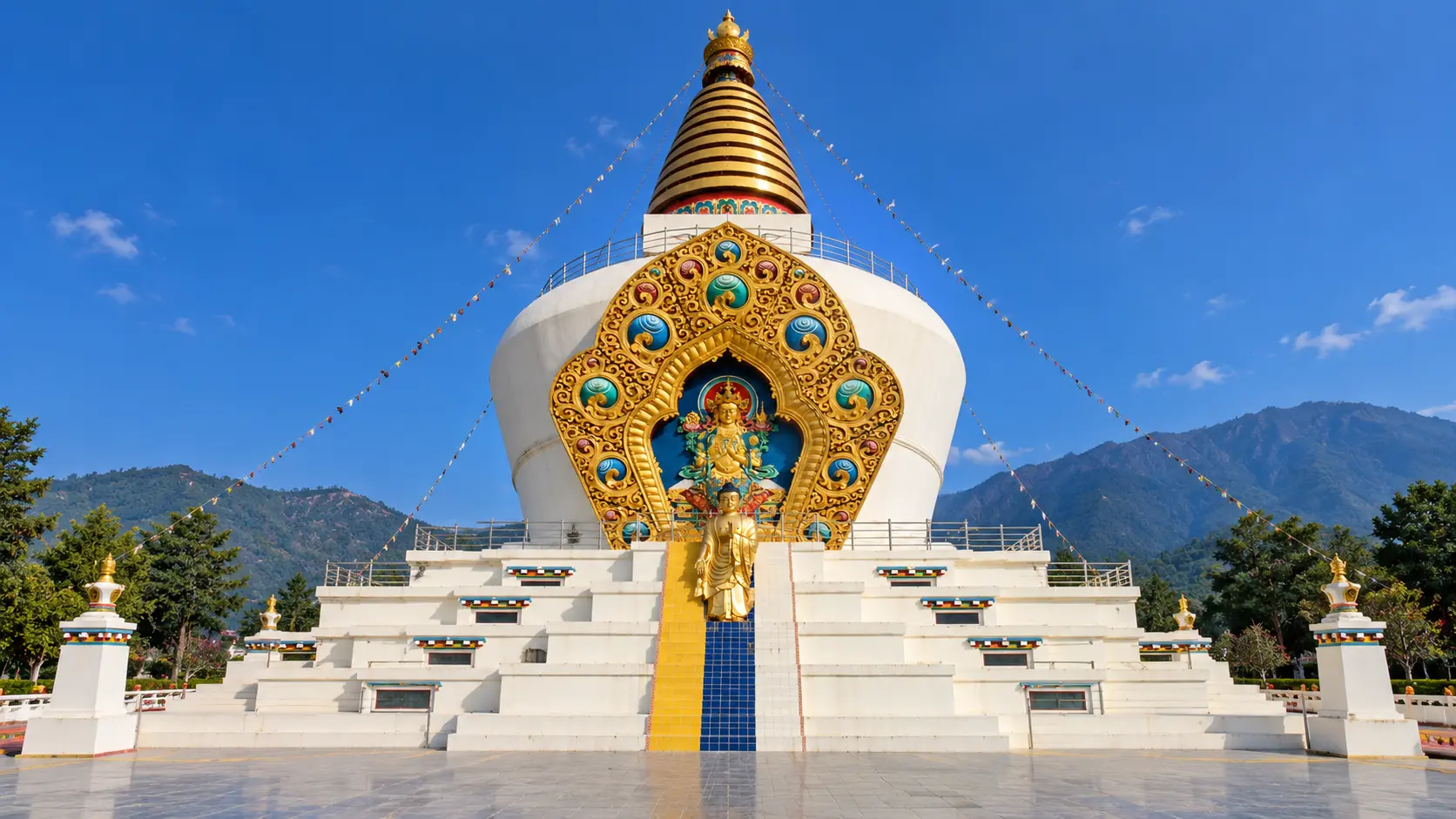
Mindrolling is globally celebrated for its breathtaking architectural marvels. Dominating the western skyline of the Doon Valley is the awe-inspiring Great Stupa (World Peace Stupa), which soars to a monumental height of 185 feet (56.4 metres) with a base footprint of 100 square feet, making it one of the tallest Buddhist stupas on Earth. Formally inaugurated and consecrated on October 28, 2002, by His Holiness the 14th Dalai Lama, the stupa is an extraordinary multi-tiered work of sacred engineering, containing multi-level shrine rooms embellished with vibrant traditional Tibetan murals illustrating the life of the Buddha, reliquaries, and precious sacred scriptures. Directly adjacent in the central garden stands a magnificent 103-foot-tall (31.4-metre) golden statue of Gautama Buddha, gazing serenely down upon landscaped courtyards surrounded by hundreds of hand-carved, rotating brass prayer wheels. Offering a tranquil haven of meditation, art, and philosophy, Mindrolling Monastery welcomes visitors of all faiths seeking peace, aesthetic beauty, and spiritual insight.
Start here. Open a tile for the full details.
Why goRead details
Mindrolling Monastery offers travelers, spiritual seekers, and art connoisseurs an extraordinary immersion into authentic Tibetan Buddhist heritage:
When to visitRead details
Mindrolling Monastery is open throughout the year, with particular seasons offering optimal conditions:
Entry & permissionsRead details
Fees, visiting hours and entry rules may change. Confirm the latest details with the official operator or local authority before travelling.
- Entry Fees: Entry into Mindrolling Monastery, the stupa courtyards, the Buddha statue garden, and the main prayer halls is completely free for all domestic Indian and international visitors. Voluntary donations into official monastery collection boxes are welcome to support the free monastic schooling and health clinics.
- Opening Timings:
- Monastery Grounds & Garden: Open daily from 09:00 AM to 19:00 PM.
- Main Temple (Tsuklakhang): Open daily from 09:00 AM to 12:00 PM, and 14:00 PM to 17:30 PM (closed during lunch hours and monk private prayer assemblies).
- Great Stupa Interior Shrine Rooms: Open to the public only on Sundays from 10:00 AM to 17:00 PM, and on major Buddhist festival days.
- Photography Rules: Photography of the exterior architecture, the Great Stupa, the 103-foot Buddha statue, and the garden courtyards is freely permitted. However, photography, video recording, and selfie sticks are strictly prohibited inside the inner temple halls and the Great Stupa shrine rooms out of respect for sacred relics. Operating civilian drones over the monastery is illegal without prior permission from the monastic administration and Dehradun police.
Plan your visitRead details
Mindrolling Monastery is located in Clement Town in the southern sector of Dehradun city, exceptionally well connected by public and private transit:
Wheelchair Accessibility Advice
The campus is exceptionally well-suited for travelers with limited mobility and wheelchair users, as the main entrance, garden paths, and the outer circumambulation loop around the stupa are smooth, wide, and paved with flat stone.
Explore the full guide - choose a topic below.
Why visit?
Mindrolling Monastery offers travelers, spiritual seekers, and art connoisseurs an extraordinary immersion into…Explore detailsClose details
Mindrolling Monastery offers travelers, spiritual seekers, and art connoisseurs an extraordinary immersion into authentic Tibetan Buddhist heritage:
- Marvel at the 185-Foot Great Stupa of World Peace: Stand in awe before one of the largest Buddhist stupas ever constructed. Circumambulate (kora) its wide flagstone base in a clockwise direction, spinning hundreds of gleaming brass prayer wheels inscribed with the sacred compassion mantra Om Mani Padme Hum. On Sundays, climb the interior staircase to explore multiple floors of exquisite shrine rooms filled with intricate gold leaf carvings, mandalas, and reliquaries.
- Admire the 103-Foot Golden Buddha Statue: Gaze up at the monumental 103-foot golden statue of Lord Buddha standing in the Abhaya Mudra (gesture of fearlessness and blessing) amidst flowering lotus gardens. Dedicated to universal world peace and the longevity of the Dalai Lama, the colossal statue presents an iconic and photogenic centerpiece of the monastery grounds.
- Witness the Grandeur of the Main Temple (Tsuklakhang): Step inside the primary assembly hall, where the air is filled with the fragrant scent of Tibetan juniper incense, butter lamps, and the deep, resonant drone of monastic chanting. Marvel at the colossal gilded statues of Sakyamuni Buddha, Guru Padmasambhava, and the Bodhisattvas, surrounded by walls covered in masterfully executed Tibetan thangka paintings and mandalas illustrating Buddhist cosmology.
- Visit Ngagyur Nyingma College: Observe the vibrant intellectual life of one of the premier centers of higher Buddhist philosophical studies in exile. Listen to young Buddhist monks engaged in traditional, animated philosophical debate in the shaded courtyards, utilizing formal hand claps, foot stamps, and classical logic to test doctrinal understanding.
- Explore Clement Town's Authentic Tibetan Market: Stroll through the charming, pedestrian-friendly streets of Clement Town surrounding the monastery. Browse boutique shops selling handwoven Tibetan woolen carpets, singing bowls, prayer flags, exquisite brass thangkas, hand-carved incense burners, and herbal medicinal teas.
- Enjoy Authentic Tibetan Culinary Specialties: Savor genuine Tibetan cuisine at the numerous family-run cafes and restaurants lining the monastery square. Indulge in steaming plates of handmade steamed or fried momos (vegetable, paneer, or chicken), hot bowls of thukpa (noodle soup), hearty thenthuk (hand-pulled flat pasta soup), fluffy steamed bread (tingmo), and authentic salted Tibetan butter tea (po cha).
What to expect
Visiting Mindrolling Monastery is a peaceful, contemplative, and culturally enriching experience suitable for…Explore detailsClose details
Visiting Mindrolling Monastery is a peaceful, contemplative, and culturally enriching experience suitable for visitors of all ages:
- Campus Layout and Landscaping: The monastery is an expansive, gated complex covering several acres. The grounds are designed with spacious paved stone walkways, lush manicured green lawns, blooming marigold and rose beds, weeping willow trees, and peaceful prayer wheel galleries. The layout provides plenty of open space and benches where visitors can sit quietly and read or meditate.
- Temple Etiquette and Dress Code: Mindrolling is a sacred living place of monastic worship and study. Visitors must dress respectfully with shoulders and knees covered (avoid sleeveless tops, short skirts, or tight beachwear). Footwear must be removed before entering the carpeted temple halls and the Great Stupa. Silence should be maintained inside prayer halls, and visitors should never point their feet toward the Buddha statues or touch sacred ritual instruments.
- Interior Stupa Access: Check the current visiting hours and permitted access with the site operator before departure; ceremonies, closures and visitor sessions can affect access. Visitors wishing to climb inside the stupa should plan their visit on a Sunday.
- Climate and Seasonality: Located in the flat valley basin of Dehradun, Mindrolling enjoys a warm subtropical climate. Winter months (October to March) offer sunny, comfortable days (18°C to 24°C) and cool evenings (6°C to 10°C). Summer months (April to June) can be warm during midday hours (32°C to 38°C), making morning and late afternoon visits preferable. The monsoon months (July to August) bring lush green gardens alongside frequent tropical downpours.
Best time to visit
Mindrolling Monastery is open throughout the year, with particular seasons offering optimal conditions: - Autumn…Explore detailsClose details
Mindrolling Monastery is open throughout the year, with particular seasons offering optimal conditions:
- Autumn and Winter (October to March): The most pleasant and popular time to visit. Days are sunny, bright, and mild with clear blue skies, making it delightful to walk around the gardens, circumambulate the stupa, and explore the outdoor market.
- Tibetan New Year (Losar - February / March): The most vibrant cultural festival celebrated at Mindrolling. The monastery comes alive with colorful prayer flags, elaborate butter sculptures (torma), ceremonial trumpet music, and traditional monastic cham dances performed by monks in ornate silk brocade robes and animal masks to dispel negativity for the new year.
- Spring (March to April): The monastery gardens are filled with blooming spring flowers, and daytime temperatures are comfortably warm and pleasant.
- Summer (May to June): While midday hours can be hot and humid in the Doon Valley, early mornings (09:00 to 11:00 AM) and peaceful late afternoons (16:30 to 19:00 PM) offer serene lighting, cooler breezes, and quiet meditation in the shaded temple halls.
- Monsoon (July to August): The gardens turn a vivid, radiant emerald green, and rain showers add a fresh, atmospheric touch to the monastic architecture. Carry an umbrella or light raincoat.
How to reach
Mindrolling Monastery is located in Clement Town in the southern sector of Dehradun city, exceptionally well…Explore detailsClose details
Mindrolling Monastery is located in Clement Town in the southern sector of Dehradun city, exceptionally well connected by public and private transit:
- From Dehradun Inter-State Bus Terminus (ISBT, 4 km): The monastery is located just 4 kilometres south of Dehradun ISBT along the Saharanpur Road corridor. Confirm the current charge and what it includes with the operator or service provider. Visitor admission, vehicles, parking, activities and accommodation can have separate charges.
- From Dehradun Railway Station (9 km): Confirm the current charge and what it includes with the operator or service provider. Visitor admission, vehicles, parking, activities and accommodation can have separate charges.
- From Mussoorie (42 km): The drive from Mussoorie descends the winding mountain highway to Rajpur Road, crosses Dehradun city, and follows Saharanpur Road to Clement Town (approx. 1.5 hours by car).
- By Rail: The nearest railway station is Dehradun Railway Station (DDN, 9 km), connecting to New Delhi, Lucknow, Mumbai, and Kolkata via daily premium express trains including the Dehradun Shatabdi Express, Vande Bharat Express, and Jan Shatabdi Express.
- By Air: The closest commercial airport is Jolly Grant Airport, Dehradun (DED, 31 km). Taxis can be hired at the airport terminal for a direct 45-minute drive to Clement Town via the Dehradun-Haridwar bypass road, bypassing city center traffic.
Entry, timings and permissions
Fees, visiting hours and entry rules may change.Explore detailsClose details
Fees, visiting hours and entry rules may change. Confirm the latest details with the official operator or local authority before travelling.
- Entry Fees: Entry into Mindrolling Monastery, the stupa courtyards, the Buddha statue garden, and the main prayer halls is completely free for all domestic Indian and international visitors. Voluntary donations into official monastery collection boxes are welcome to support the free monastic schooling and health clinics.
- Opening Timings:
- Monastery Grounds & Garden: Open daily from 09:00 AM to 19:00 PM.
- Main Temple (Tsuklakhang): Open daily from 09:00 AM to 12:00 PM, and 14:00 PM to 17:30 PM (closed during lunch hours and monk private prayer assemblies).
- Great Stupa Interior Shrine Rooms: Open to the public only on Sundays from 10:00 AM to 17:00 PM, and on major Buddhist festival days.
- Photography Rules: Photography of the exterior architecture, the Great Stupa, the 103-foot Buddha statue, and the garden courtyards is freely permitted. However, photography, video recording, and selfie sticks are strictly prohibited inside the inner temple halls and the Great Stupa shrine rooms out of respect for sacred relics. Operating civilian drones over the monastery is illegal without prior permission from the monastic administration and Dehradun police.
Nearby places to consider
A visit to Mindrolling Monastery pairs easily with other prominent historical, natural, and spiritual landmarks…Explore detailsClose details
A visit to Mindrolling Monastery pairs easily with other prominent historical, natural, and spiritual landmarks in the Dehradun valley:
- Forest Research Institute (FRI, 11 km north): A magnificent 450-hectare Greco-Roman and colonial heritage campus featuring the largest brick building in Asia and six fascinating forestry museums.
- Robber's Cave / Guchhupani (17 km north): A dramatic natural limestone river gorge where visitors can wade through ankle-deep crystalline waters between towering subterranean rock walls.
- Tapkeshwar Mahadev Temple (14 km northwest): An ancient Shiva cave temple where natural mineral-rich spring water continuously drips (tapakt) onto the sacred lingam from the limestone ceiling.
- Sahastradhara (22 km northeast): Celebrated natural sulfur springs and thousands of cascading waterfalls renowned for therapeutic bathing and a passenger ropeway to an amusement park.
- Dehradun Clock Tower & Paltan Bazaar (8 km north): The bustling colonial commercial heart of Dehradun, famous for Basmati rice, hand-carved wooden crafts, and local street delicacies.
- Malsi Deer Park / Dehradun Zoo (18 km north): A pleasant zoological and botanical park located along the road to Mussoorie, home to spotted deer, leopards, and Himalayan birds.
In pictures
The practical bits
Before you go.
Plan ahead
To make your visit to Mindrolling Monastery rewarding and culturally sensitive, consider the following practical…Explore detailsClose details
To make your visit to Mindrolling Monastery rewarding and culturally sensitive, consider the following practical advice:
Visit on a Sunday to See the Stupa Interior
If you wish to climb inside the 185-foot Great Stupa and view its remarkable multi-level shrine rooms, sacred…Explore detailsClose details
If you wish to climb inside the 185-foot Great Stupa and view its remarkable multi-level shrine rooms, sacred relics, and exquisite Tibetan murals, make sure to plan your visit on a Sunday between 10:00 AM and 17:00 PM. On all other days of the week, the stupa interior remains closed, though you can freely admire the exterior and spin the prayer wheels.
Circumambulate in a Clockwise Direction
In Tibetan Buddhist tradition, sacred monuments - including stupas, temples, and prayer wheel rows - are always…Explore detailsClose details
In Tibetan Buddhist tradition, sacred monuments - including stupas, temples, and prayer wheel rows - are always circumambulated in a clockwise direction (pradakshina). Turning prayer wheels clockwise while maintaining calm, positive thoughts is considered spiritually auspicious.
Spend Time in Clement Town Tibetan Bazaar
Allocate at least 45 minutes after your temple visit to explore the bustling Tibetan market right outside the…Explore detailsClose details
Allocate at least 45 minutes after your temple visit to explore the bustling Tibetan market right outside the monastery gate. Enjoy an authentic lunch of steamed chicken or cheese-spinach momos with fiery red chili chutney, try traditional butter tea, and shop for hand-made incense, prayer flags, and brass singing bowls.
Wheelchair Accessibility Advice
The campus is exceptionally well-suited for travelers with limited mobility and wheelchair users, as the main…Explore detailsClose details
The campus is exceptionally well-suited for travelers with limited mobility and wheelchair users, as the main entrance, garden paths, and the outer circumambulation loop around the stupa are smooth, wide, and paved with flat stone.
A few things you might wonder
Common questions about visiting Mindrolling Monastery. Fees, visiting hours and ceremonies are researched details that may change; confirm current arrangements with the operator before travelling.
What is the historical significance of Mindrolling Monastery?
How tall is the Great Stupa at Mindrolling, and when was it built?
Can non-Buddhists and general tourists visit Mindrolling Monastery?
When can visitors enter the interior of the Great Stupa?
Is there an entry fee to visit Mindrolling Monastery?
What food options are available near the monastery?
Explore more in Mussoorie Dehradun
Discover other destinations around this hub
More Hubs in Uttarakhand
Continue exploring other travel hubs in this state
Planning a trip to Mussoorie Dehradun?