Lal Tibba
Comprehensive visitor guide to Lal Tibba in Landour, Mussoorie, Dehradun District. Discover the highest peak, telescopic Himalayan views, and Char Dukan cafes.
Location
Mussoorie Dehradun, Uttarakhand
A closer look
Your visit, at a glance.
Mussoorie Dehradun, Uttarakhand
GET TO KNOW THE PLACE
Perched proudly atop Depot Hill at an altitude of 2,275 metres (7,464 feet) above sea level in the tranquil, historic cantonment of Landour in Dehradun District, Uttarakhand, Lal…
The story of Lal Tibba
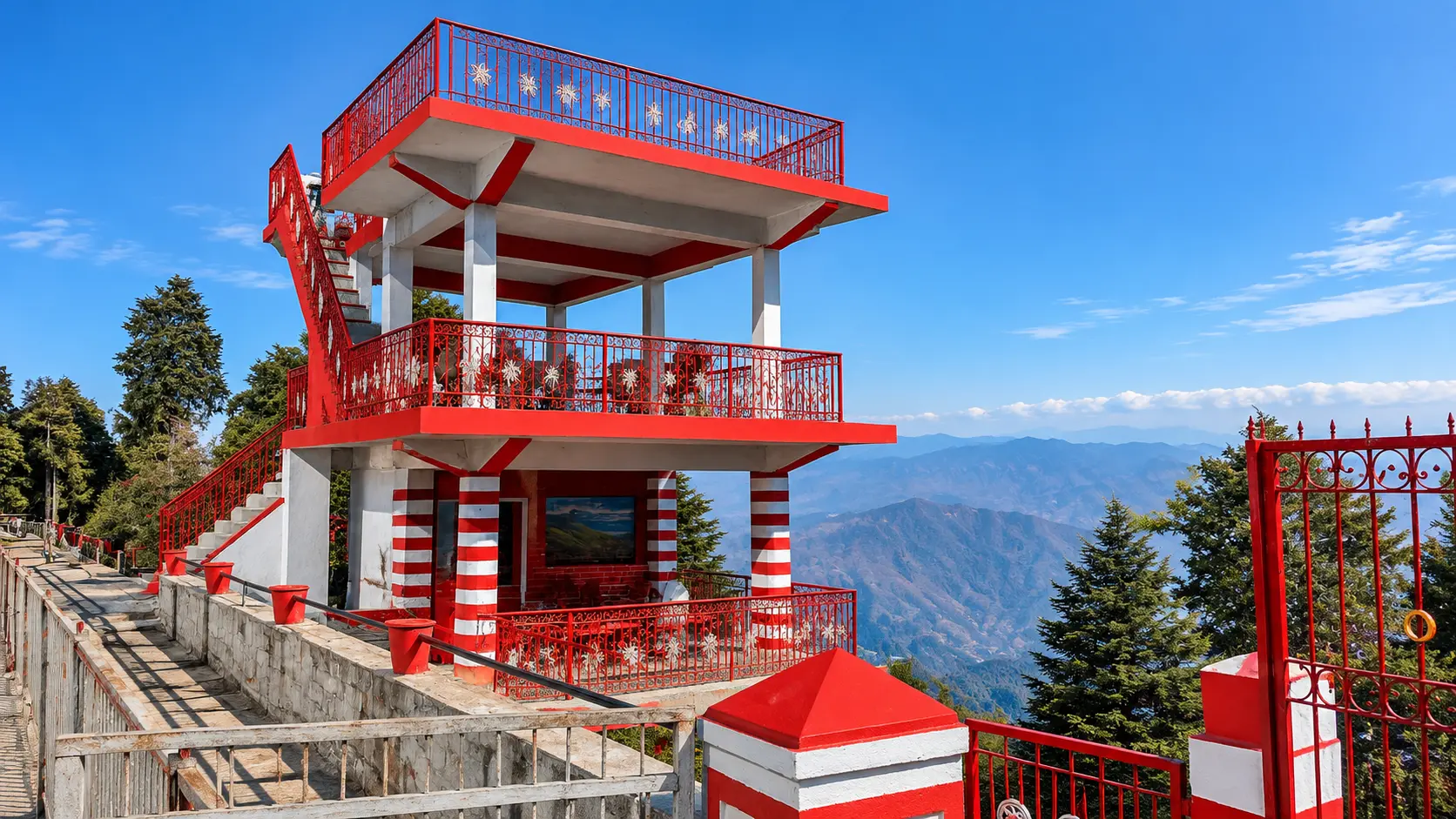
Perched proudly atop Depot Hill at an altitude of 2,275 metres (7,464 feet) above sea level in the tranquil, historic cantonment of Landour in Dehradun District, Uttarakhand, Lal Tibba stands as the highest natural summit and most revered panoramic vantage point of the entire Mussoorie ridge. Situated approximately 5 kilometres east of Mussoorie's bustling Mall Road, Lal Tibba - translating from Hindi to English literally as "Red Hill" - derives its evocative name from multiple romantic attributes: the reddish tint of its natural mineral-rich soil, the distinctive red-painted roofs of colonial-era British convalescent cottages, and the fiery crimson glow that washes over the surrounding mountain amphitheater during celestial sunrises and sunsets.
Unlike the commercialized and crowded promenades of central Mussoorie, Lal Tibba resides within the peaceful, ecologically preserved boundaries of the Landour Cantonment Board (established in 1827 as a British military sanitarium). Surrounded by grand, centuries-old canopies of Himalayan deodar (Cedrus deodara), evergreen banj oak (Quercus leucotrichophora), blue pine, and wild rhododendron, the air at Lal Tibba is remarkably crisp, fragrant, and silent. Depot Hill historically served as a critical convalescent station for recuperating British troops and later became an essential communications outpost, housing a historic Doordarshan television relay tower and All India Radio transmission towers.
Lal Tibba's primary claim to fame is its world-renowned telescopic observation deck. In 1967, the local municipality installed high-powered Japanese optical binoculars and telescopes on the rooftop observation terrace of what is today the Lal Tibba Binocular Cafe. From this elevated vantage point, visitors are treated to an astonishingly clear, close-up panorama of the great snow-clad giants of the Garhwal Himalayas. Sweeping across a vast northern arc are the majestic massifs of Bandarpoonch (6,316 m) (the "Monkey's Tail"), Swargarohini (6,252 m) (the stairway to heaven of the Pandavas), the Gangotri peaks (6,672 m), Kedarnath Peak and Dome (6,831 m), and the distant four-headed massif of Chaukhamba (7,138 m). Serving as the crowning stop on the historic Landour heritage walking circuit - which weaves past Char Dukan, St. Paul's Church, and the home of celebrated author Ruskin Bond - Lal Tibba represents the very soul of Himalayan hill tranquility.
Start here. Open a tile for the full details.
Why goRead details
Lal Tibba offers travelers, photographers, and literature enthusiasts an unparalleled blend of mountain grandeur and colonial quietude:
When to visitRead details
Lal Tibba is a magnificent year-round destination, with distinct seasonal highlights:
Entry & permissionsRead details
Fees, visiting hours and entry rules may change. Confirm the latest details with the official operator or local authority before travelling.
- Entry Fees: Viewing the valley and hills from the public roadside parapets is completely free. Accessing the private rooftop observation decks equipped with high-powered binoculars and telescopes incurs a nominal charge of approximately ₹50 per person, which is commonly waived or deducted from your food and drink bill if you order at the cafe.
- Opening Timings: The viewing cafes and telescopic decks are open daily from 06:00 AM to 19:30 PM. Early morning (06:00 to 08:30 AM) and sunset (17:00 to 18:30 PM) offer the most breathtaking lighting conditions.
- Traffic and Cantonment Regulations: Landour’s roads are historic, narrow, and single-lane with limited passing places. Large tourist buses and heavy commercial vehicles are strictly prohibited. Drivers must observe cantonment speed limits (20 km/h) and avoid blowing horns. Parking near Lal Tibba is restricted to small roadside bays; during busy summer weekends, visitors may need to park near Char Dukan and walk the remaining 1 km.
- Photography Prohibitions: Photography of the Indian military communication installations, radar dishes, and transmission towers on Depot Hill is strictly forbidden. Flying civilian drones over Landour Cantonment is illegal without prior defense clearances.
Plan your visitRead details
Lal Tibba is situated 5 kilometres east of Mussoorie town center in Landour Cantonment:
Explore the full guide - choose a topic below.
Why visit?
Lal Tibba offers travelers, photographers, and literature enthusiasts an unparalleled blend of mountain grandeur…Explore detailsClose details
Lal Tibba offers travelers, photographers, and literature enthusiasts an unparalleled blend of mountain grandeur and colonial quietude:
- Look Through the Historic High-Powered Telescope: Stand upon the rooftop observation terrace to view the Great Himalayan snow peaks through the powerful mounted optical binoculars. Even distant glaciers, crevasses, and sheer granite arêtes on the summit ridge of Bandarpoonch and Kedarnath Dome appear remarkably vivid and close.
- Witness the Magical 'Winterline' Phenomenon: Visit between October and January to witness the rare and world-famous Winterline. This extraordinary atmospheric optical phenomenon - visible in only two places on Earth (Mussoorie/Landour in India and parts of the Swiss Alps) - occurs when solar rays refract through cold-weather air layers at sunset, producing a sharp, vivid horizontal band of fiery red, orange, and purple light across the western horizon separating the earth from the sky.
- Stand at the Highest Summit of Mussoorie: Reach the geographic apex of the Mussoorie range at 2,275 metres. The invigorating mountain air, expansive sightlines, and cool deodar breezes provide immediate mental refreshment far above the dusty plains.
- Savor Coffee and Pancakes with Mountain Views: Relax on the open-air wooden viewing decks of Lal Tibba's heritage cafes. Sip fresh French-press espresso or hot ginger-lemon-honey tea while enjoying crispy waffles, fluffy blueberry pancakes, and cheese toast against the dramatic backdrop of snow-capped peaks.
- Explore the Historic Char Dukan and St. Paul's Church: Combine your visit with a scenic stroll to Char Dukan (located just 1 kilometre below), a charming cluster of four historic wooden eateries that have served tea, bun-omelettes, and cinnamon waffles to soldiers, travelers, and Woodstock school students for over a century. Adjacent sits St. Paul's Anglican Church, consecrated in 1839, featuring magnificent stained-glass windows and brass memorials.
- Walk in the Footsteps of Great Authors: The peaceful, deodar-shaded roads leading to Lal Tibba have provided creative inspiration to generations of renowned writers, including India's beloved author Ruskin Bond, actor Victor Banerjee, and historical travelers who chose Landour as their sanctuary of artistic retreat.
What to expect
Visiting Lal Tibba is a gentle, relaxed, and visually inspiring mountain experience: - Ridge Layout and Viewing…Explore detailsClose details
Visiting Lal Tibba is a gentle, relaxed, and visually inspiring mountain experience:
- Ridge Layout and Viewing Terraces: Lal Tibba sits along a narrow, winding mountain road cresting Depot Hill. The viewpoint itself is centered around two multi-storey heritage cafes built on the hillside edge. Visitors enter the cafe at road level and climb a short flight of internal wooden stairs to reach the rooftop observation deck, where optical binoculars and mounted telescopes are positioned on tripods facing the northern Himalayan range.
- Climate and High Mountain Breeze: Because Lal Tibba is situated nearly 300 metres higher than Mussoorie's Mall Road, it is noticeably cooler throughout the day and evening. In summer (April to June), daytime temperatures average a pleasant 15°C to 24°C, dropping to 10°C at night. In autumn and winter (October to February), crisp sunny days (10°C to 16°C) yield to freezing nights (-2°C to 4°C). The exposed ridge catches brisk mountain winds, making warm layers necessary even on bright days.
- The Landour Heritage Walk: Many travelers choose to reach Lal Tibba on foot, embarking on the classic 3-kilometre uphill walking circuit starting from Landour Clock Tower or Picture Palace. The paved, pine-needle-strewn road winds through dense deodar groves past historic British bungalows (such as Rokeby Manor and Ivy Cottage), offering birdsong, tranquility, and breathtaking glimpses of the Doon Valley on one side and the snow peaks on the other.
- Cantonment Regulations and Restraint: Landour is an active military cantonment managed by the Ministry of Defence. It strictly enforces environmental conservation, noise control, and speed limits. Visitors will not find loud music, souvenir bazaars, or commercial gaming arcades here; the charm of Lal Tibba lies in its dignified stillness and respect for nature.
Best time to visit
Lal Tibba is a magnificent year-round destination, with distinct seasonal highlights: - Autumn (September to…Explore detailsClose details
Lal Tibba is a magnificent year-round destination, with distinct seasonal highlights:
- Autumn (September to November): Universally acknowledged as the premier season for telescope viewing and photography. Following the monsoon rains, the atmosphere is scrubbed completely clean of dust and haze. Skies are an intense, deep azure, and the entire snow-clad Himalayan range stands out in razor-sharp relief from dawn to dusk.
- Winter (December to February): The season of magic and the Winterline. Visitors are treated to sensational sunset colors, crisp sunny daytime hours, and cozy cafe fireplaces. January frequently brings heavy snowfall that drapes the deodar branches, church spires, and red rooftops in glistening white snow, creating a fairy-tale winter wonderland.
- Spring (March to April): The hillsides burst into color as wild crimson rhododendron trees bloom across the oak forests. The weather is comfortably mild, mountain birds are nesting and singing, and the snow on the higher peaks reflects brilliant sunshine.
- Summer (May to June): The ideal escape from the scorching heat of the northern plains. While afternoons can become slightly hazy, mornings (06:00 to 09:30 AM) consistently provide clear views of the snow peaks before convective clouds form.
- Monsoon (July to August): Heavy rains and dense mist envelope the ridge. While distant Himalayan views are mostly blocked by swirling rain clouds, the lush green moss, hanging ferns, and dramatic cloud play create an intensely romantic and atmospheric ambiance loved by solitude seekers.
How to reach
Lal Tibba is situated 5 kilometres east of Mussoorie town center in Landour Cantonment: - From Mussoorie (5 km)…Explore detailsClose details
Lal Tibba is situated 5 kilometres east of Mussoorie town center in Landour Cantonment:
- From Mussoorie (5 km):
- By Private Taxi / Cab: Confirm the current charge and what it includes with the operator or service provider. Visitor admission, vehicles, parking, activities and accommodation can have separate charges.
- By Two-Wheeler / Auto-Rickshaw: Rented scooters and auto-rickshaws easily navigate the steep, winding paved road climbing through Landour Bazaar and Char Dukan.
- On Foot (Heritage Walk): Active travelers can enjoy the classic uphill heritage walk from Picture Palace via Landour Bazaar, Mullingar Hill, and Char Dukan to Lal Tibba (approx. 4.5 km, 1 to 1.5 hours of steady, scenic walking under tall deodar trees).
- From Dehradun (39 km): The drive from Dehradun city ascends via Rajpur Road and the Mussoorie highway to Picture Palace, then climbs through the Landour ridge to Lal Tibba (approx. 1.5 hours by car).
- By Rail: The nearest railway station is Dehradun Railway Station (DDN, 39 km), connecting to New Delhi, Lucknow, Kolkata, and Mumbai via the Dehradun Shatabdi Express, Vande Bharat Express, and Nanda Devi Express. Taxis are readily available at the station.
- By Air: The closest commercial airport is Jolly Grant Airport, Dehradun (DED, 65 km). Taxis can be hired directly from the airport terminal for the scenic drive up to Mussoorie and Landour.
Entry, timings and permissions
Fees, visiting hours and entry rules may change.Explore detailsClose details
Fees, visiting hours and entry rules may change. Confirm the latest details with the official operator or local authority before travelling.
- Entry Fees: Viewing the valley and hills from the public roadside parapets is completely free. Accessing the private rooftop observation decks equipped with high-powered binoculars and telescopes incurs a nominal charge of approximately ₹50 per person, which is commonly waived or deducted from your food and drink bill if you order at the cafe.
- Opening Timings: The viewing cafes and telescopic decks are open daily from 06:00 AM to 19:30 PM. Early morning (06:00 to 08:30 AM) and sunset (17:00 to 18:30 PM) offer the most breathtaking lighting conditions.
- Traffic and Cantonment Regulations: Landour’s roads are historic, narrow, and single-lane with limited passing places. Large tourist buses and heavy commercial vehicles are strictly prohibited. Drivers must observe cantonment speed limits (20 km/h) and avoid blowing horns. Parking near Lal Tibba is restricted to small roadside bays; during busy summer weekends, visitors may need to park near Char Dukan and walk the remaining 1 km.
- Photography Prohibitions: Photography of the Indian military communication installations, radar dishes, and transmission towers on Depot Hill is strictly forbidden. Flying civilian drones over Landour Cantonment is illegal without prior defense clearances.
Nearby places to consider
A visit to Lal Tibba connects naturally with other historic and scenic landmarks across Landour and Mussoorie: -…Explore detailsClose details
A visit to Lal Tibba connects naturally with other historic and scenic landmarks across Landour and Mussoorie:
- Char Dukan (1 km west): The iconic heritage square featuring four colonial-era wooden food stalls serving famous ginger-lemon tea, cinnamon waffles, cheese omelettes, and pancakes under ancient deodars.
- St. Paul's Church (1 km west): Consecrated in 1839, this serene Anglican stone church was built for British convalescent soldiers and features historic stained-glass windows and timber roof trusses.
- Kellogg Memorial Church (2.5 km southwest): An exquisite Presbyterian church built in 1903 in the American Gothic style, housing the historic Landour Language School where generations of foreign scholars learned Hindi and Urdu.
- Sister's Bazaar & Landour Bakehouse (2 km east): A quaint colonial shopping corner named after the nursing sisters of the British sanitarium, home to the famous Landour Bakehouse and the historic Prakash Jam Store.
- Gun Hill Viewpoint (4 km west): Mussoorie's second-highest peak, accessible via an aerial ropeway from Mall Road, offering historic viewpoints and carnival amusements.
- Sir George Everest's Estate (11 km west): The historic hilltop home and observatory of the surveyor who mapped the Great Trigonometrical Survey of India, offering 360-degree vistas of the Doon Valley.
In pictures
The practical bits
Before you go.
Plan ahead
To make the most of your excursion to Lal Tibba, keep the following practical advice in mind: -Explore detailsClose details
To make the most of your excursion to Lal Tibba, keep the following practical advice in mind:
Time Your Visit for Sunrise or Sunset
The Himalayan snow peaks are at their absolute most spectacular during the early morning hours (when the rising…Explore detailsClose details
The Himalayan snow peaks are at their absolute most spectacular during the early morning hours (when the rising sun turns the white ice to rose gold) and at sunset (when the western sky glows with the Winterline and alpine glow). Midday visits in summer often encounter cloud cover that hides the distant peaks.
Combine with the Landour Walking Loop
Do not simply drive to Lal Tibba and leave.Explore detailsClose details
Do not simply drive to Lal Tibba and leave. Plan a relaxed half-day walking loop around the Upper Chukkar (the circular forest road encircling Landour ridge). Stop at Char Dukan for tea and pancakes, visit St. Paul's Church, browse the cheese, jams, and peanut butter at Prakash Store (operating since 1928), and visit Sister's Bazaar for Landour Bakehouse pastries.
Pack a Warm Jacket Year-Round
Because of its 2,275-metre elevation and exposed ridge position, Lal Tibba can be surprisingly cold and windy…Explore detailsClose details
Because of its 2,275-metre elevation and exposed ridge position, Lal Tibba can be surprisingly cold and windy, especially after the sun dips behind the mountains. Always carry a warm fleece jacket, windbreaker, or woollen shawl, even during May and June. In autumn and winter, warm thermals, gloves, and beanies are essential.
Respect the Silence of Landour
Landour is a residential and convalescent sanctuary cherished for its peaceful mountain quietude.Explore detailsClose details
Landour is a residential and convalescent sanctuary cherished for its peaceful mountain quietude. Keep vehicle noise to a minimum, do not play loud music on portable speakers, and refrain from littering along the forest pathways.
A few things you might wonder
Common questions about visiting Lal Tibba. Fees, visiting hours and ceremonies are researched details that may change; confirm current arrangements with the operator before travelling.
What does the name 'Lal Tibba' mean and why was it given?
What is the famous telescope at Lal Tibba?
Can I see the Himalayas from Lal Tibba throughout the year?
What is the 'Winterline' phenomenon seen from Lal Tibba?
How far is Lal Tibba from Mussoorie Mall Road, and can I walk there?
Are there entry tickets or charges at Lal Tibba?
Explore more in Mussoorie Dehradun
Discover other destinations around this hub
More Hubs in Uttarakhand
Continue exploring other travel hubs in this state
Planning a trip to Mussoorie Dehradun?