Jageshwar Dham
Comprehensive visitor guide to Jageshwar Dham in Almora, Uttarakhand. Explore 124 ancient Nagara stone temples, Maha Mrityunjaya shrine, and sacred deodar forest.
Location
Deep Kumaon, Uttarakhand
A closer look
Your visit, at a glance.
Deep Kumaon, Uttarakhand
GET TO KNOW THE PLACE
Cradled in a deep, secluded mountain valley at an elevation of 1,870 metres (6,135 feet) above sea level in the Bhanoli tehsil of Almora District, Uttarakhand, Jageshwar Dham…
The story of Jageshwar Dham
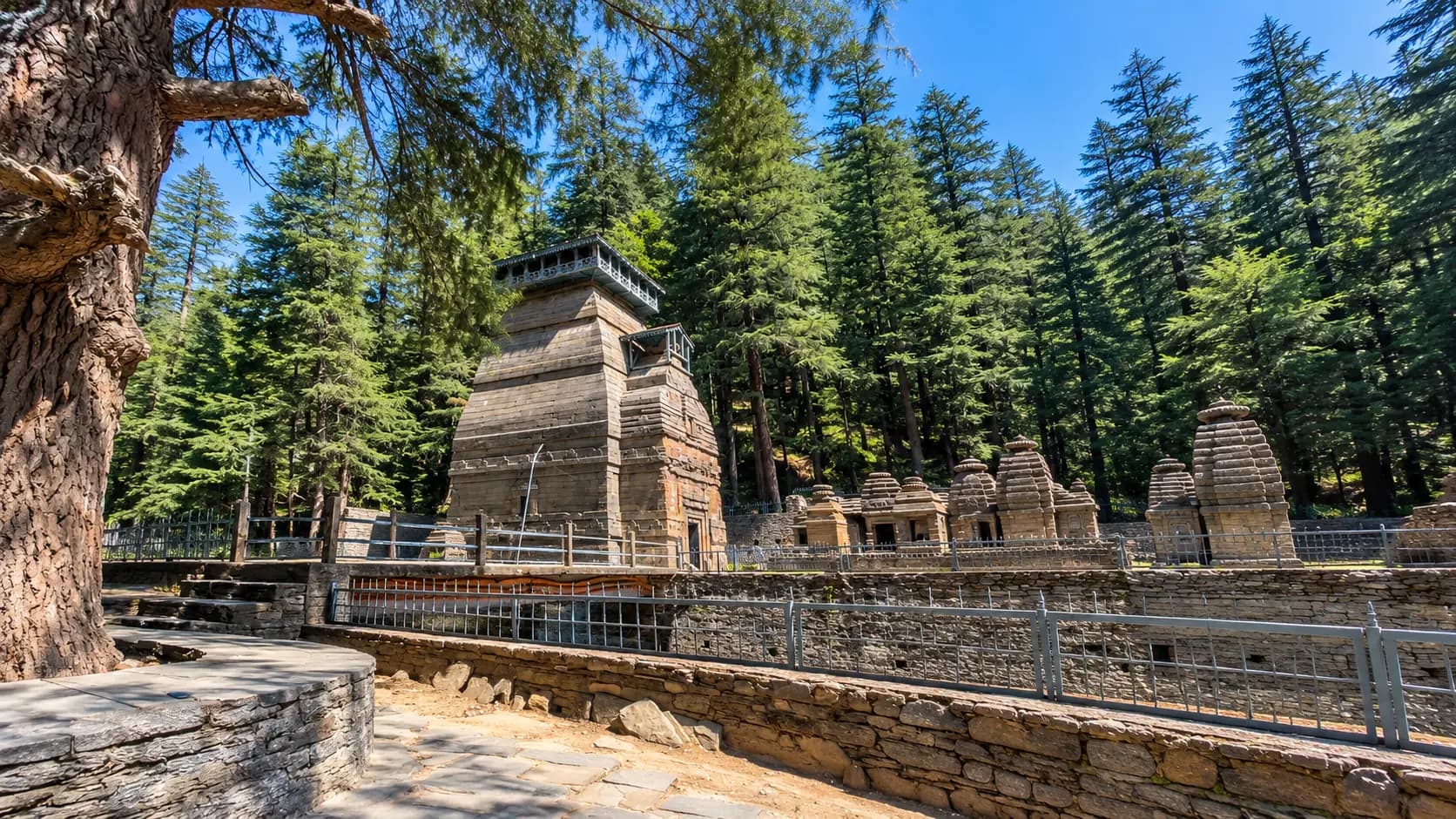
Cradled in a deep, secluded mountain valley at an elevation of 1,870 metres (6,135 feet) above sea level in the Bhanoli tehsil of Almora District, Uttarakhand, Jageshwar Dham (also known as the Jageshwar Valley of Temples) represents one of the most sublime, spiritually resonant, and architecturally magnificent temple sanctuaries in the entire Himalayan region. Located approximately 35 kilometres northeast of Almora town along the murmuring crystalline waters of the sacred Jataganga stream, this sacred Shaivite haven is encircled by a dense, towering cathedral of centuries-old Himalayan deodar trees (Cedrus deodara). The majestic conifers soar up to 50 metres into the alpine sky, casting cool, dappled shadows across a wondrous archaeological landscape encompassing 124 preserved ancient stone temples.
Constructed across a five-hundred-year golden epoch of Himalayan temple architecture - spanning from the 7th to the 12th century CE under the patronages of the early Katyuri dynasty and subsequently expanded by the royal Chand monarchs of Kumaon - the temples of Jageshwar are built in the classical North Indian Nagara style. Characterized by monumental curvilinear stone towers (shikharas), intricate amalaka crowning elements, carved kalasha finials, and square pillared entrance porticos (mandapas), the complex is preserved today as a Centrally Protected Monument of National Importance by the Archaeological Survey of India (ASI), Dehradun Circle.
In sacred Hindu geography and Puranic literature, Jageshwar holds an extraordinary stature. It is identified in the Shiva Purana and the Linga Purana as the sacred Darukavana (literally "The Deodar Forest"), venerated as the sanctified realm where the universal worship of Lord Shiva in the symbolic form of the Lingam first originated. According to sacred tradition, great Vedic sages meditated here in ancient times, and it was in this very deodar grove that Lord Shiva appeared before them in cosmic penance. Many devout scholars and pilgrims revere Jageshwar as the true northern candidate for the eighth Jyotirlinga, Nageshvara Darukavane. In the 8th century CE, the great philosopher-saint Adi Shankaracharya visited Jageshwar during his transformative Himalayan spiritual tour, renovating several shrines, re-establishing classical Vedic rituals, and sanctifying the primary sanctum of Tarun Jageshwar and the imposing shrine of Maha Mrityunjaya.
Start here. Open a tile for the full details.
Why goRead details
Jageshwar Dham offers travelers, historians, and pilgrims an enchanting blend of early medieval stone art, sacred Shaivite ritual, and ancient woodland tranquility:
When to visitRead details
Jageshwar Dham is an all-season pilgrimage and cultural destination, though each period has distinct highlights:
Entry & permissionsRead details
Fees, visiting hours and entry rules may change. Confirm the latest details with the official operator or local authority before travelling.
- Entry Fees: Entry into the Jageshwar temple complex, the individual sanctums, and the surrounding deodar forest is completely free for all visitors.
- ASI Archaeological Museum Timings and Fees:
- Timings: Open daily from 10:00 to 17:00 (Closed on Fridays and gazetted central government holidays).
- Entry Fees: ₹20 for Indian citizens and SAARC/BIMSTEC visitors; ₹250 for foreign nationals; entry is completely free for children under 15 years of age.
- Pujas and Archana: Devotees wishing to perform special rituals (such as Maha Mrityunjaya Japa, Rudrabhishekam, or Navagraha Puja) can book registered temple priests (Pujaris) through the authorized Jageshwar Mandir Prabandhan Samiti office counter located near the main entrance gate, where standardized government-approved rates are displayed.
- Photography and Monument Rules: General photography of temple exteriors, stone courtyards, and deodar forests is permitted. However, photography and video recording inside the inner sanctums of Tarun Jageshwar and Maha Mrityunjaya are strictly prohibited. Operating drones or commercial movie cameras within the 100-metre prohibited and 200-metre regulated zones of this ASI monument is strictly illegal without written permission from the Archaeological Survey of India.
Plan your visitRead details
Jageshwar Dham is easily accessible by motorable roads from Almora and the Kumaon foothills:
Explore the full guide - choose a topic below.
Why visit?
Jageshwar Dham offers travelers, historians, and pilgrims an enchanting blend of early medieval stone art, sacred…Explore detailsClose details
Jageshwar Dham offers travelers, historians, and pilgrims an enchanting blend of early medieval stone art, sacred Shaivite ritual, and ancient woodland tranquility:
- Worship at the 8th-Century Maha Mrityunjaya Temple: Stand in reverence before the largest and most ancient shrine in the Jageshwar cluster. Dating to the early Katyuri era (circa 8th century CE), this monumental temple is dedicated to Lord Shiva as the conqueror of death (Maha Mrityunjaya). Worship the unique self-manifested lingam, which features a remarkable eye-shaped opening (netra) through which the third eye of Shiva is perceived, believed to bestow immense healing and spiritual liberation upon chanting the Maha Mrityunjaya Mantra.
- Explore 124 Ancient Nagara Stone Temples: Wander through an open-air architectural museum of 124 exquisitely preserved stone shrines, ranging from towering pyramidal temples to miniature votive shrines dedicated to Lord Shiva, Goddess Durga, Lord Vishnu, Surya, Kuber, and the Navagrahas. Notice the gradual stylistic transition from early post-Gupta flat-roofed designs to soaring, elaborately carved Nagara shikharas.
- Visit the ASI Archaeological Museum: Discover a priceless treasury of over 150 ancient stone sculptures and bronzes recovered from the Jageshwar valley, meticulously displayed in the Archaeological Survey of India museum on site. Admire the celebrated 9th-century life-sized sculpture of Paun Raja (a local Katyuri king or royal devotee), intricately carved stone murtis of Uma-Maheshwara, Surya riding his seven-horse chariot, and exquisite celestial dancers (apsaras).
- Experience the Sacred Deodar Forest (Darukavana): Breathe in the cool, resin-scented air of the ancient deodar forest. Walking along the flagstone paths bordered by these monumental conifers, with the gentle murmur of the Jataganga stream echoing off grey granite walls, evokes a timeless sense of peace and meditative seclusion.
- Participate in Atmospheric Evening Aarti: Check the current visiting hours and permitted access with the site operator before departure; ceremonies, closures and visitor sessions can affect access. The resonant ringing of brass temple bells, rhythmic beating of traditional drums, burning camphor lamps, and synchronized Vedic chanting echoing through the candlelit stone courtyard create an unforgettable spiritual experience.
- Trek to Dandeshwar and Vridha Jageshwar: Extend your exploration to nearby sister shrines: the colossal, single stone spire of Dandeshwar Temple (1.8 km downstream) where Lord Shiva is depicted holding a staff (danda), and Vridha Jageshwar (Old Jageshwar, 7 km uphill), an ancient mountaintop temple offering breathtaking panoramic vistas of the snow-clad Himalayas.
What to expect
Visiting Jageshwar Dham is a peaceful and culturally rich experience characterized by sacred rituals, pristine…Explore detailsClose details
Visiting Jageshwar Dham is a peaceful and culturally rich experience characterized by sacred rituals, pristine nature, and historic architecture:
- Complex Layout and Courtyards: The main Jageshwar temple complex is enclosed within an ancient stone-walled precinct entered via a traditional covered stone gatehouse. Inside, 124 temples of varying sizes are arranged around flat stone-paved courtyards. The twin focal points are the Tarun Jageshwar Temple (with its massive silver-embossed doors and protective guardian deities) and the Maha Mrityunjaya Temple.
- Ritual Schedule and Sanctum Flow: Check the current visiting hours and permitted access with the site operator before departure; ceremonies, closures and visitor sessions can affect access.
- Microclimate and Mountain Weather: Situated in a narrow, shaded valley bordered by towering deodar trees and running water, Jageshwar is noticeably cooler than Almora town. Summer days (April to June) are delightfully pleasant (16°C to 25°C), while summer nights require a light sweater. Autumn (September to November) brings crisp, sunny days and chilly nights (6°C to 12°C). In winter (December to February), the sun reaches the valley floor for only a few hours each day; daytime temperatures hover between 8°C and 14°C, and night temperatures regularly plunge to freezing (0°C to 3°C), with occasional light snow flurries.
- Dress Code and Temple Etiquette: Visitors must dress conservatively in modest attire covering shoulders and knees. All footwear, leather belts, and leather bags must be deposited at the free shoe-stand outside the complex gate. Wash your feet at the running water channel before entering. Silence should be maintained inside the active sanctums, and photography of the inner Shiva lingams is strictly banned.
Best time to visit
Jageshwar Dham is an all-season pilgrimage and cultural destination, though each period has distinct highlights…Explore detailsClose details
Jageshwar Dham is an all-season pilgrimage and cultural destination, though each period has distinct highlights:
- Spring and Summer (March to June): The most popular and weather-friendly time to visit. Pleasant daytime temperatures, blooming wild orchids in the deodar trees, and clear blue skies make it ideal for leisurely exploring the 124 shrines and the ASI museum.
- Monsoon and Shravan Mela (July to August): The holy Hindu month of Shravan is the most spiritually vibrant time at Jageshwar. Thousands of devout pilgrims (Kavadiyas and Shaivite devotees) journey here to offer holy Ganga water to Lord Shiva during the month-long Jageshwar Shravan Mela. The surrounding forest turns a lush, mossy green with gushing mountain streams. However, visitors must navigate occasional monsoon downpours and humid mountain roads.
- Autumn (September to November): Considered by photographers and cultural travelers to be the finest season. The monsoon clouds depart, leaving crisp, transparent mountain air and deep-blue skies. The weather is dry and refreshing, crowd levels are moderate, and surrounding mountain viewpoints like Vridha Jageshwar offer razor-sharp panoramic vistas of the Trishul and Nanda Devi snow peaks.
- Winter (December to February): Ideal for travelers seeking deep meditative solitude and cold mountain weather. The valley is tranquil and unhurried. While frosty mornings require heavy winter jackets, sitting in the temple courtyard under the winter sun while listening to temple bells is deeply therapeutic.
How to reach
Jageshwar Dham is easily accessible by motorable roads from Almora and the Kumaon foothills: - By Road via Almora…Explore detailsClose details
Jageshwar Dham is easily accessible by motorable roads from Almora and the Kumaon foothills:
- By Road via Almora (35 km): Jageshwar is situated 35 kilometres northeast of Almora town:
- The Route: Drive along the smooth, paved Almora-Pithoragarh highway (NH 309A network) through Barechhina to Artola junction (32 km). At Artola, turn left onto the scenic 3-kilometre valley road that gently winds down alongside the Jataganga stream through ancient deodar woods directly to the Jageshwar parking terminal (approx. 1 to 1.5 hours driving time from Almora).
- Public Transport: Regular shared passenger jeeps (Maxx cabs) and private taxis depart frequently throughout the day from the Dharanaula Taxi Stand in Almora. Uttarakhand Transport Corporation (UTC) state buses also operate direct services between Haldwani/Almora and Jageshwar.
- From Kathgodam (120 km): Private cabs and shared taxis are available from Kathgodam railway station, driving via Bhowali, Khairna, and Almora to Jageshwar (approx. 4 to 5 hours).
- From Delhi NCR (415 km): Connected via Moradabad, Rampur, Haldwani, Kathgodam, and Almora (approx. 9 to 11 hours drive).
- By Rail: The nearest broad-gauge railway terminus is Kathgodam Railway Station (KGM, 120 km), which connects directly to New Delhi, Lucknow, Kolkata, and Dehradun via premium trains like the Kathgodam Shatabdi Express and Ranikhet Express.
- By Air: The closest commercial airport is Pantnagar Airport (PGH, 150 km), operating scheduled flights to New Delhi and Dehradun. Taxis can be hired at the airport terminal for the direct mountain drive to Jageshwar.
Entry, timings and permissions
Fees, visiting hours and entry rules may change.Explore detailsClose details
Fees, visiting hours and entry rules may change. Confirm the latest details with the official operator or local authority before travelling.
- Entry Fees: Entry into the Jageshwar temple complex, the individual sanctums, and the surrounding deodar forest is completely free for all visitors.
- ASI Archaeological Museum Timings and Fees:
- Timings: Open daily from 10:00 to 17:00 (Closed on Fridays and gazetted central government holidays).
- Entry Fees: ₹20 for Indian citizens and SAARC/BIMSTEC visitors; ₹250 for foreign nationals; entry is completely free for children under 15 years of age.
- Pujas and Archana: Devotees wishing to perform special rituals (such as Maha Mrityunjaya Japa, Rudrabhishekam, or Navagraha Puja) can book registered temple priests (Pujaris) through the authorized Jageshwar Mandir Prabandhan Samiti office counter located near the main entrance gate, where standardized government-approved rates are displayed.
- Photography and Monument Rules: General photography of temple exteriors, stone courtyards, and deodar forests is permitted. However, photography and video recording inside the inner sanctums of Tarun Jageshwar and Maha Mrityunjaya are strictly prohibited. Operating drones or commercial movie cameras within the 100-metre prohibited and 200-metre regulated zones of this ASI monument is strictly illegal without written permission from the Archaeological Survey of India.
Nearby places to consider
A visit to Jageshwar can be beautifully combined with other cultural and natural highlights of Almora District: -…Explore detailsClose details
A visit to Jageshwar can be beautifully combined with other cultural and natural highlights of Almora District:
- Dandeshwar Temple (1.8 km west): A magnificent standalone temple complex featuring a massive, towering stone shikhara dedicated to Lord Shiva as the bearer of the staff, set in a tranquil deodar clearing along the river.
- Vridha Jageshwar (7 km north): The ancient predecessor shrine situated high on a panoramic mountain ridge at 2,200 metres, offering breathtaking vistas of Nanda Devi, Trishul, and Panchachuli peaks.
- Jhaker Sam Temple (1 km south): A historic temple dedicated to Lord Shiva situated slightly above the main valley road, associated with local folklore of penance and protection.
- Almora Heritage Town (35 km southwest): The historic cultural capital of Kumaon, renowned for its cobbled Lala Bazaar, ancient Kasar Devi temple, Chitai Golu Devta temple, and traditional copperware crafts.
- Chitai Golu Devta Temple (31 km southwest): The legendary temple dedicated to the Kumaoni God of Justice (Golu Devta), famous for thousands of brass bells hung by devotees and handwritten petitions pinned to the temple courtyards.
In pictures
The practical bits
Before you go.
Plan ahead
To experience the full historical and spiritual richness of Jageshwar Dham, keep the following practical tips in…Explore detailsClose details
To experience the full historical and spiritual richness of Jageshwar Dham, keep the following practical tips in mind:
Hire a Registered Local Guide or ASI Audio Guide
The 124 stone temples possess a rich and intricate 1,300-year history.Explore detailsClose details
The 124 stone temples possess a rich and intricate 1,300-year history. Hiring an authorized local temple guide or spending time reading the ASI interpretive plaques will greatly enrich your appreciation of the architectural transitions from post-Gupta to mature Nagara styles and the mythic symbolism carved into the stone doorframes.
Dress in Layers for the Forest Microclimate
Because the temple complex sits deep inside a narrow valley under dense deodar canopy, the temperature inside the…Explore detailsClose details
Because the temple complex sits deep inside a narrow valley under dense deodar canopy, the temperature inside the temple courtyard is typically 3°C to 5°C cooler than on the surrounding hilltops. Even in the middle of summer, carry a light shawl or fleece jacket. In autumn and winter, warm woollens, thermal inners, and thick socks are necessary, especially since shoes must be removed on the cold stone flags.
Visit Dandeshwar Temple and Vridha Jageshwar
Do not limit your visit solely to the main temple cluster.Explore detailsClose details
Do not limit your visit solely to the main temple cluster. Stop at Dandeshwar Temple, located just 1.8 km before Jageshwar along the road, which features the largest single stone shikhara in the valley. If you have personal transport, drive or hike 7 km up the mountain ridge to Vridha Jageshwar for sweeping Himalayan panoramas and ancient peace.
Support Local Kumaoni Flavors and Crafts
Stop by the rustic village market outside the temple gate to enjoy piping hot Aloo ke Gutke with fragrant wild…Explore detailsClose details
Stop by the rustic village market outside the temple gate to enjoy piping hot Aloo ke Gutke with fragrant wild jambu herb, sweet Bal Mithai, and herbal mountain teas. You can also purchase locally harvested deodar oil, organic honey, and hand-carved wooden temple souvenirs crafted by local artisans.
A few things you might wonder
Common questions about visiting Jageshwar Dham. Fees, visiting hours and ceremonies are researched details that may change; confirm current arrangements with the operator before travelling.
How old are the temples of Jageshwar Dham and who built them?
Is Jageshwar Dham considered one of the twelve Jyotirlingas?
What is the significance of the Maha Mrityunjaya Temple at Jageshwar?
Can non-Hindus and foreign tourists enter Jageshwar Dham?
How much time is required to visit Jageshwar Dham?
Where can visitors stay overnight in Jageshwar?
Explore more in Deep Kumaon
Discover other destinations around this hub
More Hubs in Uttarakhand
Continue exploring other travel hubs in this state
Planning a trip to Deep Kumaon?