Mana Village
Complete visitor guide to Mana Village in Chamoli, Uttarakhand. Explore India's First Village, Saraswati River origin, Bhim Pul, Vyas Gufa, and Vasudhara Falls.
Location
Char Dham Badrinath, Uttarakhand
A closer look
Your visit, at a glance.
Char Dham Badrinath, Uttarakhand
GET TO KNOW THE PLACE
Perched majestically at an altitude of 3,219 metres (10,560 feet) above sea level in the high-altitude trans-Himalayan expanse of Chamoli District, Uttarakhand, Mana Village…
The story of Mana Village
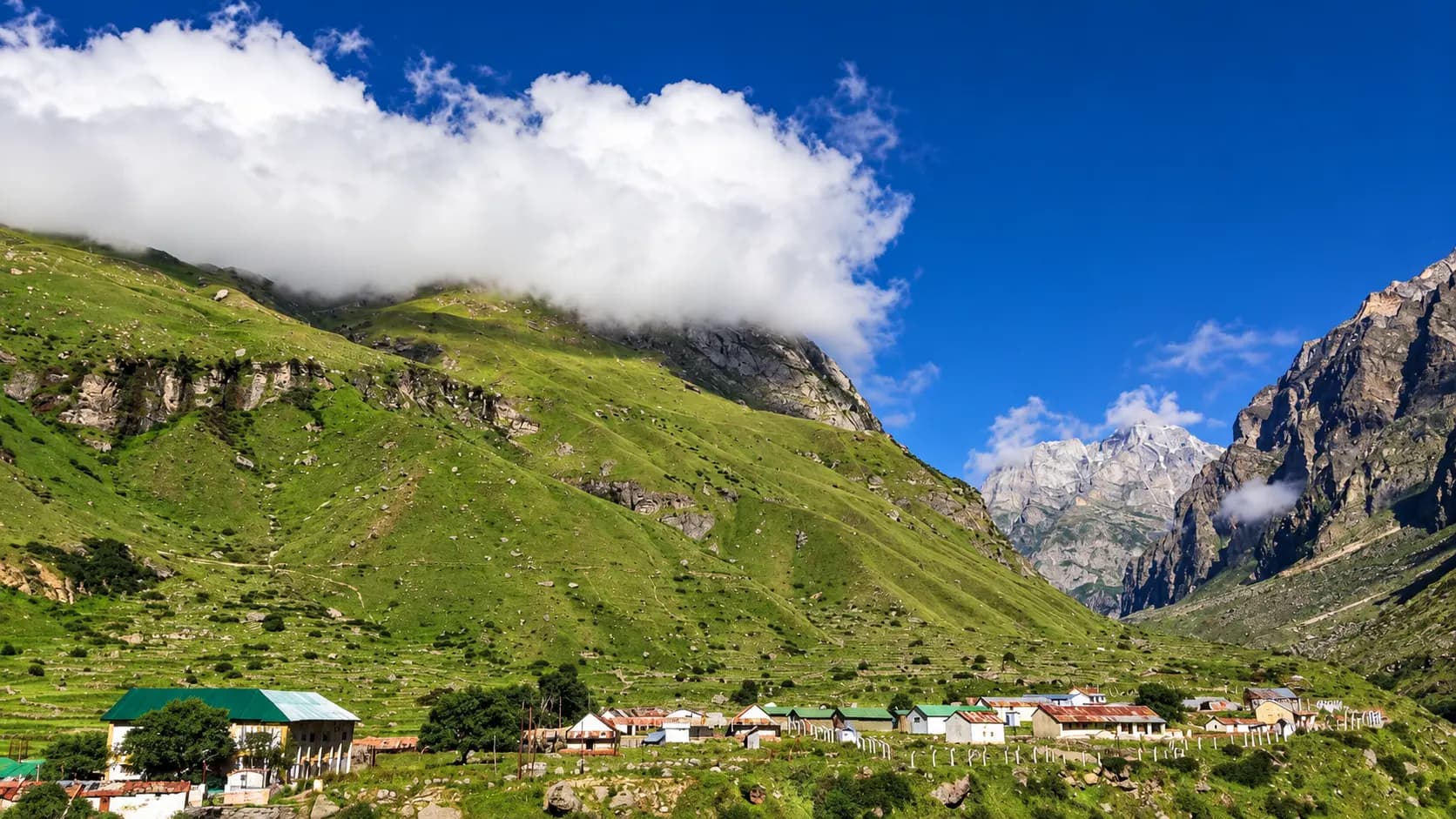
Perched majestically at an altitude of 3,219 metres (10,560 feet) above sea level in the high-altitude trans-Himalayan expanse of Chamoli District, Uttarakhand, Mana Village commands an extraordinary place in India's geographical, spiritual, and cultural landscape. Situated just 3.2 kilometres north of the revered Badrinath Temple at the northernmost motorable terminus of National Highway 7, Mana stands proudly designated as the 'First Indian Village' on the northern frontier. In October 2022, a historic national re-imagination led by the Government of India overturned the outdated colonial moniker of Mana as India's "last village," declaring that border settlements are not remote peripheries but rather the proud first sentinels of the republic.
Set against a breathtaking backdrop of towering, snow-crowned Himalayan massifs and glaciated alpine valleys, Mana is inhabited by the indigenous Bhotia community, primarily belonging to the Marchha and Tolchha tribal lineages. For centuries, the people of Mana flourished as intrepid trans-Himalayan traders, guiding caravans of laden sheep, goats, and yaks across the treacherous 5,608-metre Mana Pass (Dungri La) into Tibet to exchange Indian barley, sugar, spices, and textiles for Tibetan salt, borax, and raw pashmina wool until the closure of the border following the 1962 Sino-Indian War. Today, while their trade routes have closed, the Bhotias of Mana preserve a vibrant pastoral heritage characterized by masterful handloom wool-weaving, sustainable mountain horticulture, and a centuries-old cycle of seasonal transhumance - living in Mana's stone-and-timber dwellings during the alpine summer (May to October) and migrating down to the warmer lower valleys around Joshimath and Gopeshwar when winter covers their high village in deep snowdrifts.
Beyond its compelling frontier geography, Mana is deeply woven into the sacred mythology of ancient India. According to the Mahabharata, this dramatic mountain threshold was the sacred passageway traversed by the five Pandava brothers and Draupadi as they embarked on their final, arduous pilgrimage toward heaven along the Swargarohini glacier. Within the village perimeter, natural geological wonders blend seamlessly with epic lore: the turbulent, foaming waters of the Saraswati River burst forth violently from subterranean rock chambers to cascade through a deep vertical gorge, spanned by Bhim Pul - a colossal monolithic granite slab said to have been lifted and placed across the chasm by the mighty Pandava warrior Bhima so Draupadi could cross. High on the village hillside sit the sacred caverns of Vyas Gufa and Ganesh Gufa, where Sage Maharishi Ved Vyasa is revered to have dictated the monumental 100,000 verses of the Mahabharata to the elephant-headed scribe Lord Ganesha. Offering stunning alpine trails leading toward the 122-metre cascade of Vasudhara Falls, Mana represents a sublime convergence of high-altitude Himalayan wilderness, living frontier tradition, and timeless epic lore.
Start here. Open a tile for the full details.
Why goRead details
Mana Village offers travelers a profoundly enriching mountain experience that combines living tribal heritage, dramatic river gorges, and sacred sites:
When to visitRead details
Mana Village is strictly a seasonal destination, open to visitors for approximately six months each year from May to October/November, aligned with the opening of the Badrinath Temple:
Entry & permissionsRead details
Fees, visiting hours and entry rules may change. Confirm the latest details with the official operator or local authority before travelling.
- Entry Fees: There is no entry fee to enter Mana Village, Bhim Pul, Saraswati River viewpoint, or the exterior village areas. Entry into the cave shrines of Vyas Gufa and Ganesh Gufa is completely free, though voluntary donations into temple collection boxes are welcome.
- Opening Timings: The village pathways and shrines are generally open for visitors daily from 06:00 to 18:00 during the open season (May to October). Visitors are strongly advised to complete their sightseeing and return to Badrinath before nightfall, as mountain temperatures drop drastically after sunset and street illumination is minimal.
- Permits and Identity Requirements:
- Domestic Indian Travelers: No Inner Line Permit or special civil permit is required for Indian nationals to visit Mana Village, Vyas Gufa, Bhim Pul, or to hike the 5 km trail to Vasudhara Falls. Carrying valid government photo identification (Aadhaar, Voter ID, or Driving License) is recommended due to nearby border security checkpoints.
- Foreign Nationals: Foreign tourists can freely visit Mana Village, Vyas Gufa, and Bhim Pul during daylight hours without prior permits. However, proceeding beyond Mana Village toward Mana Pass (Dungri La) or the Satopanth Lake trek requires special restricted area permits and military clearance from the District Magistrate and ITBP.
- Drone Restrictions: The operation of civil drones and unmanned aerial vehicles (UAVs) is strictly prohibited across Mana Village and the surrounding mountain valley due to high-security Indo-Tibetan border defense regulations. Violators face immediate equipment confiscation and legal prosecution.
Plan your visitRead details
Mana Village is situated in the upper northern reaches of Chamoli District, readily accessible by road from Badrinath:
High Altitude and Acclimatization
At 3,219 metres, the atmospheric oxygen level is noticeably lower than in the plains or lower hills. Ensure you have spent at least one night in Joshimath (1,875 m) or Badrinath (3,133 m) to acclimatize before undertaking extended walking or the steep hike to Vasudhara Falls. Walk at a steady, relaxed pace, stay hydrated with warm water, and avoid overexertion.
Explore the full guide - choose a topic below.
Why visit?
Mana Village offers travelers a profoundly enriching mountain experience that combines living tribal heritage…Explore detailsClose details
Mana Village offers travelers a profoundly enriching mountain experience that combines living tribal heritage, dramatic river gorges, and sacred sites:
- Stand at India's First Village: Experience the unique cultural pride of visiting India's northern frontier outpost. Welcoming road signs, patriotic viewpoints, and the famous tea stall 'Hindustan Ki Pehli Dukan' (India's First Shop) celebrate Mana's frontline status, offering visitors steaming mugs of herbal chai and mountain views just 24 kilometres south of the international border with Tibet.
- Witness the Dramatic Origin of the Saraswati River: Observe one of the most astonishing hydrological phenomena in the Himalayas. The mythic Saraswati River emerges with thunderous roar from a glacial subterranean fracture directly beneath the rock face at Mana, surges through a narrow vertical gorge, merges with the Alaknanda at Keshav Prayag, and mysteriously disappears beneath the earth, echoing the ancient Vedic belief of an invisible subterranean river.
- Cross the Mythic Boulder Bridge of Bhim Pul: Stand directly above the deafening torrent of the Saraswati on Bhim Pul, a colossal natural stone boulder spanning the narrow gorge. Legend recounts that Bhima hurled this massive rock across the fissure to create a safe bridge for his queen Draupadi during the Pandavas' ascent to heaven.
- Visit the Cave Scriptoriums of the Mahabharata: Climb the stone steps to Vyas Gufa, a prehistoric rock shelter where Sage Ved Vyasa is believed to have meditated and composed the four Vedas, the 18 Puranas, and the epic Mahabharata. Marvel at the unusual rock formations on the cave's overhang that resemble layered ancient palm-leaf manuscripts, revered by devotees as the petrified Vyas Pothi. Nearby sits Ganesh Gufa, where Lord Ganesha wrote down the epic verses without pause.
- Discover Living Bhotia Handloom Traditions: Wander through charming stone-paved pathways bordered by traditional two-storey stone-and-timber houses with slate roofs. Meet local Marchha Bhotia women spinning raw wool on wooden spindles (takli) and weaving authentic sheep-wool blankets (pankhi), soft pashmina shawls, warm tweed jackets, mufflers, and traditional carpets (dan) directly outside their homes.
- Embark on the Vasudhara Falls Trek: Use Mana as the starting base for an unforgettable 5-kilometre high-altitude day hike across moraines and glacial terraces to Vasudhara Falls, a breathtaking 122-metre waterfall cascading from glacial cliffs against the backdrop of Mount Chaukhamba and Mount Kamet.
What to expect
Visiting Mana Village is a sensory immersion into high Himalayan alpine life, marked by brisk mountain breezes…Explore detailsClose details
Visiting Mana Village is a sensory immersion into high Himalayan alpine life, marked by brisk mountain breezes, roaring river rapids, and rustic village hospitality:
- Village Architecture and Topography: Mana is situated on a steeply terraced hillside overlooking the confluence of the Alaknanda and Saraswati rivers. The settlement features narrow, cobblestone-paved alleys lined with traditional stone masonry houses constructed with thick slate roofs designed to withstand heavy winter snow loads. Wooden carved window frames and open verandas display bundles of drying mountain herbs and hand-spun woollen yarn.
- Altitude and Mountain Climate: Located at an elevation of 3,219 metres (10,560 feet), Mana has noticeably thinner air than lower valley towns. Daytime temperatures during the open season (May to October) typically range between 10°C and 18°C under bright sunshine, but drop swiftly to near freezing (0°C to 5°C) once the sun dips behind the mountain ridges or during sudden mountain rain showers.
- Walking Circuit and Sightseeing Flow: Vehicles must park at the paved designated parking terminus at the village entrance. Visitors proceed entirely on foot along a well-defined stone pathway that winds through the village. The walking circuit passes Ganesh Gufa, climbs gently toward Vyas Gufa, continues downhill toward the roaring Saraswati canyon and Bhim Pul, and circles back past the village tea shops and handloom stalls. The entire circuit covers approximately 2 kilometres of walking on stone steps and inclined ramps.
- Cultural Interactions and Village Life: The resident Bhotia villagers are remarkably warm, hospitable, and proud of their cultural identity. Many elders converse fluently in Hindi as well as their native Tibeto-Burman dialects. Strolling through the village provides an authentic glimpse into high-altitude mountain survival, from seasonal farming of kidney beans (rajma), potatoes, and barley to the processing of medicinal mountain herbs like jambu and chora.
Best time to visit
Mana Village is strictly a seasonal destination, open to visitors for approximately six months each year from May…Explore detailsClose details
Mana Village is strictly a seasonal destination, open to visitors for approximately six months each year from May to October/November, aligned with the opening of the Badrinath Temple:
- Summer (May to June): This is the most popular time to visit. Days are pleasantly crisp with temperatures ranging from 12°C to 20°C, and skies are generally clear, offering panoramic views of snow-dusted peaks. Snowmelt fills the Saraswati River with thunderous volume. Expect substantial pilgrim crowds during these months, especially between 10:00 and 15:00, when thousands of visitors make the short excursion from Badrinath.
- Monsoon (July to August): Temperatures range between 12°C and 18°C. The alpine meadows burst into lush emerald green, and wild Himalayan flowers bloom across the hillsides. However, heavy rains bring frequent landslide disruptions along National Highway 7 between Joshimath and Badrinath. The Saraswati River swells to an awe-inspiring, deafening torrent. Visitors during this period must maintain flexible schedules and monitor mountain road updates.
- Autumn (September to October): Considered by seasoned mountain travelers to be the finest season to visit Mana. Monsoon rains cease, the mountain atmosphere becomes crystal clear, and the surrounding peaks - including Neelkanth, Nar, and Narayana - stand out sharply against deep azure skies. Temperatures range from 5°C to 15°C during the day and drop below freezing (-2°C to 3°C) at night. October brings vibrant autumn gold to the birch and willow trees before the village begins its winter migration.
- Winter (November to April) - Closed and Evacuated: By late October or early November, coinciding with the closing of the Badrinath Temple on Bhai Dooj, the entire village is evacuated. Heavy snowfall (2 to 4 metres) blankets the valley, burying roads and dwellings. The Bhotia families migrate down to their winter residences in Gopeshwar, Joshimath, and Pandukeshwar. Only Indo-Tibetan Border Police (ITBP) and Indian Army garrisons remain stationed in the sector.
How to reach
Mana Village is situated in the upper northern reaches of Chamoli District, readily accessible by road from…Explore detailsClose details
Mana Village is situated in the upper northern reaches of Chamoli District, readily accessible by road from Badrinath:
- By Road via Badrinath: Mana is located just 3.2 kilometres north of Badrinath Temple along the northernmost stretch of National Highway 7.
- From Badrinath: Confirm the current charge and what it includes with the operator or service provider. Visitor admission, vehicles, parking, activities and accommodation can have separate charges. Active travelers can also enjoy a scenic 45-minute uphill walk (3.2 km) along the paved road from Badrinath to Mana.
- From Joshimath (48 km): Drive north along NH 7 via Vishnuprayag, Govindghat, and Pandukeshwar to reach Badrinath and Mana (approx. 2 to 2.5 hours by car).
- From Rishikesh / Haridwar: Rishikesh is located 301 km south, connected via the all-weather NH 7 Char Dham Highway corridor passing Devprayag, Srinagar, Rudraprayag, and Karnaprayag (approx. 9 to 11 hours drive).
- By Rail: The nearest major railway stations are Yog Nagari Rishikesh (YNRK, 301 km) and Haridwar Junction (HW, 323 km). Both stations connect directly to New Delhi, Lucknow, Mumbai, and Kolkata. Taxis and GMOU/UTC state buses depart daily from Rishikesh and Haridwar for Joshimath and Badrinath.
- By Air: The closest commercial airport is Jolly Grant Airport, Dehradun (DED, 318 km), operating regular daily flights to Delhi, Mumbai, Bengaluru, and other major Indian metros. Taxis and car rentals are available at the airport for the scenic mountain drive up NH 7.
- By Helicopter: Passenger helicopter shuttle services operate during the Char Dham season from Dehradun (Sahastradhara Helipad) directly to the Badrinath Helipad, situated just 4 kilometres south of Mana Village, allowing affluent travelers to reach the area within a 45-minute flight.
Entry, timings and permissions
Fees, visiting hours and entry rules may change.Explore detailsClose details
Fees, visiting hours and entry rules may change. Confirm the latest details with the official operator or local authority before travelling.
- Entry Fees: There is no entry fee to enter Mana Village, Bhim Pul, Saraswati River viewpoint, or the exterior village areas. Entry into the cave shrines of Vyas Gufa and Ganesh Gufa is completely free, though voluntary donations into temple collection boxes are welcome.
- Opening Timings: The village pathways and shrines are generally open for visitors daily from 06:00 to 18:00 during the open season (May to October). Visitors are strongly advised to complete their sightseeing and return to Badrinath before nightfall, as mountain temperatures drop drastically after sunset and street illumination is minimal.
- Permits and Identity Requirements:
- Domestic Indian Travelers: No Inner Line Permit or special civil permit is required for Indian nationals to visit Mana Village, Vyas Gufa, Bhim Pul, or to hike the 5 km trail to Vasudhara Falls. Carrying valid government photo identification (Aadhaar, Voter ID, or Driving License) is recommended due to nearby border security checkpoints.
- Foreign Nationals: Foreign tourists can freely visit Mana Village, Vyas Gufa, and Bhim Pul during daylight hours without prior permits. However, proceeding beyond Mana Village toward Mana Pass (Dungri La) or the Satopanth Lake trek requires special restricted area permits and military clearance from the District Magistrate and ITBP.
- Drone Restrictions: The operation of civil drones and unmanned aerial vehicles (UAVs) is strictly prohibited across Mana Village and the surrounding mountain valley due to high-security Indo-Tibetan border defense regulations. Violators face immediate equipment confiscation and legal prosecution.
Nearby places to consider
A visit to Mana Village pairs naturally with other extraordinary landmarks across the upper Alaknanda valley: -…Explore detailsClose details
A visit to Mana Village pairs naturally with other extraordinary landmarks across the upper Alaknanda valley:
- Badrinath Temple (3.2 km south): One of the four cardinal Char Dham shrines of India, dedicated to Lord Vishnu (Badri Vishal). Features the ancient 1-metre black Shaligram deity, thermal sulfur springs at Tapt Kund, and sacred ancestral rites at Brahma Kapal.
- Vasudhara Falls (5 km northwest): A spectacular 122-metre waterfall cascading over sheer vertical rock faces into a glacial valley at an altitude of 3,650 metres. The 5-km walking trail from Mana passes through rugged moraine landscapes offering breathtaking views of Chaukhamba and Satopanth peaks.
- Keshav Prayag (Within village perimeter): The sacred confluence where the roaring Saraswati River merges into the turquoise torrent of the Alaknanda River, situated just a short walk below Bhim Pul.
- Satopanth Tal (25 km trek): A sacred triangular glacial lake located at an altitude of 4,600 metres, revered as the holy meditation seat of the Hindu trinity (Brahma, Vishnu, and Shiva). Accessible via an arduous 3-to-4 day high-altitude trek originating from Mana Village.
- Charan Paduka (3 km southwest): A sacred boulder perched at 3,340 metres on the slopes of Narayan Parvat bearing the footprints (paduka) of Lord Vishnu, accessible via an uphill day hike from Badrinath.
In pictures
The practical bits
Before you go.
Plan ahead
A visit to Mana Village is most rewarding when planned with attention to high-altitude mountain conditions and…Explore detailsClose details
A visit to Mana Village is most rewarding when planned with attention to high-altitude mountain conditions and local cultural etiquette:
High Altitude and Acclimatization
At 3,219 metres, the atmospheric oxygen level is noticeably lower than in the plains or lower hills.Explore detailsClose details
At 3,219 metres, the atmospheric oxygen level is noticeably lower than in the plains or lower hills. Ensure you have spent at least one night in Joshimath (1,875 m) or Badrinath (3,133 m) to acclimatize before undertaking extended walking or the steep hike to Vasudhara Falls. Walk at a steady, relaxed pace, stay hydrated with warm water, and avoid overexertion.
Layered Cold-Weather Attire
High Himalayan weather is notoriously fickle.Explore detailsClose details
High Himalayan weather is notoriously fickle. Even on sunny summer mornings, temperatures can plunge swiftly if cloud cover rolls in. Dress in breathable layers: thermal base layers, a fleece or woollen sweater, and a windproof/waterproof outer jacket. Sturdy walking shoes with grippy rubber soles are essential for navigating damp stone steps, cobblestone lanes, and uneven rocky trails around Bhim Pul.
Support Local Artisan Economy
Mana is renowned for authentic, handwoven woollen products made from locally sourced sheep wool, angora, and…Explore detailsClose details
Mana is renowned for authentic, handwoven woollen products made from locally sourced sheep wool, angora, and pashmina. Buying directly from resident Marchha women at their doorstep looms ensures fair earnings for the indigenous artisans. Authentic items include pure wool pankhi (shawls), hand-knitted caps, warm socks, tweed jackets, and organic high-altitude pulses like Mana Rajma. Carry sufficient cash in Indian Rupees, as UPI mobile network connectivity can be erratic in the gorge.
Hydration and Waste Management
Carry a reusable thermal flask filled with warm drinking water.Explore detailsClose details
Carry a reusable thermal flask filled with warm drinking water. Mana Village is part of an ecologically fragile alpine sanctuary; avoid purchasing single-use plastic water bottles. Dispose of all personal trash in designated village waste bins or carry it back to your hotel in Badrinath. Respect local traditions by not littering near sacred water sources or cave shrines.
A few things you might wonder
Common questions about visiting Mana Village. Fees, visiting hours and ceremonies are researched details that may change; confirm current arrangements with the operator before travelling.
Why is Mana called the 'First Indian Village' instead of the 'Last Village'?
How far is Mana Village from Badrinath and how do I commute between them?
Can anyone visit Vyas Gufa and Bhim Pul, and are there entry tickets?
Is an Inner Line Permit required for Indian tourists visiting Mana?
What is the famous tea shop 'Hindustan Ki Pehli Dukan' in Mana?
Can I visit Mana Village during the winter months?
Explore more in Char Dham Badrinath
Discover other destinations around this hub
More Hubs in Uttarakhand
Continue exploring other travel hubs in this state
Planning a trip to Char Dham Badrinath?