Badrinath Temple
Comprehensive visitor guide to Badrinath Temple in Chamoli, Uttarakhand. Explore Char Dham history, Shaligram idol, Tapt Kund, puja timings & travel route.
Location
Char Dham Badrinath, Uttarakhand
A closer look
Your visit, at a glance.
Char Dham Badrinath, Uttarakhand
GET TO KNOW THE PLACE
Perched at a breath-taking altitude of 3,133 metres (10,279 feet) above sea level along the rushing, crystalline waters of the Alaknanda River in Chamoli District, Uttarakhand…
The story of Badrinath Temple
Perched at a breath-taking altitude of 3,133 metres (10,279 feet) above sea level along the rushing, crystalline waters of the Alaknanda River in Chamoli District, Uttarakhand, Shri Badrinath Temple (revered across the Indian subcontinent as Badrikashram or Badri Vishal) is one of the most sacred and celebrated pilgrimage shrines in the Hindu world. Holding a dual crown of supreme religious preeminence, Badrinath serves as the northern cardinal anchor of the pan-Indian Char Dham (alongside Puri in the east, Rameswaram in the south, and Dwarka in the west) and the crowning finale of the Himalayan Chhota Char Dham yatra of Uttarakhand (Yamunotri, Gangotri, Kedarnath, and Badrinath). It is also immortalized as one of the 108 Divya Desams of Sri Vaishnavism, lauded in ancient Tamil hymns as Tiruvadhariyaashramam.
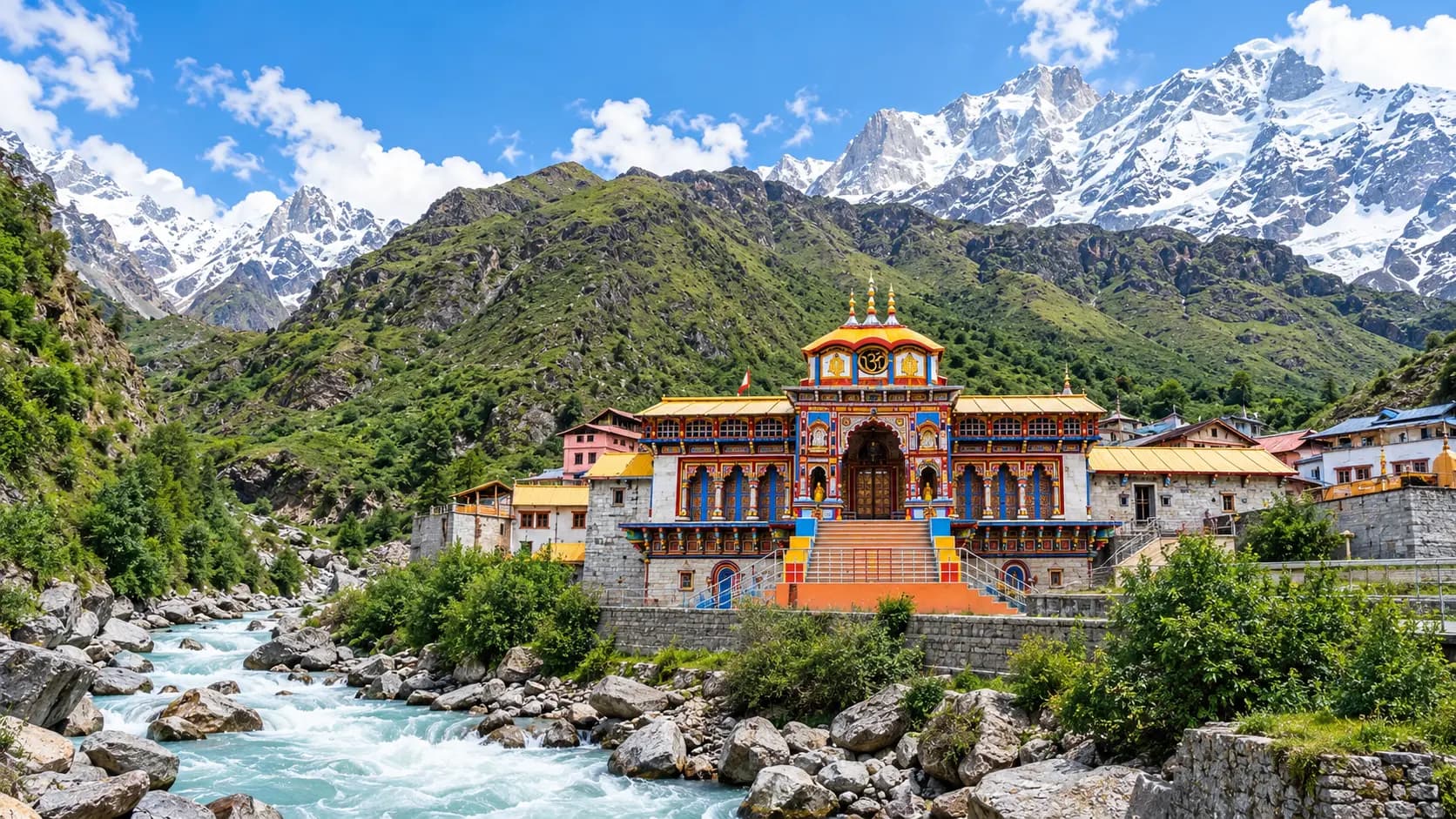
The physical setting of Badrinath is nothing short of mythic. The sanctuary is cradled in an expansive glacial valley flanked by the twin mountain ranges of Nar Parvat (5,831 m) to the east and Narayana Parvat (5,965 m) to the west - representing the eternal sages Nar and Narayana, whose severe penances are immortalized in the Mahabharata and Bhagavata Purana. Towering like a colossal frosted diamond directly behind the temple is the majestic pyramid of Mount Neelkanth (6,596 m / 21,640 ft), affectionately hailed as the "Queen of the Garhwal Himalayas". According to sacred lore, Lord Vishnu sat here in prolonged, rigorous meditation under the open sky; his divine consort, Goddess Lakshmi, took the physical form of a Badri tree (wild jujube / Ziziphus jujuba) to shelter him from scorching sun and freezing Himalayan snows, earning him the eternal title Badrinath ("Lord of the Badri Forest").
The presiding deity inside the sanctum sanctorum is an extraordinary 1-metre (3.3-foot) tall, self-manifested (Swayamvyakta) black stone Shaligram monolith depicting Lord Vishnu seated in the serene, meditative Padmasana (lotus posture). When Buddhist influence spread through the Himalayas, the sacred idol was hidden in the swirling waters of the Alaknanda River to prevent desecration. In the 8th century CE, the great philosopher-saint Adi Shankaracharya retrieved the idol from the river's Narad Kund and consecrated it in its present sanctuary. To cement the cultural and spiritual integration of the Indian subcontinent, Shankaracharya established the unbroken historic tradition that the chief priest - the Rawal - of Badrinath must always be a celibate Nambudiri Brahmin originating from the state of Kerala in southern India.
Encompassing natural geothermal sulfur springs (Tapt Kund) where pilgrims cleanse themselves in 55°C mineral waters, the sacred riverside rock platform of Brahma Kapal where ancestral rites ensure eternal salvation, and a distinctive brightly painted Tibetan-style facade crowned with a gold cupola, Badrinath represents the sublime pinnacle of high Himalayan faith.
Start here. Open a tile for the full details.
Why goRead details
- The Crown of the Pan-Indian Char Dham: Visiting Badrinath fulfills one of the four foundational lifetime spiritual journeys envisioned by Adi Shankaracharya. Standing before Badri Vishal at 10,200 feet is an experience of immense historical resonance and cosmic devotion.
- The Self-Manifested Shaligram Deity: The sanctum idol is a marvel of ancient sacred art. Unlike most depictions of Vishnu bearing weapons and standing triumphant, Badri Vishal is depicted in deep, introspective yogic meditation, with two hands resting gently in his lap in the Dhyana Mudra, sheltered beneath a glittering canopy of pure gold and studded with diamonds.
- The Thermal Miracle of Tapt Kund: Situated on the riverbank directly below the freezing Alaknanda River, Tapt Kund is a natural geothermal sulfur spring that continuously discharges steaming water at 55°C (131°F). Taking a ritual holy dip in these mineral-rich hot waters before climbing the temple steps is deeply refreshing and scientifically recognized for relieving muscle fatigue.
- Ancestral Rites at Brahma Kapal: On the riverbank north of the temple lies a sacred flat granite rock known as Brahma Kapal. Scriptural tradition holds that performing Pinda Daan (ancestral death rituals / Shraddha) here grants permanent salvation (Moksha) to departed ancestors, eliminating the need for any future Shraddha ceremonies.
- Dramatic Alpine Setting Beside Mount Neelkanth: The visual drama of Badrinath is unforgettable. The colorful, painted temple facade stands out vividly against the grey granite cliffs of the Narayana range, while the glittering, snow-clad apex of Mount Neelkanth catches the morning sun like a beacon of gold.
- Unrivalled Cultural Integration: Badrinath is a living monument to India's cultural unity. Situated in northern Uttarakhand near the Tibetan border, the temple's daily Vedic rituals are conducted in Sanskrit by Malayali Nambudiri priests from Kerala, attended by pilgrims hailing from Bengal, Gujarat, Tamil Nadu, Maharashtra, and across the globe.
When to visitRead details
Badrinath Temple is accessible for approximately six months each year:
Entry & permissionsRead details
Fees, visiting hours and entry rules may change. Confirm the latest details with the official operator or local authority before travelling.
- Temple Opening and Darshan Timings: The temple operates across two major daily liturgical sessions:
- Morning Session: 04:30 AM to 13:00 PM (Maha Abhishek at 04:30 AM; general public darshan from 07:00 AM to 13:00 PM).
- Midday Closure: The sanctum closes strictly from 13:00 PM to 16:00 PM for deity rest and purification.
- Evening Session: 16:00 PM to 21:00 PM (Evening Geeta Path and Sayankal Aarti from 18:00 PM; Shayan Aarti and final closure at 21:00 PM).
- Admission Charges:
- General public entry and darshan are completely free.
- Special Puja Bookings: Devotees wishing to attend the pre-dawn Maha Abhishek Puja, Geeta Path, or perform special Archana can book tickets in advance through the official BKTC portal (badrinath-kedarnath.gov.in) with tariffs ranging from ₹500 to ₹10,000 depending on the ritual.
- VIP / Priority Darshan: During peak summer rush, BKTC occasionally operates regulated fast-track darshan tokens (priced around ₹300 per person) to reduce queue wait times.
- Mandatory Yatra Registration: All pilgrims visiting Badrinath must complete mandatory biometric or online yatra registration through the Uttarakhand Tourism portal (registrationandtouristcare.uk.gov.in) before undertaking the journey. Registration is free and QR-coded wristbands or digital passes are verified at highway checkposts.
- Photography and Prohibitions: Photography, videography, and mobile phone usage are strictly prohibited inside the inner temple complex. Electronic devices must be kept inside bags or deposited. Flying drones is strictly illegal throughout Badrinath township.
Plan your visitRead details
Badrinath Temple is situated at the terminus of National Highway 7 (the Char Dham Badrinath Highway) in northern Chamoli District.
Explore the full guide - choose a topic below.
Why visit?
The Crown of the Pan-Indian Char Dham: Visiting Badrinath fulfills one of the four foundational lifetime…Explore detailsClose details
- The Crown of the Pan-Indian Char Dham: Visiting Badrinath fulfills one of the four foundational lifetime spiritual journeys envisioned by Adi Shankaracharya. Standing before Badri Vishal at 10,200 feet is an experience of immense historical resonance and cosmic devotion.
- The Self-Manifested Shaligram Deity: The sanctum idol is a marvel of ancient sacred art. Unlike most depictions of Vishnu bearing weapons and standing triumphant, Badri Vishal is depicted in deep, introspective yogic meditation, with two hands resting gently in his lap in the Dhyana Mudra, sheltered beneath a glittering canopy of pure gold and studded with diamonds.
- The Thermal Miracle of Tapt Kund: Situated on the riverbank directly below the freezing Alaknanda River, Tapt Kund is a natural geothermal sulfur spring that continuously discharges steaming water at 55°C (131°F). Taking a ritual holy dip in these mineral-rich hot waters before climbing the temple steps is deeply refreshing and scientifically recognized for relieving muscle fatigue.
- Ancestral Rites at Brahma Kapal: On the riverbank north of the temple lies a sacred flat granite rock known as Brahma Kapal. Scriptural tradition holds that performing Pinda Daan (ancestral death rituals / Shraddha) here grants permanent salvation (Moksha) to departed ancestors, eliminating the need for any future Shraddha ceremonies.
- Dramatic Alpine Setting Beside Mount Neelkanth: The visual drama of Badrinath is unforgettable. The colorful, painted temple facade stands out vividly against the grey granite cliffs of the Narayana range, while the glittering, snow-clad apex of Mount Neelkanth catches the morning sun like a beacon of gold.
- Unrivalled Cultural Integration: Badrinath is a living monument to India's cultural unity. Situated in northern Uttarakhand near the Tibetan border, the temple's daily Vedic rituals are conducted in Sanskrit by Malayali Nambudiri priests from Kerala, attended by pilgrims hailing from Bengal, Gujarat, Tamil Nadu, Maharashtra, and across the globe.
What to expect
Badrinath is a bustling, high-altitude pilgrim township located in a wide mountain valley beside the Alaknanda…Explore detailsClose details
Badrinath is a bustling, high-altitude pilgrim township located in a wide mountain valley beside the Alaknanda River. Arriving by road along National Highway 7, vehicles park at large municipal plazas on the eastern riverbank.
To reach the temple, pilgrims cross pedestrian footbridges suspended over the roaring, white-water torrent of the Alaknanda. The air is cool, thin, and filled with the scent of mountain pine, burning incense, and sulfur steam rising from Tapt Kund. At Tapt Kund, separate enclosed bathing pools for men and women allow devotees to immerse themselves in the steaming geothermal waters, an invigorating contrast to the crisp mountain breeze.
Ascending the wide stone stairway from the riverbank, you face the iconic facade of Badrinath Temple. Resembling a multi-tiered Himalayan monastery, the entrance gate is vibrantly painted in red, yellow, green, and blue, featuring intricate arched wooden carvings and a conical roof topped with a shining gold kalasha. Footwear must be deposited at municipal counters before entering the broad stone courtyard.
Inside, the temple is organized into three traditional chambers. The outer Sabha Mandapa is a spacious columned hall where hundreds of pilgrims assemble, chanting hymns in deep devotion. Moving forward into the Darshan Mandapa, the atmosphere becomes intimate and sacred. Finally, looking through the brass-plated doorway into the Garbhagriha (sanctum sanctorum), illuminated by the warm glow of countless pure ghee lamps, you behold Badri Vishal. The black Shaligram idol is crowned with a diamond-studded tiara, dressed in rich brocade silks, and adorned with fragrant garlands of tulsi leaves and lotus flowers. The Rawal and assisting priests chant Vedic mantras, blessing devotees with chandan (sandalwood paste), sacred tulsi, and teertham.
Outside the temple, a short walk along the riverside path leads to Brahma Kapal, where families sit with priests performing ancestral rites along the river stones. The surrounding temple market is lively and colorful, with shops selling Shaligram stones, brass idols, Himalayan woollens, dried herbs, and authentic Badrinath prasad baskets containing roasted amaranth laddoos and dry fruits.
Best time to visit
Badrinath Temple is accessible for approximately six months each year: - Annual Opening & Closing Dates: The…Explore detailsClose details
Badrinath Temple is accessible for approximately six months each year:
- Annual Opening & Closing Dates: The temple opens on the auspicious day of Akshaya Tritiya (late April or early May) and closes on the day of Bhai Dooj (late October or early November). The exact dates are calculated astrologically each year on Basant Panchami by the royal astrologers of the Tehri Garhwal palace.
- May to June (Summer Season - Peak Yatra Rush): This is the busiest and most popular period of the pilgrimage. Temperatures are mild and comfortable during the day (12°C to 18°C), though nights are cool (4°C to 8°C). The snow on the valley floor has melted, and all roads, hotels, and transport services are in full swing. Because hundreds of thousands of pilgrims visit during this window, queues for darshan can take 2 to 4 hours, and advance booking of accommodation is essential.
- September to October (Autumn Season - Crisp Skies & Ideal Travel): Post-monsoon autumn is universally regarded as the finest time to visit Badrinath. The monsoon clouds clear completely, revealing deep blue skies and razor-sharp views of Mount Neelkanth. Daytime weather is brisk and pleasant (8°C to 15°C), while nights are cold (dropping near 0°C). Darshan queues are significantly shorter and more relaxed than in summer.
- July to August (Monsoon Season - Travel with Caution): During the monsoon, the Alaknanda River swells into a roaring flood. Sections of National Highway 7 between Rishikesh, Rudraprayag, and Joshimath frequently experience landslides and temporary road blockages. However, the valley around Badrinath is verdant and misty, and darshan lines are uncrowded. Travelers must plan flexible itineraries and carry wet-weather gear.
- November to April (Winter Closure): Heavy blizzards bury the entire township in several feet of snow, and temperatures plummet to -15°C. The temple remains completely closed. During these winter months, worship continues at the Narsingh Temple in Joshimath, where the deity's Utsav Murti is enshrined.
How to reach
Badrinath Temple is situated at the terminus of National Highway 7 (the Char Dham Badrinath Highway) in northern…Explore detailsClose details
Badrinath Temple is situated at the terminus of National Highway 7 (the Char Dham Badrinath Highway) in northern Chamoli District.
- From Rishikesh / Haridwar (298 km to 320 km): National Highway 7 is a modern, two-lane all-weather highway that connects Rishikesh to Badrinath via Devprayag, Srinagar, Rudraprayag, Karnaprayag, Chamoli, Pipalkoti, and Joshimath. The 298-km drive takes approximately 10 to 12 hours. State transport buses (UTC / GMOU), shared taxis, and private cabs operate daily from Rishikesh and Haridwar. Most pilgrims break their journey with an overnight halt at Srinagar, Rudraprayag, or Joshimath.
- From Joshimath (45 km): Joshimath is the primary staging base for Badrinath. From Joshimath, the highway winds through the dramatic Alaknanda gorge past Vishnuprayag, Pandukeshwar, and Hanuman Chatti, reaching Badrinath in approximately 1.5 to 2 hours.
- Nearest Railway Stations:
- Yog Nagari Rishikesh (YNRK, 298 km): Modern broad-gauge railway terminus connecting directly to Delhi and northern hubs.
- Haridwar Junction (HW, 320 km): Major national rail junction connected to all corners of India.
- Nearest Airport: Jolly Grant Airport, Dehradun (DED, 315 km). Private helicopter charter companies operate seasonal Char Dham helicopter packages departing from the Sahastradhara Helipad in Dehradun directly to the Badrinath Helipad (located 1.5 km from the temple).
- Parking & Local Transit: Large municipal parking areas are located on the eastern riverbank. From the parking plaza, the temple is an easy 300-metre walk across the pedestrian bridge. Battery-operated buggies and manual palanquins are available for seniors.
Entry, timings and permissions
Fees, visiting hours and entry rules may change.Explore detailsClose details
Fees, visiting hours and entry rules may change. Confirm the latest details with the official operator or local authority before travelling.
- Temple Opening and Darshan Timings: The temple operates across two major daily liturgical sessions:
- Morning Session: 04:30 AM to 13:00 PM (Maha Abhishek at 04:30 AM; general public darshan from 07:00 AM to 13:00 PM).
- Midday Closure: The sanctum closes strictly from 13:00 PM to 16:00 PM for deity rest and purification.
- Evening Session: 16:00 PM to 21:00 PM (Evening Geeta Path and Sayankal Aarti from 18:00 PM; Shayan Aarti and final closure at 21:00 PM).
- Admission Charges:
- General public entry and darshan are completely free.
- Special Puja Bookings: Devotees wishing to attend the pre-dawn Maha Abhishek Puja, Geeta Path, or perform special Archana can book tickets in advance through the official BKTC portal (badrinath-kedarnath.gov.in) with tariffs ranging from ₹500 to ₹10,000 depending on the ritual.
- VIP / Priority Darshan: During peak summer rush, BKTC occasionally operates regulated fast-track darshan tokens (priced around ₹300 per person) to reduce queue wait times.
- Mandatory Yatra Registration: All pilgrims visiting Badrinath must complete mandatory biometric or online yatra registration through the Uttarakhand Tourism portal (registrationandtouristcare.uk.gov.in) before undertaking the journey. Registration is free and QR-coded wristbands or digital passes are verified at highway checkposts.
- Photography and Prohibitions: Photography, videography, and mobile phone usage are strictly prohibited inside the inner temple complex. Electronic devices must be kept inside bags or deposited. Flying drones is strictly illegal throughout Badrinath township.
Nearby places to consider
Mana Village (3 km): The historic Bhotia border village, featuring Bhim Pul, the origin of the Saraswati River…Explore detailsClose details
- Mana Village (3 km): The historic Bhotia border village, featuring Bhim Pul, the origin of the Saraswati River, Vyas Cave, and Ganesh Cave.
- Vasudhara Falls (9 km trek from Mana): A spectacular 122-metre (400-foot) glacial waterfall cascading sheer down rocky cliffs, revered in legend for sprinkling holy water only upon the virtuous.
- Charan Paduka (3 km trek): A sacred boulder perched on Narayana Parvat bearing the footprints of Lord Vishnu, surrounded by rolling alpine meadows.
- Joshimath & Jyotirmath (45 km): The historic northern monastery of Adi Shankaracharya and the winter seat of Lord Badrinath at the Narsingh Temple.
- Valley of Flowers & Hemkund Sahib (25 km to Govindghat): The world-renowned UNESCO World Heritage floral park and the high-altitude Sikh pilgrimage shrine at 4,329 metres.
In pictures
The practical bits
Before you go.
Plan Around the Midday Sanctum Closure
Check the current visiting hours and permitted access with the site operator before departure; ceremonies…Explore detailsClose details
Check the current visiting hours and permitted access with the site operator before departure; ceremonies, closures and visitor sessions can affect access. Ensure your itinerary does not arrive during this window expecting immediate darshan.
Take the Holy Dip at Tapt Kund Before Darshan
Do not miss the ritual experience of bathing in Tapt Kund.Explore detailsClose details
Do not miss the ritual experience of bathing in Tapt Kund. The naturally sulfurous, steaming water (55°C) is clean and piping hot, flowing continuously through granite spouts into enclosed bathing tanks. It thoroughly warms your body against the freezing Himalayan morning air and prepares you spiritually for darshan. Pack a change of dry clothes and a small towel in a waterproof bag.
Acclimatization and Warm Layering
Even in the middle of summer (May-June), Badrinath sits above 10,200 feet, where night temperatures can drop to…Explore detailsClose details
Even in the middle of summer (May-June), Badrinath sits above 10,200 feet, where night temperatures can drop to 4°C or lower. Pack warm thermal innerwear, a fleece jacket or down coat, woolen caps, and gloves. If you are traveling rapidly from the plains, take it easy on your first afternoon; drink warm water, avoid heavy running, and allow your body to acclimatize to the reduced oxygen levels.
Extend Your Trip to Mana Village (3 km)
Do not leave Badrinath without visiting Mana Village, situated just 3 kilometres further up the valley.Explore detailsClose details
Do not leave Badrinath without visiting Mana Village, situated just 3 kilometres further up the valley. Recognized as the "First Indian Village" near the Indo-Tibetan border, Mana is home to the dramatic roaring gorge of the Saraswati River, the natural stone bridge of Bhim Pul, and the ancient mythic caves of Vyas Gufa (where the sage Vyasa dictated the Mahabharata) and Ganesh Gufa.
A few things you might wonder
Common questions about visiting Badrinath Temple. Fees, visiting hours and ceremonies are researched details that may change; confirm current arrangements with the operator before travelling.
Who is the deity worshipped at Badrinath Temple?
Why is the head priest of Badrinath from Kerala?
What is the significance of Tapt Kund?
How do I reach Badrinath and can I drive directly to the temple?
What is Brahma Kapal and why do pilgrims visit it?
What are the winter months for Badrinath and where is the deity taken?
Is registration mandatory for the Badrinath Yatra?
Are there helicopter services available to Badrinath?
Explore more in Char Dham Badrinath
Discover other destinations around this hub
More Hubs in Uttarakhand
Continue exploring other travel hubs in this state
Planning a trip to Char Dham Badrinath?