Dumuriput
Visit Dumuriput in Koraput, Odisha: home to the famous Sri Ram Temple and Odisha's highest kneeling Hanuman statue. Sourced guide covers timings and travel.
Location
Koraput, Odisha
A closer look
Your visit, at a glance.
Koraput, Odisha
GET TO KNOW THE PLACE
Dumuriput is a picturesque roadside village and revered pilgrimage destination situated in the Koraput district of southern Odisha.
The story of Dumuriput
Dumuriput is a picturesque roadside village and revered pilgrimage destination situated in the Koraput district of southern Odisha. Perched upon the undulating tablelands of the central Koraput plateau along National Highway 26 (NH-26), the village occupies a strategic position roughly midway between the administrative headquarters of Koraput town (12 kilometres to the northwest) and the aerospace manufacturing centre of Sunabeda (7 kilometres to the southeast). Dumuriput is renowned across eastern India for the Sri Ram Temple and its colossal kneeling statue of Lord Hanuman, an iconic spiritual monument that overlooks the surrounding pine-clad hills and agricultural terraces.
Surrounded by the gentle green contours of the Eastern Ghats at an elevation of approximately 880 to 900 metres above sea level, Dumuriput offers travellers a serene and spiritually enriching stopover along the highway corridor. Unlike remote wilderness cataracts or high mountain crags that require arduous trekking, the sacred complex at Dumuriput is exceptionally accessible. It serves as both a devotional focal point for thousands of local tribal and non-tribal devotees and an attractive cultural rest point for overland road-trippers navigating southern Odisha.
Start here. Open a tile for the full details.
Why goRead details
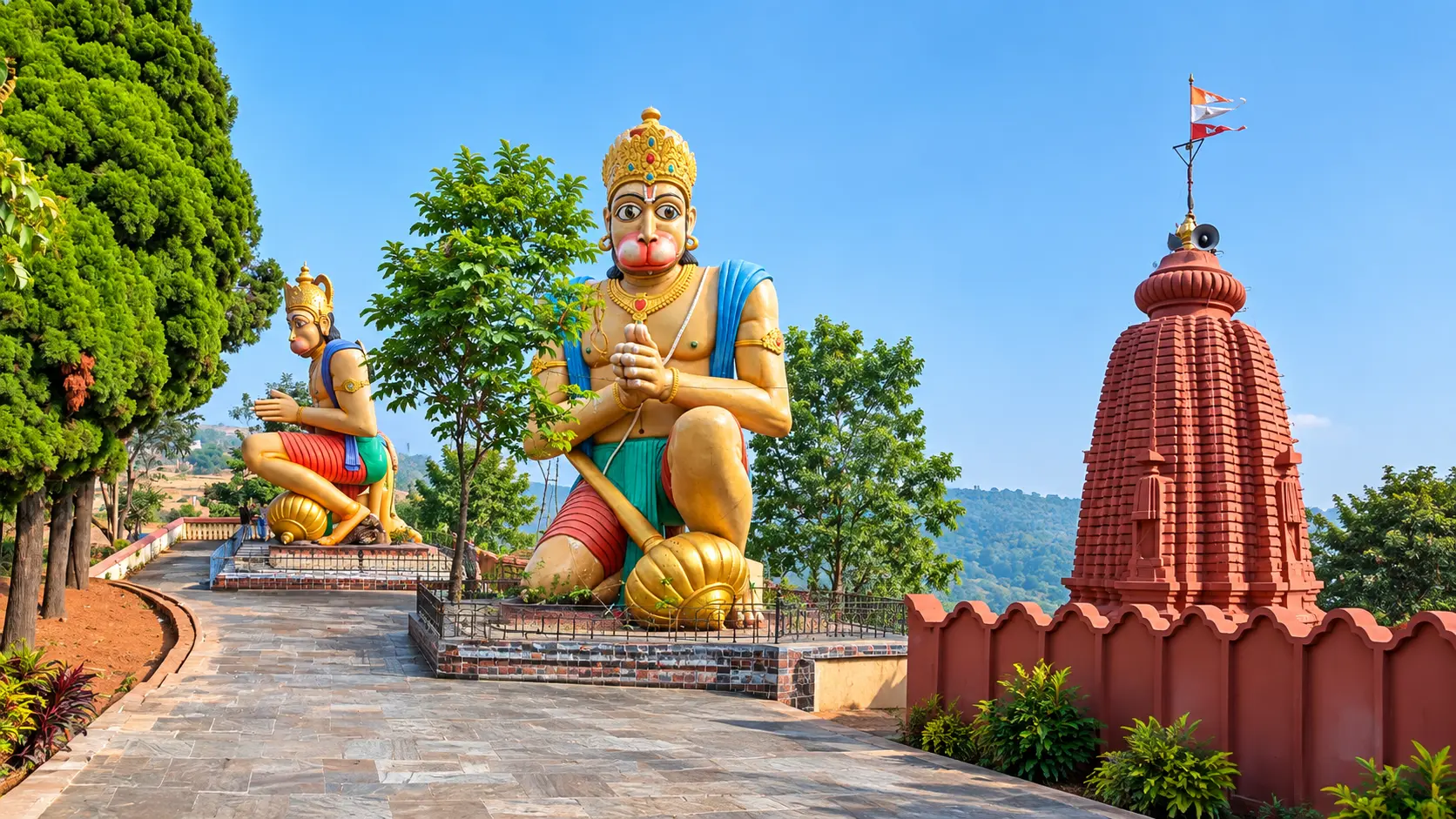
The crowning landmark of Dumuriput is its magnificent kneeling statue of Lord Hanuman, officially recorded in the Koraput District Gazetteer and state tourism records as the highest kneeling Hanuman statue in Odisha. Sculpted in an attitude of supreme humility and devotion (Anjaneya bhava), the towering figure depicts Hanuman kneeling on one knee with hands folded in reverent prayer before the sanctum of Lord Sri Ram. The statue's monumental proportions, expressive classical facial features, and elevated pedestal make it an arresting artistic and devotional presence visible from afar against the mountain skyline.
When to visitRead details
Dumuriput is an all-season destination that welcomes travellers throughout the year, but the post-monsoon and winter months - from October through March - offer the most comfortable and pleasant experience. During this period, the Koraput plateau enjoys delightfully mild daytime weather, with temperatures hovering between 19°C and 26°C accompanied by clear blue skies and refreshing highland breezes. Early mornings and late evenings can be brisk, with temperatures dropping below 12°C, making warm woollens or light sweaters advisable for dawn darshan.
Entry & permissionsRead details
Fees, visiting hours and entry rules may change. Confirm the latest details with the official operator or local authority before travelling.
Admission to the Sri Ram Temple and the monumental Hanuman statue grounds in Dumuriput is completely free for all visitors and devotees. There are no entrance tickets, mandatory photography charges, or parking fees imposed by the temple trust or local administration. Voluntary donations for temple maintenance, religious pujas, or prasad distribution may be made directly into official hundi donation collection boxes within the sanctum.
The temple complex is open daily to the public from 6:00 AM to 8:00 PM. Morning rituals, temple cleaning, and initial aarti generally take place between 6:30 AM and 7:30 AM, while the evening sandhya aarti is performed around sunset (typically 6:00 PM to 6:30 PM), creating an enchanting devotional atmosphere filled with the resonance of temple bells, conch shells, and burning camphor.
As a functional and revered Hindu shrine, visitors are expected to maintain traditional religious decorum. Footwear must be removed at the designated shoe-stand stalls located near the courtyard entrance before stepping onto the temple platform. Modest, respectful attire is required; visitors in beachwear or overly revealing clothing may be gently reminded of temple traditions. Non-commercial photography and videography of the outdoor Hanuman statue and gardens are freely permitted, but photography inside the inner sanctum sanctorum during worship is discouraged to maintain sacred sanctity.
Plan your visitRead details
Dumuriput is ideally situated along National Highway 26, the primary transportation spine connecting the key urban centres of southern Odisha. The village lies roughly 12 km southeast of Koraput town centre and just 7 km northwest of Sunabeda, making it an effortless 15- to 20-minute drive from either town along smooth, all-weather asphalt roads.
Access
Confirm the current charge and what it includes with the operator or service provider. Visitor admission, vehicles, parking, activities and accommodation can have separate charges. The short flight of steps leading into the inner sanctum is equipped with sturdy handrails.
Explore the full guide - choose a topic below.
Why visit?
The crowning landmark of Dumuriput is its magnificent kneeling statue of Lord Hanuman, officially recorded in the…Explore detailsClose details
The crowning landmark of Dumuriput is its magnificent kneeling statue of Lord Hanuman, officially recorded in the Koraput District Gazetteer and state tourism records as the highest kneeling Hanuman statue in Odisha. Sculpted in an attitude of supreme humility and devotion (Anjaneya bhava), the towering figure depicts Hanuman kneeling on one knee with hands folded in reverent prayer before the sanctum of Lord Sri Ram. The statue's monumental proportions, expressive classical facial features, and elevated pedestal make it an arresting artistic and devotional presence visible from afar against the mountain skyline.
Complementing the colossal outdoor sculpture is the serene Sri Ram Temple itself. The shrine is dedicated to the divine trio of Lord Ram, Mata Sita, and Lakshmana, whose beautifully adorned murtis inspire deep reverence. The temple is designed with traditional regional architectural motifs, featuring a spacious paved circumambulation courtyard, manicured gardens, and shaded sitting alcoves where travellers can unwind amidst cool mountain breezes.
For cultural enthusiasts, Dumuriput provides an authentic window into how classical Vaishnavite traditions have intertwined seamlessly with local indigenous culture in Koraput. During the vibrant celebration of Ram Navami in spring, the entire village is transformed into a colourful sea of pilgrims, devotional chanting, folk processions, and traditional community feasts, making it one of the most culturally vibrant places to visit in the district.
What to expect
Visiting Dumuriput is a relaxed and visually uplifting experience.Explore detailsClose details
Visiting Dumuriput is a relaxed and visually uplifting experience. Located directly adjacent to the smooth, four-lane alignment of National Highway 26, the village is easily recognized by the towering saffron and white profile of the Hanuman statue rising gracefully above the surrounding treetops. A broad entrance archway leads from the highway into a clean, well-maintained temple apron with organized parking areas for cars, motorcycles, and pilgrim buses.
Passing through the main gateway, visitors step into an open stone-paved courtyard that immediately insulates them from highway traffic. The massive kneeling Hanuman statue dominates the foreground, framed by flowering shrubs and neatly trimmed hedges. Devotees often pause at the base of the pedestal to offer prayers, light incense, and take photographs before proceeding toward the elevated temple mandap.
Inside the sanctum sanctorum, the atmosphere is quiet and meditative. Priests perform regular Vedic aarti rituals, chant stotras, and offer sanctified charanamrita and tulsi prasad to visiting pilgrims. The surrounding courtyard offers pleasant open vistas overlooking the rural hillsides, where terraced fields of millet and mustard slope gently away toward distant forest ridges. The entire visit can be comfortably enjoyed in about an hour, although many visitors choose to linger longer in the peaceful courtyard to soak in the tranquil spiritual ambiance.
Best time to visit
Dumuriput is an all-season destination that welcomes travellers throughout the year, but the post-monsoon and…Explore detailsClose details
Dumuriput is an all-season destination that welcomes travellers throughout the year, but the post-monsoon and winter months - from October through March - offer the most comfortable and pleasant experience. During this period, the Koraput plateau enjoys delightfully mild daytime weather, with temperatures hovering between 19°C and 26°C accompanied by clear blue skies and refreshing highland breezes. Early mornings and late evenings can be brisk, with temperatures dropping below 12°C, making warm woollens or light sweaters advisable for dawn darshan.
The highlight of the village's cultural calendar occurs during the Hindu month of Chaitra (typically late March or April), when the festival of Sri Ram Navami is celebrated with grand pomp and religious fervour. Over nine days of festivities, thousands of devotees gather from across Koraput, Rayagada, and neighbouring Andhra Pradesh, filling the temple grounds with devotional music, cultural dances, and vibrant fairs.
Visiting during the southwest monsoon (July to September) reveals the surrounding countryside at its lush greenest, though occasional heavy downpours may interrupt open-air courtyard walks. The hot summer months of May and June bring warm midday temperatures, but early morning and evening visits remain comfortable due to the elevation of the plateau.
How to reach
Dumuriput is ideally situated along National Highway 26, the primary transportation spine connecting the key…Explore detailsClose details
Dumuriput is ideally situated along National Highway 26, the primary transportation spine connecting the key urban centres of southern Odisha. The village lies roughly 12 km southeast of Koraput town centre and just 7 km northwest of Sunabeda, making it an effortless 15- to 20-minute drive from either town along smooth, all-weather asphalt roads.
For travellers using public transport, regular state transport (OSRTC) and private express buses plying between Koraput, Sunabeda, Similiguda, and Jeypore pass directly through Dumuriput at frequent intervals. Passengers can easily disembark at the designated Dumuriput highway stop, which sits just a short 200-metre walk from the temple complex. Local shared auto-rickshaws also run continually between the Koraput central bus terminal and Sunabeda, providing inexpensive, on-demand transport throughout the day.
For rail travellers, the nearest major railway junction is Koraput Railway Station (station code: KRPU), situated approximately 11 to 12 km away, offering express connections to Visakhapatnam, Bhubaneswar, Rourkela, and Jagdalpur. Damanjodi Railway Station (station code: DMNJ) is located roughly 18 km to the east. The nearest commercial air terminal is Visakhapatnam International Airport (VTZ) in Andhra Pradesh, located approximately 190 km to the south via the scenic Salur Ghat highway corridor, accessible in roughly 4 hours by rental car or inter-state taxi.
Entry, timings and permissions
Fees, visiting hours and entry rules may change.Explore detailsClose details
Fees, visiting hours and entry rules may change. Confirm the latest details with the official operator or local authority before travelling.
Admission to the Sri Ram Temple and the monumental Hanuman statue grounds in Dumuriput is completely free for all visitors and devotees. There are no entrance tickets, mandatory photography charges, or parking fees imposed by the temple trust or local administration. Voluntary donations for temple maintenance, religious pujas, or prasad distribution may be made directly into official hundi donation collection boxes within the sanctum.
The temple complex is open daily to the public from 6:00 AM to 8:00 PM. Morning rituals, temple cleaning, and initial aarti generally take place between 6:30 AM and 7:30 AM, while the evening sandhya aarti is performed around sunset (typically 6:00 PM to 6:30 PM), creating an enchanting devotional atmosphere filled with the resonance of temple bells, conch shells, and burning camphor.
As a functional and revered Hindu shrine, visitors are expected to maintain traditional religious decorum. Footwear must be removed at the designated shoe-stand stalls located near the courtyard entrance before stepping onto the temple platform. Modest, respectful attire is required; visitors in beachwear or overly revealing clothing may be gently reminded of temple traditions. Non-commercial photography and videography of the outdoor Hanuman statue and gardens are freely permitted, but photography inside the inner sanctum sanctorum during worship is discouraged to maintain sacred sanctity.
Nearby places to consider
Dumuriput's central location along NH-26 makes it an ideal anchor point for visiting several signature landmarks…Explore detailsClose details
Dumuriput's central location along NH-26 makes it an ideal anchor point for visiting several signature landmarks across the Koraput region:
- Sabara Srikhetra: Situated roughly 12 km away in Koraput town, this famous hilltop Jagannath Temple is celebrated for its inclusive tribal religious heritage and panoramic town vistas.
- Damanjodi: Located approximately 22 km to the southeast, home to NALCO's sprawling bauxite complex, a remarkable 14.6 km overland conveyor system, and peaceful township temples.
- Deomali: Odisha's highest peak at 1,672 metres, located approximately 45 km to the southeast via Semiliguda, offering sweeping montane grasslands and ridge hiking.
- Upper Kolab Dam: Situated roughly 26 km to the west near Koraput town, featuring a majestic hydroelectric reservoir, landscaped floral parks, and boating amenities.
In pictures
The practical bits
Before you go.
Plan ahead
A visit to Dumuriput is easily incorporated into any travel schedule across Koraput district with minimal…Explore detailsClose details
A visit to Dumuriput is easily incorporated into any travel schedule across Koraput district with minimal logistical preparation.
Access
Confirm the current charge and what it includes with the operator or service provider.Explore detailsClose details
Confirm the current charge and what it includes with the operator or service provider. Visitor admission, vehicles, parking, activities and accommodation can have separate charges. The short flight of steps leading into the inner sanctum is equipped with sturdy handrails.
Weather
The plateau weather is generally pleasant, but mid-day sunshine during summer and autumn can heat the open stone…Explore detailsClose details
The plateau weather is generally pleasant, but mid-day sunshine during summer and autumn can heat the open stone pavement of the courtyard. Visitors walking barefoot across the courtyard between 11:00 AM and 3:00 PM may find the stones hot; visiting during the early morning or late afternoon hours ensures a much cooler, more comfortable walk.
What to carry
Carry a personal water bottle, sun protection (such as sunglasses or a hat for daytime garden walks), and cash in…Explore detailsClose details
Carry a personal water bottle, sun protection (such as sunglasses or a hat for daytime garden walks), and cash in small denominations if you wish to purchase floral offerings, incense, or sacred sweets from local vendor stalls outside the gate.
Facilities
The temple complex provides clean drinking water facilities, designated shoe storage, and shaded pavilions for…Explore detailsClose details
The temple complex provides clean drinking water facilities, designated shoe storage, and shaded pavilions for resting. Outside the temple boundary along the highway, local shops offer fresh coconut water, hot tea, packaged snacks, and religious souvenirs. For comprehensive dining and lodging, travellers can utilize the extensive hotels, multi-cuisine restaurants, and banks available in nearby Sunabeda (7 km) or Koraput town (12 km).
Temple etiquette and traditions
Walk around the shrine and the Hanuman pedestal in a traditional clockwise (pradakshina) direction.Explore detailsClose details
Walk around the shrine and the Hanuman pedestal in a traditional clockwise (pradakshina) direction. Maintain a peaceful, reverent tone inside the courtyard, and ensure mobile phones are kept on silent mode during prayer sessions. Keep the temple gardens clean by disposing of flower leaves and prasad containers in the designated trash bins provided on site.
A few things you might wonder
Common questions about visiting Dumuriput. Fees, visiting hours and ceremonies are researched details that may change; confirm current arrangements with the operator before travelling.
Where is Dumuriput located?
What is Dumuriput famous for?
Which deities are enshrined in the Sri Ram Temple at Dumuriput?
Is there an admission fee to enter the Sri Ram Temple?
What are the opening and closing hours of the temple?
What is the most popular festival celebrated in Dumuriput?
How can travellers reach Dumuriput from Koraput or Sunabeda?
What facilities are available for visitors at Dumuriput?
Explore more in Koraput
Discover other destinations around this hub


More Hubs in Odisha
Continue exploring other travel hubs in this state
Planning a trip to Koraput?