Dhankar Monastery
Discover Dhankar Monastery in Spiti Valley. Comprehensive guide to the 1,000-year-old cliffside fort, Vairochana statue, Dhankar Lake hike, timings, and access.
Location
Spiti Valley, Himachal Pradesh
A closer look
Your visit, at a glance.
Spiti Valley, Himachal Pradesh
GET TO KNOW THE PLACE
Perched with heart-stopping audacity atop a razor-thin, wind-carved ridge of crumbly sedimentary clay and conglomerate pinnacles at a breathtaking altitude of 3,894 meters…
The story of Dhankar Monastery
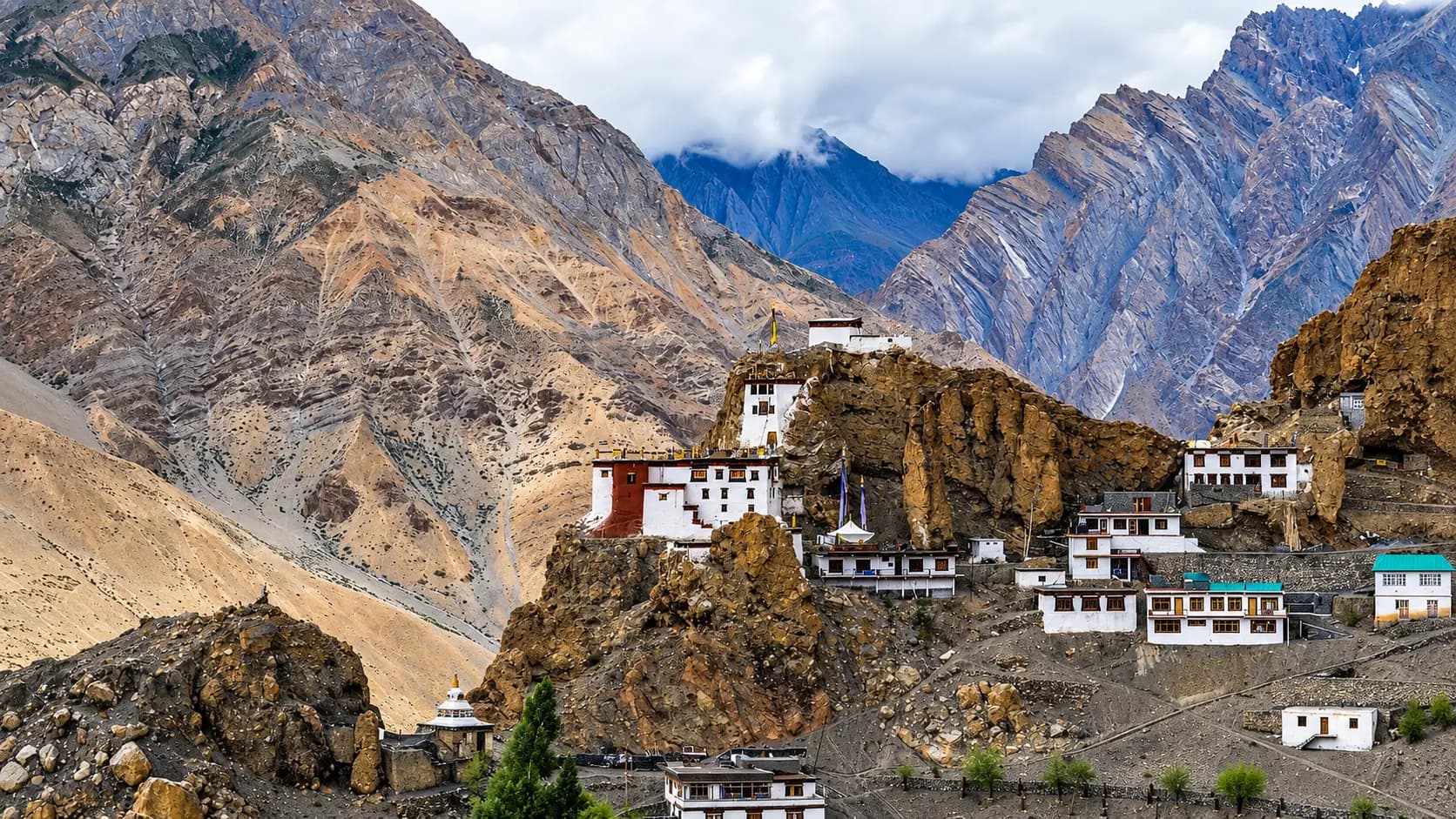
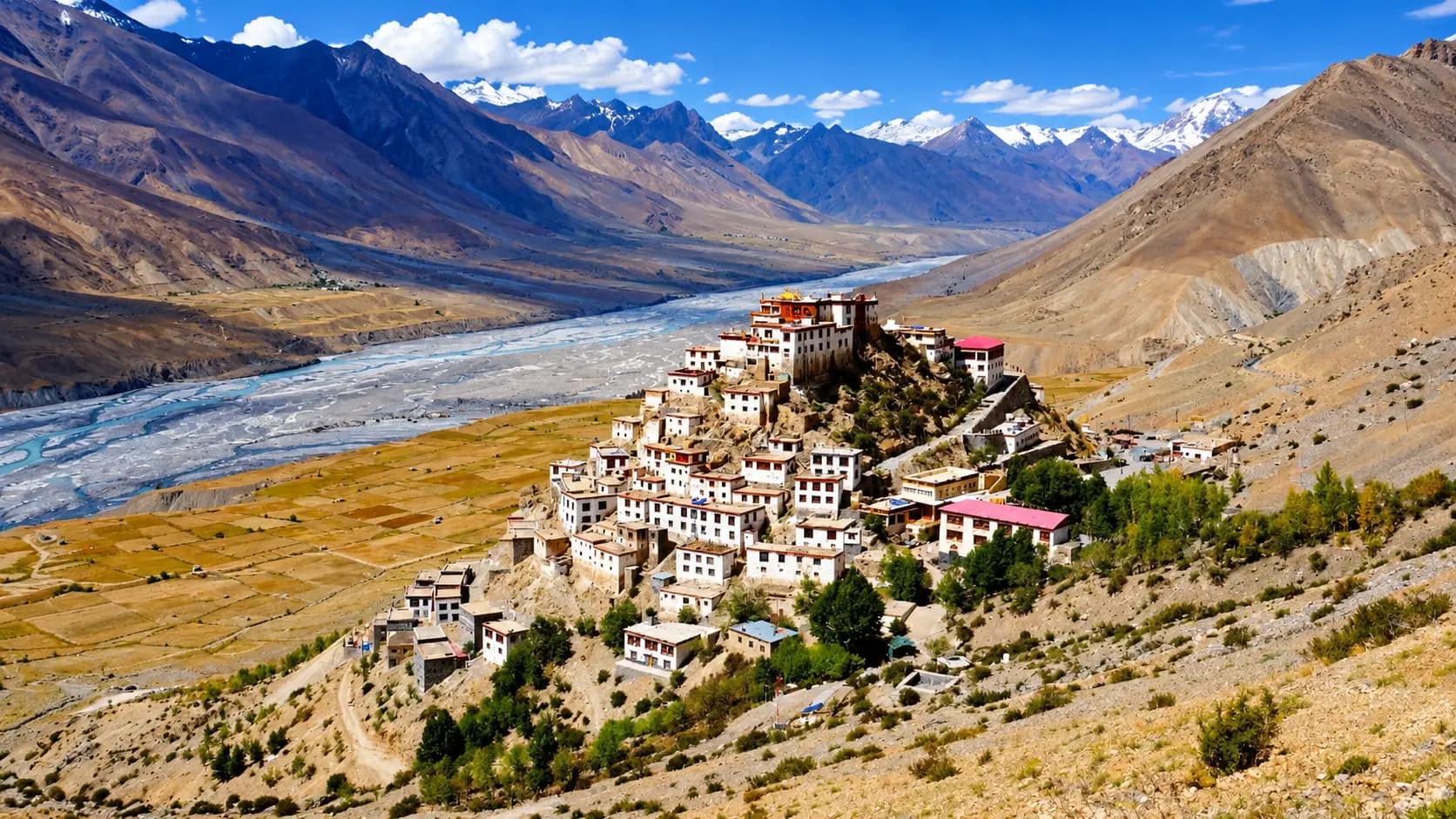
Perched with heart-stopping audacity atop a razor-thin, wind-carved ridge of crumbly sedimentary clay and conglomerate pinnacles at a breathtaking altitude of 3,894 meters (12,774 feet) above mean sea level, Dhankar Monastery (historically rendered as Dhangkar Gompa) is one of the most visually staggering, historically revered, and architecturally daring monastic citadels in the entire Himalayan world. Situated in the Spiti Tehsil of Himachal Pradesh’s high-altitude Lahaul and Spiti District, approximately thirty-four kilometers southeast of the sub-divisional capital of Kaza, Dhankar occupies a natural eagles-nest redoubt that seems to defy the very laws of gravity.
The name Dhankar carries direct, dramatic etymological meaning in the local Western Tibetan (Bhoti) language: Dhang signifies a "cliff" or "precipice," while Kar or Khar translates to a "palace" or "fortress," creating the literal definition: "Fortress on a Cliff." During the seventeenth century, this impregnable rock outcrop served as the supreme royal capital and fortress-residence of the hereditary rulers of the Spiti kingdom, the Nonos of Spiti. Perched 300 vertical meters above the valley floor, the ancient complex served a dual function: a sacred spiritual sanctuary for the lamas of the Gelugpa (Yellow Hat) order of Tibetan Buddhism, and a military defensive stronghold where local villagers could retreat during external invasions.
From its windswept wooden balconies, visitors gaze down upon one of the grandest hydrological spectacles in the Himalayas: the dramatic, braided confluence where the turquoise waters of the Pin River merge into the wide gravel floodplains of the Spiti River. Crowned by centuries-old mud-and-timber meditation chambers, world-renowned clay statues of the Meditating Buddha Vairochana, and the nearby sacred high-altitude alpine bowl of Dhankar Lake (4,140 m), Dhankar Monastery is a priceless, living monument of trans-Himalayan Buddhist civilization.
Start here. Open a tile for the full details.
Why goRead details
For cultural historians, spiritual seekers, architecture enthusiasts, and landscape photographers, Dhankar Monastery represents a pinnacle of Himalayan travel. It combines an extraordinary cliffside setting, ancient royal history, priceless Buddhist sacred art, and urgent global conservation importance.
When to visitRead details
Due to its extreme high-altitude cold-desert environment, Dhankar Monastery experiences stark seasonal contrasts.
Entry & permissionsRead details
Fees, visiting hours and entry rules may change. Confirm the latest details with the official operator or local authority before travelling.
Understanding monastery entry protocols, voluntary conservation fees, and sacred hall etiquette ensures an effortless and respectful visit.
Admission Charges and Public Access
- Village & Monastery Complex Entry: Completely Free. There is no entry ticket, gate toll, or municipal tax required to enter Dhankar village, explore the outer ramparts, or walk the trail to Dhankar Lake.
- Voluntary Conservation Donation: Inside the ancient prayer hall, a nominal voluntary donation of ₹25 to ₹50 is requested by the resident lamas. Because Dhankar is an endangered monument undergoing delicate structural conservation, visitors are encouraged to contribute generously to the monastery preservation fund.
Operating Hours
Facility / Section | Operating Days | Operating Hours | Operational Notes |
|---|---|---|---|
Dhankar Village & Viewpoints | All 7 Days (Mon to Sun) | Daylight visits recommended; confirm any after-dark access | Scenic overlooks open continuously during daylight |
Ancient Cliff Gompa (Old Dukhang) | All 7 Days | 06:30 to 17:00 | Closed briefly 12:00 - 14:00 during monk lunch/prayers |
New Dhankar Monastery Complex | All 7 Days | 07:00 to 18:00 | Monastic school, main assembly hall, and offices |
Dhankar Lake Hiking Trail | All 7 Days (Summer/Autumn) | Sunrise to Sunset | Day hike only; night camping strictly prohibited |
Permissions, Inner Line Permits, and Filming Regulations
- Inner Line Permit (ILP) Regulations: Indian nationals require no permits. Foreign nationals do not require an Inner Line Permit (ILP) to visit Dhankar Monastery when traveling between Manali, Kaza, and Dhankar. An ILP is required only if you continue traveling further east past Tabo and Sumdo toward Kinnaur (at the Khab/Akpa border checkpost).
- Interior Photography Restrictions: Handheld smartphone and personal digital photography is completely permitted and free across the exterior cliffside terraces, village, and viewpoints. However, photography inside the ancient prayer hall containing the sacred Vairochana statue and 16th-century frescoes is strictly restricted out of spiritual respect and to prevent irreversible flash-light damage to antique mineral pigments.
- Drone Operations: Flying unmanned aerial vehicles (drones) over Dhankar Monastery and the village is strictly prohibited without formal written clearance from the Sub-Divisional Magistrate (SDM), Kaza. Unauthorized drones disturb nesting cliff raptors and violate administrative security regulations.
Plan your visitRead details
Dhankar Monastery is situated in the central Spiti Valley, thirty-four kilometers southeast of Kaza along the main highway connecting Kaza with Tabo.
Altitude Hydration & Pacing
At an altitude of 3,894 meters, physical exertion quickly triggers shortness of breath. Drink at least 3 liters of water throughout the day, carry a filled water bottle on your walk, and avoid rushing up the stone stairs. Take slow, deliberate steps and pause on the viewing balconies to catch your breath while absorbing the panoramic river vistas.
Explore the full guide - choose a topic below.
Why visit?
For cultural historians, spiritual seekers, architecture enthusiasts, and landscape photographers, Dhankar…Explore detailsClose details
For cultural historians, spiritual seekers, architecture enthusiasts, and landscape photographers, Dhankar Monastery represents a pinnacle of Himalayan travel. It combines an extraordinary cliffside setting, ancient royal history, priceless Buddhist sacred art, and urgent global conservation importance.
1. One of the World’s Most Dramatically Sited Monasteries
Few structures on earth evoke such profound awe as the ancient Gompa of Dhankar:
- Gravity-Defying Architecture: The monastery was constructed directly into and over sharp, erosion-carved clay spires and limestone conglomerate needles. Its whitewashed mud-brick walls, timber-framed windows, and red prayer rooms appear as natural organic extensions of the living rock, clinging to vertical cliffs that plunge hundreds of meters down into the abyss.
- The Confluence Panorama: Looking southward from the highest battlements of the ancient fort reveals a jaw-dropping trans-Himalayan vista. Far below in the wide, sunlit canyon, the crystalline, snow-fed Pin River cascades out of the rugged gorge of Pin Valley National Park to join the silty, braided currents of the Spiti River. Beyond the river, barren ochre mountains rise toward the glaciated 6,000-meter pyramidal massifs of the Manirang mountain range.
2. The Ancient Royal Capital of the Kingdom of Spiti
To understand Dhankar is to step into the feudal history of Western Tibet:
- The Seat of the Nonos: Unlike monastic centers like Key or Tabo that were built solely for religious meditation, Dhankar was the fortified administrative citadel of the Kingdom of Spiti. The local rulers, known as the Nonos of Spiti, governed their trans-Himalayan realm from the highest towers of this rock, collecting taxes in grain, wool, and butter.
- Strategic Defensive Fortress: The sheer cliff topography made Dhankar virtually impregnable. During historical raids by invading Dogra armies, Ladakhi forces, or Kullvi raiders, the entire population of Dhankar village ascended to the upper citadel. Monks and warriors hauled up ladders, stockpiled dried meat and barley (tsampa), and rolled boulders down the narrow approach gully to repel attackers.
3. Sacred Buddhist Art & The Four-Faced Vairochana
The spiritual treasury of the ancient Gompa dates back to the era of the great translator Lotsawa Rinchen Zangpo (10th - 11th century):
- The Vairochana Masterpiece: The most sacred and culturally renowned relic within the ancient prayer hall (dukhang) is a monumental life-sized clay sculpture of Dhyani Buddha Vairochana (the Primordial Buddha of Illuminating Wisdom). Uniquely, the deity is sculpted as Chaturmukha - four identical, serene, and radiant manifestations seated back-to-back, facing the four cardinal directions to symbolize the omnipresence of Buddhist wisdom radiating throughout the cosmos.
- Ancient Frescoes & Thangkas: The dimly lit, butter-lamp-scented chambers are adorned with 16th- and 17th-century wall murals painted with natural mineral pigments (lapis lazuli, malachite, and cinnabar). The paintings depict the Medicine Buddha, Avalokiteshvara with a thousand arms, fierce wrathful protectors (dharmapalas), and the wheel of cyclic existence (Bhavachakra).
4. World Monuments Watch: A Precious, Endangered Wonder
The extreme cliff setting that once protected Dhankar from medieval armies now threatens its physical survival:
- The 2006 Watch List: In 2006, the World Monuments Fund (WMF) officially designated Dhankar Monastery on the prestigious World Monuments Watch List of the 100 Most Endangered Sites in the world. The soft sedimentary clay pinnacles supporting the historic foundations are subject to wind erosion, flash rains, and seismic tremors.
- Living Conservation in Action: International structural engineers and local Spitian conservationists have collaborated to underpin fragile foundations, install wooden tension ties, and apply traditional mud-straw plaster to preserve the historic complex. Visiting Dhankar offers a profound appreciation for the fragile, living cultural heritage of the high Himalayas.
What to expect
Visiting Dhankar Monastery is an atmospheric, physically demanding, and culturally solemn experience.Explore detailsClose details
Visiting Dhankar Monastery is an atmospheric, physically demanding, and culturally solemn experience. Understanding the layout of the old and new monasteries, the village topography, and local religious etiquette will ensure a meaningful visit.
1. Arrival in Dhankar Village
Approaching from the highway at Sichling:
- The Village Perch: After climbing eight kilometers of steep asphalt switchbacks, the road levels out at the threshold of Dhankar Village (elevation ~3,850 m). Traditional whitewashed, flat-roofed mud-brick houses cling to the steep terraced slope, surrounded by tiny, vibrant green patches of high-altitude barley and green peas.
- The New Monastery: At the lower entrance of the village stands the modern Dhankar Monastery complex, inaugurated by His Holiness the 14th Dalai Lama. This modern complex houses the monastic school, the living quarters for younger monk students, and the primary vehicle parking grounds.
2. Navigating the Ancient Cliffside Gompa
To visit the historic 1,000-year-old cliffside fort:
- The Pedestrian Ascent: From the village square, visitors follow a narrow, unpaved footpath of packed earth and stone switchbacks that climbs roughly 100 vertical meters toward the jagged rocky ridge.
- Tight, Historic Passageways: The interior of the old monastery is a labyrinth of low-ceilinged stone corridors, steep wooden ladder-stairs, and rustic timber thresholds smoothed by centuries of monk footfalls. Tall visitors must watch their heads, and everyone should tread gently to avoid straining fragile wooden floorboards.
- The Rooftop Balcony: Stepping out onto the open, flat clay roof of the ancient prayer hall brings you to the famous viewing parapet. Flanked by fluttering Buddhist prayer flags and juniper smoke braziers, the drop beneath your feet is dizzying, offering unmatched views of the Spiti-Pin river confluence.
3. The Hike to Sacred Dhankar Lake (Dhankar Tso)
For travelers with good physical stamina and acclimatization, the hike to Dhankar Lake is an unmissable adventure:
- The Trailhead: A clearly marked, steep dirt trail ascends directly behind the upper village.
- Distance & Elevation Gain: The hike covers approximately 2.5 kilometers each way, climbing from 3,894 meters to an altitude of 4,140 meters (13,580 feet).
- Duration & Terrain: Takes roughly 1 to 1.5 hours of steady uphill climbing over loose gravel, scree, and dry alpine soil.
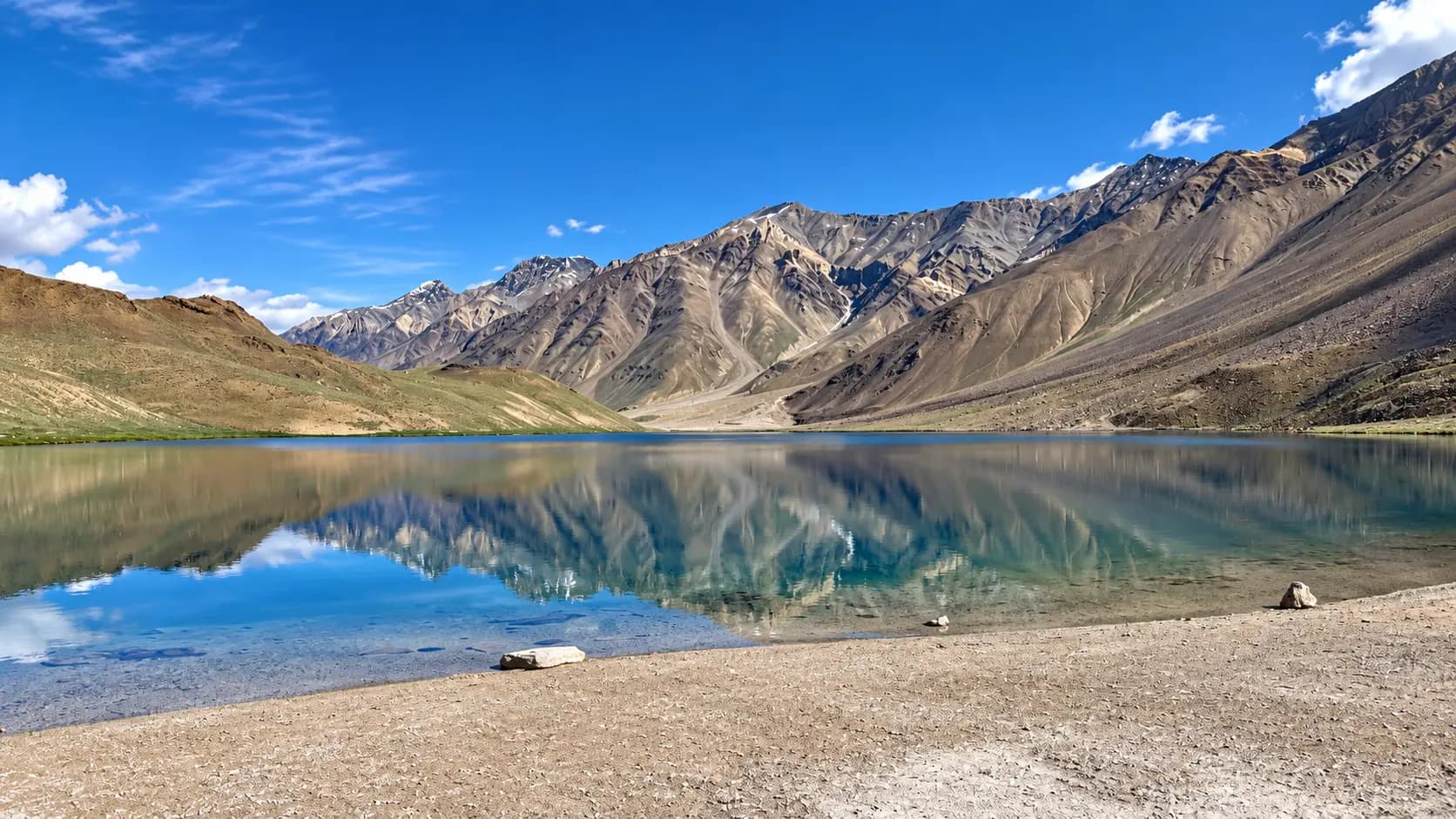
- The Sacred Mountain Tarn: Reaching the top brings you out onto a hidden, tranquil alpine basin cradling the crystal-clear waters of Dhankar Lake. Surrounded by prayer flags, the lake reflects the snow-covered pyramids of the Manirang Range. It is a deeply peaceful spot for meditation, photography, and silence. Remember that the lake is a sacred spiritual site; touching the water or swimming is strictly forbidden.
4. Altitude Realities at 3,894 Meters
Dhankar sits nearly 4,000 meters above sea level, where atmospheric oxygen is roughly 35% lower than at sea level:
- Move Slowly: Climbing the steep stone stairs between the village and the upper monastery will quickly induce breathlessness if you rush. Walk at a slow, meditative pace, take frequent pauses to admire the scenery, and stay hydrated with warm water or herbal tea.
Best time to visit
Due to its extreme high-altitude cold-desert environment, Dhankar Monastery experiences stark seasonal contrasts.Explore detailsClose details
Due to its extreme high-altitude cold-desert environment, Dhankar Monastery experiences stark seasonal contrasts.
Season / Period | Daytime Temp | Nighttime Temp | Monastic Highlights & Travel Conditions |
|---|---|---|---|
Spring (May to Early June) | 10°C to 18°C | -2°C to 4°C | Spiti Awakening: High passes begin opening; clear sunny skies; crisp mountain air; prayer halls open for summer season; uncrowded village. |
Summer (Late June to August) | 16°C to 24°C | 6°C to 11°C | Peak Travel Season: Warmest sunny weather; barley terraces turn brilliant emerald-green; Dhankar Lake trek accessible and pleasant; local homestays buzzing. |
Autumn (Sept to October) | 8°C to 18°C | -4°C to 3°C | Prime Clarity & Golden Fields: Spotless azure skies; barley harvest turns slopes golden-amber; razor-sharp mountain visibility; crisp cool nights. |
Early Winter (November) | 2°C to 10°C | -10°C to -2°C | Winter Chill: Bitter howling winds; freezing sub-zero nights; tourist facilities begin closing; monks engage in winter monastic retreats. |
Deep Winter (Dec to April) | -15°C to 2°C | -25°C to -10°C | Extreme Arctic Solitude: Village draped in heavy snow; monastery accessible only via the Shimla-Kinnaur road; extreme cold; authentic winter Spiti life. |
The Summer Season (June to August)
Summer is the most comfortable and vibrant time to visit Dhankar. Days are delightfully warm and sunny, with temperatures around 20°C to 22°C. The terraced fields surrounding the village are carpeted in lush green barley, the Pin River rushes in full glacial volume, and the hiking trail up to Dhankar Lake is clear of snow and adorned with high-altitude alpine flora.
The Golden Autumn Window (September to October)
For photographers and cultural purists, autumn is the quintessential season. The skies are a deep, flawless cobalt blue, completely free of any haze. The terraced barley fields turn brilliant shades of gold and amber as village families gather together to harvest and thresh grain on flat rooftops. Daytime temperatures are delightfully crisp and invigorating, offering ideal conditions for the uphill trek to Dhankar Lake.
How to reach
Dhankar Monastery is situated in the central Spiti Valley, thirty-four kilometers southeast of Kaza along the…Explore detailsClose details
Dhankar Monastery is situated in the central Spiti Valley, thirty-four kilometers southeast of Kaza along the main highway connecting Kaza with Tabo.
Route from Kaza via Sichling
- The Route: Depart Kaza heading southeast along National Highway 505 toward Tabo. Drive along the wide, scenic gravel bed of the Spiti River for 26 kilometers until reaching the junction village of Sichling. At Sichling, turn left off the highway onto the dedicated Dhankar branch road, winding steeply uphill for eight kilometers through arid clay switchbacks to Dhankar village.
- Driving Distance & Duration: Total distance from Kaza is 34 kilometers, taking approximately 1 to 1.5 hours by car or taxi.
- Road Conditions: The highway from Kaza to Sichling is paved and well-maintained. The final 8-kilometer branch road to Dhankar is an asphalt mountain road with steep gradients, tight hairpin turns, and protective stone parapets. Standard hatchbacks, sedans, and SUVs can easily navigate the road during summer and autumn.
Route from Tabo (Eastern Approach)
- The Route: If traveling westward into Spiti from Tabo or Kinnaur, drive northwest along NH-505 for approximately 16 kilometers to Sichling, then ascend the 8-kilometer branch road to Dhankar.
- Distance & Driving Time: Total distance from Tabo is 24 kilometers, taking about 45 minutes to 1 hour.
By Public HRTC Bus & Shared Taxi
Budget backpackers can utilize Himachal’s dependable rural transit network:
- Public HRTC Bus: Board the daily morning HRTC bus running between Kaza and Tabo / Reckong Peo. Confirm the current charge and what it includes with the operator or service provider. Visitor admission, vehicles, parking, activities and accommodation can have separate charges.
- From Sichling to Dhankar: Confirm the current charge and what it includes with the operator or service provider. Visitor admission, vehicles, parking, activities and accommodation can have separate charges.
Connectivity to Airports and Major Railheads
- Nearest Airport (Bhuntar - KUU): Located approximately 240 kilometers west via Kunzum Pass and Atal Tunnel (summer only, approx. 9 - 10 hours by road).
- Nearest Major Broad-Gauge Railhead (Kalka - KLK / Chandigarh - CDG): Located approximately 440 to 460 kilometers southwest via the all-weather National Highway 5 through Shimla, Rampur, Reckong Peo, and Tabo (approx. 16 to 18 hours across a 2-day driving journey).
Entry, timings and permissions
Fees, visiting hours and entry rules may change.Explore detailsClose details
Fees, visiting hours and entry rules may change. Confirm the latest details with the official operator or local authority before travelling.
Understanding monastery entry protocols, voluntary conservation fees, and sacred hall etiquette ensures an effortless and respectful visit.
Admission Charges and Public Access
- Village & Monastery Complex Entry: Completely Free. There is no entry ticket, gate toll, or municipal tax required to enter Dhankar village, explore the outer ramparts, or walk the trail to Dhankar Lake.
- Voluntary Conservation Donation: Inside the ancient prayer hall, a nominal voluntary donation of ₹25 to ₹50 is requested by the resident lamas. Because Dhankar is an endangered monument undergoing delicate structural conservation, visitors are encouraged to contribute generously to the monastery preservation fund.
Operating Hours
Facility / Section | Operating Days | Operating Hours | Operational Notes |
|---|---|---|---|
Dhankar Village & Viewpoints | All 7 Days (Mon to Sun) | Daylight visits recommended; confirm any after-dark access | Scenic overlooks open continuously during daylight |
Ancient Cliff Gompa (Old Dukhang) | All 7 Days | 06:30 to 17:00 | Closed briefly 12:00 - 14:00 during monk lunch/prayers |
New Dhankar Monastery Complex | All 7 Days | 07:00 to 18:00 | Monastic school, main assembly hall, and offices |
Dhankar Lake Hiking Trail | All 7 Days (Summer/Autumn) | Sunrise to Sunset | Day hike only; night camping strictly prohibited |
Permissions, Inner Line Permits, and Filming Regulations
- Inner Line Permit (ILP) Regulations: Indian nationals require no permits. Foreign nationals do not require an Inner Line Permit (ILP) to visit Dhankar Monastery when traveling between Manali, Kaza, and Dhankar. An ILP is required only if you continue traveling further east past Tabo and Sumdo toward Kinnaur (at the Khab/Akpa border checkpost).
- Interior Photography Restrictions: Handheld smartphone and personal digital photography is completely permitted and free across the exterior cliffside terraces, village, and viewpoints. However, photography inside the ancient prayer hall containing the sacred Vairochana statue and 16th-century frescoes is strictly restricted out of spiritual respect and to prevent irreversible flash-light damage to antique mineral pigments.
- Drone Operations: Flying unmanned aerial vehicles (drones) over Dhankar Monastery and the village is strictly prohibited without formal written clearance from the Sub-Divisional Magistrate (SDM), Kaza. Unauthorized drones disturb nesting cliff raptors and violate administrative security regulations.
Nearby places to consider
Dhankar Monastery is strategically positioned in the lower-central Spiti Valley, placing you within easy reach of…Explore detailsClose details
Dhankar Monastery is strategically positioned in the lower-central Spiti Valley, placing you within easy reach of several of the region’s greatest cultural, natural, and spiritual treasures:
1. Dhankar Lake / Dhankar Tso (Approx. 2.5 km Uphill Hike)
Perched at an elevation of 4,140 meters amidst a hidden mountain amphitheater above the village, this sacred, crystal-clear glacial lake reflects the snow peaks of the Manirang massif. A rewarding 1.5-hour uphill trek through dry alpine pastures brings you to its serene, prayer-flag-strewn shores.
2. Tabo Monastery (Approx. 24 km Southeast via NH-505)
Founded in 996 CE by the legendary Buddhist master Lotsawa Rinchen Zangpo, Tabo is a UNESCO World Heritage Tentative site universally celebrated as the "Ajanta of the Himalayas." Its ancient mud-brick complex houses nine temples preserving priceless, museum-grade 10th-century stucco sculptures, life-sized bodhisattvas, and exquisite Indian-Tibetan murals.
3. Pin Valley National Park & Kungri Monastery (Approx. 20 km Southwest via Attargo)
Branching south from the highway at Attargo bridge, the stunning Pin Valley is a protected national park renowned for its dramatic red and purple geological formations, wild herds of Himalayan ibex, and the endangered snow leopard. In the valley stands Kungri Monastery, Spiti’s premier monastery belonging to the ancient Nyingmapa (Red Hat) order of Tibetan Buddhism, founded in the 14th century.
4. Lhalung Monastery / Serkhang Temple (Approx. 12 km Northeast via Lingti Valley)
Tucked away in the remote Lingti side valley, Lhalung Monastery is an exquisite hidden gem built during the reign of Rinchen Zangpo. Its legendary Serkhang (Golden Temple) features fifty-one intricately carved and painted willow-wood deities leaping from the walls in dazzling, preserved medieval colors.
5. Kaza, Key Monastery & Kibber (Approx. 34 to 50 km Northwest)
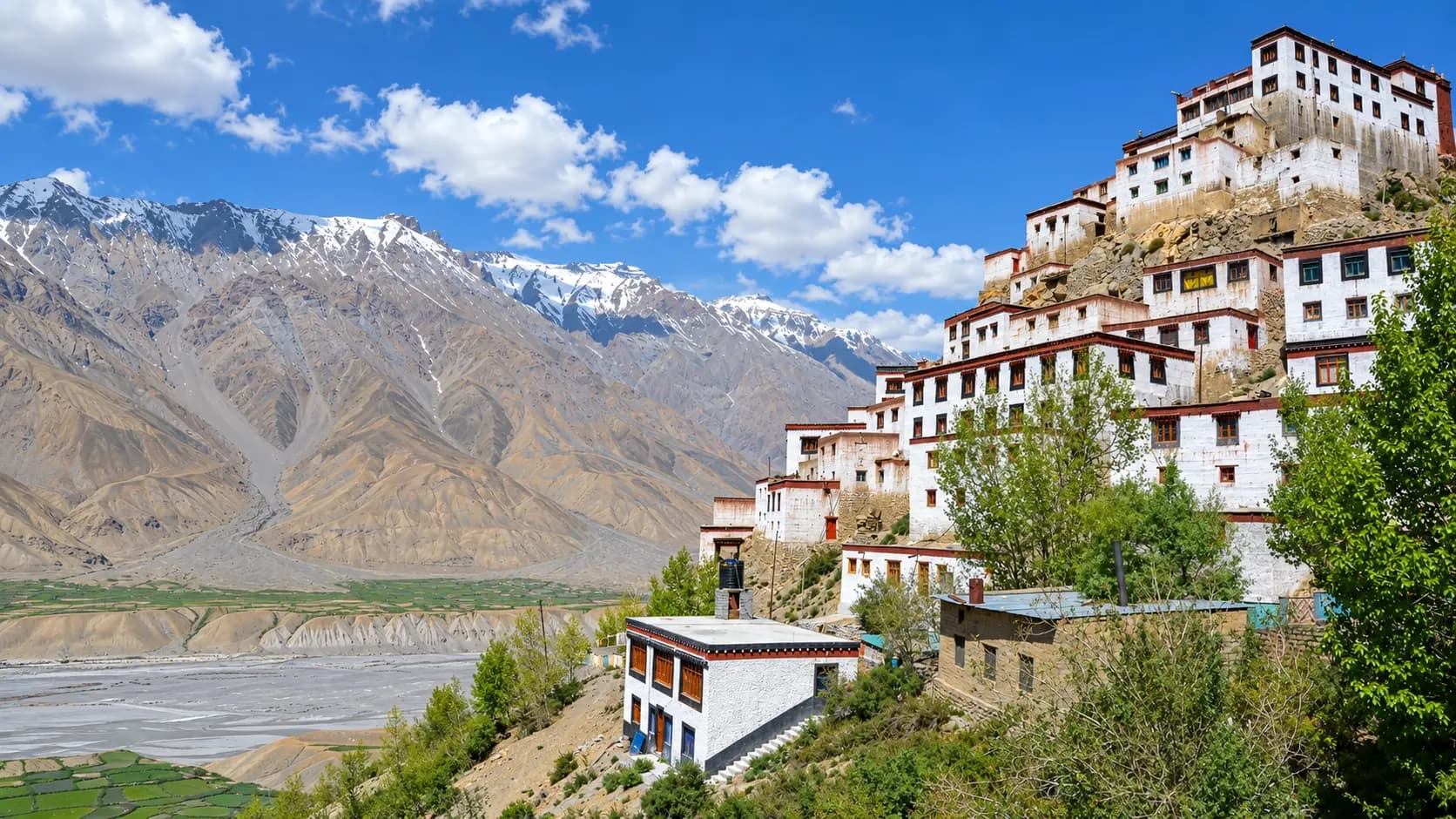
Spiti’s administrative and travel hub. Visit the iconic, multi-tiered white fortress-monastery of Key Gompa (at 4,166 m), the fossil village of Langza, the world’s highest operational post office at Hikkim (4,400 m), and the high-altitude snow leopard sanctuary of Kibber (4,270 m).
In pictures
The practical bits
Before you go.
Plan ahead
To make your trip to Dhankar Monastery spiritually rewarding, physically safe, and culturally respectful, review…Explore detailsClose details
To make your trip to Dhankar Monastery spiritually rewarding, physically safe, and culturally respectful, review these four mandatory preparation blocks:
Sturdy Footwear for Steep Clay Paths
Wear broken-in hiking boots or trail sneakers with aggressive rubber tread.Explore detailsClose details
Wear broken-in hiking boots or trail sneakers with aggressive rubber tread. The pedestrian path climbing to the old monastery is unpaved, steep, and covered in loose gravel. Inside the ancient gompa, the wooden ladders and steep stairs require secure footing. If undertaking the 2.5-kilometer hike up to Dhankar Lake, ankle-supportive boots are absolutely mandatory to navigate the rocky scree slopes safely.
Altitude Hydration & Pacing
At an altitude of 3,894 meters, physical exertion quickly triggers shortness of breath.Explore detailsClose details
At an altitude of 3,894 meters, physical exertion quickly triggers shortness of breath. Drink at least 3 liters of water throughout the day, carry a filled water bottle on your walk, and avoid rushing up the stone stairs. Take slow, deliberate steps and pause on the viewing balconies to catch your breath while absorbing the panoramic river vistas.
Modest Monastic Dress & Sanctuary Etiquette
Dhankar is an active sacred sanctuary of Tibetan Buddhism.Explore detailsClose details
Dhankar is an active sacred sanctuary of Tibetan Buddhism. Dress modestly with shoulders, chest, and knees fully covered. Remove shoes and hats before entering the sacred prayer halls. Always walk in a clockwise direction (pradakshina or kora) around Buddhist stupas, mani stone walls, and inside temple shrines. Never touch ancient clay statues, murals, or sacred ritual instruments without explicit permission from a resident lama.
Combine Dhankar with Pin Valley or Tabo
Maximize your travel itinerary by pairing Dhankar with neighboring Spitian cultural highlights.Explore detailsClose details
Maximize your travel itinerary by pairing Dhankar with neighboring Spitian cultural highlights. Visit the ancient 1,000-year-old Tabo Monastery (the "Ajanta of the Himalayas") in the morning, ascend to Dhankar Monastery for mid-day exploration and lunch overlooking the river confluence, and spend your afternoon driving into the dramatic wilderness of Pin Valley National Park via the bridge at Attargo.
A few things you might wonder
Common questions about visiting Dhankar Monastery. Fees, visiting hours and ceremonies are researched details that may change; confirm current arrangements with the operator before travelling.
What is the elevation of Dhankar Monastery, and where is it located?
What is the meaning of the name 'Dhankar'?
Why was Dhankar Monastery listed as an endangered site by the World Monuments Fund?
What is the historic four-faced Vairochana statue at Dhankar?
How difficult is the hike to Dhankar Lake, and how long does it take?
Is there an entry fee to visit Dhankar Monastery?
Explore more in Spiti Valley
Discover other destinations around this hub
More Hubs in Himachal Pradesh
Continue exploring other travel hubs in this state
Planning a trip to Spiti Valley?