Kedarnath Temple
Comprehensive visitor guide to Shri Kedarnath Temple in Rudraprayag, Uttarakhand. Explore Jyotirlinga history, 16 km Gaurikund trek, helicopter booking & darshan.
Location
Char Dham Kedarnath, Uttarakhand
A closer look
Your visit, at a glance.
Char Dham Kedarnath, Uttarakhand
GET TO KNOW THE PLACE
Perched at a breath-taking altitude of 3,584 metres (11,759 feet) above sea level in the high glaciated heart of Rudraprayag District, Uttarakhand, Shri Kedarnath Temple stands…
The story of Kedarnath Temple
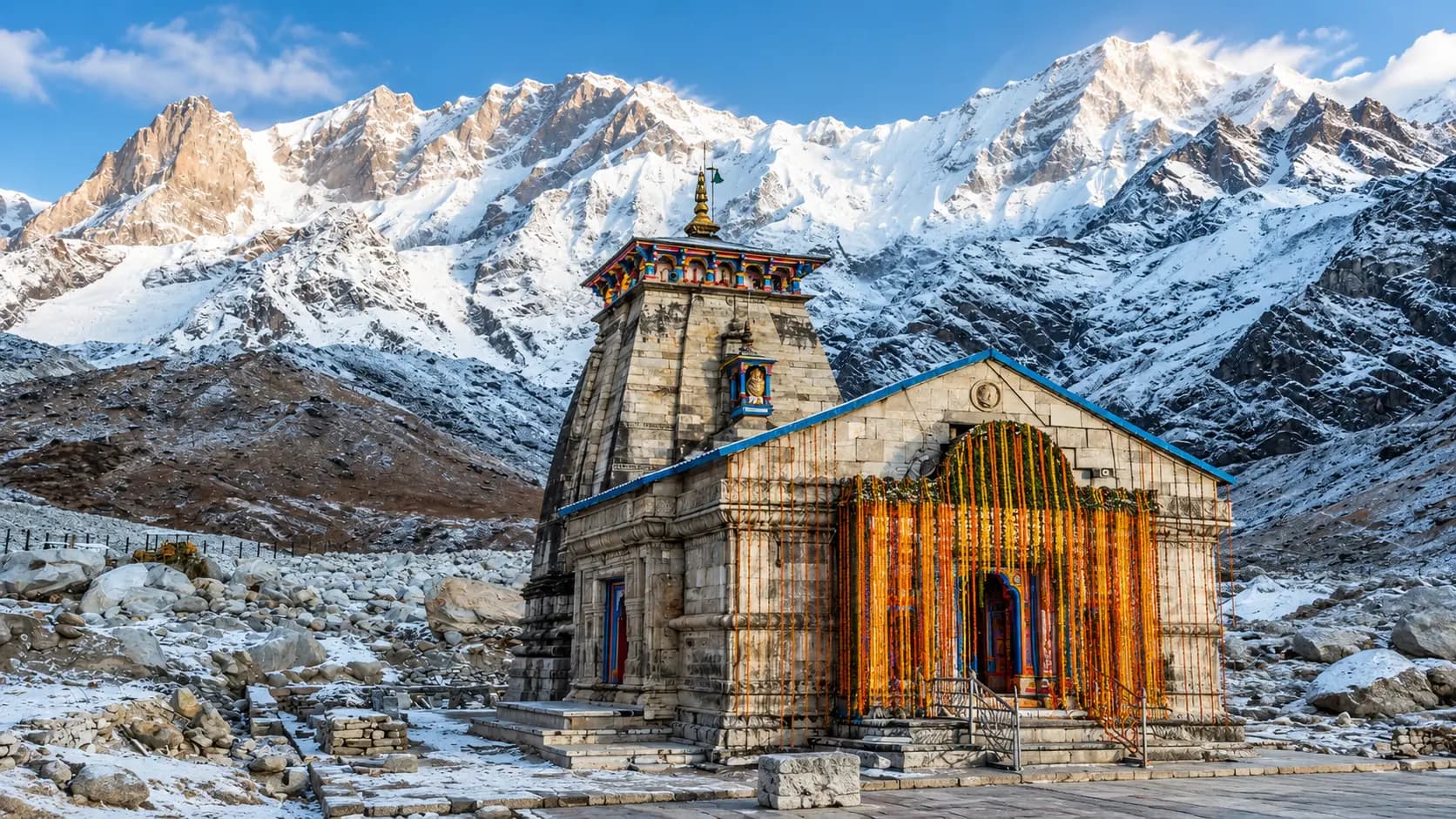
Perched at a breath-taking altitude of 3,584 metres (11,759 feet) above sea level in the high glaciated heart of Rudraprayag District, Uttarakhand, Shri Kedarnath Temple stands as one of the most venerable, remote, and awe-inspiring pilgrimage sanctuaries in the Hindu world. Holding supreme preeminence as the most elevated and rugged of the twelve sacred Jyotirlingas of Lord Shiva, Kedarnath also serves as the supreme crown jewel of Uttarakhand's Chhota Char Dham yatra and the premier shrine (Prathama Kedar) among the sacred Panch Kedar circuit. Cradled within a dramatic, bowl-shaped glacial amphitheater along the foaming headwaters of the sacred Mandakini River, the ancient stone temple stands framed directly behind by the colossal, ice-encrusted pyramid of Mount Kedarnath (6,940 m / 22,769 ft) and the soaring ramparts of Kedar Dome (6,831 m).
The spiritual heritage of Kedarnath is deeply anchored in the epic Mahabharata. Following the catastrophic Kurukshetra War, the victorious Pandava brothers sought the blessings of Lord Shiva to atone for the grave sins of fratricide (gotra-vadha) and slaying learned elders. Shiva, unwilling to grant easy forgiveness, fled to the high Himalayas and assumed the disguise of a bull grazing among cattle in the high alpine meadows of the Mandakini valley. When the mighty Pandava warrior Bhima recognized the divine beast and attempted to restrain him by straddling the mountain ridges, Shiva dived into the earth. While the other four portions of his divine body manifested across the Garhwal mountains to form the remaining Panch Kedar shrines - the arms at Tungnath, the face at Rudranath, the navel and stomach at Madhyamaheshwar, and the hair locks at Kalpeshwar - the sacred hump (pinda) remained above ground here at Kedarnath, venerated to this day as a natural, uncarved triangular rock monolith.
Believed to have been originally constructed by the Pandavas and revived in the 8th century CE by the philosopher-saint Adi Shankaracharya, the temple was rebuilt using colossal, precision-cut grey granite blocks assembled without mortar on a high, massive stone plinth. The architectural strength of this ancient monument was demonstrated during the tragic June 2013 Himalayan flash floods: while surrounding lodges and paths were obliterated by a deluge of mud and glacial meltwater from Chorabari Lake, the temple itself stood unscathed, protected in part by Bhim Shila, a massive natural granite boulder that tumbled down the mountainside and came to rest mere metres behind the sanctum, diverting the surging floodwaters to either side. To celebrate the pan-Indian spiritual harmony of Sanatana Dharma, Shankaracharya established that the chief priest - the Rawal - must always belong to the Veerashaiva Lingayat community from the southern state of Karnataka, maintaining a vibrant tradition of worship across thousands of kilometres and over a millennium of history.
Start here. Open a tile for the full details.
Why goRead details
Kedarnath Temple draws millions of devotees, spiritual seekers, and mountain trekkers from across the globe for an array of profound spiritual, architectural, and geographical reasons:
When to visitRead details
Kedarnath is open to pilgrims for approximately six months each year, strictly governed by the astrological calendar of the Shri Badrinath-Kedarnath Temple Committee:
Entry & permissionsRead details
Fees, visiting hours and entry rules may change. Confirm the latest details with the official operator or local authority before travelling.
- Entry Charges: General entry into Kedarnath Temple and standard queue darshan are completely free. Devotees wishing to participate in special morning pujas (such as Mahabhishekam, Rudrabhishekam, or Laghurudram) must book formal puja receipts in advance through the official BKTC portal (
badrinath-kedarnath.gov.in). - Mandatory Yatra Registration: In accordance with Uttarakhand state government regulations, every visitor to Kedarnath must complete mandatory Char Dham Yatra biometric registration before starting their journey. Registration is free and can be completed online via the Uttarakhand Tourism portal (
registrationandtouristcare.uk.gov.in) or at physical registration counters in Haridwar, Rishikesh, and Sonprayag. QR-code registration slips are scanned at Sonprayag and Gaurikund checkposts. - Medical Fitness and Health Screening: Because of the extreme altitude and physical strain, all pilgrims - especially those over 50 years of age or with pre-existing cardiovascular conditions - must undergo mandatory medical screening at health centers in Sonprayag and Gaurikund. Carrying personal supplies of prescribed medications is critical.
- Prohibitions and Drone Bans: Photography, videography, and mobile phone usage are strictly prohibited inside the inner temple sanctum. Flying civilian drones or UAVs is strictly banned throughout the Kedarnath valley under state security and civil aviation safety orders.
Plan your visitRead details
Reaching Kedarnath requires traveling along the Mandakini river valley in Rudraprayag District to the motorable road-head at Gaurikund, followed by a mountain trek or helicopter transfer:
Explore the full guide - choose a topic below.
Why visit?
Kedarnath Temple draws millions of devotees, spiritual seekers, and mountain trekkers from across the globe for…Explore detailsClose details
Kedarnath Temple draws millions of devotees, spiritual seekers, and mountain trekkers from across the globe for an array of profound spiritual, architectural, and geographical reasons:
- Worship at the Highest Jyotirlinga on Earth: Experience the supreme spiritual darshan of Lord Shiva at the most sacred and elevated of the 12 Jyotirlingas. Touch your forehead to the ancient triangular stone lingam inside the candlelit, incense-fragrant sanctum, where chants of Om Namah Shivaya have resonated for centuries.
- Witness Magnificent Nagara Stone Architecture: Marvel at the exterior architecture of the millennium-old temple, constructed from enormous grey granite slabs fitted together with remarkable geometric precision. Admire the large stone statue of the bull Nandi kneeling in perpetual adoration outside the doorway and the carved depictions of the Pandavas, Lord Krishna, and Draupadi adorning the inner hall (sabha mandapa).
- Marvel at the Protective Boulder of Bhim Shila: Stand in wonder directly behind the temple at Bhim Shila, the colossal natural boulder that rolled down the mountain during the catastrophic 2013 cloudburst, wedged itself into the ground, and divided the raging torrent of debris, miraculously sparing the ancient sanctum from destruction. Devotees revere the rock as a divine manifestation of Bhima's protective shield.
- Visit the Reconstructed Adi Shankaracharya Samadhi: Pay homage at the newly constructed subterranean Samadhi memorial of Adi Shankaracharya situated behind the temple. Inaugurated in November 2021, the memorial features a magnificent 12-foot black chlorite stone statue of the great saint sculpted by master craftsmen from Mysore, marking the spot where he is believed to have attained Videha Mukti (final liberation) at the age of 32.
- Conquer the Legendary 16-km Gaurikund Trek: Embark on one of the most famous and soul-stirring high-altitude mountain pilgrimages in India. The 16-kilometre paved trail climbs 1,600 vertical metres along the roaring Mandakini gorge, crossing glacial streams, misty pine forests, and thunderous waterfalls before emerging into the wide glacial basin of Kedarnath.
- Walk to the Guardian Shrine of Bhairavnath: Climb a steep 1-kilometre hillside path to the solitary open-air temple of Bhairavnath, the fierce guardian deity of the Kedarnath valley. Perched on a dramatic cliff edge, this viewpoint offers the most spectacular panoramic photograph of the entire Kedarnath township, the temple, and the towering snow-covered face of Mount Kedarnath.
What to expect
Visiting Kedarnath is an intense high-altitude mountain pilgrimage that combines physical exertion with deeply…Explore detailsClose details
Visiting Kedarnath is an intense high-altitude mountain pilgrimage that combines physical exertion with deeply moving spiritual atmosphere:
- Pilgrimage Flow and Daily Sanctum Timings: Check the current visiting hours and permitted access with the site operator before departure; ceremonies, closures and visitor sessions can affect access. During peak summer months (May - June), general queue waiting times can extend from 3 to 6 hours.
- Altitude and Weather Conditions: At an elevation of 3,584 metres, atmospheric pressure and oxygen levels are significantly lower than at the plains. Even in peak summer (May to June), daytime temperatures rarely exceed 12°C to 15°C under bright sunshine and plummet rapidly to near freezing (0°C to 4°C) after sunset. In autumn (September - October), nighttime temperatures regularly drop to -5°C to -10°C, accompanied by biting Himalayan winds. Sudden weather shifts, dense fog, afternoon rain, or unseasonal snow flurries are common.
- Township Infrastructure Post-Reconstruction: Following the 2013 floods, the Kedarnath township was systematically rebuilt with master-planned, flood-resilient infrastructure. The town features a wide central pedestrian promenade leading to the temple, pre-fabricated fiberglass cottages, modern GMVN pilgrim complexes, round-the-clock emergency medical clinics, heated tent clusters, and extensive bio-toilet sanitation facilities.
- Spiritual Discipline and Etiquette: Kedarnath maintains rigorous spiritual sanctity. Non-vegetarian food, alcohol, and tobacco are strictly prohibited across the entire valley. Modest, full-body warm clothing is mandatory for temple entry. Devotees must remove their shoes at designated shoe stalls before entering the temple courtyard. Photography and video recording inside the sanctum sanctorum are strictly forbidden and heavily fined.
Best time to visit
Kedarnath is open to pilgrims for approximately six months each year, strictly governed by the astrological…Explore detailsClose details
Kedarnath is open to pilgrims for approximately six months each year, strictly governed by the astrological calendar of the Shri Badrinath-Kedarnath Temple Committee:
- Summer (May to June): The most popular and accessible time to visit. The temple doors open annually on Akshaya Tritiya (late April or early May). Days are pleasantly cool with daytime temperatures ranging from 10°C to 16°C. High mountain snows are melting, and skies are generally clear in the mornings. This period sees the largest pilgrim rush, resulting in heavy demand for helicopter seats, guesthouse rooms, and long darshan queues.
- Monsoon (July to August): Temperatures range between 10°C and 15°C. The valley turns emerald-green with blooming alpine flora and rushing waterfalls. However, heavy Himalayan rains bring frequent landslides, rockfalls, and road closures along NH 107 between Rudraprayag and Gaurikund. Helicopter flights are frequently cancelled due to cloud cover and low visibility. Pilgrims traveling during monsoon must maintain flexible travel itineraries.
- Autumn (September to October): Highly recommended for seasoned travelers and photographers. Monsoon clouds disperse completely, leaving crystal-clear, deep azure skies and razor-sharp views of snow-clad massifs. Day temperatures range from 5°C to 12°C, while nights turn sharply freezing (-2°C to -8°C). Crowd levels are more manageable than in summer. The temple officially closes for the winter season on Bhai Dooj (two days after Diwali, in late October or early November).
- Winter (November to April) - Closed and Snowbound: Heavy winter blizzards bury the entire valley under 2 to 4 metres of snow, and temperatures drop to -15°C to -25°C. Kedarnath town is completely evacuated. The sacred silver idol (Utsav Murti) of Lord Shiva is transported down in a grand ceremonial palanquin procession to the Omkareshwar Temple in Ukhimath, where daily winter worship is conducted for six months.
How to reach
Reaching Kedarnath requires traveling along the Mandakini river valley in Rudraprayag District to the motorable…Explore detailsClose details
Reaching Kedarnath requires traveling along the Mandakini river valley in Rudraprayag District to the motorable road-head at Gaurikund, followed by a mountain trek or helicopter transfer:
- By Road to Gaurikund: The vehicular highway National Highway 107 connects the plains with Gaurikund via Rishikesh, Devprayag, Srinagar, Rudraprayag, Tilwara, Kund, Guptkashi, and Sonprayag:
- Sonprayag to Gaurikund (5 km): Private vehicles and tour buses must park at the massive multi-level parking lot in Sonprayag. Confirm the current charge and what it includes with the operator or service provider. Visitor admission, vehicles, parking, activities and accommodation can have separate charges.
- From Rishikesh (215 km) / Haridwar (238 km): Regular UTC state transport buses, GMOU buses, and private shared cabs depart daily from early morning (04:00 to 07:00 AM) from Rishikesh and Haridwar, reaching Sonprayag in approximately 8 to 10 hours.
- The 16-km Pedestrian Mountain Trek: From Gaurikund (1,982 m), the paved pedestrian trail ascends 16 kilometres to Kedarnath (3,584 m):
- Route Stages: Gaurikund -> Jungle Chatti (4 km) -> Bheembali (7 km) -> Lincholi (11 km) -> Kedarnath Base Camp (15 km) -> Kedarnath Temple (16 km).
- Duration: Average walking time is between 6 and 9 hours on foot.
- Mules, Ponies & Porters: Confirm the current charge and what it includes with the operator or service provider. Visitor admission, vehicles, parking, activities and accommodation can have separate charges.
- By Helicopter Shuttle Services: Fast and convenient 7-to-10 minute passenger helicopter shuttle flights operate continuously during daylight hours (subject to clear weather) from three designated valley helipads: Guptkashi, Phata, and Sirsi.
- All helicopter tickets must be booked exclusively through the official IRCTC HeliYatra online portal (
heliyatra.irctc.co.in). Same-day return and next-day return tickets are available. Helicopters land at the Kedarnath Helipad, situated just 700 metres from the temple.
- All helicopter tickets must be booked exclusively through the official IRCTC HeliYatra online portal (
- By Rail: The nearest railway stations are Yog Nagari Rishikesh (YNRK, 215 km) and Haridwar Junction (HW, 238 km), well-connected to New Delhi, Lucknow, Mumbai, and Kolkata.
- By Air: The closest commercial airport is Jolly Grant Airport, Dehradun (DED, 235 km). Taxis are available for direct hire to Guptkashi and Sonprayag.
Entry, timings and permissions
Fees, visiting hours and entry rules may change.Explore detailsClose details
Fees, visiting hours and entry rules may change. Confirm the latest details with the official operator or local authority before travelling.
- Entry Charges: General entry into Kedarnath Temple and standard queue darshan are completely free. Devotees wishing to participate in special morning pujas (such as Mahabhishekam, Rudrabhishekam, or Laghurudram) must book formal puja receipts in advance through the official BKTC portal (
badrinath-kedarnath.gov.in). - Mandatory Yatra Registration: In accordance with Uttarakhand state government regulations, every visitor to Kedarnath must complete mandatory Char Dham Yatra biometric registration before starting their journey. Registration is free and can be completed online via the Uttarakhand Tourism portal (
registrationandtouristcare.uk.gov.in) or at physical registration counters in Haridwar, Rishikesh, and Sonprayag. QR-code registration slips are scanned at Sonprayag and Gaurikund checkposts. - Medical Fitness and Health Screening: Because of the extreme altitude and physical strain, all pilgrims - especially those over 50 years of age or with pre-existing cardiovascular conditions - must undergo mandatory medical screening at health centers in Sonprayag and Gaurikund. Carrying personal supplies of prescribed medications is critical.
- Prohibitions and Drone Bans: Photography, videography, and mobile phone usage are strictly prohibited inside the inner temple sanctum. Flying civilian drones or UAVs is strictly banned throughout the Kedarnath valley under state security and civil aviation safety orders.
Nearby places to consider
A visit to Kedarnath pairs seamlessly with other profound spiritual and natural destinations across the Mandakini…Explore detailsClose details
A visit to Kedarnath pairs seamlessly with other profound spiritual and natural destinations across the Mandakini and Alaknanda basins:
- Bhairavnath Temple (1 km east): The guardian shrine of the Kedarnath valley, perched atop a steep rocky hill offering sweeping panoramic views of the entire temple town and glacial basin.
- Chorabari Tal / Gandhi Sarovar (3 km north): A pristine glacial lake located at 3,900 metres directly beneath the snout of the Chorabari Glacier, where Mahatma Gandhi's ashes were immersed in 1948 (check with local authorities for current trail access).
- Vasuki Tal (8 km trek): A sacred, crystal-clear high-altitude glacial lake situated at 4,135 metres, surrounded by towering snow-clad peaks, accessible via a challenging day trek from Kedarnath.
- Triyuginarayan Temple (12 km from Sonprayag): An ancient stone Vishnu temple renowned as the celestial wedding venue of Lord Shiva and Goddess Parvati, where a perpetual sacred flame (akhand dhuni) has burned since the Treta Yuga.
- Gauri Kund (Trailhead): Sacred thermal sulfur spring and historic temple dedicated to Goddess Gauri (Parvati), where she is believed to have performed intense penance to win the heart of Lord Shiva.
- Ukhimath Omkareshwar Temple (45 km southwest): The historic winter seat of Lord Kedarnath, where the deity is worshipped during the six months when Kedarnath is snowbound.
In pictures
The practical bits
Before you go.
Plan ahead
A successful pilgrimage to Kedarnath requires meticulous planning regarding accommodation, physical stamina, and…Explore detailsClose details
A successful pilgrimage to Kedarnath requires meticulous planning regarding accommodation, physical stamina, and mountain conditions:
Confirmed Accommodation in Advance
Never arrive in Kedarnath without confirmed night accommodation, particularly during May, June, September, and…Explore detailsClose details
Never arrive in Kedarnath without confirmed night accommodation, particularly during May, June, September, and October. Rooms, pre-fabricated cottages, and dormitory beds at GMVN complexes should be booked months in advance via gmvnonline.com. Limited rooms are available at local private ashrams and guesthouses. If accommodations in Kedarnath are full, consider staying overnight at Lincholi (5 km below the temple) or descending to Gaurikund.
Physical Fitness and Acclimatization
Ascending 1,600 vertical metres over 16 kilometres in thin mountain air is physically demanding.Explore detailsClose details
Ascending 1,600 vertical metres over 16 kilometres in thin mountain air is physically demanding. Undertake regular cardiovascular training (walking, jogging, stair climbing) for at least 4 to 6 weeks prior to the yatra. Walk at a steady, rhythmic pace, rest every 30 to 45 minutes, and stay hydrated with warm water and electrolytes. If symptoms of Acute Mountain Sickness (severe headache, vomiting, dizziness) occur, rest immediately and descend if symptoms persist.
Essential Clothing and Gear
Pack heavy cold-weather apparel: thermal innerwear, a fleece sweater, a down jacket rated for 0°C, woollen socks…Explore detailsClose details
Pack heavy cold-weather apparel: thermal innerwear, a fleece sweater, a down jacket rated for 0°C, woollen socks, gloves, and a wind-resistant cap. Broken-in, waterproof trekking shoes with sturdy rubber lugged soles are essential for the damp, paved trail. Carry a lightweight rain poncho, trekking pole, high-lumen torch or headlamp, power bank (phone batteries drain quickly in the cold), and personal first-aid supplies.
Cash and Digital Connectivity
Mobile network coverage (Jio, Airtel, and BSNL) is generally functional in Kedarnath township and along parts of…Explore detailsClose details
Mobile network coverage (Jio, Airtel, and BSNL) is generally functional in Kedarnath township and along parts of the trek, though internet data speeds can be slow during peak hours. There is only one operational ATM in Kedarnath town, which frequently runs out of cash. Carry adequate physical cash in Indian Rupees for pony rentals, meals, and emergencies.
A few things you might wonder
Common questions about visiting Kedarnath Temple. Fees, visiting hours and ceremonies are researched details that may change; confirm current arrangements with the operator before travelling.
How long is the trek to Kedarnath, and how many hours does it take?
How can I book helicopter tickets for Kedarnath?
Is it safe to visit Kedarnath after the 2013 flash floods?
What is the minimum age or medical restriction for the Kedarnath yatra?
Where can pilgrims stay overnight in Kedarnath?
What happens to Kedarnath Temple during the winter months?
More Hubs in Uttarakhand
Continue exploring other travel hubs in this state
Planning a trip to Char Dham Kedarnath?