Gangotri Glacier (Gaumukh)
Essential visitor guide to Gangotri Glacier and Gaumukh snout in Uttarkashi, Uttarakhand. Explore Bhagirathi origin, permits, Bhojwasa, and Tapovan trek route.
Location
Char Dham Gangotri, Uttarakhand
A closer look
Your visit, at a glance.
Char Dham Gangotri, Uttarakhand
GET TO KNOW THE PLACE
Cradled in the supreme glaciated amphitheater of Uttarkashi District, Uttarakhand, the mighty Gangotri Glacier and its sacred terminus at Gaumukh (30.9257° N, 79.0805° E) stand…
The story of Gangotri Glacier (Gaumukh)
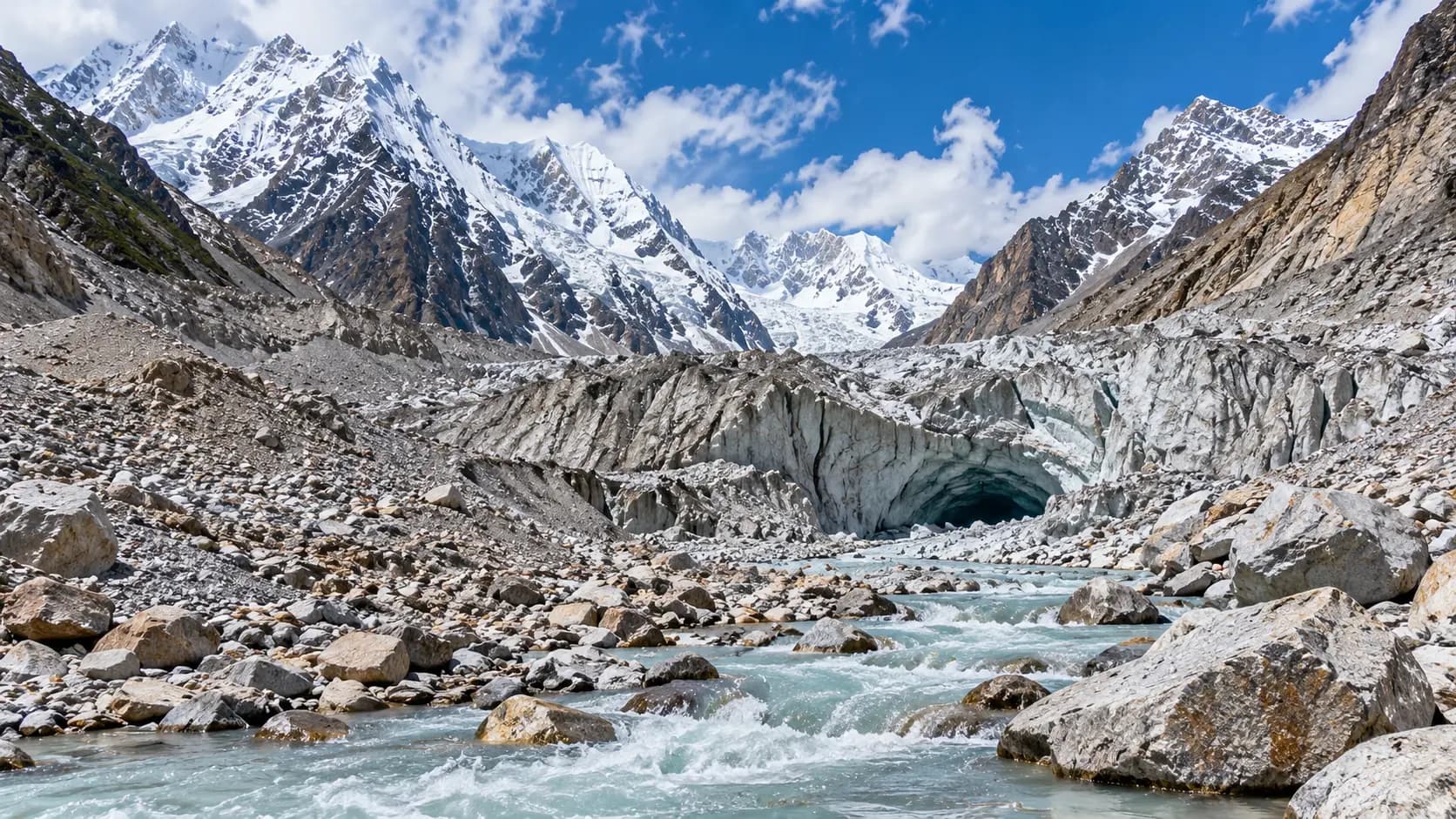
Cradled in the supreme glaciated amphitheater of Uttarkashi District, Uttarakhand, the mighty Gangotri Glacier and its sacred terminus at Gaumukh (30.9257° N, 79.0805° E) stand as the divine and physical cradle of the most revered river in human civilization - the holy Ganga. Situated at an altitude of 4,023 metres (13,200 feet) above sea level within the pristine alpine wilderness of Gangotri National Park, Gaumukh (literally translated from Sanskrit as the "Cow's Mouth") is the mythic ice-cave portal from whose gaping, crystalline depths the turbulent, silt-laden waters of the Bhagirathi River burst forth into the world. Flowing southward through deep Himalayan chasms, the Bhagirathi unites with the Alaknanda at Devprayag to formally inaugurate the holy Ganga.
Spanning an astonishing length of over 30 kilometres with a width ranging between 2 and 4 kilometres and an ice volume exceeding 27 cubic kilometres, Gangotri is one of the largest valley glaciers in the entire Himalayan chain, fed by a vast network of tributary glaciers descending from the towering snow-domes of the Chaukhamba massif (7,138 m). According to sacred Hindu epic lore, King Bhagiratha performed arduous, thousands-of-years-long penance on a granite slab at Gangotri (Bhagirath Shila) to persuade Goddess Ganga to descend from heaven to wash away the ashes and liberate the souls of his 60,000 cursed ancestors. To prevent her torrential fall from shattering the Earth, Lord Shiva caught the cosmic river in his matted locks (jata), gently releasing her in seven tranquil mountain streams, with the Bhagirathi emerging here at Gaumukh.
The pilgrimage to Gaumukh is an unforgettable high-altitude Himalayan expedition, commencing at the sacred temple town of Gangotri (3,100 m) and tracing the deep, canyon-cut valley of the Bhagirathi upstream for 18 kilometres (36 km round-trip). The trail ascends past dense birch (bhojpatra) and pine woodlands at Chirbasa (3,600 m) and the windswept alluvial plains of Bhojwasa (3,792 m), culminating in the rugged moraine fields of the glacier terminus. Soaring vertically above the glacier are some of the most celebrated and formidable granite peaks on Earth, including the towering trident of the Bhagirathi Peaks (Bhagirathi I at 6,856 m, II at 6,512 m, and III at 6,454 m) and the breathtaking, matterhorn-like granite spire of Mount Shivling (6,543 m). Gaumukh is not merely a geographic wonder; it is an enduring symbol of spiritual purity, geological grandeur, and alpine challenge.
Start here. Open a tile for the full details.
Why goRead details
The journey to Gangotri Glacier and Gaumukh offers a transformative alpine experience combining profound religious devotion with raw Himalayan wilderness:
When to visitRead details
Gangotri Glacier is strictly seasonal, accessible for approximately six months each year from May to October:
Entry & permissionsRead details
Fees, visiting hours and entry rules may change. Confirm the latest details with the official operator or local authority before travelling.
- Mandatory Daily Quota and Permits: To protect the delicate glacial ecosystem from overtourism, the Uttarakhand Forest Department and National Green Tribunal enforce a strict daily cap of 150 permits.
- Permits must be secured in advance via the Uttarakhand Forest Department online portal (
forest.uk.gov.in) or obtained in person at the District Forest Officer (DFO) office in Uttarkashi or the Gangotri Forest Checkpoint (subject to daily quota availability).
- Permits must be secured in advance via the Uttarakhand Forest Department online portal (
- Entry Fee Structure:
- Indian Nationals: ₹150 per person for an initial 2-day permit; ₹50 per person per additional day.
- Foreign Citizens: ₹600 per person for an initial 2-day permit; ₹250 per person per additional day.
- Permit Processing / Eco-Cess: Nominal fee of ₹50 to ₹100 per application.
- Mandatory Guide Requirement: Forest Department regulations mandate that every trekking team or individual must be accompanied by a government-registered local mountain guide. Trekkers attempting to enter without a certified guide will be turned back at the Gangotri checkpost.
- Operating Timings: The Gangotri Forest Checkpoint opens daily at 06:00 and closes for outbound entries at 11:00. Trekkers are not permitted to start after 11:00 to prevent stranded parties along the exposed trail after sunset.
- Environmental Restrictions: Single-use plastic bottles, non-biodegradable food packaging, and alcohol are strictly banned. Forest rangers inspect backpacks at the checkpoint and collect a refundable security deposit for every packaged plastic item (such as biscuit or energy bar wrappers), which is refunded upon showing the wrappers on return. Drones are prohibited throughout the national park.
Plan your visitRead details
Reaching the trailhead at Gangotri town involves scenic road travel through the Garhwal Himalayas of Uttarkashi District:
Safety in the Rockfall Chute
The 2-kilometre section between Chirbasa and Bhojwasa is notorious for loose rockfalls and shooting stones, particularly on windy afternoons or after rainfall. Traverse this stretch swiftly without lingering, wear a trekking helmet if available, keep a watchful eye on the upper cliffs, and never stop for rest breaks directly beneath scree funnels.
Explore the full guide - choose a topic below.
Why visit?
The journey to Gangotri Glacier and Gaumukh offers a transformative alpine experience combining profound…Explore detailsClose details
The journey to Gangotri Glacier and Gaumukh offers a transformative alpine experience combining profound religious devotion with raw Himalayan wilderness:
- Stand at the Physical Birthplace of the Holy Ganga: Experience the awe of witnessing the divine source of the river that has nurtured Indian spirituality and civilization for millennia. Watching the torrential turquoise-grey glacial meltwater thunder out from the massive sapphire-blue ice cave of Gaumukh is a deeply moving spiritual and emotional milestone.
- Witness the Majesty of Mount Shivling: Marvel at Mount Shivling (6,543 m), widely celebrated by mountaineers as the "Matterhorn of India." Its sheer, needle-sharp granite pyramid pierces the azure sky directly behind the glacier snout, presenting one of the most iconic and photogenic mountain panoramas in the entire Himalayas.
- Gaze Upon the Bhagirathi Sisters: Behold the colossal granite battlements of the Bhagirathi peaks (I, II, and III) rising in sheer 2,000-metre rock walls directly across the glacial valley, catching the radiant golden light of dawn and sunset.
- Explore Ancient Bhojpatra Birch Forests: Walk through the sacred groves of Chirbasa and Bhojwasa, where ancient Betula utilis (Himalayan birch or bhojpatra) trees flourish. For centuries, ancient Indian sages and scholars used the delicate, paper-thin bark of these very trees to write the earliest Sanskrit manuscripts of the Vedas, Upanishads, and the Mahabharata.
- Trek Through Gangotri National Park: Immerse yourself in the protected biodiversity of Uttarakhand's third-largest national park. The rugged valleys are home to the endangered snow leopard (Panthera uncia), herds of bharal (Himalayan blue sheep) grazing nonchalantly on sheer scree slopes, the Himalayan musk deer, and golden eagles wheeling on alpine thermals.
- Option to Extend to the Alpine Meadow of Tapovan: Seasoned trekkers can traverse the lateral moraines and cross the crevassed ice trunk of the Gangotri Glacier to reach Tapovan (4,463 m), an ethereal high-altitude meadow of emerald grass, babbling glacial streams, and wandering sadhus situated directly at the foot of Mount Shivling.
What to expect
Trekking to Gaumukh is a serious high-altitude expedition that demands physical stamina, mental resilience, and…Explore detailsClose details
Trekking to Gaumukh is a serious high-altitude expedition that demands physical stamina, mental resilience, and respect for fragile alpine terrain:
- Trek Itinerary and Terrain: The 18-kilometre trail from Gangotri to Gaumukh is generally undertaken as a 2-day or 3-day round trip:
- Gangotri to Chirbasa (9 km, 3,600 m): The stone-and-dirt trail climbs gently along the right bank of the roaring Bhagirathi River through cedar and pine forests, offering initial glimpses of the Bhagirathi peaks.
- Chirbasa to Bhojwasa (5 km, 3,792 m): The trail crosses an infamous and barren 2-kilometre rockfall zone where loose scree and "shooting stones" can tumble down the cliff faces. It arrives at the wide, boulder-strewn river flat of Bhojwasa, the mandatory overnight halt.
- Bhojwasa to Gaumukh (4 km, 4,023 m): A rocky, moraine-strewn trail climbs through glacial debris to the viewpoint overlooking the ice cave of Gaumukh.
- Overnight Stay at Bhojwasa: Bhojwasa serves as the solitary base camp for the final push to Gaumukh. Accommodations are basic and rugged, consisting of the government-run GMVN Tourist Rest House (dormitory beds and simple rooms), private eco-tents, and the historic Lalbaba Ashram, where travelers are offered warm bedding and simple vegetarian community meals (langar).
- Altitude and High Cold: Elevations range from 3,100 metres at Gangotri to over 4,000 metres at Gaumukh. The air is thin, with atmospheric oxygen levels approximately 40% lower than at sea level. Daytime temperatures in summer average between 8°C and 15°C under direct sunlight, but plunge swiftly to near freezing (0°C to -5°C) at night. High alpine winds frequently sweep down the glacial corridor.
- Glacial Safety and Snout Buffer Zone: Gangotri Glacier is an active, dynamic river of ice. Climate warming has caused rapid retreat and structural instability. Following tragic incidents of collapsing ice seracs, the Forest Department and National Green Tribunal have placed a strict 500-metre safety perimeter around the snout. Visitors are strictly prohibited from walking directly beneath or touching the active ice wall.
Best time to visit
Gangotri Glacier is strictly seasonal, accessible for approximately six months each year from May to October: -…Explore detailsClose details
Gangotri Glacier is strictly seasonal, accessible for approximately six months each year from May to October:
- Summer (May to June): The prime trekking window. Gangotri Temple opens on Akshaya Tritiya (late April/early May), and the trekking trail opens shortly thereafter as winter snows recede. Daytime temperatures are pleasant (10°C to 18°C), skies are predominantly clear in the morning, and the glacier is in full active melt. Expect high demand for daily permits, requiring early advance booking.
- Monsoon (July to August): Travel during mid-summer is hazardous and strongly discouraged. Intense monsoon downpours saturate the steep mountain slopes, triggering frequent rockfalls, landslides, and road closures along NH 34 between Rishikesh and Gangotri. The trail through the Chirbasa rockfall chute becomes extremely dangerous due to falling boulders. Swollen glacial streams can wash away temporary footbridges.
- Autumn (September to October): Considered by mountain connoisseurs to be the finest time to trek to Gaumukh. With the retreat of the monsoon, the air becomes exceptionally crisp and clean, offering crystal-clear, deep-blue skies and razor-sharp views of Shivling and the Bhagirathi peaks. Days are sunny but brisk (5°C to 12°C), while nights in Bhojwasa drop to sub-zero temperatures (-2°C to -8°C). The trail closes in late October/early November when the Gangotri temple shuts for winter.
- Winter (November to April) - Strictly Closed: Heavy winter blizzards bury the entire valley under 2 to 4 metres of snow. Temperatures drop to -20°C to -30°C. Gangotri National Park is closed to all civilian entry, and the forest checkpoints are evacuated.
How to reach
Reaching the trailhead at Gangotri town involves scenic road travel through the Garhwal Himalayas of Uttarkashi…Explore detailsClose details
Reaching the trailhead at Gangotri town involves scenic road travel through the Garhwal Himalayas of Uttarkashi District:
- By Road to Gangotri: Gangotri town is situated at the terminus of National Highway 34, located 265 km northeast of Rishikesh and 98 km from Uttarkashi:
- From Uttarkashi (98 km): Drive along NH 34 via Maneri, Bhatwari, Gangnani (famous for hot sulfur springs), and Harsil valley (famed for apple orchards and deodar forests) to Gangotri (approx. 4 to 5 hours driving time).
- From Rishikesh / Dehradun (265 km): The all-weather road follows NH 34 past Chamba, Dharasu Band, and Uttarkashi, requiring 8 to 10 hours of mountain driving. Regular UTC state transport buses, GMOU buses, and private shared jeeps operate daily from Rishikesh (Natraj Chowk) and Dehradun to Uttarkashi and Gangotri.
- By Rail: The nearest major railway stations are Yog Nagari Rishikesh (YNRK, 265 km), Haridwar Junction (HW, 288 km), and Dehradun (DDN, 275 km), connecting to New Delhi, Lucknow, Kolkata, and major Indian cities.
- By Air: The closest commercial airport is Jolly Grant Airport, Dehradun (DED, 270 km). Taxis can be hired directly from the airport terminal for the two-day drive to Gangotri (typically halting overnight in Uttarkashi or Harsil).
- By Foot (The 18-km Gaumukh Trail): Vehicles cannot proceed beyond Gangotri town. The journey to Gaumukh is undertaken entirely on foot or by pack mule (up to Bhojwasa) along the designated 18-km national park trail.
Entry, timings and permissions
Fees, visiting hours and entry rules may change.Explore detailsClose details
Fees, visiting hours and entry rules may change. Confirm the latest details with the official operator or local authority before travelling.
- Mandatory Daily Quota and Permits: To protect the delicate glacial ecosystem from overtourism, the Uttarakhand Forest Department and National Green Tribunal enforce a strict daily cap of 150 permits.
- Permits must be secured in advance via the Uttarakhand Forest Department online portal (
forest.uk.gov.in) or obtained in person at the District Forest Officer (DFO) office in Uttarkashi or the Gangotri Forest Checkpoint (subject to daily quota availability).
- Permits must be secured in advance via the Uttarakhand Forest Department online portal (
- Entry Fee Structure:
- Indian Nationals: ₹150 per person for an initial 2-day permit; ₹50 per person per additional day.
- Foreign Citizens: ₹600 per person for an initial 2-day permit; ₹250 per person per additional day.
- Permit Processing / Eco-Cess: Nominal fee of ₹50 to ₹100 per application.
- Mandatory Guide Requirement: Forest Department regulations mandate that every trekking team or individual must be accompanied by a government-registered local mountain guide. Trekkers attempting to enter without a certified guide will be turned back at the Gangotri checkpost.
- Operating Timings: The Gangotri Forest Checkpoint opens daily at 06:00 and closes for outbound entries at 11:00. Trekkers are not permitted to start after 11:00 to prevent stranded parties along the exposed trail after sunset.
- Environmental Restrictions: Single-use plastic bottles, non-biodegradable food packaging, and alcohol are strictly banned. Forest rangers inspect backpacks at the checkpoint and collect a refundable security deposit for every packaged plastic item (such as biscuit or energy bar wrappers), which is refunded upon showing the wrappers on return. Drones are prohibited throughout the national park.
Nearby places to consider
The Gangotri-Gaumukh valley is ringed with sublime spiritual and alpine destinations: - Gangotri Temple…Explore detailsClose details
The Gangotri-Gaumukh valley is ringed with sublime spiritual and alpine destinations:
- Gangotri Temple (Trailhead): The sacred white granite shrine dedicated to Goddess Ganga, constructed by Nepalese General Amar Singh Thapa in the early 18th century, featuring the sacred Bhagirath Shila and the submerged Shiva Lingam in the river.
- Tapovan (6 km beyond Gaumukh): An ethereal high-altitude meadow at 4,463 metres lying across the Gangotri Glacier, renowned for crystalline springs, wild blue sheep herds, and incomparable close-up views of Mount Shivling.
- Nandanvan (Across Gangotri Glacier): A high alpine terrace at 4,500 metres situated at the foot of Bhagirathi peaks, offering an expansive vantage point over the glaciated confluence of the Gangotri and Chaturangi glaciers.
- Harsil Valley (25 km southwest of Gangotri): An enchanting hamlet set amidst apple orchards, roaring mountain streams, and fragrant deodar forests, famous for its historic wooden houses and the legendary legacy of "Pahari" Frederick Wilson.
- Gangnani Hot Springs (50 km southwest): Natural thermal sulfur springs (Rishi Kund) along NH 34 offering rejuvenating, mineral-rich hot baths with dedicated enclosures for men and women.
In pictures
The practical bits
Before you go.
Plan ahead
Because Gaumukh is a remote, high-altitude alpine environment, thorough preparation is crucial for personal…Explore detailsClose details
Because Gaumukh is a remote, high-altitude alpine environment, thorough preparation is crucial for personal safety and enjoyment:
Acclimatization Strategy
Do not rush the journey.Explore detailsClose details
Do not rush the journey. Spend a night in Uttarkashi (1,158 m) or Harsil (2,745 m), followed by at least one full night and day acclimatizing in Gangotri town (3,100 m) before beginning the trek. This gradual progression allows your body to adjust to diminishing oxygen levels. Drink plenty of warm liquids and avoid alcohol or tobacco.
Essential Clothing and Footwear
High-quality, broken-in waterproof trekking boots with ankle support and deep lugged soles are essential for…Explore detailsClose details
High-quality, broken-in waterproof trekking boots with ankle support and deep lugged soles are essential for traversing moraines and scree. Dress in moisture-wicking synthetic base layers, an insulating mid-layer (fleece or light down jacket), and a heavy-duty waterproof, wind-resistant outer shell. Carry thermal gloves, a warm fleece beanie, UV400-rated mountain sunglasses to prevent snow glare damage, and a reliable headlamp with extra batteries.
Overnight Booking at Bhojwasa
During the peak months of May, June, September, and October, accommodation at Bhojwasa fills up quickly.Explore detailsClose details
During the peak months of May, June, September, and October, accommodation at Bhojwasa fills up quickly. Book dormitory beds or rooms at the GMVN Tourist Rest House in advance through the official GMVN web portal (gmvnonline.com). Alternatively, shelter and blankets can be arranged upon arrival at the Lalbaba Ashram or private tented camps.
Safety in the Rockfall Chute
The 2-kilometre section between Chirbasa and Bhojwasa is notorious for loose rockfalls and shooting stones…Explore detailsClose details
The 2-kilometre section between Chirbasa and Bhojwasa is notorious for loose rockfalls and shooting stones, particularly on windy afternoons or after rainfall. Traverse this stretch swiftly without lingering, wear a trekking helmet if available, keep a watchful eye on the upper cliffs, and never stop for rest breaks directly beneath scree funnels.
A few things you might wonder
Common questions about visiting Gangotri Glacier (Gaumukh). Fees, visiting hours and ceremonies are researched details that may change; confirm current arrangements with the operator before travelling.
How long is the trek to Gaumukh and how many days does it take?
Do I need a permit to visit Gaumukh, and how can I get one?
Can I hire a pony or mule to go all the way to Gaumukh?
Is it safe to go close to the ice snout at Gaumukh?
What facilities are available for food and accommodation at Bhojwasa?
Can beginners and children do the Gaumukh trek?
More Hubs in Uttarakhand
Continue exploring other travel hubs in this state
Planning a trip to Char Dham Gangotri?