Maa Samaleswari Temple
Complete visitor guide to Maa Samaleswari Temple in Sambalpur, Odisha. Explore the 16th-century Chauhan shrine, SAMALEI riverfront promenade, Nuakhai rituals, and timings.
Location
Sambalpur & West Odisha, Odisha
Duration
Allow time for worship and queues; timing varies during festivals.
Best Time
Choose a date around your interests and check the current festival or worship schedule. Festivals can affect queues, transport and accommodation.
Difficulty
Confirm the accessible entrance and any steps; a fully flat, step-free complex is not certified here.
A closer look
Your visit, at a glance.
Sambalpur & West Odisha, Odisha
GET TO KNOW THE PLACE
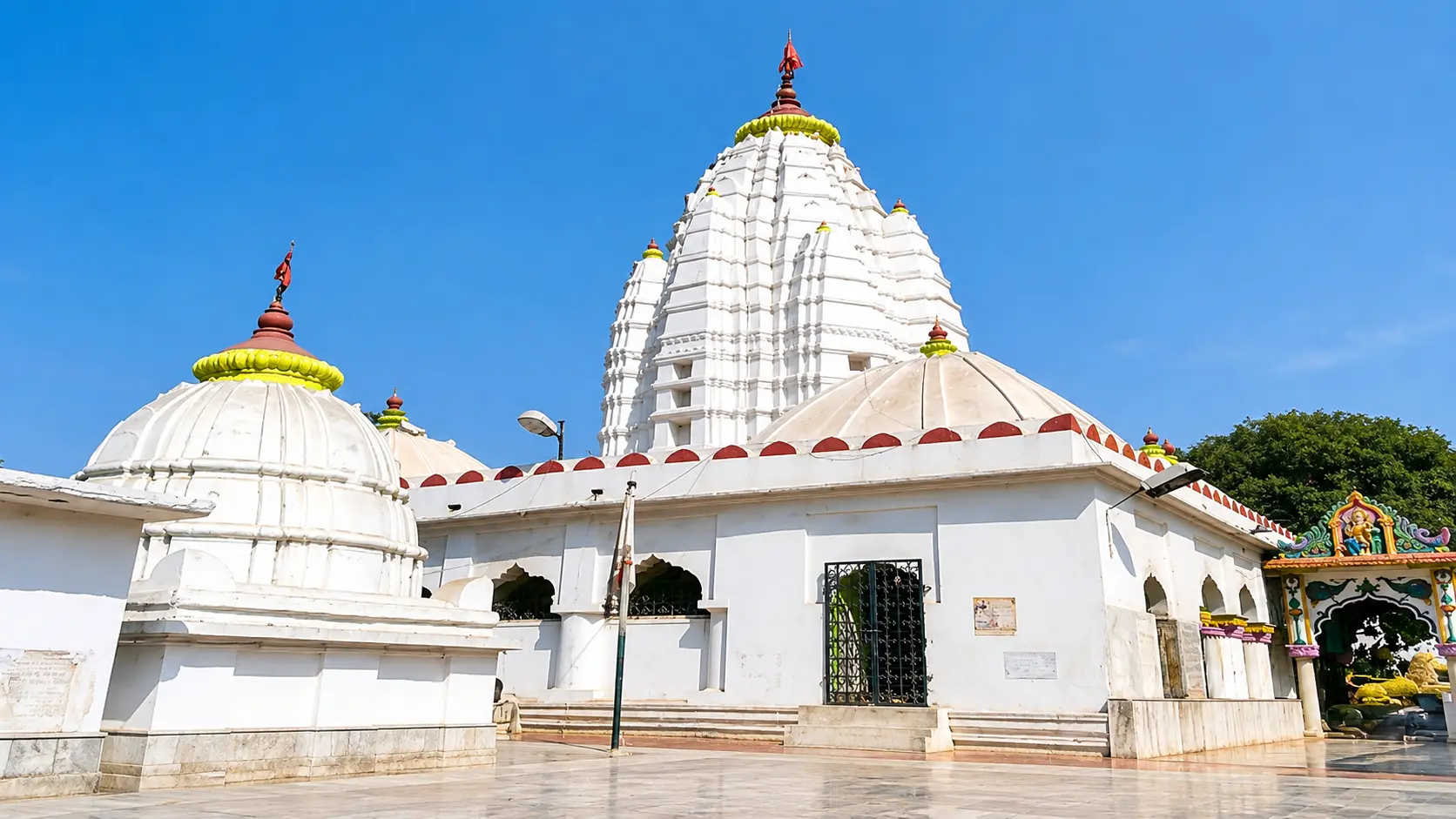
Set gracefully upon the eastern banks of the mighty Mahanadi River in the historic city of Sambalpur, the Maa Samaleswari Temple is the beating spiritual heart and cultural…
The story of Maa Samaleswari Temple
Set gracefully upon the eastern banks of the mighty Mahanadi River in the historic city of Sambalpur, the Maa Samaleswari Temple is the beating spiritual heart and cultural anchor of Western Odisha. Revered by millions of devotees across the upper Mahanadi basin, Chhattisgarh, and neighboring states, Goddess Samaleswari - affectionately addressed as Maa Samalei or Jagatjanani - is worshipped as the supreme presiding deity (Adhistatri Devi) of the region.
From its legendary 16th-century origins beneath a sacred silk-cotton (Simuli) tree under the patronage of King Balaram Dev, the founder of the Sambalpur Chauhan dynasty, to its magnificent stone reconstruction in 1665 CE by Maharaja Chhatra Sai Deo, the temple represents an extraordinary synthesis of royal Chauhan architecture, ancient tribal and folk religious traditions, and orthodox Shakta philosophy. Confirm the current charge and what it includes with the operator or service provider. Visitor admission, vehicles, parking, activities and accommodation can have separate charges. Melding centuries-old ritual devotion with an expansive 1-kilometre riverfront promenade, landscaped heritage plazas, cloistered pradakshina verandas, and mesmerizing evening light-and-sound spectacles, Maa Samaleswari Temple provides an awe-inspiring introduction to Western Odisha’s living soul.
Start here. Open a tile for the full details.
Why goRead details
Whether you are a pilgrim seeking maternal blessings, a heritage enthusiast fascinated by medieval dynastic design, or a traveler eager to witness vibrant regional traditions, Maa Samaleswari Temple offers an unforgettable encounter:
When to visitRead details
Sambalpur experiences an inland tropical climate with marked seasonal transitions. Understanding the seasonal weather and festival calendar will help you plan the most fulfilling visit.
Entry & permissionsRead details
Fees, visiting hours and entry rules may change. Confirm the latest details with the official operator or local authority before travelling.
A visit to Maa Samaleswari Temple is completely visitor-friendly and free from administrative hurdles:
- Admission Charges: Entrance to the temple complex, the covered circumambulatory corridor, and the entire SAMALEI riverfront promenade is 100% free of charge. No tickets or passes are required for general public darshan.
- Vehicle Parking Fees: The Sambalpur Municipal Corporation operates designated paved parking complexes near the temple entrance plaza with nominal community rates:
- Two-wheelers: ₹10
- Auto-rickshaws and Cars: ₹20 - ₹30
- Tourist Buses: ₹50
- Daily Operating Schedule:
- The temple opens every morning at 05:00 and remains open until 21:00 at night.
- Midday Sanctum Closure: The inner sanctum doors close for public darshan between 13:00 and 15:00 following the offering of midday bhog and the deity's afternoon repose (pahuda). The outer courtyard, pradakshina veranda, and riverfront promenade remain open to the public continuously throughout the day.
- During major religious celebrations (such as Nuakhai, Mahalaya, and Durga Ashtami), the sanctum remains open continuously for 24 hours.
- Daily Ritual & Aarti Schedule:
- Mangala Alati (Morning Lamp Offering): 05:30
- Balya Bhoga (Morning Refreshment): 08:30
- Madhyanna Dhoopa & Anna Bhoga (Noon Feast): 12:30 to 13:00
- Sandhya Alati (Evening Prayer): 18:30 to 19:00
- Ratri Pahuda (Night Closure): 21:00
- Light-and-Sound Show Timings:
- Operates daily (except Mondays) from 19:00 to 19:40 at the open-air heritage amphitheatre. Tickets are available on-site at nominal rates (approx. ₹30 - ₹50 per viewer).
- Photography Rules & Regulations:
- Photography and videography are freely permitted across the SAMALEI riverfront promenade, landscaped gardens, outer heritage plazas, and the external temple courtyard.
- Photography, video recording, mobile calls, and selfie sticks are strictly prohibited inside the inner sanctum (garbhagriha).
- Drone photography over the temple precinct and riverfront requires prior written permission from the District Collectorate of Sambalpur and local police authorities.
- Dress Code and Etiquette:
- Devotees are expected to wear modest, culturally respectful attire covering shoulders and knees.
- Footwear (shoes, sandals, slippers) must be deposited at the free footwear counters outside before entering the stone courtyard.
- Leather articles (belts, wallets, bags) should ideally be left in your vehicle or cloakroom before entering the inner sanctum.
Plan your visitRead details
Centrally located within Sambalpur city along the banks of the Mahanadi River, Maa Samaleswari Temple is exceptionally easy to access via all major transport networks.
Explore the full guide - choose a topic below.
Why visit?
Whether you are a pilgrim seeking maternal blessings, a heritage enthusiast fascinated by medieval dynastic…Explore detailsClose details
Whether you are a pilgrim seeking maternal blessings, a heritage enthusiast fascinated by medieval dynastic design, or a traveler eager to witness vibrant regional traditions, Maa Samaleswari Temple offers an unforgettable encounter:
- Western Odisha’s Supreme Spiritual Sanctuary: For the people of Western Odisha, Maa Samaleswari is not merely a deity enshrined in stone; she is the mother, protector, and celestial ruler of the land. Experiencing the morning or evening aarti amidst the reverberations of tribal drums (dhol), gongs (nishan), pipes (tasha), and brass cymbals (ghanta) is an electrifying devotional experience unmatched anywhere in Eastern India.
- The Swayambhu Monolithic Rock Manifestation: Inside the sanctum sanctorum, the goddess is not depicted as a multi-armed anthropomorphic statue. Instead, she is worshipped in an ancient swayambhu (self-manifested) monolithic granite rock formation that slopes naturally like a tilted face. Bathed in crimson vermilion (sindoor), crowned with a golden diadem, and adorned with massive silver and gold eyes (chakkhu), a gold nose-ring (nolak), and a traditional silver umbrella, her maternal gaze holds devotees in spellbound reverence.
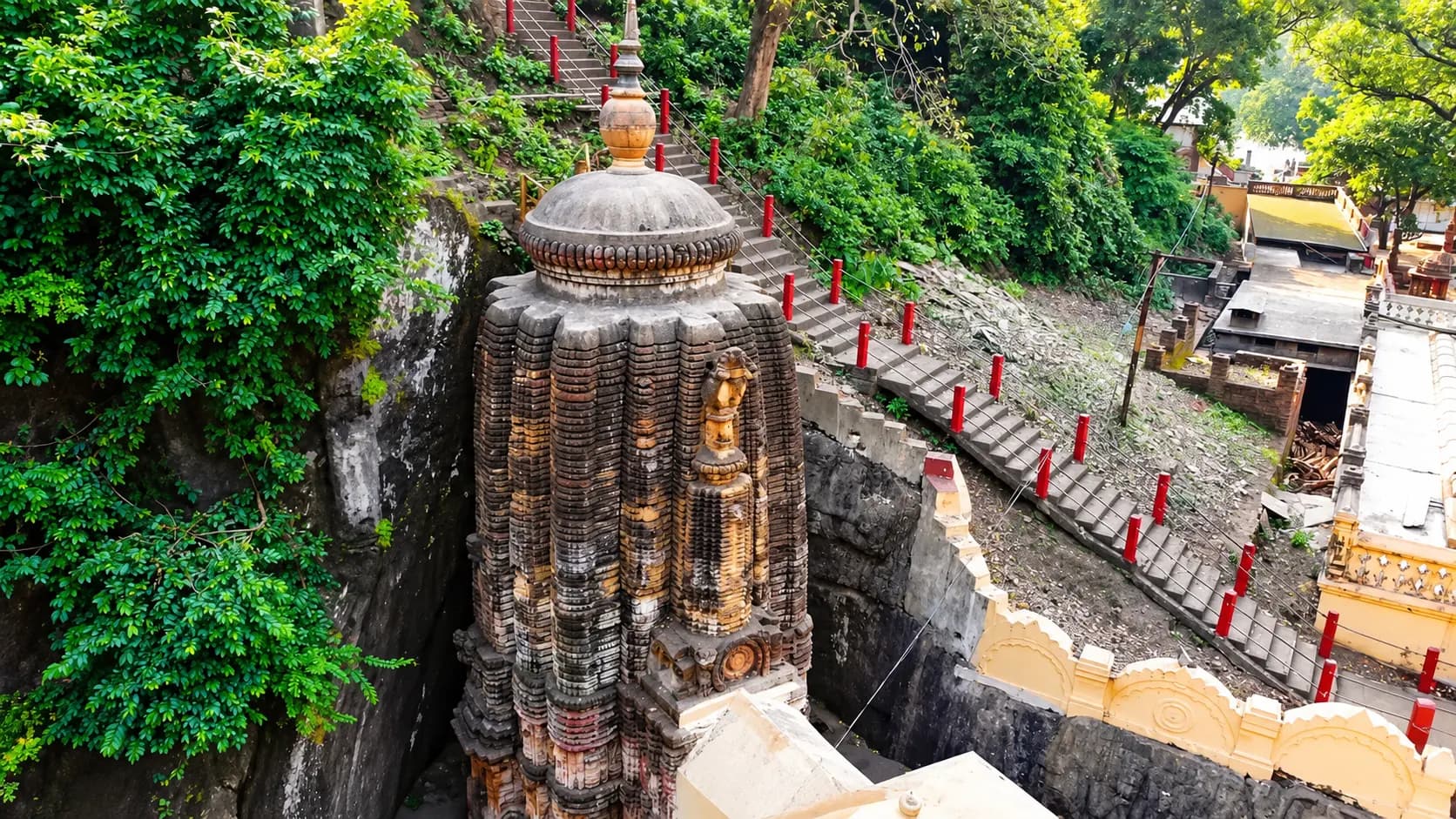
- Unique Chauhan Regional Architecture: The temple exemplifies the distinct Chauhan architectural tradition that developed in the upper Mahanadi valley during the 16th and 17th centuries. Departing from the coastal Odishan style, the temple features a massive square sanctum tower surrounded on all four sides by a wide, arched circumambulatory veranda (pradakshina patha), supported by heavy stone pillars and decorated with lime-surkhi plasterwork that keeps the interior astonishingly cool even during blistering summer months.
- The World-Class SAMALEI Heritage Precinct: Dedicated in January 2024, the 39-acre SAMALEI redevelopment has radically transformed the temple environment. Visitors can stroll along the sweeping 1-kilometre paved promenade directly overlooking the swirling currents of the Mahanadi River, relax in lush heritage gardens, explore open-air cultural pavilions, and enjoy state-of-the-art covered queue complexes equipped with modern visitor amenities.
- The Epicenter of Nuakhai Festivities: Maa Samaleswari Temple is the absolute epicentre of Nuakhai, Western Odisha’s grandest agrarian festival. On the auspicious day of Bhadrapada Sukla Panchami, the entire region pauses as the first grains of the newly harvested winter paddy (Nabanna) are ceremonially presented to Maa Samaleswari before any home partakes of the harvest. Witnessing the sea of devout farmers and families clad in colourful Sambalpuri Ikat handlooms offering prayers here is a quintessential Odishan cultural experience.
What to expect
Visiting Maa Samaleswari Temple is a rich, sensory journey that blends temple pageantry, river vistas, and…Explore detailsClose details
Visiting Maa Samaleswari Temple is a rich, sensory journey that blends temple pageantry, river vistas, and vibrant market culture.
Arrival and the Modern Heritage Plaza
Approaching the temple from the Sambalpur Ring Road, visitors step into the spacious, pedestrian-only heritage plaza constructed under the SAMALEI initiative. Where congested alleyways once stood, an expansive landscaped precinct now opens up, adorned with sandstone ornamental gateways, shaded colonnades, native flowering trees, and stone sculptures celebrating Western Odisha's iconic folk dance forms such as Dalkhai, Rasarkeli, and Karma.
Visitors deposit footwear at modernized automated shoe counters and pass through security checkpoints into the covered queue pavilion. The queue complex features high vaulted ceilings, powerful ventilation fans, chilled drinking water dispensers, clean restrooms, and designated seating areas for seniors and families with infants.
The Temple Courtyard and Circumambulatory Veranda
Crossing the threshold through the ancient stone lion gate (Singhadwara), you enter the sacred sanctum compound, enclosed by high fortified stone boundary walls (meghnad pacheri). The central temple tower rises majestically into the sky, its curvilinear sandstone spire punctuated by ornamental niches, miniature spires (angashikharas), and the crowning amalaka disk topped by the royal Chauhan brass flag and trident.
The defining architectural feature of the temple is the wide, pillared cloistered veranda (pradakshina patha) that completely encircles the central sanctum. Built by Maharaja Chhatra Sai Deo in the 1660s, this broad corridor allows hundreds of worshippers to circumambulate the goddess simultaneously. The heavy square pillars and arched ceilings are coated in pure white lime wash, providing a soothing, glare-free haven from the midday sun. Carved along the outer sanctum walls are niches enshrining deities including Lord Ganesha, Goddess Durga, Lord Kartikeya, and Lord Hanuman, each receiving vermilion and oil lamp offerings from passing pilgrims.
The Inner Sanctum Darshan
Entering the inner sanctum through a brass-clad doorway, the air becomes rich with the aromas of burning pure ghee lamps, crushed marigold blossoms, camphor, and sandalwood paste. The floor drops slightly, centering on the immense swayambhu granite boulder.
The facial contour of Maa Samaleswari is coated with thick layers of crimson vermilion applied over centuries of ritual devotion. Her large, mesmerizing silver eyes shine brilliantly in the flickering lamplight, while a prominent gold nose-ring and a golden tongue lend an extraordinary aura of fierce maternal compassion. Hereditary priests (pujaris) chant sacred Sanskrit shlokas and Odia verses, offering devotees holy basil leaves, red flower petals, sweet sugar candies (batasa), and sacred vermilion (sindoor) to mark on their foreheads.
The Mahanadi Riverfront Promenade and Ghats
Exiting the rear of the temple complex through a grand arched portal, you emerge directly onto the newly constructed Mahanadi riverfront promenade. Stretching for nearly a kilometre along the riverbank, the wide flagstone promenade is lined with wrought-iron railings, sandstone gazebos (chhatris), viewing decks, and terraced stone bathing ghats (Samalei Ghat).
Looking out over the river, the view across the broad Mahanadi waters is breathtaking, especially in the late afternoon when the setting sun reflects off the swirling currents. Devotees gather at the ghats to take ritual dips, float earthen lamps (diyas) down the river, or sit in the breezy riverside pavilions listening to devotional chants broadcast across the promenade.
The Evening Light-and-Sound Show
Check the current visiting hours and permitted access with the site operator before departure; ceremonies, closures and visitor sessions can affect access. Utilizing high-definition laser projectors, surround sound, and architectural projection mapping against the heritage temple walls, the spectacle narrates the history of Sambalpur - from the legend of Raja Balaram Dev and the brave hare, to the heroic battles of freedom fighter Veer Surendra Sai, to the cultural brilliance of Sambalpuri handloom weaving and folk music.
Best time to visit
Sambalpur experiences an inland tropical climate with marked seasonal transitions.Explore detailsClose details
Sambalpur experiences an inland tropical climate with marked seasonal transitions. Understanding the seasonal weather and festival calendar will help you plan the most fulfilling visit.
Seasonal Breakdown
- Winter (October to March) - The Golden Season: The winter months represent the most pleasant and comfortable period to visit Sambalpur. Daytime temperatures range from 18°C to 28°C with gentle breezes off the Mahanadi River, while evenings and early mornings are pleasantly cool (12°C to 16°C). The weather is ideal for strolling along the riverfront promenade, exploring the outer heritage plazas, and lingering in the temple courtyards without discomfort from heat.
- Monsoon (July to September) - River Grandeur & Festive Vibrance: The monsoon brings heavy monsoonal showers that fill the Mahanadi River to its banks, creating a spectacular backdrop for the temple promenade. The air is fresh and breezy, although humidity is high. September is particularly vibrant as it hosts the momentous festival of Nuakhai, filling Sambalpur with unmatched cultural energy and joy.
- Summer (April to June) - Extremely Hot & Dry: Western Odisha is renowned for scorching summer temperatures, frequently climbing between 42°C and 46°C between late April and early June. The afternoon sun makes bare stone flagstones blistering hot. If visiting during summer, schedule your visit strictly during early morning hours (05:30 to 08:30) or late evening (after 18:00) when the river breeze cools the promenade and courtyards.
Major Festivals and Special Days
- Nuakhai (Bhadrapada Sukla Panchami - August / September): The crowning cultural and social festival of Western Odisha. Farmers, craftspeople, and families arrive by the thousands dressed in brand-new Sambalpuri Ikat attire. The first harvest porridge (Nabanna) is ceremonially cooked and offered to Maa Samaleswari at the exact auspicious astrological minute (lagna). Following the temple ceremony, homes across the state erupt in celebration, marked by family feasts and the customary Nuakhai Juhar greeting.
- Mahalaya & Dhabaleswar Besha (September / October): On the sacred dawn of Mahalaya, which marks the commencement of Navaratri and Durga Puja, Maa Samaleswari is adorned in her legendary Dhabaleswar Besha (also called Ganga Snana Besha). For this single day, the crimson vermilion of the deity is concealed beneath pristine white sandalwood paste, white silks, and silver jewelry. Over 150,000 devotees wait in queue for hours through the night to catch a glimpse of the goddess in her radiant white avatar.
- Navaratri & Durga Puja (September / October): Spanning nine days and nights, the temple resonates with Vedic chanting, special animal welfare pujas, and daily alterations of royal vestments (beshas), culminating in the grand Vijayadashami celebrations.
- Tuesdays and Sundays: These are considered particularly auspicious days for Goddess Samaleswari. Local families routinely visit for baby naming ceremonies, thread ceremonies, and thanksgiving rituals, resulting in higher morning and evening crowd densities.
How to reach
Centrally located within Sambalpur city along the banks of the Mahanadi River, Maa Samaleswari Temple is…Explore detailsClose details
Centrally located within Sambalpur city along the banks of the Mahanadi River, Maa Samaleswari Temple is exceptionally easy to access via all major transport networks.
By Air
- Veer Surendra Sai Airport, Jharsuguda (JRG): The nearest commercial domestic airport, located approximately 60 kilometres north of Sambalpur. Jharsuguda operates scheduled daily flights connecting to major Indian metros including New Delhi, Kolkata, Bengaluru, Hyderabad, and Bhubaneswar. From Jharsuguda airport, you can reach Sambalpur in roughly 50 to 60 minutes via the four-lane Biju Expressway / NH-53 by hiring an airport taxi or taking an express bus.
- Biju Patnaik International Airport, Bhubaneswar (BBI): Situated approximately 280 kilometres east. Bhubaneswar provides comprehensive nationwide and international flight connections. From Bhubaneswar, Sambalpur is easily reached by regular express trains (including the Puri-Rourkela Vande Bharat Express, taking ~4 hours) or via taxi along National Highway 55.
By Train
- Sambalpur Junction (SBP): The primary railway gateway, situated just 3 kilometres north of the temple. As the headquarters of the Sambalpur Railway Division, the station is directly connected by superfast and express trains to New Delhi, Mumbai (LTT/CSMT), Kolkata (Howrah), Chennai, Hyderabad, Bengaluru, Ahmedabad, Raipur, Surat, and Puri. Prepaid auto-rickshaws, app-based cabs, and cycle-rickshaws take less than 10 minutes to reach the temple from the station.
- Sambalpur Road Railway Station (SBPD): Located about 2 kilometres east, accommodating select local and passenger rail services.
By Road
- City Connectivity: The temple is positioned right beside the Sambalpur Ring Road along the Mahanadi embankment in downtown Sambalpur (near Dhanupali and Khetrajpur). The approaches are wide, multi-lane, and well-lit with clear directional signposts.
- From Bargarh (approx. 45 km / 50 minutes): Drive east along National Highway 53 (NH-53), crossing the Mahanadi bridge directly into Sambalpur city.
- From Rourkela (approx. 165 km / 3 hours): Travel south along the four-lane Biju Expressway via Jharsuguda into Sambalpur.
- From Raipur, Chhattisgarh (approx. 260 km / 5 hours): Head east along NH-53 via Saraipali, Sohela, and Bargarh directly into Sambalpur.
- Public Buses: The Sambalpur Government Bus Terminal (Govindtola) and private bus stands at Ainthapali operate non-stop inter-district and interstate bus services connecting Sambalpur to all parts of Odisha and Chhattisgarh. City auto-rickshaws and e-rickshaws connect the bus stands to the temple in 15 minutes.
Entry, timings and permissions
Fees, visiting hours and entry rules may change.Explore detailsClose details
Fees, visiting hours and entry rules may change. Confirm the latest details with the official operator or local authority before travelling.
A visit to Maa Samaleswari Temple is completely visitor-friendly and free from administrative hurdles:
- Admission Charges: Entrance to the temple complex, the covered circumambulatory corridor, and the entire SAMALEI riverfront promenade is 100% free of charge. No tickets or passes are required for general public darshan.
- Vehicle Parking Fees: The Sambalpur Municipal Corporation operates designated paved parking complexes near the temple entrance plaza with nominal community rates:
- Two-wheelers: ₹10
- Auto-rickshaws and Cars: ₹20 - ₹30
- Tourist Buses: ₹50
- Daily Operating Schedule:
- The temple opens every morning at 05:00 and remains open until 21:00 at night.
- Midday Sanctum Closure: The inner sanctum doors close for public darshan between 13:00 and 15:00 following the offering of midday bhog and the deity's afternoon repose (pahuda). The outer courtyard, pradakshina veranda, and riverfront promenade remain open to the public continuously throughout the day.
- During major religious celebrations (such as Nuakhai, Mahalaya, and Durga Ashtami), the sanctum remains open continuously for 24 hours.
- Daily Ritual & Aarti Schedule:
- Mangala Alati (Morning Lamp Offering): 05:30
- Balya Bhoga (Morning Refreshment): 08:30
- Madhyanna Dhoopa & Anna Bhoga (Noon Feast): 12:30 to 13:00
- Sandhya Alati (Evening Prayer): 18:30 to 19:00
- Ratri Pahuda (Night Closure): 21:00
- Light-and-Sound Show Timings:
- Operates daily (except Mondays) from 19:00 to 19:40 at the open-air heritage amphitheatre. Tickets are available on-site at nominal rates (approx. ₹30 - ₹50 per viewer).
- Photography Rules & Regulations:
- Photography and videography are freely permitted across the SAMALEI riverfront promenade, landscaped gardens, outer heritage plazas, and the external temple courtyard.
- Photography, video recording, mobile calls, and selfie sticks are strictly prohibited inside the inner sanctum (garbhagriha).
- Drone photography over the temple precinct and riverfront requires prior written permission from the District Collectorate of Sambalpur and local police authorities.
- Dress Code and Etiquette:
- Devotees are expected to wear modest, culturally respectful attire covering shoulders and knees.
- Footwear (shoes, sandals, slippers) must be deposited at the free footwear counters outside before entering the stone courtyard.
- Leather articles (belts, wallets, bags) should ideally be left in your vehicle or cloakroom before entering the inner sanctum.
Nearby places to consider
Maa Samaleswari Temple is ideally situated to serve as the starting anchor for exploring the rich array of…Explore detailsClose details
Maa Samaleswari Temple is ideally situated to serve as the starting anchor for exploring the rich array of attractions across Sambalpur and Western Odisha:
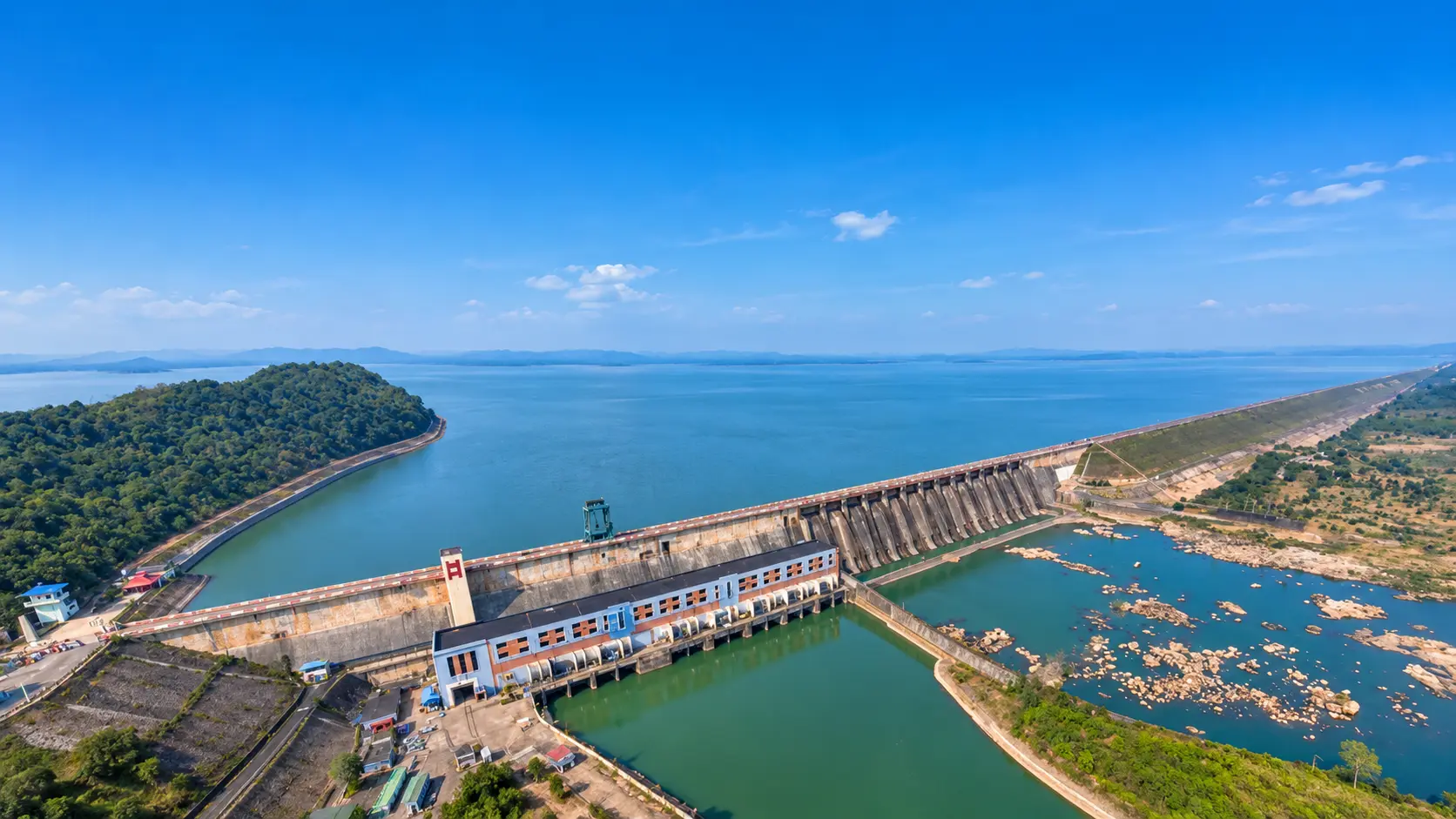
- Hirakud Dam and Gandhi Minar (approx. 15 km northwest): One of independent India’s engineering marvels, Hirakud impounds the world's longest major earthen dam (25.8 km). Ascend the Gandhi Minar observation tower for sweeping 360-degree views over the 743-square-kilometre Ramsar wetland reservoir, or ride the passenger ropeway across Jawahar Udyan.
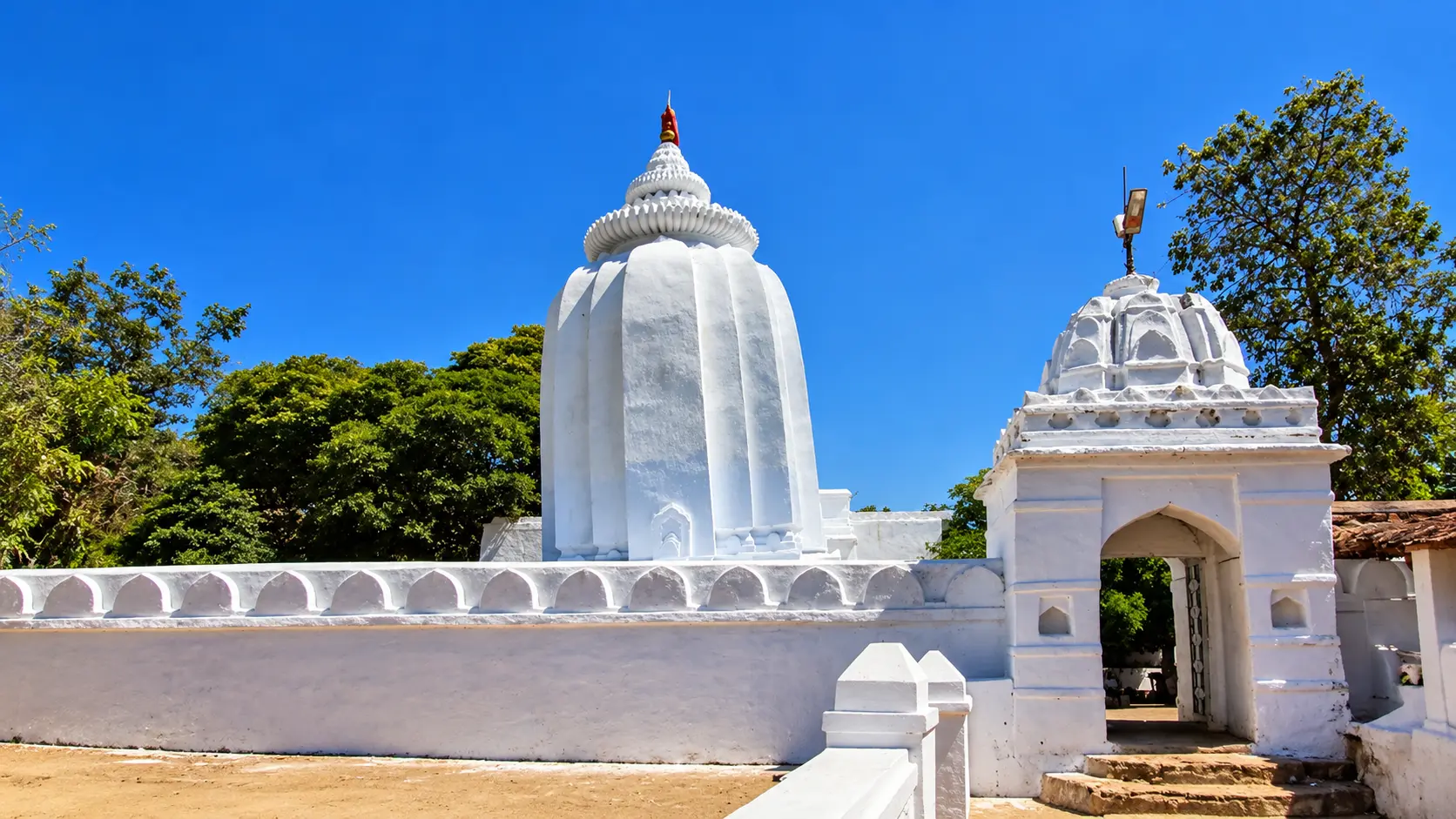
- Huma Leaning Temple (approx. 23 km south): A world-renowned 17th-century Chauhan architectural enigma dedicated to Lord Bimaleswar (Shiva). The stone temple tower leans sharply toward the river, while thousands of tame, sacred Kudo fish swarm the rocky river steps to feed directly from visitors’ hands.
- Ghanteswari Temple, Chiplima (approx. 30 km southwest): Perched at the confluence of the Mahanadi River and the Chiplima power channel, this famous temple is covered in thousands of brass bells offered by devotees. Historically, the bells acted as an acoustic navigational warning for boatmen navigating treacherous river rapids.
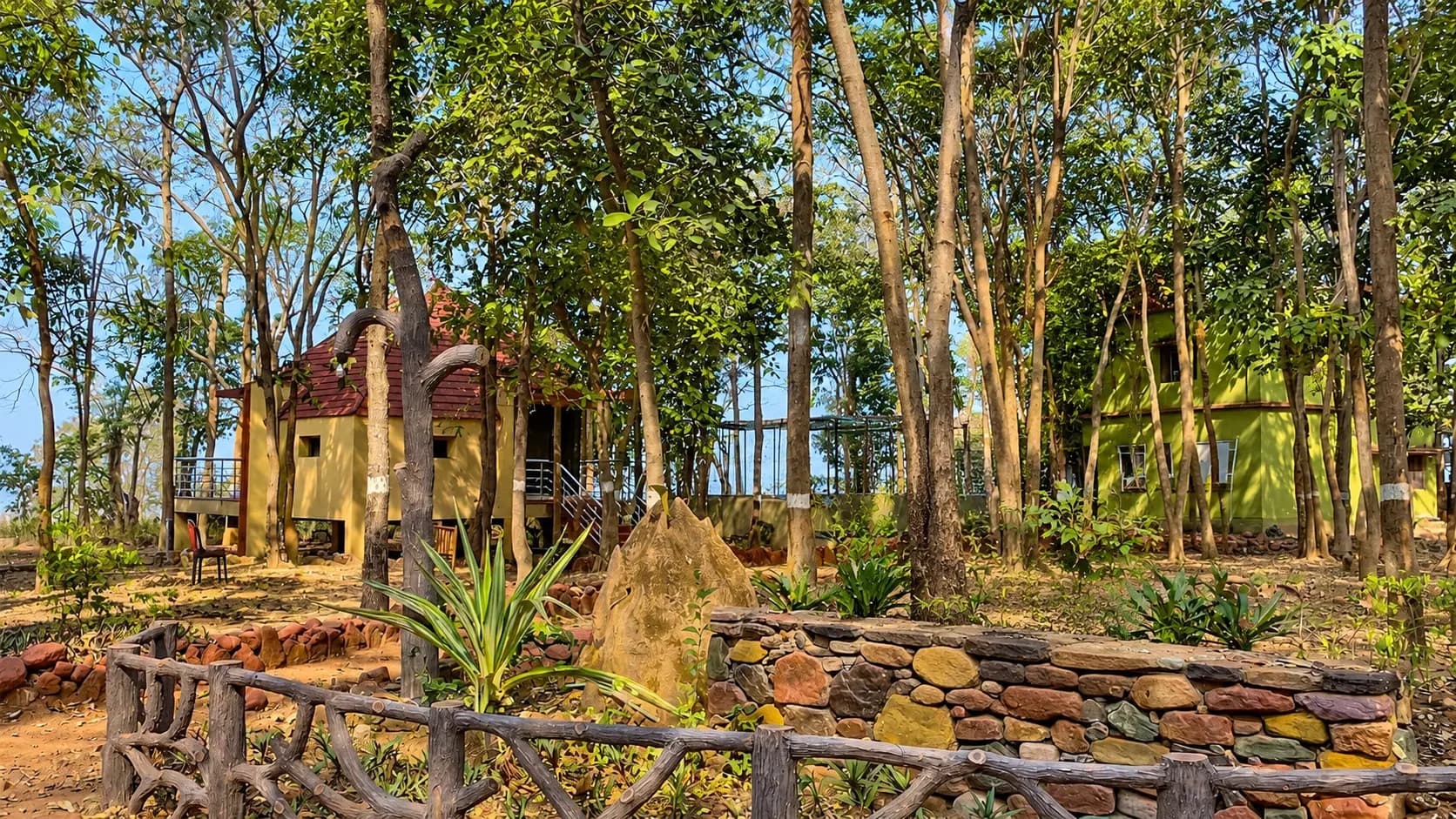
- Debrigarh Wildlife Sanctuary (approx. 50 km northwest): Bordering the western shore of the Hirakud reservoir, Debrigarh is one of Odisha’s finest wildlife reserves, celebrated for dense populations of Indian gaur (bison), leopards, sambar, wild boars, and over 200 species of migratory waterfowl.
- Maneswar Shiva Temple (approx. 10 km south): An ancient medieval shrine dedicated to Lord Mandhata Shiva, famous for its sacred temple pond teeming with hundreds of giant, protected Indian softshell and flapshell turtles that feed from pilgrims' hands.
In pictures
The practical bits
Before you go.
Plan ahead
To maximize your spiritual experience and comfort at Maa Samaleswari Temple, keep the following structured…Explore detailsClose details
To maximize your spiritual experience and comfort at Maa Samaleswari Temple, keep the following structured planning guidelines in mind:
Ideal Time of Day for Darshan
Check the current visiting hours and permitted access with the site operator before departure; ceremonies…Explore detailsClose details
Check the current visiting hours and permitted access with the site operator before departure; ceremonies, closures and visitor sessions can affect access.
Navigating Festival Crowds
If visiting during peak festival dates - especially Nuakhai in August/September or Mahalaya in October - be…Explore detailsClose details
If visiting during peak festival dates - especially Nuakhai in August/September or Mahalaya in October - be prepared for enormous crowd turnouts exceeding 100,000 pilgrims. Queue waiting times can stretch from 2 to 4 hours. Take advantage of the covered SAMALEI queue corridors, carry water bottles, and follow instructions from temple police and volunteer wardens. Families with elderly individuals or young children should approach the special senior/differently-abled queue gate near the north entrance.
Riverfront Stroll and Photography
Allocate at least 45 minutes to leisurely explore the 1-km SAMALEI riverfront promenade.Explore detailsClose details
Allocate at least 45 minutes to leisurely explore the 1-km SAMALEI riverfront promenade. The best photographic compositions of the temple’s curvilinear spire are captured from the southern viewing deck of the river promenade during the golden hour (17:00 to 17:45), when warm sunlight bathes the sandstone walls against the wide expanse of the Mahanadi River.
Authentic Souvenirs and Temple Sweets
Directly outside the temple gate along the new SAMALEI vending arcade, government-certified artisan stalls sell…Explore detailsClose details
Directly outside the temple gate along the new SAMALEI vending arcade, government-certified artisan stalls sell genuine handwoven Sambalpuri Ikat cotton and silk sarees, stoles, and fabrics directly from master weavers. Inside the temple prasad counter, do not miss the opportunity to purchase authentic temple bhog - especially khaja (crisp layered pastry glazed in sugar syrup), laddoo, and dry prasad packets blessed at the sanctum altar.
A few things you might wonder
Common questions about visiting Maa Samaleswari Temple. Fees, visiting hours and ceremonies are researched details that may change; confirm current arrangements with the operator before travelling.
Who founded Maa Samaleswari Temple and what is the story behind its origin?
When was the current stone temple constructed?
What is the SAMALEI Project and how has it changed the temple?
What form does the idol of Maa Samaleswari take inside the sanctum?
Is there an entry fee to visit Maa Samaleswari Temple?
What are the temple's daily opening and closing hours?
What is the significance of the Nuakhai festival at this temple?
How far is the temple from the nearest airport and railway station?
Explore more in Sambalpur
Discover other destinations around this hub
More Hubs in Odisha
Continue exploring other travel hubs in this state
Planning a trip to Sambalpur & West Odisha?