Nrusinghanath Temple
Complete visitor guide to Nrusinghanath Temple at Gandhamardan Hills, Bargarh, Odisha. Explore the 1413 CE Chauhan shrine of Vidala Nrusingha, sacred waterfalls, and treks.
Location
Sambalpur & West Odisha, Odisha
Duration
Choose a permitted temple or hill visit around your available time and return journey.
Best Time
Confirm worship access and any hill-route permissions, then check the weather.
Difficulty
Temple access and hill routes have different requirements. Confirm steps and authorised trails rather than relying on a single grade.
A closer look
Your visit, at a glance.
Sambalpur & West Odisha, Odisha
GET TO KNOW THE PLACE
Nestled against the emerald-clad northern slopes of the sacred Gandhamardan mountain range in Bargarh district, Western Odisha, Nrusinghanath Temple is one of India’s most…
The story of Nrusinghanath Temple
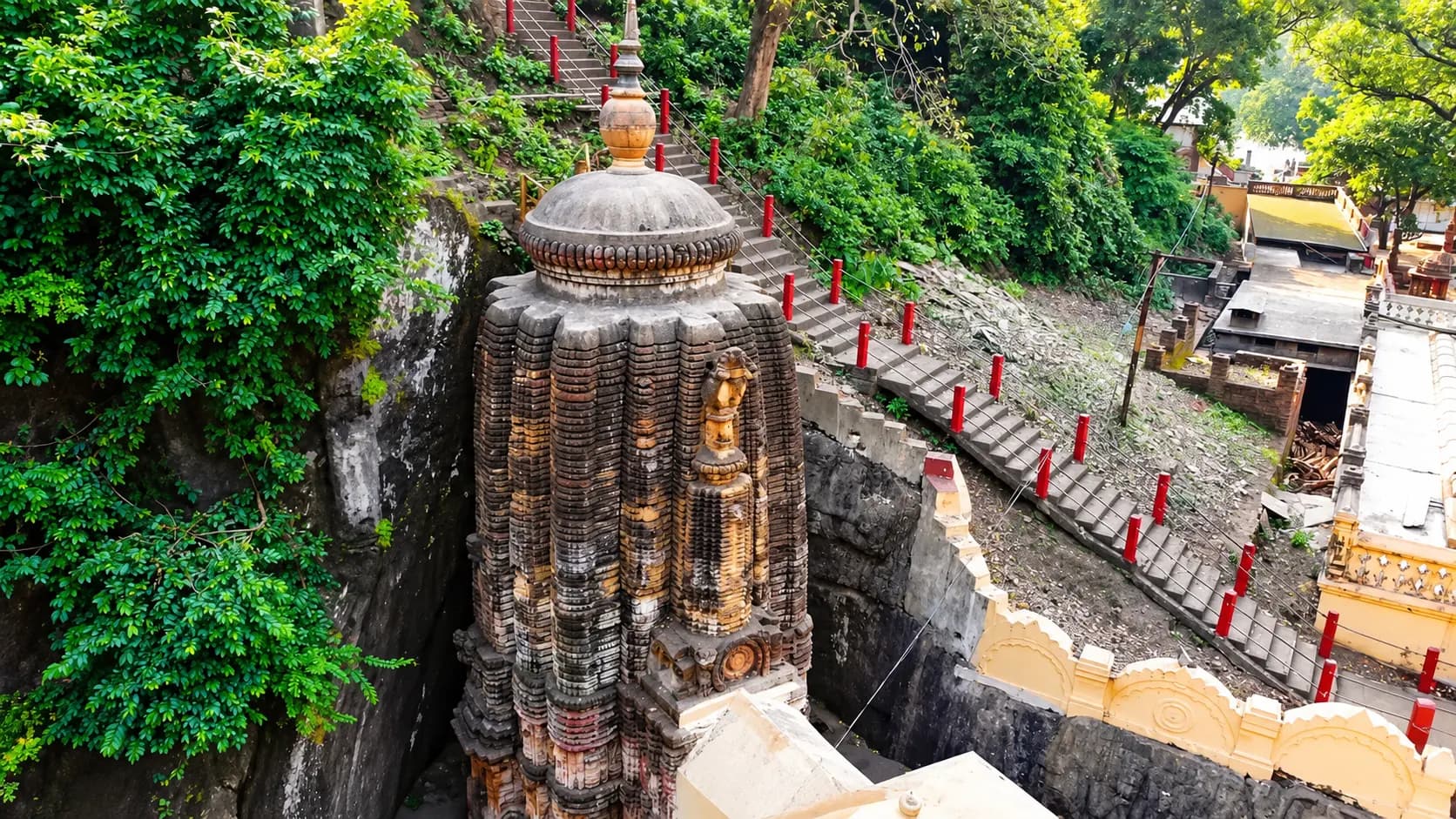
Nestled against the emerald-clad northern slopes of the sacred Gandhamardan mountain range in Bargarh district, Western Odisha, Nrusinghanath Temple is one of India’s most captivating medieval pilgrim sanctuaries. Situated near the small town of Paikmal, roughly 110 kilometres west of Bargarh and 160 kilometres from Sambalpur, this ancient holy seat bridges intense Vaishnavite devotion, rich Chauhan dynastic architecture, and pristine highland ecology. Here, where dense sal, teak, and medicinal forests blanket the hillsides, the crystal-clear waters of the sacred Papaharini stream cascade down rocky mountain gorges, filling natural stone plunge pools before gently washing past the plinth of an intricately carved 15th-century stone temple.
What makes Nrusinghanath truly distinctive across the Indian subcontinent is its principal deity: Lord Vidala-Nrusingha (affectionately revered by Western Odishan communities as Marjara Keshari), a unique manifestation of Lord Vishnu portrayed with the body of a celestial lion and the face of a cat. Flanked by pristine mountain waterfalls - most famously the 40-foot cascade of Kapildhar - and resting at the trailhead of an ancient 16-kilometre trans-mountain pilgrimage track crossing the Gandhamardan ridge into Balangir district’s Harishankar shrine, Nrusinghanath offers a deeply rejuvenating journey into mythological lore, botanical wonder, and medieval craftsmanship.
Start here. Open a tile for the full details.
Why goRead details
Whether you are drawn by deep spiritual devotion, a passion for medieval Kalinga architecture, or a desire to trek through one of India's richest botanical reserves, Nrusinghanath delivers an exceptional travel experience:
When to visitRead details
The climate around the Gandhamardan foothills varies significantly through the year. Planning your trip in accordance with the seasonal rhythm ensures an enjoyable and safe visit.
Entry & permissionsRead details
Fees, visiting hours and entry rules may change. Confirm the latest details with the official operator or local authority before travelling.
A visit to Nrusinghanath is characterized by welcoming hospitality and transparent regulations:
- Admission Charges: Entrance to the temple premises, the holy Papaharini stream bathing ghats, and the hiking trail to Kapildhar waterfall is completely free of cost.
- Vehicle Parking Fees: A nominal community parking fee is managed by the local temple administration at the foothill parking ground:
- Two-wheelers: ₹10
- Auto-rickshaws and Cars: ₹20 - ₹30
- Tourist Vans and Buses: ₹50
- Temple Operating Hours:
- The temple opens every day at 06:00 in the morning and closes at 20:00 in the evening.
- Midday Intermission: The sanctum sanctorum briefly closes between 12:30 and 14:00 for the ceremonial offering of afternoon bhog and the deity's rest (pahuda). The outer temple courtyards and river ghats remain accessible throughout the day.
- During the three-day Nrusingha Chaturdashi festival in May, the temple remains open around the clock for continuous pilgrim darshan.
- Daily Ritual Schedule:
- Mangala Alati (Dawn Lamp Ceremony): 06:15
- Suryapuja & Balya Bhoga (Morning Offering): 08:30
- Madhyanna Dhoopa & Anna Bhoga (Noon Feast): 12:00 to 12:30
- Sandhya Alati (Evening Prayer): 18:30
- Ratri Pahuda (Night Closure): 20:00
- Photography & Filming Regulations:
- Photography and video recording are freely permitted around the outer temple compound, the Papaharini stream, Kapildhar waterfall, and along forest trails.
- Photography, videography, and mobile phone usage are strictly prohibited inside the inner sanctum of Lord Vidala Nrusingha.
- Commercial drone filming across the Gandhamardan Biodiversity Heritage Site requires prior written permission from both the District Administration of Bargarh and the Divisional Forest Officer (DFO), Bargarh.
- Trekking Permissions:
- Walking up to Kapildhar waterfall (approx. 4 km) does not require any special permit.
- Hikers undertaking the full 16-kilometre trans-mountain trek across the Gandhamardan ridge to Harishankar should inform the local Forest Department beat office at Paikmal and are strongly advised to hire a local tribal forest guide to navigate the dense, unmarked interior trails safely.
Plan your visitRead details
Nrusinghanath is situated in the westernmost corner of Odisha near the Chhattisgarh state border. It can be reached comfortably by private vehicle, tourist taxi, or public transport via several well-connected transport nodes.
Trail Safety and Footwear Considerations
While shoes must be removed at the designated footwear stand outside the main temple entrance, you must bring sturdy, slip-resistant walking shoes or hiking sandals for the trail along the stream. The stone steps leading up toward Kapildhar are perpetually damp from forest moisture and spray, developing slippery moss coatings during and after the monsoon. Avoid smooth-soled flip-flops or open heels. When bathing in the Papaharini stream or the waterfall plunge pools, stay strictly within designated shallow zones; underwater granite shelves drop off suddenly into deep crevices with strong currents.
Explore the full guide - choose a topic below.
Why visit?
Whether you are drawn by deep spiritual devotion, a passion for medieval Kalinga architecture, or a desire to…Explore detailsClose details
Whether you are drawn by deep spiritual devotion, a passion for medieval Kalinga architecture, or a desire to trek through one of India's richest botanical reserves, Nrusinghanath delivers an exceptional travel experience:
- The Rare Feline Iconography of Vidala-Nrusingha: While classical depictions of Lord Narasimha across India depict a human body with the terrifying face of a lion tearing apart the demon Hiranyakashipu, Nrusinghanath enshrines a singular feline deity. Local legend recounts how Vishnu assumed the form of a cat (marjara / vidala) to trap the subterranean demon Musika Daitya (who fled in the guise of a mouse into a deep fissure in the Gandhamardan rock). Worshipping the feline deity poised above the aperture offers a captivating glimpse into regional Odishan mythology.
- The Sacred Cascades of the Papaharini: Rising in the virgin springs of the upper Gandhamardan plateau, the Papaharini (meaning "remover of sins") flows past the temple courtyard in a series of dramatic mountain waterfalls. Taking a holy dip in the crystal-clear, icy mountain pools of Papaharini Kund, followed by a scenic hike up to the roaring falls of Kapildhar and Bhimdhar, combines traditional pilgrim purification with exhilarating nature exploration.
- Centuries-Old Chauhan Dynastic Splendour: The existing temple structure was commissioned in March 1413 CE by King Baijal Singh Dev II, the fourth Chauhan ruler of the Kingdom of Patna. A priceless stone inscription etched in proto-Odia script set within the temple doorframe records this royal dedication, providing authentic documentary evidence of medieval Western Odisha’s artistic, political, and linguistic flourishing.
- The Gandhamardan Biodiversity Heritage Site: Celebrated in the Ramayana as the mythical mountain transported from the Himalayas by Lord Hanuman to deliver the life-saving Sanjeevani herb to a wounded Lakshmana, the Gandhamardan range was officially notified as Odisha’s third Biodiversity Heritage Site (BHS) in March 2023. The 18,963-hectare protected forest is home to more than 1,050 species of medicinal plants, rare orchids, and rich wildlife including leopards, barking deer, and four-horned antelopes.
- The Epic Cross-Mountain Trail to Harishankar: For avid hikers and spiritual pilgrims, Nrusinghanath serves as the northern trailhead for the legendary 16-kilometre foot march over the Gandhamardan mountain plateau to Harishankar Temple on the southern slope in Balangir district. This ancient forest trail winds through medicinal plant meadows, secluded streams, and windswept highland plateaus, offering one of the finest day treks in Eastern India.
What to expect
Visiting Nrusinghanath is a multi-layered sensory journey that transitions seamlessly from village bustle to…Explore detailsClose details
Visiting Nrusinghanath is a multi-layered sensory journey that transitions seamlessly from village bustle to forested serenity, sacred stone sanctums, and cool rushing mountain waters.
Arrival and Temple Precinct
The final approach to Nrusinghanath winds through lush farmland and dense deciduous forest before terminating at the foothills of the Gandhamardan range. The temple complex is surrounded by towering banyan, sal, and mahua trees whose branches provide a natural green canopy over the access road. At the entrance, an open courtyard houses traditional stalls operated by local villagers selling puja baskets containing flowers, incense, tulsi garlands, and clay pots of sweet mahaprasad. Nearby, tribal apothecaries and local herbalists display raw roots, tree barks, forest honey, and herbal concoctions freshly harvested from the surrounding slopes.
Temple Architecture and Medieval Inscriptions
Entering through the stone gateway, visitors encounter the 45-foot-tall stone temple constructed from dressed beige sandstone and chlorite masonry:
- The Vimana (Sanctum Tower): Built in the classical Kalinga rekha deula design with a graceful curvilinear spire. The exterior facade features intricate relief carvings of Vishnu's ten incarnations (Dasavatara), celestial nymphs (alasakanyas), dancing musicians, and rampant mythical lions (gajasimhas).
- The Jagamohana (Assembly Hall): Supported by twelve massive, carved stone pillars. Several pillars and door lintels exhibit stylistic characteristics dating back to the 9th to 11th centuries Somavamshi era, demonstrating that the 15th-century Chauhan builders incorporated elements from an earlier, ancient temple that stood on this sacred site.
- The 1413 CE Inscription: On the right-hand doorframe of the inner sanctum, visitors can inspect a remarkably preserved stone inscription incised in proto-Odia characters. It records that King Baijala Deva, son of Maharaja Vatsaraja Deva of the Chauhan house of Patna, erected the temple of Vidala Nrusingha on Friday, the full-moon day of Chaitra in Saka 1335 (March 1413 CE) and endowed the revenue of Loisingha and Adigam villages for the temple's maintenance.
The Inner Sanctum and Holy Darshan
Stepping down into the inner sanctum (garbhagriha), the ambient temperature drops noticeably. In the dimly lit chamber, illuminated by brass oil lamps (diyas), rests the revered black chlorite idol of Lord Vidala Nrusingha. The deity has the head of a fierce yet benign cat with prominent eyes, erect ears, and sharp whiskers, mounted on a feline-lion body. Priests continuously bathe the murti with fresh water piped from the mountain spring, decorating it with fragrant sandalwood paste, red hibiscus, and tulsi leaves. Devotees receive sacred water (charanamrita) and packets of khichdi and sweet porridge offered as bhog.
The Waterfalls: Kapildhar, Bhimdhar, and Beyond
Directly behind the main temple complex, the Papaharini stream carves through massive pink and grey granite boulders. A paved pathway and a flight of weathered stone steps ascend into the dense forest along the stream course:
- Papaharini Kund: Located right beside the temple plinth, this stepped bathing tank receives the initial cascade of the mountain stream. Pilgrims immerse themselves here before entering the temple, believing the water possesses medicinal properties absorbed from the hundreds of herbal roots uphill.
- Kapildhar Waterfall (approx. 4 km uphill): The most famous cascade in the complex. Here, the stream plunges nearly 40 feet over a sheer vertical granite precipice into a wide, foam-flecked rock pool. Surrounded by dense jungle and giant ferns, the air around Kapildhar is cool and misty. A small shrine dedicated to Sage Kapila stands perched beside the falls.
- Bhimdhar and Gadadhar (6 km and 9 km uphill): For adventurous trekkers, the rocky foot trail continues ascending through untamed forest to Bhimdhar and Gadadhar. These remote waterfalls feature deep, swirling mountain pools enclosed by high cliffs, where the only sounds are rushing water and the calls of hill mynas and peacocks.
Best time to visit
The climate around the Gandhamardan foothills varies significantly through the year.Explore detailsClose details
The climate around the Gandhamardan foothills varies significantly through the year. Planning your trip in accordance with the seasonal rhythm ensures an enjoyable and safe visit.
Seasonal Breakdown
- Winter (October to March) - Peak Season: This is undeniably the most comfortable and rewarding time to explore Nrusinghanath and hike the surrounding hills. Daytime temperatures hover pleasantly between 18°C and 28°C, while nights and early mornings in the forested valley are brisk and refreshing (10°C to 15°C). The mountain streams run clear, the humidity is minimal, and forest trails up to Kapildhar and Harishankar are dry, secure, and easily navigable.
- Monsoon (July to September) - Spectacular Waterfalls & Lush Wilderness: The monsoon transforms the Gandhamardan hills into a vivid green paradise. The Papaharini stream swells into a roaring torrent, and the waterfalls at Kapildhar, Bhimdhar, and Gadadhar plunge with thunderous power, creating magnificent visual spectacles. However, heavy rains make the stone trails extremely slick and algae-coated. Leeches emerge along the forest paths, and flash runoff can occasionally make bathing in the stream dangerous. If visiting during the monsoon, sturdy waterproof footwear with aggressive grip is essential.
- Summer (April to June) - Extremely Hot & Dry: Western Odisha experiences blistering summer heat, with temperatures regularly soaring between 42°C and 45°C. The forest turns dry and leafless, the flow of the Papaharini stream diminishes to a trickle, and hiking up the exposed stone steps becomes physically exhausting. Check the current visiting hours and permitted access with the site operator before departure; ceremonies, closures and visitor sessions can affect access.
Key Festivals and Fairs
- Nrusingha Chaturdashi (May / Vaisakha Sukla Chaturdashi): The crowning religious and cultural event of the year. Commemorating the appearance day of Lord Narasimha, this festival draws over 100,000 pilgrims from Odisha, Chhattisgarh, Madhya Pradesh, and Jharkhand. The village grounds host an immense three-day fair (Nrusinghanath Mela) featuring traditional Sambalpuri folk dance, Dalkhai performances, street theatre, giant ferris wheels, and hundreds of handicraft and culinary stalls.
- Maha Shivaratri (February / March): While primarily a Vaishnavite shrine, Nrusinghanath’s close connection to the Shaivite shrine of Harishankar across the mountain means that thousands of pilgrims observe Shivaratri here, bathing in the Papaharini at midnight before undertaking the cross-mountain trek.
- Makar Sankranti (January): Celebrated with holy ritual dips in the ice-cold mountain stream at dawn, followed by special offerings of newly harvested rice and sesame sweets (til ladoo).
How to reach
Nrusinghanath is situated in the westernmost corner of Odisha near the Chhattisgarh state border.Explore detailsClose details
Nrusinghanath is situated in the westernmost corner of Odisha near the Chhattisgarh state border. It can be reached comfortably by private vehicle, tourist taxi, or public transport via several well-connected transport nodes.
By Air
- Swami Vivekananda Airport, Raipur, Chhattisgarh (RPR): The most convenient major airport, situated approximately 160 kilometres west of Nrusinghanath. Raipur is a fully equipped domestic airport offering frequent direct flights to New Delhi, Mumbai, Kolkata, Bengaluru, Hyderabad, Chennai, and Ahmedabad. From Raipur, you can hire a private taxi to Nrusinghanath via NH-353 through Arang, Bagbahara, and Nuapada (a smooth 3.5 to 4-hour drive).
- Veer Surendra Sai Airport, Jharsuguda (JRG): Located approximately 185 kilometres northeast. Jharsuguda operates direct flights to Delhi, Kolkata, Bengaluru, and Bhubaneswar. From Jharsuguda, the drive to Nrusinghanath proceeds via Bargarh and Padampur (taking roughly 4 hours via NH-53 and SH-3).
By Train
- Khariar Road Railway Station (KRAR): The closest active railway hub, situated roughly 40 kilometres west of Nrusinghanath on the Raipur - Vizianagaram main railway line. Numerous express trains connecting Chhattisgarh and Coastal Andhra Pradesh stop here. Taxis and auto-rickshaws are readily available outside the station for the 1-hour drive to the temple.
- Kantabanji Railway Station (KBJ): Located about 60 kilometres south, offering excellent connectivity on the East Coast Railway route.
- Bargarh Road Railway Station (BRGA): Located approximately 110 kilometres east on the Sambalpur - Titlagarh line. From Bargarh, regular state transport buses and private taxis ply toward Padampur and Paikmal.
By Road
- From Bargarh Town (approx. 110 km / 2.5 hours): Head southwest along State Highway 3 (SH-3) passing through Barpali, Padampur, and Paikmal. The road is well-surfaced two-lane asphalt cutting through pleasant countryside and Sal forested hill passes.
- From Sambalpur City (approx. 160 km / 3.5 hours): Drive west on National Highway 53 (NH-53) to Bargarh, then turn south toward Padampur and Paikmal.
- From Balangir (approx. 100 km / 2.5 hours): Travel northwest via Patnagarh to reach Paikmal and Nrusinghanath.
- Bus Services: The Odisha State Road Transport Corporation (OSRTC) and private bus operators run daily scheduled services connecting Bargarh, Sambalpur, Balangir, and Raipur to Paikmal and Nrusinghanath bus terminal.
Entry, timings and permissions
Fees, visiting hours and entry rules may change.Explore detailsClose details
Fees, visiting hours and entry rules may change. Confirm the latest details with the official operator or local authority before travelling.
A visit to Nrusinghanath is characterized by welcoming hospitality and transparent regulations:
- Admission Charges: Entrance to the temple premises, the holy Papaharini stream bathing ghats, and the hiking trail to Kapildhar waterfall is completely free of cost.
- Vehicle Parking Fees: A nominal community parking fee is managed by the local temple administration at the foothill parking ground:
- Two-wheelers: ₹10
- Auto-rickshaws and Cars: ₹20 - ₹30
- Tourist Vans and Buses: ₹50
- Temple Operating Hours:
- The temple opens every day at 06:00 in the morning and closes at 20:00 in the evening.
- Midday Intermission: The sanctum sanctorum briefly closes between 12:30 and 14:00 for the ceremonial offering of afternoon bhog and the deity's rest (pahuda). The outer temple courtyards and river ghats remain accessible throughout the day.
- During the three-day Nrusingha Chaturdashi festival in May, the temple remains open around the clock for continuous pilgrim darshan.
- Daily Ritual Schedule:
- Mangala Alati (Dawn Lamp Ceremony): 06:15
- Suryapuja & Balya Bhoga (Morning Offering): 08:30
- Madhyanna Dhoopa & Anna Bhoga (Noon Feast): 12:00 to 12:30
- Sandhya Alati (Evening Prayer): 18:30
- Ratri Pahuda (Night Closure): 20:00
- Photography & Filming Regulations:
- Photography and video recording are freely permitted around the outer temple compound, the Papaharini stream, Kapildhar waterfall, and along forest trails.
- Photography, videography, and mobile phone usage are strictly prohibited inside the inner sanctum of Lord Vidala Nrusingha.
- Commercial drone filming across the Gandhamardan Biodiversity Heritage Site requires prior written permission from both the District Administration of Bargarh and the Divisional Forest Officer (DFO), Bargarh.
- Trekking Permissions:
- Walking up to Kapildhar waterfall (approx. 4 km) does not require any special permit.
- Hikers undertaking the full 16-kilometre trans-mountain trek across the Gandhamardan ridge to Harishankar should inform the local Forest Department beat office at Paikmal and are strongly advised to hire a local tribal forest guide to navigate the dense, unmarked interior trails safely.
Nearby places to consider
Nrusinghanath sits at the threshold of several historic and scenic landmarks across Western Odisha and eastern…Explore detailsClose details
Nrusinghanath sits at the threshold of several historic and scenic landmarks across Western Odisha and eastern Chhattisgarh:
- Harishankar Temple (approx. 16 km via mountain trek / 150 km by road): Located on the southern slope of the Gandhamardan range in Balangir district, Harishankar is a renowned shrine dedicated to the unified form of Lord Vishnu (Hari) and Lord Shiva (Shankar). Like Nrusinghanath, it features a gushing perennial mountain stream that cascades down natural granite slides, creating an exhilarating natural water flume where pilgrims slide into natural rock pools.
- Gandhamardan Herbal Gardens, Paikmal (approx. 3 km northeast): An expansive botanical repository and research nursery managed by the State Ayurvedic Department and the Forest Department. Visitors can examine living specimens of hundreds of rare medicinal and therapeutic plants cultivated in this natural foothill climate.
- Debrigarh Wildlife Sanctuary (approx. 110 km northeast): Situated along the western shoreline of the mighty Hirakud Reservoir in Bargarh and Sambalpur districts, Debrigarh is famous for dense wildlife sightings including Indian bison (gaur), leopards, sambar, wild boars, and over 200 species of migratory birds.
- Ranipur-Jharial (approx. 125 km south): An extraordinary archaeological site in Balangir district known as the "Soma Tirtha." Set atop a massive flat granite outcrop, it boasts one of India's four rare circular hypaethral Chausath Yogini Temples (64 Yoginis), alongside the massive brick temple of Indralath and over 50 medieval Shaivite shrines.
- Bargarh Town (approx. 110 km east): Famous worldwide for hosting the Dhanu Yatra - the world's largest open-air theatre festival - held annually in December/January, where the entire town transforms into the mythological city of Mathura under the rule of King Kansa.
In pictures
The practical bits
Before you go.
Plan ahead
To experience the spiritual, natural, and historical riches of Nrusinghanath to their fullest, keep the following…Explore detailsClose details
To experience the spiritual, natural, and historical riches of Nrusinghanath to their fullest, keep the following structured planning guidelines in mind:
Allocating Time for the Visit
Set aside at least 4 to 5 hours for a comprehensive visit to Nrusinghanath.Explore detailsClose details
Set aside at least 4 to 5 hours for a comprehensive visit to Nrusinghanath. This allows 1 hour for temple darshan, exploring the 15th-century Chauhan stone inscriptions, and walking through the outer courtyards; 1 hour for a refreshing holy dip in the Papaharini stream; and 2 to 3 hours for the rewarding hike up through the forest to Kapildhar waterfall and back. If you plan to complete the full 16-kilometre trek across the Gandhamardan ridge to Harishankar, allocate an entire full day (7 to 9 hours of walking) starting at sunrise.
Trail Safety and Footwear Considerations
While shoes must be removed at the designated footwear stand outside the main temple entrance, you must bring…Explore detailsClose details
While shoes must be removed at the designated footwear stand outside the main temple entrance, you must bring sturdy, slip-resistant walking shoes or hiking sandals for the trail along the stream. The stone steps leading up toward Kapildhar are perpetually damp from forest moisture and spray, developing slippery moss coatings during and after the monsoon. Avoid smooth-soled flip-flops or open heels. When bathing in the Papaharini stream or the waterfall plunge pools, stay strictly within designated shallow zones; underwater granite shelves drop off suddenly into deep crevices with strong currents.
Forest Conservation and Wildlife Etiquette
Remember that you are stepping into the protected Gandhamardan Biodiversity Heritage Site.Explore detailsClose details
Remember that you are stepping into the protected Gandhamardan Biodiversity Heritage Site. Do not pluck, break, or harvest any medicinal herbs, wild flowers, or plant cuttings, as doing so is a punishable forest offense under the Biological Diversity Act. Carry your personal trash back down to the temple disposal bins; never discard plastic water bottles, gutkha packets, or food containers along the sacred stream or waterfall paths. Wild animals, including sloth bears and leopards, inhabit the upper reaches of the mountain; avoid trekking alone after 16:30 and never hike the deep mountain trails after dark.
Accommodation and Dining Practicalities
For overnight stays, the Odisha Tourism Development Corporation (OTDC) operates the comfortable Panthanivas…Explore detailsClose details
For overnight stays, the Odisha Tourism Development Corporation (OTDC) operates the comfortable Panthanivas Nrusinghanath near Paikmal, featuring air-conditioned and non-air-conditioned rooms, well-maintained gardens, and an on-site restaurant serving hearty regional meals. In addition, several non-profit pilgrim dharamsalas operated by the Temple Trust offer affordable, basic lodging. Delicious, piping-hot temple mahaprasad - comprising aromatic rice, dalma (lentils cooked with indigenous vegetables), and sweet rice kheer - is available daily around 13:00 at nominal rates in the temple dining hall.
A few things you might wonder
Common questions about visiting Nrusinghanath Temple. Fees, visiting hours and ceremonies are researched details that may change; confirm current arrangements with the operator before travelling.
Who built Nrusinghanath Temple and when was it established?
Why is Lord Vishnu worshipped in the form of a cat (Vidala-Nrusingha) here?
Is there an entry fee to visit Nrusinghanath Temple or the waterfalls?
How do I reach Kapildhar waterfall, and is the trail difficult?
What is the connection between the Gandhamardan Hills and the Ramayana?
Can I trek from Nrusinghanath across the mountain to Harishankar Temple?
What facilities are available for overnight stay and food at Nrusinghanath?
When is the best season to plan a trip to Nrusinghanath?
Explore more in Sambalpur
Discover other destinations around this hub
More Hubs in Odisha
Continue exploring other travel hubs in this state
Planning a trip to Sambalpur & West Odisha?