Udayagiri & Khandagiri Caves
Complete visitor guide to Udayagiri and Khandagiri Caves in Bhubaneswar, Odisha.
Location
Golden Triangle, Odisha
A closer look
Your visit, at a glance.
Golden Triangle, Odisha
GET TO KNOW THE PLACE
Rising with stark, ancient majesty above the suburban skyline of western Bhubaneswar, Khordha District, Odisha, the twin sandstone ridges of Udayagiri and Khandagiri stand as…
The story of Udayagiri & Khandagiri Caves
Rising with stark, ancient majesty above the suburban skyline of western Bhubaneswar, Khordha District, Odisha, the twin sandstone ridges of Udayagiri and Khandagiri stand as monumental testaments to the dawn of recorded history in eastern India. Excavated primarily during the 1st and 2nd centuries BCE under the visionary patronage of Emperor Kharavela of the Mahameghavahana (Chedi) dynasty, as well as his queens and royal successors, this complex comprises 33 rock-cut monastic caverns (lenas). Carved out of the living coarse-grained yellow sandstone of Udayagiri ("Hill of Sunrise", rising to 41.8 metres) and Khandagiri ("Broken Hill", rising to 37.5 metres), these caves were conceived not as temples for ritual worship, but as austere, weather-proof residential retreats and meditation cells for ascetic Jain monks (Sramanas and Nirgranthas) seeking quietude away from the bustling royal metropolis of Kalinganagara.
Historically, Udayagiri and Khandagiri hold an unparalleled place in South Asian epigraphy and art history. On the overhanging natural brow of Cave 14 on Udayagiri, known as Hathigumpha (the Elephant Cave), is inscribed the famous 17-line Hathigumpha Inscription. Written in ancient Brahmi script and Prakrit language, this monumental autobiographical charter represents one of the most critical epigraphical records in all of ancient India. Inscribed by order of Emperor Kharavela himself, it provides a meticulously detailed year-by-year chronicle of his life, military triumphs across the Indian subcontinent (including the defeat of Magadha and the Greek King Demetrius), musical erudition, hydraulic engineering achievements, and his historic recovery of the venerated Kalinga Jina religious icon taken by the Nanda Empire three centuries prior.
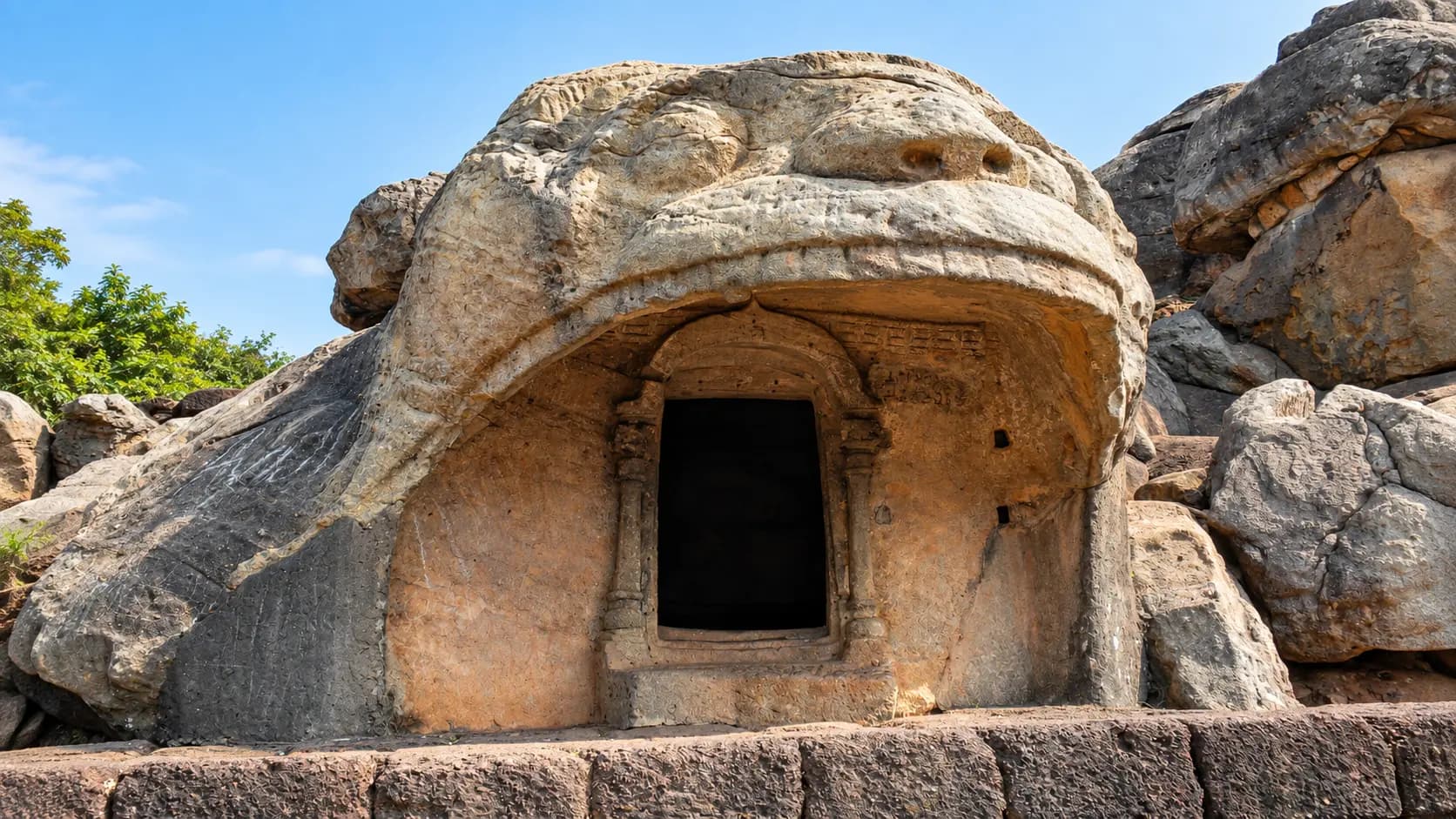
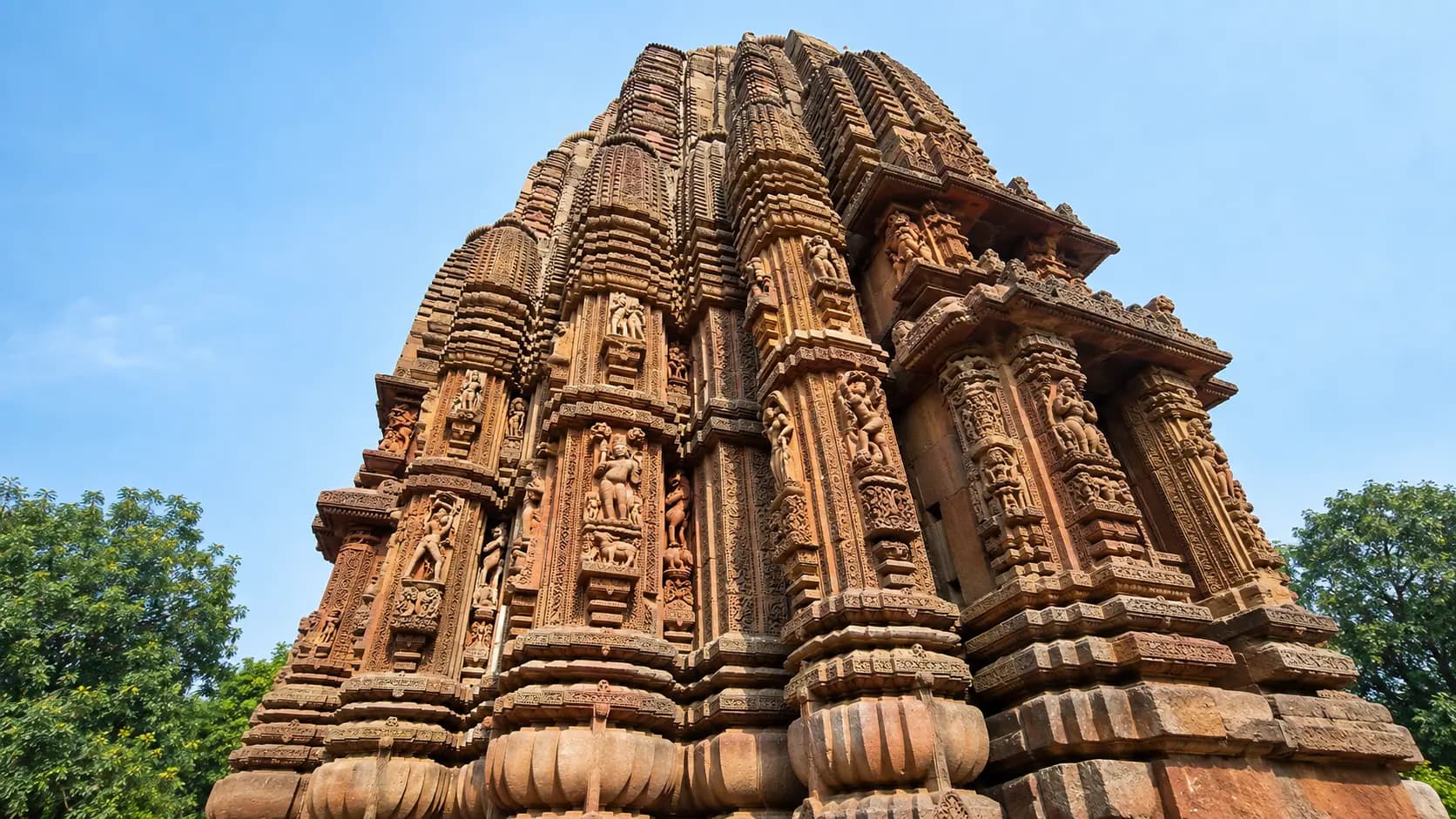
Architecturally, the caves represent an astonishing evolutionary leap in early Indian rock-cut design, developing contemporaneously with the earliest Buddhist chaityas and viharas at Barabar, Bhaja, and Bedse. From the monumental, two-storied monastic palace of Ranigumpha (Queen's Cave) with its sweeping open courtyard and animated multi-figured narrative friezes, to the whimsical zoomorphic facade of Vyaghragumpha (sculpted to resemble the gaping jaws of a roaring tiger), and the medieval 11th-century Somavamshi-era Tirthankara relief galleries of Barabhuji Gumpha on Khandagiri, the twin hills form an open-air museum chronicling over a millennium of Jain spiritual devotion, royal diplomacy, and artistic brilliance.
Start here. Open a tile for the full details.
Why goRead details
- Read the 17-Line Hathigumpha Inscription of Emperor Kharavela: Stand before one of the most vital historical documents of ancient India. Inscribed in crisp 2,100-year-old Brahmi characters upon the natural cavern roof of Hathigumpha (Cave 14), this monumental royal charter offers an unedited, firsthand autobiographical account of Emperor Kharavela's military victories, public welfare works, and deep patronage of Jainism.
- Explore the Grandeur of Ranigumpha (Queen's Cave): Walk through the largest, most sophisticated rock-cut monastery in the complex. This two-storied architectural masterpiece features an expansive central courtyard, multi-tiered pillared galleries, and continuous high-relief friezes illustrating royal processions, hunting expeditions, forest wildlife, court dancers, and classical dramatic legends.
- Marvel at Whimsical Zoomorphic Rock Architecture: Encounter extraordinary ancient sculpting ingenuity at Vyaghragumpha (Cave 12), where the entire cave exterior is chiseled into the ferocious head of a roaring tiger, and Sarpa Gumpha (Cave 13), crowned with an entrance canopy sculpted like a three-hooded serpent.
- Trace the Millennium-Long Evolution of Jain Iconography: Contrast the austere, aniconic 1st-century BCE monk cells of Udayagiri with the richly sculpted medieval caves of Khandagiri. Inside Barabhuji Gumpha and Navamuni Gumpha, admire high-relief 11th-century carvings of all 24 Jain Tirthankaras alongside their attendant twelve-armed Sasana Devis (protective goddesses).
- Ascend to the Summit of Khandagiri and the Digambara Temple: Climb the stepped flagstone path to the peak of Khandagiri Hill, crowned by a pristine 19th-century white marble-and-stone Digambara Jain Temple dedicated to Bhagwan Rishabhanatha, offering panoramic 360-degree views across Bhubaneswar's urban canopy and distant forest ridges.
- Experience Natural Ancient Acoustic Engineering: Test the astonishing acoustic design of Ranigumpha's central cell. A whisper or spoken phrase delivered inside the chamber resonates clearly across the expansive stone courtyard, demonstrating that the space was deliberately engineered to host royal musical recitals and philosophical discourses.
When to visitRead details
Bhubaneswar experiences a tropical savanna climate characterized by distinct seasons: a pleasant, dry winter, an intensely hot and arid summer, and a humid southwest monsoon. Because visiting Udayagiri and Khandagiri involves climbing open, unshaded sandstone hills and walking on bare rock surfaces, selecting the appropriate season and time of day is vital for comfort and safety.
Entry & permissionsRead details
Fees, visiting hours and entry rules may change. Confirm the latest details with the official operator or local authority before travelling.
- Admission Charges:
- Udayagiri Hill (ASI Protected Monument):
- Indian Citizens, SAARC, and BIMSTEC Visitors: ₹25 per person for physical paper tickets at the gatehouse counter; discounted to ₹20 per person when paying digitally via the ASI e-ticketing portal.
- Foreign Nationals: ₹300 per person at the cash counter; discounted to ₹250 per person via digital cashless payment.
- Children under 15 Years: Free admission upon presentation of valid proof of age.
- Khandagiri Hill: Completely free public entry (₹0). There are no entry gates or ticketing counters on Khandagiri Hill or at the hilltop Digambara Jain Temple.
- Udayagiri Hill (ASI Protected Monument):
- Vehicle Parking Fees: The municipal parking plaza charges:
- Two-wheelers / Scooters: ₹20
- Cars / Taxis / SUVs: ₹50
- Tourist Buses: ₹100
- Operational Hours: Both Udayagiri and Khandagiri hills are open daily from Sunrise to Sunset (06:00 AM to 18:00 PM) throughout the year, including Sundays and national holidays. The ASI ticket kiosk at Udayagiri operates from 06:00 AM to 17:30 PM.
- Permissions and Guidelines:
- No advance bureaucratic permits are required for general tourists, history students, or Jain pilgrims.
- Photography: Still photography using handheld smartphones, DSLR, or mirrorless cameras is permitted without additional fee. Tripods and commercial video equipment require prior written authorization from the ASI Bhubaneswar Circle.
- Drones: Recreational drone flights over the archaeological monument and surrounding hills are strictly prohibited without prior written clearance from the ASI, local police, and civil aviation authorities.
- Temple Decorum: Footwear must be removed before entering the inner sanctum of the hilltop Digambara Jain Temple on Khandagiri.
Plan your visitRead details
Udayagiri and Khandagiri Caves are situated in the western suburbs of Bhubaneswar along the Khandagiri-Chandaka Road, immediately adjacent to National Highway 16 (NH-16, the major Kolkata - Chennai corridor). The monument enjoys exceptional urban connectivity to all primary transit hubs.
Wildlife precautions and monkey safety
Both Udayagiri and Khandagiri hills are home to large, active troops of wild rhesus macaques and bonnet monkeys. While they are accustomed to human presence, they can be remarkably bold, opportunistic, and aggressive if they detect food.
Explore the full guide - choose a topic below.
Why visit?
Read the 17-Line Hathigumpha Inscription of Emperor Kharavela: Stand before one of the most vital historical…Explore detailsClose details
- Read the 17-Line Hathigumpha Inscription of Emperor Kharavela: Stand before one of the most vital historical documents of ancient India. Inscribed in crisp 2,100-year-old Brahmi characters upon the natural cavern roof of Hathigumpha (Cave 14), this monumental royal charter offers an unedited, firsthand autobiographical account of Emperor Kharavela's military victories, public welfare works, and deep patronage of Jainism.
- Explore the Grandeur of Ranigumpha (Queen's Cave): Walk through the largest, most sophisticated rock-cut monastery in the complex. This two-storied architectural masterpiece features an expansive central courtyard, multi-tiered pillared galleries, and continuous high-relief friezes illustrating royal processions, hunting expeditions, forest wildlife, court dancers, and classical dramatic legends.
- Marvel at Whimsical Zoomorphic Rock Architecture: Encounter extraordinary ancient sculpting ingenuity at Vyaghragumpha (Cave 12), where the entire cave exterior is chiseled into the ferocious head of a roaring tiger, and Sarpa Gumpha (Cave 13), crowned with an entrance canopy sculpted like a three-hooded serpent.
- Trace the Millennium-Long Evolution of Jain Iconography: Contrast the austere, aniconic 1st-century BCE monk cells of Udayagiri with the richly sculpted medieval caves of Khandagiri. Inside Barabhuji Gumpha and Navamuni Gumpha, admire high-relief 11th-century carvings of all 24 Jain Tirthankaras alongside their attendant twelve-armed Sasana Devis (protective goddesses).
- Ascend to the Summit of Khandagiri and the Digambara Temple: Climb the stepped flagstone path to the peak of Khandagiri Hill, crowned by a pristine 19th-century white marble-and-stone Digambara Jain Temple dedicated to Bhagwan Rishabhanatha, offering panoramic 360-degree views across Bhubaneswar's urban canopy and distant forest ridges.
- Experience Natural Ancient Acoustic Engineering: Test the astonishing acoustic design of Ranigumpha's central cell. A whisper or spoken phrase delivered inside the chamber resonates clearly across the expansive stone courtyard, demonstrating that the space was deliberately engineered to host royal musical recitals and philosophical discourses.
What to expect
Visiting Udayagiri and Khandagiri Caves is an active, immersive archaeological journey that spans two distinct…Explore detailsClose details
Visiting Udayagiri and Khandagiri Caves is an active, immersive archaeological journey that spans two distinct hills separated by a paved roadway and a bustling central plaza. The two hills offer complementary experiences: Udayagiri (the northern hill) contains 18 numbered caves and is an ASI-ticketed, manicured heritage park; Khandagiri (the southern hill) contains 15 numbered caves and is an open, free-access spiritual pilgrimage site crowned by an active Jain temple.
Exploring Udayagiri Hill (18 Caves):
Entering through the ASI gatehouse, you step into landscaped gardens dotted with flowering frangipani and shaded lawns. A wide stone staircase leads directly to the monumental facade of Ranigumpha (Cave 1). The sheer scale of this double-storied monastery is breathtaking: an open amphitheatre-like courtyard cut into the living hillside, framed by an upper and lower veranda supported by heavy square pillars. As you walk along the upper veranda, examine the continuous narrative friezes carved along the architraves. You will see vibrant depictions of caparisoned royal elephants, soldiers bearing swords and shields, acrobatic dancers accompanied by flutists and drummers, and a dramatic narrative sequence depicting an elopement or abduction scene that scholars link to the ancient classical drama of Vasavadatta and King Udayana.
Continuing along the paved hill path, you pass Chota Hathigumpha (Cave 3), adorned with delicate entrance carvings of wild elephants, and Alakapuri (Cave 4) with its winged mythical beasts. Further up the slope lies Mancapuri and Swargapuri (Cave 9), a double-storied complex preserving inscriptions by Kharavela's chief queen (the Queen of Simhapatha) and his royal successors, depicting royal courtiers bowing in worship before a sacred Jain altar.
Ascending toward the upper terrace brings you to the hallowed site of Hathigumpha (Cave 14). This natural, irregular cavern opens wide like the belly of an elephant. Above its entrance portal, protected behind a glass and metal railing installed by the ASI, is the world-famous 17-line inscription of Emperor Kharavela. Nearby, don't miss Vyaghragumpha (Cave 12), where ancient stonecutters brilliantly transformed a natural boulder into the gaping, fanged maw of a roaring Bengal tiger, with the small doorway of the monk's cell forming the open throat.
Exploring Khandagiri Hill (15 Caves):
Crossing the road onto Khandagiri Hill, you begin a steeper climb along ancient stone staircases cut into the weathered rock face. The lower caves - Tatowa Gumpha 1 and 2 (Caves 1 & 2) - are flanked by carved guardian sentinels and arches filled with lively squawking parrots (tatowa). In Ananta Gumpha (Cave 3), inspect ancient 1st-century BCE relief tympanums featuring Goddess Gajalakshmi bathed by celestial elephants and the Sun God Surya riding a four-horse chariot with his consorts.
Higher up the hill, the character of the caves shifts from early austere cells to medieval devotional shrines. During the Somavamshi period (10th - 11th century CE), Jain devotees reoccupied the hill and transformed several caves into sculpture galleries. Inside Navamuni Gumpha (Cave 7) and Barabhuji Gumpha (Cave 8), the walls are densely carved with seated and standing figures of all 24 Jain Tirthankaras - including Rishabhanatha, Parshvanatha, and Mahavira - flanked by intricate, multi-armed female protective goddesses (Sasana Devis) like Chakreswari and Rohini.
At the summit of Khandagiri (elevation ~55 metres), a flat stone plateau opens up to reveal the brilliant white Digambara Jain Temple, built in the 19th century by the local Jain merchant community. The temple remains a living shrine of prayer and meditation, offering cool marble verandas and panoramic views of the green Chandaka forest canopy to the west and the modern skyline of Bhubaneswar to the east.
Best time to visit
Bhubaneswar experiences a tropical savanna climate characterized by distinct seasons: a pleasant, dry winter, an…Explore detailsClose details
Bhubaneswar experiences a tropical savanna climate characterized by distinct seasons: a pleasant, dry winter, an intensely hot and arid summer, and a humid southwest monsoon. Because visiting Udayagiri and Khandagiri involves climbing open, unshaded sandstone hills and walking on bare rock surfaces, selecting the appropriate season and time of day is vital for comfort and safety.
The optimal season to explore Udayagiri and Khandagiri is during the winter window from October through March. During these months, daytime weather in Bhubaneswar is delightfully mild and comfortable, with temperatures fluctuating between 16°C and 28°C. Clear azure skies, gentle breezes, and low humidity make it a joy to climb the stone stairs, stroll along the breezy upper ridges of the hills, and spend hours studying the microscopic details of ancient rock carvings without feeling overheated.
The summer period, spanning from April to June, brings extreme deltaic heat. Midday temperatures regularly climb between 38°C and 43°C, and the exposed yellow sandstone rocks absorb solar radiation, becoming blisteringly hot. Exploring the unshaded hilltops in the middle of a summer day is physically grueling and carries severe risk of heat exhaustion. If you must visit in summer, do so strictly between 06:00 and 08:30 AM, when the morning air is relatively cool and the rising sun illuminates the eastern facade of Udayagiri ("Hill of Sunrise").
The monsoon season, lasting from July through late September, transforms the twin hills into lush, moss-covered green outcrops. While the rainy season brings dramatic cloud formations, cool temperatures, and refreshing winds, it also introduces significant hazards: the ancient rock steps, uneven stone surfaces, and steep paths become coated with slippery green algae, requiring extreme caution and footwear with excellent traction.
How to reach
Udayagiri and Khandagiri Caves are situated in the western suburbs of Bhubaneswar along the Khandagiri-Chandaka…Explore detailsClose details
Udayagiri and Khandagiri Caves are situated in the western suburbs of Bhubaneswar along the Khandagiri-Chandaka Road, immediately adjacent to National Highway 16 (NH-16, the major Kolkata - Chennai corridor). The monument enjoys exceptional urban connectivity to all primary transit hubs.
- By Air: The nearest airport is Biju Patnaik International Airport (BBI) in Bhubaneswar, located just 6 kilometres southeast of the caves. The airport operates frequent non-stop domestic flights connecting Odisha with Delhi, Mumbai, Kolkata, Bengaluru, Hyderabad, Chennai, and other major cities. An app-based taxi (Ola/Uber) or prepaid airport cab can reach the caves in approximately 15 to 20 minutes via Aerodrome Road, Siripur Chhak, and Khandagiri Road.
- By Rail: Bhubaneswar Railway Station (BBS) at Master Canteen is situated approximately 7 kilometres east of the monument. Serving as the headquarters of the East Coast Railway, it connects Bhubaneswar directly with all major Indian metropolitan centres. An auto-rickshaw or taxi from the station's main exit takes approximately 18 to 25 minutes via Rajpath or Janpath and Khandagiri Chhak.
- By Bus and Public Transit:
- Mo Bus (Capital Region Urban Transport): Bhubaneswar's modern, air-conditioned Mo Bus network provides direct, highly frequent connections to Khandagiri. Routes 10, 16, and 20 connect Khandagiri Chhak directly with Master Canteen, Baramunda Inter-State Bus Terminal (ISBT), and KIIT University. The bus stop at Khandagiri Chhak is located just 300 metres from the entrance gates.
- From Baramunda ISBT: Confirm the current charge and what it includes with the operator or service provider. Visitor admission, vehicles, parking, activities and accommodation can have separate charges.
- Auto-Rickshaws & Taxis: Metered and app-based auto-rickshaws are abundant throughout Bhubaneswar. Confirm the current charge and what it includes with the operator or service provider. Visitor admission, vehicles, parking, activities and accommodation can have separate charges.
- Private Vehicles: Paved, organized vehicle parking plazas are situated in the central saddle between the two hills, providing ample space for two-wheelers, private cars, and tourist coaches.
Entry, timings and permissions
Fees, visiting hours and entry rules may change.Explore detailsClose details
Fees, visiting hours and entry rules may change. Confirm the latest details with the official operator or local authority before travelling.
- Admission Charges:
- Udayagiri Hill (ASI Protected Monument):
- Indian Citizens, SAARC, and BIMSTEC Visitors: ₹25 per person for physical paper tickets at the gatehouse counter; discounted to ₹20 per person when paying digitally via the ASI e-ticketing portal.
- Foreign Nationals: ₹300 per person at the cash counter; discounted to ₹250 per person via digital cashless payment.
- Children under 15 Years: Free admission upon presentation of valid proof of age.
- Khandagiri Hill: Completely free public entry (₹0). There are no entry gates or ticketing counters on Khandagiri Hill or at the hilltop Digambara Jain Temple.
- Udayagiri Hill (ASI Protected Monument):
- Vehicle Parking Fees: The municipal parking plaza charges:
- Two-wheelers / Scooters: ₹20
- Cars / Taxis / SUVs: ₹50
- Tourist Buses: ₹100
- Operational Hours: Both Udayagiri and Khandagiri hills are open daily from Sunrise to Sunset (06:00 AM to 18:00 PM) throughout the year, including Sundays and national holidays. The ASI ticket kiosk at Udayagiri operates from 06:00 AM to 17:30 PM.
- Permissions and Guidelines:
- No advance bureaucratic permits are required for general tourists, history students, or Jain pilgrims.
- Photography: Still photography using handheld smartphones, DSLR, or mirrorless cameras is permitted without additional fee. Tripods and commercial video equipment require prior written authorization from the ASI Bhubaneswar Circle.
- Drones: Recreational drone flights over the archaeological monument and surrounding hills are strictly prohibited without prior written clearance from the ASI, local police, and civil aviation authorities.
- Temple Decorum: Footwear must be removed before entering the inner sanctum of the hilltop Digambara Jain Temple on Khandagiri.
Nearby places to consider
Dhauli Shanti Stupa & Ashokan Rock Edicts (~12 km southeast): Perched upon the scenic Dhauli Hills overlooking…Explore detailsClose details
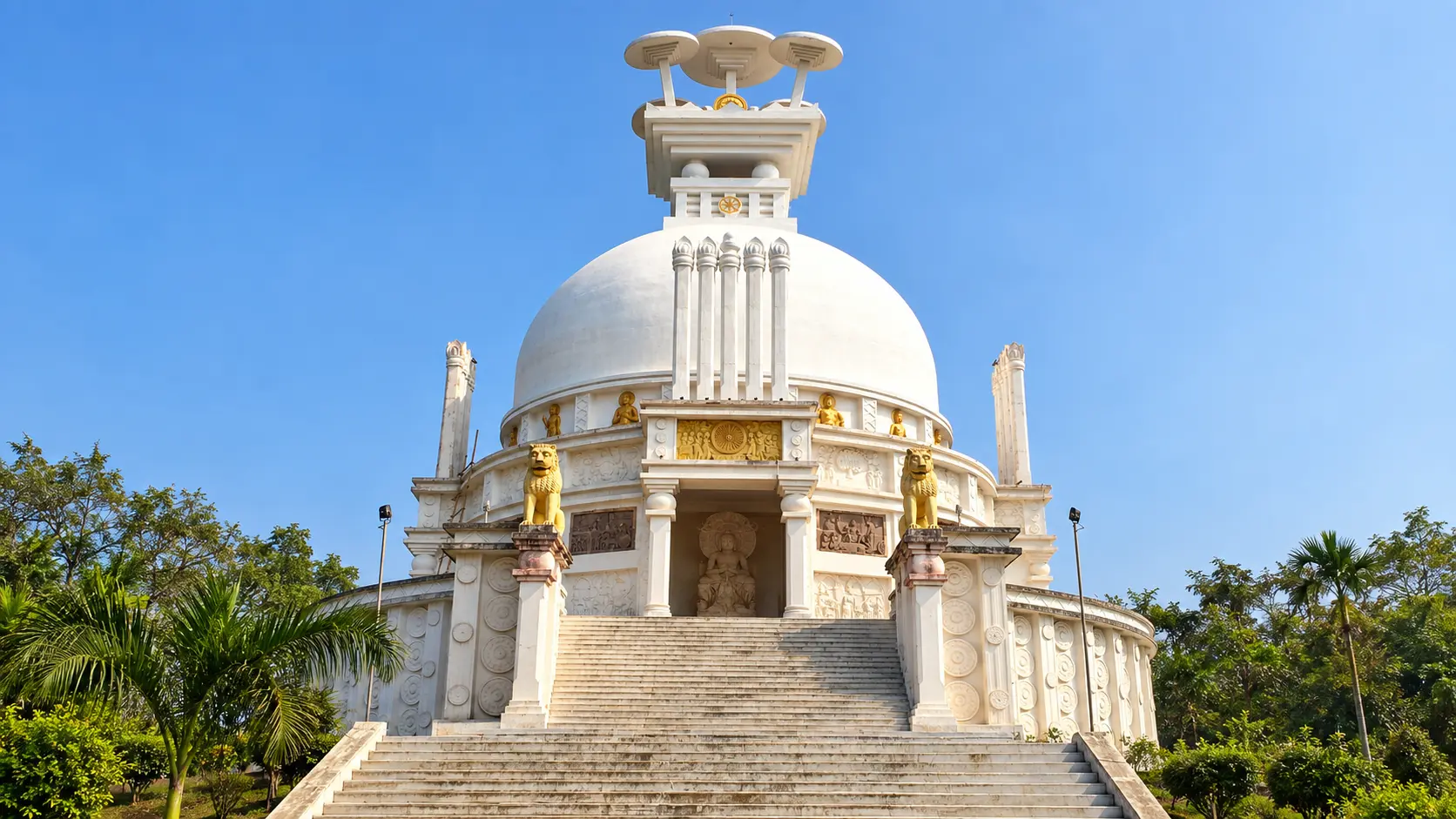
- Dhauli Shanti Stupa & Ashokan Rock Edicts (~12 km southeast): Perched upon the scenic Dhauli Hills overlooking the Daya River, this gleaming white peace pagoda commemorates Emperor Ashoka's profound spiritual transformation following the Kalinga War of 261 BCE. The base of the hill preserves Ashoka's ancient edicts carved in rock, offering a fascinating historical complement to Kharavela's Hathigumpha inscription.
- Nandankanan Zoological Park (~18 km north): Odisha's premier wildlife sanctuary and botanical garden, sprawling across 437 hectares around Kanjia Lake. Famous as the first zoo in the world to breed white tigers in captivity, Nandankanan offers thrilling safaris (Lion, White Tiger, Bear, and Herbivore), a world-class reptile park, and open-air aviaries.
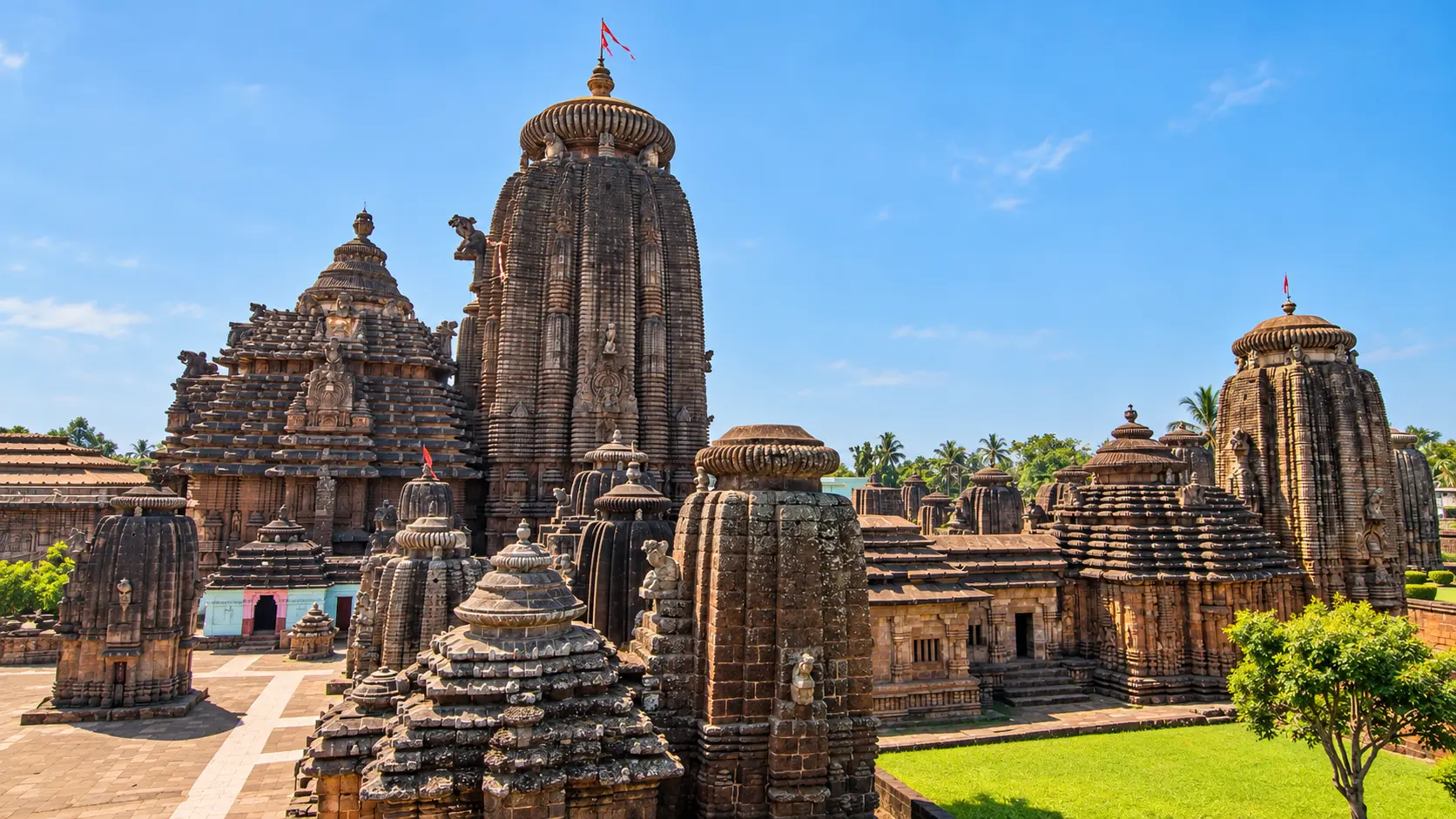
- Shree Lingaraj Temple & Old Town Heritage Precinct (~7 km southeast): The 11th-century spiritual crown jewel of Bhubaneswar's temple architecture, featuring a soaring 55-metre curvilinear deula, over 150 subsidiary shrines, and the sacred ritual waters of Bindu Sagar Lake.
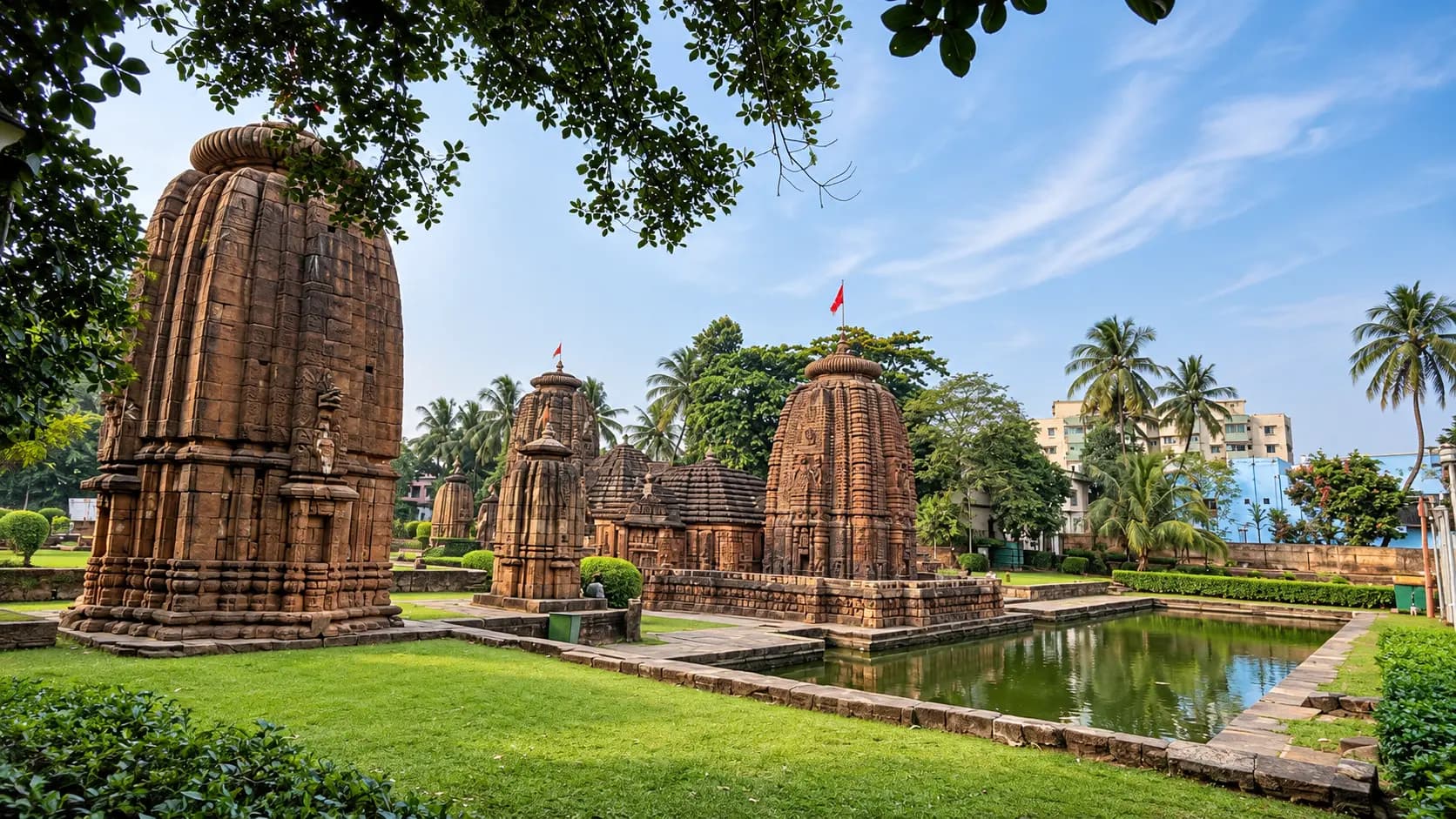
- Mukteswar & Parasurameswar Temples (~7 km southeast): Celebrated as the "Gem of Odishan Architecture," the 10th-century Mukteswar Temple features a legendary arched torana and delicate ceiling carvings, while the adjacent 7th-century Parasurameswar Temple showcases the earliest intact Kalinga stone craftsmanship.
- Odisha State Museum (~6 km east): Located at Kalpana Square, this premier state repository houses extensive galleries of rare palm-leaf manuscripts (talapatra), prehistoric stone sculptures, archaeological bronzes, Jain and Buddhist antiquities, and traditional Odishan musical instruments.
In pictures
The practical bits
Before you go.
What to pack
When preparing to explore Udayagiri and Khandagiri, dress in lightweight, breathable cotton clothing suitable for…Explore detailsClose details
When preparing to explore Udayagiri and Khandagiri, dress in lightweight, breathable cotton clothing suitable for outdoor hill climbing. Wear sturdy, comfortable walking shoes or sneakers with excellent rubber tread, as you will be navigating uneven rock-cut steps, natural sandstone slopes, and occasional gravel paths. Bring a wide-brimmed sunhat, sunglasses, and high-SPF sunscreen to shield yourself from the sun, as large sections of the hill slopes are completely unshaded. Carry a refillable water bottle, but keep it securely tucked away inside your backpack rather than holding it in your hands. A compact pocket flashlight or smartphone torch is helpful for illuminating the shadowy interiors of deep monk cells. If you appreciate epigraphy, bring a magnifying glass or binoculars to inspect the high-placed Brahmi characters of the Hathigumpha inscription.
Wildlife precautions and monkey safety
Both Udayagiri and Khandagiri hills are home to large, active troops of wild rhesus macaques and bonnet monkeys.Explore detailsClose details
Both Udayagiri and Khandagiri hills are home to large, active troops of wild rhesus macaques and bonnet monkeys. While they are accustomed to human presence, they can be remarkably bold, opportunistic, and aggressive if they detect food.
Crucial rule
Never carry food items, fruit, peanuts, biscuits, or drink bottles in open plastic bags or in your hands.Explore detailsClose details
Never carry food items, fruit, peanuts, biscuits, or drink bottles in open plastic bags or in your hands. Monkeys instantly recognize plastic bags as containing food and will leap to snatch them from your grasp. Keep all snacks, water bottles, and small personal belongings securely zipped inside a sturdy backpack. Avoid making direct, prolonged eye contact or baring your teeth in an aggressive smile at dominant male monkeys, as this is interpreted as a threat. Do not feed the monkeys, as this encourages unnatural aggression toward other visitors.
Climbing the hills and footwear
Exploring both hills requires moderate physical fitness and entails climbing approximately 150 to 200 rock-cut…Explore detailsClose details
Exploring both hills requires moderate physical fitness and entails climbing approximately 150 to 200 rock-cut steps on each hill. The staircases on Udayagiri are relatively gentle and well-maintained with flagstones and protective railings. Khandagiri's steps, however, are steeper, narrower, and cut directly into natural rock faces, with some sections lacking handrails. Take an unhurried, measured pace and watch your footing, particularly on descending paths. In rainy weather, avoid stepping on dark, mossy patches of rock which become dangerously slick. If traveling with elderly family members or individuals with limited mobility, focus your visit on Udayagiri's lower terrace, where Ranigumpha (Cave 1) and Chota Hathigumpha (Cave 3) can be reached with minimal climbing.
Deciphering the Hathigumpha inscription
The Hathigumpha Inscription is located high on the overhanging rock ceiling of Cave 14 on Udayagiri.Explore detailsClose details
The Hathigumpha Inscription is located high on the overhanging rock ceiling of Cave 14 on Udayagiri. Because the inscription is carved into natural sandstone and has endured two millennia of weathering, viewing the characters clearly requires good lighting. The best time to view the inscription is between 09:30 AM and 12:00 PM, when angled morning daylight illuminates the natural cave arch without deep shadows. Confirm the current charge and what it includes with the operator or service provider. Visitor admission, vehicles, parking, activities and accommodation can have separate charges. A knowledgeable guide can point out specific historical markers in the Prakrit text, explain the architectural layout of Ranigumpha, and share local folklore.
Distinguishing Jain Udayagiri from Buddhist Udayagiri
A common source of confusion among travelers to Odisha is the presence of two famous historical sites named…Explore detailsClose details
A common source of confusion among travelers to Odisha is the presence of two famous historical sites named "Udayagiri." The site described in this guide is the Jain Udayagiri in Bhubaneswar (Khordha District), dating to the 1st - 2nd century BCE, famous for Emperor Kharavela's inscriptions and rock-cut monk cells. The second site is the Buddhist Udayagiri in Jajpur District, located approximately 95 kilometres northeast of Bhubaneswar as part of the famous "Diamond Triangle" Buddhist Circuit (alongside Ratnagiri and Lalitgiri). The Jajpur site dates to the 7th - 12th century CE and features excavated brick stupas, colossal Mahayana Buddha statues, and Tantric monasteries. When booking drivers or tour itineraries, always specify "Khandagiri-Udayagiri Caves in Bhubaneswar."
A few things you might wonder
Common questions about visiting Udayagiri & Khandagiri Caves. Fees, visiting hours and ceremonies are researched details that may change; confirm current arrangements with the operator before travelling.
Who was Emperor Kharavela, and why is he important to Indian history?
What is the historical significance of the Hathigumpha Inscription?
How do Udayagiri and Khandagiri differ from Buddhist caves like Ajanta or Ellora?
Why are the caves divided into two hills, and how many caves are there in total?
What are the architectural highlights of Ranigumpha (Queen's Cave)?
Are the caves connected to the Buddhist Circuit of Odisha?
What safety precautions should visitors take regarding monkeys at the caves?
How long does it take to tour Udayagiri and Khandagiri Caves?
Explore more in Puri Konark Bhubaneswar
Discover other destinations around this hub
More Hubs in Odisha
Continue exploring other travel hubs in this state
Planning a trip to Golden Triangle?