Lingaraj Temple
Complete visitor guide to the 11th-century Lingaraj Temple in Old Town Bhubaneswar. Discover the 55-metre shikhara, Harihara deity, Mahashivratri, and Curzon viewing platform.
Location
Golden Triangle, Odisha
A closer look
Your visit, at a glance.
Golden Triangle, Odisha
GET TO KNOW THE PLACE
Dominating the historic skyline of Bhubaneswar with its monumental, dark red laterite and sandstone silhouette, the Lingaraj Temple (reverently called Shree Lingaraj Mandir) is…
The story of Lingaraj Temple
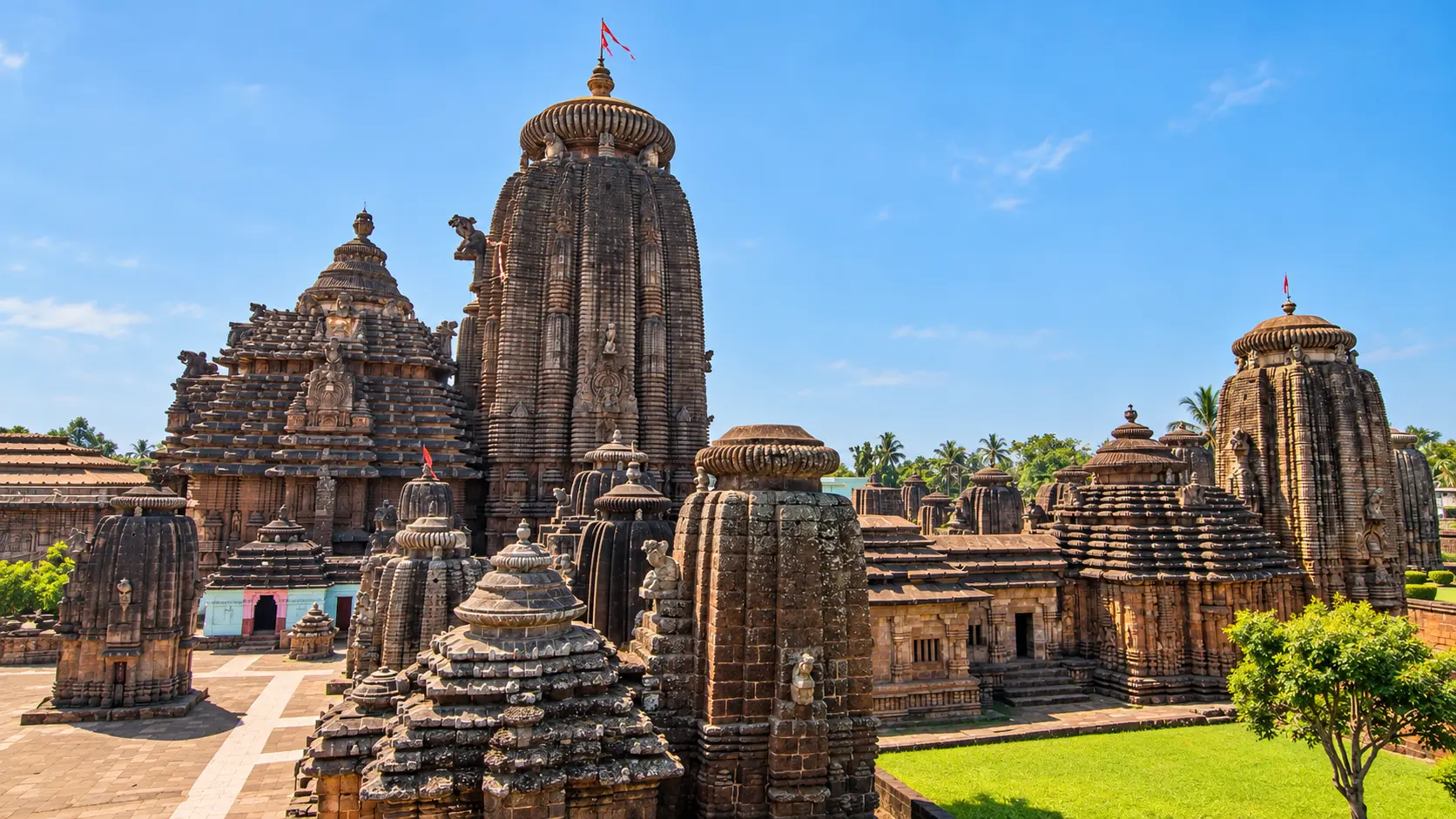
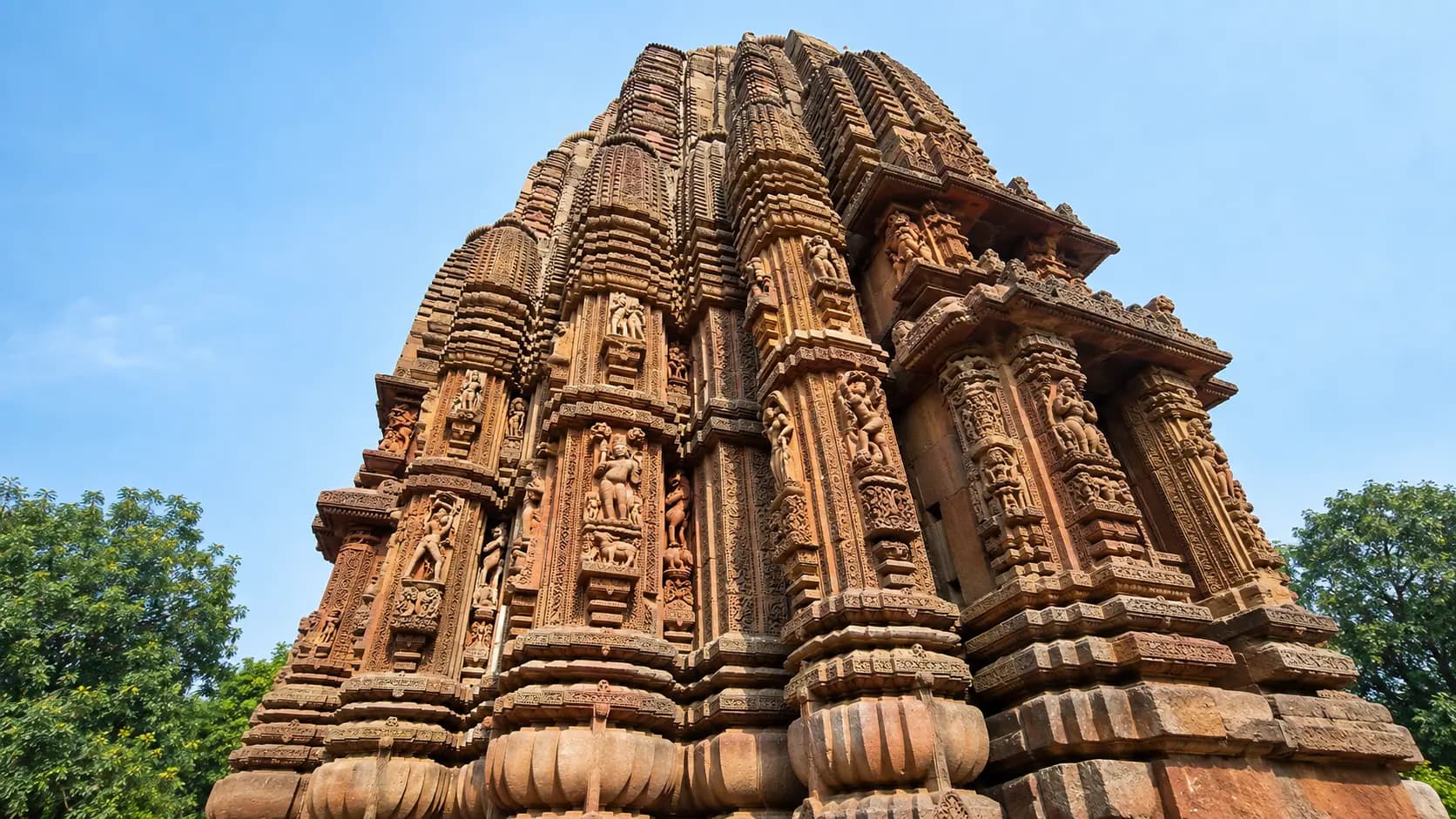
Dominating the historic skyline of Bhubaneswar with its monumental, dark red laterite and sandstone silhouette, the Lingaraj Temple (reverently called Shree Lingaraj Mandir) is the supreme architectural masterpiece, spiritual epicenter, and living heart of Odisha's temple capital. Celebrated for over a thousand years as the quintessential crown jewel of the mature Kalinga architectural style, this 11th-century monument represents the absolute artistic and engineering zenith of medieval Indian sacred architecture.
Rising majestically to a dizzying height of 55 metres (180 feet), the temple’s curvilinear main spire (Vimana) is the tallest in Bhubaneswar, richly embellished from foundation plinth to kalasa finial with thousands of masterfully sculpted miniature shrines, soaring leogryphs, guardian dikpalas, and sensual celestial maidens (Alasa Kanyas). Enclosed within a colossal laterite boundary wall encompassing 4.5 acres, the courtyard contains a breathtaking sacred labyrinth of over 150 subsidiary stone temples and shrines, creating an entire self-contained universe of stone, incense, and living devotion.
Yet, beyond its architectural majesty, Lingaraj holds a profoundly unique theological identity. The presiding deity worshiped within the dark, perfumed sanctum is Harihara - a rare syncretic manifestation uniting Lord Shiva (Hara) and Lord Vishnu (Hari) into a single divine form. This unique synthesis reflects the historic theological reconciliation between Shaivism and Vaishnavism achieved in medieval Odisha. Consequently, in a ritual practice found almost nowhere else in India, the uncarved natural stone lingam is worshiped simultaneously with bilva leaves (sacred to Shiva) and tulsi leaves (sacred to Vishnu).
From the dramatic midnight elevation of the blazing Mahadipa atop the 55-metre shikhara during Mahashivratri to the joyous chariot processions of Ashokashtami, Lingaraj Temple remains one of the most vibrant, emotionally charged, and awe-inspiring living sanctuaries in all of Asia.
Start here. Open a tile for the full details.
Why goRead details
- The Crown Jewel of Kalinga Architecture: Behold the supreme 11th-century masterpiece of mature Odishan temple engineering, anchored by a colossal 55-metre (180-foot) rekha deul that dominates the city skyline.
- The Syncretic Divinity of Harihara: Discover a unique theological synthesis where Lord Shiva and Lord Vishnu are worshiped as one, honored with offerings of both holy bilva leaves and sacred tulsi.
- A Sacred Stone Labyrinth of 150+ Shrines: Explore an expansive 4.5-acre courtyard containing more than 150 individual stone temples spanning nine centuries, including the magnificent 13th-century Parvati Temple.
- The World-Famous Mahashivratri Mahadipa Spectacle: Witness tens of thousands of devotees holding night-long vigil under flickering clay lamps, erupting into ecstatic cheers as a servitor carries a massive burning lamp to the temple pinnacle.
- The Historic Curzon Viewing Platform: Ascend the elevated stone observation deck outside the northern boundary wall, offering non-Hindus and photographers an unhindered panoramic view of the 55-metre shikhara and courtyard ceremonies.
- The Legendary Rukuna Ratha Yatra: Experience the vibrant 5-day car festival celebrated during Ashokashtami, when the deity journeys on a massive wooden chariot that uniquely never needs to turn around.
- Revitalized Ekamra Kshetra Heritage Promenades: Walk the newly developed pedestrianized stone avenues, landscaped buffer plazas, and illuminated pathways connecting Lingaraj seamlessly to the sacred waters of Bindu Sagar Lake.
When to visitRead details
Entry & permissionsRead details
Fees, visiting hours and entry rules may change. Confirm the latest details with the official operator or local authority before travelling.
Religious Entry Regulations & Prohibited Items
- Exclusive Hindu Entry Law: In strict accordance with centuries-old customary religious tradition, entry into the inner compound of Lingaraj Temple is restricted exclusively to practicing Hindus / Sanatana Dharma followers. Non-Hindus, foreign tourists of other faiths, and non-Indian citizens are not permitted beyond the gates.
- The Curzon Viewing Platform: Non-Hindu visitors can enjoy a panoramic view of the entire temple complex, its 55-metre shikhara, the Jagamohana, and the active courtyard shrines from an elevated stone viewing platform situated outside the northern boundary wall. Erected during British Viceroy Lord Curzon’s visit in the early 20th century, this platform provides an ideal, elevated vantage point for sightseeing and telephoto photography.
- Strict Prohibition of Electronics: Mobile phones, digital cameras, smart watches, bags, and electronic equipment are strictly prohibited inside the temple premises. Visitors must deposit all digital devices at the free, secure computerized cloakrooms operated outside the Singhadwara.
- Ban on Leather Articles: All leather items - including leather belts, wallets, shoes, watch straps, and leather purses - are strictly prohibited inside the sanctum. Visitors should carry cloth or jute pouches for cash.
- Dress Code: Visitors must adhere to modest traditional Indian attire. Men should wear dhotis or kurta-pyjamas, and women should wear sarees, salwar kameez, or modest long dresses. Western clothing such as shorts, bermudas, miniskirts, ripped jeans, and sleeveless tops is strictly barred.
Temple Timings and Daily Rituals
The temple opens daily at approximately 05:00 AM and operates until 21:00 PM:
- 05:00 AM: Mangala Alati (Morning auspicious lamp ritual; temple doors open).
- 06:00 to 07:30 AM: Abakasha and Snana (Cleansing and holy bathing of the Swayambhu Lingam with water from Bindu Sagar).
- 08:30 to 11:30 AM: Sahana Mela (Public free darshan up close to the sanctum Yonipitha).
- 12:30 to 14:30 PM: Madhyanna Dhupa (Midday royal food offerings; sanctum doors closed to the public).
- 15:30 to 18:30 PM: Afternoon reopening and evening darshan.
- 19:00 PM: Sandhya Alati (Evening twilight lamp waving ceremony).
- 20:30 to 21:00 PM: Badasinghara Bhoga and Pahuda (Night floral decoration, lullaby singing, and temple closing).
Plan your visitRead details
The nearest airport is Biju Patnaik International Airport (BBI) in Bhubaneswar, located just 4 kilometres northwest of Lingaraj Temple.
- The airport operates frequent non-stop domestic flights from New Delhi, Mumbai, Bengaluru, Kolkata, Chennai, and Hyderabad.
- Pre-paid airport taxis and app-based rides (Ola and Uber) reach the temple in approximately 10 to 15 minutes via Aerodrome Road and Ekamra Marg.
Explore the full guide - choose a topic below.
Why visit?
The Crown Jewel of Kalinga Architecture: Behold the supreme 11th-century masterpiece of mature Odishan temple…Explore detailsClose details
- The Crown Jewel of Kalinga Architecture: Behold the supreme 11th-century masterpiece of mature Odishan temple engineering, anchored by a colossal 55-metre (180-foot) rekha deul that dominates the city skyline.
- The Syncretic Divinity of Harihara: Discover a unique theological synthesis where Lord Shiva and Lord Vishnu are worshiped as one, honored with offerings of both holy bilva leaves and sacred tulsi.
- A Sacred Stone Labyrinth of 150+ Shrines: Explore an expansive 4.5-acre courtyard containing more than 150 individual stone temples spanning nine centuries, including the magnificent 13th-century Parvati Temple.
- The World-Famous Mahashivratri Mahadipa Spectacle: Witness tens of thousands of devotees holding night-long vigil under flickering clay lamps, erupting into ecstatic cheers as a servitor carries a massive burning lamp to the temple pinnacle.
- The Historic Curzon Viewing Platform: Ascend the elevated stone observation deck outside the northern boundary wall, offering non-Hindus and photographers an unhindered panoramic view of the 55-metre shikhara and courtyard ceremonies.
- The Legendary Rukuna Ratha Yatra: Experience the vibrant 5-day car festival celebrated during Ashokashtami, when the deity journeys on a massive wooden chariot that uniquely never needs to turn around.
- Revitalized Ekamra Kshetra Heritage Promenades: Walk the newly developed pedestrianized stone avenues, landscaped buffer plazas, and illuminated pathways connecting Lingaraj seamlessly to the sacred waters of Bindu Sagar Lake.
What to expect
The construction of Lingaraj Temple reflects the imperial ambition of the Somavamshi Dynasty (also known as the…Explore detailsClose details
The Historical Genesis and Somavamshi Dynasty
The construction of Lingaraj Temple reflects the imperial ambition of the Somavamshi Dynasty (also known as the Kesharis), who ruled Odisha between the 9th and 12th centuries. King Jajati Keshari (Yayati II), who unified western and coastal Odisha and moved his capital to Ekamra Kshetra, laid the foundation of this colossal monument in the early 11th century (circa 1025 - 1040 CE).
The monument was completed and consecrated by his illustrious son, King Lalatendu Keshari, in the late 11th century (circa 1090 - 1105 CE). During the subsequent reign of the Eastern Ganga Dynasty in the 12th century, King Anangabhima Deva III further embellished the complex by adding the Nata Mandapa (dancing hall) and Bhoga Mandapa (hall of offerings), completing the classic four-fold axial alignment of mature Kalinga temple architecture.
+-----------------------------------------------------------------------------------+
|                        LINGARAJ TEMPLE AXIAL ARCHITECTURE                         |
+-----------------------------------------------------------------------------------+
|                                                                                   |
|                                     [ WEST ]                                      |
|                                                                                   |
|                      ┌──────────────────────────────────────┐                     |
|                      │         VIMANA (BADA DEUL)           │                     |
|                      │  - Colossal 55-metre (180 ft) Shikhara                     |
|                      │  - Dark Sanctum Housing Swayambhu    │                     |
|                      │    Harihara Lingam (Ratnavedi)       │                     |
|                      └──────────────────┬───────────────────┘                     |
|                                         │                                         |
|                                         ▼                                         |
|                      ┌──────────────────────────────────────┐                     |
|                      │         JAGAMOHANA (ASSEMBLY HALL)   │                     |
|   [ NORTH ]          │  - Stepped Pyramidal Pidha Roof      │       [ SOUTH ]     |
| Curzon Viewing       │  - 35 metres tall, massive corbeling │   Over 150 Stone    |
| Platform (For        └──────────────────┬───────────────────┘   Subsidiary Temples|
| Non-Hindus & Photos)                    │                       (Parvati Temple,  |
|                                         ▼                       Ganesha, Kartikeya|
|                      ┌──────────────────────────────────────┐   Bhubaneswari)     |
|                      │        NATA MANDAPA (DANCE HALL)     │                     |
|                      │  - Pillared Hall added by Gangas     │                     |
|                      └──────────────────┬───────────────────┘                     |
|                                         │                                         |
|                                         ▼                                         |
|                      ┌──────────────────────────────────────┐                     |
|                      │        BHOGA MANDAPA (OFFERINGS)     │                     |
|                      │  - Consecration of 5 Daily Feasts    │                     |
|                      └──────────────────┬───────────────────┘                     |
|                                         │                                         |
|                                         ▼                                         |
|                                     [ EAST ]                                      |
|                      Singhadwara (Lion's Gate Main Entrance)                      |
|                                                                                   |
+-----------------------------------------------------------------------------------+
The Architectural Components of the Temple
Lingaraj Temple represents the architectural blueprint against which all other Kalinga temples are measured. Its design consists of four monumental structures arranged in a continuous east-to-west axial line:
- The Vimana (Bada Deul): The sanctum sanctorum, built in the curvilinear rekha deul style, soaring 55 metres (180 feet) into the air. The vertical stone tower is carved into five distinct horizontal zones (Pancharatha plan), decorated with ascending rows of miniature decorative spires (urushringas), roaring leogryphs projecting boldly from the stone faces, and guardian dikpalas holding celestial weapons. The pinnacle is crowned by a colossal fluted amalaka stone and an ashtadhatu trident (Trishula) and wheel (Chakra).
- The Jagamohana (Mukhasala): The monumental assembly hall, built in the stepped pyramidal pidha deul style, rising 35 metres (115 feet) high. Its massive stone walls, over 2 metres thick, are punctured by perforated stone latticework windows (jali) that cast dappled geometric light into the cavernous gathering hall.
- The Nata Mandapa (Dancing Hall): A spacious, open pillared hall added in the 12th century, historically utilized for ceremonial classical Odissi and Mahari sacred dance performances.
- The Bhoga Mandapa (Hall of Offerings): A richly sculpted pidha hall where the temple's five daily royal food offerings are consecrated before being distributed to sevayats and devotees.
The Sacred Divinity of Harihara
Inside the windowless, unlit inner sanctum - accessible through a single narrow doorway and lit only by flickering brass oil lamps - rests the sacred Swayambhu Lingam.
Unlike conventional carved cylindrical lingams, the deity at Lingaraj is a natural, unhewn granitic rock boulder rising about 8 inches above a broad, circular chlorite Yonipitha measuring 8 feet in diameter. The stone is reverently worshiped as Harihara:
- The right half of the lingam embodies Lord Shiva (Hara), worshiped with cold water drawn from the sacred Bindu Sagar Lake, raw milk, honey, sandalwood paste, and leaves of the sacred bilva tree.
- The left half of the lingam embodies Lord Vishnu (Hari), worshiped with offerings of sacred tulsi leaves and adorned with Vaishnavite garments.
This dual nature is reflected throughout the temple: the finial of the 55-metre shikhara carries both the Trident of Shiva and the Discus of Vishnu, and temple priests belong to both Shaivite (Brahmanas and Badus) and Vaishnavite servitor communities who have performed hereditary duties for over forty generations.
The Courtyard and Subsidiary Temples
Enclosed within the massive 520 ft by 465 ft laterite perimeter wall (Kurma Bedha) lies an astonishing sacred city of over 150 subsidiary stone temples:
- The Parvati Temple (Northwest Corner): The most magnificent subsidiary temple within the complex, constructed in the 13th century by Eastern Ganga Queen Chandrika Devi. Built as a mature Kalinga temple in miniature, its stone walls are adorned with some of the most exquisite, fluid female sculptures in eastern India, portraying Goddess Parvati in various compassionate and martial aspects.
- The Ganesha and Kartikeya Shrines: Located on the southern and western exterior niches of the main deul, featuring colossal monolithic chlorite statues of the divine sons of Shiva. The chlorite Ganesha holds a bowl of modaks with his trunk, while Kartikeya rides a beautifully sculpted peacock.
- Bhubaneswari and Gopalini Shrines: Honoring the ancient patron goddesses of Ekamra Kshetra who dwell within the sacred mango grove.
Major Festivals: Mahashivratri and Rukuna Ratha Yatra
- Mahashivratri (Jagara): Celebrated on the 14th night of the dark half of Phalguna (February - March), Mahashivratri at Lingaraj is an unforgettable spiritual spectacle. Over 200,000 pilgrims fast from dawn to nightfall, gathering in the temple courtyard with lighted clay lamps (diyas). Around midnight, following the completion of the secret fourth-phase puja, a hereditary servitor (Badu Sevayat) ties a colossal brass lamp filled with hundreds of liters of ghee and a thick cotton wick - the Mahadipa - to his waist. Barefoot and without safety ropes, he scales the sheer vertical stone surface of the 55-metre shikhara to place the flaming lamp beside the pinnacle trident. As the golden flame erupts against the dark night sky, the entire crowd breaks into thunderous cries of "Har Har Mahadev!", breaking their day-long fast in unison.
- Ashokashtami (Rukuna Ratha Yatra): Held in Chaitra (March - April), this 5-day chariot festival features the Rukuna Ratha, a 35-foot-tall wooden chariot carrying the representative brass idol of Lord Lingaraj (Lord Chandrasekhar), Goddess Parvati, and Goddess Rukmini down the Grand Road to the Rameswar Temple. The chariot is famous as the "Analeuta Ratha" (the chariot that never turns around) - it has steerable wheels and towing attachments at both ends, allowing it to reverse direction without turning around.
Best time to visit
Explore detailsClose details
Seasonal breakdown
Season | Months | Daytime Temp (°C) | Nighttime Temp (°C) | Temple Atmosphere & Darshan Experience |
|---|---|---|---|---|
Peak Winter | November - February | 24°C - 28°C | 14°C - 18°C | Optimal. Crisp, dry air and cool, breezy mornings. Perfect for comfortable barefoot courtyard walking, photography from the Curzon platform, and attending the Mahashivratri festival. |
Early Spring | March - April | 30°C - 35°C | 20°C - 24°C | Very Good. Pleasant mornings and warm afternoons. Ideal for witnessing the vibrant spectacles of the Rukuna Ratha Yatra and Ashokashtami. |
Summer | May - June | 36°C - 42°C | 26°C - 30°C | Hot & Challenging. The stone-paved courtyard becomes scorching hot to walk upon barefoot between 10:30 AM and 16:00 PM. Early morning darshans (05:00 to 07:30 AM) or evening visits (after 18:00 PM) are essential. |
Monsoon | July - October | 29°C - 33°C | 24°C - 26°C | Lush & Dynamic. The adjacent Bindu Sagar Lake is full and surrounding gardens turn brilliant emerald green. Heavy rain showers require umbrellas; stone steps can be slippery. |
How to reach
The nearest airport is Biju Patnaik International Airport (BBI) in Bhubaneswar, located just 4 kilometres…Explore detailsClose details
By Air
The nearest airport is Biju Patnaik International Airport (BBI) in Bhubaneswar, located just 4 kilometres northwest of Lingaraj Temple.
- The airport operates frequent non-stop domestic flights from New Delhi, Mumbai, Bengaluru, Kolkata, Chennai, and Hyderabad.
- Pre-paid airport taxis and app-based rides (Ola and Uber) reach the temple in approximately 10 to 15 minutes via Aerodrome Road and Ekamra Marg.
By Train
- Bhubaneswar Main Railway Station (BBS): Located approximately 5 kilometres northeast of the temple. As the primary East Coast Railway junction, it offers comprehensive nationwide rail connectivity. Confirm the current charge and what it includes with the operator or service provider. Visitor admission, vehicles, parking, activities and accommodation can have separate charges.
- Lingaraj Temple Road Railway Station (LGTR): Located approximately 2.5 kilometres southwest, handling regional suburban passenger trains.
By Road & Public Transit
- City Bus Network (Mo Bus): The capital region's clean, air-conditioned Mo Bus Route 11 and connecting routes terminate at Lingaraj Temple bus stop and Garage Chhak, just a short 3-minute walk from the entrance plaza.
- Auto-Rickshaws & E-Rickshaws: Battery-powered green e-rickshaws and auto-rickshaws operate round-the-clock throughout Bhubaneswar.
- Private Car & Taxi: Driving via Lewis Road or Tankapani Road leads directly to the newly widened Ekamra heritage corridor parking plazas located 200 metres from the Singhadwara entrance.
Entry, timings and permissions
Fees, visiting hours and entry rules may change.Explore detailsClose details
Fees, visiting hours and entry rules may change. Confirm the latest details with the official operator or local authority before travelling.
Religious Entry Regulations & Prohibited Items
- Exclusive Hindu Entry Law: In strict accordance with centuries-old customary religious tradition, entry into the inner compound of Lingaraj Temple is restricted exclusively to practicing Hindus / Sanatana Dharma followers. Non-Hindus, foreign tourists of other faiths, and non-Indian citizens are not permitted beyond the gates.
- The Curzon Viewing Platform: Non-Hindu visitors can enjoy a panoramic view of the entire temple complex, its 55-metre shikhara, the Jagamohana, and the active courtyard shrines from an elevated stone viewing platform situated outside the northern boundary wall. Erected during British Viceroy Lord Curzon’s visit in the early 20th century, this platform provides an ideal, elevated vantage point for sightseeing and telephoto photography.
- Strict Prohibition of Electronics: Mobile phones, digital cameras, smart watches, bags, and electronic equipment are strictly prohibited inside the temple premises. Visitors must deposit all digital devices at the free, secure computerized cloakrooms operated outside the Singhadwara.
- Ban on Leather Articles: All leather items - including leather belts, wallets, shoes, watch straps, and leather purses - are strictly prohibited inside the sanctum. Visitors should carry cloth or jute pouches for cash.
- Dress Code: Visitors must adhere to modest traditional Indian attire. Men should wear dhotis or kurta-pyjamas, and women should wear sarees, salwar kameez, or modest long dresses. Western clothing such as shorts, bermudas, miniskirts, ripped jeans, and sleeveless tops is strictly barred.
Temple Timings and Daily Rituals
The temple opens daily at approximately 05:00 AM and operates until 21:00 PM:
- 05:00 AM: Mangala Alati (Morning auspicious lamp ritual; temple doors open).
- 06:00 to 07:30 AM: Abakasha and Snana (Cleansing and holy bathing of the Swayambhu Lingam with water from Bindu Sagar).
- 08:30 to 11:30 AM: Sahana Mela (Public free darshan up close to the sanctum Yonipitha).
- 12:30 to 14:30 PM: Madhyanna Dhupa (Midday royal food offerings; sanctum doors closed to the public).
- 15:30 to 18:30 PM: Afternoon reopening and evening darshan.
- 19:00 PM: Sandhya Alati (Evening twilight lamp waving ceremony).
- 20:30 to 21:00 PM: Badasinghara Bhoga and Pahuda (Night floral decoration, lullaby singing, and temple closing).
Nearby places to consider
Bindu Sagar Lake (~150 m north): The sacred mythological lake of Ekamra Kshetra, flanked by ancient stone ghats…Explore detailsClose details
- Bindu Sagar Lake (~150 m north): The sacred mythological lake of Ekamra Kshetra, flanked by ancient stone ghats, the central Jala Mandir island pavilion, and dozens of heritage shrines.
- Ananta Vasudeva Temple (~200 m northeast on Bindu Sagar): The premier 13th-century Vaishnavite temple of Old Town, world-famous for its active wood-fired kitchens and authentic earthen-pot Mahaprasad.
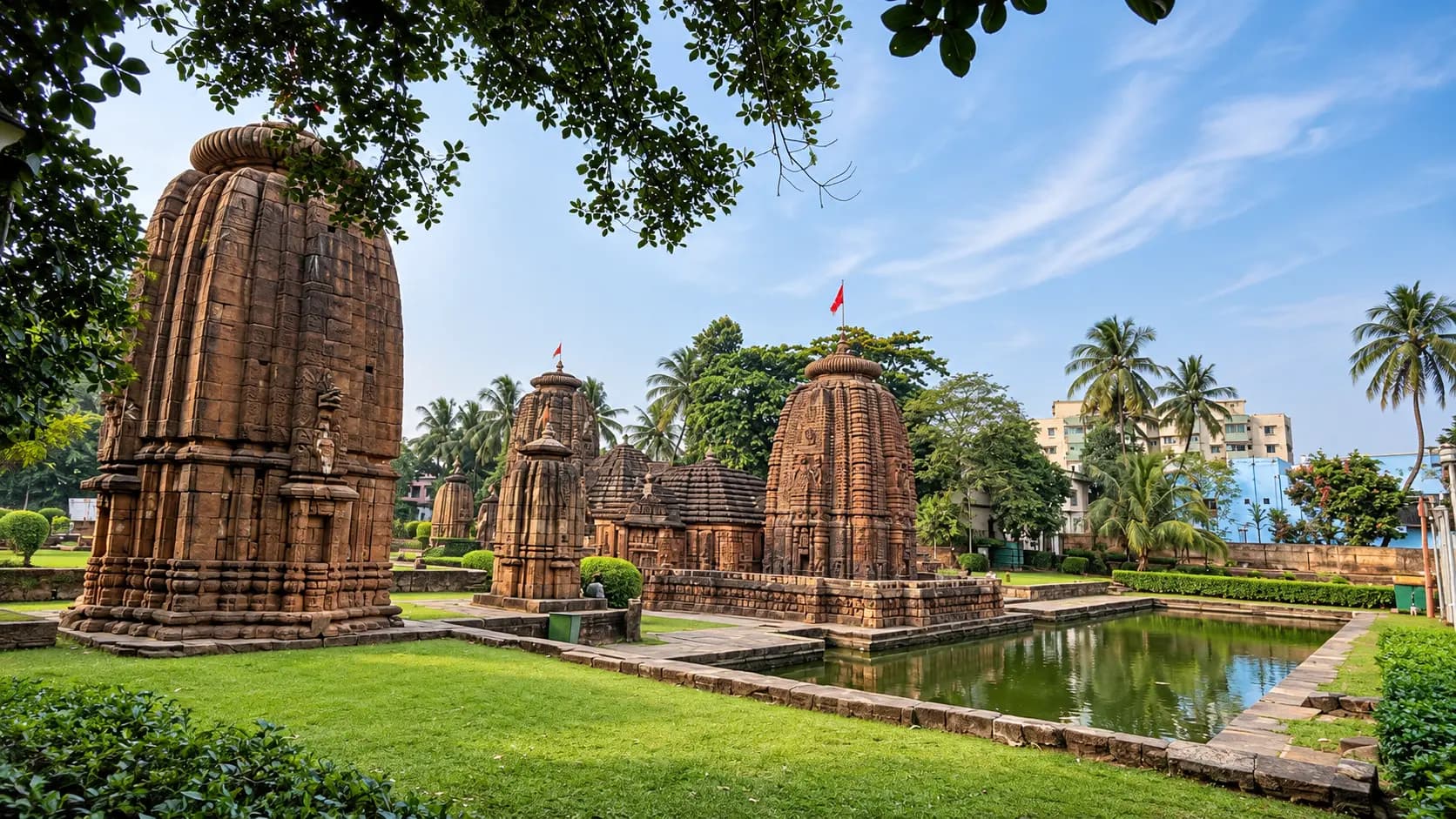
- Mukteswar & Siddheswar Temples (~1.2 km northeast): Celebrated as the "Gem of Odisha Architecture," renowned for its graceful arched stone torana and exquisite 10th-century carvings.
- Parsurameswar Temple (~1.3 km northeast): One of the oldest surviving stone temples in Bhubaneswar (dating to ~650 CE), featuring exceptionally preserved reliefs of Nataraja and the Saptamatrikas.
- Rajarani Temple (~2 km east): The 11th-century "Love Temple" sculpted from fine yellowish sandstone, famed for its sensual female nayikas and lush ASI garden setting.
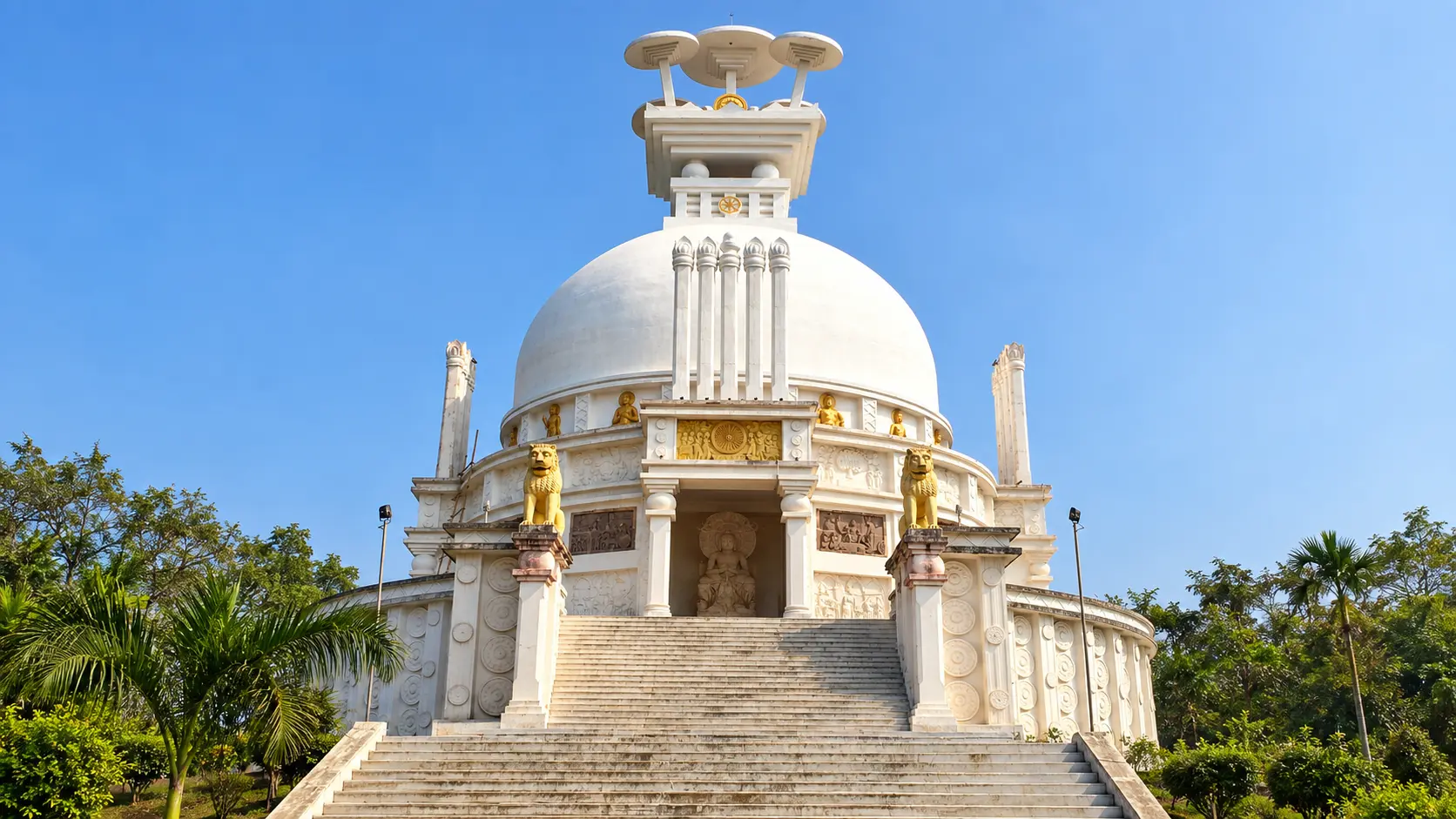
- Dhauli Shanti Stupa (~9 km south): The historic white Buddhist peace pagoda perched atop Dhauli Hill overlooking the Daya River, where Emperor Ashoka renounced warfare following the Kalinga War in 261 BCE.
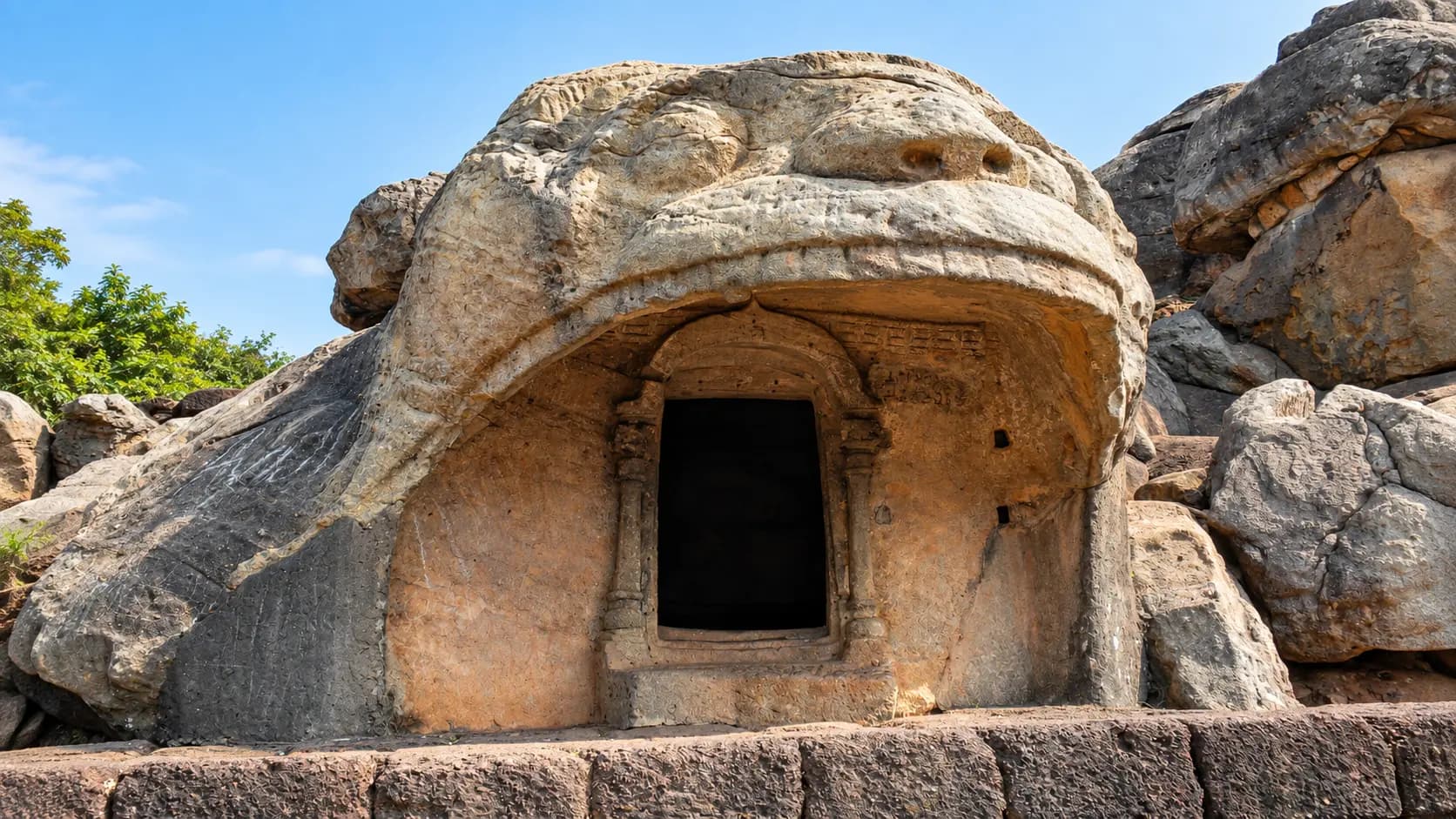
- Udayagiri and Khandagiri Caves (~8 km northwest): Ancient 1st-century BCE Jain rock-cut monasteries featuring Emperor Kharavela's historic Hathigumpha inscription.
In pictures
The practical bits
Before you go.
Cloakroom and Shoe Storage Strategy
Before entering the temple security lines, deposit all electronic items (phones, smartwatches, fitness trackers)…Explore detailsClose details
Before entering the temple security lines, deposit all electronic items (phones, smartwatches, fitness trackers) and leather articles (belts, wallets) at the free computerized cloakroom located on the right side of the main Singhadwara entrance. Remove your footwear at the designated free shoe counters. Carry your paper currency and reading glasses in a simple cotton cloth sling pouch.
Timing Your Darshan for Minimal Queues
Check the current visiting hours and permitted access with the site operator before departure; ceremonies…Explore detailsClose details
Check the current visiting hours and permitted access with the site operator before departure; ceremonies, closures and visitor sessions can affect access.
Visiting the Curzon Viewing Platform
If you are traveling with international friends of other faiths or wish to take wide-angle architectural…Explore detailsClose details
If you are traveling with international friends of other faiths or wish to take wide-angle architectural photographs of the temple spire, walk along the northern outer wall of the temple to the Curzon Viewing Platform. The elevated stone terrace is open to everyone, completely free, and offers an unobstructed vista of the 55-metre shikhara, the subsidiary Parvati Temple, and the stone courtyard bustling with priests in saffron robes.
Combining with Bindu Sagar and Ananta Vasudeva
A classic Old Town heritage walking circuit pairs Lingaraj Temple with neighboring treasures.Explore detailsClose details
A classic Old Town heritage walking circuit pairs Lingaraj Temple with neighboring treasures. Check the current visiting hours and permitted access with the site operator before departure; ceremonies, closures and visitor sessions can affect access. At 12:30 PM, enter the neighboring Ananta Vasudeva Temple to purchase fresh, wood-fired temple Mahaprasad (Abhada) at its lively Ananda Bazar, enjoying authentic Odia temple cuisine on fresh sal leaves.
A few things you might wonder
Common questions about visiting Lingaraj Temple. Fees, visiting hours and ceremonies are researched details that may change; confirm current arrangements with the operator before travelling.
Why is Lingaraj Temple the most famous temple in Bhubaneswar?
Can non-Hindus enter the Lingaraj Temple compound?
What is the unique theological significance of the Harihara deity?
What happens at Lingaraj Temple during Mahashivratri?
What is the Rukuna Ratha Yatra?
Are mobile phones and cameras allowed inside Lingaraj Temple?
What is the dress code for visiting Lingaraj Temple?
How old is Lingaraj Temple and who built it?
Explore more in Puri Konark Bhubaneswar
Discover other destinations around this hub
More Hubs in Odisha
Continue exploring other travel hubs in this state
Planning a trip to Golden Triangle?