Dhauli Shanti Stupa & Ashokan Edicts
Complete visitor guide to Dhauli Shanti Stupa and 3rd-century BCE Ashokan Rock Edicts near Bhubaneswar, Odisha.
Location
Golden Triangle, Odisha
A closer look
Your visit, at a glance.
Golden Triangle, Odisha
GET TO KNOW THE PLACE
Perched with serene majesty atop the rocky, granitic crest of Dhauligiri overlooking the meandering, emerald green waters of the Daya River, Dhauli Shanti Stupa and the Ashokan…
The story of Dhauli Shanti Stupa & Ashokan Edicts
Perched with serene majesty atop the rocky, granitic crest of Dhauligiri overlooking the meandering, emerald green waters of the Daya River, Dhauli Shanti Stupa and the Ashokan Rock Edicts commemorate the most consequential moral and philosophical pivot in ancient Indian history. Located roughly 8 kilometres south of Bhubaneswar in Khordha District, Odisha, along the highway to Puri, this sacred hill marks the legendary battleground of the Kalinga War (circa 261 BCE) - the apocalyptic conflict whose catastrophic carnage caused Emperor Ashoka the Great to renounce aggressive military conquest forever and embrace the path of universal peace, non-violence (Ahimsa), and Buddhist Dhamma.
The historical tapestry of Dhauli spans over two millennia. At the base of the hill, housed inside a protective glass-paneled pavilion maintained by the Archaeological Survey of India (ASI), lie the monumental Ashokan Rock Edicts, chiseled in the 3rd century BCE in early Brahmi script. Crowned directly above the stone inscriptions is a majestic rock-cut elephant, recognized by art historians worldwide as the oldest surviving rock sculpture in eastern India and a revered symbol of Lord Buddha.
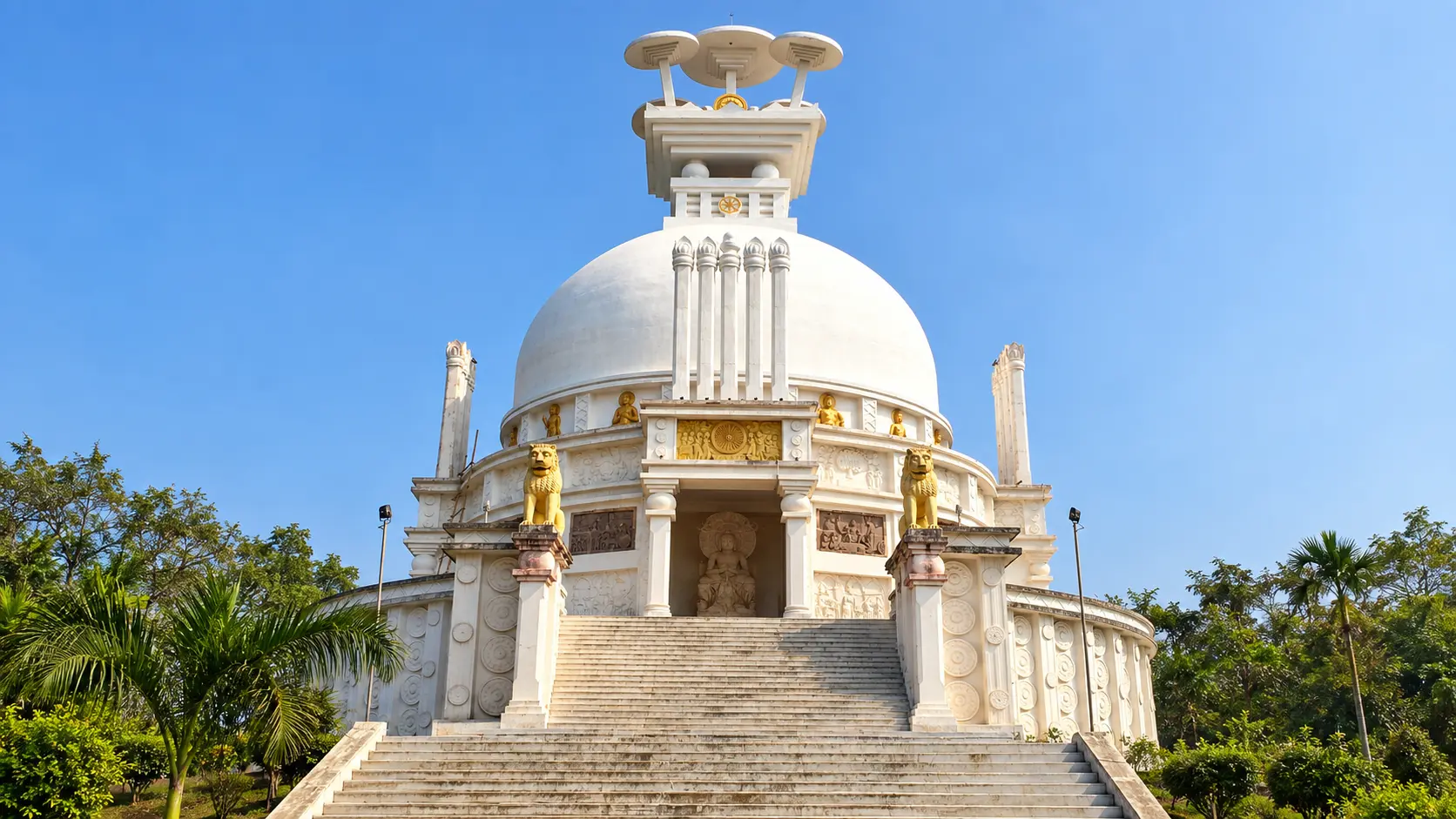
Ascending the hill brings visitors to the dazzling white domed Dhauli Shanti Stupa (Peace Pagoda), erected in 1971 - 1972 as an enduring symbol of global harmony through a historic collaboration between the Kalinga Nippon Buddha Sangha and the Government of Odisha under the spiritual guidance of the Most Venerable Nichidatsu Fujii. Combining ancient epigraphy, exquisite Buddhist friezes, breathtaking panoramic river views, and a state-of-the-art evening 3D projection Light and Sound show, Dhauli stands as an essential pilgrimage of conscience, history, and spiritual renewal on Odisha's Golden Triangle circuit.
Start here. Open a tile for the full details.
Why goRead details
- The Epicenter of Ashoka’s Transformation: Stand on the historic ground where the bloody Kalinga War of 261 BCE prompted Emperor Ashoka to renounce war (Chanda Ashoka) and become the champion of global peace (Dharma Ashoka).
- Ancient 3rd-Century BCE Ashokan Rock Edicts: Read the profound words of Emperor Ashoka inscribed in ancient Prakrit and Early Brahmi script, declaring his immortal paternal creed: "All men are my children" (Sarve manussa me paja).
- The Oldest Rock-Cut Animal Sculpture in Eastern India: Marvel at the 2,250-year-old colossal rock-cut elephant carved seamlessly from the living granitic boulder directly above the Ashokan edicts, symbolizing Lord Buddha's miraculous conception.
- The Gleaming White Dhauli Shanti Stupa: Explore the iconic 1972 Peace Pagoda crowned with five stone umbrellas, adorned with carved stone relief panels depicting the life, enlightenment, and Parinirvana of Gautama Buddha.
- Spectacular Evening Light and Sound Show: Experience a dramatic 3D projection mapping spectacle on the facade of the white stupa, narrated by legendary voice artists depicting the rise of the Mauryas, the Kalinga War, and the dawn of peace.
- Panoramic Panoramas of the Daya River Valley: Gaze across expansive rural vistas of fertile green rice paddies, whispering cashew plantations, and the tranquil loops of the Daya River from the hilltop observation balustrades.
- Syncretic Spiritual Heritage: Visit the adjacent medieval Dhabaleswar Temple on the crest of Dhauligiri, showcasing the ancient harmonious coexistence of Shaivism and Buddhism in Odishan culture.
When to visitRead details
Entry & permissionsRead details
Fees, visiting hours and entry rules may change. Confirm the latest details with the official operator or local authority before travelling.
Tariffs, Timings and Regulations
- General Admission Fee: Entry to Dhauli Shanti Stupa, the observation terrace, and the ASI Ashokan Rock Edict enclosure is completely free (₹0) for all Indian citizens and international visitors.
- Light and Sound Show Tickets:
- Regular Seating: ₹50 per person.
- Executive Front-Row Seating: ₹150 per person.
- Tickets are purchased at the on-site counter adjacent to the stupa amphitheater from 18:30 PM onwards.
- Monument Hours:
- Dhauli Shanti Stupa: Open daily from 06:00 AM to 19:30 PM.
- Ashokan Rock Edict Pavilion: Open daily from 06:00 AM to 18:00 PM.
- Light and Sound Show: 19:00 PM to 20:20 PM (Tuesday to Sunday; strictly closed on Mondays).
- Vehicle Parking Fees:
- Two-wheelers: ₹20.
- Cars and light motor vehicles: ₹50.
- Tourist coaches: ₹100.
- Photography and Drone Regulations: Handheld still photography and smartphone videography are permitted free throughout the hill. Flying camera drones over the stupa, amphitheater, or ASI protected perimeter is strictly prohibited without prior written defense and civil aviation clearances.
Plan your visitRead details
The nearest airport is Biju Patnaik International Airport (BBI) in Bhubaneswar, located just 10 kilometres northwest of Dhauli Hill.
- Daily flights link Bhubaneswar with New Delhi, Mumbai, Bengaluru, Kolkata, Chennai, and Hyderabad.
- From the airport terminal, pre-paid taxis and app-based cabs (Ola and Uber) reach Dhauli in 20 to 25 minutes via Aerodrome Road, Ravi Talkies Chhak, and the Puri highway (NH-316).
Return Transportation Precautions
If traveling to Dhauli by taxi or auto-rickshaw in the late afternoon for the Light and Sound show, it is essential to arrange a round-trip fare that includes waiting time. Hailing an app-based cab (Uber or Ola) from Dhauli Hill after 20:30 PM can be unreliable due to limited vehicle availability on the highway at night.
Explore the full guide - choose a topic below.
Why visit?
The Epicenter of Ashoka’s Transformation: Stand on the historic ground where the bloody Kalinga War of 261 BCE…Explore detailsClose details
- The Epicenter of Ashoka’s Transformation: Stand on the historic ground where the bloody Kalinga War of 261 BCE prompted Emperor Ashoka to renounce war (Chanda Ashoka) and become the champion of global peace (Dharma Ashoka).
- Ancient 3rd-Century BCE Ashokan Rock Edicts: Read the profound words of Emperor Ashoka inscribed in ancient Prakrit and Early Brahmi script, declaring his immortal paternal creed: "All men are my children" (Sarve manussa me paja).
- The Oldest Rock-Cut Animal Sculpture in Eastern India: Marvel at the 2,250-year-old colossal rock-cut elephant carved seamlessly from the living granitic boulder directly above the Ashokan edicts, symbolizing Lord Buddha's miraculous conception.
- The Gleaming White Dhauli Shanti Stupa: Explore the iconic 1972 Peace Pagoda crowned with five stone umbrellas, adorned with carved stone relief panels depicting the life, enlightenment, and Parinirvana of Gautama Buddha.
- Spectacular Evening Light and Sound Show: Experience a dramatic 3D projection mapping spectacle on the facade of the white stupa, narrated by legendary voice artists depicting the rise of the Mauryas, the Kalinga War, and the dawn of peace.
- Panoramic Panoramas of the Daya River Valley: Gaze across expansive rural vistas of fertile green rice paddies, whispering cashew plantations, and the tranquil loops of the Daya River from the hilltop observation balustrades.
- Syncretic Spiritual Heritage: Visit the adjacent medieval Dhabaleswar Temple on the crest of Dhauligiri, showcasing the ancient harmonious coexistence of Shaivism and Buddhism in Odishan culture.
What to expect
In the 3rd century BCE, the proud, sovereign maritime empire of Kalinga commanded the trade routes across the Bay…Explore detailsClose details
The Kalinga War and Ashoka’s Moral Awakening
In the 3rd century BCE, the proud, sovereign maritime empire of Kalinga commanded the trade routes across the Bay of Bengal, remaining fiercely independent from the expanding Mauryan Empire. In 261 BCE, Emperor Ashoka marched his colossal imperial army into the coastal plains along the Daya River near Dhauli to crush Kalinga’s resistance.
The resulting battle was catastrophic in its ferocity. Historical records, corroborated by Ashoka's own Rock Edict XIII, record that over 100,000 Kalinga warriors were slaughtered in combat, 150,000 were captured and deported into exile, and countless thousands succumbed to starvation and post-war pestilence. Local tradition recounts that the waters of the Daya River ran entirely crimson with human blood.
Surveying the corpse-strewn battlefield from the heights of Dhauligiri, Ashoka was struck with overwhelming grief, visceral horror, and profound existential remorse. Recognizing the hollow tragedy of military conquest (Digvijaya), he underwent a profound spiritual crisis. Guided by the Buddhist monk Upagupta, the emperor renounced warfare forever, embraced the peaceful precepts of Buddhism, and proclaimed Dharmavijaya - the conquest of hearts through righteousness, moral compassion, and non-violence.
+-----------------------------------------------------------------------------------+
|                        DHAULI HILL & SHANTI STUPA MAP                             |
+-----------------------------------------------------------------------------------+
|                                                                                   |
|  [ BHUBANESWAR CITY (8 km North via NH-316) ]                                     |
|              │                                                                    |
|              ▼                                                                    |
|     [ DHAULI BASE JUNCTION ] ─── Souvenir shops, e-rickshaws, base parking        |
|              │                                                                    |
|              ├───► [ ASHOKAN ROCK EDICTS & 3RD-CENTURY BCE ROCK-CUT ELEPHANT ]    |
|              │     (Protected ASI Glass Pavilion)                                 |
|              │                                                                    |
|              ▼ (1 km Scenic Winding Hill Road / Motorable Ghat)                   |
|     [ HILLTOP PARKING TERRACE & TICKET PLAZA ]                                    |
|              │                                                                    |
|              ├───► [ MEDIEVAL DHABALESWAR SHIVA TEMPLE ] (Adjacent Ridge)         |
|              │                                                                    |
|              ▼                                                                    |
|     [ DHAULI SHANTI STUPA (PEACE PAGODA) ] ── Built 1972                          |
|              │  - Colossal Cardinal Buddha Statues                                |
|              │  - Jataka & Life of Buddha Carved Stone Friezes                    |
|              │  - Panoramic Balustrade Overlooking the Daya River Valley          |
|              │                                                                    |
|              ▼                                                                    |
|Check the current visiting hours and permitted access with the site operator before departure; ceremonies, closures and visitor sessions can affect access.|
|                                                                                   |
+-----------------------------------------------------------------------------------+
The Ashokan Rock Edicts and the Rock-Cut Elephant
At the northern base of Dhauligiri, alongside the ancient highway, stands a colossal, weathered granitic rock boulder inscribed with Ashoka's royal decrees between 257 and 250 BCE. Preserved today inside an airy, glass-windowed protective pavilion constructed by the Archaeological Survey of India (ASI), these inscriptions are executed in the Early Brahmi script and the ancient Magadhi-Prakrit language.
Significantly, the Dhauli inscription contains eleven of Ashoka’s standard Fourteen Major Rock Edicts. Edicts XI, XII, and XIII - which described the gory details of the conquest of Kalinga and the deportation of its people - were tactfully omitted here. In their place, Ashoka inscribed two Special Kalinga Edicts addressed to the royal princes (Kumara) and high judicial magistrates (Mahamatras) stationed at the regional provincial capital of Tosali (identified with nearby Sisupalgarh). In these edicts, Ashoka issued instructions commanding his administrators to govern with impartiality, compassion, and justice, concluding with his celebrated humanitarian declaration:
"All men are my children. Just as I desire for my own children that they may enjoy all kinds of prosperity and happiness in both this world and the next, so do I desire for all men."
Directly above the inscribed rock surface, sculpted out of the same living bedrock, emerges the magnificent Rock-Cut Elephant. Dating precisely to the reign of Ashoka (mid-3rd century BCE), it portrays the head, curled trunk, flaring ears, and powerful forelegs of a grand elephant stepping forward from the mountain rock. Recognized as the oldest identifiable rock-cut animal sculpture in eastern India, this masterwork holds deep Buddhist significance: the elephant symbolizes Gautama Buddha, who was believed to have entered his mother Queen Maya’s womb in the auspicious form of a white elephant (Gajottama).
The Architecture of the Dhauli Shanti Stupa
Crowning the highest point of Dhauli Hill is the Dhauli Shanti Stupa (Peace Pagoda), an imposing white hemispherical structure constructed between 1971 and 1972 through a historic partnership between the Kalinga Nippon Buddha Sangha and the Japan Buddha Sangha, under the spiritual leadership of the Most Venerable Nichidatsu Fujii (founder of the Nipponzan Myohoji order) and with active patronage from the Government of Odisha.
The stupa rises gracefully from a series of stepped, circular pradakshina (circumambulatory) terraces:
- The Cardinal Buddha Statues: At the four primary compass points, large stone-carved niches house colossal statues of Lord Buddha representing key milestones in his spiritual journey:
- East: The Bhumisparsha Mudra (Earth-touching posture), calling the earth to witness his victory over Mara and his supreme enlightenment at Bodh Gaya.
- South: The Dharmachakra Pravartana Mudra (Turning the Wheel of Law), symbolizing his first philosophical sermon delivered to five ascetics at Deer Park in Sarnath.
- West: The Dhyana Mudra (Deep Meditation), portraying serene contemplation beneath the Bodhi tree.
- North: The Abhaya Mudra (Gesture of Fearlessness), conferring universal peace, protection, and liberation from worldly suffering.
- Narrative Stone Friezes: The outer circular balustrade of the stupa is embellished with exquisitely carved stone relief panels depicting crucial episodes from the life of the Buddha, including Queen Maya's celestial dream, Prince Siddhartha’s great departure on his steed Kanthaka, and his Mahaparinirvana at Kushinagar. Most movingly, a detailed historical panel illustrates Emperor Ashoka kneeling reverently, laying down his bloody battle sword before Lord Buddha, and receiving the sacred lotus flower of Dhamma.
- The Five Harmika Umbrellas: The pinnacle of the stupa dome is crowned by a square harmika supporting five tiered stone umbrellas (chhatras), symbolizing the five Buddhist transcendental virtues: charity, morality, patience, energy, and wisdom.
The Evening Light and Sound Show
As dusk descends upon the Daya River valley, Dhauli becomes the stage for a spectacular 3D Projection Mapping Light and Sound Show, organized by the Department of Tourism, Government of Odisha. Utilizing the curved white dome of the Shanti Stupa as a colossal cinematic projection canvas, powerful digital projectors and surround-sound audio recreate the history of ancient Kalinga.
Narrated in commanding voiceovers by iconic Indian cinematic voices including the late Om Puri and Kabir Bedi, the 35-minute presentation immerses visitors in the thriving maritime culture of ancient Kalinga, the deafening clash of war chariots and elephants during the Kalinga War, Ashoka’s grief-stricken repentance, and his subsequent dispatch of Buddhist missions (including his son Mahendra and daughter Sanghamitra) across Asia.
- Show Timings: Typically two shows operate every evening from Tuesday to Sunday:
- Show 1 (Odia/Hindi): 19:00 PM to 19:35 PM
- Show 2 (English/Hindi): 19:45 PM to 20:20 PM
- Note: The Light and Sound show is strictly closed on Mondays for routine maintenance.
Best time to visit
Explore detailsClose details
Seasonal breakdown
Season | Months | Daytime Temp (°C) | Nighttime Temp (°C) | Hill Atmosphere & Visitor Experience |
|---|---|---|---|---|
Peak Winter | November - February | 24°C - 28°C | 14°C - 18°C | Optimal. Crisp, dry, balmy days and cool evening breezes. Perfect for climbing the stupa terraces, photographing ancient rock edicts, and attending the evening Light and Sound show without discomfort. |
Early Spring | March - April | 30°C - 35°C | 20°C - 24°C | Very Good. Pleasant mornings and mild evenings; afternoon sun begins to warm the open stone terraces. Fewer tourists allow peaceful, contemplative exploration. |
Summer | May - June | 36°C - 42°C | 26°C - 30°C | Hot & Challenging. The exposed, unshaded granitic summit absorbs intense heat during the day. Early morning (06:00 to 08:30 AM) and late evening visits (from 17:30 PM for sunset and the show) are strongly advised. |
Monsoon | July - October | 29°C - 33°C | 24°C - 26°C | Dramatic & Verdant. The Daya River swells and surrounding countryside turns brilliant emerald green. Heavy showers require an umbrella; rain-swept stone terraces can be slippery. |
How to reach
The nearest airport is Biju Patnaik International Airport (BBI) in Bhubaneswar, located just 10 kilometres…Explore detailsClose details
By Air
The nearest airport is Biju Patnaik International Airport (BBI) in Bhubaneswar, located just 10 kilometres northwest of Dhauli Hill.
- Daily flights link Bhubaneswar with New Delhi, Mumbai, Bengaluru, Kolkata, Chennai, and Hyderabad.
- From the airport terminal, pre-paid taxis and app-based cabs (Ola and Uber) reach Dhauli in 20 to 25 minutes via Aerodrome Road, Ravi Talkies Chhak, and the Puri highway (NH-316).
By Train
- Bhubaneswar Railway Station (BBS): The primary rail terminal, situated approximately 11 kilometres north of Dhauli. Taxis, private auto-rickshaws, and express buses operate frequently from the station forecourt. Confirm the current charge and what it includes with the operator or service provider. Visitor admission, vehicles, parking, activities and accommodation can have separate charges.
By Road & Local Transit
- National Highway 316 (Bhubaneswar - Puri Corridor): Dhauli is positioned just 1 kilometre west of NH-316 at Dhauli Chhak (approximately 8 km south of Bhubaneswar city centre). A well-surfaced two-lane road climbs directly to the hilltop parking plaza.
- Mo Bus (City Bus): Clean, air-conditioned Mo Bus route buses (such as Route 20 traveling between Bhubaneswar and Pipili) drop passengers at Dhauli Square (Dhauli Chhak). Confirm the current charge and what it includes with the operator or service provider. Visitor admission, vehicles, parking, activities and accommodation can have separate charges.
- Combined Day Trips: Dhauli is the natural gateway to southern heritage excursions, situated perfectly between Bhubaneswar, the Chausathi Yogini Temple at Hirapur (10 km east), the Pipili Applique Village (12 km south), and Puri (50 km south).
Entry, timings and permissions
Fees, visiting hours and entry rules may change.Explore detailsClose details
Fees, visiting hours and entry rules may change. Confirm the latest details with the official operator or local authority before travelling.
Tariffs, Timings and Regulations
- General Admission Fee: Entry to Dhauli Shanti Stupa, the observation terrace, and the ASI Ashokan Rock Edict enclosure is completely free (₹0) for all Indian citizens and international visitors.
- Light and Sound Show Tickets:
- Regular Seating: ₹50 per person.
- Executive Front-Row Seating: ₹150 per person.
- Tickets are purchased at the on-site counter adjacent to the stupa amphitheater from 18:30 PM onwards.
- Monument Hours:
- Dhauli Shanti Stupa: Open daily from 06:00 AM to 19:30 PM.
- Ashokan Rock Edict Pavilion: Open daily from 06:00 AM to 18:00 PM.
- Light and Sound Show: 19:00 PM to 20:20 PM (Tuesday to Sunday; strictly closed on Mondays).
- Vehicle Parking Fees:
- Two-wheelers: ₹20.
- Cars and light motor vehicles: ₹50.
- Tourist coaches: ₹100.
- Photography and Drone Regulations: Handheld still photography and smartphone videography are permitted free throughout the hill. Flying camera drones over the stupa, amphitheater, or ASI protected perimeter is strictly prohibited without prior written defense and civil aviation clearances.
Nearby places to consider
Chausathi Yogini Temple, Hirapur (~10 km northeast): A rare 9th-century CE hypaethral circular tantric shrine…Explore detailsClose details
- Chausathi Yogini Temple, Hirapur (~10 km northeast): A rare 9th-century CE hypaethral circular tantric shrine housing 64 exquisitely sculpted chlorite Yoginis, set in a tranquil rural village.
- Pipili Applique Artisan Village (~12 km south on NH-316): The colorful township world-famous for heritage applique patchwork, canopies, umbrellas, and ceremonial banners made for Lord Jagannath's Ratha Yatra.
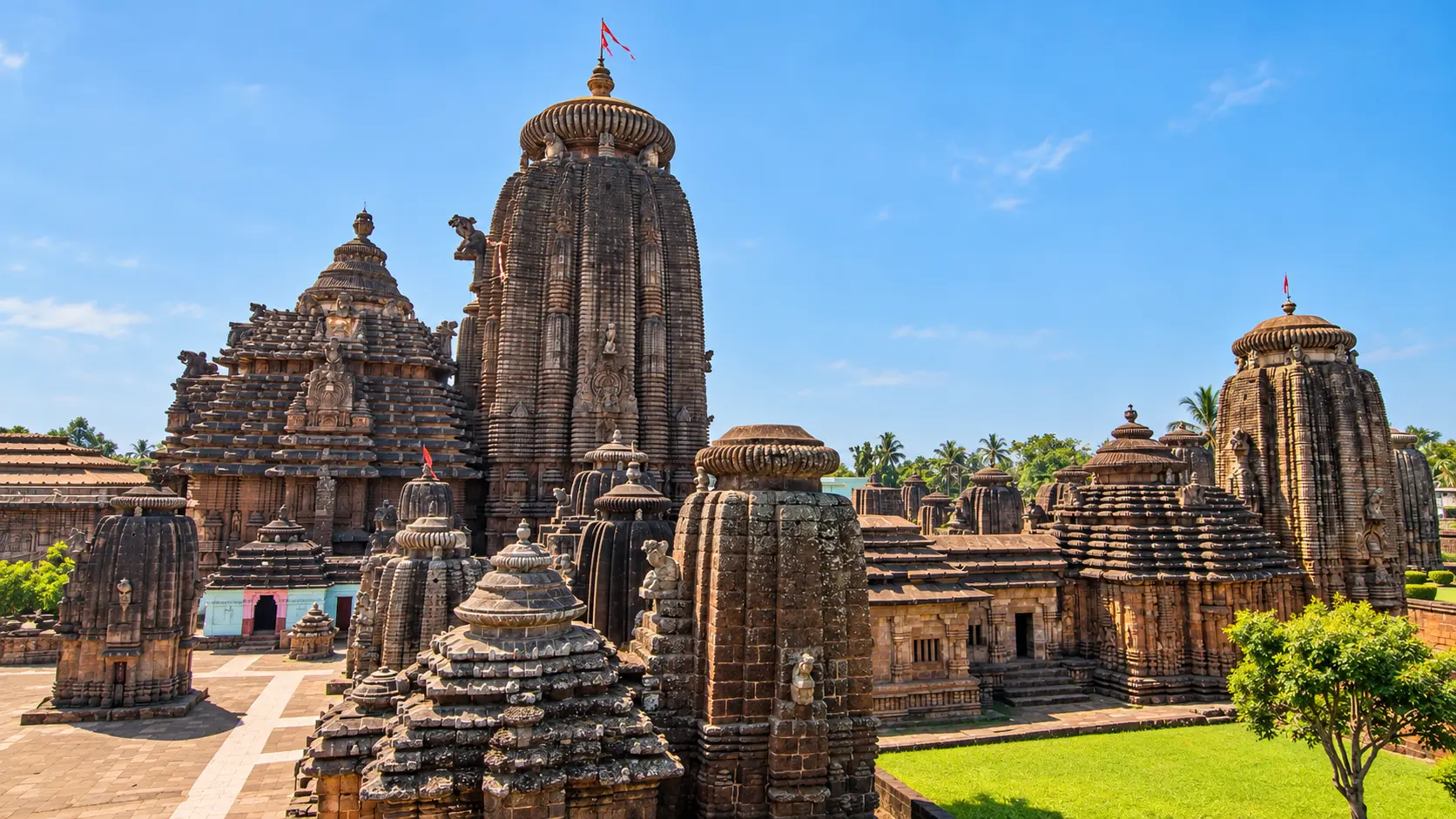
- Shree Lingaraj Temple (~8 km north): The grandest 11th-century Kalinga-style temple in Old Town Bhubaneswar, rising 55 metres high and surrounded by 150 subsidiary shrines.
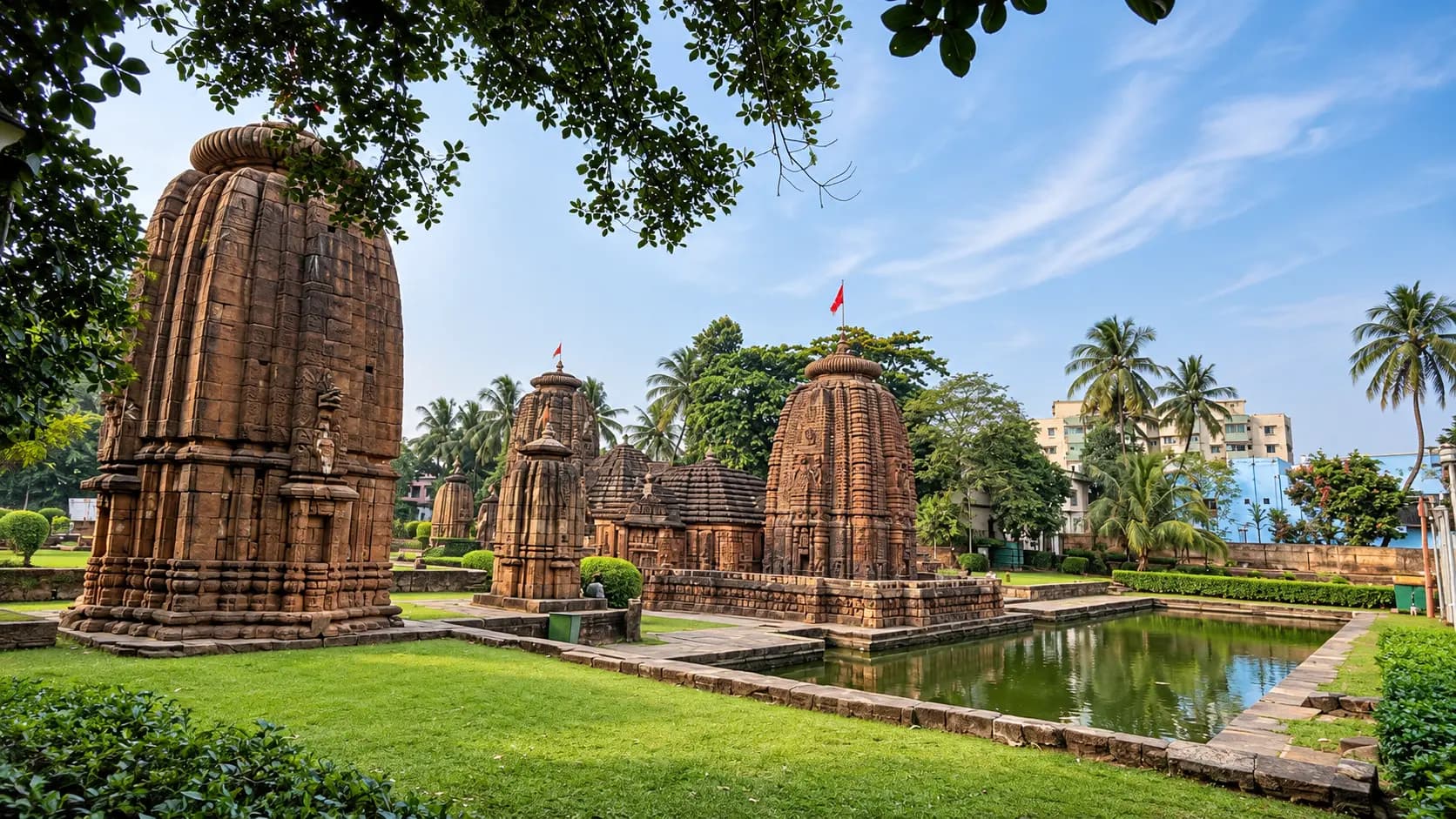
- Bindu Sagar Lake (~8.5 km north): The sacred mythological reservoir of Ekamra Kshetra, flanked by ancient stone ghats and the Ananta Vasudeva Temple.
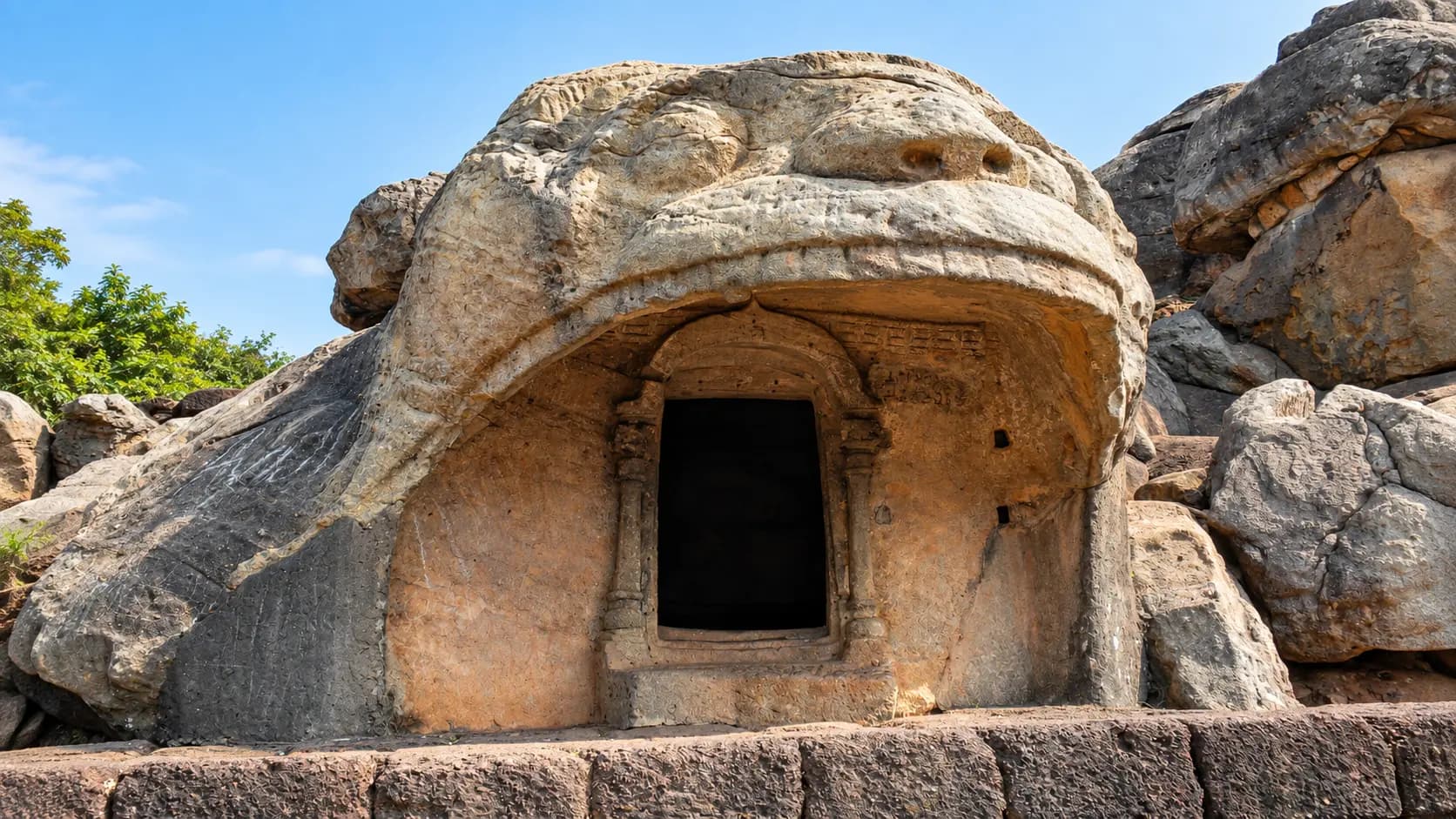
- Udayagiri and Khandagiri Caves (~12 km northwest): Ancient 1st-century BCE rock-cut Jain cave dwellings featuring Emperor Kharavela's historic Hathigumpha inscription.
- Puri Jagannath Temple & Golden Beach (~50 km south): The world-renowned Char Dham pilgrimage epicenter and Blue Flag certified coastal promenade of Puri.
In pictures
The practical bits
Before you go.
Ideal Timing for the Two-Part Heritage Experience
To experience everything Dhauli has to offer, arrive at Dhauli Hill around 16:30 PM.Explore detailsClose details
To experience everything Dhauli has to offer, arrive at Dhauli Hill around 16:30 PM. Begin at the base of the hill, spending 30 minutes inside the ASI pavilion examining the 2,250-year-old Ashokan Rock Edicts and the rock-cut elephant in good daylight. Next, drive or walk up the hill to the Shanti Stupa by 17:15 PM to stroll the pradakshina terrace, admire the life-of-Buddha friezes, and photograph the spectacular golden sunset over the Daya River valley. Conclude your evening by taking your seat for the 19:00 PM Light and Sound show.
Monday Closure Notice
Remember that while the Shanti Stupa and Ashokan Edicts are open 365 days a year, the Dhauli Light and Sound show…Explore detailsClose details
Remember that while the Shanti Stupa and Ashokan Edicts are open 365 days a year, the Dhauli Light and Sound show is strictly closed on Mondays for technical maintenance. If attending the multimedia show is high on your priority list, plan your visit for Tuesday through Sunday.
Footwear Strategy on the Stupa Terrace
Visitors are required to remove shoes before climbing onto the upper sanctum terrace of the Shanti Stupa.Explore detailsClose details
Visitors are required to remove shoes before climbing onto the upper sanctum terrace of the Shanti Stupa. While open-air shoe racks are provided near the steps, the marble and sandstone floor tiles can become hot under afternoon sun between March and September. Wearing light cotton socks allows you to walk comfortably while respecting the sanctity of the Buddhist shrine.
Return Transportation Precautions
If traveling to Dhauli by taxi or auto-rickshaw in the late afternoon for the Light and Sound show, it is…Explore detailsClose details
If traveling to Dhauli by taxi or auto-rickshaw in the late afternoon for the Light and Sound show, it is essential to arrange a round-trip fare that includes waiting time. Hailing an app-based cab (Uber or Ola) from Dhauli Hill after 20:30 PM can be unreliable due to limited vehicle availability on the highway at night.
A few things you might wonder
Common questions about visiting Dhauli Shanti Stupa & Ashokan Edicts. Fees, visiting hours and ceremonies are researched details that may change; confirm current arrangements with the operator before travelling.
Why is Dhauli Hill historically significant in Indian history?
What are the Ashokan Rock Edicts at Dhauli?
What is the rock-cut elephant sculpture above the edicts?
When was the Dhauli Shanti Stupa built and who built it?
Is there an entrance fee to visit Dhauli Shanti Stupa?
What are the timings of the Dhauli Light and Sound show?
Can tourists take photographs at Dhauli?
How far is Dhauli from Bhubaneswar and how do I get there?
Explore more in Puri Konark Bhubaneswar
Discover other destinations around this hub
More Hubs in Odisha
Continue exploring other travel hubs in this state
Planning a trip to Golden Triangle?