Mukteswar Temple
Complete visitor guide to the 10th-century Mukteswar Temple in Bhubaneswar, Odisha.
Location
Golden Triangle, Odisha
A closer look
Your visit, at a glance.
Golden Triangle, Odisha
GET TO KNOW THE PLACE
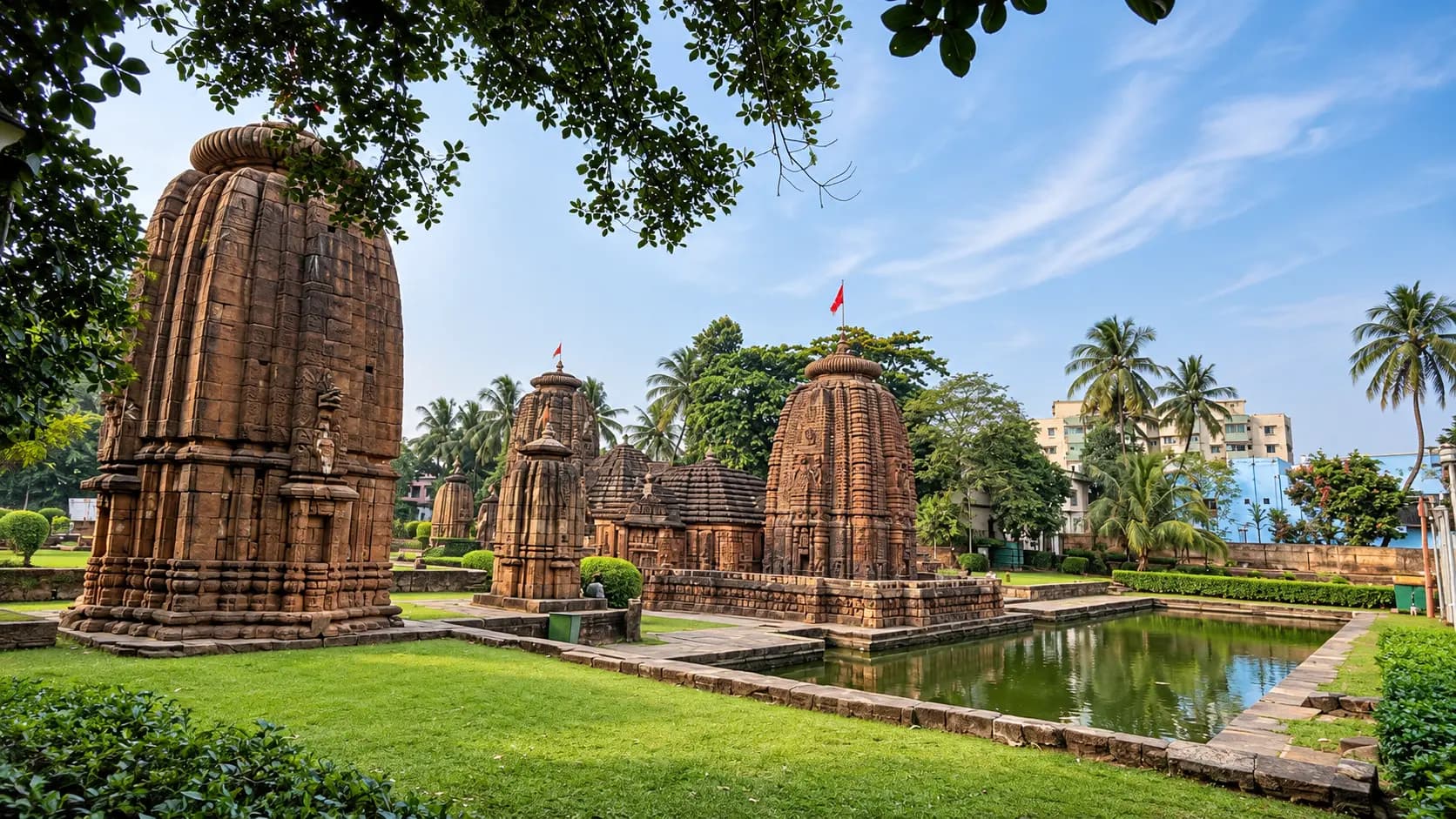
Standing in a tranquil, manicured palm-fringed garden in the Kedargauri quarter of Old Town Bhubaneswar, the Mukteswar Temple (reverently praised in Odia as the "Jewel Box of…
The story of Mukteswar Temple
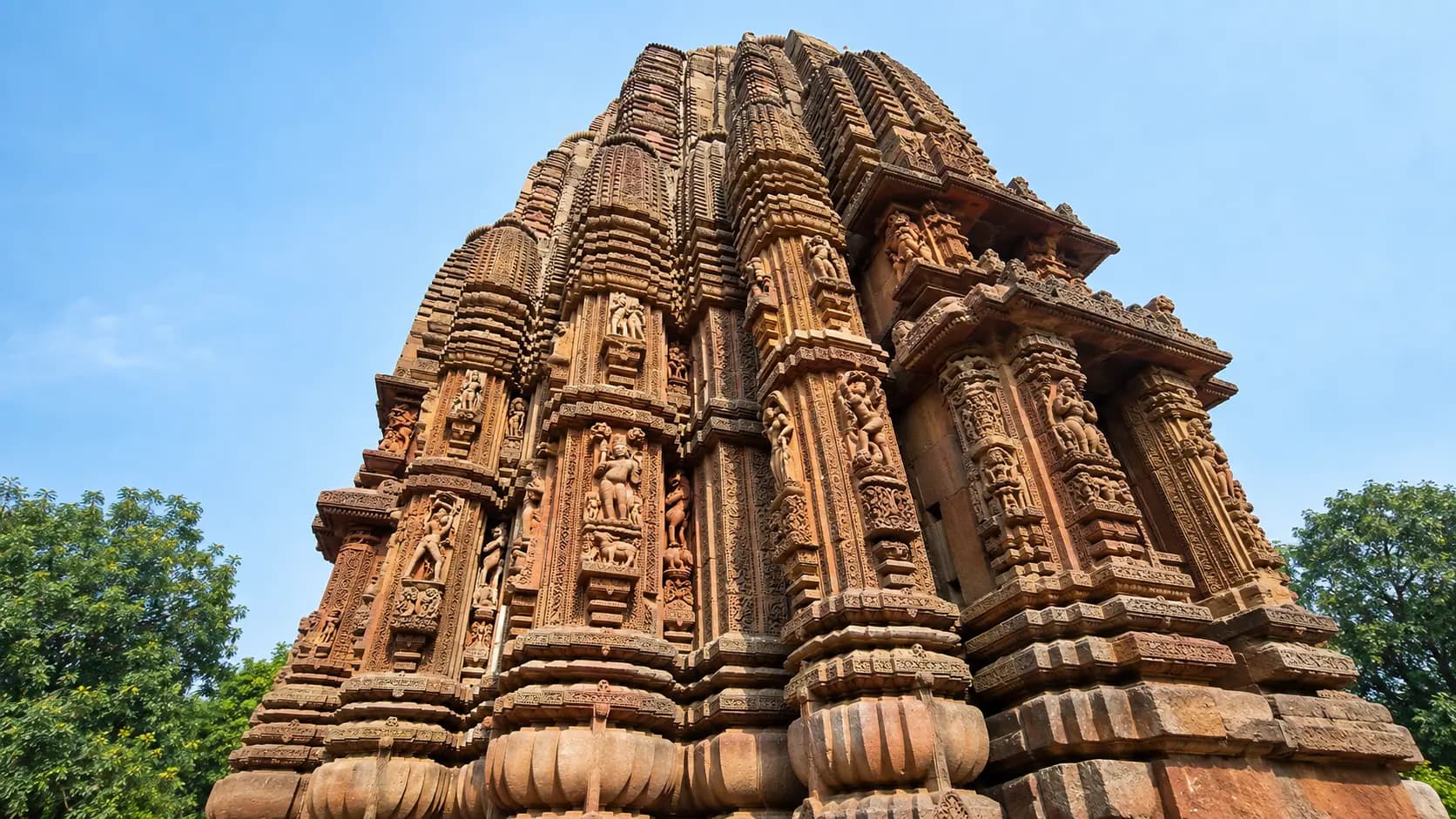
Standing in a tranquil, manicured palm-fringed garden in the Kedargauri quarter of Old Town Bhubaneswar, the Mukteswar Temple (reverently praised in Odia as the "Jewel Box of Kalinga Architecture") is universally acclaimed by historians, architects, and travelers as one of the most exquisite miniature stone temples ever erected in India. Celebrated 19th-century architectural historian James Fergusson famously designated it the "Gem of Odisha Architecture" - a title it continues to wear with undisputed grace.
Constructed during the mid-to-late 10th century CE (circa 950 - 975 CE) under the patronage of the Somavamshi Dynasty (traditionally attributed to King Jajati I), Mukteswar marks the definitive stylistic watershed in eastern Indian art. It represents the vital evolutionary bridge linking the early, robust, flat-roofed temples of the Bhauma-Kara period (such as the 7th-century Parsurameswar Temple) with the soaring, monumental, mature masterworks of the later Somavamshi and Eastern Ganga periods (such as Rajarani and Lingaraj temples).
Rising to a modest yet perfectly balanced height of 10.5 metres (35 feet), Mukteswar is world-renowned for its sublime sculptural refinement and its extraordinary, free-standing arched stone gateway - the Torana - an architectural marvel found nowhere else in Odisha. Inside the assembly hall (Jagamohana), the ceiling unfurls as a breathtaking, deep-relief stone carving of a blossoming lotus surrounded by celestial deities, while the adjoining sacred tank of Marichi Kunda whispers ancient folklore of miraculous healing. Unlike the heavily restricted sanctums of Lingaraj and Puri, Mukteswar is completely open to visitors of all faiths, offering an intimate, serene encounter with pure 10th-century artistic perfection.
Start here. Open a tile for the full details.
Why goRead details
- The Gem of Odisha Architecture: Marvel at the monument universally praised as the most refined, harmonious, and exquisitely proportioned miniature temple in eastern India.
- The World-Famous Arched Stone Torana: Photograph the legendary free-standing makara-torana - the only arched gateway in Odisha temple architecture - carved with intricate filigree, grinning ganas, and celestial maidens.
- The Sculptural Watershed of Kalinga Art: Observe the historic transition from early Bhauma-Kara styles to mature Somavamshi architecture, showcasing the earliest true stepped pyramidal pidha roof in Odisha.
- The Masterpiece Sculpted Lotus Ceiling: Step inside the dim, cool Jagamohana to gaze upward at the celebrated circular stone lotus ceiling carved in deep relief, surrounded by the Saptamatrikas and Ganesha.
- The Miraculous Waters of Marichi Kunda: Walk down the stone steps of the sacred spring-fed tank whose mineral-rich waters have been revered for centuries for curing infertility in childless women.
- Completely Inclusive and Open Access: Enjoy unrestricted access to the temple courtyard, Torana, and inner assembly hall, open to international travelers and visitors of all religions without restrictions.
- The Annual Mukteswar Odissi Dance Festival: Experience world-class classical Odissi dance recitals performed on an open-air garden stage every January against the floodlit stone Torana.
When to visitRead details
Entry & permissionsRead details
Fees, visiting hours and entry rules may change. Confirm the latest details with the official operator or local authority before travelling.
Tariffs, Timings and Regulations
- Admission Fee: Entry to Mukteswar Temple, Siddheswar Temple, Marichi Kunda, and the surrounding ASI landscaped gardens is completely free (₹0) for all domestic and international visitors.
- Visiting Hours: Open daily from sunrise to sunset (06:00 AM to 19:00 PM).
- Universal Visitor Access: Unlike Lingaraj and Jagannath temples, Mukteswar Temple is completely open to visitors of all religious faiths and nationalities. International travelers can freely walk through the Torana, explore the courtyard, and enter the assembly hall.
- Photography Rules:
- Handheld still photography and smartphone videography are permitted free of charge throughout the monument and gardens.
- Using heavy professional camera tripods, commercial video equipment, or fashion photography rigs requires prior written permission from the Archaeological Survey of India.
- Flying camera drones over the monument or surrounding ASI heritage boundary is strictly prohibited under national security regulations.
- Footwear Etiquette: Visitors can wear shoes while strolling the grassy lawns and stone perimeter walkways, but must remove shoes before stepping onto the stone plinth of the temple.
Plan your visitRead details
The nearest airport is Biju Patnaik International Airport (BBI) in Bhubaneswar, located approximately 4.5 kilometres northwest of Mukteswar Temple.
- Daily non-stop flights connect Bhubaneswar with New Delhi, Mumbai, Bengaluru, Kolkata, Chennai, and Hyderabad. Confirm the current charge and what it includes with the operator or service provider. Visitor admission, vehicles, parking, activities and accommodation can have separate charges.
Explore the full guide - choose a topic below.
Why visit?
The Gem of Odisha Architecture: Marvel at the monument universally praised as the most refined, harmonious, and…Explore detailsClose details
- The Gem of Odisha Architecture: Marvel at the monument universally praised as the most refined, harmonious, and exquisitely proportioned miniature temple in eastern India.
- The World-Famous Arched Stone Torana: Photograph the legendary free-standing makara-torana - the only arched gateway in Odisha temple architecture - carved with intricate filigree, grinning ganas, and celestial maidens.
- The Sculptural Watershed of Kalinga Art: Observe the historic transition from early Bhauma-Kara styles to mature Somavamshi architecture, showcasing the earliest true stepped pyramidal pidha roof in Odisha.
- The Masterpiece Sculpted Lotus Ceiling: Step inside the dim, cool Jagamohana to gaze upward at the celebrated circular stone lotus ceiling carved in deep relief, surrounded by the Saptamatrikas and Ganesha.
- The Miraculous Waters of Marichi Kunda: Walk down the stone steps of the sacred spring-fed tank whose mineral-rich waters have been revered for centuries for curing infertility in childless women.
- Completely Inclusive and Open Access: Enjoy unrestricted access to the temple courtyard, Torana, and inner assembly hall, open to international travelers and visitors of all religions without restrictions.
- The Annual Mukteswar Odissi Dance Festival: Experience world-class classical Odissi dance recitals performed on an open-air garden stage every January against the floodlit stone Torana.
What to expect
Before the construction of Mukteswar, ancient Odishan temples - such as the 7th-century Parsurameswar and…Explore detailsClose details
The Architectural Evolution and Kalinga Masterpiece
Before the construction of Mukteswar, ancient Odishan temples - such as the 7th-century Parsurameswar and Shatrughneswar temples - featured squarish, low assembly halls with flat, tiered terraced roofs and unadorned interior ceilings. With Mukteswar, 10th-century Odishan master masons pioneered an architectural revolution:
- They introduced the fully developed Pancharatha ground plan (a five-segmented facade that produces rich light-and-shade textures).
- They perfected the stepped pyramidal roof (pidha deul) crowned with a kalasa.
- They transformed the interior ceiling into a magnificent three-dimensional stone sculpture.
- They integrated Buddhist and Jain artistic motifs into an orthodox Shaivite sanctuary dedicated to Lord Shiva as Mukteswara ("Lord of Spiritual Liberation").
+-----------------------------------------------------------------------------------+
|                        MUKTESWAR TEMPLE COMPLEX LAYOUT                            |
+-----------------------------------------------------------------------------------+
|                                                                                   |
|                                     [ WEST ]                                      |
|                                                                                   |
|                      ┌──────────────────────────────────────┐                     |
|                      │          VIMANA (SANCTUM)            │                     |
|                      │  - 10.5 m (35 ft) Rekha Deul         │                     |
|                      │  - Intricately Carved Bho Windows    │                     |
|                      │  - Dark Sanctum Housing Shiva Lingam │                     |
|                      └──────────────────┬───────────────────┘                     |
|                                         │                                         |
|                                         ▼                                         |
|                      ┌──────────────────────────────────────┐                     |
|                      │        JAGAMOHANA (ASSEMBLY HALL)    │                     |
|   [ NORTH ]          │  - Stepped Pyramidal Pidha Roof      │       [ SOUTH ]     |
| Manicured ASI Lawns  │  - Masterpiece Carved Lotus Ceiling  │   Sacred Stepped    |
| & 11th-Century       │  - Perforated Stone Jali Windows     │   Tank:             |
| Siddheswar Temple    └──────────────────┬───────────────────┘   MARICHI KUNDA     |
| (Red Sandstone Deul)                    │                       (Medicinal Spring)|
|                                         ▼                                         |
|                      ┌──────────────────────────────────────┐                     |
|                      │      THE ICONIC ARCHED TORANA        │                     |
|                      │  - Free-standing Makara Arch         │                     |
|                      │  - Heavy Fluted Octagonal Pillars    │                     |
|                      └──────────────────┬───────────────────┘                     |
|                                         │                                         |
|                                         ▼                                         |
|                                     [ EAST ]                                      |
|                       Paved Courtyard & Garden Entrance                           |
|                                                                                   |
+-----------------------------------------------------------------------------------+
The World-Famous Arched Stone Torana
The defining signature of Mukteswar is its independent, free-standing arched gateway known as the Torana. Rising gracefully directly in front of the eastern entrance of the Jagamohana, this singular monument stands completely detached from the main temple structure.
The Torana is supported by two massive, fluted octagonal stone pillars that rise from square carved plinths. The base and shafts of these pillars are embellished with delicate bead-chains, miniature floral medallions, and joyful laughing ganas (dwarf attendants).
Resting upon these pillars is a majestic, sweeping semi-circular arch adorned with virtuosic stone filigree:
- Makara Motifs: The lower ends of the arch terminate in the open jaws of gaping makaras - mythical aquatic creatures combining the snout of a crocodile, the body of a fish, and the curling tail of a peacock.
- Celestial Reclining Maidens: Carved along the curvature of the arch are sensual female figures (Nayikas) reclining in graceful, languid postures, resting their heads upon their hands.
- Scrollwork and Birds: Intricate floral arabesques, strings of carved stone pearls, grinning grotesque faces (Kirtimukhas), and pairs of fluttering peacocks cover every square millimeter of the arch face.
Art historians recognize this Torana as a sublime medieval synthesis: while the temple itself is Shaivite, the form of the gateway draws deep structural inspiration from ancient Buddhist toranas (such as those at Sanchi) and Jain rock-cut archways, reflecting the eclectic cultural syncretism of 10th-century Kalinga.
The Vimana and Its Delicate Carvings
The sanctum tower (Vimana) stands 10.5 metres (35 feet) high and is renowned for its graceful curvilinear contour. Unlike the imposing, severe verticality of Lingaraj, Mukteswar's shikhara feels light, delicate, and jewel-like.
Key artistic features of the Vimana include:
- The Bho Chaitya Motifs: Above each central facade niche rises an ornate bho medallion - a stylized chaitya window crowned with a fierce Kirtimukha (Face of Glory) disgorging ropes of pearls, flanked by two celestial nymphs holding flower garlands.
- The Celestial Maidens (Alasa Kanyas): Carved into the corner recesses are exquisite high-relief sculptures of young women in intimate, candid moments of daily life: a woman looking into a mirror while applying vermilion to her hair parting, another holding a pet parrot in a cage, a maiden wringing water from her wet braided hair while a goose sips the falling droplets, and a dancer adjusting her ankle bells.
- Nataraja and Ascetics: Dynamic reliefs of multi-armed Nataraja performing the cosmic dance of dissolution, accompanied by rows of emaciated Shaivite ascetics (Pashupatas) engaged in deep yogic meditation and penance.
The Jagamohana and the Masterpiece Lotus Ceiling
The assembly hall (Jagamohana) features the earliest complete example of a stepped pyramidal roof in Odisha, composed of five distinct stone tiers crowned with miniature kalasas and sculpted crouching lions.
However, the crowning artistic surprise awaits inside. Stepping across the low stone threshold into the dim, cool sanctum reveals an interior ceiling that is an absolute tour-de-force of medieval Indian stone sculpture:
- At the exact center of the ceiling is a colossal, multi-layered carved stone lotus medallion sculpted in dramatic deep relief. The central lotus bud projects downward into the room, surrounded by concentric rings of delicately textured petals that seem to float weightlessly in the dark stone.
- Surrounding this central floral medallion is a carved square frieze depicting the Saptamatrikas (the Seven Mother Goddesses: Brahmani, Vaishnavi, Indrani, Chamunda, Maheshwari, Kaumari, and Varahi), flanked by finely detailed reliefs of Lord Ganesha holding modaks, Kartikeya on his peacock, and celestial musicians playing flutes and cymbals.
The Sacred Stepped Tank: Marichi Kunda
Just southwest of the temple compound lies an ancient, stone-revetted stepped tank called the Marichi Kunda. Fed by a natural underground perennial spring, the water remains remarkably clear and cool throughout the year.
According to local spiritual belief, the mineral waters of Marichi Kunda possess miraculous fertility-granting powers. For centuries, childless women from across Odisha have traveled here on the eve of the Ashokashtami festival (March/April). Devotees take a sacred pre-dawn dip in the tank and perform ritual prayers to invoke divine blessings for conception. During the morning of Ashokashtami, pitchers of holy water drawn from Marichi Kunda are ceremonially auctioned to eager pilgrims outside the temple gates.
The Siddheswar Temple and Garden Precinct
Sharing the beautifully landscaped ASI park grounds immediately north of Mukteswar is the Siddheswar Temple. Built in the 11th century during the later Somavamshi era, Siddheswar is slightly taller than Mukteswar and features a red-sandstone rekha deul. Its interior enshrines an impressive four-armed monolithic statue of Lord Ganesha and a Shiva Lingam. The juxtaposition of the two temples offers visitors a fascinating side-by-side study in Kalinga architectural progression.
Best time to visit
Explore detailsClose details
Seasonal breakdown
Season | Months | Daytime Temp (°C) | Nighttime Temp (°C) | Temple Atmosphere & Visitor Experience |
|---|---|---|---|---|
Peak Winter | November - February | 24°C - 28°C | 14°C - 18°C | Optimal. Crisp, dry air, mild sunshine, and cool evenings. Perfect for leisurely garden strolls, photographing the Torana in golden morning light, and attending the Mukteswar Dance Festival in mid-January. |
Early Spring | March - April | 30°C - 35°C | 20°C - 24°C | Very Good. Pleasant mornings and breezy evenings; afternoon sun warms the stone plinths. Coincides with the vibrant Ashokashtami rituals at Marichi Kunda. |
Summer | May - June | 36°C - 42°C | 26°C - 30°C | Hot & Humid. The stone courtyard absorbs considerable heat during midday. Early morning visits (06:00 to 08:30 AM) or sunset hours (17:30 to 19:00 PM) are strongly recommended. |
Monsoon | July - October | 29°C - 33°C | 24°C - 26°C | Lush & Dramatic. Landscaped lawns and surrounding palm trees become brilliantly green. Rain cleans the dark sandstone filigree, though brief downpours require umbrellas. |
How to reach
The nearest airport is Biju Patnaik International Airport (BBI) in Bhubaneswar, located approximately 4.5…Explore detailsClose details
By Air
The nearest airport is Biju Patnaik International Airport (BBI) in Bhubaneswar, located approximately 4.5 kilometres northwest of Mukteswar Temple.
- Daily non-stop flights connect Bhubaneswar with New Delhi, Mumbai, Bengaluru, Kolkata, Chennai, and Hyderabad. Confirm the current charge and what it includes with the operator or service provider. Visitor admission, vehicles, parking, activities and accommodation can have separate charges.
By Train
- Bhubaneswar Main Railway Station (BBS): Located approximately 4.5 kilometres north of the temple. Confirm the current charge and what it includes with the operator or service provider. Visitor admission, vehicles, parking, activities and accommodation can have separate charges.
- Lingaraj Temple Road Railway Station (LGTR): Located 3 kilometres southwest, handling local suburban passenger services.
By Road & Public Transit
- Mo Bus (Urban Bus): Capital Region Urban Transport (CRUT) operates clean, air-conditioned Mo Bus services connecting across the city. Routes stopping at Ravi Talkies Chhak or Garage Chhak leave passengers just a short 5-minute walk from the Kedargauri - Mukteswar heritage gate.
- Walking Circuit in Old Town: Mukteswar is positioned ideally along the classic Old Town heritage walking trail. It is located just 200 metres from the 7th-century Parsurameswar Temple, 300 metres from Kedargauri Temple, and 1.2 kilometres northeast of Lingaraj Temple and Bindu Sagar Lake.
Entry, timings and permissions
Fees, visiting hours and entry rules may change.Explore detailsClose details
Fees, visiting hours and entry rules may change. Confirm the latest details with the official operator or local authority before travelling.
Tariffs, Timings and Regulations
- Admission Fee: Entry to Mukteswar Temple, Siddheswar Temple, Marichi Kunda, and the surrounding ASI landscaped gardens is completely free (₹0) for all domestic and international visitors.
- Visiting Hours: Open daily from sunrise to sunset (06:00 AM to 19:00 PM).
- Universal Visitor Access: Unlike Lingaraj and Jagannath temples, Mukteswar Temple is completely open to visitors of all religious faiths and nationalities. International travelers can freely walk through the Torana, explore the courtyard, and enter the assembly hall.
- Photography Rules:
- Handheld still photography and smartphone videography are permitted free of charge throughout the monument and gardens.
- Using heavy professional camera tripods, commercial video equipment, or fashion photography rigs requires prior written permission from the Archaeological Survey of India.
- Flying camera drones over the monument or surrounding ASI heritage boundary is strictly prohibited under national security regulations.
- Footwear Etiquette: Visitors can wear shoes while strolling the grassy lawns and stone perimeter walkways, but must remove shoes before stepping onto the stone plinth of the temple.
Nearby places to consider
Parsurameswar Temple (~200 m west): One of the oldest surviving stone temples in Bhubaneswar (dating to ~650 CE)…Explore detailsClose details
- Parsurameswar Temple (~200 m west): One of the oldest surviving stone temples in Bhubaneswar (dating to ~650 CE), renowned for its early Bhauma-Kara architecture, Nataraja carvings, and Saptamatrika friezes.
- Kedargauri Temple (~300 m southwest): An ancient twin temple complex dedicated to Lord Shiva and Goddess Gauri, set around two perennial sacred natural springs.
- Rajarani Temple (~1 km east): The celebrated 11th-century "Love Temple" sculpted from fine yellowish sandstone, famed for its sensual female nayikas and lush ASI garden setting.
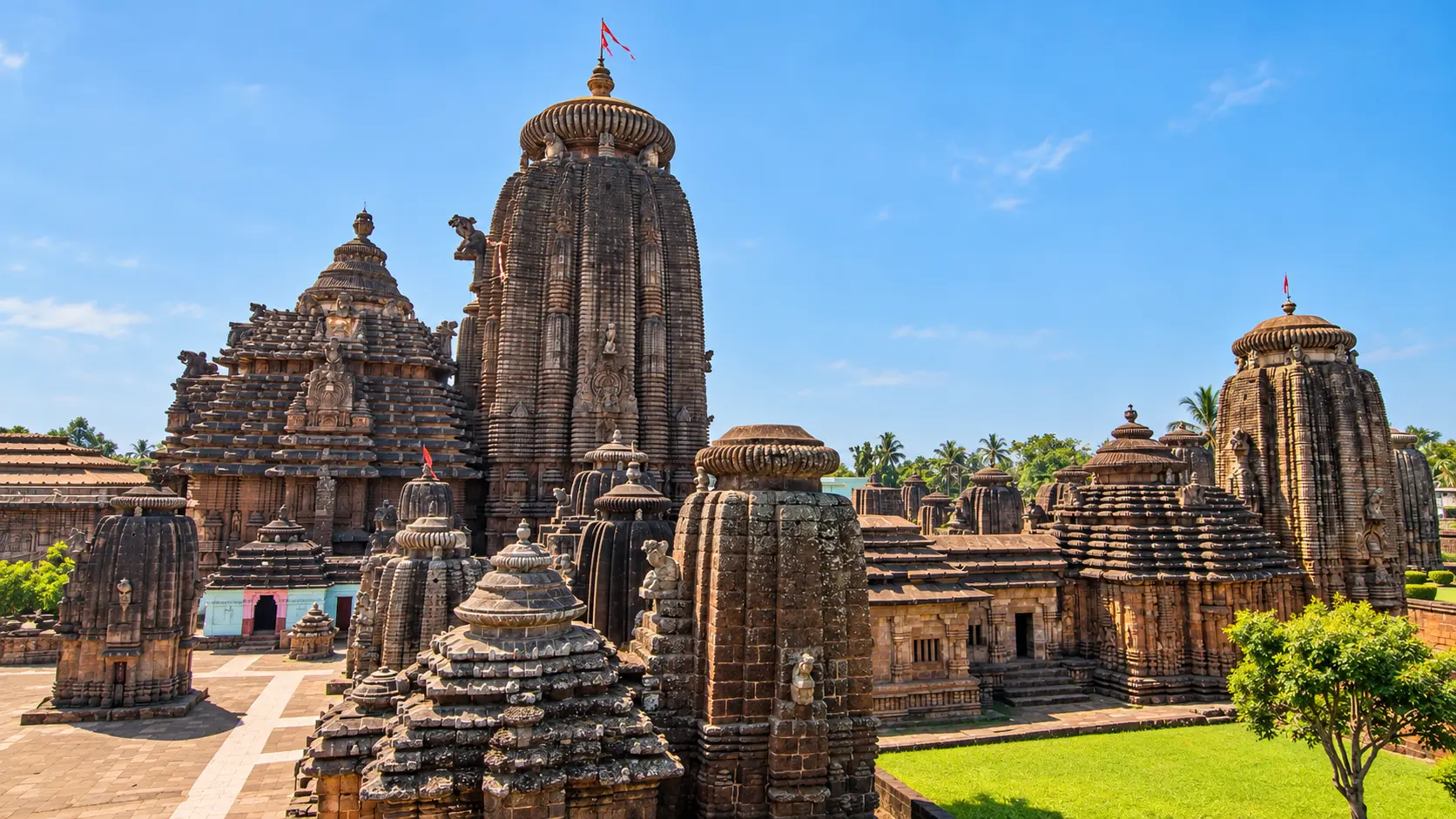
- Shree Lingaraj Temple (~1.2 km southwest): The monumental 11th-century crown jewel of Bhubaneswar, soaring 55 metres high and surrounded by 150 subsidiary shrines.
- Bindu Sagar Lake (~1.2 km southwest): The sacred mythological reservoir of Ekamra Kshetra, flanked by ancient stone ghats and the 13th-century Ananta Vasudeva Temple.
- Odisha State Museum (~1.5 km north): A premier cultural institution showcasing archaeological artifacts, medieval Jain and Buddhist sculptures, ancient copper-plate charters, and palm-leaf manuscripts.
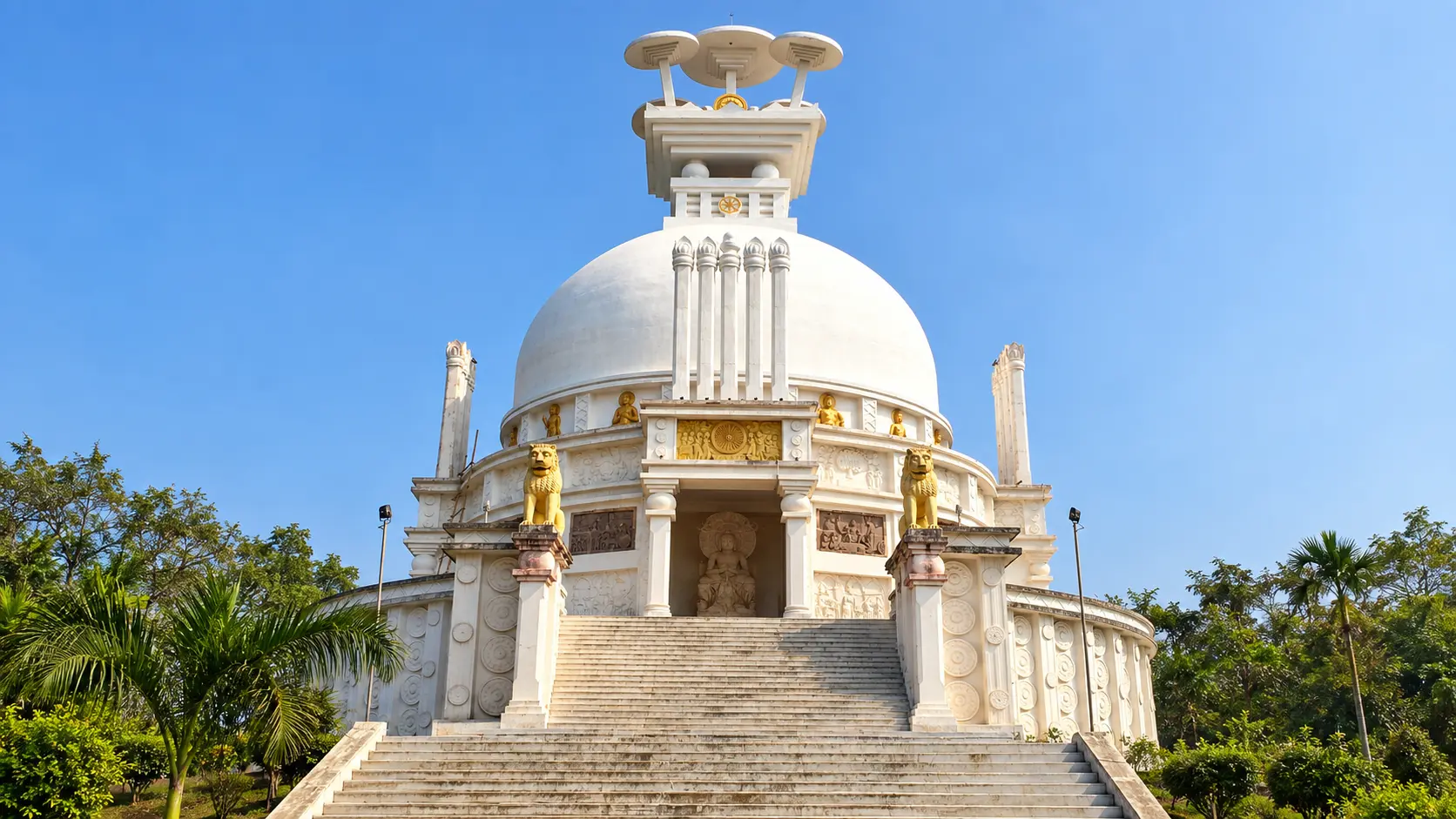
- Dhauli Shanti Stupa (~8 km south): The iconic white Buddhist peace pagoda perched atop Dhauli Hill overlooking the historic battleground of the Kalinga War.
In pictures
The practical bits
Before you go.
Optimal Lighting for Torana Photography
The best time for photography at Mukteswar Temple is in the early morning between 06:30 AM and 08:30 AM.Explore detailsClose details
The best time for photography at Mukteswar Temple is in the early morning between 06:30 AM and 08:30 AM. Because the Torana faces directly east, the soft dawn sun illuminates the front face of the arched gateway, highlighting the exquisite textures of the carved makaras, grinning ganas, and reclining maidens without harsh midday shadows. Late afternoon (16:30 to 17:30 PM) offers a warm, golden backlight from the west behind the shikhara.
Don't Miss Looking Up Inside the Ceiling
Most casual tourists walk inside the Jagamohana assembly hall and immediately focus on the inner doorway to the…Explore detailsClose details
Most casual tourists walk inside the Jagamohana assembly hall and immediately focus on the inner doorway to the sanctum, entirely missing the temple's greatest hidden treasure: the sculpted stone ceiling. Carry a small penlight or use your smartphone's flashlight to illuminate the roof above you; the multi-tiered lotus medallion, the surrounding Saptamatrikas, and Ganesha carved in deep relief represent one of the crowning triumphs of Indian rock art.
Pairing with the Kedargauri Temple Precinct
Make the most of your excursion by exploring the adjoining historical cluster.Explore detailsClose details
Make the most of your excursion by exploring the adjoining historical cluster. Start at Mukteswar and Siddheswar, walk 50 metres south to examine the stepped tank at Marichi Kunda, and then cross the narrow lane to visit the 7th-century Parsurameswar Temple - one of Bhubaneswar's oldest surviving temples, famous for its ancient Nataraja and Saptamatrika reliefs. Conclude with a peaceful stroll through the mango groves of the Kedargauri Temple complex.
Attending the Mukteswar Dance Festival in January
If your travel dates fall in mid-January, plan your visit to coincide with the annual Mukteswar Dance Festival…Explore detailsClose details
If your travel dates fall in mid-January, plan your visit to coincide with the annual Mukteswar Dance Festival (January 14 to 16). Organized by Odisha Tourism, this free evening festival transforms the temple gardens into an open-air theater where India's foremost classical Odissi dancers perform under the stars, with the 10th-century stone Torana dramatically bathed in artistic colored floodlights.
A few things you might wonder
Common questions about visiting Mukteswar Temple. Fees, visiting hours and ceremonies are researched details that may change; confirm current arrangements with the operator before travelling.
Why is Mukteswar Temple called the "Gem of Odisha Architecture"?
What is the famous Torana at Mukteswar Temple?
Can non-Hindus and international tourists visit Mukteswar Temple?
What is the significance of the sculpted ceiling inside Mukteswar Temple?
What is the sacred tank of Marichi Kunda famous for?
What is the Mukteswar Dance Festival?
Is there an entrance fee to visit Mukteswar Temple?
How old is Mukteswar Temple and who built it?
Explore more in Puri Konark Bhubaneswar
Discover other destinations around this hub
More Hubs in Odisha
Continue exploring other travel hubs in this state
Planning a trip to Golden Triangle?