Rajarani Temple
Complete visitor guide to the 11th-century Rajarani Temple in Bhubaneswar, Odisha.
Location
Golden Triangle, Odisha
A closer look
Your visit, at a glance.
Golden Triangle, Odisha
GET TO KNOW THE PLACE
Rising with sublime elegance from a sprawling carpet of manicured green emerald lawns in the eastern quarter of Old Town Bhubaneswar, Khordha District, Odisha, Rajarani Temple…
The story of Rajarani Temple
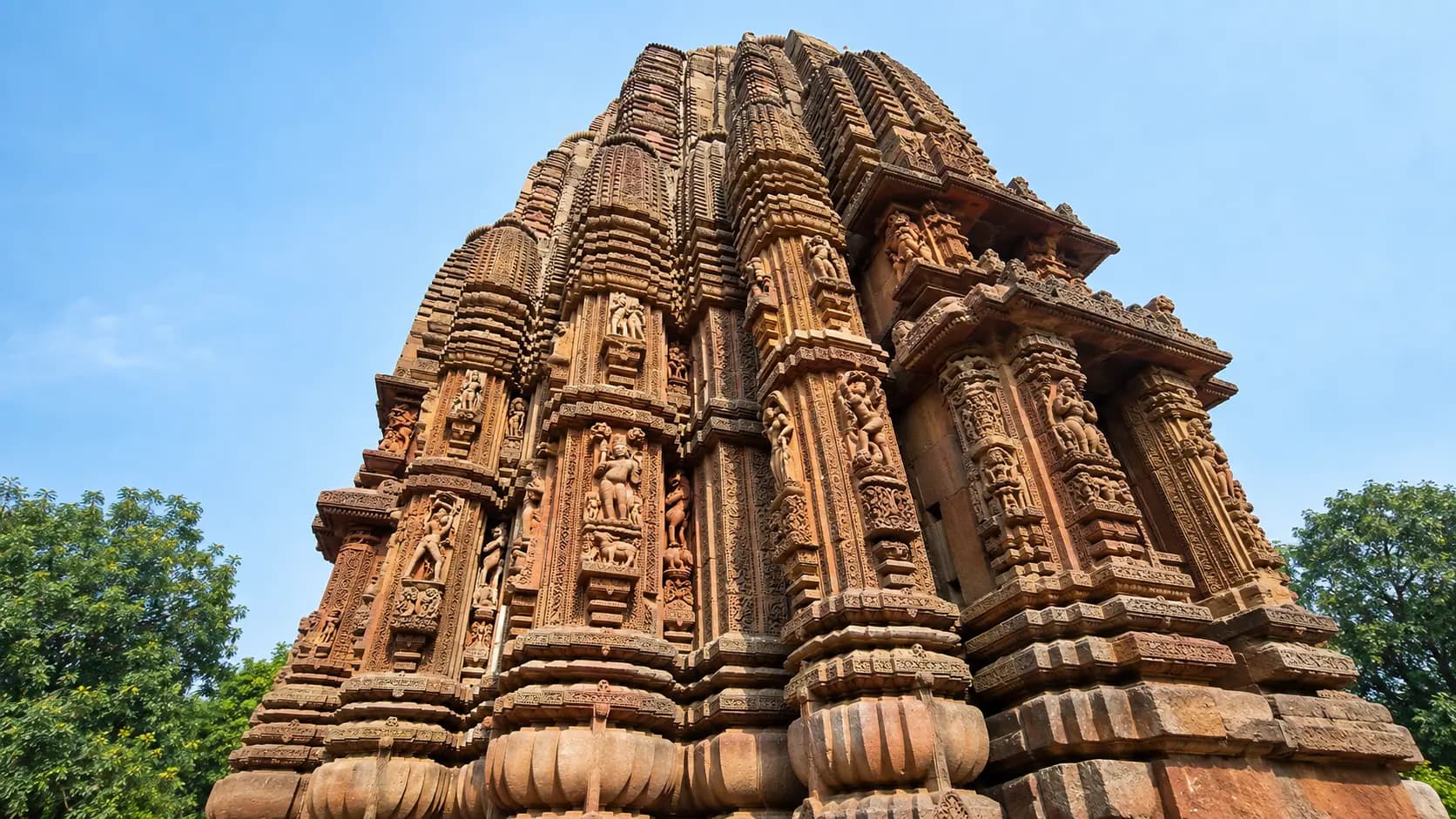
Rising with sublime elegance from a sprawling carpet of manicured green emerald lawns in the eastern quarter of Old Town Bhubaneswar, Khordha District, Odisha, Rajarani Temple stands as one of the most aesthetically accomplished and architecturally fascinating monuments of medieval India. Constructed during the mid-11th century (approximately 1000 - 1050 CE) under the illustrious Somavamshi (Kesari) dynasty, this monument marks a pivotal transitional epoch in classical Kalinga temple architecture. Positioned chronologically and stylistically between the jewel-like 10th-century Mukteswar Temple and the towering, monumental 11th-century Lingaraj Temple, Rajarani represents the absolute zenith of Odishan decorative stone carving and structural innovation.
Unlike the living pilgrimage temples of Bhubaneswar where ancient rituals, chanting priests, and ringing bells create an atmosphere of intense religious devotion, Rajarani Temple is a peaceful, non-living monument centrally protected and meticulously maintained by the Archaeological Survey of India (ASI, Bhubaneswar Circle). The sanctum sanctorum houses no consecrated deity or active Shivalinga today. Free from liturgical restrictions or religious entry barriers, the monument welcomes visitors of all faiths, backgrounds, and nationalities to walk across its elevated sandstone plinths, inspect its microscopic architectural carvings, and explore its dimly lit inner sanctum at their own contemplative pace.
The temple's evocative modern name, "Rajarani," has long sparked romantic speculation among travelers, many of whom assume it was built by a loving king (Raja) in tribute to his queen (Rani), or served as a royal pleasure pavilion. In reality, historical records and epigraphical research confirm that the temple derives its name from the distinctive local, fine-grained yellowish-red sandstone known in Odia as Rajaraniya or Rajarani patthara. This resilient, compact stone possessed an extraordinary fine grain that allowed 11th-century master sculptors to carve with the crisp precision of wood or ivory, producing razor-sharp, deeply undercut bas-reliefs that have miraculously resisted nine centuries of weathering. Identified in the ancient palm-leaf text Ekamra Purana as the sacred Indresvara Temple dedicated to Lord Shiva, Rajarani is globally renowned today as the "Love Temple of Odisha" due to its astonishingly sensual, lifelike sculptures of Alasa Kanyas (indolent celestial maidens), Nayikas, and amorous couples that celebrate the beauty of human emotion, physical elegance, and divine grace.
Start here. Open a tile for the full details.
Why goRead details
- Admire the Pinnacle of Classical Kalinga Stone Carving: Stand inches away from 11th-century high-relief sculptures that represent the crowning artistic triumph of Somavamshi artisans. The fluid anatomical realism, delicate drapery folds, intricate hair buns, and expressive facial glances of Rajarani's carved figures represent an unsurpassed high-water mark in ancient Indian visual art.
- Experience the "Love Temple of Odisha" and Sensual Alasa Kanyas: Discover the famous feminine iconography that adorns the temple's outer walls. Behold masterfully sculpted maidens performing everyday and intimate acts - applying black collyrium to their eyes with a slender stick, gazing vanity-struck into round hand mirrors, playfully holding pet parrots, extracting thorns from their soles, and wringing fragrant bathwater from long, cascading locks of hair.
- Inspect the Unique Khajuraho-Style Clustered Shikhara: Examine the sanctuary's curvilinear tower (rekha deula), which differs dramatically from all other temples in Bhubaneswar. Instead of a sheer vertical wall, Rajarani's spire is clustered with dozens of miniature miniature spirelets (angasikharas), producing a stepped, multi-layered mountain-silhouette that shares profound structural parallels with the Chandela temples of Khajuraho.
- Marvel at the World's Finest Ashtadikpala Sculptures: Study the eight Guardians of the Quarters (Ashtadikpalas) carved on the lower tier of the temple facade. Each guardian deity - including Indra on his multi-tusked elephant, Agni riding a ram, Yama with his death-staff on a buffalo, and Varuna mounted on a mythical sea monster - is depicted with complete iconographic precision and breathtaking artistic finesse.
- Enjoy an Open, Non-Living Monument Without Ritual Restrictions: Because no active worship occurs within the temple, travelers of all nationalities and religious traditions can step freely onto the plinth, inspect the inner sanctum, examine the Saivite doorkeepers, and admire the stonecraft without priests, religious fees, or sectarian entry prohibitions.
- Attend the World-Renowned Rajarani Music Festival: If visiting in mid-January, immerse yourself in one of India's most prestigious open-air classical music celebrations. Listen to celebrated maestros of Odissi vocal, Hindustani classical, Carnatic music, flute, and sitar perform on an illuminated open-air stage against the floodlit backdrop of the thousand-year-old sandstone spire.
When to visitRead details
Bhubaneswar experiences a tropical savanna climate characterized by distinct seasons: a pleasant, dry winter, an intensely hot summer, and a humid maritime monsoon. Because exploring Rajarani Temple involves walking barefoot on stone plinths and examining open-air exterior sculptures under the sky, timing your visit according to seasonal patterns is crucial.
Entry & permissionsRead details
Fees, visiting hours and entry rules may change. Confirm the latest details with the official operator or local authority before travelling.
- Admission Charges: Rajarani Temple is an Archaeological Survey of India (ASI) ticketed monument.
- Indian Citizens, SAARC, and BIMSTEC Visitors: ₹25 per person when purchasing a physical paper ticket at the entrance counter; discounted to ₹20 per person when paying digitally via the ASI e-ticketing portal or on-site QR code.
- Foreign Tourists: ₹300 per person at the cash counter; discounted to ₹250 per person via digital cashless payment.
- Children under 15 Years: Free admission upon presentation of valid identity or age proof.
- Rajarani Music Festival Tickets: During the annual three-day festival in January, entry to the general monument lawns during daytime follows standard ASI ticketing. Reserved seating passes for the evening musical concerts are sold separately by Odisha Tourism at nominal rates (typically ₹100 to ₹300 per evening, or ₹500 for a season pass).
- Visiting Hours: The temple grounds and monument are open daily from Sunrise to Sunset (06:00 AM to 18:00 PM) throughout the year, including Sundays and public holidays. The ticket booking kiosk operates from 06:00 AM to 17:30 PM.
- Permissions and Guidelines:
- No prior bureaucratic permissions or security passes are required for general tourists, history enthusiasts, or architectural scholars.
- Still Photography & Non-Commercial Video: Handheld cameras, smartphones, and personal mirrorless cameras are permitted without extra fee. Personal tripods and gimbals are generally permitted on the garden lawns, but should not obstruct pedestrian pathways or narrow plinth walkways.
- Commercial Filming & Drones: Professional commercial cinematography, fashion shoots, advertising photography, or drone flying strictly require prior written sanction and permits from the Superintending Archaeologist, ASI Bhubaneswar Circle. Unlicensed drone flights are strictly prohibited.
- Footwear Policy: Shoes, sandals, and leather footwear must be removed before ascending the flight of stairs onto the raised stone temple plinth and entering the sanctum. Visitors can leave their shoes at the designated shoe rack beside the entrance pathway.
Plan your visitRead details
Rajarani Temple is situated in the eastern sector of Old Town Bhubaneswar, within Rajarani Colony just off Tankapani Road and Lewis Road. The site enjoys superb urban connectivity to Bhubaneswar's primary transit hubs, airport, and major hotel districts.
Explore the full guide - choose a topic below.
Why visit?
Admire the Pinnacle of Classical Kalinga Stone Carving: Stand inches away from 11th-century high-relief…Explore detailsClose details
- Admire the Pinnacle of Classical Kalinga Stone Carving: Stand inches away from 11th-century high-relief sculptures that represent the crowning artistic triumph of Somavamshi artisans. The fluid anatomical realism, delicate drapery folds, intricate hair buns, and expressive facial glances of Rajarani's carved figures represent an unsurpassed high-water mark in ancient Indian visual art.
- Experience the "Love Temple of Odisha" and Sensual Alasa Kanyas: Discover the famous feminine iconography that adorns the temple's outer walls. Behold masterfully sculpted maidens performing everyday and intimate acts - applying black collyrium to their eyes with a slender stick, gazing vanity-struck into round hand mirrors, playfully holding pet parrots, extracting thorns from their soles, and wringing fragrant bathwater from long, cascading locks of hair.
- Inspect the Unique Khajuraho-Style Clustered Shikhara: Examine the sanctuary's curvilinear tower (rekha deula), which differs dramatically from all other temples in Bhubaneswar. Instead of a sheer vertical wall, Rajarani's spire is clustered with dozens of miniature miniature spirelets (angasikharas), producing a stepped, multi-layered mountain-silhouette that shares profound structural parallels with the Chandela temples of Khajuraho.
- Marvel at the World's Finest Ashtadikpala Sculptures: Study the eight Guardians of the Quarters (Ashtadikpalas) carved on the lower tier of the temple facade. Each guardian deity - including Indra on his multi-tusked elephant, Agni riding a ram, Yama with his death-staff on a buffalo, and Varuna mounted on a mythical sea monster - is depicted with complete iconographic precision and breathtaking artistic finesse.
- Enjoy an Open, Non-Living Monument Without Ritual Restrictions: Because no active worship occurs within the temple, travelers of all nationalities and religious traditions can step freely onto the plinth, inspect the inner sanctum, examine the Saivite doorkeepers, and admire the stonecraft without priests, religious fees, or sectarian entry prohibitions.
- Attend the World-Renowned Rajarani Music Festival: If visiting in mid-January, immerse yourself in one of India's most prestigious open-air classical music celebrations. Listen to celebrated maestros of Odissi vocal, Hindustani classical, Carnatic music, flute, and sitar perform on an illuminated open-air stage against the floodlit backdrop of the thousand-year-old sandstone spire.
What to expect
Visiting Rajarani Temple is a serene, culturally enriching, and visually breathtaking experience.Explore detailsClose details
Visiting Rajarani Temple is a serene, culturally enriching, and visually breathtaking experience. Located just off Tankapani Road in an expansive archaeological garden maintained by the ASI, the temple is shielded from modern city noise by thick hedges, emerald turf lawns, and flowering tropical shrubs. After purchasing your entry ticket at the gatehouse counter or scanning your online ASI QR code, you follow a broad, paved flagstone pathway winding through the gardens toward the elevated temple structure.
The monument rests upon a raised, molded plinth (pista) and consists of two principal interconnected architectural chambers: the curvilinear sanctuary tower (Vimana or Rekha Deula), which rises gracefully to a height of 17.9 metres (59 feet), and the squarish audience hall (Jagamohana or Pidha Deula), crowned by a pyramidal stepped roof with an amalaka (ribbed stone disc) and kalasa (sacred pot finial).
One of the most intriguing paradoxes of Rajarani Temple becomes immediately apparent as you approach: while the sanctuary tower is overwhelmingly encrusted with dense, multi-tiered sculptural reliefs from its basement molding to its crowning spire, the exterior walls of the Jagamohana are almost entirely plain and uncarved. Historical archaeologists believe that construction of the temple was abruptly abandoned in the mid-11th century - perhaps due to political upheaval or the death of the patron monarch - leaving the assembly hall in an unfinished, rough-hewn state while the sanctuary tower stood completely finished. This dramatic architectural contrast provides art historians with a rare, living textbook demonstrating how medieval Kalinga master masons first laid smooth stone blocks before carving figurative sculptures in situ from top to bottom.
To enter the monument, visitors must remove their footwear at the foot of the plinth stairs. Walking barefoot across the cool, smooth laterite flagstones, you enter the dim, cool interior of the Jagamohana. The hall is simple and unadorned, illuminated only by natural light filtering through the eastern entrance portal and two perforated stone screen windows on the northern and southern walls. Stepping through the inner doorway into the sanctum sanctorum (garbhagriha), you find a quiet, cavernous chamber. No idol, lingam, or altar exists on the central stone pedestal; instead, the cool stone chamber offers an acoustic resonance and an aura of profound architectural tranquility.
Stepping back outside onto the circumambulatory walkway (pradakshina patha), you can embark on an unhurried, clockwise study of the exterior walls. Here, the golden-yellow sandstone glows warmly in the sunlight, revealing a dizzying universe of divine, human, and mythical imagery. On the lower wall segment (jangha), look for the Eight Directional Guardians (Ashtadikpalas), each standing regally in his proper compass quadrant. On the upper wall tiers and recessed pilasters, admire the world-famous Alasa Kanyas - graceful celestial women depicted in flowing garments with slender waists, rounded hips, and intricate hair arrangements, captured mid-stride in moments of private contemplation, vanity, dance, and music.
Best time to visit
Bhubaneswar experiences a tropical savanna climate characterized by distinct seasons: a pleasant, dry winter, an…Explore detailsClose details
Bhubaneswar experiences a tropical savanna climate characterized by distinct seasons: a pleasant, dry winter, an intensely hot summer, and a humid maritime monsoon. Because exploring Rajarani Temple involves walking barefoot on stone plinths and examining open-air exterior sculptures under the sky, timing your visit according to seasonal patterns is crucial.
The undisputed best time to visit Rajarani Temple is during the winter months, extending from October through March. During this period, daytime weather in Bhubaneswar is delightfully mild and sunny, with temperatures hovering between 15°C and 28°C, accompanied by gentle breezes and low humidity. The absence of intense heat makes it completely comfortable to walk barefoot on the sun-warmed stone plinths and spend hours scrutinizing minute sculptural details without fatigue.
The January Festival Window: Visiting in mid-January offers a magical cultural bonus. Every year, typically between January 18 and January 20, the Department of Tourism, Government of Odisha, organizes the prestigious three-day Rajarani Music Festival on the temple grounds. As twilight falls, the thousand-year-old sandstone spire is washed in golden spotlights, and the manicured lawns become an open-air amphitheater where leading vocalists and instrumentalists from the Hindustani, Carnatic, and Odissi classical traditions perform under the stars. Attending this festival is widely considered one of the finest classical music experiences in South Asia.
The summer period, spanning from April to June, brings severe deltaic heat and high humidity. Midday temperatures frequently exceed 38°C to 42°C, and the exposed sandstone plinth becomes blisteringly hot to walk upon barefoot. If traveling during the summer, visit strictly during early morning hours between 06:00 and 08:30 AM, or late afternoon between 16:30 and 18:00 PM, when the sun is low and stone surfaces have cooled down.
The monsoon season, lasting from July through late September, brings heavy tropical rains that wash the ancient temple clean and revitalize the surrounding lawns into vibrant, emerald-green carpets. While the temple looks strikingly atmospheric under dark monsoon clouds, frequent rain squalls can disrupt outdoor viewing, and the wet sandstone steps can become slippery.
How to reach
Rajarani Temple is situated in the eastern sector of Old Town Bhubaneswar, within Rajarani Colony just off…Explore detailsClose details
Rajarani Temple is situated in the eastern sector of Old Town Bhubaneswar, within Rajarani Colony just off Tankapani Road and Lewis Road. The site enjoys superb urban connectivity to Bhubaneswar's primary transit hubs, airport, and major hotel districts.
- By Air: The monument is located approximately 5.5 kilometres east of Biju Patnaik International Airport (BBI) in Bhubaneswar. The airport handles daily non-stop flights connecting the state capital with Delhi, Mumbai, Kolkata, Bengaluru, Hyderabad, Chennai, and other major hubs. From the airport arrivals terminal, travelers can hire an app-based cab (Ola/Uber) or prepaid taxi, reaching Rajarani Temple in roughly 15 to 20 minutes via Ekamra Marg, Ravi Talkies Chhak, and Tankapani Road.
- By Rail: The primary rail gateway is Bhubaneswar Railway Station (BBS) at Master Canteen, situated just 4.5 kilometres north of the temple. As the premier terminus of the East Coast Railway, it connects Bhubaneswar directly to New Delhi, Howrah, Chennai, Mumbai, and all major Indian cities. An auto-rickshaw or taxi from the station's main exit takes approximately 12 to 18 minutes via Cuttack-Puri Road and Lewis Road.
- By Road and Local City Transit:
- Mo Bus (Capital Region Urban Transport): Bhubaneswar's modern, air-conditioned Mo Bus network operates frequent, affordable services connecting Old Town with the rest of the city. Routes passing through Ravi Talkies Chhak and Garage Chhak (such as Route 11 and Route 18) drop passengers within a short 5-to-10-minute walk (400 to 600 metres) of Rajarani Temple.
- Auto-Rickshaws & Taxis: Both metered auto-rickshaws and app-based rides (Ola, Uber, Rapido) are readily available across Bhubaneswar. Confirm the current charge and what it includes with the operator or service provider. Visitor admission, vehicles, parking, activities and accommodation can have separate charges.
- Self-Drive & Two-Wheelers: Visitors traveling by private car or rental two-wheeler can easily navigate via GPS along Tankapani Road. A paved visitor parking zone is situated immediately outside the ASI entrance gatehouse.
- Proximity to Other Temples: Rajarani Temple is situated within easy walking or auto-rickshaw distance of Old Town's other monumental shrines: it is located just 1.2 kilometres south of Mukteswar and Parasurameswar Temples, and 1.5 kilometres northeast of the great Lingaraj Temple and Bindu Sagar Lake.
Entry, timings and permissions
Fees, visiting hours and entry rules may change.Explore detailsClose details
Fees, visiting hours and entry rules may change. Confirm the latest details with the official operator or local authority before travelling.
- Admission Charges: Rajarani Temple is an Archaeological Survey of India (ASI) ticketed monument.
- Indian Citizens, SAARC, and BIMSTEC Visitors: ₹25 per person when purchasing a physical paper ticket at the entrance counter; discounted to ₹20 per person when paying digitally via the ASI e-ticketing portal or on-site QR code.
- Foreign Tourists: ₹300 per person at the cash counter; discounted to ₹250 per person via digital cashless payment.
- Children under 15 Years: Free admission upon presentation of valid identity or age proof.
- Rajarani Music Festival Tickets: During the annual three-day festival in January, entry to the general monument lawns during daytime follows standard ASI ticketing. Reserved seating passes for the evening musical concerts are sold separately by Odisha Tourism at nominal rates (typically ₹100 to ₹300 per evening, or ₹500 for a season pass).
- Visiting Hours: The temple grounds and monument are open daily from Sunrise to Sunset (06:00 AM to 18:00 PM) throughout the year, including Sundays and public holidays. The ticket booking kiosk operates from 06:00 AM to 17:30 PM.
- Permissions and Guidelines:
- No prior bureaucratic permissions or security passes are required for general tourists, history enthusiasts, or architectural scholars.
- Still Photography & Non-Commercial Video: Handheld cameras, smartphones, and personal mirrorless cameras are permitted without extra fee. Personal tripods and gimbals are generally permitted on the garden lawns, but should not obstruct pedestrian pathways or narrow plinth walkways.
- Commercial Filming & Drones: Professional commercial cinematography, fashion shoots, advertising photography, or drone flying strictly require prior written sanction and permits from the Superintending Archaeologist, ASI Bhubaneswar Circle. Unlicensed drone flights are strictly prohibited.
- Footwear Policy: Shoes, sandals, and leather footwear must be removed before ascending the flight of stairs onto the raised stone temple plinth and entering the sanctum. Visitors can leave their shoes at the designated shoe rack beside the entrance pathway.
Nearby places to consider
Mukteswar & Parasurameswar Temples (~1.2 km north): Often hailed as the "Gem of Odishan Architecture," the…Explore detailsClose details
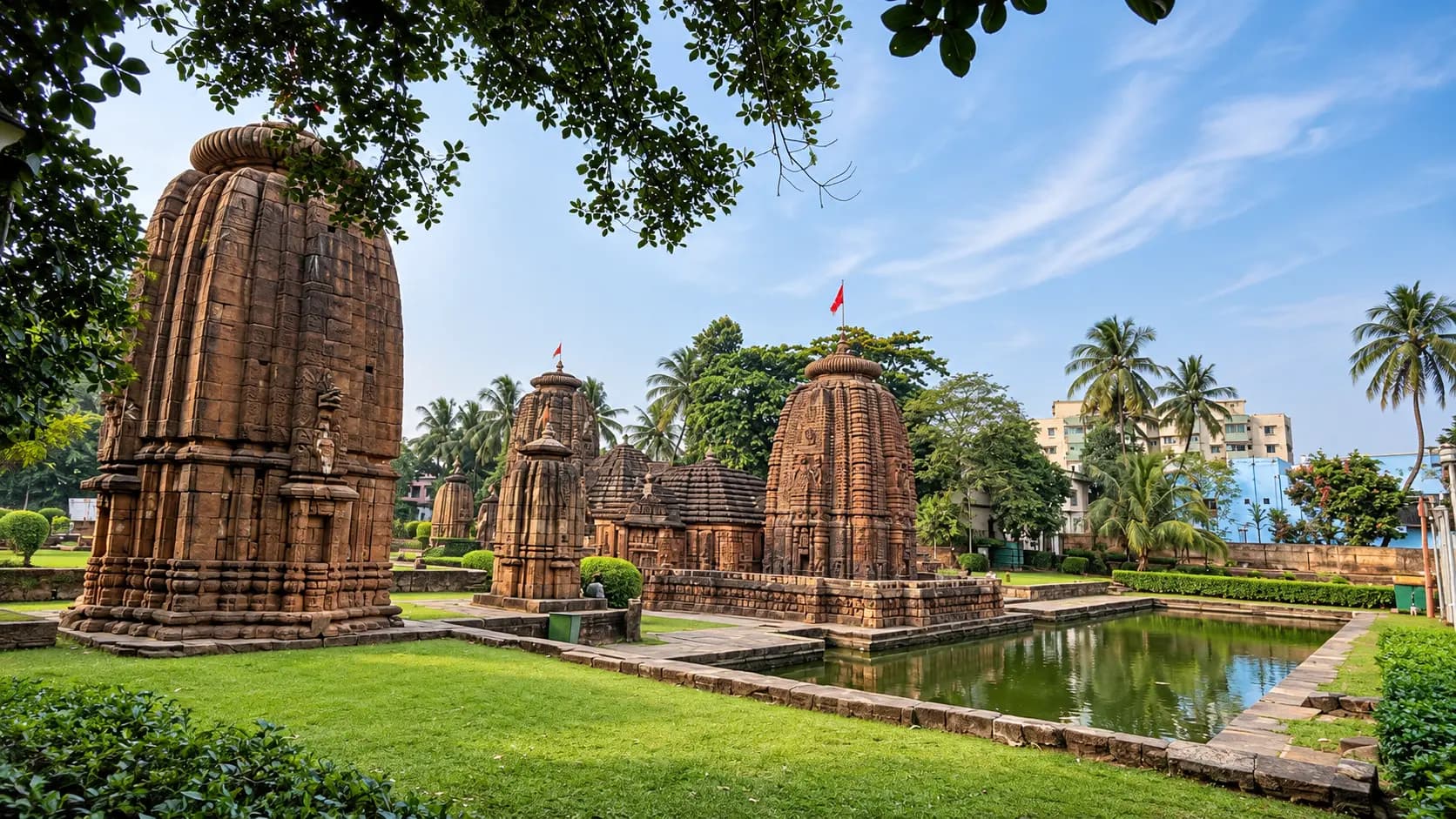
- Mukteswar & Parasurameswar Temples (~1.2 km north): Often hailed as the "Gem of Odishan Architecture," the 10th-century Mukteswar Temple features a world-famous sculpted arched gateway (torana) and delicate ceiling carvings. Adjacent stands Parasurameswar Temple, dating to the 7th century, representing the earliest intact example of Kalinga temple building with primitive relief slabs and dancing Shiva figures.
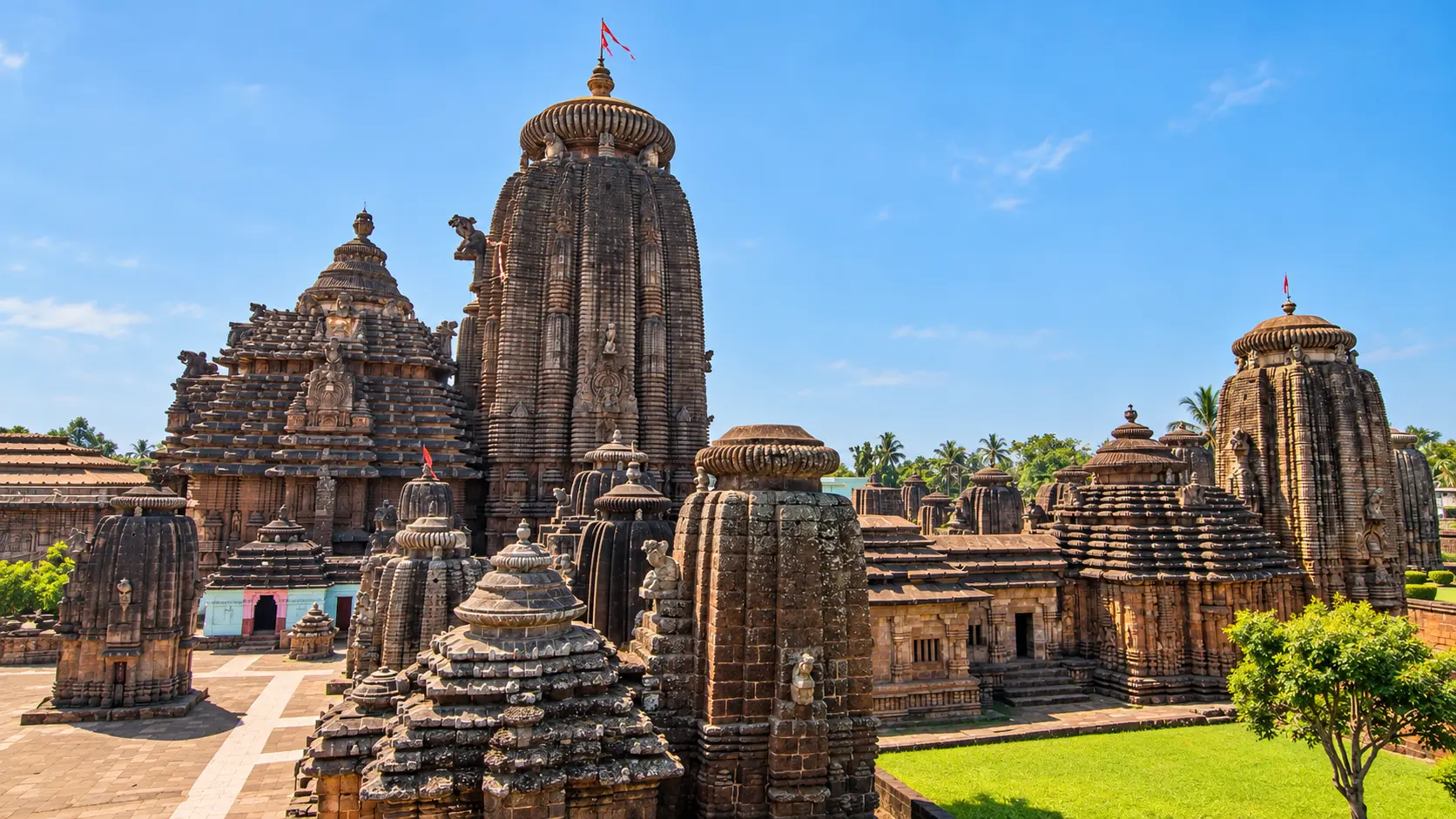
- Shree Lingaraj Temple & Bindu Sagar Lake (~1.5 km southwest): The monumental spiritual epicentre of Bhubaneswar, Lingaraj's colossal 55-metre deula dominates the Old Town skyline. Dating to the late 11th century, it represents the grand culmination of the Somavamshi architectural style that began at Rajarani. Devotees take holy dips in the ancient sacred waters of the adjoining Bindu Sagar Lake.
- Ananta Vasudeva Temple (~1.6 km southwest): Situated on the eastern bank of Bindu Sagar, this 13th-century Ganga-dynasty temple is the only historic shrine in Bhubaneswar dedicated to Lord Vishnu (as Krishna, Balarama, and Subhadra). Visitors can visit its bustling earthen-pot temple kitchen (Ananda Bazar) to sample authentic Mahaprasad (Abhada).
- Chausathi Yogini Temple, Hirapur (~14 km southeast): A rare, roofless circular 9th-century Tantric shrine nestled amidst rural paddy fields, housing 64 exquisitely sculpted female Yogini statues carved from dark chlorite stone, each depicted with distinct hairstyles, poses, and animal mounts.
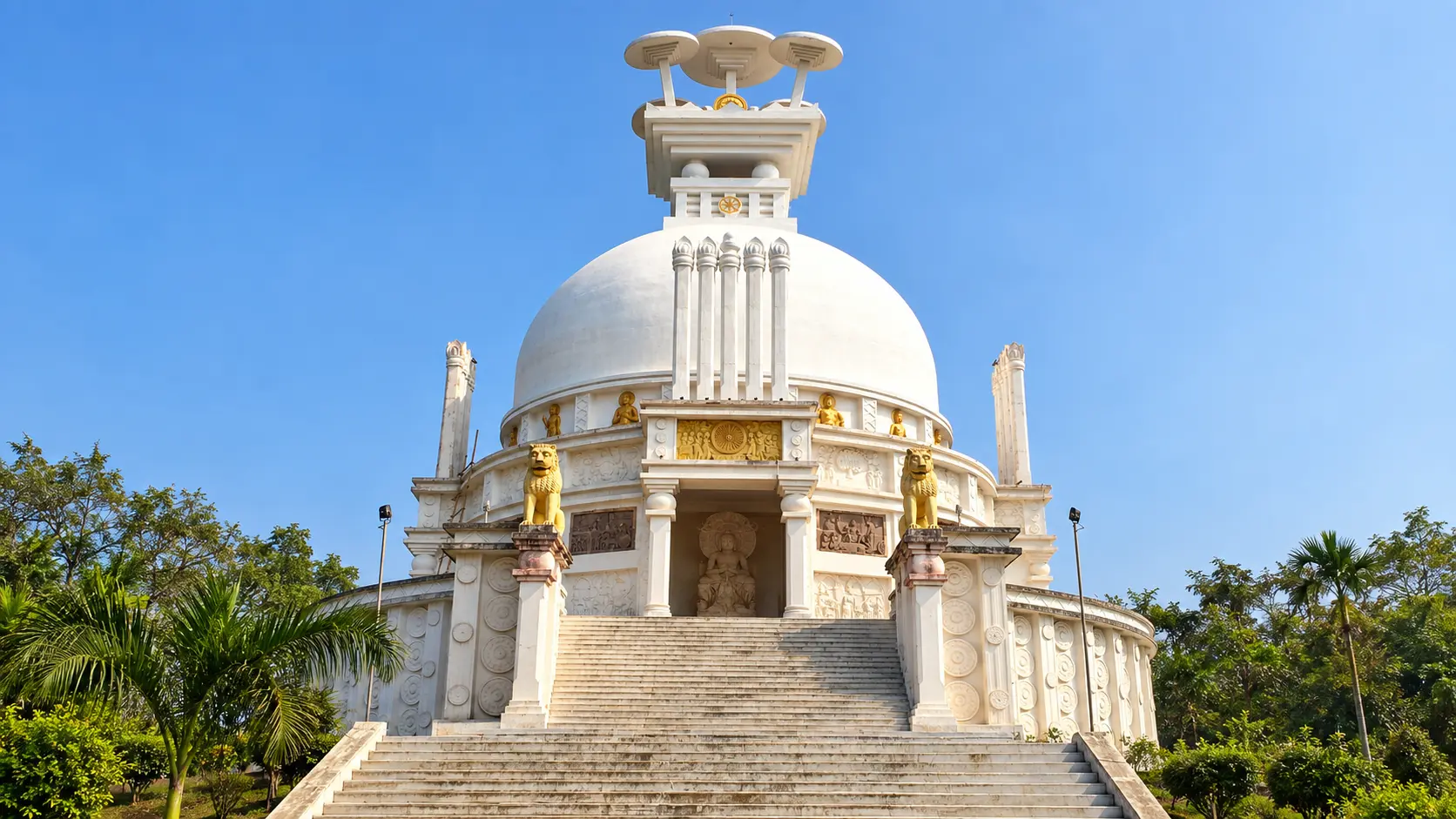
- Dhauli Shanti Stupa & Ashokan Rock Edicts (~8 km south): Perched upon the scenic Dhauli Hills overlooking the Daya River, this gleaming white peace pagoda commemorates Emperor Ashoka's renunciation of conquest and conversion to Buddhism following the catastrophic Kalinga War of 261 BCE.
In pictures
The practical bits
Before you go.
What to pack
When visiting Rajarani Temple, wear lightweight, comfortable cotton clothing.Explore detailsClose details
When visiting Rajarani Temple, wear lightweight, comfortable cotton clothing. Because this is a protected archaeological monument rather than an active worship shrine, standard temple dress restrictions (such as mandatory dhotis or strict coverage requirements) are not legally enforced; however, modest attire covering shoulders and knees is recommended out of cultural respect. Wear slip-on shoes or sandals that are easy to remove and put back on when accessing the stone plinth. Bring a small pair of cotton socks in your bag if visiting on a sunny afternoon, as the exposed laterite and sandstone flagstones can heat up significantly under the midday sun. Carry a bottle of drinking water, sunglasses, a wide-brimmed hat, and a pocket binoculars or telephoto lens to examine high-relief carvings situated 10 to 15 metres up the tower spire.
Footwear and temple etiquette
Footwear must be taken off before stepping onto the temple plinth.Explore detailsClose details
Footwear must be taken off before stepping onto the temple plinth. A designated shoe depository is located along the stone approach path near the ASI garden entrance. Inside the sanctum and along the circumambulatory corridor, walking is permitted only in bare feet or clean socks. Because the temple does not have an active priesthood or consecrated deity, there are no priests demanding donations, dakshina, or offering flowers. Visitors are strictly prohibited from touching, leaning on, or defacing the ancient sandstone carvings, as oil from human fingertips accelerates the erosion of delicate mineral surfaces. Maintain a calm, respectful demeanor throughout the monument grounds.
Photography tips and lighting
Rajarani Temple is widely considered the most photogenic temple in Bhubaneswar due to its freestanding position…Explore detailsClose details
Rajarani Temple is widely considered the most photogenic temple in Bhubaneswar due to its freestanding position amidst open green lawns and uncluttered backgrounds. To capture the finest photographs of the intricate carvings, timing your visit according to the angle of the sun is essential. The eastern facade and the entrance porch are bathed in warm, direct morning light between 06:30 and 09:00 AM. Conversely, the southern and western facades - which feature the most sensational Alasa Kanyas and Ashtadikpalas - are illuminated by the warm, golden rays of the afternoon sun between 15:30 and 17:30 PM, when the yellow Rajaraniya sandstone glows with a rich, radiant amber luminescence. A medium telephoto lens (70 - 200mm) is ideal for isolating individual maiden sculptures, guardian figures, and high-relief scrollwork without perspective distortion.
Attending the Rajarani Music Festival
If your travel plans coincide with the mid-January music festival (typically January 18 to 20), plan to arrive at…Explore detailsClose details
If your travel plans coincide with the mid-January music festival (typically January 18 to 20), plan to arrive at the temple gates by 17:15 PM, as seats fill up rapidly before the performances commence at 18:00 PM. Evenings in Bhubaneswar during January can be unexpectedly brisk (dropping to 14°C to 16°C), so carry a light woolen shawl, sweater, or jacket for comfortable open-air seating. Purchasing your festival passes a day in advance from the Odisha Tourism counter at Paryatan Bhawan or through the official state tourism portal guarantees reserved seating in the front pavilions.
Timing your walk
Allow approximately 1.5 hours to explore Rajarani Temple thoroughly.Explore detailsClose details
Allow approximately 1.5 hours to explore Rajarani Temple thoroughly. Begin with a slow, panoramic circuit around the outer perimeter of the garden to appreciate the temple's unique Khajuraho-like clustered shikhara silhouette against the sky. Next, ascend the plinth steps, enter the bare, peaceful Jagamohana and sanctum, and then commence your detailed, clockwise pradakshina inspection of the sanctuary exterior. Take time to examine each of the eight compass corners to locate every Dikpala guardian with his mount, and scrutinize the pilasters to appreciate the emotional nuance of the Alasa Kanyas.
A few things you might wonder
Common questions about visiting Rajarani Temple. Fees, visiting hours and ceremonies are researched details that may change; confirm current arrangements with the operator before travelling.
Why is the temple called Rajarani if it was not built for a king and queen?
Is Rajarani Temple an active place of Hindu worship today?
What is the architectural significance of Rajarani's clustered sanctuary tower?
What are the Alasa Kanyas, and why are they carved on the temple walls?
Who are the Ashtadikpalas, and where are they located on the monument?
What is the annual Rajarani Music Festival, and how can travelers attend?
Why is the front hall (Jagamohana) largely plain while the main tower is heavily carved?
How long does a visit to Rajarani Temple take, and what is the best way to combine it with other sights?
Explore more in Puri Konark Bhubaneswar
Discover other destinations around this hub
More Hubs in Odisha
Continue exploring other travel hubs in this state
Planning a trip to Golden Triangle?