Raghurajpur Artist Village
Complete visitor guide to Raghurajpur Heritage Crafts Village near Puri, Odisha.
Location
Golden Triangle, Odisha
A closer look
Your visit, at a glance.
Golden Triangle, Odisha
GET TO KNOW THE PLACE
Tucked amidst emerald groves of swaying coconut palms, betel nut plantations, and tranquil jackfruit orchards on the southern floodplains of the Bhargavi River in Puri District…
The story of Raghurajpur Artist Village
Tucked amidst emerald groves of swaying coconut palms, betel nut plantations, and tranquil jackfruit orchards on the southern floodplains of the Bhargavi River in Puri District, Odisha, Raghurajpur Artist Village stands as one of the most remarkable living cultural treasures in the Indian subcontinent. Located just 14 kilometres north of the sacred coastal city of Puri and 55 kilometres south of the state capital of Bhubaneswar, this serene agrarian settlement of approximately 140 households is not merely a rural hamlet; it is an active guild of master artisans where every single family is dedicated to the hereditary preservation of traditional fine and performing arts. In the year 2000, following an intensive conservation and revitalization project spearheaded by the Indian National Trust for Art and Cultural Heritage (INTACH) in collaboration with the Government of India, Raghurajpur was officially designated as India's first Heritage Crafts Village.
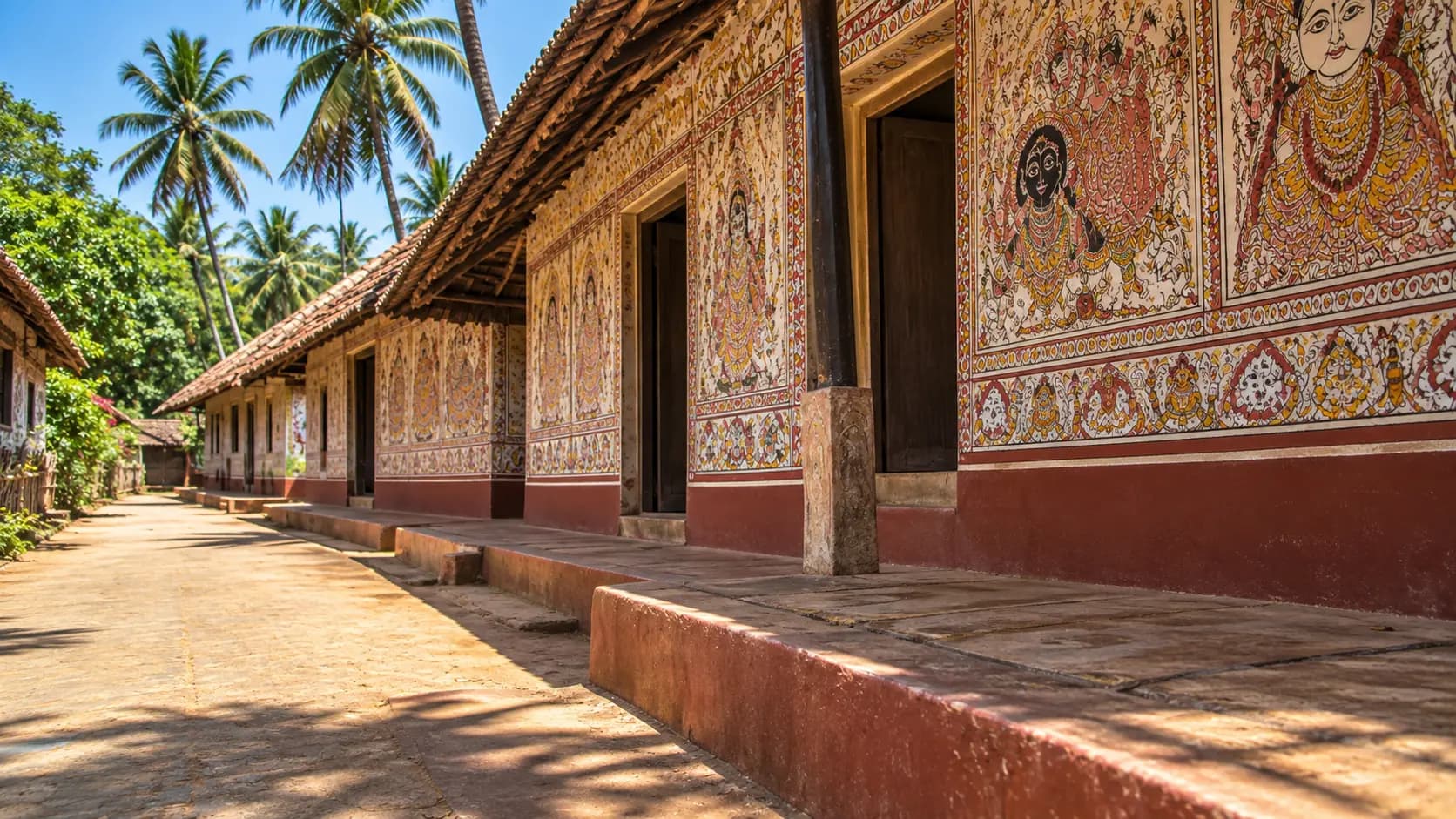
Walking past the welcoming entrance archway off the Chandanpur country road, travelers enter an open-air living museum where everyday rural life and sacred artistic devotion merge seamlessly. The village architecture is organized with striking geometric symmetry: two parallel rows of traditional lime-washed ancestral houses face each other across a broad, brick-paved central street. Along the central axis of this pedestrian thoroughfare stand sacred community shrines and open-pillared Bhagabata Tungis - traditional community pavilions dedicated to the village recitation of the 16th-century Odia Bhagavata composed by saint-poet Jagannatha Dasa. The outer facades of nearly every dwelling are decorated with intricate Bhiti Chitra (murals) rendered in mineral pigments, depicting dramatic episodes from the Ramayana, the Mahabharata, the Gita Govinda, and the celestial pastimes of Lord Jagannath, Balabhadra, and Devi Subhadra.
Beyond its physical beauty, Raghurajpur is the world epicentre of Pattachitra - the ancient Odishan art of narrative scroll painting executed on treated handloom cloth - and Talapatra Chitra, the breathtakingly delicate craft of incising microscopic illustrations onto dried palm leaves using an iron stylus. The village is also the historic cradle of Gotipua dance, an ancient ritual performing art executed by prepubescent boys dressed in feminine attire that served as the foundational bedrock for modern classical Odissi dance. Raghurajpur is celebrated across the globe as the birthplace of Padma Vibhushan Guru Kelucharan Mohapatra (1926 - 2004), the maestro who spearheaded the mid-20th-century revival of Odissi dance, as well as Gotipua master Padma Shri Guru Maguni Charan Das. For cultural connoisseurs, art collectors, photographers, and curious travelers, a journey to Raghurajpur offers an authentic, unvarnished encounter with living artistic lineages passed down through generations without compromise.
Start here. Open a tile for the full details.
Why goRead details
- Encounter India's First Designated Heritage Crafts Village: Experience an entire village community where artistic creation is an intrinsic way of life. Over 300 master painters, sculptors, and dancers work harmoniously along a single tranquil street, making Raghurajpur a vibrant model of rural heritage conservation and community empowerment recognized by UNESCO and INTACH.
- Witness the Living Tradition of Sacred Pattachitra: Observe master Chitrakaras (traditional painters) grinding raw minerals, calcining marine conch shells, and formulating natural tree resins on their shaded front verandas (danda or pinda). Watch them translate centuries-old iconographical canons into intricate multi-figured tapestries on hand-prepared cloth canvases without chemical paints or synthetic binders.
- Discover Microscopic Palm-Leaf Engraving (Talapatra Chitra): Marvel at the astonishing dexterity of artisans who use a razor-sharp iron stylus (loha lekhani) to carve hair-thin narrative friezes into cured palmyra palm leaves. Examine interactive jali kanta scrolls featuring ingenious filigree cutouts and folding multi-tiered flaps that reveal concealed mythological panels beneath.
- Support Master Artisans Directly Without Intermediaries: Purchasing artwork directly from the artists inside their ancestral living rooms guarantees that 100% of your financial contribution goes straight to supporting hereditary artisan households, bypassing urban emporium commissions and high commercial gallery markups.
- Experience the Cradle of Gotipua Dance and Odissi Heritage: Visit the Dasabhuja Gotipua Odissi Nrutya Parishad, the village's historic residential dance gurukul. Arrange an intimate live performance of Gotipua, watching young dancers perform breathtaking acrobatic bandhas, intricate footwork, and expressive abhinaya to the rhythmic accompaniment of the mardala drum and cymbals.
- Walk Through a Panoramic Open-Air Mural Gallery: The exterior walls of Raghurajpur's homes form an uninterrupted visual chronicle of Odishan mythology, folklore, and rural ecology. Every house presents a unique outdoor exhibition, turning a simple stroll along the central lane into an immersive visual feast for photographers and culture enthusiasts.
When to visitRead details
Raghurajpur is situated in the tropical coastal plains of Puri District, experiencing a seasonal climate characterized by a pleasant, dry winter, an intensely hot and humid summer, and heavy maritime monsoon rains. Planning your excursion around regional climatic patterns is essential for enjoying comfortable walking and open-air veranda interactions.
Entry & permissionsRead details
Fees, visiting hours and entry rules may change. Confirm the latest details with the official operator or local authority before travelling.
- Admission Charges: Public entry to Raghurajpur Artist Village is completely free (₹0). There are no entrance gates, admission counters, or municipal ticketing requirements. Visitors are free to walk down the central street, view the exterior wall murals, and visit artisan verandas at their leisure.
- Art Purchases: All financial transactions in the village are direct purchases of handcrafted art, textiles, and sculptures from individual artisans. Prices range from ₹150 to ₹500 for miniature palm-leaf bookmarks and small painted coasters, to ₹1,500 to ₹8,000 for medium-sized framed Pattachitra paintings, and upward of ₹25,000 to ₹1,50,000 for master-grade, multi-figure epic scrolls and antique-style palm-leaf manuscripts that require months of dedicated labor.
- Gotipua Dance Recital Fees: While casual observation of morning practice sessions at the dance school is often permitted free of charge, staging a formal, full-costumed 40-to-45-minute Gotipua dance performance requires an advance booking honorarium. A collective cultural donation ranging from ₹2,500 to ₹5,000 is paid directly to the Dasabhuja Gotipua Odissi Nrutya Parishad to support the young students' education, living expenses, and traditional costumes.
- Operational Hours: The village is accessible daily from dawn to dusk, with recommended visiting hours between 08:00 AM and 18:30 PM. Artisans are most active on their outdoor verandas between 09:00 AM and 17:00 PM, when daylight provides ideal illumination for fine line-work. The village remains open on Sundays, national holidays, and regional festival days.
- Permissions and Regulations: No advance bureaucratic permits or registration passes are required for domestic or international tourists. Commercial cinematographers, television production crews, or academic documentary teams planning extensive equipment setups should coordinate in advance with the Village Crafts Committee (Gramya Committee) or the Puri District Tourism Office. Flying recreational drones over the village is subject to standard Indian civil aviation and privacy guidelines; always obtain verbal consent from village elders before launching aerial cameras over residential rooftops.
Plan your visitRead details
Raghurajpur is exceptionally well-connected by road to the major travel hubs of Odisha's Golden Triangle, situated just 1.5 kilometres off National Highway 316 (NH-316), the primary four-lane arterial highway connecting Bhubaneswar and Puri.
Explore the full guide - choose a topic below.
Why visit?
Encounter India's First Designated Heritage Crafts Village: Experience an entire village community where artistic…Explore detailsClose details
- Encounter India's First Designated Heritage Crafts Village: Experience an entire village community where artistic creation is an intrinsic way of life. Over 300 master painters, sculptors, and dancers work harmoniously along a single tranquil street, making Raghurajpur a vibrant model of rural heritage conservation and community empowerment recognized by UNESCO and INTACH.
- Witness the Living Tradition of Sacred Pattachitra: Observe master Chitrakaras (traditional painters) grinding raw minerals, calcining marine conch shells, and formulating natural tree resins on their shaded front verandas (danda or pinda). Watch them translate centuries-old iconographical canons into intricate multi-figured tapestries on hand-prepared cloth canvases without chemical paints or synthetic binders.
- Discover Microscopic Palm-Leaf Engraving (Talapatra Chitra): Marvel at the astonishing dexterity of artisans who use a razor-sharp iron stylus (loha lekhani) to carve hair-thin narrative friezes into cured palmyra palm leaves. Examine interactive jali kanta scrolls featuring ingenious filigree cutouts and folding multi-tiered flaps that reveal concealed mythological panels beneath.
- Support Master Artisans Directly Without Intermediaries: Purchasing artwork directly from the artists inside their ancestral living rooms guarantees that 100% of your financial contribution goes straight to supporting hereditary artisan households, bypassing urban emporium commissions and high commercial gallery markups.
- Experience the Cradle of Gotipua Dance and Odissi Heritage: Visit the Dasabhuja Gotipua Odissi Nrutya Parishad, the village's historic residential dance gurukul. Arrange an intimate live performance of Gotipua, watching young dancers perform breathtaking acrobatic bandhas, intricate footwork, and expressive abhinaya to the rhythmic accompaniment of the mardala drum and cymbals.
- Walk Through a Panoramic Open-Air Mural Gallery: The exterior walls of Raghurajpur's homes form an uninterrupted visual chronicle of Odishan mythology, folklore, and rural ecology. Every house presents a unique outdoor exhibition, turning a simple stroll along the central lane into an immersive visual feast for photographers and culture enthusiasts.
What to expect
Visiting Raghurajpur is an intimate, welcoming, and deeply personal cultural journey.Explore detailsClose details
Visiting Raghurajpur is an intimate, welcoming, and deeply personal cultural journey. Upon arriving at the village boundary, vehicles are left at a dedicated parking area beside a monumental gateway, preserving the peaceful, pedestrian-first character of the settlement. As you step onto the clean, brick-paved central avenue, you are greeted by the rustic sounds of rural Odisha: the gentle clinking of pestles grinding minerals in stone mortars, the rhythmic scratching of iron styluses on tough palm fronds, birds chirping in the overhanging palm canopies, and the distant, melodic cadence of devotional flute music or temple bells.
The village consists of roughly 140 multi-generational families belonging to the Chitrakara (painter) caste, alongside allied families specializing in stone masonry, wood carving, and traditional brassware. The houses are single-storied structures characterized by deep, shaded front verandas known locally as pindas. These raised verandas act as family workshops, communal living rooms, and informal galleries. As you walk down the street, master craftsmen and young apprentices seated cross-legged on woven grass mats will warmly invite you onto their verandas to watch them work. There is no hard sell or aggressive touting; hospitality is sincere, and artisans take enormous pride in explaining their materials, ancestral methods, and iconographic narratives.
Inside each home, master painters maintain portfolios of completed works ranging from small palm-leaf bookmarks and miniature wooden deities to sprawling, museum-grade Pattachitra tapestries depicting the complete Dashavatara (ten incarnations of Vishnu), the Kaliya Daman, or the grand Ratha Yatra of Lord Jagannath that require three to six months of painstaking continuous labor. Artisans will gladly demonstrate how they transform raw nature into fine art: passing around rough chunks of yellow orpiment (haritala), deep red cinnabar stone (hingula), raw white conch shells (sankha), and black lamp soot (kajala). They will show you their specialized handmade brushes, meticulously assembled using delicate hairs gathered from the tails of domestic field mice or buffalo necks, bound tightly into slender bamboo quills.
Beyond scroll painting, you will encounter diverse allied crafts developed over centuries to serve the ceremonial needs of the Jagannath Temple in Puri and village theatre (Jatra). Artisans craft vibrant papier-mâché masks representing demons, divine avatars, and sacred animals using mashed recycled paper, cloth, and cow dung. Woodcarvers fashion sacred icons of the Jagannath triad from seasoned neem wood, while other artisans carve astonishingly detailed figures out of dried betel nuts (areca nuts) and polished coconut shells.
At the far end of the village street stands the community dance hall and residential gurukul of the Dasabhuja Gotipua Odissi Nrutya Parishad. Here, young boys undergo rigorous daily discipline, training in traditional physical conditioning, classical music theory, and the devotional repertoire of Gotipua dance. If you have pre-arranged a recital, the young performers emerge transformed in glittering silk dhotis, ornate headgear framed by fresh white flowers, and traditional silver filigree jewelry, performing gravity-defying balance postures (bandhas) that leave spectators spellbound.
Best time to visit
Raghurajpur is situated in the tropical coastal plains of Puri District, experiencing a seasonal climate…Explore detailsClose details
Raghurajpur is situated in the tropical coastal plains of Puri District, experiencing a seasonal climate characterized by a pleasant, dry winter, an intensely hot and humid summer, and heavy maritime monsoon rains. Planning your excursion around regional climatic patterns is essential for enjoying comfortable walking and open-air veranda interactions.
The optimal season to explore Raghurajpur extends from October through March. During these post-monsoon and winter months, daytime temperatures are remarkably comfortable, typically ranging between 18°C and 28°C, accompanied by clear sapphire skies, gentle coastal breezes, and low humidity. Because the village's central brick street is unshaded by artificial awnings, the mild winter sunshine makes strolling between homes, examining outdoor wall murals, and attending outdoor dance recitals completely effortless and comfortable.
The summer period, spanning from April to June, brings severe deltaic heat and oppressive humidity. Daytime temperatures regularly surge between 36°C and 42°C. While artisans continue their work in the shade of their verandas and thick-walled homes, the midday glare along the open street can be physically draining for travelers. If visiting in summer, plan your arrival for early morning between 08:00 and 10:30, or late afternoon after 16:00, avoiding the scorching midday hours.
The monsoon season, lasting from July through late September, transforms the surrounding countryside into lush green paddy fields and brings overflowing waters to the nearby Bhargavi River. While the landscape is spectacularly vibrant and the sound of falling rain on tiled roofs creates a tranquil ambiance, heavy tropical downpours can restrict walking along the village street and make delicate paper and cloth crafts vulnerable to ambient dampness. However, monsoon visitors have the unique privilege of witnessing artisans preparing the sacred Anavasara Patti paintings, which are installed in the Puri Jagannath Temple during the sacred fortnight preceding the annual Ratha Yatra festival.
How to reach
Raghurajpur is exceptionally well-connected by road to the major travel hubs of Odisha's Golden Triangle…Explore detailsClose details
Raghurajpur is exceptionally well-connected by road to the major travel hubs of Odisha's Golden Triangle, situated just 1.5 kilometres off National Highway 316 (NH-316), the primary four-lane arterial highway connecting Bhubaneswar and Puri.
- By Air: The nearest airport is Biju Patnaik International Airport (BBI) in Bhubaneswar, located approximately 52 kilometres north of the village. The airport operates frequent daily non-stop domestic flights connecting Odisha with major Indian metropolises including New Delhi, Mumbai, Kolkata, Bengaluru, Hyderabad, and Chennai, alongside select international connections. From the airport, travelers can hire a private prepaid taxi or app-based cab (Ola/Uber) to reach Raghurajpur in approximately 1 hour and 15 minutes via NH-316.
- By Rail: The closest major railway terminal is Puri Railway Station (PURI), situated approximately 14 kilometres south of Raghurajpur. Puri is an important terminus of the East Coast Railway, served by express and superfast trains (including Vande Bharat Express and Shatabdi Express services) connecting Kolkata (Howrah), New Delhi, Visakhapatnam, and Ahmedabad. A taxi or auto-rickshaw from Puri railway station takes approximately 25 to 35 minutes to reach the village. Alternatively, Bhubaneswar Railway Station (BBS), located 55 kilometres north, offers extensive nationwide rail connectivity.
- By Road and Local Transit:
- From Puri (14 km): Drive north along the four-lane NH-316 toward Bhubaneswar for approximately 12 kilometres until reaching Chandanpur Chhak (Chandanpur Junction). At Chandanpur, turn left onto the scenic country road following the signpost for Raghurajpur; the village entrance is situated just 1.5 kilometres from the highway turnoff. Confirm the current charge and what it includes with the operator or service provider. Visitor admission, vehicles, parking, activities and accommodation can have separate charges.
- From Bhubaneswar (55 km): Drive south on NH-316 through Uttara, Pipili, and Teisipur toward Puri. Upon reaching Chandanpur Chhak, turn right onto the village approach road. Confirm the current charge and what it includes with the operator or service provider. Visitor admission, vehicles, parking, activities and accommodation can have separate charges.
- By Public Bus: Regular state transport (OSRTC) buses and local private buses running frequently between Bhubaneswar (Baramunda Bus Stand) and Puri stop upon request at Chandanpur Chhak on the highway. Confirm the current charge and what it includes with the operator or service provider. Visitor admission, vehicles, parking, activities and accommodation can have separate charges.
Entry, timings and permissions
Fees, visiting hours and entry rules may change.Explore detailsClose details
Fees, visiting hours and entry rules may change. Confirm the latest details with the official operator or local authority before travelling.
- Admission Charges: Public entry to Raghurajpur Artist Village is completely free (₹0). There are no entrance gates, admission counters, or municipal ticketing requirements. Visitors are free to walk down the central street, view the exterior wall murals, and visit artisan verandas at their leisure.
- Art Purchases: All financial transactions in the village are direct purchases of handcrafted art, textiles, and sculptures from individual artisans. Prices range from ₹150 to ₹500 for miniature palm-leaf bookmarks and small painted coasters, to ₹1,500 to ₹8,000 for medium-sized framed Pattachitra paintings, and upward of ₹25,000 to ₹1,50,000 for master-grade, multi-figure epic scrolls and antique-style palm-leaf manuscripts that require months of dedicated labor.
- Gotipua Dance Recital Fees: While casual observation of morning practice sessions at the dance school is often permitted free of charge, staging a formal, full-costumed 40-to-45-minute Gotipua dance performance requires an advance booking honorarium. A collective cultural donation ranging from ₹2,500 to ₹5,000 is paid directly to the Dasabhuja Gotipua Odissi Nrutya Parishad to support the young students' education, living expenses, and traditional costumes.
- Operational Hours: The village is accessible daily from dawn to dusk, with recommended visiting hours between 08:00 AM and 18:30 PM. Artisans are most active on their outdoor verandas between 09:00 AM and 17:00 PM, when daylight provides ideal illumination for fine line-work. The village remains open on Sundays, national holidays, and regional festival days.
- Permissions and Regulations: No advance bureaucratic permits or registration passes are required for domestic or international tourists. Commercial cinematographers, television production crews, or academic documentary teams planning extensive equipment setups should coordinate in advance with the Village Crafts Committee (Gramya Committee) or the Puri District Tourism Office. Flying recreational drones over the village is subject to standard Indian civil aviation and privacy guidelines; always obtain verbal consent from village elders before launching aerial cameras over residential rooftops.
Nearby places to consider
Pipili Applique Village (~35 km north): Situated along NH-316 midway between Bhubaneswar and Puri, Pipili is…Explore detailsClose details
- Pipili Applique Village (~35 km north): Situated along NH-316 midway between Bhubaneswar and Puri, Pipili is world-renowned for its brilliant, multi-hued applique cloth craft (Chandua). Master craftsmen cut and sew bold geometric patterns, animal motifs, and mythological deities onto umbrellas, wall hangings, lampshades, and ceremonial canopies used during the Jagannath Ratha Yatra. Combining Raghurajpur and Pipili offers a comprehensive overview of rural Odishan textile and visual arts.
- Puri Shree Jagannath Temple & Golden Beach (~14 km south): The spiritual core of Odisha and one of the four sacred Char Dham pilgrimage sites of Hinduism. Visitors can explore the monumental 12th-century Kalinga architecture of the temple from the outside (entry to the inner sanctum is restricted to practicing Hindus), followed by an evening stroll along the Blue Flag certified Golden Beach or the lively, bustling shores of Swargadwar.
- Konark Sun Temple (~38 km east via Coastal Highway): A UNESCO World Heritage Site dating to the 13th century, built by King Narasimhadeva I in the form of a colossal stone chariot of the Sun God Surya, complete with 24 carved stone wheels and seven galloping horses. The exquisite sculptural friezes of Konark share profound stylistic affinities with the narrative traditions preserved in Raghurajpur's Pattachitra.
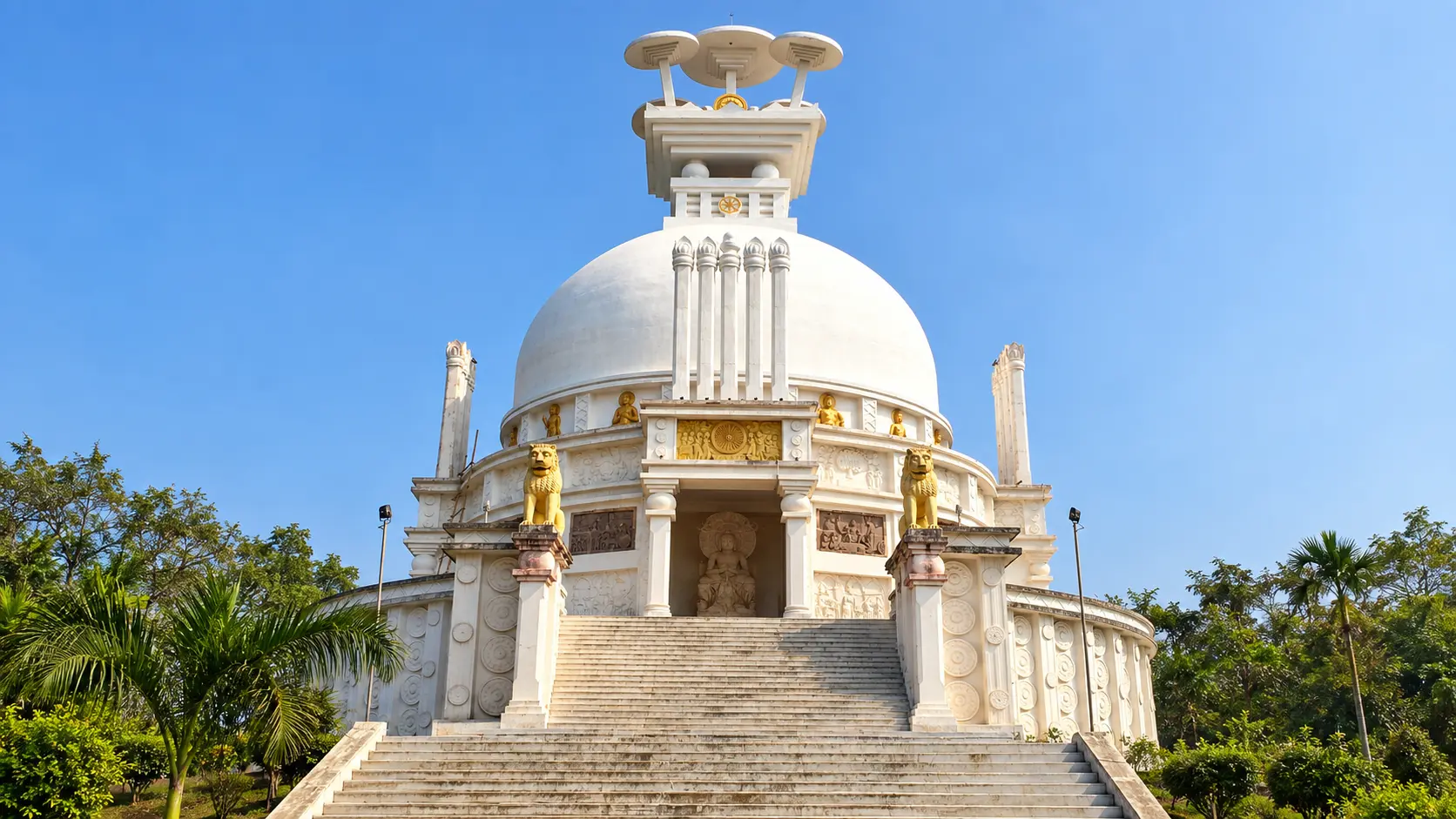
- Dhauli Shanti Stupa & Ashokan Edicts (~45 km north): Perched upon the scenic Dhauli Hills overlooking the Daya River near Bhubaneswar, this serene white peace pagoda commemorates Emperor Ashoka's profound spiritual transformation from a conquering warrior to a patron of Buddhist non-violence following the bloody Kalinga War of 261 BCE. The site preserves ancient rock-cut Ashokan edicts in Brahmi script alongside a monumental rock elephant.
- Chausathi Yogini Temple, Hirapur (~48 km north): Located in a quiet rural hamlet near the Bhargavi River outskirts of Bhubaneswar, this rare 9th-century hypaethral (roofless) circular shrine houses 64 exquisitely carved chlorite stone statues of female Yoginis, each depicted with distinct hairstyles, expressions, and animal mounts, radiating esoteric Tantric spiritual power.
In pictures
The practical bits
Before you go.
What to pack
When visiting Raghurajpur, dress in lightweight, breathable cotton clothing that covers your shoulders and knees…Explore detailsClose details
When visiting Raghurajpur, dress in lightweight, breathable cotton clothing that covers your shoulders and knees out of respect for traditional village customs and active community shrines. Wear comfortable slip-on footwear or sandals, as you will frequently take off your shoes when stepping onto raised household verandas, entering living-room galleries, or visiting community temples. Bring sunglasses, a wide-brimmed sunhat, and broad-spectrum sunscreen for walking the open central lane. Carry a sturdy, protective poster tube or rigid folder if you plan on purchasing delicate unframed paper scrolls or palm-leaf manuscripts to prevent them from creasing in transit. Confirm the current charge and what it includes with the operator or service provider. Visitor admission, vehicles, parking, activities and accommodation can have separate charges.
Artisan etiquette and purchasing
The artisans of Raghurajpur are gracious, warm hosts who consider sharing their artistic heritage a sacred calling.Explore detailsClose details
The artisans of Raghurajpur are gracious, warm hosts who consider sharing their artistic heritage a sacred calling. When you walk along the street, feel free to stop and observe any artisan who is actively painting or carving. Always greet them respectfully with a warm "Namaskar". You are under no obligation to purchase something on every veranda you visit; master craftsmen genuinely appreciate sincere interest, thoughtful questions about their materials, and appreciation of their skill. If you decide to buy, remember that you are negotiating directly with the creator of the work. While gentle, courteous bargaining is normal and accepted in rural markets, aggressive or disrespectful haggling devalues months of painstaking manual labor. If an artisan's asking price seems high, ask them to explain the complexity of the piece, the natural pigments used, and the time required to complete it - you will often find the price is exceptionally modest compared to city emporiums.
Gotipua dance arrangements
Experiencing a live Gotipua dance performance is often the emotional and cultural highlight of a visit to…Explore detailsClose details
Experiencing a live Gotipua dance performance is often the emotional and cultural highlight of a visit to Raghurajpur. Performances are organized at the residential gurukul of the Dasabhuja Gotipua Odissi Nrutya Parishad, situated near the eastern end of the central street. To ensure that the young dancers and musicians are available and can prepare their elaborate costumes, makeup, and musical accompaniment, it is highly recommended to call or arrange the performance at least 24 hours in advance through your tour operator, taxi driver, or directly with the village dance guru upon arrival in Puri. Performances take place in an intimate, open-sided community pavilion, allowing spectators to sit just a few feet away from the dancers and experience the acoustic resonance of the mardala drum and hand cymbals.
Photography guidelines
Raghurajpur is an absolute paradise for travel photographers, offering vibrant natural light, richly textured…Explore detailsClose details
Raghurajpur is an absolute paradise for travel photographers, offering vibrant natural light, richly textured lime-washed walls, colourful murals, and expressive artisan portraits. Master craftsmen are generally very accommodating and delighted to have their work photographed. However, courtesy is paramount: always ask verbal permission ("Photo le sakte hain?" or "Can I take a photo?") before pointing your camera directly at an individual, especially elderly family members or women working on domestic tasks. When photographing inside private living quarters or home galleries, ask whether specific masterworks may be photographed, as some artists prefer that their proprietary award-winning compositions are not reproduced. Avoid using intrusive direct flash photography when documenting fragile natural-dye paintings or dancers in performance.
Navigating workshops
Because Raghurajpur contains over 120 households, it can be overwhelming to decide where to stop.Explore detailsClose details
Because Raghurajpur contains over 120 households, it can be overwhelming to decide where to stop. A great strategy is to take an initial, unhurried walk down the entire length of the central street to absorb the atmosphere and inspect the exterior murals. Notice the diverse specializations: while some households focus exclusively on classic religious Pattachitra, others specialize in intricate palm-leaf etching, wooden mask carving, or papier-mâché sculptures. Take your time to visit three or four different workshops, comparing painting styles, line thickness, and pigment vibrancy. Don't miss visiting the ancestral home and memorial dedicated to Padma Vibhushan Guru Kelucharan Mohapatra, where photographs, memorabilia, and family members preserve the memory of the legendary Odissi pioneer.
A few things you might wonder
Common questions about visiting Raghurajpur Artist Village. Fees, visiting hours and ceremonies are researched details that may change; confirm current arrangements with the operator before travelling.
What is the historical significance of Pattachitra painting in Raghurajpur?
How do artisans make natural colours for authentic Pattachitra paintings?
What is the difference between Pattachitra on cloth and Talapatra Chitra on palm leaf?
Can tourists visit Raghurajpur without a guided tour or advance booking?
Who was Guru Kelucharan Mohapatra, and what is his connection to Raghurajpur?
What is Gotipua dance, and how does it relate to classical Odissi?
How can visitors distinguish genuine handmade Pattachitra from commercial prints?
How much time should I plan for a visit to Raghurajpur?
Explore more in Puri Konark Bhubaneswar
Discover other destinations around this hub
More Hubs in Odisha
Continue exploring other travel hubs in this state
Planning a trip to Golden Triangle?