Nandankanan Zoological Park
Complete visitor guide to Nandankanan Zoological Park near Bhubaneswar, Odisha.
Location
Golden Triangle, Odisha
A closer look
Your visit, at a glance.
Golden Triangle, Odisha
GET TO KNOW THE PLACE
Sprawling across 437 hectares (approx.
The story of Nandankanan Zoological Park
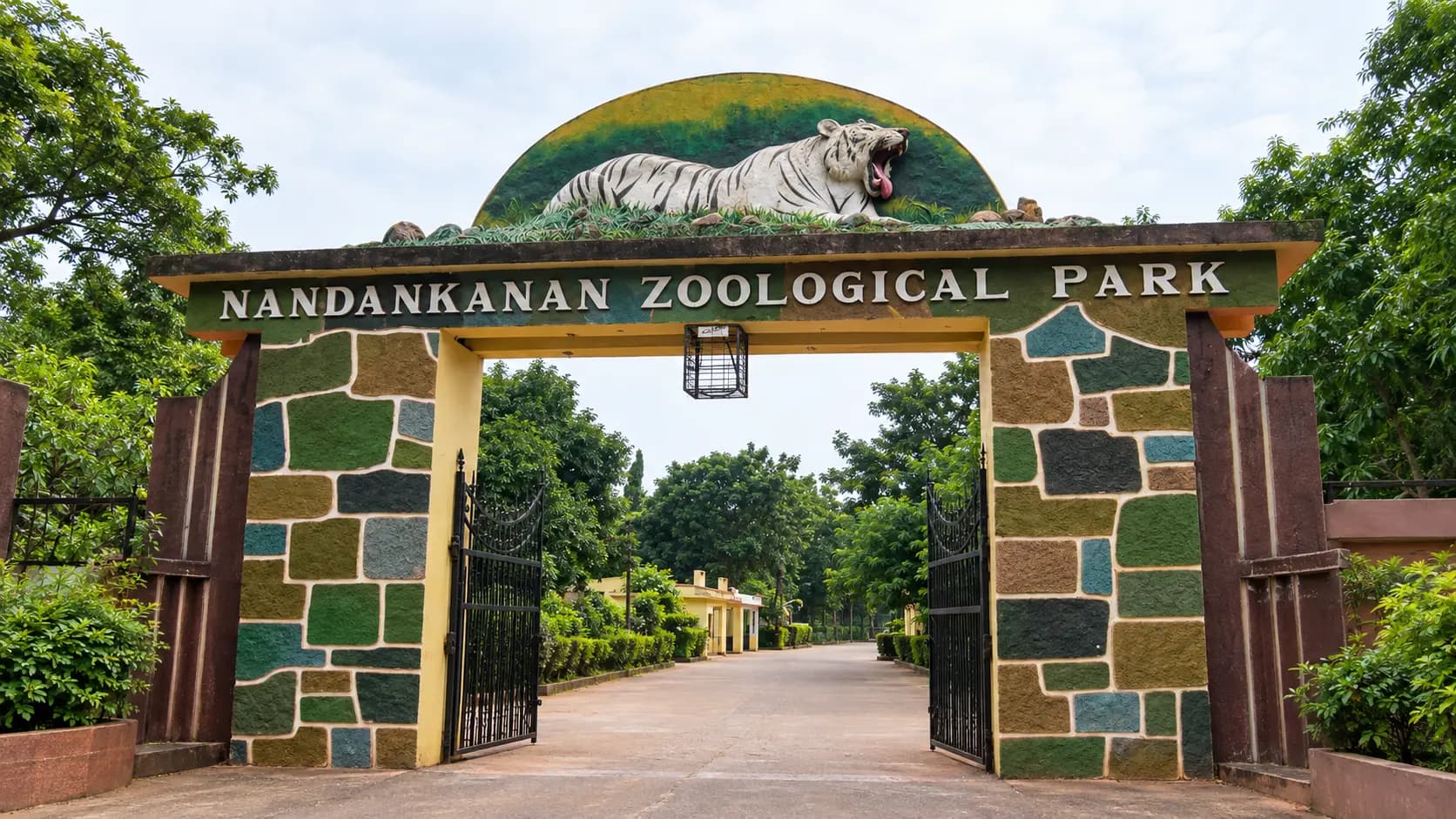
Sprawling across 437 hectares (approx. 1,080 acres) of lush moist deciduous forest, undulating laterite hills, and the shimmering waters of the natural freshwater Kanjia Lake, the Nandankanan Zoological Park - poetically named "The Garden of the Gods" - is one of India’s most celebrated, progressive, and scientifically renowned zoological sanctuaries. Located 18 kilometres north of Bhubaneswar in Khordha District, Odisha, near the suburban town of Barang, Nandankanan has earned international acclaim not merely as an entertaining family destination, but as a pioneering global powerhouse of wildlife conservation, research, and endangered species captive breeding.
Unlike traditional urban menageries that confine animals to sterile concrete cages, Nandankanan was deliberately integrated into the natural living biosphere of the Chandaka-Dampara wildlife corridor. Its spacious open-air moated enclosures, expansive tree-shaded walk-through aviaries, and thriving wetland habitats provide an environment so close to the wild that wild animals - including wild tigers and leopards - have historically walked into the zoo from surrounding jungles to seek mates.
Nandankanan holds a legendary place in global zoological history: in 1980, it became the first zoo in the world to successfully breed white tigers from normal-colored parents, sparking global scientific fascination. It is also the first zoo in the world to breed the critically endangered Indian Pangolin in captivity, and the first Indian zoo inducted into the prestigious World Association of Zoos and Aquariums (WAZA).
With four thrilling open forest safaris (Tiger, Lion, Bear, and Herbivore), a scenic modern aerial passenger ropeway soaring over Kanjia Lake, a nostalgic toy train, and the adjacent State Botanical Garden, Nandankanan delivers an extraordinary full-day eco-adventure that connects visitors intimately with the marvels of Indian wildlife.
Start here. Open a tile for the full details.
Why goRead details
- The World-Famous White Tigers of Nandankanan: Observe magnificent white Royal Bengal tigers roaming in expansive, natural open-forest moated enclosures, descended from the world’s first captive-bred white tiger lineage born to tawny parents.
- Four Thrilling Open Forest Safaris: Board secure, caged safari buses to venture directly inside sprawling natural jungle enclosures housing roaming prides of Asiatic lions, Royal Bengal tigers, sloth bears, and herds of spotted deer.
- Spectacular Kanjia Lake Aerial Ropeway: Glide through the sky on a modern passenger cable car suspended high above the tranquil waters of Kanjia Lake, enjoying breathtaking 360-degree aerial views of lotus wetlands and canopy treetops.
- Pioneering Pangolin & Gharial Conservation Breeding: Learn about ground-breaking international wildlife recovery programs, including the world’s only captive breeding center for the endangered Indian Pangolin and large-scale gharial reintroduction projects.
- Boating on Kanjia Lake: Rent pedal boats or rowboats to glide across a 66-hectare natural freshwater wetland designated as a Wetland of National Importance, harboring over 100 species of resident and migratory waterbirds.
- Immersive Walk-Through Aviaries & Reptile Park: Walk inside massive, multi-tiered flight aviaries filled with pelicans, painted storks, and spoonbills, and explore specialized glass vivariums housing king cobras, pythons, and monitor lizards.
- A Complete Family Eco-Retreat: Enjoy comfortable hop-on hop-off battery-operated buggies, scenic lakeside picnic lawns, the nostalgic narrow-gauge toy train, and the adjacent 75-hectare State Botanical Garden.
When to visitRead details
Entry & permissionsRead details
Fees, visiting hours and entry rules may change. Confirm the latest details with the official operator or local authority before travelling.
Tariffs, Timings and Regulations
- General Zoo Admission Fee:
- Indian Citizens: ₹50 per adult; ₹10 for children (aged 3 to 12 years).
- Foreign Citizens: ₹100 per adult.
- Children under 3 years: Free admission.
- Optional Attraction Tickets:
- Forest Safari Bus Ride (Lion, Tiger, Bear & Herbivore): ₹60 per person.
- Aerial Ropeway (Cable Car): ₹120 per person (round trip).
- Toy Train Ride: ₹50 per person.
- Battery-Operated Vehicles (BOV): ₹80 to ₹100 per person (hop-on hop-off within the park).
- Pedal Boating on Kanjia Lake: ₹50 to ₹100 per boat (30 minutes).
- Visiting Hours:
- Summer (April to October): 07:30 AM to 17:30 PM.
- Winter (November to March): 08:00 AM to 17:00 PM.
- Weekly Closure: Strictly closed every Monday for veterinary health rounds, enclosure sanitation, and park maintenance.
- Note: Ticket counters close 45 minutes before park closing.
- Strict Conservation & Security Bylaws:
- Feeding, teasing, poking, or shouting at animals is strictly illegal under Section 38J of the Wildlife Protection Act and attracts immediate police fines or prosecution.
- Single-use plastic bags, disposable thermocol containers, and alcohol are banned inside the park; plastic water bottles must carry a refundable security sticker at the entry gate.
- Operating camera drones over the zoo or forest safari is strictly prohibited.
Plan your visitRead details
The nearest airport is Biju Patnaik International Airport (BBI) in Bhubaneswar, located approximately 20 kilometres south of Nandankanan.
- The airport operates frequent non-stop flights connecting Bhubaneswar with major Indian metros including New Delhi, Mumbai, Bengaluru, Kolkata, Chennai, and Hyderabad. Confirm the current charge and what it includes with the operator or service provider. Visitor admission, vehicles, parking, activities and accommodation can have separate charges.
Explore the full guide - choose a topic below.
Why visit?
The World-Famous White Tigers of Nandankanan: Observe magnificent white Royal Bengal tigers roaming in expansive…Explore detailsClose details
- The World-Famous White Tigers of Nandankanan: Observe magnificent white Royal Bengal tigers roaming in expansive, natural open-forest moated enclosures, descended from the world’s first captive-bred white tiger lineage born to tawny parents.
- Four Thrilling Open Forest Safaris: Board secure, caged safari buses to venture directly inside sprawling natural jungle enclosures housing roaming prides of Asiatic lions, Royal Bengal tigers, sloth bears, and herds of spotted deer.
- Spectacular Kanjia Lake Aerial Ropeway: Glide through the sky on a modern passenger cable car suspended high above the tranquil waters of Kanjia Lake, enjoying breathtaking 360-degree aerial views of lotus wetlands and canopy treetops.
- Pioneering Pangolin & Gharial Conservation Breeding: Learn about ground-breaking international wildlife recovery programs, including the world’s only captive breeding center for the endangered Indian Pangolin and large-scale gharial reintroduction projects.
- Boating on Kanjia Lake: Rent pedal boats or rowboats to glide across a 66-hectare natural freshwater wetland designated as a Wetland of National Importance, harboring over 100 species of resident and migratory waterbirds.
- Immersive Walk-Through Aviaries & Reptile Park: Walk inside massive, multi-tiered flight aviaries filled with pelicans, painted storks, and spoonbills, and explore specialized glass vivariums housing king cobras, pythons, and monitor lizards.
- A Complete Family Eco-Retreat: Enjoy comfortable hop-on hop-off battery-operated buggies, scenic lakeside picnic lawns, the nostalgic narrow-gauge toy train, and the adjacent 75-hectare State Botanical Garden.
What to expect
Nandankanan is unique among Indian zoos because of its immense scale and natural topography.Explore detailsClose details
The Geographic Scope and Natural Landscape
Nandankanan is unique among Indian zoos because of its immense scale and natural topography. Covering 437 hectares, the park is divided into two primary zones linked across the lake:
- The Core Zoological Park (362 hectares): Housing more than 150 species of mammals, birds, and reptiles in naturalistic moated enclosures, open safari reserves, and specialized nocturnal and reptile houses.
- The State Botanical Garden (75 hectares): Situated on the northern shore of Kanjia Lake, featuring manicured thematic gardens, glass greenhouses, a rose garden, a medicinal plant conservatory, and a butterfly park.
- Kanjia Lake (66 hectares): The natural ecological heart of the sanctuary. This serene, natural freshwater wetland is filled with flowering pink water lilies and wild lotus beds, acting as a crucial wintering refuge for migratory waterfowl from Siberia and Central Asia.
+-----------------------------------------------------------------------------------+
|                        NANDANKANAN ZOOLOGICAL PARK LAYOUT                         |
+-----------------------------------------------------------------------------------+
|                                                                                   |
|                                [ NORTH ]                                          |
|                State Botanical Garden & Butterfly Park (75 ha)                    |
|                                     │                                             |
|                                     ▼                                             |
|   ~~~~~~~~~~~~~~~~~~~~~~~~~~~~~~~~~~~~~~~~~~~~~~~~~~~~~~~~~~~~~~~~~~~~~~~~~~~~~   |
|            KANJIA LAKE WETLAND (66 ha) - Boating & Migratory Bird Sanctuary       |
|            [ AERIAL ROPEWAY / CABLE CAR: 620 m SPAN OVER LAKE WATERS ]            |
|   ~~~~~~~~~~~~~~~~~~~~~~~~~~~~~~~~~~~~~~~~~~~~~~~~~~~~~~~~~~~~~~~~~~~~~~~~~~~~~   |
|                                     ▲                                             |
|                                     │                                             |
|   [ SAFARI ZONE (West) ]   ┌─────────────────────────────┐   [ AVIARY & REPTILE ] |
|   - White Tiger Safari     │   CENTRAL ANIMAL ENCLOSURES │   - Walk-through Aviary|
|   - Asiatic Lion Safari    │   - White & Melanistic Tigers│   - King Cobra House  |
|   - Sloth Bear Safari      │   - Indian Pangolin Center  │   - Gharial Breeding   |
|   - Herbivore Safari       │   - Nocturnal Animal House  │   - Amphibian House    |
|                            └──────────────┬──────────────┘                        |
|                                           │                                       |
|                                           ▼                                       |
|                      [ MAIN ENTRY PLAZA & TOY TRAIN STATION ]                     |
|                      Computerized Turnstiles, Parking & Food Court                |
|                                           │                                       |
|                                           ▼                                       |
|                  [ BHUBANESWAR CITY (18 km South via Nandankanan Rd) ]            |
|                                                                                   |
+-----------------------------------------------------------------------------------+
The World-Famous White Tigers of Nandankanan
The crown jewel of Nandankanan's conservation legacy is its historic association with the White Tiger. While white tigers in other zoos trace their lineage to the famous wild-caught cub "Mohan" from Rewa (Madhya Pradesh), Nandankanan achieved a biological miracle in 1980.
Two normal, wild-caught tawny Royal Bengal tigers - named Deepak and Ganga - carried a hidden recessive gene for white coat pigmentation (pseudomelanism). In 1980, Ganga gave birth to a litter of three white tiger cubs: Debabrata, Sheeba, and Subhra. This marked the very first time in recorded zoological history that white tigers were born to normal-colored parents in captivity.
Over the ensuing decades, Nandankanan established a healthy, genetically sound captive breeding population of white tigers. Today, visitors can observe these majestic predators - characterized by chalk-white fur striped with charcoal-grey bands, ice-blue eyes, and pink noses - roaming freely across spacious open-air moated enclosures that simulate their natural jungle habitats. Nandankanan is also home to rare melanistic (black) tigers, carrying dense black stripes that merge into almost solid dark coats.
The Four Open Forest Safaris
For wildlife enthusiasts, the premier adventure at Nandankanan is the Four Open Safaris, located in the western sector of the park. Visitors board specially reinforced, heavy-duty safari buses with wire-mesh windows that enter secure double-gated forest zones:
- White Tiger Safari (12 hectares): The bus navigates winding dirt tracks through dense Sal and bamboo forest, allowing passengers to observe magnificent white tigers lounging under trees, swimming in forest ponds, or pacing within feet of the vehicle.
- Lion Safari (20 hectares): An expansive scrubland enclosure where prides of Asiatic lions roam naturally, basking on laterite rocks or resting under the shade of banyan trees.
- Sloth Bear Safari): A rugged, boulder-strewn wooded hillside where shaggy sloth bears forage for termites, climb low trees, and nurse their cubs.
- Herbivore Safari (21 hectares): A vast open grassland savanna supporting large, thriving herds of spotted deer (Chital), sambar, barking deer, blackbuck antelopes, and wild boars grazing harmoniously.
Confirm the current charge and what it includes with the operator or service provider. Visitor admission, vehicles, parking, activities and accommodation can have separate charges.
The Aerial Ropeway and Kanjia Lake Boating
- The Passenger Ropeway: Spanning an impressive 620 metres directly across the sparkling surface of Kanjia Lake, the modern aerial cable car connects the main zoo with the State Botanical Garden. Gliding silently in enclosed glass-sided cabins high above the water, passengers enjoy panoramic views of feeding pelicans, paddling boats, and the dense emerald canopy of the Chandaka forest. Confirm the current charge and what it includes with the operator or service provider. Visitor admission, vehicles, parking, activities and accommodation can have separate charges.
- Kanjia Lake Boating: Near the main zoo food court, visitors can hire 2-seater and 4-seater pedal boats or traditional wooden rowboats to explore the open waters of Kanjia Lake. Paddling through beds of blossoming pink lotus flowers while watching kingfishers dive for fish is one of the park’s most peaceful pastimes.
Pioneering Pangolin and Gharial Conservation
Nandankanan is not merely an exhibition facility; it is a globally recognized research center for critically endangered species:
- The Indian Pangolin Conservation Breeding Center: Nandankanan is the only zoo in the world to successfully breed the endangered Indian Pangolin (Manis crassicaudata) in captivity. The park maintains a dedicated, climate-controlled off-display research center equipped with nocturnal infrared cameras, underground artificial burrows, and specialized insect diets, achieving historic breakthrough births that have helped save this heavily trafficked mammal from extinction.
- Gharial Conservation & Captive Breeding: In 1980, Nandankanan became the first zoo in India to breed the endangered fish-eating Gharial (Gavialis gangeticus). The zoo’s expansive breeding pool has produced hundreds of healthy hatchlings, which have been systematically released into the wild waters of the Mahanadi River at Satkosia Gorge to revive wild populations.
The Reptile Park, Nocturnal House & Aviaries
- Reptile Park: Encloses a vast collection of Indian reptiles, including massive 16-foot King Cobras, Indian rock pythons, banded kraits, Russell's vipers, monitor lizards, and land tortoises, maintained in large glass-fronted naturalistic terrariums.
- Nocturnal Animal House: A specially designed dark pavilion with inverted light cycles where visitors can observe nocturnal wildlife - including Indian civets, pangolins, flying squirrels, barn owls, and slow lorises - fully active during daytime hours.
- Walk-Through Aviary: A massive 15-metre-tall mesh dome allowing visitors to walk inside among free-flying painted storks, white ibises, openbill storks, night herons, and colorful pheasants.
Best time to visit
Explore detailsClose details
Seasonal breakdown
Season | Months | Daytime Temp (°C) | Nighttime Temp (°C) | Park Atmosphere & Wildlife Activity |
|---|---|---|---|---|
Peak Winter | November - February | 24°C - 28°C | 15°C - 19°C | Optimal. Mild, pleasant sunshine, cool breezes, and high animal activity throughout the day. Kanjia Lake is filled with thousands of migratory birds, and walking the expansive park is comfortable. |
Early Spring | March - April | 29°C - 34°C | 21°C - 25°C | Very Good. Warm mornings and breezy afternoons; fewer crowds on weekdays allow quick safari boarding and tranquil boating on the lake. |
Summer | May - June | 35°C - 40°C | 27°C - 30°C | Hot & Challenging. Midday heat is intense; tigers and lions retreat into shaded moats and caves between 11:30 AM and 15:30 PM. Early morning visits (07:30 to 10:30 AM) with BOV buggies are strongly advised. |
Monsoon | July - October | 28°C - 32°C | 24°C - 26°C | Lush & Tropical. Forest canopy and Kanjia Lake brim with vibrant green vegetation. Heavy rain showers require umbrellas; battery buggies operate normally. |
How to reach
The nearest airport is Biju Patnaik International Airport (BBI) in Bhubaneswar, located approximately 20…Explore detailsClose details
By Air
The nearest airport is Biju Patnaik International Airport (BBI) in Bhubaneswar, located approximately 20 kilometres south of Nandankanan.
- The airport operates frequent non-stop flights connecting Bhubaneswar with major Indian metros including New Delhi, Mumbai, Bengaluru, Kolkata, Chennai, and Hyderabad. Confirm the current charge and what it includes with the operator or service provider. Visitor admission, vehicles, parking, activities and accommodation can have separate charges.
By Train
- Bhubaneswar Main Railway Station (BBS): Located approximately 18 kilometres south of the park. It offers comprehensive nationwide express and superfast train connectivity. Taxis and auto-rickshaws take roughly 35 minutes along the multi-lane Nandankanan Road.
- Barang Railway Station: Located just 2.5 kilometres north, serving local suburban passenger trains running between Bhubaneswar and Cuttack.
By Road & Public Transit
- Mo Bus (City Bus Transit): Confirm the current charge and what it includes with the operator or service provider. Visitor admission, vehicles, parking, activities and accommodation can have separate charges.
- Auto-Rickshaws & App Cabs: Dedicated taxi stands, auto-rickshaw bays, and app-based cab pickups operate right outside the main visitor entrance gate.
- Private Car & Parking: Confirm the current charge and what it includes with the operator or service provider. Visitor admission, vehicles, parking, activities and accommodation can have separate charges.
Entry, timings and permissions
Fees, visiting hours and entry rules may change.Explore detailsClose details
Fees, visiting hours and entry rules may change. Confirm the latest details with the official operator or local authority before travelling.
Tariffs, Timings and Regulations
- General Zoo Admission Fee:
- Indian Citizens: ₹50 per adult; ₹10 for children (aged 3 to 12 years).
- Foreign Citizens: ₹100 per adult.
- Children under 3 years: Free admission.
- Optional Attraction Tickets:
- Forest Safari Bus Ride (Lion, Tiger, Bear & Herbivore): ₹60 per person.
- Aerial Ropeway (Cable Car): ₹120 per person (round trip).
- Toy Train Ride: ₹50 per person.
- Battery-Operated Vehicles (BOV): ₹80 to ₹100 per person (hop-on hop-off within the park).
- Pedal Boating on Kanjia Lake: ₹50 to ₹100 per boat (30 minutes).
- Visiting Hours:
- Summer (April to October): 07:30 AM to 17:30 PM.
- Winter (November to March): 08:00 AM to 17:00 PM.
- Weekly Closure: Strictly closed every Monday for veterinary health rounds, enclosure sanitation, and park maintenance.
- Note: Ticket counters close 45 minutes before park closing.
- Strict Conservation & Security Bylaws:
- Feeding, teasing, poking, or shouting at animals is strictly illegal under Section 38J of the Wildlife Protection Act and attracts immediate police fines or prosecution.
- Single-use plastic bags, disposable thermocol containers, and alcohol are banned inside the park; plastic water bottles must carry a refundable security sticker at the entry gate.
- Operating camera drones over the zoo or forest safari is strictly prohibited.
Nearby places to consider
State Botanical Garden (adjacent via Ropeway): A serene 75-hectare plant sanctuary featuring thematic…Explore detailsClose details
- State Botanical Garden (adjacent via Ropeway): A serene 75-hectare plant sanctuary featuring thematic glasshouses, orchidariums, a rose garden, and a butterfly park on the northern shore of Kanjia Lake.
- Barabati Fort, Cuttack (~14 km north): The historic 14th-century fort ruins of the Eastern Ganga Dynasty, featuring a monumental nine-storeyed palace mound and a stone moat.
- Odisha State Maritime Museum, Cuttack (~18 km northeast): A world-class museum housed inside the 19th-century British Maritime Workshop on the banks of the Mahanadi River, celebrating Kalinga's ancient naval heritage.
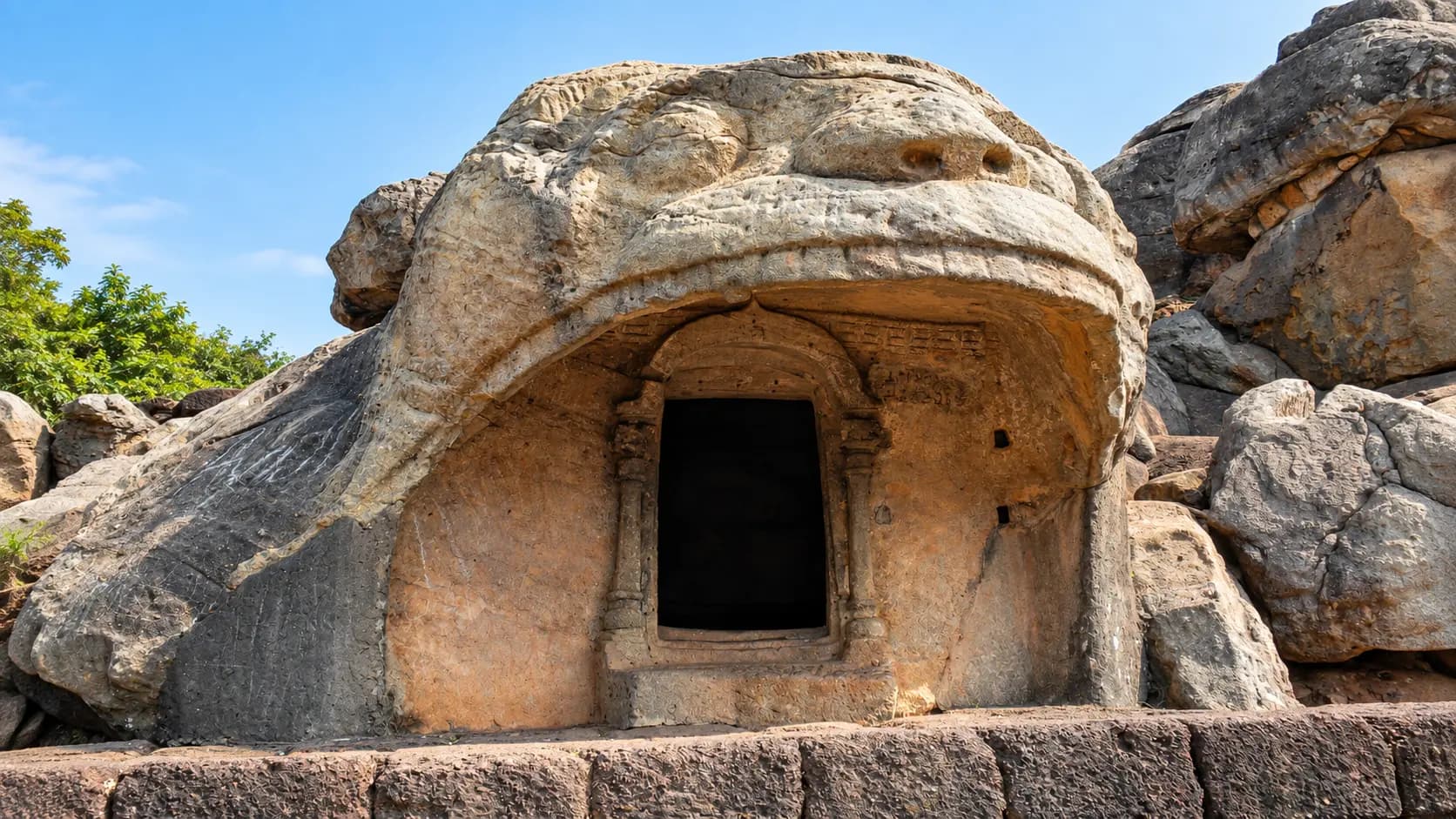
- Udayagiri and Khandagiri Caves (~16 km southwest): Ancient 1st-century BCE rock-cut Jain cave dwellings featuring Emperor Kharavela's historic Hathigumpha inscription.
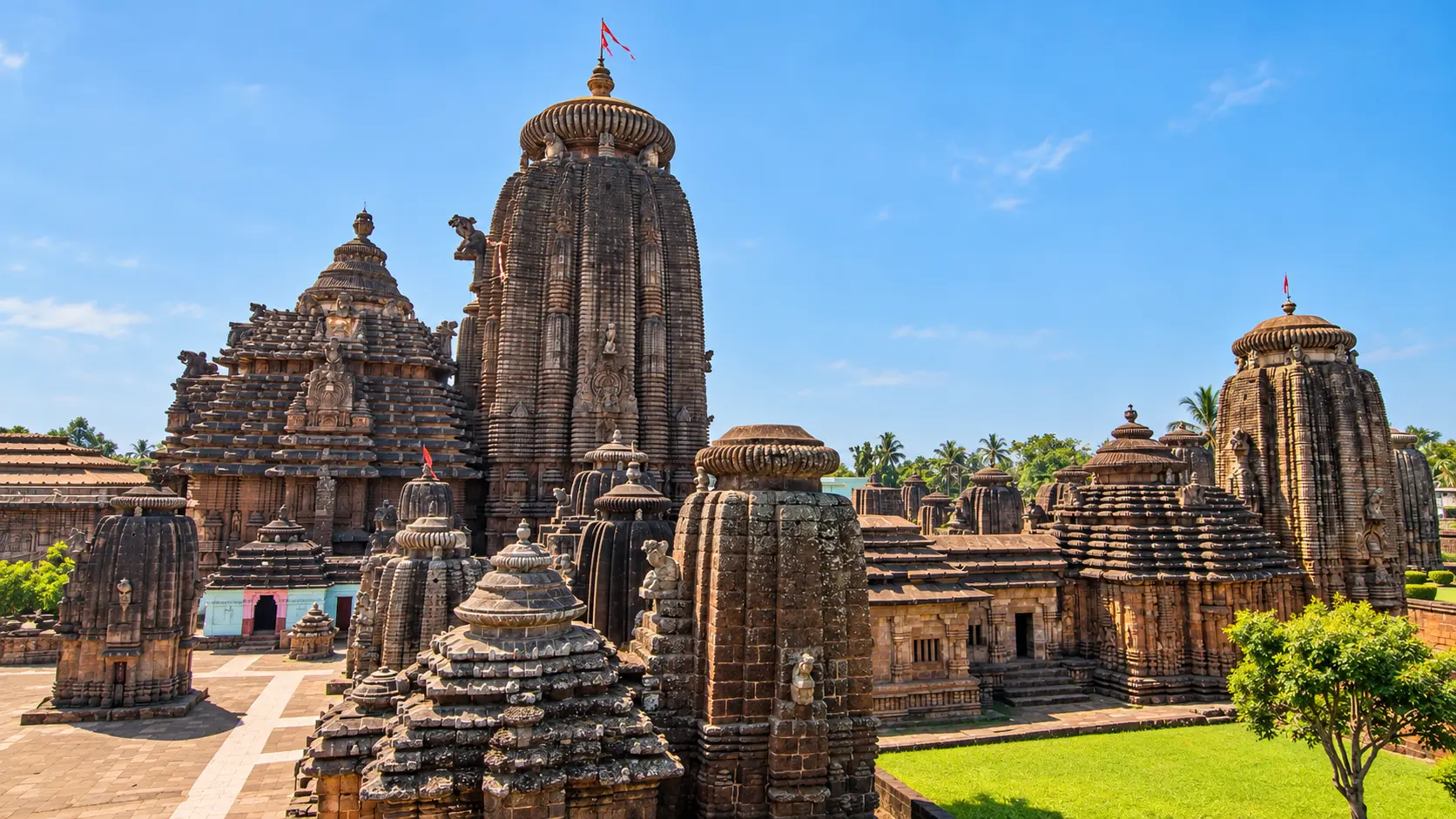
- Shree Lingaraj Temple (~18 km south): The magnificent 11th-century crown jewel of Kalinga temple architecture in Old Town Bhubaneswar, rising 55 metres high.
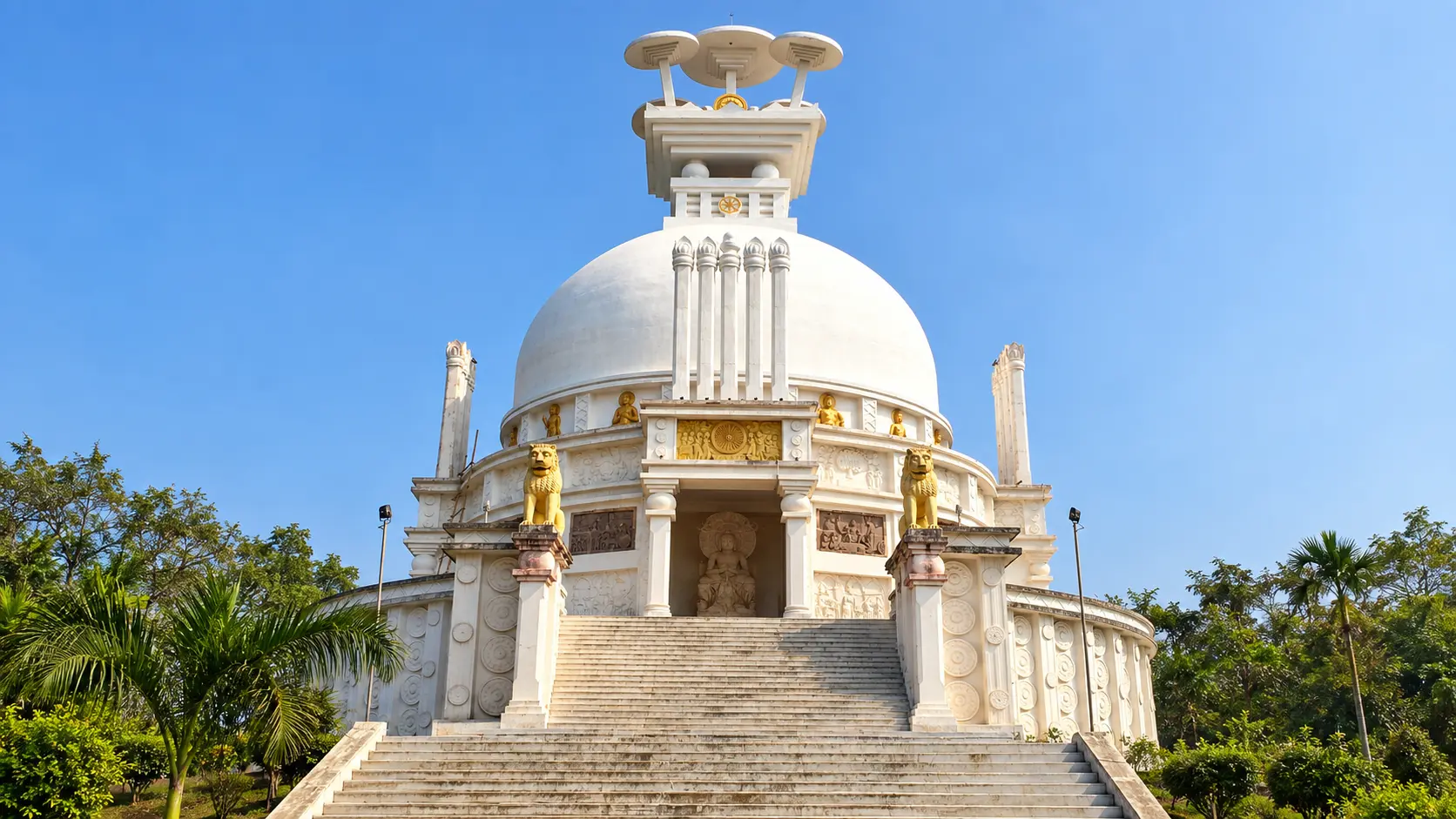
- Dhauli Shanti Stupa (~24 km south): The iconic white Buddhist peace pagoda perched atop Dhauli Hill overlooking the historic battleground of the Kalinga War.
In pictures
The practical bits
Before you go.
Book Online and Arrive Early
During winter weekends and public holidays, the gate ticket queues at Nandankanan can exceed 45 minutes.Explore detailsClose details
During winter weekends and public holidays, the gate ticket queues at Nandankanan can exceed 45 minutes. Book your entry tickets and safari add-ons in advance online via the official portal (nandankanan.org). Check the current visiting hours and permitted access with the site operator before departure; ceremonies, closures and visitor sessions can affect access.
Hop-On Hop-Off Battery Vehicles (BOV)
Nandankanan is immense - exploring all enclosures on foot requires walking more than 7 to 9 kilometres.Explore detailsClose details
Nandankanan is immense - exploring all enclosures on foot requires walking more than 7 to 9 kilometres. Confirm the current charge and what it includes with the operator or service provider. Visitor admission, vehicles, parking, activities and accommodation can have separate charges. These open electric golf buggies run on continuous circular routes, allowing you to hop on and hop off at major exhibit stations throughout the day.
Prioritizing the Forest Safari Early
Head directly to the Safari Terminal upon entering the park to complete your Four Forest Safaris before midday.Explore detailsClose details
Head directly to the Safari Terminal upon entering the park to complete your Four Forest Safaris before midday. Morning hours offer the best safari experience: lions and white tigers are alert and prowling through the woods, whereas during the hot afternoon hours, big cats tend to sleep deeply in thick undergrowth or artificial dens far from the bus tracks.
Combining with the State Botanical Garden & Ropeway
Plan a complete day itinerary by combining the zoo with the State Botanical Garden.Explore detailsClose details
Plan a complete day itinerary by combining the zoo with the State Botanical Garden. Board the Aerial Ropeway near the Kanjia lakefront to cross the water to the botanical garden. Spend an hour strolling through the Japanese Zen garden, the glass greenhouse, and the butterfly conservatory away from the zoo crowds, before taking the return cable car back for an afternoon boat ride on Kanjia Lake.
A few things you might wonder
Common questions about visiting Nandankanan Zoological Park. Fees, visiting hours and ceremonies are researched details that may change; confirm current arrangements with the operator before travelling.
Why is Nandankanan Zoological Park famous globally?
What safaris can visitors experience at Nandankanan?
What are the visiting hours and weekly closing days of the zoo?
How does the aerial ropeway across Kanjia Lake work?
Can visitors hire internal transport inside Nandankanan?
Is boating available inside Nandankanan?
How much are the entry tickets for Nandankanan Zoo?
Are plastic bottles and outside food allowed inside the park?
Explore more in Puri Konark Bhubaneswar
Discover other destinations around this hub
More Hubs in Odisha
Continue exploring other travel hubs in this state
Planning a trip to Golden Triangle?