Chausathi Yogini Temple, Hirapur
Complete visitor guide to the 9th-century hypaethral Chausathi Yogini Temple in Hirapur near Bhubaneswar, Odisha. Discover 64 chlorite Yoginis, Mahamaya, and Tantric heritage.
Location
Golden Triangle, Odisha
A closer look
Your visit, at a glance.
Golden Triangle, Odisha
GET TO KNOW THE PLACE
Tucked away in the pastoral, palm-fringed village of Hirapur on the floodplains of the Daya River, approximately 15 kilometres southeast of Bhubaneswar, stands one of the most…
The story of Chausathi Yogini Temple, Hirapur
Tucked away in the pastoral, palm-fringed village of Hirapur on the floodplains of the Daya River, approximately 15 kilometres southeast of Bhubaneswar, stands one of the most enigmatic, intimate, and artistically mesmerizing monuments of medieval India: the Chausathi Yogini Temple (known locally as the Mahamaya Temple). Unlike the soaring sandstone shikharas that dominate the skyline of Ekamra Kshetra, this 9th-century CE shrine is remarkably compact, low-slung, and completely roofless - a hypaethral circular sanctum designed to be permanently open to the heavens.
Built during the zenith of the powerful Bhauma-Kara dynasty - a progressive matriarchal and eclectic royal line that patronized both Mahayana Buddhism and esoteric Shakta-Tantric Hinduism - the Hirapur temple is one of only four surviving hypaethral Chausathi Yogini temples in the entire Indian subcontinent (alongside Ranipur-Jharial in western Odisha, and Mitawali and Bhedaghat in Madhya Pradesh). Shrouded in local village folklore and dense jungle overgrowth for centuries, the temple was brought to national archaeological prominence in 1953 by the renowned Odia epigraphist and historian Kedarnath Mahapatra.
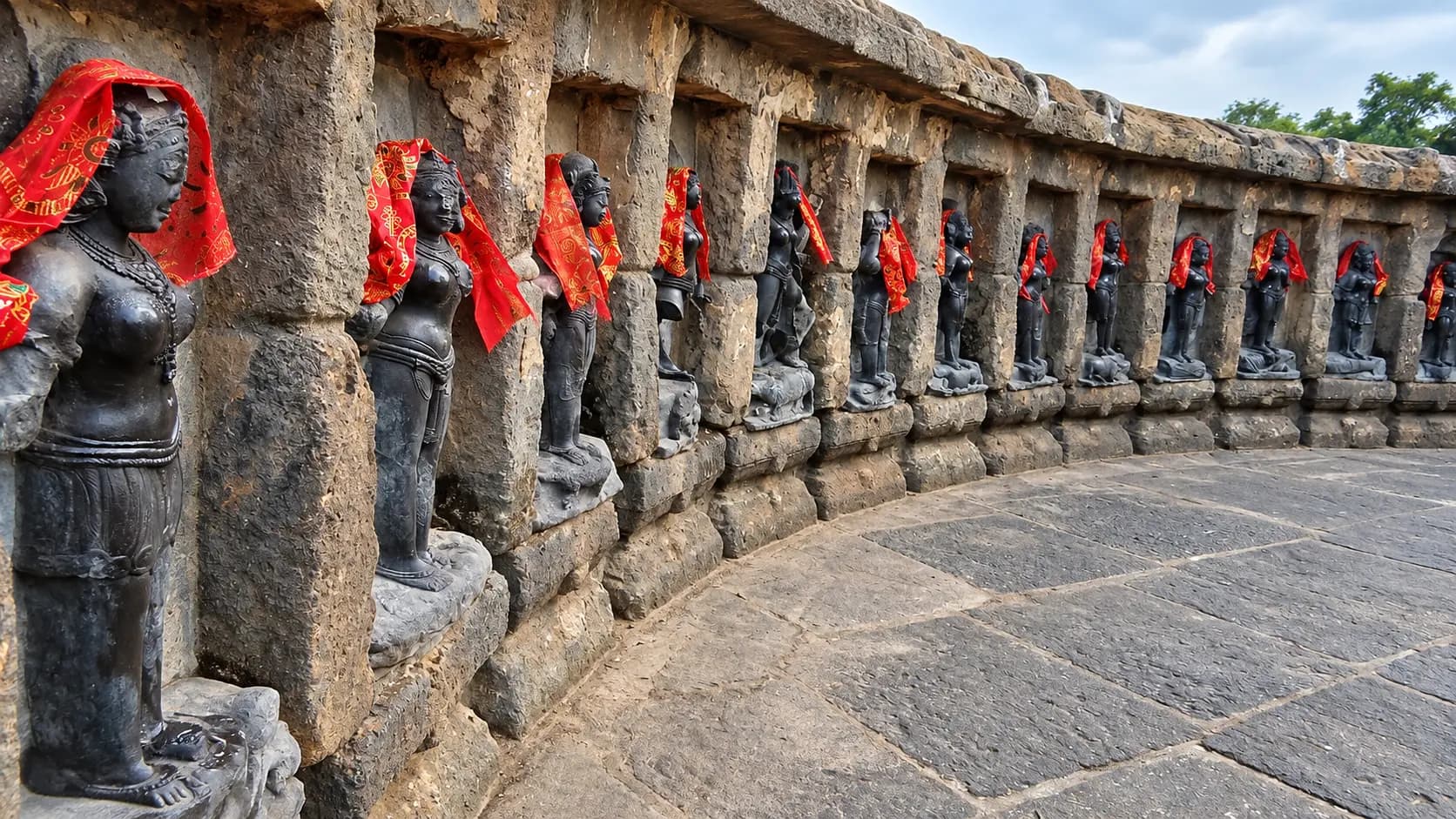
Measuring a modest 9 metres (roughly 27 to 30 feet) in diameter and rising just 2 metres (6.5 to 8 feet) from the ground, the inner perimeter of the circular enclosure features 64 individual niches carved into buff sandstone and laterite. Within each niche rests an exquisite, finely detailed dark chlorite stone statuette of a Yogini - sculpted not as grotesque or terrifying monsters, but as radiant, graceful, and sensuous female celestial divinities. Each goddess displays intricate hairstyles (keshabandha), elegant jewels, and a serene, enigmatic smile, posed dynamically upon her distinct vahana (mount), ranging from roosters, snakes, and elephants to a severed human head. Today, carefully preserved by the Archaeological Survey of India (ASI) and continuing as an active village shrine for Goddess Mahamaya, the Chausathi Yogini Temple offers an extraordinary window into medieval India's sacred sacred feminine mysteries, Tantric cosmos, and sublime sculptural artistry.
Start here. Open a tile for the full details.
Why goRead details
- One of Only Four Hypaethral Yogini Temples in India: Step inside a rare, roofless circular shrine built open to the open sky, designed for esoteric midnight Tantric rituals and cosmic communion with the celestial spheres.
- The Sixty-Four Exquisite Chlorite Yoginis: Marvel at 64 masterfully carved grey-green chlorite stone statuettes (40 to 60 cm tall) depicting youthful female divinities in graceful postures, adorned with intricate braided coiffures and fine jewelry.
- Unique Animal and Symbolic Vahanas: Observe the fascinating iconography of each Yogini standing upon her individual mount, including an elephant, crab, rooster, scorpion, bull, lion, camel, peacock, snake, and severed human head.
- Active Worship of Goddess Mahamaya: Experience a living rural shrine where the presiding deity, Goddess Mahamaya, is actively adorned with vermilion, red hibiscus flowers, and daily rituals by local village priests.
- The Mysterious Central Chandi Mandapa: Examine the central open pavilion housing carved stone representations of Lord Shiva as Ekapada Bhairava (the one-legged ascetic aspect) and Swachchanda Bhairava.
- Intimate and Peaceful Rural Atmosphere: Escape the bustling urban crowds of Bhubaneswar in a quiet, manicured garden compound surrounded by rural paddy fields, coconut trees, and village lotus ponds.
- The Annual Chausathi Yogini Mahotsav: Attend the enchanting 3-day cultural festival held each winter, featuring world-class classical Odissi and folk dance recitals performed against the floodlit circular monument.
When to visitRead details
Entry & permissionsRead details
Fees, visiting hours and entry rules may change. Confirm the latest details with the official operator or local authority before travelling.
Tariffs, Timings and Regulations
- Admission Fee: Entry to the Chausathi Yogini Temple and its surrounding ASI gardens is completely free (₹0) for all Indian citizens and international visitors.
- Visiting Hours: Open daily from sunrise to sunset (06:00 AM to 18:00 PM).
- Photography Rules:
- Photography using handheld cameras and smartphones is permitted free of charge.
- Using tripods, professional lighting rigs, or filming commercial video requires advance statutory clearance from the Archaeological Survey of India.
- Flying drones over the monument or surrounding ASI buffer zone is strictly prohibited under national antiquities and security laws.
- Footwear and Religious Etiquette:
- Visitors must remove their footwear at the paved entrance terrace before stepping through the narrow entrance passage into the circular sanctum. Dedicated open-air shoe racks are provided free of charge.
- Out of respect for the active sacred sanctum, do not touch, lean against, or rub the ancient chlorite sculptures. Maintain quiet, contemplative decorum inside the circular chamber.
Plan your visitRead details
The nearest airport is Biju Patnaik International Airport (BBI) in Bhubaneswar, located approximately 17 kilometres northwest of Hirapur.
- The airport operates daily non-stop flights connecting Bhubaneswar with major Indian metros including New Delhi, Mumbai, Bengaluru, Kolkata, Chennai, and Hyderabad.
- From the airport arrivals hall, pre-paid taxis and app-based cabs (Ola and Uber) reach Hirapur in approximately 35 to 45 minutes via Aerodrome Road, Ravi Talkies Chhak, and Tankapani Road.
Explore the full guide - choose a topic below.
Why visit?
One of Only Four Hypaethral Yogini Temples in India: Step inside a rare, roofless circular shrine built open to…Explore detailsClose details
- One of Only Four Hypaethral Yogini Temples in India: Step inside a rare, roofless circular shrine built open to the open sky, designed for esoteric midnight Tantric rituals and cosmic communion with the celestial spheres.
- The Sixty-Four Exquisite Chlorite Yoginis: Marvel at 64 masterfully carved grey-green chlorite stone statuettes (40 to 60 cm tall) depicting youthful female divinities in graceful postures, adorned with intricate braided coiffures and fine jewelry.
- Unique Animal and Symbolic Vahanas: Observe the fascinating iconography of each Yogini standing upon her individual mount, including an elephant, crab, rooster, scorpion, bull, lion, camel, peacock, snake, and severed human head.
- Active Worship of Goddess Mahamaya: Experience a living rural shrine where the presiding deity, Goddess Mahamaya, is actively adorned with vermilion, red hibiscus flowers, and daily rituals by local village priests.
- The Mysterious Central Chandi Mandapa: Examine the central open pavilion housing carved stone representations of Lord Shiva as Ekapada Bhairava (the one-legged ascetic aspect) and Swachchanda Bhairava.
- Intimate and Peaceful Rural Atmosphere: Escape the bustling urban crowds of Bhubaneswar in a quiet, manicured garden compound surrounded by rural paddy fields, coconut trees, and village lotus ponds.
- The Annual Chausathi Yogini Mahotsav: Attend the enchanting 3-day cultural festival held each winter, featuring world-class classical Odissi and folk dance recitals performed against the floodlit circular monument.
What to expect
The architectural design of the Chausathi Yogini Temple at Hirapur stands in stark, dramatic contrast to standard…Explore detailsClose details
The Hypaethral Architecture and Bhumandala Design
The architectural design of the Chausathi Yogini Temple at Hirapur stands in stark, dramatic contrast to standard Kalinga temple architecture (which typically features towering deuls and enclosed jagamohan assembly halls). Instead, the temple is laid out as a perfect circle constructed from sandstone blocks laid upon a laterite foundation.
The structure has an exterior circumference of roughly 27.4 metres (90 feet), an internal diameter of approximately 7.6 metres (25 feet), and an external diameter of roughly 9 metres. The perimeter wall stands only 2 metres (around 6.5 to 8 feet) tall, deliberately constructed without a roof to create an unhindered opening to the sky.
In Tantric metaphysics, this hypaethral circular design represents the Bhumandala (the sacred mandala of the cosmos) and the Yoni-mandala (the womb of creation), embodying the five great primordial elements (Pancha Bhutas): earth, water, fire, air, and ether (Akasha). The open sky allowed nocturnal practitioners (sadhakas) to channel cosmic lunar energies and stellar vibrations directly into the sanctum during secret midnight rituals conducted on new moon (Amavasya) and full moon (Purnima) nights.
+-----------------------------------------------------------------------------------+
|                     CHAUSATHI YOGINI TEMPLE, HIRAPUR LAYOUT                      |
+-----------------------------------------------------------------------------------+
|                                                                                   |
|                                [ NORTH ]                                          |
|                                                                                   |
|                           .-''''''-.                                              |
|                        .'            '.                                           |
|                     .'    Niches with    '.                                       |
|                    /     Chlorite Yoginis   \                                     |
|                   |       ┌───────────┐      |                                    |
|       [ WEST ]    |       │  CHANDI   │      |    [ EAST ]                        |
|                   |       │  MANDAPA  │      | ──► [ NARROW ENTRANCE PASSAGE ]    |
|                   |       │ (Bhairavas│      |     Flanked by guardian dwarapalas |
|                    \      └───────────┘     /      (Jai & Vijai)                  |
|                     '.                    .'                                      |
|                        '. Niches with.'                                        |
|                           '-......-'                                              |
|                                                                                   |
|                                [ SOUTH ]                                          |
|                                                                                   |
|    EXTERIOR WALL: 9 Carved sandstone niches housing fierce warrior Katyayanis     |
|    SURROUNDING: Manicured ASI Lawns, Village Palm Groves & Daya River Canal       |
|                                                                                   |
+-----------------------------------------------------------------------------------+
The Sixty-Four Yoginis: Sculptural Masterpieces
The chief glory of Hirapur lies in the 64 individual niches carved into the inner circular wall. Each niche measures roughly 50 cm high by 25 cm wide and houses an individual free-standing sculpture carved from fine-grained, smooth grey-green chlorite stone (khadipathara).
While yogini sculptures in other parts of India (such as Ranipur-Jharial or Mitawali) are often weathered, defaced, or sculpted with fierce, multi-armed terrifying expressions, the Hirapur yoginis are uniquely characterized by their youthful feminine beauty, slender waists, rounded hips, delicate facial features, and serene, enigmatic expressions.
Key attributes of the Hirapur Yoginis include:
- Exquisite Coiffures (Keshabandha): Each of the 64 Yoginis displays a distinct and elaborate hairstyle. Some feature high braided chignons, fan-shaped buns decorated with pearls and floral pins, stepped coronets, or loose cascading ringlets gathered on one side, presenting a veritable encyclopedia of 9th-century royal Odia hairdressing and personal ornamentation.
- Dynamic Postures and Attire: The goddesses are depicted in various graceful classical tribhanga (three-bend) stances, dynamic archery poses, or dance mudras. They wear sheer pleated skirts (antariya), broad jeweled girdles (mekhala), tiered necklaces, armlets, and anklets.
- The Diverse Vahanas (Mounts): Each Yogini stands upon her distinct animal, avian, or symbolic pedestal, which provides vital clues to her mythological identity and esoteric functions:
- Avian & Reptilian Vahanas: Yoginis standing gracefully upon a duck (Hamsa), rooster, peacock, vulture, crocodile (Makara), frog (Manduka), crab (Karkata), tortoise (Kurma), and coiled serpents (Sarpa).
- Mammalian Vahanas: Mounts including the bull (Nandi), lion, caparisoned horse, domestic cat, rat, wild boar (Varaha), elephant (Gaja), buffalo (Mahisha), camel, and gazelle.
- Symbolic & Anthropomorphic Pedestals: Several Yoginis stand upon symbolic objects or beings, including a flowering lotus, a two-headed severed human corpse, a dancing dwarf, and a sacred water vessel (Kalasha).
The Presiding Deity: Goddess Mahamaya
Although all 64 Yoginis are revered collectively, the central presiding goddess of the Hirapur temple is Goddess Mahamaya (occupying niche number 31 on the eastern arc of the circular wall). Depicted as a magnificent four-armed divinity standing gracefully upon a prostrate human figure or lion pedestal, she is larger than the surrounding sculptures and wears an elaborate crown.
Unlike abandoned archaeological ruins, the Hirapur temple remains an active village shrine. Local priests perform morning and evening worship, applying sacred vermilion (sindoor) to Mahamaya’s forehead, garlanding her with fresh red hibiscus flowers, burning camphor, and distributing sacred consecrated sweets (bhog) to pilgrims.
The Central Chandi Mandapa
In the center of the circular open court stands a low, rectangular stone pavilion known as the Chandi Mandapa (or Jagati). Constructed with open pillared sides, this central sanctum houses four carved chlorite yogini figures and four impressive reliefs of Bhairava - the fierce manifestation of Lord Shiva who acts as the supreme guardian and consort of the Yogini mandala.
The Bhairava sculptures include depictions of Ekapada Bhairava (Shiva standing ascetic-like on a single leg, holding a trident and skull-cup), Swachchanda Bhairava, and Ajaikapada. These images symbolize the cosmic pillar (Skambha) linking earth and the heavens, anchoring the esoteric rituals of the circle.
The Exterior Walls and the Nine Katyayanis
The exterior perimeter of the temple is constructed of unadorned, buff-colored laterite stone. However, this rustic wall is punctuated by nine projecting niches containing carved sandstone statues of female warrior deities identified as the Nine Katyayanis (fierce manifestations of Goddess Durga).
Unlike the gentle Yoginis within the sanctum, the exterior Katyayanis are sculpted with resolute, martial authority. They are depicted holding drawn swords, heavy shields, severed demonic heads, and tridents, attended by diminutive dwarfish attendants. These warrior goddesses guard the outer perimeter, serving as cosmic sentinels protecting the sanctum from profane or malevolent intrusions.
Best time to visit
Explore detailsClose details
Seasonal breakdown
Season | Months | Daytime Temp (°C) | Nighttime Temp (°C) | Temple Atmosphere & Visitor Experience |
|---|---|---|---|---|
Peak Winter | November - February | 24°C - 28°C | 14°C - 18°C | Optimal. Crisp, balmy daytime temperatures, cool breezes, and clear blue skies. Ideal for leisurely barefoot exploration of the roofless courtyard and attending the annual Chausathi Yogini Mahotsav in December/January. |
Early Spring | March - April | 30°C - 35°C | 20°C - 24°C | Very Good. Pleasant mornings and breezy evenings; midday sun becomes warm on exposed sandstone. Fewer visitors allow for peaceful, uninterrupted photography. |
Summer | May - June | 36°C - 42°C | 26°C - 30°C | Hot & Scorching. Because the temple has no roof, the unshaded sandstone floor becomes intensely hot to walk upon barefoot between 10:30 AM and 16:00 PM. Early morning visits (06:00 to 08:30 AM) are strongly advised. |
Monsoon | July - October | 29°C - 33°C | 24°C - 26°C | Lush & Atmospheric. Surrounding paddy fields and village lotus ponds brim with emerald greenery. Rain washes the dark chlorite sculptures, making their intricate carvings glisten, though an umbrella is essential. |
How to reach
The nearest airport is Biju Patnaik International Airport (BBI) in Bhubaneswar, located approximately 17…Explore detailsClose details
By Air
The nearest airport is Biju Patnaik International Airport (BBI) in Bhubaneswar, located approximately 17 kilometres northwest of Hirapur.
- The airport operates daily non-stop flights connecting Bhubaneswar with major Indian metros including New Delhi, Mumbai, Bengaluru, Kolkata, Chennai, and Hyderabad.
- From the airport arrivals hall, pre-paid taxis and app-based cabs (Ola and Uber) reach Hirapur in approximately 35 to 45 minutes via Aerodrome Road, Ravi Talkies Chhak, and Tankapani Road.
By Train
- Bhubaneswar Railway Station (BBS): The primary railway junction on the East Coast Railway line, situated approximately 15 kilometres northwest of the temple. Daily superfast and express trains link Bhubaneswar with all regions of India.
- Taxis and auto-rickshaws are readily available outside the station. Confirm the current charge and what it includes with the operator or service provider. Visitor admission, vehicles, parking, activities and accommodation can have separate charges.
By Road & Local Transit
- From Bhubaneswar City Centre: Drive south toward Ravi Talkies square on Lewis Road, turn east onto Tankapani Road, cross the Daya River canal, and follow the paved rural road toward Balianta. Clear signboards guide drivers through the agrarian hamlets directly to the ASI parking area at Hirapur village.
- Auto-Rickshaw & Taxi Hires: While app-based cabs can easily take you to Hirapur, mobile network coverage in the rural village can occasionally make hailing a return cab delayed. It is strongly recommended to book a return taxi or retain your auto-rickshaw driver for the return trip to the city.
- Combined Heritage Day Trip: Hirapur is conveniently positioned along the route toward Dhauli Shanti Stupa (~10 km away) and Pipili Applique Village (~18 km south), making it seamless to combine these sites into a half-day rural heritage circuit.
Entry, timings and permissions
Fees, visiting hours and entry rules may change.Explore detailsClose details
Fees, visiting hours and entry rules may change. Confirm the latest details with the official operator or local authority before travelling.
Tariffs, Timings and Regulations
- Admission Fee: Entry to the Chausathi Yogini Temple and its surrounding ASI gardens is completely free (₹0) for all Indian citizens and international visitors.
- Visiting Hours: Open daily from sunrise to sunset (06:00 AM to 18:00 PM).
- Photography Rules:
- Photography using handheld cameras and smartphones is permitted free of charge.
- Using tripods, professional lighting rigs, or filming commercial video requires advance statutory clearance from the Archaeological Survey of India.
- Flying drones over the monument or surrounding ASI buffer zone is strictly prohibited under national antiquities and security laws.
- Footwear and Religious Etiquette:
- Visitors must remove their footwear at the paved entrance terrace before stepping through the narrow entrance passage into the circular sanctum. Dedicated open-air shoe racks are provided free of charge.
- Out of respect for the active sacred sanctum, do not touch, lean against, or rub the ancient chlorite sculptures. Maintain quiet, contemplative decorum inside the circular chamber.
Nearby places to consider
Dhauli Shanti Stupa (~10 km southwest): The majestic white Buddhist peace pagoda perched atop Dhauli Hill on the…Explore detailsClose details
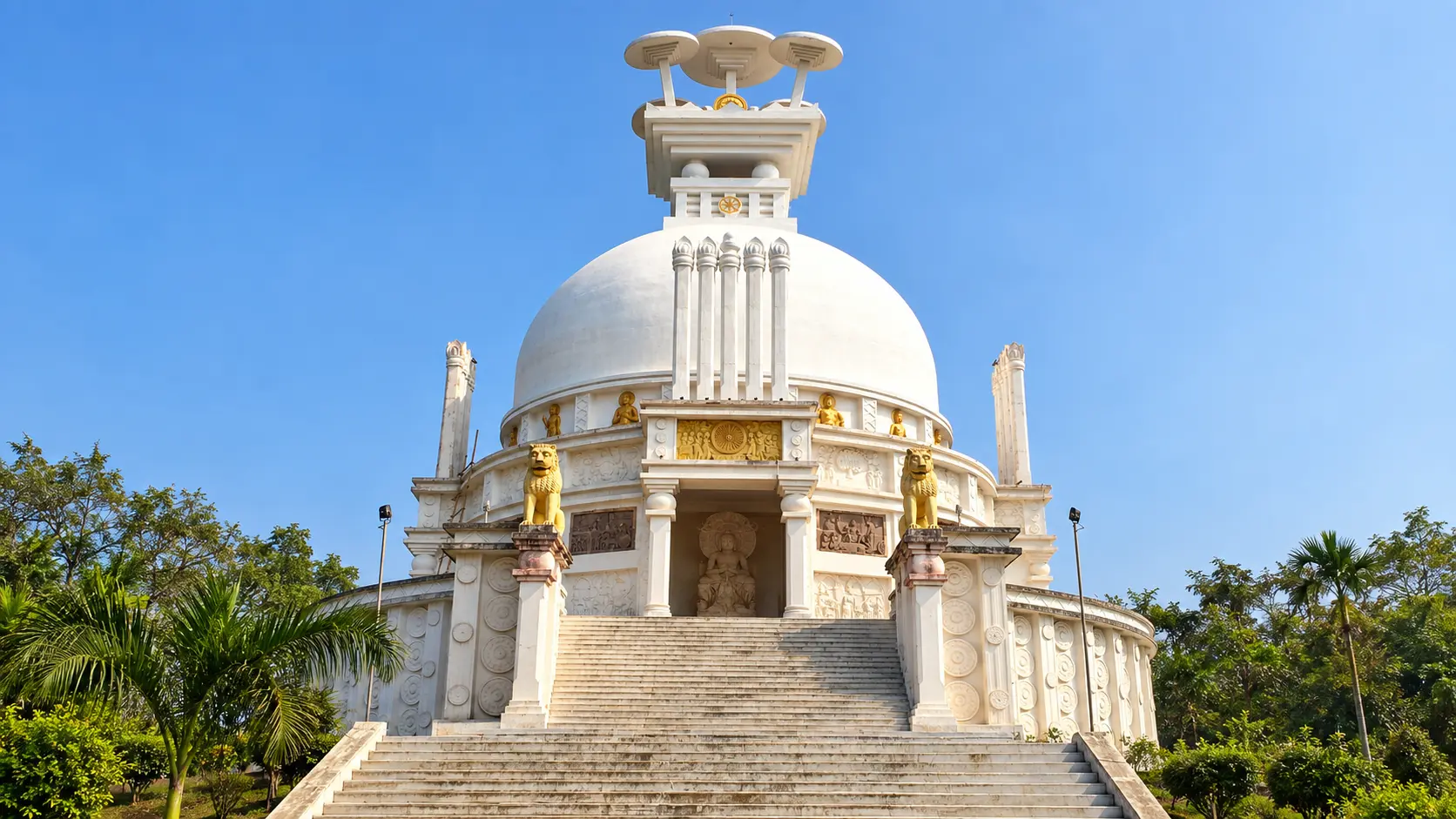
- Dhauli Shanti Stupa (~10 km southwest): The majestic white Buddhist peace pagoda perched atop Dhauli Hill on the banks of the Daya River, overlooking the historic site of the Kalinga War (261 BCE) and housing Emperor Ashoka’s famous rock edicts.
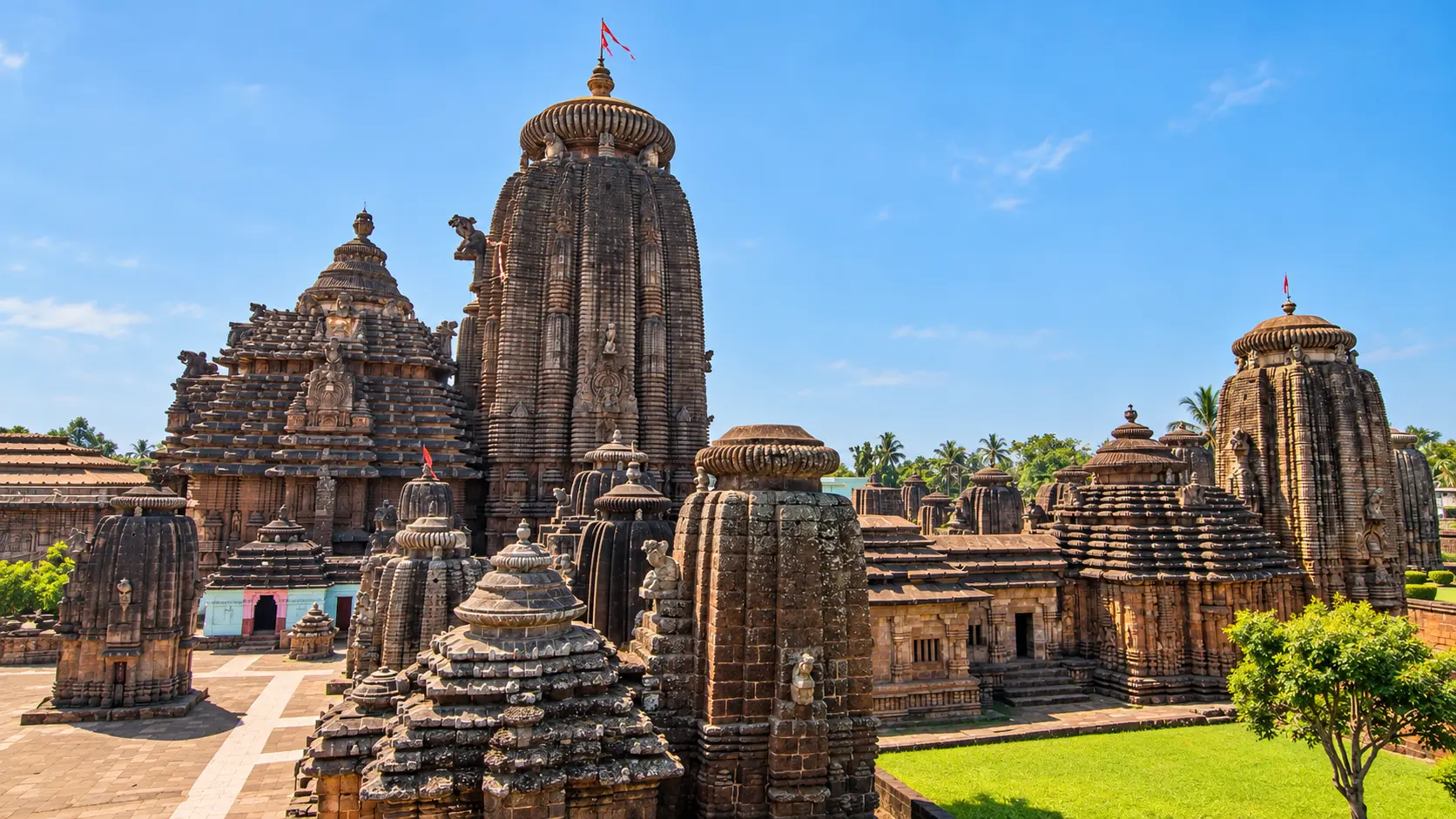
- Shree Lingaraj Temple (~14 km northwest): The monumental 11th-century crown jewel of Kalinga temple architecture in Old Town Bhubaneswar, rising 55 metres high and surrounded by 150 subsidiary shrines.
- Bindu Sagar Lake (~14 km northwest): The mythological sacred lake of Ekamra Kshetra, flanked by ancient stone ghats, the central Jala Mandir island pavilion, and Ananta Vasudeva Temple.
- Pipili Applique Artisan Village (~18 km south): A world-famous artisan township where hereditary craftspeople create vibrant hand-stitched applique umbrellas, canopies, wall hangings, and ceremonial banners for the Puri Ratha Yatra.
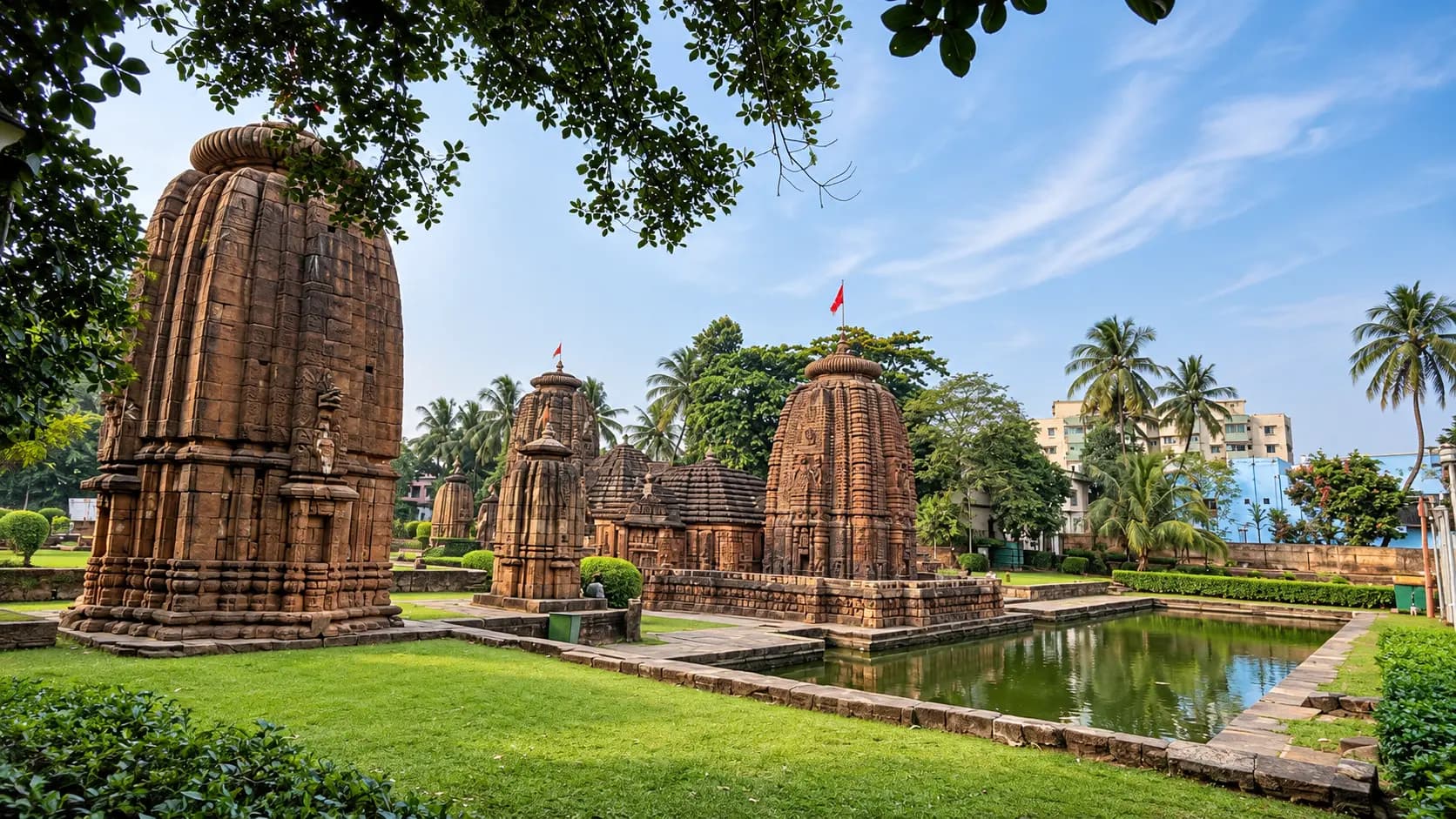
- Mukteswar & Parsurameswar Temples (~13 km northwest): Celebrated 7th and 10th-century stone architectural masterpieces in Bhubaneswar, renowned for their intricate carvings and the iconic arched stone torana.
- Rajarani Temple (~14 km northwest): The elegant 11th-century "Love Temple" sculpted from fine yellowish sandstone, celebrated for its exquisite female nayika figures.
In pictures
The practical bits
Before you go.
Timing Your Visit for Optimal Light and Comfort
Because the Chausathi Yogini Temple is completely open to the sky, the interior stone courtyard is fully exposed…Explore detailsClose details
Because the Chausathi Yogini Temple is completely open to the sky, the interior stone courtyard is fully exposed to direct sunlight. Schedule your visit either in the early morning between 06:30 AM and 09:00 AM or in the late afternoon between 16:00 PM and 17:30 PM. Early morning light illuminates the western and northern Yogini niches beautifully, while late afternoon golden rays cast a warm glow across Goddess Mahamaya and the eastern sculptures, keeping the stone floor cool for barefoot walking.
Footwear and Socks Strategy
During hot or sunny days between March and October, the dark sandstone paving stones inside the roofless temple…Explore detailsClose details
During hot or sunny days between March and October, the dark sandstone paving stones inside the roofless temple absorb immense thermal radiation. If visiting after 10:00 AM, consider carrying a thick pair of cotton socks in your pocket; wearing socks while walking barefoot protects your feet from burning stone surfaces while complying fully with temple sanctity.
Hiring a Return Vehicle in Advance
Hirapur is an authentic, peaceful rural village located about 15 kilometres outside urban Bhubaneswar.Explore detailsClose details
Hirapur is an authentic, peaceful rural village located about 15 kilometres outside urban Bhubaneswar. While app-based ride services (Uber/Ola) will readily drop you off at Hirapur, finding an available cab for the return journey back to the city can involve lengthy waiting times. Either retain your auto-rickshaw driver for a two-hour round trip (including waiting time) or arrange for a pre-booked private taxi.
Pairing with Dhauli and Pipili Heritage
Combine your excursion to Hirapur with other prominent cultural landmarks in southern Khordha and northern Puri…Explore detailsClose details
Combine your excursion to Hirapur with other prominent cultural landmarks in southern Khordha and northern Puri districts. A rewarding half-day itinerary begins with a quiet 07:30 AM morning visit to the Chausathi Yogini Temple, followed by a 15-minute drive south across the Daya River to the historic Dhauli Shanti Stupa and Emperor Ashoka’s 3rd-century BCE rock edicts, concluding with a midday stop at the colorful artisan workshops of Pipili to observe traditional Odia applique embroidery.
A few things you might wonder
Common questions about visiting Chausathi Yogini Temple, Hirapur. Fees, visiting hours and ceremonies are researched details that may change; confirm current arrangements with the operator before travelling.
What is the historical significance of the Chausathi Yogini Temple at Hirapur?
Why does the Chausathi Yogini Temple have no roof?
How many Yogini sculptures survive inside the temple today?
Who is the presiding deity of the Hirapur temple?
Is there an entrance fee to visit the Chausathi Yogini Temple?
How do the Hirapur Yoginis differ from Yogini sculptures at other Indian temples?
When was the temple rediscovered by modern historians?
What is the Chausathi Yogini Mahotsav?
Explore more in Puri Konark Bhubaneswar
Discover other destinations around this hub
More Hubs in Odisha
Continue exploring other travel hubs in this state
Planning a trip to Golden Triangle?