Gahirmatha Marine Sanctuary
Comprehensive visitor guide to Gahirmatha Marine Sanctuary in Kendrapara, Odisha. Discover Olive Ridley mass nesting arribada, Gupti boat safaris, permits, and seasons.
Location
Bhitarkanika & Cuttack, Odisha
Duration
Plan only around an expressly authorised activity; no turtle-viewing duration is promised.
Best Time
Do not book around a promised nesting or hatching date. Check current conservation notices and any expressly authorised visitor programme.
Difficulty
A permitted public visitor route has not been established for the nesting beach; this guide does not describe it as a standard excursion.
A closer look
Your visit, at a glance.
Bhitarkanika & Cuttack, Odisha
GET TO KNOW THE PLACE
Gahirmatha Marine Sanctuary, located along the deltaic rim of Kendrapara District in eastern Odisha, represents one of the most vital marine conservation frontiers on planet Earth.
The story of Gahirmatha Marine Sanctuary
Gahirmatha Marine Sanctuary, located along the deltaic rim of Kendrapara District in eastern Odisha, represents one of the most vital marine conservation frontiers on planet Earth. Declared as Odisha's first and only marine wildlife sanctuary in September 1997 under Section 26(1)(b) of the Wildlife (Protection) Act, 1972, this expansive protected seascape encompasses an extraordinary 1,435 square kilometres. Of this total footprint, approximately 1,408 square kilometres comprise the open oceanic waters of the Bay of Bengal, extending a full 20 kilometres seaward from the low-water shoreline, while the remaining 27 square kilometres consist of shifting deltaic sand spits, mudflats, barrier beaches, and mangrove-fringed creek networks. Stretching continuously from the mouth of the Dhamra River in the north to the mouth of the Mahanadi River at Barunei and False Point in the south, Gahirmatha serves as a biological bastion separating the dense tidal forests of the Bhitarkanika mangrove wetland from the high-energy waters of the northern Indian Ocean.
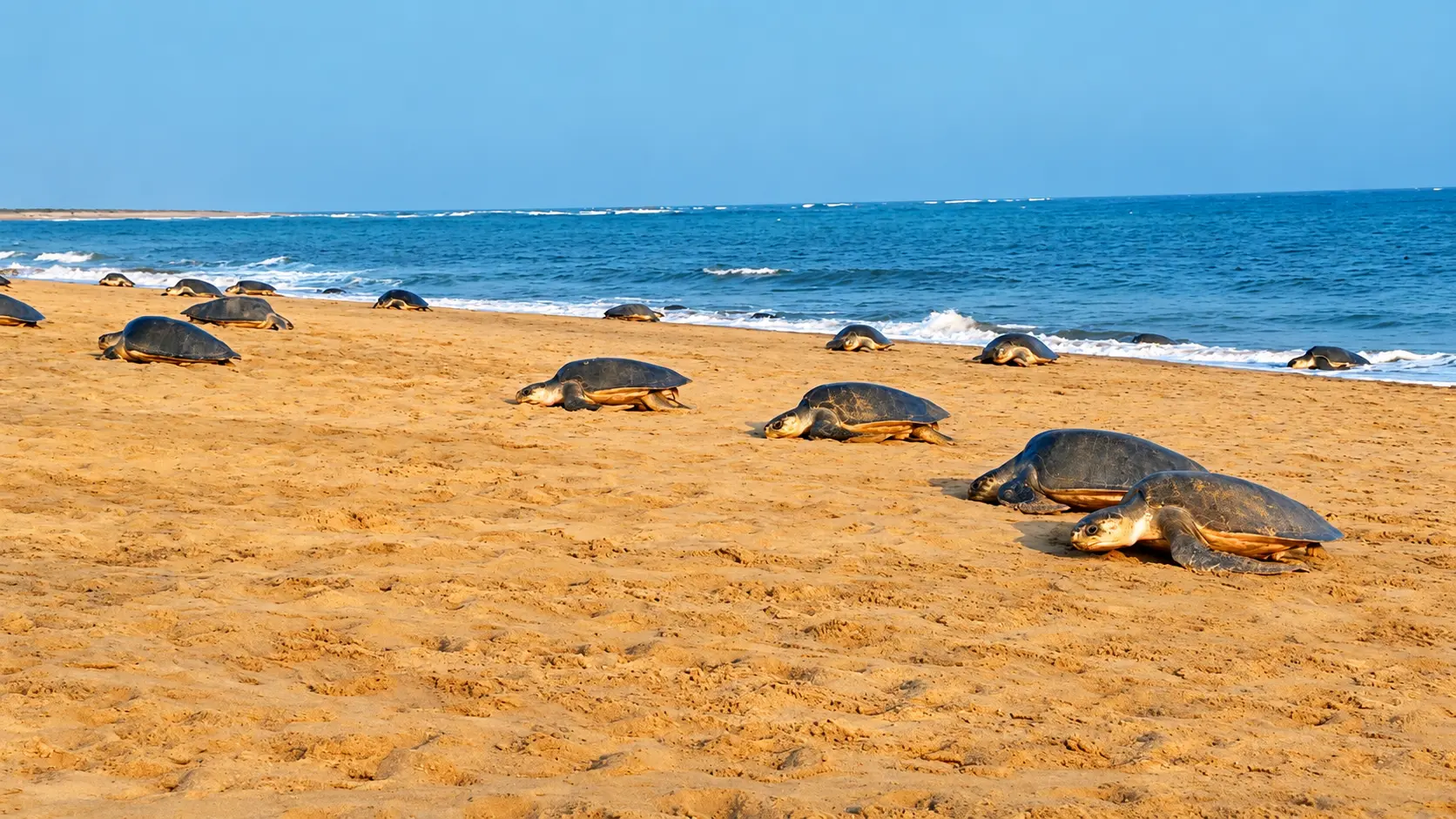
Globally, Gahirmatha is celebrated with singular renown as the largest mass nesting rookery in the world for the endangered Olive Ridley sea turtle (Lepidochelys olivacea). Every winter, between the months of November and April, the coastal waters off Gahirmatha become the epicentre of a mesmerizing oceanic migration. Hundreds of thousands of adult Olive Ridley turtles travel thousands of nautical miles across the South Pacific and Indian Oceans, congregating in the shallow marine shelves fronting Kendrapara's coast to mate. Following offshore mating aggregations, the female turtles stage in coastal shallows, awaiting specific nocturnal environmental cues - such as strong offshore winds, waning moon phases, and rising spring tides - to embark on the phenomenon known globally by its Spanish term, arribada (meaning "arrival by sea"). During an arribada, immense waves of female turtles crawl synchronously out of the surf onto narrow barrier spits, primarily Nasi-1 and Nasi-2 islands, excavating tens of thousands of nest cavities per night and depositing millions of leathery white eggs in the sand.
Yet Gahirmatha's ecological significance transcends its world-famous turtles. The sanctuary's pristine marine ecotone forms an indispensable habitat for several species of marine mammals, including rare Irrawaddy dolphins (Orcaella brevirostris), Indo-Pacific humpback dolphins (Sousa chinensis), and finless porpoises (Neophocaena phocaenoides). Its shallow estuarine bays provide crucial nursery grounds for prehistoric horseshoe crabs (Tachypleus gigas and Carcinoscorpius rotundicauda), while the saline creeks shelter formidable saltwater crocodiles (Crocodylus porosus) that navigate between the open sea and the inland channels of Bhitarkanika National Park. Above the waves, the skies of Gahirmatha are patrolled by apex avian predators, notably the magnificent white-bellied sea eagle (Haliaeetus leucogaster), osprey (Pandion haliaetus), and migratory skimmers, terns, and plovers that feed on the rich schools of estuarine fish.
Because of this profound ecological sensitivity, Gahirmatha is governed under some of the most rigorous conservation protocols in South Asia. Unlike conventional wildlife reserves oriented around open public recreation, the core rookery beaches of Nasi-1 and Nasi-2 are strictly closed to general tourist traffic round-the-clock, protected under high-security defense protocols and intensive forest surveillance. Instead, public engagement with Gahirmatha is structured through highly regulated ecotourism channels, centered at the Gupti jetty embarkation point and the remote coastal outpost of Habalikhati. Here, authorized motorized boats guide travelers along winding mangrove corridors into buffer marine creeks, offering rare glimpses of estuarine dolphins, coastal wildlife, and the untamed maritime boundary where the rivers of Odisha empty into the vast Bay of Bengal.
Start here. Open a tile for the full details.
Why goRead details
During a successful nesting season, official census figures recorded by the Mangrove Forest Division (Wildlife) at Rajnagar frequently document between 200,000 and upwards of 700,000 nesting females arriving over a concentrated window of five to ten consecutive nights. The females use their paddle-like flippers to drag their heavy bodies above the high-tide line, select an undisturbed patch of dry sand, and meticulously excavate an egg chamber approximately 45 to 60 centimetres deep using their hind flippers. Each female deposits an average clutch of 100 to 120 eggs, carefully fills the cavity with sand, compacts the mound with the rhythmic thudding of her plastron to disguise the nest from predators, and returns immediately to the safety of the ocean waves.
When to visitRead details
Because Gahirmatha is an exposed marine sanctuary characterized by open oceanic tides and specialized seasonal biological migrations, choosing the correct month of travel is essential for a safe, comfortable, and ecologically rewarding experience:
Entry & permissionsRead details
Fees, visiting hours and entry rules may change. Confirm the latest details with the official operator or local authority before travelling.
Wildlife tourism and coastal navigation within Gahirmatha Marine Sanctuary are strictly controlled by the Odisha Forest and Environment Department alongside maritime enforcement agencies:
+-----------------------------------------------------------------------------------+
|                        GAHIRMATHA TARIFFS & OPERATIONAL RULES                     |
+------------------------+----------------------------------------------------------+
| Category               | Regulatory Policy / Guidelines                           |
+------------------------+----------------------------------------------------------+
| Daily Navigation Hours | 08:00 AM to 17:00 PM daily; night boat movements along  |
|                        | creeks are strictly prohibited for marine safety         |
+------------------------+----------------------------------------------------------+
| Forest Permit Fee      | ₹40 per Indian adult; ₹20 per child (under 12);          |
|                        | ₹1,000 per foreign tourist                               |
+------------------------+----------------------------------------------------------+
| Boat Safari Hire       | ₹3,500 to ₹6,000 per vessel (seats 8 - 10 passengers)     |
| (Gupti to Habalikhati) | depending on vessel engine rating and day/overnight trip |
+------------------------+----------------------------------------------------------+
| Fishing Prohibition    | Mandatory 7-month ban (Nov 1 to May 31) on all motorized |
| (OMFRA & WPA 1972)     | fishing trawlers within 20 km offshore sanctuary waters  |
+------------------------+----------------------------------------------------------+
| Core Rookery Closure   | Nasi-1 & Nasi-2 barrier spits strictly closed to tourists|
|                        | round-the-clock throughout the year                      |
+------------------------+----------------------------------------------------------+
| Mandatory Safety Gear  | Certified life jackets mandatory for all boat passengers |
|                        | throughout the transit across creeks and estuaries       |
+------------------------+----------------------------------------------------------+
| Drone Regulations      | Flying drones or UAVs strictly banned without defense    |
|                        | and wildlife written clearances                          |
+-----------------------------------------------------------------------------------+
Admission Policies and Forest Permits
Every visitor entering the sanctuary's waterways or heading to Habalikhati must secure an official entry permit issued by the Forest Range Office at Gupti jetty or the Mangrove Forest Division headquarters at Rajnagar. Permit fees are set at ₹40 for Indian adults, ₹20 for Indian children under 12, and ₹1,000 for foreign passport holders. Submitting a clear, government-issued physical photo identification card (such as an Aadhaar Card, Passport, or Voter ID) is mandatory for every passenger before boarding any authorized safari vessel.
Boat Hire and Authorized Operating Hours
Tourist boat operations from Gupti jetty are permitted strictly between 08:00 AM and 17:00 PM during daylight hours. Night navigation through the sanctuary creeks is legally prohibited for passenger safety and to minimize disruption to nocturnal wildlife. Boat hire charges from Gupti to Habalikhati and back range between ₹3,500 and ₹6,000 per vessel, accommodating up to 8 to 10 passengers. Visitors staying at Habalikhati Nature Camp should confirm their boat transfer arrangements at the time of booking through the official EcoTour Odisha portal.
Maritime Conservation and Restricted Zones
Under the Orissa Marine Fishing Regulation Act (OMFRA), 1982, and the Wildlife (Protection) Act, 1972, a statutory seven-month fishing trawler ban is enforced from November 1 to May 31 across the 20-kilometre offshore buffer. The core nesting islands (Nasi-1 and Nasi-2) are permanent inviolate scientific reserves, protected under round-the-clock naval, coast guard, and forest patrols; landing on these barrier islands is strictly illegal.
Plan your visitRead details
Reaching the secluded marine environment of Gahirmatha involves a coordinated journey combining regional air or rail transport, road travel across rural coastal Odisha, and a mandatory maritime boat passage from the river jetty at Gupti:
Safety gear and crocodile awareness
Always wear your buckled life jacket throughout the water transit; estuarine creeks harbor giant saltwater crocodiles, so never dangle hands or feet overboard and never step onto muddy tidal banks under any circumstances.
Explore the full guide - choose a topic below.
Why visit?
The defining spectacle of Gahirmatha is the synchronized mass nesting of Olive Ridley turtles.Explore detailsClose details
The Phenomenon of the Olive Ridley Arribada
The defining spectacle of Gahirmatha is the synchronized mass nesting of Olive Ridley turtles. Olive Ridleys are among the smallest of the world's seven sea turtle species, typically weighing between 35 and 50 kilograms with an olive-green, heart-shaped carapace. What sets them apart biologically is their extraordinary collective nesting behavior. While solitary nesting occurs across many tropical beaches worldwide, synchronized mass nesting at scale occurs at only a handful of global sites - primarily along the Pacific coast of Costa Rica (such as Playa Ostional and Nancite) and the eastern seaboard of India in Odisha. Among all these sites, Gahirmatha remains the largest and most densely populated rookery on Earth.
During a successful nesting season, official census figures recorded by the Mangrove Forest Division (Wildlife) at Rajnagar frequently document between 200,000 and upwards of 700,000 nesting females arriving over a concentrated window of five to ten consecutive nights. The females use their paddle-like flippers to drag their heavy bodies above the high-tide line, select an undisturbed patch of dry sand, and meticulously excavate an egg chamber approximately 45 to 60 centimetres deep using their hind flippers. Each female deposits an average clutch of 100 to 120 eggs, carefully fills the cavity with sand, compacts the mound with the rhythmic thudding of her plastron to disguise the nest from predators, and returns immediately to the safety of the ocean waves.
Approximately 45 to 60 days later, the sands erupt in a secondary natural miracle: synchronous hatchling emergence. In the cool darkness of the night, hundreds of thousands of tiny hatchlings - each measuring barely four centimetres in length - burst simultaneously from their subterranean chambers and scurry towards the moonlit oceanic horizon. While tourists cannot walk upon the core Nasi spits during nesting hours, boat excursions through the surrounding marine waters and educational displays at forest interpretation centres offer profound insight into one of the natural world's greatest reproductive spectacles.
Multi-Agency Maritime Conservation and the 7-Month Fishing Ban
Gahirmatha serves as a living laboratory for large-scale marine governance in India. Every year, from November 1 through May 31, the Government of Odisha enforces a statutory seven-month ban on all mechanized fishing activities across the entire 1,435-square-kilometre sanctuary and within a 20-kilometre buffer zone seaward of the coast. Promulgated under the Orissa Marine Fishing Regulation Act (OMFRA), 1982, and the Wildlife (Protection) Act, 1972, this prohibition aims directly at preventing mortal turtle casualties caused by trawl nets, deep-sea gill nets, and motorized boat propellers during the mating season.
Enforcement of this fishing ban represents an unprecedented inter-agency collaboration. The Mangrove Forest Division (Wildlife) coordinates daily maritime patrols in high-speed interceptor vessels alongside armed units of the Indian Coast Guard, the Odisha Marine Police, and the State Directorate of Fisheries. Patrol vessels monitor the waters 24 hours a day, intercepting illegal trawlers entering from neighboring maritime districts and neighboring states, seizing contraband nets, and mandating the use of Turtle Excluder Devices (TEDs) on licensed commercial vessels operating further offshore. Observing this intensive conservation shield provides visitors with a rare look at the monumental logistics required to preserve marine biodiversity in a developing maritime landscape.
Coastal Dolphin Watching and Estuarine Marine Fauna
Beyond sea turtles, the tranquil estuarine mouths and shallow coastal waters of Gahirmatha provide refuge to extraordinary cetacean species. The confluence of freshwater discharge from the Brahmani, Baitarani, Dhamra, and Maipura river systems with the saline waters of the Bay of Bengal creates a highly productive brackish ecotone rich in plankton, shrimp, and juvenile pelagic fish. This abundant food supply attracts pods of the critically endangered Irrawaddy dolphin (Orcaella brevirostris). Characterized by their blunt, rounded foreheads, lack of a prominent beak, and unique behavior of spitting streams of water to herd fish, Irrawaddy dolphins are frequently spotted surfacing in the calm waters of the outer estuaries.
In addition to Irrawaddy dolphins, the marine sanctuary is home to the Indo-Pacific humpback dolphin (Sousa chinensis), easily distinguished by its fleshy dorsal hump and playful surface breaches, as well as the elusive finless porpoise. As authorized safari boats cruise from Gupti towards the outer sandbars, vigilant travelers can scan the wave crests for the glinting grey curves of surfacing dolphins, creating an exhilarating open-water wildlife encounter that rivals marine safaris in southern India and Sri Lanka.
Habalikhati Beach and Wilderness Isolation
For travelers seeking genuine marine solitude, the coastal outpost of Habalikhati represents one of the most remote and atmospheric wilderness lodges in eastern India. Situated on a slender barrier strip along the Bay of Bengal, Habalikhati is entirely cut off from the mainland road network. The only route of access is a 2.5-hour motorized boat voyage navigating south-eastward from Gupti jetty through an intricate maze of tidal mangrove creeks, wide estuarine bays, and tranquil mudflats.
Upon arrival at Habalikhati, visitors step into a pristine coastal realm where dense casuarina groves and mangrove trees meet sweeping golden sand beaches stretching endlessly toward the horizon. Operated under the aegis of EcoTour Odisha, the Habalikhati Nature Camp provides eco-tents and cottages where guests fall asleep to the rhythmic roar of the Bay of Bengal surf and wake to spectacular sunrises over the ocean. Wandering the deserted shores reveals intricate animal tracks - from the cloven hoofprints of wild boars and chital (spotted deer) to the sprawling crawl marks of water monitors and the occasional discarded shell of an ancient horseshoe crab.
Horseshoe Crabs: Living Marine Fossils
Gahirmatha's intertidal mudflats and shallow sandy beaches are one of the critical global breeding sanctuaries for horseshoe crabs, particularly the two Asian species: the tri-spine horseshoe crab (Tachypleus gigas) and the mangrove horseshoe crab (Carcinoscorpius rotundicauda). Horseshoe crabs are not true crabs, but ancient marine chelicerates more closely related to spiders and scorpions, having existed virtually unchanged for over 450 million years - predating dinosaurs by hundreds of millions of years.
During full moon and new moon spring tides, adult horseshoe crabs emerge onto the muddy sandbars of the Gahirmatha estuary in bonded breeding pairs, the smaller male clinging to the back of the female as she deposits thousands of blue-green eggs in the intertidal sediment. These unique creatures are vital to modern biomedical science; their copper-based blue blood contains Limulus Amebocyte Lysate (LAL), a clotting agent indispensable for testing the safety of medical vaccines, injectable drugs, and biomedical equipment worldwide. Observing these ancient arthropods scuttling across the estuarine sands offers travelers an awe-inspiring direct link to prehistoric geological eras.
What to expect
Visiting Gahirmatha Marine Sanctuary is fundamentally distinct from visiting a commercial seaside resort or an…Explore detailsClose details
Visiting Gahirmatha Marine Sanctuary is fundamentally distinct from visiting a commercial seaside resort or an open national park safari. Because the core purpose of the sanctuary is absolute conservation and strategic maritime security, the experience is defined by serene river-boat transit, expansive coastal wilderness, and strict regulatory discipline:
+-----------------------------------------------------------------------------------+
|                        GAHIRMATHA VISITOR EXPERIENCE HIGHLIGHTS                   |
+-----------------------------------------------------------------------------------+
| Component                  | What Travelers Experience                            |
+----------------------------+------------------------------------------------------+
| Embarkation at Gupti       | Check-in at Forest Range Office, life jacket checks, |
|                            | and boarding covered wooden motorized safari boats.  |
+----------------------------+------------------------------------------------------+
| Creek Boat Cruise          | 2.5-hour scenic cruise along Baunsagadh & Patasala   |
| (28 km water route)        | creeks through dense Rhizophora & Avicennia forests. |
+----------------------------+------------------------------------------------------+
| Estuarine Dolphin Waters   | Scanning open river mouths and outer sandbars for     |
|                            | surfacing Irrawaddy and Indo-Pacific humpback pods.  |
+----------------------------+------------------------------------------------------+
| Habalikhati Nature Camp    | Secluded eco-cottages nestled behind casuarina dunes |
|                            | directly fronting the Bay of Bengal coastline.       |
+----------------------------+------------------------------------------------------+
| Turtle Conservation Zone   | Viewing offshore turtle flotillas from boats;        |
|                            | learning arribada dynamics from certified guides.    |
+----------------------------+------------------------------------------------------+
| Strict Inviolate Spits     | Nasi-1 and Nasi-2 nesting barrier islands remain     |
| (Defense & Rookery Area)   | strictly closed to all civilian landing at all times.|
+-----------------------------------------------------------------------------------+
The Gupti Jetty Embarkation and Creek Navigation
Your journey begins at Gupti jetty, situated along the tranquil Patasala River approximately 25 kilometres southeast of Rajnagar. Unlike the bustling Khola gate used for Bhitarkanika's inland crocodile tours, Gupti is quieter and distinctly maritime in character. Here, forest rangers examine entry permits and verify physical identity documents before assigning visitors to authorized motorized wooden safari boats.
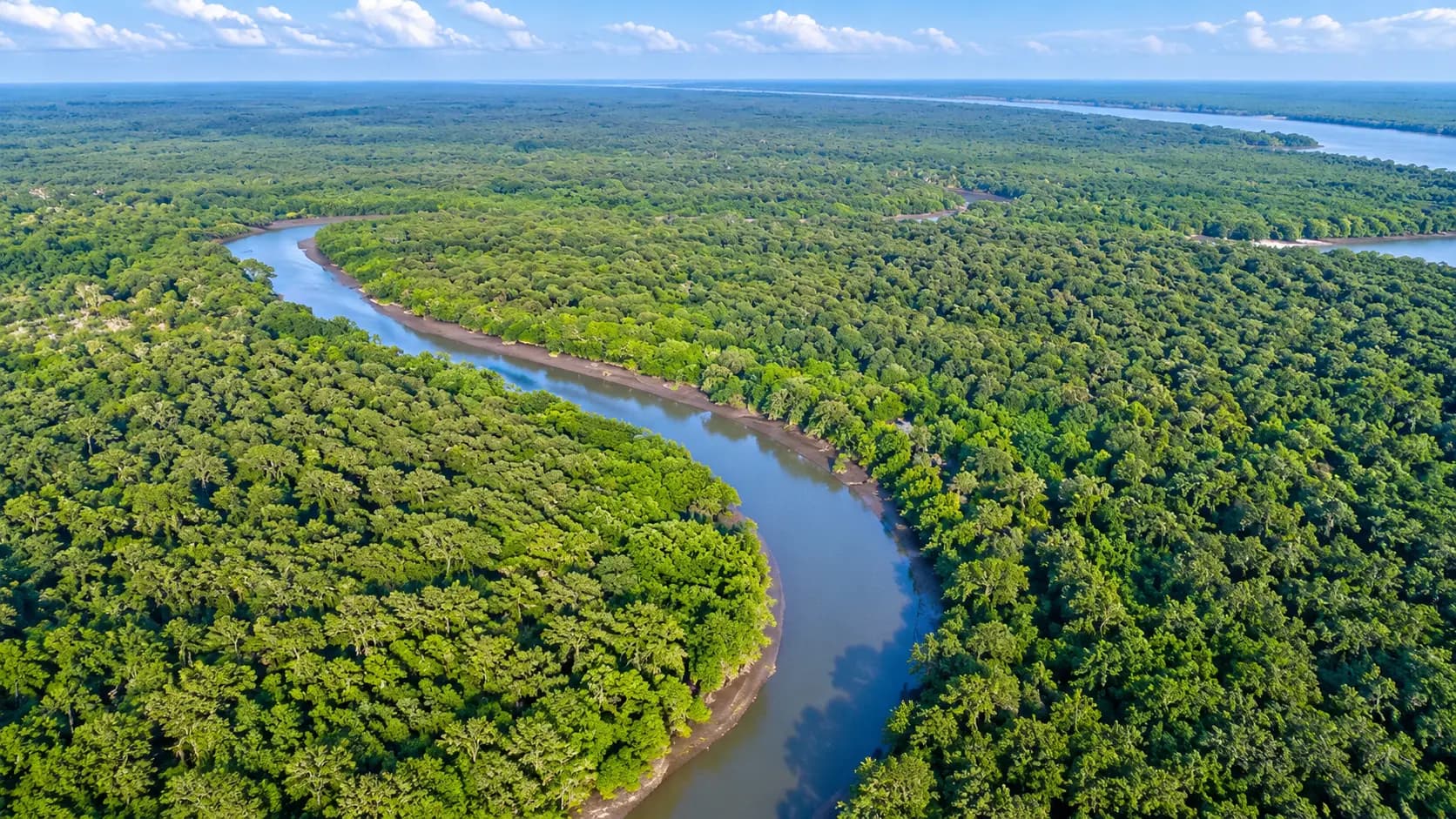
As the boat pulls away from the wooden jetty, the journey unfolds through an mesmerizing deltaic wilderness. For the first hour, the boat glides through sheltered tidal channels flanked by towering mangrove trees with intricate stilt-root tangles (Rhizophora mucronata) and spiky pneumatophore breathing roots poking upward through glistening mudbanks. As the creek broadens, kingfishers dart across the bow, brahminy kites soar overhead, and large mudskippers hop along the intertidal fringe.
Offshore Congregations and Marine Wildlife Sighting
As the vessel approaches the outer estuary where the river meets the Bay of Bengal, the sheltered creeks give way to wide, salty bays where the air carries the scent of sea salt and ocean spray. Between December and February, travelers often spot mating pairs of Olive Ridley turtles floating at the surface of the water, their domed carapaces glistening in the morning sunlight.
In these brackish outer reaches, boatmen cut the engine to idle, allowing passengers to scan the surface for dolphins. The blunt-headed Irrawaddy dolphin surfaces with a soft, gentle blow, rolling smoothly across the surface, while the pinkish-grey Indo-Pacific humpback dolphin frequently executes higher arches and playful splashes. Binoculars are essential for observing these marine mammals without intruding into their swimming paths.
Strict Core Inviolate Sanctuary Boundaries: Understanding the Nasi Spits
A vital expectation to set prior to visiting Gahirmatha is understanding the legal status of the nesting beaches. The primary arribada beaches - Nasi-1 and Nasi-2 islands - are situated on shifting barrier sandbars separated from the mainland by wide tidal channels. These islands are entirely off-limits to all tourists, wildlife photographers, and commercial tour groups.
This total public exclusion exists for two critical reasons: first, to ensure that the fragile mass nesting phenomenon proceeds without human trampling, light disturbance, or noise; and second, because the islands lie directly adjacent to Dr. APJ Abdul Kalam Island (Wheeler Island), an active, highly classified missile test facility administered by India's Defence Research and Development Organisation (DRDO). Tourist safaris cruise through designated marine channels and buffer waters, but stepping foot onto the Nasi barrier spits is strictly forbidden and punishable by law.
The Coastal Eco-Retreat Experience at Habalikhati
For those who reserve overnight accommodation at Habalikhati Nature Camp, the experience shifts from active boat touring to deep coastal serenity. Located on a barrier spit facing the open Bay of Bengal, Habalikhati is accessible solely by water. Guests disembark onto the sandy shore and walk through a stand of whistling casuarina trees to reach comfortable eco-tents and cottages.
At Habalikhati, there is no vehicle traffic, no television, and minimal cellular reception. The soundtrack is provided entirely by the crashing surf of the Bay of Bengal and the call of shorebirds. After dark, under a sky densely packed with stars, visitors experience the primordial tranquility of an unlit coastline. Forest guards enforce strict nocturnal blackout rules along the beach to ensure that stray turtle hatchlings are not disoriented by artificial lighting.
Best time to visit
Because Gahirmatha is an exposed marine sanctuary characterized by open oceanic tides and specialized seasonal…Explore detailsClose details
Because Gahirmatha is an exposed marine sanctuary characterized by open oceanic tides and specialized seasonal biological migrations, choosing the correct month of travel is essential for a safe, comfortable, and ecologically rewarding experience:
Season | Months | Weather, Marine Conditions & Wildlife Sightings |
|---|---|---|
Winter Peak (Best Time) | November to February | Temperature: 15°C - 28°C. Calm seas, mild weather, pleasant breezes. Prime mating congregations of Olive Ridley turtles offshore; peak arribada nesting on Nasi spits (Jan-Feb). Superb dolphin spotting and migratory waterfowl viewing. |
Pre-Monsoon & Hatching Transition | March to May | Temperature: 26°C - 36°C. Rising humidity, afternoon winds. Olive Ridley hatchlings emerging from nests (March-April). Note: Bhitarkanika National Park inland creeks close May 1 for crocodile breeding; marine fishing ban remains active. |
Monsoon & Storm Season (Avoid) | June to September | Temperature: 25°C - 32°C. Heavy torrential rainfall, severe tidal surges, rough seas, and frequent Bay of Bengal depressions/cyclones. Boat navigation dangerous; Habalikhati Confirm current camping permission, permitted overnight areas and accommodation booking requirements with the operator before making arrangements. |
Post-Monsoon Clearing | October | Temperature: 22°C - 31°C. Receding rains, clearing skies, lush mangrove foliage. Occasional post-monsoon cyclonic threats; early scouting patrols prepare for turtle season. |
Winter: November to February (The Optimal Visiting Season)
The winter months represent the absolute gold standard for visiting Gahirmatha Marine Sanctuary. During this period, the northeast monsoon brings stable atmospheric conditions, clear blue skies, minimal precipitation, and calm, glassy seas across the northern Bay of Bengal. Daytime temperatures hover comfortably between 22°C and 28°C, while night-time temperatures drop to a crisp 15°C to 18°C, accompanied by refreshing coastal sea breezes.
Biologically, this is the most vibrant period on the marine calendar. Thousands of adult Olive Ridley turtles assemble in the offshore waters, frequently seen surfacing for air beside patrol vessels and safari boats. The mass nesting arribadas on the Nasi barrier spits typically occur between mid-January and late February. Furthermore, thousands of migratory shorebirds, gulls, terns, and raptors congregate across the sandbars, and the calm waters offer optimal visibility for spotting pods of surfacing Irrawaddy and humpback dolphins.
Pre-Monsoon & Hatchling Emergence: March to May
March brings warm, sunny days with temperatures rising toward 32°C and afternoon sea breezes that create moderate surface chop on the outer bays. Early March is exceptional for observing the culmination of the nesting cycle: the mass emergence of millions of Olive Ridley hatchlings making their desperate sprint toward the sea. By April and May, daytime temperatures escalate toward 36°C with intense coastal humidity, and pre-monsoon convective thunderstorms (known locally as Kalbaisakhi or Nor'westers) can generate sudden squalls and violent waves in the late afternoon.
Crucially, travelers must note that from May 1 onward, the adjoining inland mangrove channels of Bhitarkanika National Park are strictly closed to tourists for the estuarine crocodile breeding season. While the marine sanctuary waters technically operate, tourism infrastructure at Habalikhati often begins winding down for seasonal maintenance.
Monsoon and Storm Season: June to September (Strictly Avoid)
The southwest monsoon season brings intense maritime hazards to coastal Kendrapara. The Bay of Bengal becomes turbulent, generating high swell, violent gale-force winds, continuous torrential downpours, and frequent low-pressure cyclonic depressions. Tidal surges routinely submerge coastal mudflats and low-lying barrier sandbars.
Boat navigation through the open river mouths of the Dhamra and Maipura is exceptionally dangerous due to treacherous breakers and shifting sand shoals. The Habalikhati Nature Camp is typically closed to tourists during this period, and recreational boat excursions are suspended by the Forest Department for maritime passenger safety.
Post-Monsoon: October
October serves as the transitional window between the dying monsoon and the onset of winter. The skies begin to clear, rainfall diminishes to intermittent passing showers, and the coastal mangrove canopy appears lush, washed, and intensely green. However, October represents the peak period for tropical cyclonic disturbances developing in the Bay of Bengal, which can rapidly intensify into powerful cyclones that strike the Kendrapara coast. Travelers planning October visits must monitor Indian Meteorological Department (IMD) forecasts diligently and confirm that boat safari operations have formally resumed.
How to reach
Reaching the secluded marine environment of Gahirmatha involves a coordinated journey combining regional air or…Explore detailsClose details
Reaching the secluded marine environment of Gahirmatha involves a coordinated journey combining regional air or rail transport, road travel across rural coastal Odisha, and a mandatory maritime boat passage from the river jetty at Gupti:
+-----------------------------------------------------------------------------------+
|                        REGIONAL HUBS & ARRIVAL POINTS                             |
|                                                                                   |
|   Biju Patnaik Airport (BBI), Bhubaneswar          Bhadrak Railway Station (BHK)  |
|            (~150 km / 4.5 hrs)                         (~90 km / 2.5 hrs)         |
+------------------------------------------+----------------------------------------+
                                           |
                                           v
+-----------------------------------------------------------------------------------+
|                            CENTRAL ROAD GATEWAY: RAJNAGAR                         |
|   Approached via NH-16 -> Cuttack -> Kendrapara -> Pattamundai -> Rajnagar        |
|   or via NH-16 -> Bhadrak -> Chandbali -> Rajnagar                                |
+------------------------------------------+----------------------------------------+
                                           |
                                           | (25 km paved coastal road / 45 mins)
                                           v
+-----------------------------------------------------------------------------------+
|                           MANDATORY WATER EMBARKATION:                            |
|                                 GUPTI JETTY                                       |
|   Forest Range Check-Post | Permit Verification | Vehicle Parking | Boat Charters|
+------------------------------------------+----------------------------------------+
                                           |
                                           | (2.5 hrs / 28 km motorized boat cruise)
                                           v
+-----------------------------------------------------------------------------------+
|                           GAHIRMATHA MARINE SANCTUARY                             |
|     Habalikhati Nature Camp | Coastal Mangrove Creeks | Estuarine Dolphin Waters  |
+-----------------------------------------------------------------------------------+
By Air
The closest airport offering regular commercial air connectivity is Biju Patnaik International Airport (BBI) in Bhubaneswar, situated approximately 150 kilometres southwest of Gupti jetty. Bhubaneswar is extensively connected to major Indian metropolitan cities - including New Delhi, Mumbai, Kolkata, Bengaluru, Hyderabad, and Chennai - as well as select international hubs like Dubai, Singapore, and Bangkok. From the airport terminal, travelers can hire private pre-paid air-conditioned taxis or arrange chauffeured vehicles for the direct 4.5-hour road drive to Gupti via Cuttack, Kendrapara, Pattamundai, and Rajnagar.
By Rail
For travelers arriving by train, the most convenient mainline railway stations are:
- Bhadrak Railway Station (BHK): Located approximately 90 kilometres northwest of Gupti, Bhadrak is an important junction on the South Eastern Railway's Howrah-Chennai mainline. It is serviced by numerous premier express and superfast trains, including the Howrah-Puri Vande Bharat Express, Dhauli Express, and Coromandel Express. From Bhadrak, private taxis and rental cars can reach Gupti in approximately 2.5 to 3 hours via Chandbali and Rajnagar.
- Cuttack Railway Station (CTC): Located approximately 135 kilometres west of Gupti, Cuttack is a major rail hub offering frequent connections to western, central, and northern India. Taxis from Cuttack reach Gupti in about 3.5 to 4 hours via National Highway 16 and State Highway 9A through Kendrapara and Pattamundai.
By Road
The road route to Gahirmatha's embarkation jetty traverses the scenic deltaic countryside of Kendrapara District. From Bhubaneswar or Cuttack, travelers follow National Highway 16 northeastward to Jagatpur, branch east onto State Highway 9A passing through Kendrapara town and Pattamundai, and proceed to the central sub-divisional town of Rajnagar.
At Rajnagar, the road crosses the Brahmani-Hansua river bridge and continues southward for 25 kilometres along a narrow, paved coastal asphalt road through peaceful agricultural hamlets, shrimp aquaculture ponds, and coconut groves, terminating directly at the waterfront parking area of Gupti jetty. While public state transport buses operated by OSRTC connect Cuttack and Kendrapara to Rajnagar, there are very few direct buses operating between Rajnagar and Gupti. Therefore, hiring a dedicated private taxi or driving a personal vehicle is strongly recommended to ensure punctuality for mandatory tidal boat departures.
The Boat Crossing from Gupti Jetty
The final and definitive stage of the journey is by water. At Gupti jetty, all visitors undergo mandatory forest permit inspections, life jacket issuance, and passenger manifest registration. Motorized safari vessels depart Gupti and motor downstream along the meandering tidal waters of the Patasala and Baunsagadh creeks. The 28-kilometre journey to Habalikhati takes approximately 2.5 hours, passing beneath towering mangrove canopies of Avicennia, Rhizophora, and Sonneratia, opening gradually into broad estuarine bays where the salty ocean breeze announces the proximity of the Bay of Bengal.
Entry, timings and permissions
Fees, visiting hours and entry rules may change.Explore detailsClose details
Fees, visiting hours and entry rules may change. Confirm the latest details with the official operator or local authority before travelling.
Wildlife tourism and coastal navigation within Gahirmatha Marine Sanctuary are strictly controlled by the Odisha Forest and Environment Department alongside maritime enforcement agencies:
+-----------------------------------------------------------------------------------+
|                        GAHIRMATHA TARIFFS & OPERATIONAL RULES                     |
+------------------------+----------------------------------------------------------+
| Category               | Regulatory Policy / Guidelines                           |
+------------------------+----------------------------------------------------------+
| Daily Navigation Hours | 08:00 AM to 17:00 PM daily; night boat movements along  |
|                        | creeks are strictly prohibited for marine safety         |
+------------------------+----------------------------------------------------------+
| Forest Permit Fee      | ₹40 per Indian adult; ₹20 per child (under 12);          |
|                        | ₹1,000 per foreign tourist                               |
+------------------------+----------------------------------------------------------+
| Boat Safari Hire       | ₹3,500 to ₹6,000 per vessel (seats 8 - 10 passengers)     |
| (Gupti to Habalikhati) | depending on vessel engine rating and day/overnight trip |
+------------------------+----------------------------------------------------------+
| Fishing Prohibition    | Mandatory 7-month ban (Nov 1 to May 31) on all motorized |
| (OMFRA & WPA 1972)     | fishing trawlers within 20 km offshore sanctuary waters  |
+------------------------+----------------------------------------------------------+
| Core Rookery Closure   | Nasi-1 & Nasi-2 barrier spits strictly closed to tourists|
|                        | round-the-clock throughout the year                      |
+------------------------+----------------------------------------------------------+
| Mandatory Safety Gear  | Certified life jackets mandatory for all boat passengers |
|                        | throughout the transit across creeks and estuaries       |
+------------------------+----------------------------------------------------------+
| Drone Regulations      | Flying drones or UAVs strictly banned without defense    |
|                        | and wildlife written clearances                          |
+-----------------------------------------------------------------------------------+
Admission Policies and Forest Permits
Every visitor entering the sanctuary's waterways or heading to Habalikhati must secure an official entry permit issued by the Forest Range Office at Gupti jetty or the Mangrove Forest Division headquarters at Rajnagar. Permit fees are set at ₹40 for Indian adults, ₹20 for Indian children under 12, and ₹1,000 for foreign passport holders. Submitting a clear, government-issued physical photo identification card (such as an Aadhaar Card, Passport, or Voter ID) is mandatory for every passenger before boarding any authorized safari vessel.
Boat Hire and Authorized Operating Hours
Tourist boat operations from Gupti jetty are permitted strictly between 08:00 AM and 17:00 PM during daylight hours. Night navigation through the sanctuary creeks is legally prohibited for passenger safety and to minimize disruption to nocturnal wildlife. Boat hire charges from Gupti to Habalikhati and back range between ₹3,500 and ₹6,000 per vessel, accommodating up to 8 to 10 passengers. Visitors staying at Habalikhati Nature Camp should confirm their boat transfer arrangements at the time of booking through the official EcoTour Odisha portal.
Maritime Conservation and Restricted Zones
Under the Orissa Marine Fishing Regulation Act (OMFRA), 1982, and the Wildlife (Protection) Act, 1972, a statutory seven-month fishing trawler ban is enforced from November 1 to May 31 across the 20-kilometre offshore buffer. The core nesting islands (Nasi-1 and Nasi-2) are permanent inviolate scientific reserves, protected under round-the-clock naval, coast guard, and forest patrols; landing on these barrier islands is strictly illegal.
Nearby places to consider
Gahirmatha anchors a spectacular coastal conservation and cultural corridor across Kendrapara and neighbouring…Explore detailsClose details
Gahirmatha anchors a spectacular coastal conservation and cultural corridor across Kendrapara and neighbouring coastal districts:
                          [ Dhamra Port & Chandbali ]
                        (Historic river port & trade hub, 35 km NW)
                                     ▲
                                     │
[ Rajnagar & Kendrapara ] ◄── [ Gahirmatha / Gupti ] ──► [ Habalikhati Coastal Camp ]
(Baladevjew temple & sweets,         │                   (Secluded Bay of Bengal beach,
  25 - 55 km southwest)                │                     28 km SE by boat)
                                     ▼
                        [ Bhitarkanika National Park ]
                      (Giant saltwater crocodiles & heronry,
20 km west via Khola gate)- Bhitarkanika National Park (~20 km west by road/boat): India's second-largest mangrove wetland ecosystem, home to over 1,800 wild saltwater crocodiles, king cobras, spotted deer, and the renowned Bagagahan waterbird heronry. Safari boats depart from Khola and Gupti gates.
- Habalikhati Nature Camp (~28 km southeast by boat): The remote ecotourism outpost operated by EcoTour Odisha situated along the outer barrier coast of Gahirmatha, offering luxury eco-cottages on a pristine ocean beach bordered by casuarina groves.
- Hukitola Island Heritage Monument (~45 km south): A historic 19th-century colonial maritime complex built in 1867 on a remote deltaic island in the Mahanadi estuary, featuring a massive stone customs house and an ingenious subterranean rainwater collection system.
- Kendrapara Town & Baladevjew Temple (~55 km southwest): The cultural capital of the district, celebrated for the 17th-century Sri Baladevjew Temple dedicated to Lord Balarama, and famous across Odisha for its GI-tagged sweet, Kendrapara Rasabali.
- Chandbali Historic Port (~40 km northwest via Rajnagar): A historic 19th-century river port on the Baitarani River in Bhadrak District that served as an essential maritime hub connecting coastal Odisha with colonial Calcutta.
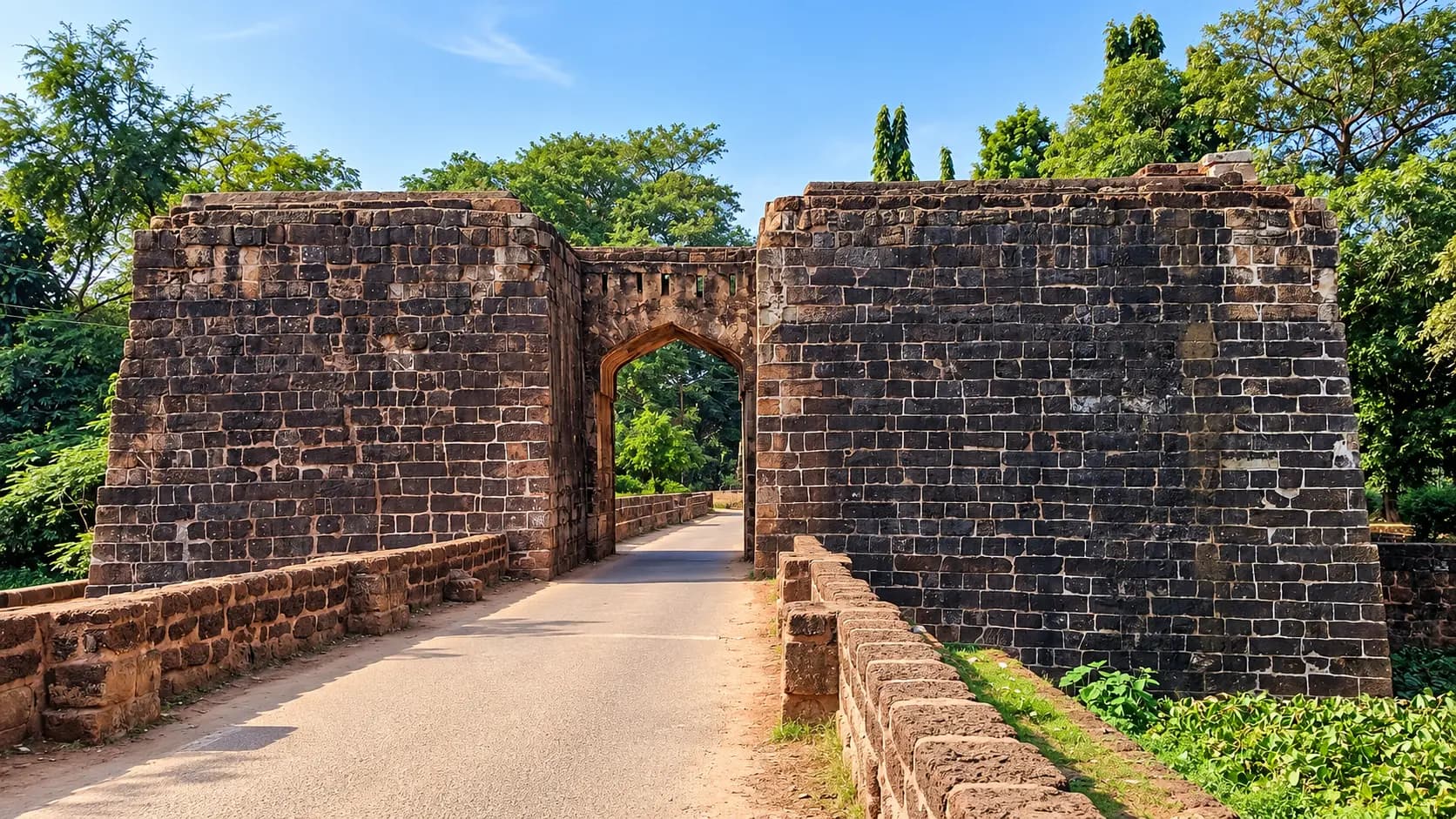
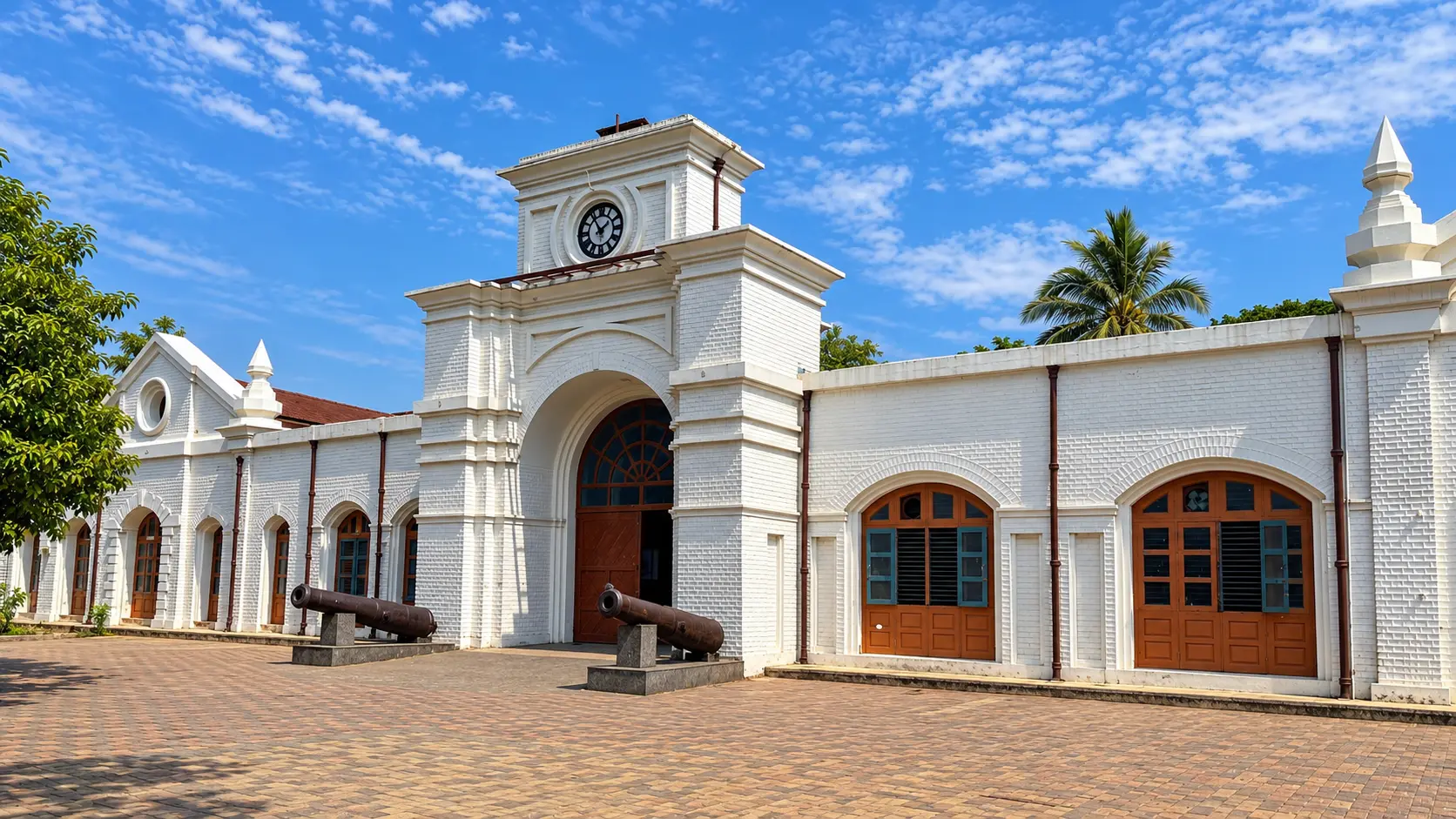
- Cuttack Heritage Circuit (~135 km west): The ancient millennium city featuring the 13th-century Barabati Fort, the sacred Cuttack Chandi Temple, and the Odisha State Maritime Museum at Jobra.
In pictures
The practical bits
Before you go.
Plan ahead
A successful expedition to Gahirmatha Marine Sanctuary requires thorough advance planning to account for tides…Explore detailsClose details
A successful expedition to Gahirmatha Marine Sanctuary requires thorough advance planning to account for tides, remote geography, and conservation rules:
Permits and identification
Ensure every member of your party carries an original, government-issued physical photo ID (Aadhaar, Passport, or…Explore detailsClose details
Ensure every member of your party carries an original, government-issued physical photo ID (Aadhaar, Passport, or Voter ID), which must be inspected and recorded in the forest manifest at Gupti jetty prior to boarding any safari vessel.
Boat safari timing and tide coordination
Coordinate your boat departure from Gupti jetty with the local boatmen 24 hours in advance; because creek…Explore detailsClose details
Coordinate your boat departure from Gupti jetty with the local boatmen 24 hours in advance; because creek channels have shallow silt bars, low tides can delay departures, making it critical to align your voyage with high water.
Lighting discipline and hatchling protection
If staying overnight at Habalikhati between January and April, strictly avoid using white LED flashlights…Explore detailsClose details
If staying overnight at Habalikhati between January and April, strictly avoid using white LED flashlights, lantern beams, or camera flashes on the beach after dusk; use only low-intensity red-filtered lights to prevent disorienting phototactic turtle hatchlings.
Pack provisions and zero-plastic discipline
Gahirmatha is an untamed conservation wilderness with zero commercial shops, restaurants, or ATMs; bring…Explore detailsClose details
Gahirmatha is an untamed conservation wilderness with zero commercial shops, restaurants, or ATMs; bring sufficient drinking water in reusable steel flasks, packed dry snacks, and personal medicines from Rajnagar, and carry every scrap of trash back to the mainland.
Safety gear and crocodile awareness
Always wear your buckled life jacket throughout the water transit; estuarine creeks harbor giant saltwater…Explore detailsClose details
Always wear your buckled life jacket throughout the water transit; estuarine creeks harbor giant saltwater crocodiles, so never dangle hands or feet overboard and never step onto muddy tidal banks under any circumstances.
Overnight arrangements at Habalikhati
Book your eco-cottage at Habalikhati Nature Camp well in advance through the official portal (ecotourodisha.com)…Explore detailsClose details
Book your eco-cottage at Habalikhati Nature Camp well in advance through the official portal (ecotourodisha.com); because the camp has limited capacity and operates on solar power, walk-in accommodation is impossible.
A few things you might wonder
Common questions about visiting Gahirmatha Marine Sanctuary. Fees, visiting hours and ceremonies are researched details that may change; confirm current arrangements with the operator before travelling.
Why are tourists prohibited from visiting the core Nasi islands where the turtles nest?
How can ordinary tourists experience Gahirmatha if the core nesting beaches are closed?
What is the annual seven-month fishing ban, and how does it affect visitors?
How long does the boat journey from Gupti jetty to Habalikhati take?
What permits and identification documents are required to enter Gahirmatha?
Are there food stalls, restaurants, or drinking water facilities inside the marine sanctuary?
Can I see dolphins during a boat excursion in Gahirmatha Marine Sanctuary?
What should I do if I spot a sea turtle or hatchling on the beach at Habalikhati?
Explore more in Bhitarkanika Cuttack
Discover other destinations around this hub
More Hubs in Odisha
Continue exploring other travel hubs in this state
Planning a trip to Bhitarkanika & Cuttack?