Barabati Fort
Comprehensive visitor guide to Barabati Fort in Cuttack, Odisha. Explore 13th-century Ganga dynasty ruins, the nine-storeyed palace mound, gateway, moat, and timings.
Location
Bhitarkanika & Cuttack, Odisha
Duration
Allow time for the permitted ruins area and your onward journey.
Best Time
Choose comfortable daylight conditions and confirm current monument access.
Difficulty
Ask about paths, uneven ground and accessible areas; an entirely flat route is not certified.
A closer look
Your visit, at a glance.
Bhitarkanika & Cuttack, Odisha
GET TO KNOW THE PLACE
Guarding the strategic deltaic apex of the mighty Mahanadi River in the heart of Cuttack, Barabati Fort stands as an enduring, evocative symbol of Odisha's medieval imperial…
The story of Barabati Fort
Guarding the strategic deltaic apex of the mighty Mahanadi River in the heart of Cuttack, Barabati Fort stands as an enduring, evocative symbol of Odisha's medieval imperial power, dynastic resilience, and tragic colonial dismantling. Founded around 1229 CE by the illustrious monarch King Anangabhima Deva III of the Eastern Ganga Dynasty, this historic citadel served for over five centuries as the sovereign political capital and military headquarters of independent Kalinga. From behind its colossal stone ramparts and wide, water-filled moats, successive lines of Ganga emperors and Suryavamsi Gajapati kings mobilized massive armies, governed vast peninsular territories stretching from the Ganges to the Godavari, and defended the cultural and religious heartland of Lord Jagannath against northern Sultanate invasions.
Centrally protected by the Archaeological Survey of India (ASI) since 1915, Barabati Fort offers modern travelers a fascinating architectural and historical narrative. Although its soaring stone towers and legendary nine-storeyed royal palace (Nava-tala prasada) were systematically demolished by British military engineers in the 1820s to provide cheap building stone for colonial revetments and lighthouses, the surviving remnants speak volumes. Today, visitors cross an ancient stone bridge spanning the wide defensive moat to enter through the magnificent Grand Arched Gateway (Singhadwara), climb the massive central palace mound, explore the excavated foundations of a 32-pillared stone assembly hall, and visit the nearby Museum of Justice (Orissa High Court Museum).
Set against the bustling backdrop of modern Cuttack - the "Millennium City" (Sahasrabda Sahara) with over a thousand years of continuous urban history, famous worldwide for its exquisite silver filigree craftsmanship (tarakasi) - Barabati Fort is an indispensable heritage stop. This guide provides an exhaustive, field-tested resource covering the fort's foundation legends, architectural components, archaeological discoveries, seasonal visiting dynamics, and local navigation.
Start here. Open a tile for the full details.
Why goRead details
Barabati Fort provides a profound, multi-layered encounter with Odisha's medieval military engineering, imperial history, and archaeological evolution:
When to visitRead details
Cuttack is situated on the coastal delta plains of Odisha, where the local climate is tropical, characterized by distinct seasonal variations in temperature, humidity, and rainfall.
Entry & permissionsRead details
Fees, visiting hours and entry rules may change. Confirm the latest details with the official operator or local authority before travelling.
Visiting Barabati Fort is straightforward, governed by standard Archaeological Survey of India heritage protocols:
+-----------------------------------------------------------------------------------+
|                        BARABATI FORT OPERATIONAL RULES                            |
+-----------------------------------------------------------------------------------+
| Operational Category   | Regulation / Policy Details                              |
+------------------------+----------------------------------------------------------+
| Monument Opening Hours | Open daily from sunrise to sunset (06:00 to 18:00)       |
|                        | throughout the year, including Sundays & public holidays |
+------------------------+----------------------------------------------------------+
| Admission Fees         | Completely FREE for all domestic and foreign visitors    |
+------------------------+----------------------------------------------------------+
| Photography Guidelines | Handheld photography and mobile cameras permitted free;  |
|                        | commercial filming & tripod rigs require prior ASI permit|
+------------------------+----------------------------------------------------------+
| Drone Regulations      | Flying unmanned aerial vehicles (drones) is strictly     |
|                        | prohibited without written clearance from ASI and police |
+------------------------+----------------------------------------------------------+
| Prohibited Activities  | Climbing on fragile stone lintels, defacing masonry,     |
|                        | littering, and entering restricted excavation trenches   |
+-----------------------------------------------------------------------------------+
Admission Policy, Opening Hours, and Preservation Bylaws
Unlike many heavily commercialized monument complexes, Barabati Fort charges zero entrance fees. The landscaped gardens, the Grand Arched Gateway, the excavated 32-pillared hall, and the palace mound are open freely to all members of the public from 06:00 AM to 18:00 PM daily.
Because the site is a federally protected monument under the Ancient Monuments and Archaeological Sites and Remains (AMASR) Act, visitors are required to follow standard conservation etiquette:
- Do not climb or walk across fragile stone carvings, decorative mouldings, or the unreinforced brick coping of excavated foundation walls.
- Commercial drone flights are strictly banned across the fort, moat, and adjacent high-security stadium perimeter by the Archaeological Survey of India and the Cuttack Commissionerate Police. Unauthorized drones will be seized immediately, and operators face legal prosecution.
- Maintain the cleanliness of the lawns and moat banks; single-use plastic littering is strictly prohibited.
Plan your visitRead details
Barabati Fort enjoys superb transport connectivity, situated centrally within the twin-city urban corridor of Cuttack and Bhubaneswar.
Explore the full guide - choose a topic below.
Why visit?
Barabati Fort provides a profound, multi-layered encounter with Odisha's medieval military engineering, imperial…Explore detailsClose details
Barabati Fort provides a profound, multi-layered encounter with Odisha's medieval military engineering, imperial history, and archaeological evolution:
- The Sovereign Military Capital of Kalinga: Established during the golden age of the Eastern Ganga dynasty - the same imperial dynasty that constructed the world-renowned Sun Temple at Konark and the grand temple of Lord Jagannath at Puri - Barabati Fort was the administrative seat where medieval monarchs directed the defense, commerce, and spiritual life of an expansive maritime empire.
- The Legend of the Fearless Pigeon: According to the sacred temple chronicle of Puri, the Madala Panji, King Anangabhima Deva III was hunting across the Mahanadi when he witnessed a predatory hawk attack a common pigeon, only for the pigeon to retaliate with fierce, heroic valor and drive the hawk away. Convinced that the soil was infused with invincible spiritual heroism (Bira Bhumi), the king chose this spit of land to establish his new capital, naming it Abhinava Varanasi Kataka.
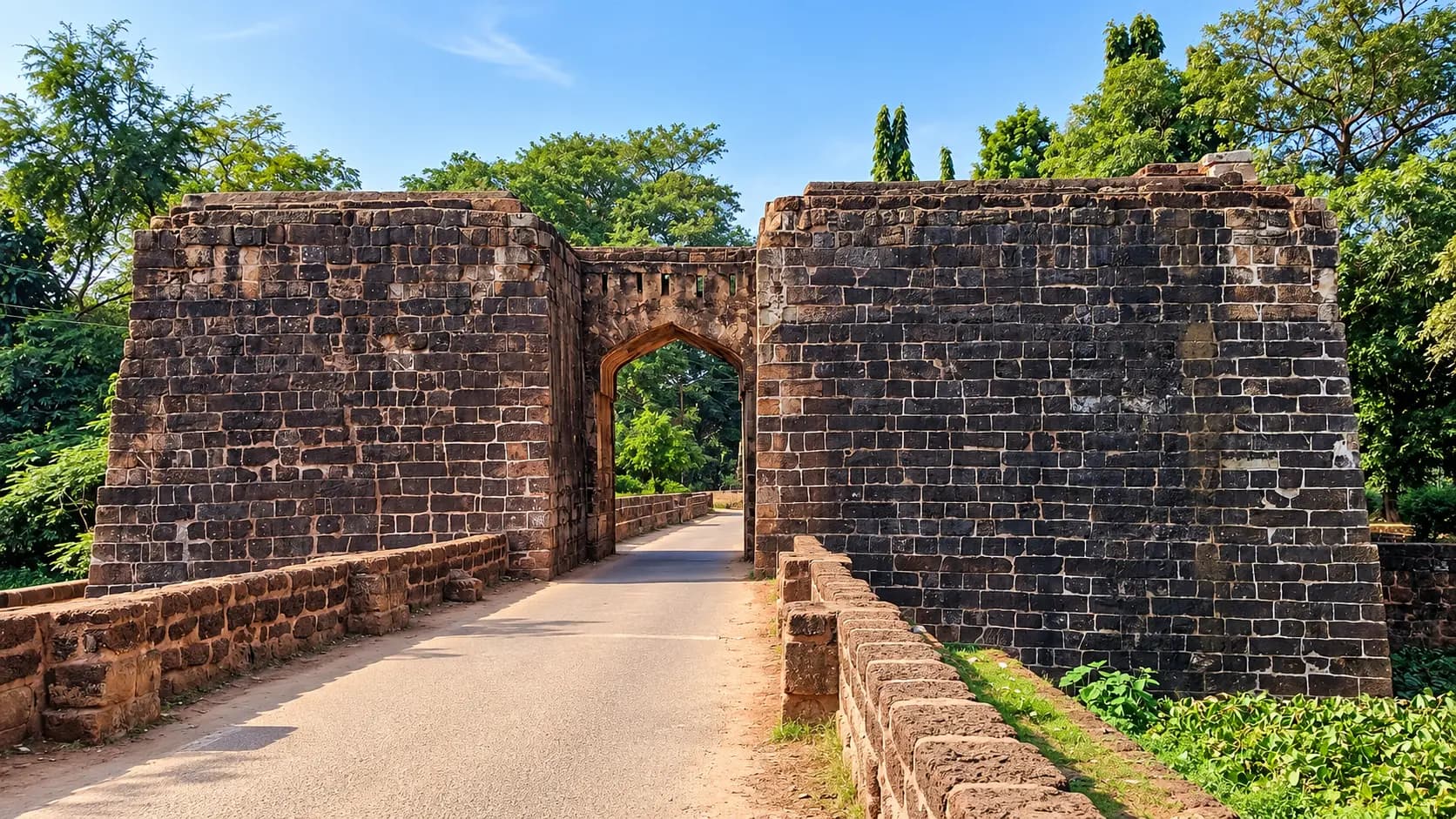
- The Monumental Arched Gateway (Singhadwara): Built of finely dressed khondalite and laterite blocks, the fort's main eastern portal displays a grand pointed arch flanked by semi-octagonal bastion towers. The gateway illustrates centuries of architectural transformation, reflecting original 13th-century Ganga masonry re-engineered with Sultanate and Mughal pointed-arch aesthetics during the 16th and 17th centuries.
- The Nine-Storeyed Palace of Mukunda Deva: The central earthen mound preserves the subterranean footprint of the legendary palace commissioned by King Mukunda Deva (reigned 1559 - 1568), the last independent Hindu emperor of Odisha. Documented with awe by Mughal historian Abul Fazl in the Ain-i-Akbari, the nine-storeyed complex housed royal courts, private pavilions, massive treasuries, and elephant stables.
- Excavated 32-Pillared Hall and Medieval Artifacts: Systematic archaeological excavations conducted by the ASI in 1989, 2007, and 2023 unearthed a magnificent square stone assembly hall supported by 32 pillar bases, structural fragments of a 13th-century Jagannath temple, stone sculptures of dancing deities, medieval weapons, and rare imported Chinese celadon porcelain confirming ancient maritime trade links.
- The Encircling Defensive Moat (Ghai): A surviving perimeter water moat measuring 30 to 40 metres in width surrounds the citadel, originally fed directly by the currents of the Mahanadi to prevent hostile sappers and cavalry charges.
- Gateway to Cuttack's Heritage and Maritime Legacy: Located within minutes of the famous Katak Chandi Temple, the Odisha State Maritime Museum, the Netaji Birth Place Museum, and the historic Barabati Stadium, the fort anchors a full day of rich urban exploration.
What to expect
Visiting Barabati Fort is an active, open-air historical exploration conducted across landscaped lawns, shaded…Explore detailsClose details
Visiting Barabati Fort is an active, open-air historical exploration conducted across landscaped lawns, shaded walkways, and excavated archaeological ruins maintained by the Archaeological Survey of India. The fort precinct is situated on the southern spit of the Mahanadi River, directly adjacent to Cantonment Road and the modern Barabati Stadium:
+-----------------------------------------------------------------------------------+
|                           MAHANADI RIVER WATERFRONT                               |
+-----------------------------------------------------------------------------------+
                                         │
                 [ Outer Defensive Moat / Water Basin (30-40 m wide) ]
                                         │
                     [ Historic Arched Stone Bridge ]
                                         │
        +────────────────────────────────+────────────────────────────────+
        |                                                                 |
[Singhadwara Gateway]                                             [Fateh Khan Mosque]
(Massive Pointed Arch,                                            (17th-Century 3-Domed
 Fluted Octagonal Towers)                                          Mughal Sanctuary)
        │                                                                 │
        +───────────────────────── [Paved Pathway] ───────────────────────+
                                         │
                   [ Central Palace Mound / Archaeological Zone ]
                                         │
        +────────────────────────────────+────────────────────────────────+
        |                                                                 |
[Nine-Storeyed Palace]                                            [32-Pillared Hall]
(Earthen & Stone Mound Footprint)                                 (Excavated 13th-Century
                                                                   Ganga Stone Assembly)
                                         │
                     [ Museum of Justice / High Court Precinct ]
                                         │
                     [ Barabati Stadium & Katak Chandi Temple ]
The Sacred River Bifurcation and the Legend of Abhinava Varanasi Kataka
To understand the strategic brilliance of Barabati Fort, one must examine Cuttack's unique deltaic topography. The city occupies an elongated spit of land formed where the mighty Mahanadi River bifurcates into two major channels: the main Mahanadi flowing around the northern flank, and the Kathajodi River branching southward. In Sanskrit, Kataka translates literally to a military camp, cantonment, or fortified citadel. By situating his new imperial fortress near the apex of this river fork around 1229 CE, King Anangabhima Deva III secured natural aquatic moats on both the north and south, rendering the capital virtually impregnable against enemy cavalry.
The foundational folklore recorded in the Madala Panji (the ancient palm-leaf chronicle of the Jagannath Temple at Puri) recounts that Anangabhima Deva was residing at his older capital of Choudwar on the northern bank of the Mahanadi. While crossing the river on a royal barge during a hunting excursion, the king noticed a predatory hawk diving upon a common heron or pigeon perched on the southern riverbank. Rather than fleeing, the smaller bird retaliated with fierce defiance, pecking and striking the hawk until the raptor fled in defeat. Convinced by his royal astrologers that this specific parcel of land was imbued with unyielding martial courage (Bira Bhumi), the king immediately resolved to establish his royal seat there, founding the imperial city of Abhinava Varanasi Kataka ("The New Varanasi Fortress") and raising the defensive stone walls of Barabati Fort.
The name Barabati itself reflects ancient Odia revenue administration: Bara translates to twelve, while a Bati was a traditional unit of land measurement equal to twenty manas (roughly twenty acres). Thus, Barabati designated an initial fortified estate encompassing twelve batis, or approximately 240 acres of land.
The Grand Arched Gateway (Singhadwara) and Defensive Ramparts
The primary surviving monumental structure of the citadel is the Grand Arched Gateway (Singhadwara or Lion Gate), located on the eastern perimeter. Constructed primarily of massive dressed blocks of reddish laterite and golden-grey khondalite sandstone, this monumental portal stands as a commanding testament to the fort's former grandeur.
Key architectural features of the gateway include:
- Massive Pointed Arch: The entrance portal features a soaring pointed arch flanked by heavy stone abutments. While the core foundations date to the 13th-century Ganga period, the pointed contour of the arch reflects later reconstructions carried out under Afghan and Mughal governors in the late 16th and 17th centuries, showcasing a harmonious blend of indigenous Odishan stonecraft and Indo-Islamic military architecture.
- Fluted Flanking Bastions: The gateway is fortified on either side by semi-octagonal stone bastions with stepped plinths, designed to provide defensive archery and musket perches covering the entrance bridge.
- Carved Ornamentation: Although weathered by centuries of humid monsoon rains, the lintels and jambs retain traces of classical Kalingan floral scrollwork, lotus rosettes, and decorative mouldings that once framed the royal entrance.
Passing through the arched gateway, visitors step onto wide paved walkways that wind through landscaped green lawns maintained by the Archaeological Survey of India, leading toward the central ruins.
The Deep Perimeter Moat (Ghai)
Encircling the entire perimeter of Barabati Fort is the Ghai, an extensive defensive water moat measuring between 30 and 40 metres in width and originally descending several metres in depth. Engineered with remarkable hydrological skill, the moat was linked via stone-lined sluice gates directly to the waters of the Mahanadi River.
During medieval sieges, the moat served several critical defensive functions:
- It prevented hostile attacking armies from deploying mobile siege towers, battering rams, or scaling ladders directly against the curtain walls.
- It thwarted enemy sappers from digging subterranean mine tunnels beneath the laterite ramparts.
- It bred thick aquatic reeds and harbored marsh crocodiles (muggers), creating a lethal deterrent to night infantry assaults.
Today, while sections of the moat have been reclaimed for modern urban development, the northern and eastern stretches remain filled with water, covered with floating water lilies and fringed by weeping willows and palm trees. A handsome arched stone bridge spans the moat, leading modern visitors directly into the Singhadwara gateway.
The Nine-Storeyed Palace Mound (Nava-Tala Prasada)
At the geometric center of the archaeological enclosure rises a massive, grass-covered earthen and rubble mound known as the Palace Mound. This elevated hillock marks the exact footprint of the legendary Nava-tala Prasada (Nine-Storeyed Palace), constructed in the mid-16th century by King Mukunda Deva, the celebrated warrior-monarch who allied with the Mughal Emperor Akbar against the Afghan Sultans of Bengal.
Historical accounts of this palace are among the most vivid in medieval Indian historiography. The Mughal court chronicler Abul Fazl, writing in the Ain-i-Akbari (the official administrative gazetteer of Akbar's reign, c. 1595), described Mukunda Deva's palace at Cuttack with breathless admiration:
- First Storey: Housed the royal elephant stables, where hundreds of imperial war tuskers were tethered.
- Second Storey: Contained the royal artillery depot, cavalry stables, and armaments workshops.
- Third Storey: Served as the barracks for the imperial bodyguard and palace watchmen.
- Fourth Storey: Accommodated the workshops of master royal artisans, jewelers, and weavers.
- Fifth Storey: Housed the imperial kitchens, bakery, and royal banqueting halls.
- Sixth Storey: Dedicated to the formal public audience hall (Diwan-i-Aam), where the king received provincial governors, feudatories, and foreign ambassadors.
- Seventh Storey: Contained the intimate private audience chamber (Diwan-i-Khas) and royal council rooms.
- Eighth Storey: Dedicated to the private residential suites of the queens, princesses, and female attendants (antahpura).
- Ninth Storey: The topmost open-air royal pavilion and sleeping terrace, commanding an unobstructed view across the confluence of the Mahanadi and Kathajodi rivers.
Tragically, this soaring stone wonder was systematically dismantled following the British conquest of 1803. In the 1820s, British military engineers blasted and quarried the palace storeys for road metal and ballast, dismantling the stone masonry down to its foundation mound. Today, climbing the stone steps to the summit of the mound provides visitors with a commanding elevated perspective over the complete fort perimeter, the surrounding moat, and the grand bowl of Barabati Stadium.
Excavated 32-Pillared Hall and Medieval Temple Foundations
Extensive archaeological excavations carried out by the Archaeological Survey of India (ASI) in 1989, 2007, and 2023 at the base of the palace mound unearthed some of the most remarkable medieval remains in eastern India:
- The 32-Pillared Stone Pavilion: Archaeologists uncovered a monumental square hall measuring approximately 25 metres on each side, supported by thirty-two massive stone pillar bases arranged in symmetrical ranks. Constructed of dressed khondalite stone, this hypostyle hall likely functioned as the imperial court of audience or a ceremonial royal dancing pavilion (Natamandapa).
- 13th-Century Jagannath Temple Remains: Deep stratigraphic trenches revealed the foundational plinth and carved architectural fragments of an ancient temple dedicated to Lord Purushottama (Jagannath), consecrated by Anangabhima Deva III to signify that the Ganga monarch ruled Kalinga merely as the humble deputy (Rauta) of the supreme cosmic lord. Excavated sculptures include high-relief images of Krishna, Ganesha, Mahishasuramardini Durga, and exquisitely carved celestial maidens (alasakanyas).
- Maritime Trade Artifacts: Perhaps the most thrilling discovery made during recent digs was the recovery of high-status imported Chinese celadon porcelain shards, dated to the Song and Yuan dynasties (13th - 14th centuries CE). Their presence inside Barabati Fort provides concrete archaeological confirmation of the flourishing maritime spice, silk, and ceramic trade between ancient Odisha's sea merchants (sadhabas) and East Asian ports.
- Medieval Weaponry & Numismatics: Excavations yielded iron cannonballs, spearheads, matchlock musket fittings, and hoards of silver and copper coins issued by the Ganga, Gajapati, and Mughal dynasties.
The Mughal Era: Fateh Khan Mosque and Maratha Rule
Following the fall of Mukunda Deva in 1568, Barabati Fort changed hands through successive imperial conquests:
- Mughal Rule (1592 - 1751): Odisha was incorporated as a formal province (Subah) of the Mughal Empire under Raja Man Singh, Akbar's general. Barabati Fort served as the official administrative palace of the Mughal Subahdar. During the reign of Emperor Shah Jahan or Aurangzeb, a provincial governor named Fateh Khan erected the Fateh Khan Mosque inside the northern fort precinct. This handsome, functioning three-domed whitewashed mosque features typical 17th-century Mughal arched facades, fluted minarets, and a peaceful prayer courtyard surrounded by mango trees.
- Maratha Rule (1751 - 1803): In 1751, the Bhonsle Marathas of Nagpur wrested control of Odisha from the Nawabs of Bengal, establishing Cuttack as their provincial capital for over half a century. The Marathas heavily reinforced the stone ramparts, added bastioned gun batteries along the moat, and used the fort as a base to administer pilgrimage taxes on travelers visiting the Jagannath Temple at Puri.
The Museum of Justice (High Court Museum) and Heritage Surroundings
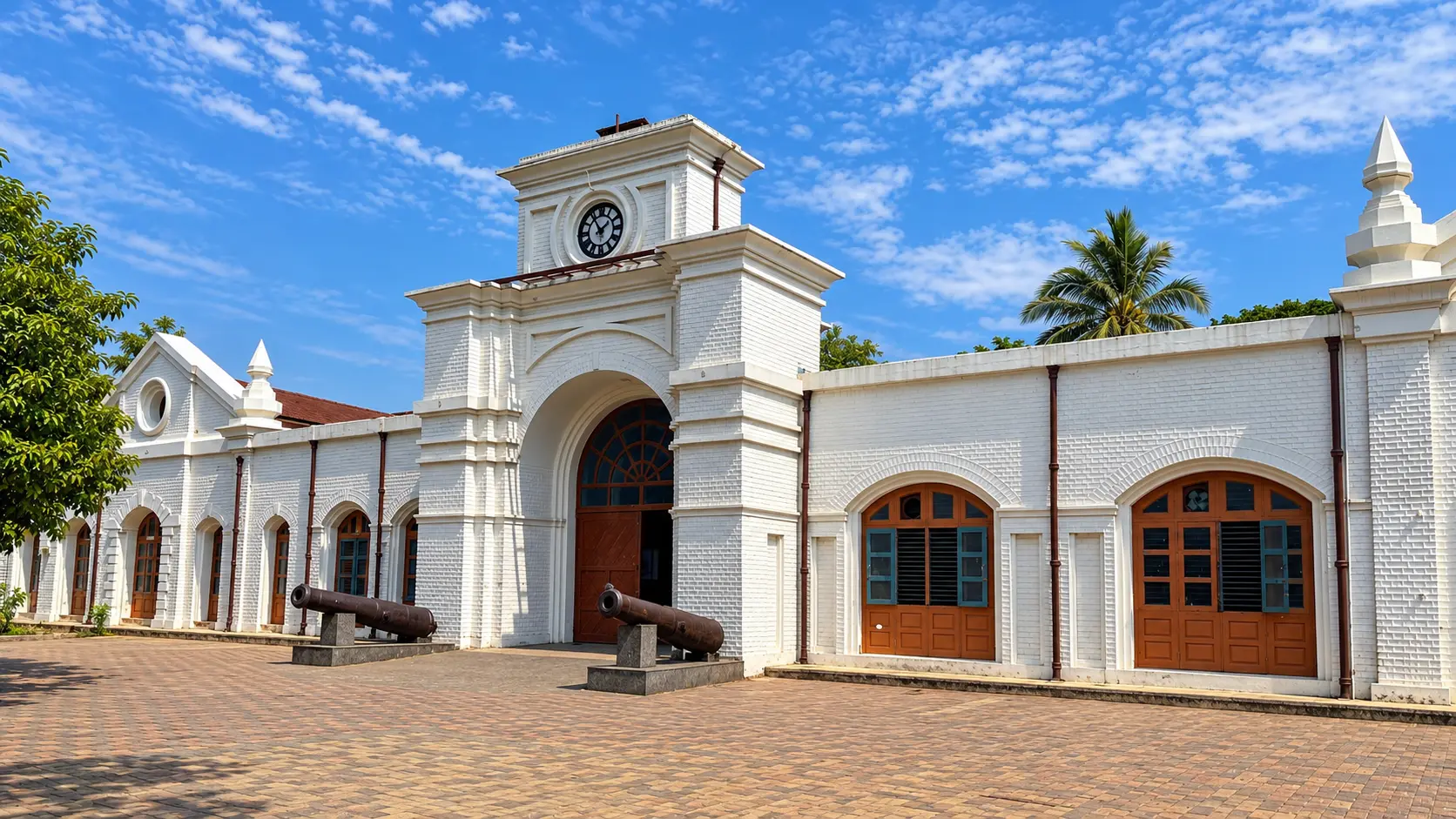
Immediately adjacent to the Barabati Fort perimeter, within the historic Barabati Killa Heritage Zone, stands the Museum of Justice (officially the Orissa High Court Museum). Housed in an elegant colonial-era heritage bungalow that once served as the official residence of the Chief Justice of Orissa, this specialized institution offers an intriguing complement to the ancient fort ruins.
Key exhibits inside the Museum of Justice include:
- Rare historic legal documents, original handwritten judgments dating back to the 19th century, and the original 1948 charter establishing the High Court of Orissa.
- Vintage British colonial court furniture, ceremonial wigs, judges' robes, ancient brass seals, and early manual typewriters used in provincial court registries.
- Detailed historical galleries dedicated to the prominent lawyers, jurists, and freedom fighters of Odisha, including Utkal Gourab Madhusudan Das, the pioneering lawyer and statesman who spearheaded the creation of the modern state of Odisha. Confirm the current charge and what it includes with the operator or service provider. Visitor admission, vehicles, parking, activities and accommodation can have separate charges.
Best time to visit
Cuttack is situated on the coastal delta plains of Odisha, where the local climate is tropical, characterized by…Explore detailsClose details
Cuttack is situated on the coastal delta plains of Odisha, where the local climate is tropical, characterized by distinct seasonal variations in temperature, humidity, and rainfall.
+-----------------------------------------------------------------------------------+
|                        BARABATI FORT SEASONAL VISITING MATRIX                     |
+-----------------------------------------------------------------------------------+
| Season        | Months          | Weather & Conditions        | Visiting Advice   |
+---------------+-----------------+-----------------------------+-------------------+
| Peak Winter   | October to      | Pleasant, mild sunny days   | Prime visiting    |
| & Festive     | February        | 16°C - 28°C; cool breezes;    | season; ideal for |
| Season        |                 | historic Bali Jatra fair    | walking & photos  |
+---------------+-----------------+-----------------------------+-------------------+
| Hot Summer    | March to        | Scorching deltaic heat;     | Avoid midday sun; |
|               | May             | 36°C - 42°C; oppressive       | visit 06:00-09:00 |
|               |                 | humidity; dehydrating air   | & 16:30-18:00 only|
+---------------+-----------------+-----------------------------+-------------------+
| Southwest     | June to         | Heavy tropical rainfall;    | Lush green lawns; |
| Monsoon       | September       | swollen Mahanadi river;     | dramatic skies;   |
|               |                 | cloudy, humid conditions    | carry umbrella    |
+-----------------------------------------------------------------------------------+
Winter Comfort & The Bali Jatra Atmosphere (October to February)
The cooler winter months represent the undisputed peak tourist season across Cuttack and coastal Odisha. Daytime temperatures hover pleasantly between 16°C and 28°C, accompanied by gentle dry breezes and azure skies, while nighttime temperatures drop to a comfortable 14°C to 18°C. This period offers ideal physical conditions for walking along the stone ramparts, climbing the palace mound, and photographing the arched gateway in soft golden sunlight.
Crucially, November coincides with Kartik Purnima and the world-famous Bali Jatra (The Voyage to Bali) festival. Celebrated on the vast sandy fairgrounds of the Mahanadi riverbed immediately adjacent to Barabati Fort, Bali Jatra is Asia's largest open-air socio-cultural trade fair. For eight continuous days, millions of visitors congregate around the fort grounds to float miniature toy boats made of banana bark and paper to commemorate ancient Kalinga's maritime expeditions to Indonesia and Sri Lanka, shop at thousands of artisan stalls, and enjoy traditional Odia street food. Visiting Barabati Fort during Bali Jatra provides an unforgettable immersion into living Odishan folk culture.
Summer Season & Deltaic Humidity (March to May)
From early March through late May, coastal Odisha experiences extreme pre-monsoon summer conditions. Maximum daytime temperatures routinely climb between 36°C and 42°C, compounded by high relative humidity rolling in from the Bay of Bengal. The unshaded stone courtyards and open grassy mound absorb intense solar radiation throughout the midday hours.
If visiting during summer months:
- Schedule your visit strictly between 06:00 and 09:00 AM in the early morning or between 16:30 and 18:00 PM in the late afternoon.
- Carry an umbrella for sun protection, wear lightweight cotton clothing, and drink plenty of tender coconut water, widely available from street vendors outside the gate.
Southwest Monsoon & The Swelling Mahanadi (June to September)
The arrival of the southwest monsoon in June transforms the fort grounds into a vibrant emerald green. Rains wash the centuries-old laterite and khondalite stones clean, while the perimeter moat fills with fresh water and blooming lilies. The adjacent Mahanadi River swells into an immense, churning brown sea, presenting a dramatic natural spectacle from the nearby Ring Road embankments.
While rainfall can be heavy and sudden, visiting during breaks between monsoon downpours offers cool temperatures (26°C to 32°C), dramatic cloudscapes for photography, and uncrowded, contemplative walks through the ancient citadel.
How to reach
Barabati Fort enjoys superb transport connectivity, situated centrally within the twin-city urban corridor of…Explore detailsClose details
Barabati Fort enjoys superb transport connectivity, situated centrally within the twin-city urban corridor of Cuttack and Bhubaneswar.
+-----------------------------------------------------------------------------------+
|                        CONNECTIVITY & DISTANCE MATRIX                             |
+-----------------------------------------------------------------------------------+
| Hub / Gateway               | Distance | Transit Mode & Travel Time               |
+-----------------------------+----------+------------------------------------------+
| Cuttack Junction (CTC)      | 4 km     | 10 - 15 mins via Station Road & Cantonment |
| Railway Station             |          |Confirm the current charge and what it includes with the operator or service provider. Visitor admission, vehicles, parking, activities and accommodation can have separate charges.|
+-----------------------------+----------+------------------------------------------+
| Badambadi Central Bus Stand | 5 km     | 15 - 20 mins; city auto-rickshaws, shared  |
|                             |          | tempos, and Mo Bus municipal shuttles    |
+-----------------------------+----------+------------------------------------------+
| Bhubaneswar Biju Patnaik    | 30 km    | 45 - 60 mins via 6-lane NH-16; pre-booked  |
| Airport (BBI)               |          |Confirm the current charge and what it includes with the operator or service provider. Visitor admission, vehicles, parking, activities and accommodation can have separate charges.|
+-----------------------------+----------+------------------------------------------+
| Puri Jagannath Temple       | 90 km    | 2 hours via NH-16 and Puri-Bhubaneswar   |
|                             |          | 4-lane highway corridor                  |
+-----------------------------+----------+------------------------------------------+
| Kolkata (Howrah Junction)   | 410 km   | 6 - 7 hours via Vande Bharat / Shatabdi or |
|                             |          | direct driving via NH-16 highway         |
+-----------------------------------------------------------------------------------+
Rail Access via Cuttack Junction (CTC)
Cuttack Junction (station code: CTC) is located just four kilometres east of Barabati Fort. It is one of the premier railway junctions on the East Coast Railway main line, serviced by dozens of daily superfast, express, and premium trains connecting Cuttack directly with all major Indian metropolitan centers:
- Vande Bharat Express & Shatabdi Express: Provide high-speed morning and evening daytime connections linking Cuttack with Howrah (Kolkata), Rourkela, and Puri.
- Rajdhani Express & Duronto Express: Daily premium overnight services linking Cuttack with New Delhi, Chennai, and Secunderabad.
- Frequent Local Trains: Continuous local EMU and passenger trains link Cuttack with Bhubaneswar in just 30 minutes, allowing travelers based in either city to commute effortlessly.
Confirm the current charge and what it includes with the operator or service provider. Visitor admission, vehicles, parking, activities and accommodation can have separate charges.
Road Transit & Urban Navigation within Cuttack
Cuttack is positioned directly along National Highway 16 (NH-16), the multi-lane divided highway connecting Kolkata and Chennai via Bhubaneswar.
- From Bhubaneswar (30 km): Drive north along NH-16 crossing the Kathajodi River bridge into Cuttack, then follow Cantonment Road directly into the Barabati Killa heritage precinct (total driving time: approx. 45 minutes).
- Public City Bus (Mo Bus): The modern, air-conditioned Mo Bus municipal transit network operated by CRUT (Capital Region Urban Transport) runs frequent, economical bus routes linking Bhubaneswar (Master Canteen / Airport) directly to Cuttack (Badambadi and Biju Patnaik Park near Barabati Fort).
- Local Commuting: Within Cuttack, auto-rickshaws and cycle-rickshaws are plentiful and represent the most convenient way to navigate the city's historic, narrow bazaar streets.
Air Connectivity via Bhubaneswar (BBI)
The nearest airport is Biju Patnaik International Airport (airport code: BBI) in Bhubaneswar, located approximately 30 kilometres south of the fort. BBI is a major, modern domestic and international airport operating nonstop flights to major Indian hubs including New Delhi, Mumbai, Bengaluru, Kolkata, Hyderabad, and Chennai, as well as direct international flights to Dubai, Singapore, and Bangkok. Pre-booked app cabs and airport prepaid taxis take approximately 50 to 60 minutes to reach Barabati Fort via NH-16.
Entry, timings and permissions
Fees, visiting hours and entry rules may change.Explore detailsClose details
Fees, visiting hours and entry rules may change. Confirm the latest details with the official operator or local authority before travelling.
Visiting Barabati Fort is straightforward, governed by standard Archaeological Survey of India heritage protocols:
+-----------------------------------------------------------------------------------+
|                        BARABATI FORT OPERATIONAL RULES                            |
+-----------------------------------------------------------------------------------+
| Operational Category   | Regulation / Policy Details                              |
+------------------------+----------------------------------------------------------+
| Monument Opening Hours | Open daily from sunrise to sunset (06:00 to 18:00)       |
|                        | throughout the year, including Sundays & public holidays |
+------------------------+----------------------------------------------------------+
| Admission Fees         | Completely FREE for all domestic and foreign visitors    |
+------------------------+----------------------------------------------------------+
| Photography Guidelines | Handheld photography and mobile cameras permitted free;  |
|                        | commercial filming & tripod rigs require prior ASI permit|
+------------------------+----------------------------------------------------------+
| Drone Regulations      | Flying unmanned aerial vehicles (drones) is strictly     |
|                        | prohibited without written clearance from ASI and police |
+------------------------+----------------------------------------------------------+
| Prohibited Activities  | Climbing on fragile stone lintels, defacing masonry,     |
|                        | littering, and entering restricted excavation trenches   |
+-----------------------------------------------------------------------------------+
Admission Policy, Opening Hours, and Preservation Bylaws
Unlike many heavily commercialized monument complexes, Barabati Fort charges zero entrance fees. The landscaped gardens, the Grand Arched Gateway, the excavated 32-pillared hall, and the palace mound are open freely to all members of the public from 06:00 AM to 18:00 PM daily.
Because the site is a federally protected monument under the Ancient Monuments and Archaeological Sites and Remains (AMASR) Act, visitors are required to follow standard conservation etiquette:
- Do not climb or walk across fragile stone carvings, decorative mouldings, or the unreinforced brick coping of excavated foundation walls.
- Commercial drone flights are strictly banned across the fort, moat, and adjacent high-security stadium perimeter by the Archaeological Survey of India and the Cuttack Commissionerate Police. Unauthorized drones will be seized immediately, and operators face legal prosecution.
- Maintain the cleanliness of the lawns and moat banks; single-use plastic littering is strictly prohibited.
Nearby places to consider
Barabati Fort anchors a diverse cultural, historical, and religious corridor within Cuttack and the surrounding…Explore detailsClose details
Barabati Fort anchors a diverse cultural, historical, and religious corridor within Cuttack and the surrounding deltaic landscape:
                          [ Choudwar Ancient Ruins ]
                        (Older Somavanshi capital, 10 km N)
                                     ▲
                                     │
[ Katak Chandi Temple ] ◄─── [ Barabati Fort ] ───► [ Maritime Museum Jobra ]
(Patron goddess of Cuttack,          │              (Historic 19th-century workshop,
  1.5 km south)                      │                3.5 km east)
                                     ▼
                          [ Netaji Birth Place & High Court ]
                        (National museum & silver filigree,
2 - 3 km southeast)- Katak Chandi Temple (~1.5 km south): The revered 10th-century shrine dedicated to Goddess Katak Chandi, the supreme guardian deity (Ishta Devi) of Cuttack city. Hundreds of devotees gather daily to offer prayers, red hibiscus flowers, and sweets, especially during the vibrant autumn Durga Puja and Chaitra Navaratri festivities.
- Odisha State Maritime Museum (~3.5 km east): Located at Jobra on the banks of the Mahanadi, this world-class museum is housed in the beautifully restored 19th-century British lighthouse workshop and dry dock. Features thirteen expansive interactive galleries displaying traditional boat-building craftsmanship, navigation tools, maritime trade artifacts, and scale models of ancient Kalingan merchant vessels (boitas).
- Netaji Subhash Chandra Bose Birth Place Museum (~2.5 km southeast): Situated in Odia Bazar, this is the ancestral residence (Janakinath Bhawan) where the legendary Indian freedom fighter Subhash Chandra Bose was born in 1897. Beautifully preserved as a national museum, it houses twelve galleries displaying his personal belongings, family letters, uniforms, and photographic chronicles.
- Dhabaleswar Island Temple (~25 km northwest): A famous Shaivite pilgrimage shrine situated on a serene rocky island in the middle of the Mahanadi River. Reached via a thrilling 254-metre-long pedestrian suspension cable bridge or traditional boat rides, surrounded by rolling hills and placid waters.
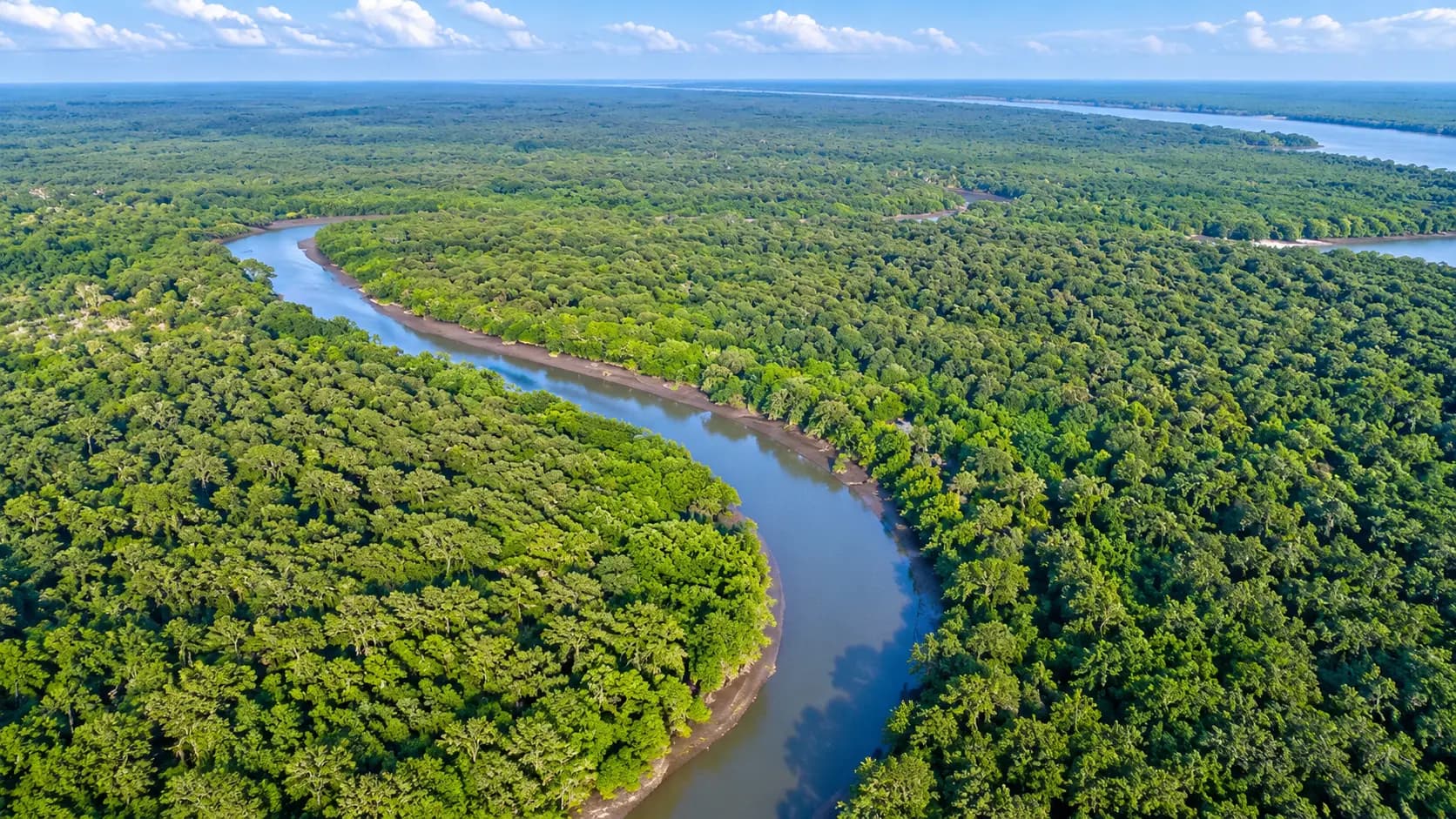
- Bhitarkanika National Park (~115 km northeast): India's second-largest mangrove ecosystem and a Ramsar Wetland of International Importance, renowned for harboring over 1,700 giant saltwater crocodiles (Crocodylus porosus), king cobras, spotted deer, and vibrant breeding heronries.
In pictures
The practical bits
Before you go.
Plan ahead
To ensure an enriching and comfortable exploration of Barabati Fort and its historic surroundings, consider the…Explore detailsClose details
To ensure an enriching and comfortable exploration of Barabati Fort and its historic surroundings, consider the following practical recommendations:
Optimal morning timing and combined heritage routing
The best time of day to explore Barabati Fort is between 07:30 and 10:00 AM.Explore detailsClose details
The best time of day to explore Barabati Fort is between 07:30 and 10:00 AM. Morning light illuminates the eastern facade of the Grand Arched Gateway beautifully, casting sharp architectural shadows ideal for photography, while ambient temperatures remain cool. Check the current visiting hours and permitted access with the site operator before departure; ceremonies, closures and visitor sessions can affect access.
Footwear and terrain navigation
Touring the fort grounds involves walking across a mixture of paved concrete pathways, manicured grass lawns, and…Explore detailsClose details
Touring the fort grounds involves walking across a mixture of paved concrete pathways, manicured grass lawns, and uneven earthen slopes around the excavated 32-pillared pavilion and the central palace mound. Wear sturdy, comfortable walking shoes or walking sandals. Visitors ascending the earthen mound should exercise caution on the stone-and-dirt steps, which can become dusty in summer and slick during the rainy season.
Silver filigree shopping in historic bazaars
No trip to Barabati Fort is complete without exploring Cuttack's world-famous silver filigree (Tarakasi)…Explore detailsClose details
No trip to Barabati Fort is complete without exploring Cuttack's world-famous silver filigree (Tarakasi) heritage, an ancient craft recently awarded the prestigious Geographical Indication (GI) tag. After completing your monument tour, take a short auto-rickshaw ride into the nearby historic artisan quarters of Nayasarak, Choudhury Bazar, and High Court Square, where master silversmiths weave paper-thin silver wires into breathtaking jewelry, miniature Konark stone wheels, peacock brooches, and filigree idols.
Culinary exploration of Cuttack street food
Cuttack is celebrated across Odisha as the gastronomic capital of authentic street delicacies.Explore detailsClose details
Cuttack is celebrated across Odisha as the gastronomic capital of authentic street delicacies. Near the fort gate, Cantonment Road, and Ring Road, sample iconic local culinary specialties:
Dahibara Aloodum
The undisputed signature dish of Cuttack, consisting of soft urad-dal vadas soaked in lightly spiced curd water…Explore detailsClose details
The undisputed signature dish of Cuttack, consisting of soft urad-dal vadas soaked in lightly spiced curd water, smothered in spicy potato curry (aloodum), and topped with yellow pea curry (ghuguni), chopped onions, fresh coriander, and a splash of cooling spiced buttermilk (pani).
Chhena Gaja and Rasagola
Renowned fresh cottage-cheese sweets crafted by master confectioners in local sweet shops across the city. ---Explore detailsClose details
Renowned fresh cottage-cheese sweets crafted by master confectioners in local sweet shops across the city.
A few things you might wonder
Common questions about visiting Barabati Fort. Fees, visiting hours and ceremonies are researched details that may change; confirm current arrangements with the operator before travelling.
Who built Barabati Fort and in which century was it founded?
Why was the nine-storeyed palace inside Barabati Fort demolished?
What are the opening timings and entry ticket fees for Barabati Fort?
What archaeological discoveries were made during excavations at Barabati Fort?
Is Barabati Fort related to the nearby Barabati Stadium?
How is Barabati Fort connected to the annual Bali Jatra festival?
Can visitors walk around the moat and climb the central palace mound?
What is the best way to get to Barabati Fort from Bhubaneswar?
Explore more in Bhitarkanika Cuttack
Discover other destinations around this hub
More Hubs in Odisha
Continue exploring other travel hubs in this state
Planning a trip to Bhitarkanika & Cuttack?