Ranganathittu Bird Sanctuary
Plan your trip to Ranganathittu Bird Sanctuary in Karnataka. Complete guide covering boat safaris, painted storks, mugger crocodiles, timings, and entry fees.
Location
Bandipur & Kabini, Karnataka
A closer look
Your visit, at a glance.
Bandipur Kabini, Karnataka
GET TO KNOW THE PLACE
Nestled like an emerald jewel along the braided, life-giving waters of the sacred Kaveri (Cauvery) River, Ranganathittu Bird Sanctuary (affectionately hailed as the Pakshi Kashi…
The story of Ranganathittu Bird Sanctuary
Nestled like an emerald jewel along the braided, life-giving waters of the sacred Kaveri (Cauvery) River, Ranganathittu Bird Sanctuary (affectionately hailed as the Pakshi Kashi of Karnataka, or the "Varanasi of Birds") is one of India’s most celebrated, historically distinguished, and biologically teeming riverine heronries. Spanning 0.67 square kilometers (67 hectares) within the Srirangapatna Taluk of southern Karnataka’s Mandya District - just three kilometers west of the historic island fortress of Srirangapatna and sixteen kilometers north of Mysuru city - Ranganathittu rests at an elevation of approximately 685 meters (2,247 feet) above mean sea level.
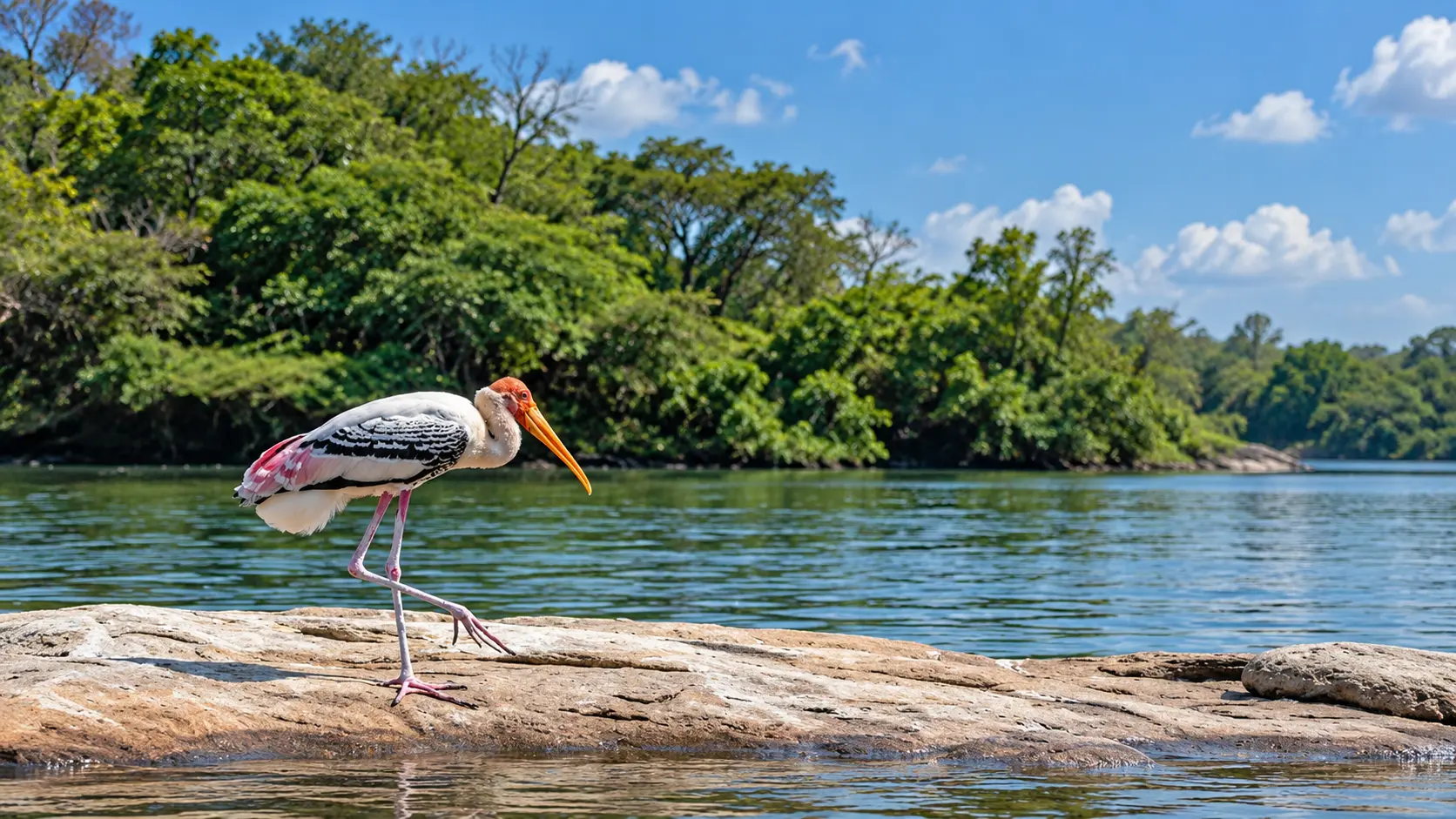
Comprising an enchanting archipelago of six major wooded islets and dozens of smooth granite rock outcrops, Ranganathittu holds a prestigious place in international conservation history. Surveyed in 1939 by India’s legendary "Birdman", the visionary ornithologist Dr. Salim Ali, the islets were recognized as an indispensable, high-density breeding ground for aquatic avifauna. Persuaded by Dr. Ali’s passionate advocacy, the Maharaja of Mysore, Krishna Raja Wadiyar IV, formally declared the islets a protected wildlife sanctuary in 1940. In August 2022, in recognition of its extraordinary biodiversity and critical ecological functions, Ranganathittu was officially designated as Karnataka’s first Ramsar Wetland of International Importance (Ramsar Site No. 2494). Today, visitors aboard silent, guided boat safaris drift within arm's reach of towering breeding colonies of painted storks, spoonbills, and darters, while dozens of massive mugger crocodiles (Crocodylus palustris) bask lazily on river rocks in a primeval tableau of natural harmony.
+----------------------------------------------------------------------------------------------------+
|                                    RANGANATHITTU RAMSAR WETLAND PROFILE                            |
|                                                                                                    |
|  [Kaveri River Braided Channels]           [6 Wooded Islets: Arjun, Banyan, Bamboo Canopies]       |
|  ~~~~~~~~~~~~~~~~~~~~~~~~~~~~~~~~~~~~~~~~~~~~~~~~~~~~~~~~~~~~~~~~~~~~~~~~~~~~~~~~~~~~~~~~~~~~~~~~~ |
|        ( )           ( )          ( )           ( )          ( )           ( )                     |
|     Painted        Asian       Eurasian       Black-       Oriental       Spot-Billed              |
|     Storks        Openbills    Spoonbills     Headed Ibis  Darters        Pelicans                 |
|                                                                                                    |
|  ~~~~~~~~~~~~~~~~~ [Granite River Boulders: >100 Resident Mugger Crocodiles] ~~~~~~~~~~~~~~~~~~~~~ |
|                                                                                                    |
|  [Mainland Riverbank Visitors' Sanctuary]                                                          |
|  - Boat Safari Jetty (Hand-rowed & Electric Eco-Boats) | Salim Ali Interpretation Centre           |
|  - Bamboo Groves (Giant Flying Fox Bat Colonies)       | Riverfront Walking Trails & Watchtowers   |
|  ================================================================================================= |
|                                                                                                    |
|  Total Area: 67 Hectares | Ramsar Site No. 2494 | District: Mandya (Srirangapatna Taluk)           |
+----------------------------------------------------------------------------------------------------+
Start here. Open a tile for the full details.
Why goRead details
Ranganathittu Bird Sanctuary is widely acclaimed as one of the finest birdwatching and river-safari experiences in Asia. It offers an extraordinarily intimate, unobstructed encounter with nesting waterbirds and prehistoric reptiles, set against the serene, flowing beauty of the Kaveri River.
When to visitRead details
While Ranganathittu is open year-round, the avian population and safari conditions fluctuate dramatically depending on the breeding calendar and Kaveri River water levels.
Entry & permissionsRead details
Fees, visiting hours and entry rules may change. Confirm the latest details with the official operator or local authority before travelling.
Ranganathittu Bird Sanctuary is administered by the Mandya Wildlife Division of the Karnataka Forest Department, operating under strict ecotourism guidelines and wildlife conservation statutes.
+----------------------------------------------------------------------------------------------------+
|                                    TICKET & PERMIT TARIFF SCHEDULE                                 |
|                                                                                                    |
|  Category             | Indian Nationals                    | Foreign Nationals                    |
|  ---------------------+-------------------------------------+------------------------------------- |
|  Park Entry (Adult)   | Approx. ₹80 - ₹100 per person       | Approx. ₹500 per person              |
|  Park Entry (Child)   | Approx. ₹25 - ₹50 (Age 5-12 years)  | Approx. ₹250 (Age 5-12 years)        |
|  Shared Boat Safari   | Approx. ₹100 - ₹150 per person      | Approx. ₹500 per person              |
|  Private Boat Hire    | Approx. ₹1,500 - ₹2,500 per boat    | Approx. ₹3,500 - ₹5,000 per boat     |
|                       | (Up to 4-6 seats with naturalist)   | (Up to 4-6 seats with naturalist)    |
|  Still Camera (DSLR)  | Approx. ₹100 - ₹150 per camera      | Approx. ₹500 per camera              |
|  Vehicle Parking      | Two-wheelers: ₹20; Cars: ₹50 - ₹80; | Two-wheelers: ₹20; Cars: ₹50 - ₹80;  |
|                       | Tourist Minibuses / Buses: ₹150     | Tourist Minibuses / Buses: ₹150      |
+----------------------------------------------------------------------------------------------------+
Daily Operating Hours
- The sanctuary gates, ticket counters, and riverboat safaris open promptly at 08:30 AM daily.
- Ticket issuance concludes at 17:00 (5:00 PM), and all boating operations cease by 17:30 (5:30 PM) as dusk approaches and birds settle into their roosts.
- The sanctuary is open seven days a week, including all Sundays and statutory public holidays.
Boating Ticket Protocols
- Visitors purchase park entry tickets and boat safari passes simultaneously at the main entrance ticketing complex.
- Both electronic card payments (UPI, credit/debit cards) and physical cash are accepted at the counters.
- Shared vs. Private Boats: Standard shared boat safaris accommodate twelve to fifteen passengers on a rotational queue basis. For serious bird photographers, wildlife cinematographers, or families desiring an exclusive, personalized experience, Private Boat Safaris can be hired directly at the boat jetty. Private boats carry up to four to six passengers accompanied by a senior forest department boatman who will pause near specific islets, maneuver for optimal sun angles, and maintain steady positioning for telephoto lens stabilization.
Safety and Sanctuary Regulations
To preserve this delicate Ramsar wetland and ensure complete visitor safety, several statutory rules are strictly enforced:
- Mandatory Life Jackets: Every person - regardless of swimming ability - must wear a properly buckled life jacket before stepping onto any safari boat. Removing life jackets while on the river is strictly prohibited.
- Strictly No Hands in Water: Passengers must keep their hands and camera gear inside the boat gunwales at all times. Reaching out to touch the water or splashing is dangerous, as large mugger crocodiles inhabit the waters and can react defensively.
- Zero Plastic & Waste Ban: Single-use plastic bottles, polythene bags, and packaged food wrappers are strictly barred past the entrance gate. All visitor waste must be placed in segregated recycling bins located across the mainland gardens.
- Drone Ban: Operating recreational or commercial drones over the sanctuary islets is strictly illegal under the Wildlife Protection Act. Drones cause severe panic among nesting colonies, leading terrified parent birds to abandon nests and causing eggs and fledglings to tumble from branches into the river below.
Plan your visitRead details
Ranganathittu Bird Sanctuary enjoys premier highway accessibility, located directly adjacent to one of the most modern transit corridors in India.
Explore the full guide - choose a topic below.
Why visit?
Ranganathittu Bird Sanctuary is widely acclaimed as one of the finest birdwatching and river-safari experiences…Explore detailsClose details
Ranganathittu Bird Sanctuary is widely acclaimed as one of the finest birdwatching and river-safari experiences in Asia. It offers an extraordinarily intimate, unobstructed encounter with nesting waterbirds and prehistoric reptiles, set against the serene, flowing beauty of the Kaveri River.
1. Close-Range Guided Boat Safaris
The undisputed centerpiece of a visit to Ranganathittu is the guided boat safari operated by the Karnataka Forest Department:
- Intimate, Eye-Level Wildlife Viewing: Unlike walking trails where birds remain high in the canopy or land safaris where animals flee from vehicle engines, Ranganathittu’s boatmen utilize sturdy, broad-beamed wooden and fiberglass boats propelled silently by long wooden oars or silent electric motors. The birds on the islets have grown completely habituated to the boats over decades, allowing visitors to glide within five to ten meters of nesting branches.
- Observing Nesting Behavior Up Close: From the water, visitors can clearly watch every stage of avian reproduction: intricate courtship displays, male storks presenting twigs to their mates, delicate egg-incubation rituals, and parent birds regurgitating fresh fish into the hungry, wide-gaping beaks of fluffy fledglings. The sheer sensory immersion - the flapping of thousands of wings, the clattering of bills, and the constant calls of hungry chicks - is unforgettable.
2. A Thriving Population of Wild Mugger Crocodiles
Ranganathittu is home to the highest concentration of freshwater marsh crocodiles (Crocodylus palustris) in Karnataka:
- Primeval Sunbathing Displays: Over one hundred resident crocodiles inhabit this stretch of the Kaveri River. During the sunny hours of the morning and afternoon, dozens of these massive armored reptiles - often measuring three to four meters in length - haul themselves onto smooth, water-carved granite boulders right in the middle of the river to bask in the sun.
- Remarkable Inter-Species Co-existence: In a fascinating ecological balance, crocodiles bask calmly just inches below low-hanging tree branches laden with squawking painted stork and cormorant nests. The boatmen navigate skillfully around these massive reptiles, offering photographers heart-racing, eye-level perspectives of wild crocodiles resting with jaws agape in the tropical sunshine.
3. A Critical Breeding Heronry of Global Significance
As a designated Ramsar site, Ranganathittu supports extraordinary densities of vulnerable and near-threatened bird species:
- Key Breeding Residents: The islets host massive colonial nesting colonies of the painted stork (Mycteria leucocephala), Asian openbill (Anastomus oscitans), black-headed ibis (Threskiornis melanocephalus), Eurasian spoonbill (Platalea leucorodia), oriental darter (Anhinga melanogaster), spot-billed pelican (Pelecanus philippensis), and black-crowned night heron.
- Specialized Riverine Birds: The fast-flowing rapids and pebble shoals surrounding the islets provide feeding territory for elusive river specialists such as the great thick-knee (great stone-curlew), river tern, pied kingfisher, white-throated kingfisher, and Indian cormorant.
4. Colossal Flying Fox Roosts and Riverine Gardens
The mainland riverbank of the sanctuary is an idyllic parkland shaded by giant weeping willows, native tamarind trees, and dense groves of golden bamboo:
- The Flying Fox Colonies: Massive clumps of tall bamboo along the water’s edge serve as the daytime roosting colony for thousands of Indian flying foxes (Pteropus giganteus), one of the largest bat species in the world. Visitors can observe these impressive fruit bats hanging upside down in dense clusters like dark fruit, fanning their wings to stay cool, and screeching softly before taking flight in magnificent synchronized swarms at dusk.
- Walking Paths and Observation Towers: Well-paved stone walking pathways wind through lush riverside gardens, connecting picturesque viewing platforms, cantilevered wooden gazebos, and elevated watchtowers equipped with educational interpretation displays.
What to expect
Visiting Ranganathittu Bird Sanctuary is a tranquil, family-friendly, and educational excursion that balances…Explore detailsClose details
Visiting Ranganathittu Bird Sanctuary is a tranquil, family-friendly, and educational excursion that balances peaceful riverside relaxation with thrilling aquatic wildlife viewing.
+----------------------------------------------------------------------------------------------------+
|                                    RANGANATHITTU VISITOR EXPERIENCE MATRIX                         |
|                                                                                                    |
|  Aspect               | Details & Practical Expectations                                           |
|  ---------------------+--------------------------------------------------------------------------- |
|  Operating Hours      | 08:30 AM to 17:30 (5:30 PM) daily year-round                                |
|  Signature Activity   | 30 to 45-minute guided rowboat safari around the six nesting islets        |
|  Boating Modes        | Shared group boats (12-15 seats) and private hire boats (4-6 seats)        |
|  Safety Standards     | Compulsory life jackets provided; strictly skilled forest boatmen          |
|  Soundscape           | Constant clatter of stork bills, chick cries, river rapids, bat rustling   |
|  Mainland Amenities   | Landscaped riverfront gardens, children's park, cafeteria, museum, toilets |
|  Accessibility        | Paved walking paths suitable for wheelchairs and elderly visitors           |
|  Average Visit Time   | 2 to 3 hours total (encompassing boat safari, gardens, and exhibits)       |
+----------------------------------------------------------------------------------------------------+
The Boat Safari Experience
Upon entering the sanctuary, visitors stroll along manicured garden paths to reach the stone boat embarkation jetty on the riverbank. Boarding requires wearing an approved orange life jacket provided by the staff.
- The boat journey typically lasts thirty to forty-five minutes, guided by seasoned local boatmen trained as naturalists by the Karnataka Forest Department.
- The boatmen maneuver using long wooden oars, rowing against the gentle river current toward the first islet. As the boat approaches, the sheer density of bird life becomes astounding: every branch of every fig, acacia, and bamboo tree is weighed down with large stick nests. Parent birds soar overhead, carrying leafy twigs or clutching fresh fish in their talons.
- The boat glides within feet of rocky outcrops where adult painted storks clatter their heavy yellow bills in courtship rituals, and downy white chicks peer curiously over the nest rim.
- Further downriver, the boat skirts granite shelves where three to four massive marsh crocodiles lie motionless. The boatmen share captivating insights in Kannada, English, and Hindi, identifying bird species, explaining crocodile territoriality, and pointing out camouflaged night herons hidden in the reed beds.
The Mainland Riverside Gardens
Back on the mainland, visitors can spend an hour exploring the beautifully landscaped sanctuary grounds:
- Dr. Salim Ali Interpretation Centre: A modern, air-conditioned educational museum showcasing high-resolution avian photography, interactive touchscreens detailing migration flyways, taxidermy exhibits, and historical archives documenting Dr. Salim Ali’s original field surveys in Mysore.
- Riverfront Promenade: Shaded benches facing the river allow visitors to sit quietly and watch river terns dive into the sparkling water with binoculars.
- Forest Canteen and Souvenir Shop: An open-air cafeteria operated under forest department supervision serves clean drinking water, hot South Indian tea and filter coffee, ice creams, and light snacks (such as idli, vada, and sandwiches). An adjacent boutique offers nature books, bird field guides, postcards, and local handicraft souvenirs.
Best time to visit
While Ranganathittu is open year-round, the avian population and safari conditions fluctuate dramatically…Explore detailsClose details
While Ranganathittu is open year-round, the avian population and safari conditions fluctuate dramatically depending on the breeding calendar and Kaveri River water levels.
+----------------------------------------------------------------------------------------------------+
|                                    ANNUAL SEASONAL & BREEDING CALENDAR                             |
|                                                                                                    |
|  Month        | Sanctuary Status| Avian Activity & Breeding Highlights                             |
|  -------------+-----------------+----------------------------------------------------------------- |
|  Jan - Feb    | Peak Season     | Peak breeding; nest building; courtship displays; pleasant winter|
|  Mar - Apr    | Peak Season     | Eggs hatch; high chick-feeding flight activity; warm afternoons  |
|  May - Jun    | Excellent       | Fledglings learning to fly; high juvenile activity; warm weather |
|  Jul - Aug    | Monsoon Surge   | Heavy KRS Dam water releases; boating frequently suspended       |
|  Sep - Oct    | Post-Monsoon    | River calms; winter migrants begin arriving; lush green islands  |
|  Nov - Dec    | Pre-Breeding    | Thousands of storks, pelicans, spoonbills arrive to claim nests  |
+----------------------------------------------------------------------------------------------------+
Winter and Early Summer (December to June): The Peak Breeding Window
The period between December and June is the absolute prime window to visit Ranganathittu:
- December to February: The weather is delightful, with cool, crisp mornings (18°C to 22°C) and sunny, pleasant afternoons (26°C to 28°C). Migratory waterbirds arrive in full force, and colonial residents engage in energetic courtship flights, bill-clattering displays, and nest building across the islets.
- March to May: This is the most active and rewarding phase for photography. The nests are brimming with chicks of all sizes. Parent storks, pelicans, and spoonbills make continuous feeding sorties back and forth across the river, bringing back fish and frogs. The trees are alive with sound and motion. While daytime temperatures can be warm (reaching 32°C to 35°C), the morning hours between 08:30 AM and 11:00 AM remain comfortable, with gentle river breezes.
Monsoon (July to September): The High-Water Flood Phase
The southwest monsoon brings complex hydrological dynamics to Ranganathittu. The sanctuary is situated just a few kilometers downstream from the massive Krishna Raja Sagara (KRS) Dam. When heavy rains in the Western Ghats (Kodagu and Wayanad) cause the KRS reservoir to fill, irrigation engineers open the crest floodgates, releasing tens of thousands of cusecs of water down the Kaveri River.
- Boating Suspensions: When the river surges into flood stage, the fast-flowing current poses severe navigation hazards. The Forest Department immediately suspends all boat safaris for safety. Lower rocky islets and crocodile basking ledges become completely submerged.
- Visitor Experience: While the mainland gardens, tree canopies, bat colonies, and interpretation center remain open, travelers cannot take boat rides during flood alerts. Visitors traveling between July and September should check local district news or forest department advisories regarding KRS Dam water discharges before visiting.
How to reach
Ranganathittu Bird Sanctuary enjoys premier highway accessibility, located directly adjacent to one of the most…Explore detailsClose details
Ranganathittu Bird Sanctuary enjoys premier highway accessibility, located directly adjacent to one of the most modern transit corridors in India.
+----------------------------------------------------------------------------------------------------+
|                                    ROAD APPROACH ROUTES TO RANGANATHITTU                           |
|                                                                                                    |
|  [Route 1: Mysuru to Ranganathittu: 16 km]                                                         |
|  Mysuru City / Palace ---> Bengaluru-Mysuru Road (NH-275) ---> Srirangapatna Outer Ring            |
|  Srirangapatna Bypass ---> Left Turn onto Ranganathittu Road (3 km) ---> Sanctuary Gate            |
|  Distance: ~16 km | Driving Time: 25 to 30 minutes | Smooth multi-lane highway                     |
|                                                                                                    |
|  [Route 2: Bengaluru to Ranganathittu: 125 km]                                                     |
|  Bengaluru ---> Bengaluru-Mysuru Expressway (NH-275, 10-lane) ---> Srirangapatna Toll Exit         |
|  Srirangapatna Exit ---> Western Link Road (3 km) ---> Sanctuary Parking Lot                       |
|  Distance: ~125 km | Driving Time: 1 hour 45 minutes | Rapid access-controlled transit             |
|                                                                                                    |
|  [Public Transit Linkage]                                                                          |
|  Mysuru Central / Bengaluru ---> KSRTC Bus to Srirangapatna ---> Auto-Rickshaw (3 km to gate)      |
+----------------------------------------------------------------------------------------------------+
Approach from Bengaluru (125 km)
The journey from Bengaluru to Ranganathittu is one of the fastest and smoothest day trips in southern India:
- Motorists take the ten-lane Bengaluru-Mysuru Access-Controlled Expressway (NH-275), bypassing towns like Bidadi, Ramanagara, Channapatna, and Mandya.
- Vehicles take the dedicated Srirangapatna Exit just before reaching Mysuru, covering the 120-kilometer expressway stretch in approximately ninety minutes.
- From the Srirangapatna expressway off-ramp, well-marked directional signboards guide drivers westward along a scenic, paved three-kilometer rural road flanked by sugarcane fields and coconut groves directly to the sanctuary entrance gate.
Approach from Mysuru (16 km)
Mysuru is the immediate urban base for Ranganathittu. The sanctuary is situated just sixteen kilometers north of Mysuru city center:
- Driving north along the Bengaluru-Mysuru highway past the historic Paschima Vahini river ghats takes approximately twenty-five to thirty minutes.
- Pre-paid auto-rickshaws, app-based cabs (Ola/Uber), and private tourist taxis operate frequently between Mysuru hotels, Mysuru Palace, and the bird sanctuary.
Rail and Bus Connections
- Nearest Railway Station: Srirangapatna Railway Station (S) is located just three kilometers east of the sanctuary, where several regional passenger trains and express trains running between Bengaluru and Mysuru halt. Auto-rickshaws are available outside the station to complete the short ride to the gate. For nationwide express rail connectivity, Mysuru Junction (MYS) is located sixteen kilometers south.
- KSRTC Bus Transit: Any KSRTC express or intercity bus operating along the high-frequency Bengaluru-Mysuru route stops at the Srirangapatna KSRTC Bus Stand. Confirm the current charge and what it includes with the operator or service provider. Visitor admission, vehicles, parking, activities and accommodation can have separate charges.
Entry, timings and permissions
Fees, visiting hours and entry rules may change.Explore detailsClose details
Fees, visiting hours and entry rules may change. Confirm the latest details with the official operator or local authority before travelling.
Ranganathittu Bird Sanctuary is administered by the Mandya Wildlife Division of the Karnataka Forest Department, operating under strict ecotourism guidelines and wildlife conservation statutes.
+----------------------------------------------------------------------------------------------------+
|                                    TICKET & PERMIT TARIFF SCHEDULE                                 |
|                                                                                                    |
|  Category             | Indian Nationals                    | Foreign Nationals                    |
|  ---------------------+-------------------------------------+------------------------------------- |
|  Park Entry (Adult)   | Approx. ₹80 - ₹100 per person       | Approx. ₹500 per person              |
|  Park Entry (Child)   | Approx. ₹25 - ₹50 (Age 5-12 years)  | Approx. ₹250 (Age 5-12 years)        |
|  Shared Boat Safari   | Approx. ₹100 - ₹150 per person      | Approx. ₹500 per person              |
|  Private Boat Hire    | Approx. ₹1,500 - ₹2,500 per boat    | Approx. ₹3,500 - ₹5,000 per boat     |
|                       | (Up to 4-6 seats with naturalist)   | (Up to 4-6 seats with naturalist)    |
|  Still Camera (DSLR)  | Approx. ₹100 - ₹150 per camera      | Approx. ₹500 per camera              |
|  Vehicle Parking      | Two-wheelers: ₹20; Cars: ₹50 - ₹80; | Two-wheelers: ₹20; Cars: ₹50 - ₹80;  |
|                       | Tourist Minibuses / Buses: ₹150     | Tourist Minibuses / Buses: ₹150      |
+----------------------------------------------------------------------------------------------------+
Daily Operating Hours
- The sanctuary gates, ticket counters, and riverboat safaris open promptly at 08:30 AM daily.
- Ticket issuance concludes at 17:00 (5:00 PM), and all boating operations cease by 17:30 (5:30 PM) as dusk approaches and birds settle into their roosts.
- The sanctuary is open seven days a week, including all Sundays and statutory public holidays.
Boating Ticket Protocols
- Visitors purchase park entry tickets and boat safari passes simultaneously at the main entrance ticketing complex.
- Both electronic card payments (UPI, credit/debit cards) and physical cash are accepted at the counters.
- Shared vs. Private Boats: Standard shared boat safaris accommodate twelve to fifteen passengers on a rotational queue basis. For serious bird photographers, wildlife cinematographers, or families desiring an exclusive, personalized experience, Private Boat Safaris can be hired directly at the boat jetty. Private boats carry up to four to six passengers accompanied by a senior forest department boatman who will pause near specific islets, maneuver for optimal sun angles, and maintain steady positioning for telephoto lens stabilization.
Safety and Sanctuary Regulations
To preserve this delicate Ramsar wetland and ensure complete visitor safety, several statutory rules are strictly enforced:
- Mandatory Life Jackets: Every person - regardless of swimming ability - must wear a properly buckled life jacket before stepping onto any safari boat. Removing life jackets while on the river is strictly prohibited.
- Strictly No Hands in Water: Passengers must keep their hands and camera gear inside the boat gunwales at all times. Reaching out to touch the water or splashing is dangerous, as large mugger crocodiles inhabit the waters and can react defensively.
- Zero Plastic & Waste Ban: Single-use plastic bottles, polythene bags, and packaged food wrappers are strictly barred past the entrance gate. All visitor waste must be placed in segregated recycling bins located across the mainland gardens.
- Drone Ban: Operating recreational or commercial drones over the sanctuary islets is strictly illegal under the Wildlife Protection Act. Drones cause severe panic among nesting colonies, leading terrified parent birds to abandon nests and causing eggs and fledglings to tumble from branches into the river below.
Nearby places to consider
Ranganathittu sits in the heart of the Kaveri River heritage corridor, surrounded by world-renowned historical…Explore detailsClose details
Ranganathittu sits in the heart of the Kaveri River heritage corridor, surrounded by world-renowned historical citadels, colossal dams, and royal monuments.
+----------------------------------------------------------------------------------------------------+
|                                    NEARBY DESTINATIONS NETWORK                                     |
|                                                                                                    |
|  [Krishna Raja Sagara Dam / Brindavan: 15 km]   [Srirangapatna Historic Fortress: 3 km]            |
|  (Engineering Marvel, Fountains, Kaveri River)  (Tipu Sultan Palace, Ranganathaswamy Temple)       |
|         ^                                              ^                                           |
|          \                                            /                                            |
|           \                                          /                                             |
|  ================= [RANGANATHITTU BIRD SANCTUARY: 685 m] ========================================= |
|           /                                          \                                             |
|          /                                            \                                            |
|         v                                              v                                           |
|  [Mysuru Royal Palace & Zoo: 16 km]              [Balmuri & Edmuri Waterfalls: 8 km]               |
|  (Wodeyar Palaces, Chamundi Hill, Rail Museum)   (Scenic Kaveri Check Dams & Cascades)             |
+----------------------------------------------------------------------------------------------------+
Srirangapatna Historic Island Fortress (3 km)
Located just three kilometers east of the bird sanctuary, Srirangapatna is an ancient island town enclosed between two branches of the Kaveri River. Historically the capital of the Mysore Kingdom under the legendary rulers Hyder Ali and Tipu Sultan (the Tiger of Mysore), the town is a treasure trove of heritage:
- Sri Ranganathaswamy Temple: Founded in 984 CE by the Western Ganga dynasty and expanded by Hoysala and Vijayanagara kings, this monumental Vaishnavite temple enshrines Lord Ranganatha in a reclining posture atop the five-headed serpent Adisesha.
- Dariya Daulat Bagh: The ornate Summer Palace of Tipu Sultan, constructed in 1784 almost entirely from carved teakwood and adorned with intricate Persian-style frescoes depicting Anglo-Mysore battles.
- The Gumbaz: The imposing mausoleum featuring black hornblende pillars housing the royal tombs of Tipu Sultan, Hyder Ali, and Queen Fakhr-un-Nisa.
Krishna Raja Sagara (KRS) Dam and Brindavan Gardens (15 km)
Situated fifteen kilometers northwest of Ranganathittu, the Krishna Raja Sagara (KRS) Dam is an iconic gravity masonry dam constructed across the Kaveri River between 1911 and 1931 under the visionary design of Sir M. Visvesvaraya and Maharaja Krishna Raja Wadiyar IV. Immediately below the dam wall lie the world-famous Brindavan Gardens, an expansive terrace garden featuring illuminated musical dancing fountains, cascading water canals, and vibrant floral parterres.
Balmuri and Edmuri Falls (8 km)
Located eight kilometers northwest along the road to KRS Dam, Balmuri and Edmuri are picturesque man-made cascades formed by low stone check-dams built across the Kaveri River. Water flows continuously over a six-foot step across a wide stone shelf, creating an idyllic shallow wading pool and popular picnic destination frequented by weekenders and film crews.
Mysuru City Royal Monuments (16 km)
Located sixteen kilometers south via NH-275, the royal city of Mysuru provides an extensive array of world-class cultural attractions:
- Mysore Palace (Amba Vilas): The grand Indo-Saracenic royal seat of the Wodeyar dynasty, famous for its gilded durbar halls, stained-glass ceilings, and weekend illuminations featuring over 97,000 electric bulbs.
- Sri Chamarajendra Zoological Gardens (Mysuru Zoo): One of the oldest, most spacious, and well-managed zoological parks in Asia, established in 1892.
- Chamundi Hill: Rising to 1,062 meters overlooking Mysuru city, crowned by the ancient Chamundeshwari Temple and the colossal monolithic Nandi bull statue.
In pictures
The practical bits
Before you go.
Plan ahead
Maximizing a trip to Ranganathittu Bird Sanctuary involves thoughtful morning timing, choosing the right…Explore detailsClose details
Maximizing a trip to Ranganathittu Bird Sanctuary involves thoughtful morning timing, choosing the right photographic equipment, and combining the visit with adjacent historical landmarks.
Early Morning Arrival Timing
Plan to arrive at the sanctuary entrance gate between 08:30 AM and 09:15 AM, allowing you to secure the earliest…Explore detailsClose details
Plan to arrive at the sanctuary entrance gate between 08:30 AM and 09:15 AM, allowing you to secure the earliest boat departures when morning light is golden and soft, nesting colonies are highly active with feeding runs, and daytime tourist crowds have not yet peaked.
Private Boat Safari for Photographers
Invest in hiring a private boat safari if you are traveling with telephoto cameras or binoculars, as private…Explore detailsClose details
Invest in hiring a private boat safari if you are traveling with telephoto cameras or binoculars, as private boats afford dedicated time to observe specific nesting behaviors, maintain ideal photographic angles against the morning light, and avoid the movement vibrations of shared passenger boats.
Photographic Gear Selection
Equip versatile zoom lenses (such as 70 - 300mm or 100 - 400mm) that allow you to capture both wide-angle frames…Explore detailsClose details
Equip versatile zoom lenses (such as 70 - 300mm or 100 - 400mm) that allow you to capture both wide-angle frames of crowded nesting islets and tight, intimate portraits of nesting birds and basking crocodiles, and ensure camera straps are securely fastened around your neck to prevent accidental drops into the river.
Sun and Hydration Protection
Wear a wide-brimmed sun hat, UV-protective sunglasses to reduce water glare, and lightweight breathable clothing…Explore detailsClose details
Wear a wide-brimmed sun hat, UV-protective sunglasses to reduce water glare, and lightweight breathable clothing, and carry an insulated metal water flask, as open boat decks reflect intense tropical sunlight during mid-morning and afternoon safaris.
Seamless Historical Circuit Pairing
Combine your morning bird safari at Ranganathittu with an afternoon exploration of Srirangapatna’s historic…Explore detailsClose details
Combine your morning bird safari at Ranganathittu with an afternoon exploration of Srirangapatna’s historic island fortress (Tipu Sultan’s Summer Palace, Ranganathaswamy Temple, Gumbaz) or an evening visit to Mysuru Palace, creating a perfectly balanced natural and cultural day itinerary.
+----------------------------------------------------------------------------------------------------+
|                                  SUGGESTED COMBINED DAY ITINERARY: NATURE & HISTORY                |
|                                                                                                    |
|  08:15 AM  -  Arrival at Ranganathittu Entrance Gate                                                 |
|  - Arrive via NH-275 Expressway from Mysuru or Bengaluru; purchase entry and boat safari tickets.   |
|                                                                                                    |
|  08:30 AM to 09:30 AM  -  Premier Guided Boat Safari                                                 |
|  - Board rowboat at jetty; cruise around the six islets. Marvel at painted storks, spoonbills,     |
|    oriental darters, and massive basking mugger crocodiles in prime morning light.                 |
|                                                                                                    |
|  09:45 AM to 11:00 AM  -  Mainland Gardens & Salim Ali Museum                                        |
|  - Stroll through riverside bamboo groves to watch the thousands of Indian flying foxes.          |
|  - Tour the Dr. Salim Ali Interpretation Centre; enjoy fresh filter coffee at the forest canteen.  |
|                                                                                                    |
|  11:30 AM to 01:30 PM  -  Srirangapatna Historic Island Fortress Exploration                         |
|  - Drive 4 km into Srirangapatna. Tour the magnificent Sri Ranganathaswamy Temple (984 CE).        |
|  - Visit the Dariya Daulat Bagh (Tipu Sultan’s teakwood Summer Palace) and the historic Water Gate.|
|                                                                                                    |
|  01:45 PM to 02:45 PM  -  Traditional Karnataka Lunch                                                |
|  - Enjoy authentic South Indian vegetarian meals or local cuisine at a highway garden restaurant.   |
|                                                                                                    |
|  03:30 PM to 06:30 PM  -  Mysuru Royal Heritage                                                      |
|  - Drive 16 km south into Mysuru. Explore the grand Amba Vilas (Mysore Palace) and Devaraja Market.|
+----------------------------------------------------------------------------------------------------+
A few things you might wonder
Common questions about visiting Ranganathittu Bird Sanctuary. Fees, visiting hours and ceremonies are researched details that may change; confirm current arrangements with the operator before travelling.
What is the best time of year to see birds nesting at Ranganathittu Bird Sanctuary?
Can tourists take boat rides at Ranganathittu, and are they safe?
Are the crocodiles in Ranganathittu dangerous to boat passengers?
What is the cost of entry tickets and boat rides at Ranganathittu?
Is Ranganathittu Bird Sanctuary open during the monsoon season?
Why is Ranganathittu designated as a Ramsar Wetland of International Importance?
How far is Ranganathittu from Mysuru and Bengaluru?
Are there food stalls and restrooms available inside the sanctuary?
Explore more in Bandipur Kabini
Discover other destinations around this hub
More Hubs in Karnataka
Continue exploring other travel hubs in this state
Planning a trip to Bandipur Kabini?