BRT Tiger Reserve (BR Hills)
Explore BRT Tiger Reserve (Biligirirangana Hills) in Karnataka. Complete guide covering wildlife safaris at K Gudi, ancient temple, Soliga culture, timings, and routes.
Location
Bandipur & Kabini, Karnataka
A closer look
Your visit, at a glance.
Bandipur Kabini, Karnataka
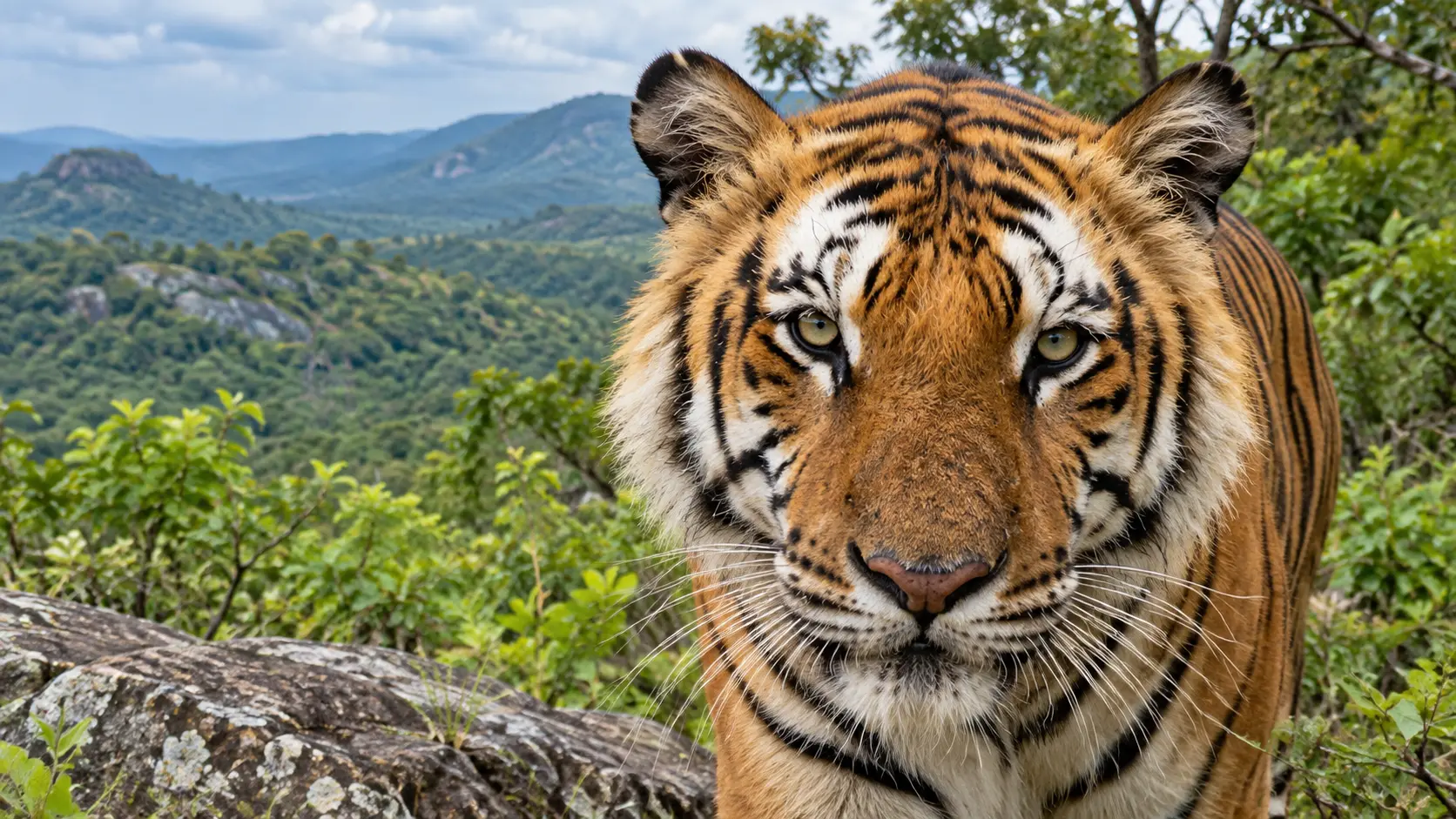
GET TO KNOW THE PLACE
Rising with dramatic geological majesty above the sun-drenched plains of southern Karnataka, the Biligirirangana Hills - popularly known as BR Hills and formally designated as…
The story of BRT Tiger Reserve (BR Hills)
Rising with dramatic geological majesty above the sun-drenched plains of southern Karnataka, the Biligirirangana Hills - popularly known as BR Hills and formally designated as the Biligiriranganatha Swamy Temple Wildlife Sanctuary (BRT Tiger Reserve) - constitute one of India’s most unique, ecologically diverse, and culturally profound mountain ecosystems. Spanning 539.52 square kilometers across the Yelandur, Kollegal, and Chamarajanagar taluks of Chamarajanagar District, this rugged hill range occupies a peerless biogeographical position: it forms the vital living ecological bridge connecting the Western Ghats mountain chain with the Eastern Ghats. Rising from 600 meters in the surrounding lowlands to an elevation of 1,816 meters (5,958 feet) at Kattari Betta, with the historic temple crest perched at 1,520 meters (4,987 feet), BR Hills represents a biological corridor of paramount national importance, enabling the genetic mixing and migration of wildlife populations between two distinct evolutionary realms.
The name Biligirirangana carries deep poetic and linguistic significance in the Kannada language: Biligiri translates to "white hill," referring to the colossal, gleaming white granite cliff face that drops four hundred vertical feet into the forested abyss, while Rangana refers to Lord Ranganatha (an incarnation of Lord Vishnu), whose ancient sanctuary crowns the highest precipice. Beyond its spiritual renown, BR Hills is an extraordinary sanctuary of biodiversity. Notified as a Tiger Reserve under Project Tiger in January 2011, its complex topography shelters five distinct forest biomes - ranging from arid scrublands and deciduous woodlands to dense evergreen shola-grassland complexes. Furthermore, BR Hills is the ancestral homeland of the Soliga indigenous community, an ancient forest-dwelling tribe whose sustainable co-existence with the forest and groundbreaking recognition of community forest rights under the Forest Rights Act serve as an inspiring global model for community-based conservation.
+----------------------------------------------------------------------------------------------------+
|                                    BRT TIGER RESERVE BIOGEOGRAPHICAL PROFILE                       |
|                                                                                                    |
|  [WESTERN GHATS ECOSYSTEM]                                              [EASTERN GHATS ECOSYSTEM]  |
|  (Moist Deciduous, Sholas, Nilgiris)                                    (Dry Scrub, Shevaroy Hills)|
|                 \                                                                    /             |
|                  \                                                                  /              |
|                   v                                                                v               |
|  ================= [BRT TIGER RESERVE: 539.52 sq km Biogeographical Bridge] ===================== |
|  - Peak Elevation: Kattari Betta (1,816 m) | Temple Crest: 1,520 m (White Rock Precipice)          |
|  - Key River Systems: Suvarnavathi & Bhargavi | 5 Forest Biomes (Scrub to Montane Sholas)          |
|  - Indigenous Stewardship: Soliga Community Podus (Forest Rights Act Community Co-management)      |
|  - Wildlife Safari Staging Ground: Kyathadevara Gudi (K Gudi Wilderness Camp, 17 km south)         |
|  ================================================================================================= |
|                 /                                                                    \             |
|                v                                                                      v            |
|  [Bandipur & Mudumalai Corridor: Southwest]                             [Cauvery Wildlife: Northeast]|
+----------------------------------------------------------------------------------------------------+
Start here. Open a tile for the full details.
Why goRead details
BR Hills offers an encounter unlike any other highland sanctuary in southern India. It marries the spiritual serenity of a high-altitude cliffside temple with the untamed wilderness of a premier tiger reserve, enriched by the profound ethnobotanical wisdom of its indigenous inhabitants.
When to visitRead details
Thanks to its elevated altitude, BR Hills enjoys a pleasant, salubrious climate throughout the year, making it an attractive year-round retreat. However, seasonal shifts bring distinctive transformations to the forest landscape and wildlife movements.
Entry & permissionsRead details
Fees, visiting hours and entry rules may change. Confirm the latest details with the official operator or local authority before travelling.
Because BR Hills is a formally notified Tiger Reserve, all public travel, temple visits, and safari activities are governed by strict conservation regulations enforced by the Karnataka Forest Department.
+----------------------------------------------------------------------------------------------------+
|                                    PERMIT & ENTRY FEE MATRIX                                       |
|                                                                                                    |
|  Category             | Regulations & Tariffs                                                      |
|  ---------------------+--------------------------------------------------------------------------- |
|  Temple Hill Access   | Free public access during daylight hours; vehicle logged at entry checkpost|
|  Temple Darshan Entry | Completely free; special sevas and archana tickets available at temple desk|
|  Night Curfew Hours   | Strict closure of all forest gates between 18:00 (6 PM) and 06:00 (6 AM)   |
|  K Gudi Bus Safari    | Approx. ₹300 - ₹500 per seat (Departmental Minibus)                        |
|  K Gudi Gypsy Safari  | Approx. ₹2,000 - ₹4,000 per seat (Jungle Lodges & Resorts package quota)   |
|  Private Forest Entry | Strictly forbidden off paved public roads; no unguided forest trekking     |
|  Plastic & Alcohol    | Total statutory ban across the entire tiger reserve boundary               |
+----------------------------------------------------------------------------------------------------+
The Strict 18:00 to 06:00 Night Traffic Curfew
The most vital regulation for every visitor to remember is the mandatory night traffic ban:
- Checkpost Gate Timings: The forest department checkposts located at Yelandur (eastern approach), Chamarajanagar / K Gudi (western approach), and Kollegal close promptly at 18:00 (6:00 PM) and do not reopen until 06:00 (6:00 AM) the following morning.
- Absolute Curfew: Absolutely no private cars, commercial taxis, or motorcycles are permitted to enter or transit through the sanctuary roads between 6:00 PM and 6:00 AM. This strict curfew was enacted under wildlife protection laws to safeguard the reserve's dense nocturnal wildlife from vehicle collisions and eliminate poaching opportunities.
- Traveler Planning: Visitors staying overnight at the temple crest or K Gudi must ensure their vehicles pass the outer foothill checkposts well before 17:30 to avoid being locked out overnight.
Temple Darshan Timings
The sacred Biligiriranganatha Swamy Temple is open daily for devotees and cultural visitors during the following hours:
- Morning Darshan: 07:00 to 13:00 (special pooja and abhisheka rituals typically take place between 08:00 and 10:00).
- Afternoon Darshan: 16:00 to 19:00 (temple closes after evening maha-mangalarathi).
- Dress Code: Devotees must dress modestly and traditionally. Men are encouraged to remove shirts before entering the inner sanctum, and footwear must be deposited at the outer stone steps. Photography inside the inner sanctum is strictly prohibited.
Safari Regulations at K Gudi
- Booking Protocols: Safari seats for open 4x4 Gypsy game drives are predominantly booked in advance through Jungle Lodges & Resorts packages at the K Gudi Wilderness Camp (
https://www.junglelodges.com/resort/k-gudi-wilderness-camp/). Limited walk-in canter bus safari tickets are issued by the forest department at the K Gudi counter on a first-come, first-served basis prior to departure shifts. - Trekking Restrictions: Independent walking, trekking, or wandering into the core jungle without an authorized forest department guide is strictly prohibited and constitutes a punishable offense under the Wildlife Protection Act.
Plan your visitRead details
BR Hills is conveniently accessible by road from the major urban centers of southern Karnataka and northwestern Tamil Nadu, offering scenic driving routes that climb through rural agrarian plains into protected mountain forests.
Explore the full guide - choose a topic below.
Why visit?
BR Hills offers an encounter unlike any other highland sanctuary in southern India.Explore detailsClose details
BR Hills offers an encounter unlike any other highland sanctuary in southern India. It marries the spiritual serenity of a high-altitude cliffside temple with the untamed wilderness of a premier tiger reserve, enriched by the profound ethnobotanical wisdom of its indigenous inhabitants.
1. The Ecological Bridge Between Two Ghats
The single most celebrated geographical feature of BR Hills is its status as the biogeographical corridor linking the Western and Eastern Ghats:
- Confluence of Evolutionary Streams: Because the ridge runs north-to-south directly between the Biligirirangan range of the Eastern Ghats and the Nilgiri-Nilambur complex of the Western Ghats, it supports an astonishing amalgamation of plant and animal species found nowhere else. Over 800 species of vascular plants, 250 species of birds, and nearly 40 species of mammals thrive within its folds.
- Five Altitudinal Forest Types: Within a 30-minute drive climbing from the plains to the hill crest, travelers experience a dramatic ecological transition: dry thorny scrub at the base gives way to open dry deciduous forest, rich moist deciduous teak woodlands, dense riverine semi-evergreen galleries along the Bhargavi River, and mystical montane evergreen shola forest patches surrounded by high-altitude rolling grasslands near the 1,800-meter ridges.
2. High-Density Tiger and Megafauna Wilderness
Notified as a Tiger Reserve in 2011, BRT harbors an exceptional concentration of apex predators and large herbivores:
- Thriving Tiger Population: Forest department camera-trapping surveys consistently establish that BRT supports a high-density population of over 60 resident Bengal tigers. The reserve's rugged topography, abundant water springs, and dense prey base provide ideal breeding conditions.
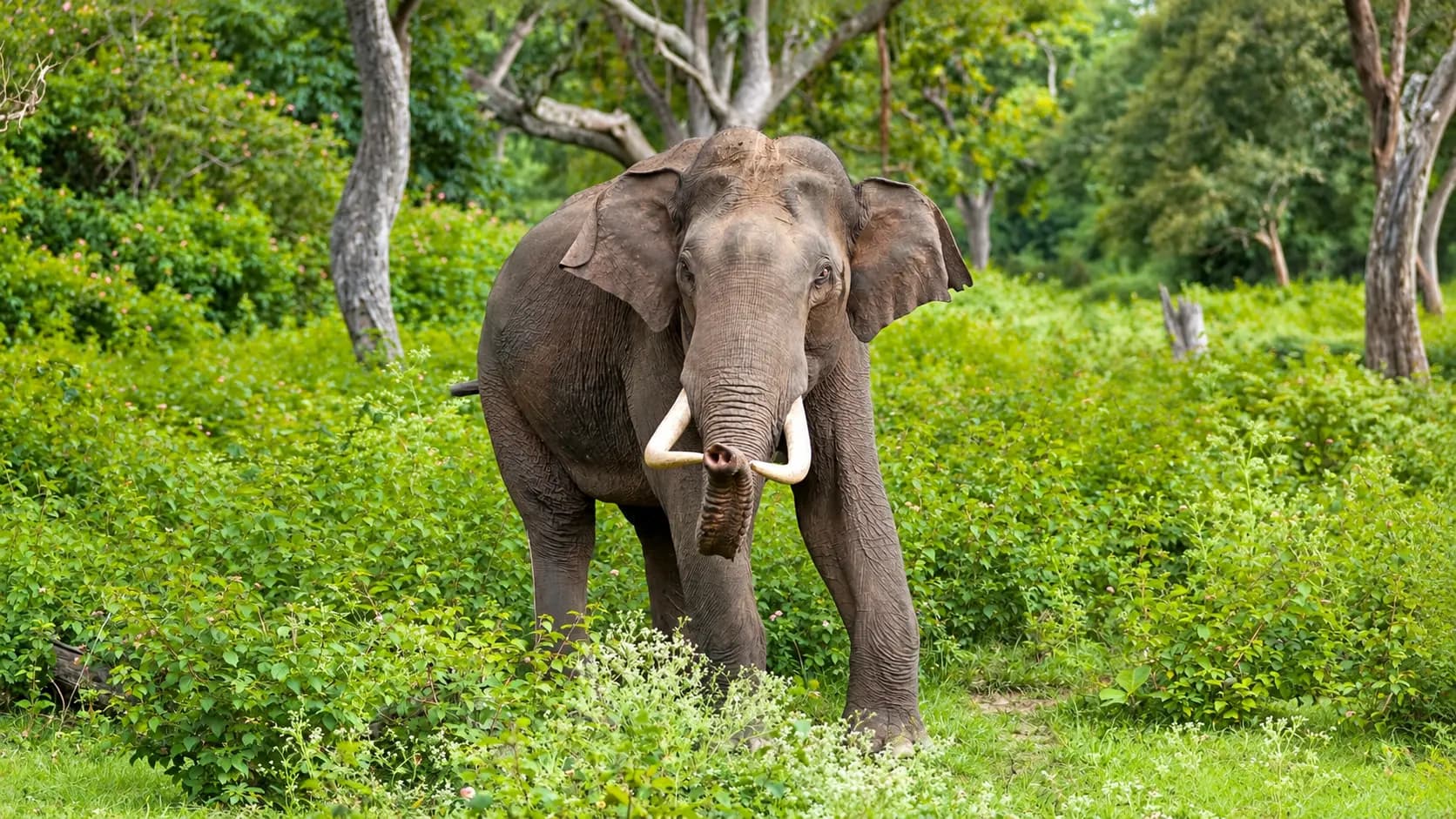
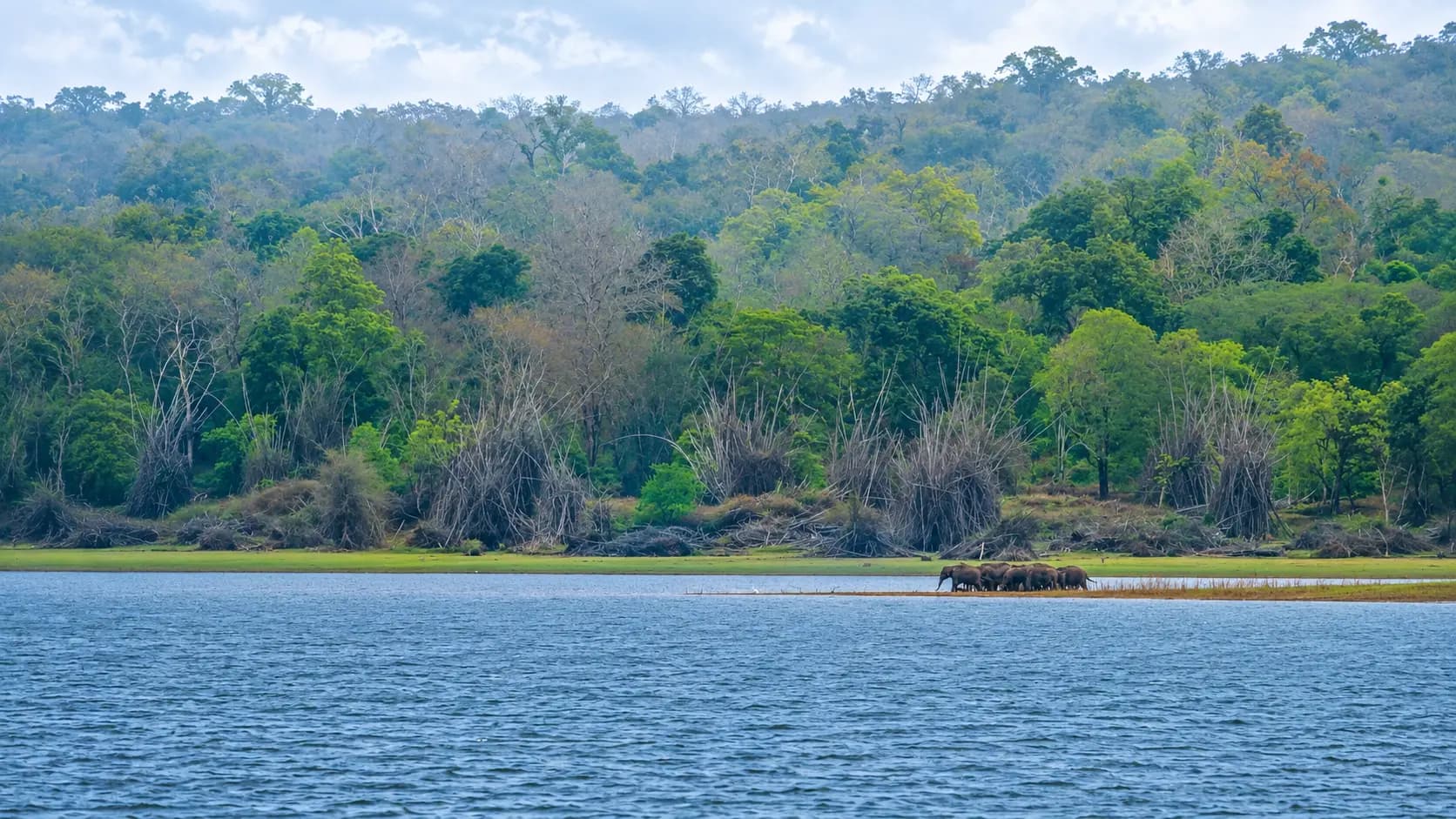
- Elephant Migration Haven: Wild Asian elephants roam the reserve in large matriarchal breeding herds. BRT acts as a crucial seasonal passage connecting elephant populations moving between the Moyar river valley in Tamil Nadu, Bandipur National Park, and the protected forests along the Cauvery River basin.
- Co-predators and Forest Ungulates: The reserve is home to dense populations of leopards, dholes (Asiatic wild dogs), sloth bears, and Indian gaurs (bison). Rare and reclusive species such as the four-horned antelope (chousingha), the mouse deer (chevrotain), and the giant flying squirrel inhabit the remote interior valleys.
3. The Ancient Biligiriranganatha Swamy Temple
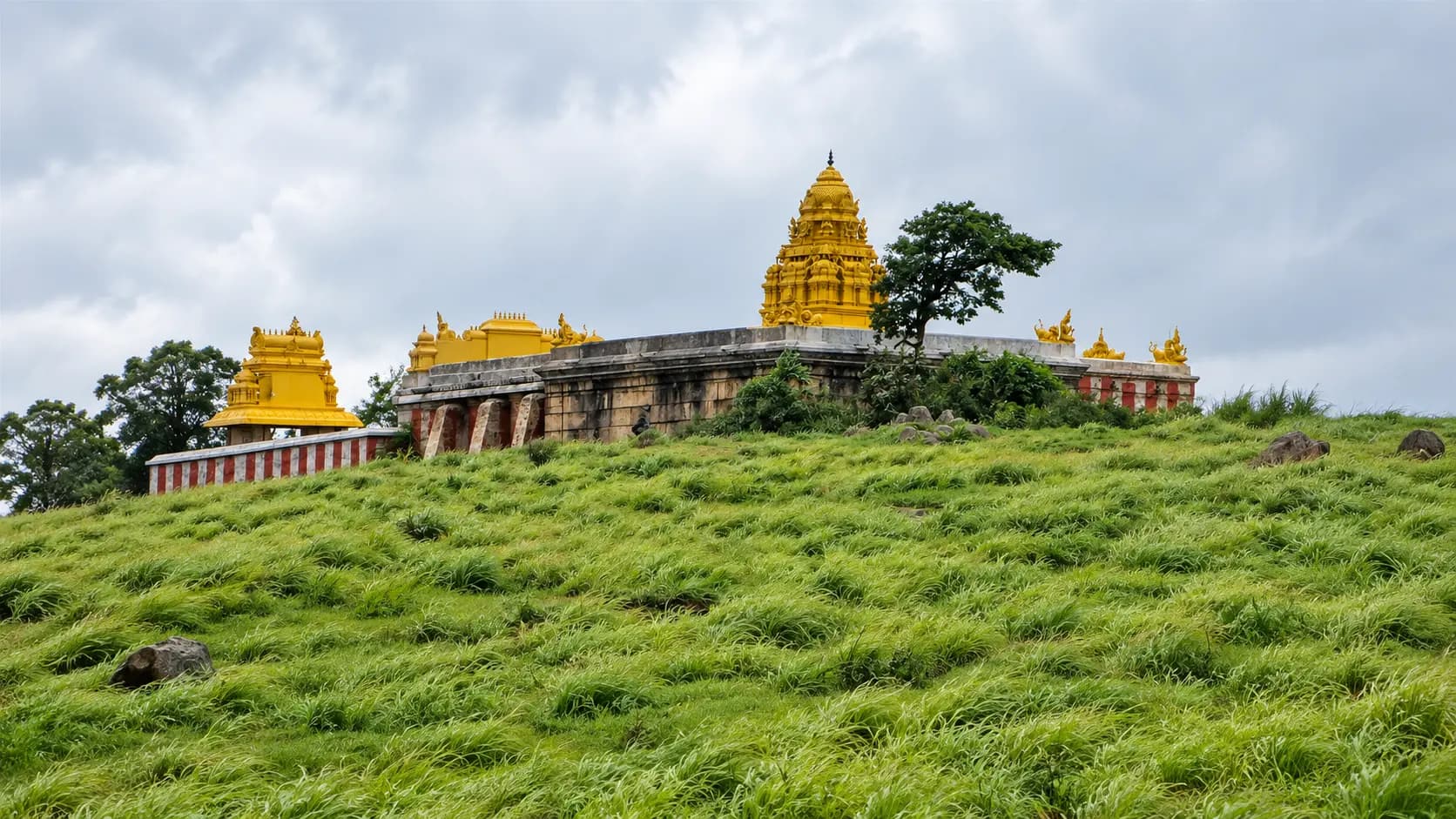
Perched precariously atop a vertical 400-foot white cliff, the Sri Biligiriranganatha Swamy Temple has been a major center of pilgrimage for over a thousand years:
- Unique Deity Iconography: Unlike most traditional South Indian shrines where Lord Ranganatha is depicted in a reclining (sayana) posture atop the serpent Adisesha, the idol inside the sanctum at BR Hills stands upright in a majestic veera posture, holding a conch (shankha), discus (chakra), bow, and arrow, accompanied by his divine consort Goddess Ranganayaki.
- The Cliffside Viewpoint: Walking onto the outer stone observation balcony of the temple reveals a jaw-dropping aerial panorama. Far below, the endless emerald canopy of the tiger reserve rolls across undulating valleys toward the Nilgiri escarpment and the plains of Tamil Nadu. In the cool morning hours, clouds drift directly below the temple steps, creating the sensation of floating above an ocean of white mist.
4. Soliga Indigenous Culture and the Sacred Doddasampige
The cultural identity of BR Hills is inseparable from the Soliga people:
- Pioneering Conservation Co-existence: The Soligas have inhabited these forests for millennia, possessing an encyclopedic knowledge of medicinal plants, wild tubers, honey-gathering techniques, and wildlife behavior. In 2011, the Soligas made history when they were officially recognized under the Forest Rights Act as legal community forest title holders within the core of a tiger reserve, proving that indigenous forest rights and rigorous wildlife conservation can thrive symbiotically.
- Doddasampige Mara (The Big Champak Tree): Situated deep within the core forest along the sacred Bhargavi River, approximately four kilometers from the main road, stands the legendary Doddasampige. Estimated by botanists to be over one thousand years old, this colossal wild champak tree (Magnolia champaca) stands thirty-four meters tall with a massive girth. The Soligas revere it as a living deity and ancestral shrine dedicated to Lord Shiva; during sacred festivals, thousands of indigenous devotees gather beneath its ancient branches for fire ceremonies and devotional worship.
What to expect
Visiting BR Hills offers a refreshing, tranquil departure from commercialized hill stations.Explore detailsClose details
Visiting BR Hills offers a refreshing, tranquil departure from commercialized hill stations. Because the entire region is an active, strictly protected tiger reserve, human presence is governed by environmental discipline, quiet reverence, and deep connection to nature.
+----------------------------------------------------------------------------------------------------+
|                                    BR HILLS VISITOR EXPERIENCE MATRIX                              |
|                                                                                                    |
|  Attribute            | Details & Practical Expectations                                           |
|  ---------------------+--------------------------------------------------------------------------- |
|  Crest Elevation      | 1,520 meters (Temple) to 1,816 meters (Kattari Betta peak)                 |
|  Atmospheric Climate  | Cool, misty mornings (14°C-18°C); pleasant, breezy afternoons (24°C-28°C)  |
|  Safari Center Base   | Kyathadevara Gudi (K Gudi), situated 17 km south of the temple settlement |
|  Safari Shifts        | Morning: 06:00 to 08:30 | Evening: 15:30 to 18:00 daily                    |
|  Checkpost Curfew     | Forest gates close strictly between 18:00 (6 PM) and 06:00 (6 AM)          |
|  Temple Atmosphere    | Traditional Dravidian temple bells, chanting, and breathtaking cliff views |
|  Commercial Footprint | Minimalist; no shopping malls or fast-food chains; rustic tribal kiosks    |
+----------------------------------------------------------------------------------------------------+
The Dual Character of the Destination
A trip to BR Hills is naturally divided into two contrasting experiences:
- The Temple Hill Crest (Biligiriranganatha): Centered around the white cliff and the ancient temple, this small settlement features narrow winding alleys, modest pilgrim guesthouses, small vegetarian canteens serving traditional hot uppittu (upma), dosas, and filter coffee, and indigenous cooperative stalls where local Soliga families sell pure wild forest honey, gooseberry (amla) preserves, herbal extracts, and handmade bamboo crafts. The atmosphere is peaceful, spiritual, and mist-laden.
- The Wildlife Hub at K Gudi (Kyathadevara Gudi): Located seventeen kilometers south of the temple along a secluded forest ghat road, K Gudi is a peaceful forest enclave surrounded by towering teak trees, bamboo clumps, and natural waterholes. K Gudi serves as the operational headquarters for all tiger reserve safaris and houses the charming, eco-conscious K Gudi Wilderness Camp operated by Jungle Lodges & Resorts.
The K Gudi Jungle Safari Experience
Safaris in BRT Tiger Reserve are operated with low-impact ecotourism ethics:
- Vehicles depart into the core wilderness at daybreak (06:00 AM) and mid-afternoon (03:30 PM). Unlike the crowded safari circuits of some commercial parks, K Gudi restricts vehicle numbers, ensuring an intimate, serene wildlife encounter.
- Accompanied by experienced Soliga tribal trackers and forest department naturalists, open 4x4 Gypsy jeeps traverse winding, unpaved tracks through dense bamboo thickets and shola margins. The naturalists read fresh tiger pugmarks in the red mud, listen intently to the sharp bark of chital alarm calls, and identify rare endemic birds flitting through the canopy.
- Sighting gaurs grazing calmly in high-altitude grassy valleys (hadlus), watching a mother elephant gently guide her calf through a bamboo grove, or spotting a sloth bear lumbering along the termite mounds are common highlights of the K Gudi drive.
Best time to visit
Thanks to its elevated altitude, BR Hills enjoys a pleasant, salubrious climate throughout the year, making it an…Explore detailsClose details
Thanks to its elevated altitude, BR Hills enjoys a pleasant, salubrious climate throughout the year, making it an attractive year-round retreat. However, seasonal shifts bring distinctive transformations to the forest landscape and wildlife movements.
+----------------------------------------------------------------------------------------------------+
|                                    ANNUAL SEASONAL & CLIMATIC CYCLE                                |
|                                                                                                    |
|  Season               | Months         | Temperature Range | Forest Atmosphere & Travel Highlights |
|  ---------------------+----------------+-------------------+-------------------------------------- |
|  Winter (Post-Monsoon)| Oct - Feb      | 12°C to 24°C      | Crisp cool air, rolling morning mist, |
|                       |                |                   | lush green sholas, high bird activity |
|  Summer (Dry Season)  | Mar - May      | 20°C to 32°C      | Warm pleasant days, dried foliage,    |
|                       |                |                   | high wildlife viewing at waterholes   |
|  Monsoon (Rains)      | Jun - Sep      | 18°C to 26°C      | Heavy rain (1,200 mm), misty hills,   |
|                       |                |                   | swollen streams, leeches in sholas    |
+----------------------------------------------------------------------------------------------------+
Winter and Post-Monsoon (October to February): The Emerald Prime
The post-monsoon and winter months represent the most idyllic period to visit BR Hills. The entire mountain range is cloaked in deep, vibrant green, seasonal mountain streams cascade through rocky ravines, and morning temperatures drop to a brisk 12°C to 15°C. Thick blankets of white fog roll over the temple cliff, dissipating slowly by mid-morning to reveal crystalline views across the plains. Birdlife is at its peak as migratory species from the Himalayas and Central Asia join the resident population. Travelers embarking on early morning safaris at K Gudi should wear warm fleece jackets and beanies.
Summer (March to May): Optimal Wildlife Tracking
Summer brings comfortable daytime temperatures (hovering around 26°C to 30°C), providing a refreshing escape from the oppressive heat of the Bengaluru and Mysuru plains. As the lower deciduous slopes drop their leaves and ground grasses dry out, visibility inside the core forest increases significantly. Wildlife - including tigers, leopards, and large elephant herds - is compelled to move toward the perennial mountain streams and waterholes surrounding K Gudi, resulting in excellent game sightings. In April and May, the sacred Doddasampige champak tree bursts into fragrant golden-yellow blossoms, attracting indigenous pilgrims from across the region.
Monsoon (June to September): Solitude and Misty Wilderness
Between June and September, the southwest monsoon brings substantial downpours to the western and southern ridges of BR Hills (annual rainfall ranges between 1,000 mm and 1,500 mm). The hills are perpetually shrouded in swirling clouds, and the scent of damp earth and crushed eucalyptus fills the air. While heavy rain can occasionally disrupt scheduled open-jeep safaris and leeches become active along forest walking trails, the monsoon is a paradise for romantic getaways, writers, landscape photographers, and nature enthusiasts seeking absolute quiet amidst rain-swept mountain forests.
How to reach
BR Hills is conveniently accessible by road from the major urban centers of southern Karnataka and northwestern…Explore detailsClose details
BR Hills is conveniently accessible by road from the major urban centers of southern Karnataka and northwestern Tamil Nadu, offering scenic driving routes that climb through rural agrarian plains into protected mountain forests.
+----------------------------------------------------------------------------------------------------+
|                                    ROAD APPROACH ROUTES TO BR HILLS                                |
|                                                                                                    |
|  [Route 1: Bengaluru to BR Hills via Kanakapura & Kollegal]                                        |
|  Bengaluru ---> NH-209 / NH-948 (Kanakapura Expressway) ---> Malavalli ---> Kollegal               |
|  Kollegal ---> Yelandur ---> Scenic Forest Ghat Road (25 km) ---> BR Hills Temple Crest            |
|  Distance: ~175 km | Driving Time: 4 to 4.5 hours | Well-paved highway with gentle forest curves   |
|                                                                                                    |
|  [Route 2: Mysuru to BR Hills via T. Narsipur & Yelandur]                                          |
|  Mysuru ---> T. Narsipur (Kaveri confluence) ---> Yelandur ---> BR Hills Ghat Road                 |
|  Distance: ~85 km | Driving Time: 2 to 2.5 hours through lush rural sugarcane belts               |
|                                                                                                    |
|  [Route 3: Chamarajanagar to BR Hills via K Gudi]                                                  |
|  Chamarajanagar ---> K Gudi Forest Checkpost (NH-209 branch) ---> K Gudi Safari Base (17 km)       |
|  K Gudi ---> Winding Ridge Road ---> BR Hills Temple Crest (17 km)                                 |
|  Distance: ~40 km | Driving Time: 1.5 hours through core tiger reserve forest                      |
+----------------------------------------------------------------------------------------------------+
Approach from Bengaluru (175 km)
The drive from Bengaluru to BR Hills is one of the most scenic weekend road trips in Karnataka:
- Vehicles leave Bengaluru via the southern corridor along National Highway 948 (NH-948, the Kanakapura Road), passing through Kanakapura and crossing the Cauvery River near Malavalli.
- Continuing south, the highway reaches the historic silk-weaving town of Kollegal and the taluk headquarters of Yelandur (150 km from Bengaluru).
- At Yelandur, vehicles pass the forest department entry checkpost and begin the twenty-five-kilometer climb up the well-paved, winding eastern ghat road. The road ascends through dry deciduous slopes, offering sweeping vistas of the agricultural plains below before terminating at the temple crest.
Approach from Mysuru (85 km)
Mysuru is the closest major rail and domestic flight gateway to BR Hills:
- Travelers take the State Highway east through T. Narsipur (famous for the sacred confluence of the Kaveri and Kapila rivers) to join the highway at Yelandur, climbing directly to the temple hill (85 km, approx. 2 hours).
- Alternatively, travelers can drive south from Mysuru along NH-766 to Nanjangud, continue to Chamarajanagar, and ascend the mountain via the western forest route through K Gudi (approx. 90 km), allowing safari visitors to reach the K Gudi Wilderness Camp directly.
The Link Road Between the Temple and K Gudi (17 km)
Visitors traveling between the Biligiriranganatha Temple crest and the safari staging ground at K Gudi use a paved, narrow, single-lane forest road spanning seventeen kilometers along the mountain spine. This scenic drive winds through dense moist deciduous and bamboo forests where wild elephants, gaurs, and spotted deer frequently cross the road. Drivers must maintain a strict speed limit of 30 km/h, avoid honking, and adhere to forest transit rules.
Public Transit and Rail Links
- Nearest Railway Stations:
- Chamarajanagar Railway Station (CMNR): Located 40 kilometers west, connected by daily passenger and express trains to Mysuru and Bengaluru.
- Mysuru Junction (MYS): Located 85 kilometers west, providing comprehensive broad-gauge rail connectivity across India.
- KSRTC Bus Connectivity: The Karnataka State Road Transport Corporation operates regular scheduled bus services connecting the BR Hills temple settlement with Yelandur, Kollegal, Chamarajanagar, and Mysuru. Several direct weekend buses also operate from Bengaluru's Satellite Bus Station.
Entry, timings and permissions
Fees, visiting hours and entry rules may change.Explore detailsClose details
Fees, visiting hours and entry rules may change. Confirm the latest details with the official operator or local authority before travelling.
Because BR Hills is a formally notified Tiger Reserve, all public travel, temple visits, and safari activities are governed by strict conservation regulations enforced by the Karnataka Forest Department.
+----------------------------------------------------------------------------------------------------+
|                                    PERMIT & ENTRY FEE MATRIX                                       |
|                                                                                                    |
|  Category             | Regulations & Tariffs                                                      |
|  ---------------------+--------------------------------------------------------------------------- |
|  Temple Hill Access   | Free public access during daylight hours; vehicle logged at entry checkpost|
|  Temple Darshan Entry | Completely free; special sevas and archana tickets available at temple desk|
|  Night Curfew Hours   | Strict closure of all forest gates between 18:00 (6 PM) and 06:00 (6 AM)   |
|  K Gudi Bus Safari    | Approx. ₹300 - ₹500 per seat (Departmental Minibus)                        |
|  K Gudi Gypsy Safari  | Approx. ₹2,000 - ₹4,000 per seat (Jungle Lodges & Resorts package quota)   |
|  Private Forest Entry | Strictly forbidden off paved public roads; no unguided forest trekking     |
|  Plastic & Alcohol    | Total statutory ban across the entire tiger reserve boundary               |
+----------------------------------------------------------------------------------------------------+
The Strict 18:00 to 06:00 Night Traffic Curfew
The most vital regulation for every visitor to remember is the mandatory night traffic ban:
- Checkpost Gate Timings: The forest department checkposts located at Yelandur (eastern approach), Chamarajanagar / K Gudi (western approach), and Kollegal close promptly at 18:00 (6:00 PM) and do not reopen until 06:00 (6:00 AM) the following morning.
- Absolute Curfew: Absolutely no private cars, commercial taxis, or motorcycles are permitted to enter or transit through the sanctuary roads between 6:00 PM and 6:00 AM. This strict curfew was enacted under wildlife protection laws to safeguard the reserve's dense nocturnal wildlife from vehicle collisions and eliminate poaching opportunities.
- Traveler Planning: Visitors staying overnight at the temple crest or K Gudi must ensure their vehicles pass the outer foothill checkposts well before 17:30 to avoid being locked out overnight.
Temple Darshan Timings
The sacred Biligiriranganatha Swamy Temple is open daily for devotees and cultural visitors during the following hours:
- Morning Darshan: 07:00 to 13:00 (special pooja and abhisheka rituals typically take place between 08:00 and 10:00).
- Afternoon Darshan: 16:00 to 19:00 (temple closes after evening maha-mangalarathi).
- Dress Code: Devotees must dress modestly and traditionally. Men are encouraged to remove shirts before entering the inner sanctum, and footwear must be deposited at the outer stone steps. Photography inside the inner sanctum is strictly prohibited.
Safari Regulations at K Gudi
- Booking Protocols: Safari seats for open 4x4 Gypsy game drives are predominantly booked in advance through Jungle Lodges & Resorts packages at the K Gudi Wilderness Camp (
https://www.junglelodges.com/resort/k-gudi-wilderness-camp/). Limited walk-in canter bus safari tickets are issued by the forest department at the K Gudi counter on a first-come, first-served basis prior to departure shifts. - Trekking Restrictions: Independent walking, trekking, or wandering into the core jungle without an authorized forest department guide is strictly prohibited and constitutes a punishable offense under the Wildlife Protection Act.
Nearby places to consider
BR Hills is situated within a captivating network of wildlife sanctuaries, historical royal palaces, and dramatic…Explore detailsClose details
BR Hills is situated within a captivating network of wildlife sanctuaries, historical royal palaces, and dramatic river waterfalls in southern Karnataka. Combining a trip to BR Hills with these nearby attractions creates a deeply rewarding multi-day circuit.
+----------------------------------------------------------------------------------------------------+
|                                    NEARBY DESTINATIONS NETWORK                                     |
|                                                                                                    |
|  [Shivanasamudra Falls: 55 km]                   [Cauvery Wildlife Sanctuary: 60 km]               |
|  (Gaganachukki & Bharachukki Kaveri Falls)       (Mahseer Angling, Galibore, Bheemeshwari)         |
|         ^                                              ^                                           |
|          \                                            /                                            |
|           \                                          /                                             |
|  ================= [BR HILLS & BRT TIGER RESERVE] ================================================ |
|           /                                          \                                             |
|          /                                            \                                            |
|         v                                              v                                           |
|  [Bandipur National Park: 85 km]                 [Male Mahadeshwara Hills (MM Hills): 70 km]       |
|  (Core Tiger Reserve & Elephant Sanctuary)       (Ancient Shiva Pilgrim Range; 1,000 m; Forest)    |
+----------------------------------------------------------------------------------------------------+
Shivanasamudra Waterfalls (55 km)
Located approximately fifty-five kilometers north of BR Hills near Malavalli, Shivanasamudra is the spectacular site where the Kaveri River divides around the island of Shivanasamudra and cascades down two roaring twin waterfalls: Gaganachukki and Bharachukki. Plunging nearly one hundred meters over rugged granite bluffs into deep mist-filled gorges, Shivanasamudra is also historically renowned as the site of the first major hydroelectric power station in Asia, established in 1902 by the Diwan of Mysore. The falls are especially breathtaking during and immediately following the southwest monsoon.
Male Mahadeshwara Hills (MM Hills - 70 km)
Situated approximately seventy kilometers east of BR Hills in the Kollegal Taluk, Male Mahadeshwara Hills is an ancient, sacred mountain range rising to an elevation of approximately 1,000 meters. Covered in dense deciduous forests that form part of the newly notified MM Hills Wildlife Sanctuary (home to tigers, elephants, and leopards), the crest is anchored by the historic temple dedicated to Lord Mahadeshwara (an incarnation of Lord Shiva). Devotees from across Karnataka and Tamil Nadu undertake foot pilgrimages through the forested hills to seek blessings at the sacred shrine.
Bandipur National Park (85 km)
Situated eighty-five kilometers southwest of BR Hills via Chamarajanagar and Gundlupet, Bandipur National Park forms the western counterpart of the Nilgiri Biosphere Reserve. Bandipur offers extensive morning and evening canter and gypsy safaris across rolling dry deciduous forests celebrated for high-density tiger populations, massive herds of Indian gaur, and migrating elephant clans.
Cauvery Wildlife Sanctuary (60 km)
Extending along the banks of the Kaveri River north and east of Kollegal, the Cauvery Wildlife Sanctuary spans rugged riverine terrain famous for its ancient river scrub, mugger crocodiles, smooth-coated otters, and the endangered hump-backed mahseer fish. It offers peaceful river-side eco-camps and scenic trekking routes along the river gorge.
In pictures
The practical bits
Before you go.
Plan ahead
A rewarding journey to BR Hills demands mindful time management, appropriate seasonal clothing, and respect for…Explore detailsClose details
A rewarding journey to BR Hills demands mindful time management, appropriate seasonal clothing, and respect for both tribal culture and wildlife boundaries.
Strict Foothill Checkpost Deadline
Ensure your vehicle passes the Yelandur or Chamarajanagar forest checkposts before 17:30 PM, leaving an essential…Explore detailsClose details
Ensure your vehicle passes the Yelandur or Chamarajanagar forest checkposts before 17:30 PM, leaving an essential thirty-minute safety buffer prior to the strictly enforced 18:00 night gate closure that bars all traffic until 06:00 AM.
Balanced Temple and Safari Staging
Divide your itinerary strategically by allocating the midday hours to visiting the cliffside Biligiriranganatha…Explore detailsClose details
Divide your itinerary strategically by allocating the midday hours to visiting the cliffside Biligiriranganatha Temple and supporting Soliga tribal honey cooperatives, while staging at K Gudi (17 km south) for early morning and evening wildlife safaris.
Warm Montane Clothing Layers
Pack a lightweight fleece jacket, windbreaker, and warm shawl, as early morning temperatures on the 1,520-meter…Explore detailsClose details
Pack a lightweight fleece jacket, windbreaker, and warm shawl, as early morning temperatures on the 1,520-meter temple cliff and open-top safaris at K Gudi regularly drop below 15°C with strong mountain winds and dense fog.
Cash and Payment Self-Sufficiency
Withdraw all required cash at automated teller machines in Yelandur, Kollegal, or Chamarajanagar before ascending…Explore detailsClose details
Withdraw all required cash at automated teller machines in Yelandur, Kollegal, or Chamarajanagar before ascending the hill, because the few ATMs located at the temple settlement frequently experience power outages or run out of currency.
Support Indigenous Soliga Enterprises
Purchase genuine forest produce - such as certified raw forest honey, wild amla gooseberry candy, and traditional…Explore detailsClose details
Purchase genuine forest produce - such as certified raw forest honey, wild amla gooseberry candy, and traditional herbal remedies - directly from the authorized Soliga tribal cooperative stores near the temple bus stand, directly sustaining indigenous family livelihoods.
+----------------------------------------------------------------------------------------------------+
|                                  SUGGESTED 2-DAY BR HILLS ITINERARY                                |
|                                                                                                    |
|  Day 1: Ascent, Cultural Immersion & Sunset Viewpoint                                              |
|  - 08:00 AM: Depart Bengaluru via Kanakapura Road (NH-948) or Mysuru via T. Narsipur.             |
|  - 12:30 PM: Pass Yelandur checkpost; climb scenic 25 km ghat road to BR Hills temple crest.       |
|  - 01:15 PM: Check into local guesthouse or proceed to K Gudi Wilderness Camp for lunch.          |
|  - 03:30 PM to 06:00 PM: Afternoon Game Drive at K Gudi. Track wild elephants and gaurs.          |
|  - 06:30 PM: Return to resort/hotel before forest road curfew; evening naturalist lecture.         |
|                                                                                                    |
|  Day 2: Temple Darshan, Sacred Tree Excursion & Descent                                            |
|  - 06:00 AM to 08:30 AM: Morning Safari at K Gudi or early morning birdwatching walk in sholas.   |
|  - 09:30 AM: Traditional South Indian breakfast; checkout from K Gudi.                             |
|  - 10:30 AM: Visit the historic Biligiriranganatha Swamy Temple; enjoy cliffside canyon vistas.   |
|  - 12:00 PM: Shop for authentic wild forest honey and herbal products at Soliga tribal store.      |
|  - 01:30 PM: Guided visit to the ancient 1,000-year-old Doddasampige sacred champak tree.         |
|  - 03:30 PM: Descend the ghat road toward Yelandur before evening; return to Bengaluru/Mysuru.    |
+----------------------------------------------------------------------------------------------------+
A few things you might wonder
Common questions about visiting BRT Tiger Reserve (BR Hills). Fees, visiting hours and ceremonies are researched details that may change; confirm current arrangements with the operator before travelling.
What is the best time to visit BR Hills for pleasant weather and wildlife safaris?
What are the checkpost timings, and is there a night traffic ban in BR Hills?
Where do wildlife safaris take place in BR Hills, and how can they be booked?
Who are the Soliga tribe, and why are they famous in BR Hills?
What is Doddasampige Mara, and how can tourists visit it?
Is private vehicle driving permitted on forest tracks inside BR Hills?
What accommodation options are available in BR Hills?
How far is BR Hills from Bengaluru and Mysuru, and what are the driving times?
Explore more in Bandipur Kabini
Discover other destinations around this hub
More Hubs in Karnataka
Continue exploring other travel hubs in this state
Planning a trip to Bandipur Kabini?