Bandipur National Park
Plan your wildlife trip to Bandipur National Park in Karnataka. Complete guide covering tiger safaris, elephant herds, night traffic bans, timings, and resorts.
Location
Bandipur & Kabini, Karnataka
A closer look
Your visit, at a glance.
Bandipur Kabini, Karnataka
GET TO KNOW THE PLACE
Spanning 872.04 square kilometers of core protected wilderness along the undulating southern plateau of Karnataka, Bandipur National Park (constituting the core of the Bandipur…
The story of Bandipur National Park
Spanning 872.04 square kilometers of core protected wilderness along the undulating southern plateau of Karnataka, Bandipur National Park (constituting the core of the Bandipur Tiger Reserve) is one of India’s most celebrated, ecologically vital, and historically significant wildlife sanctuaries. Situated primarily within the Gundlupet Taluk of Chamarajanagar District - approximately eighty kilometers south of the historic royal city of Mysuru - Bandipur rests at an average elevation of 1,020 meters (3,346 feet) above mean sea level, nestled beneath the towering, misty northern escarpments of the Nilgiri Hills.
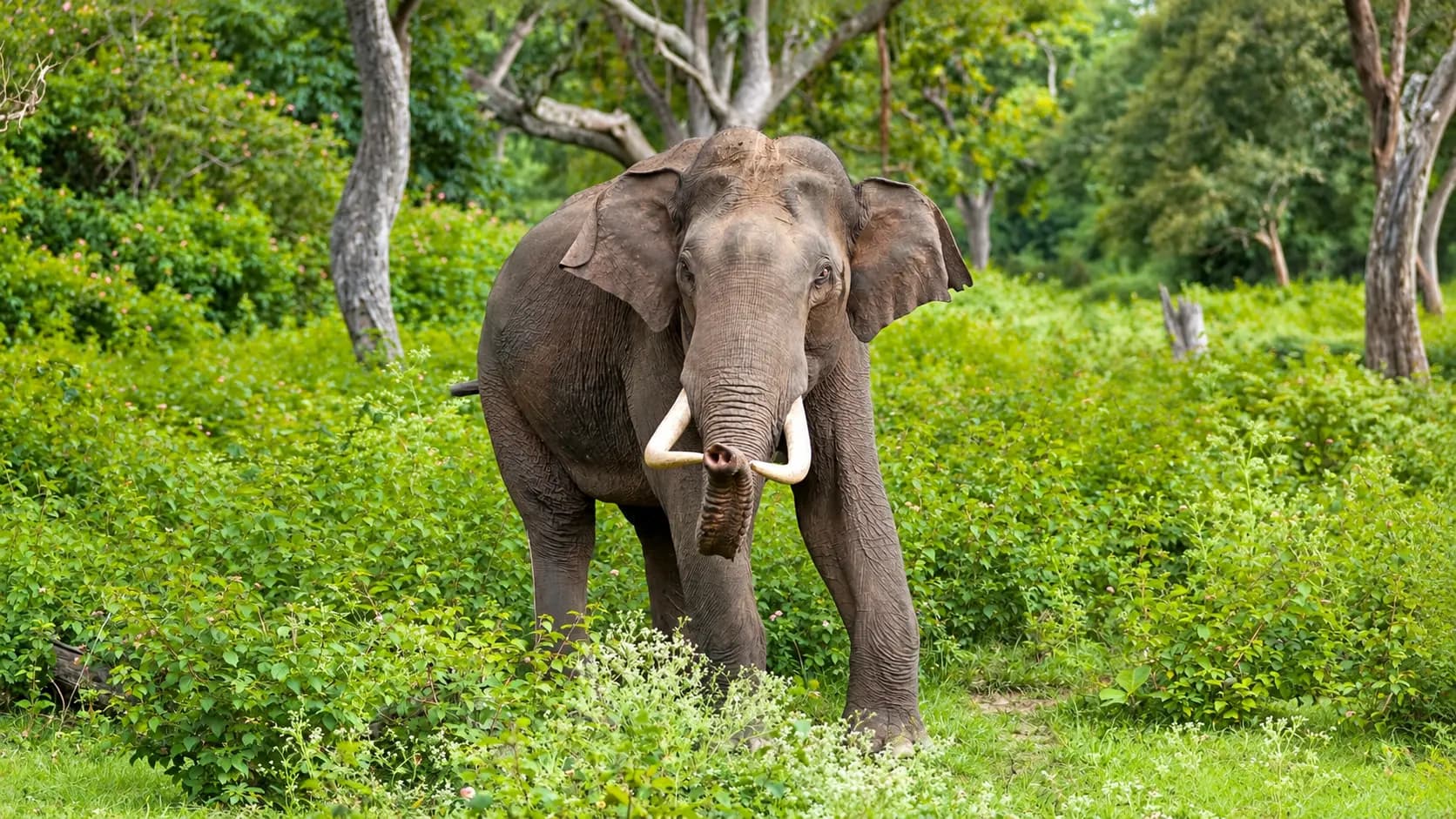
Originally carved out in 1931 by the visionary Maharaja of Mysore, Krishna Raja Wadiyar IV, as the ninety-square-kilometer Venugopala Wildlife Park, Bandipur was expanded and formally designated as one of the inaugural nine national reserves under the legendary Project Tiger initiative in 1974. Today, Bandipur forms the critical geographical and ecological linchpin of the UNESCO Nilgiri Biosphere Reserve (spanning 5,520 square kilometers). Seamlessly contiguous with Nagarhole National Park to the northwest across the Kabini reservoir, Mudumalai National Park to the south across the Moyar River in Tamil Nadu, and the Wayanad Wildlife Sanctuary to the southwest in Kerala, this interconnected forest complex shelters the single largest contiguous wild population of Asian elephants (Elephas maximus) and Bengal tigers (Panthera tigris) anywhere on the Asian continent.
Traversed by the scenic National Highway 766 (NH-766), Bandipur presents an extraordinary tapestry of dry deciduous scrub, dense teak woodlands, fragrant sandalwood groves, and lush riverine forests. Here, herds of spotted deer graze beneath golden bamboo clumps, massive Indian gaurs stride through grassy clearings, and wild Asian elephants migrate along ancestral corridors under the watchful gaze of apex predators like the leopard, the dhole (Asiatic wild dog), and the royal Bengal tiger.
+----------------------------------------------------------------------------------------------------+
|                                    BANDIPUR & NILGIRI BIOSPHERE PROFILE                            |
|                                                                                                    |
|  [Nagarhole National Park: Karnataka]           [Kabini Reservoir / River]                         |
|  (Moist Deciduous, Teak & Rosewood)                      |                                         |
|                  \                                      /                                          |
|                   \                                    /                                           |
|                    v                                  v                                            |
|  ================= [BANDIPUR NATIONAL PARK: 872 sq km Core] ====================================== |
|  - Chamarajanagar District (Gundlupet Taluk) | Elevation: 680 m to 1,454 m                         |
|  - Key Rivers: Moyar, Kabini, Nugu | Vegetation: Dry & Moist Deciduous Teak                        |
|  - Safari Base: Melukamanahalli & Reception Centre (NH-766 Corridor)                               |
|  ================================================================================================= |
|                    /                                  \                                            |
|                   /                                    \                                           |
|                  v                                      v                                          |
|  [Wayanad Wildlife Sanctuary: Kerala]           [Mudumalai National Park: Tamil Nadu]              |
|  (Western Ghats Transition Corridor)            (Across Moyar River Gorge / Nilgiris Base)         |
|                                                                                                    |
|  Combined Protected Ecosystem: >5,500 sq km | Largest Wild Elephant & Tiger Refuge in Asia         |
+----------------------------------------------------------------------------------------------------+
Start here. Open a tile for the full details.
Why goRead details
Bandipur National Park is widely recognized as one of India's premier wildlife destinations, offering an exceptional blend of accessible safari infrastructure, high animal density, rich biodiversity, and captivating royal conservation history.
When to visitRead details
The experience of Bandipur National Park varies dramatically with the rhythm of the monsoons and seasonal temperature shifts in southern Karnataka.
Entry & permissionsRead details
Fees, visiting hours and entry rules may change. Confirm the latest details with the official operator or local authority before travelling.
Access to Bandipur National Park is strictly regulated under the Wildlife Protection Act, 1972, and the National Tiger Conservation Authority (NTCA) guidelines to ensure that human presence does not disrupt wildlife habitats.
+----------------------------------------------------------------------------------------------------+
|                                    PERMIT & ENTRY FEE STRUCTURE                                    |
|                                                                                                    |
|  Category             | Indian Nationals                    | Foreign Nationals                    |
|  ---------------------+-------------------------------------+------------------------------------- |
|  Canter Bus Safari    | Approx. ₹350 - ₹500 per seat        | Approx. ₹1,500 per seat              |
|  Open Gypsy 4x4 Safari| Approx. ₹2,500 - ₹4,500 per seat    | Approx. ₹4,500 - ₹7,000 per seat     |
|  Camera Fee (DSLR)    | ₹100 - ₹500 depending on lens focal | ₹100 - ₹500 depending on lens focal  |
|  Core Forest Entry    | Strictly prohibited in private cars | Strictly prohibited in private cars  |
|  Night Driving NH-766 | Strictly banned: 21:00 to 06:00     | Strictly banned: 21:00 to 06:00      |
+----------------------------------------------------------------------------------------------------+
The Statutory Night Traffic Ban on NH-766
One of the most crucial legal regulations governing Bandipur is the mandatory night traffic ban enforced along National Highway 766 (between Gundlupet and Sultan Bathery) and the highway toward Ooty:
- Operating Hours: The forest department gates at Melukamanahalli (Karnataka entry) and Kakkanallah (Tamil Nadu border) close promptly at 21:00 (9:00 PM) and do not reopen until 06:00 (6:00 AM) the following morning.
- Zero Private Vehicle Passage: Under direct orders from the High Court of Karnataka and the Supreme Court of India, absolutely no private cars, commercial trucks, or two-wheelers are permitted to transit through the national park during these nine hours. The rule was instituted to eliminate the rampant roadkill of nocturnal wildlife, including leopards, elephants, and deer.
- Strict Exceptions: Only emergency medical ambulances and a strictly limited quota of scheduled state government transport buses (escorted in controlled convoys) are granted night passage. Travelers driving from Bengaluru or Mysuru toward Wayanad or Ooty must plan their departure to ensure they clear the forest gates well before 21:00.
Safari Booking and Departmental Permits
- Advance Online Booking: Visitors are strongly advised to book safari slots several weeks in advance through the official Karnataka Forest Department wildlife ecotourism portal (
https://aranya.gov.in/). Weekend quotas fill rapidly, especially during winter holidays and summer vacations. - On-the-Spot Booking: A designated physical ticket counter operates at the Melukamanahalli Safari Reception Centre. For morning safaris, tokens are distributed from approximately 05:45 AM; for evening safaris, the counter opens around 02:30 PM. Tickets are issued on a first-come, first-served basis for available canter bus seats.
- Strict Prohibition on Private Vehicles: Private tourist vehicles are strictly forbidden from leaving the paved national highway to enter inner forest tracks, fire lines, or safari trails. Driving off designated roads is a punishable non-bailable offense under the Wildlife Protection Act.
Forest Conduct and Code of Ethics
While inside Bandipur National Park, visitors must comply with essential conservation rules:
- Never disembark from safari vehicles inside the core forest under any circumstances.
- Maintain low voice levels; shouting, honking, playing music, or making sudden erratic movements to attract animal attention is strictly prohibited.
- Wear muted, earthy-colored clothing (shades of khaki, olive green, brown, and beige); bright fluorescent colors (red, yellow, neon) alarm wild animals and cause them to flee.
- Single-use plastic bags, bottles, and snack wrappers are strictly banned; all personal trash must be retained in vehicles and disposed of in municipal bins outside the forest.
- Smoking, consuming alcohol, and lighting open fires within the tiger reserve boundary are criminal offenses subject to immediate arrest and heavy fines.
Plan your visitRead details
Bandipur National Park is one of the most accessible wildlife reserves in southern India, benefiting from excellent multi-lane highway connectivity that links it to major metropolitan hubs and hill stations.
Explore the full guide - choose a topic below.
Why visit?
Bandipur National Park is widely recognized as one of India's premier wildlife destinations, offering an…Explore detailsClose details
Bandipur National Park is widely recognized as one of India's premier wildlife destinations, offering an exceptional blend of accessible safari infrastructure, high animal density, rich biodiversity, and captivating royal conservation history.
1. High Probability of Apex Predator and Megafauna Encounters
Bandipur is globally renowned for its extraordinary density of large mammals:
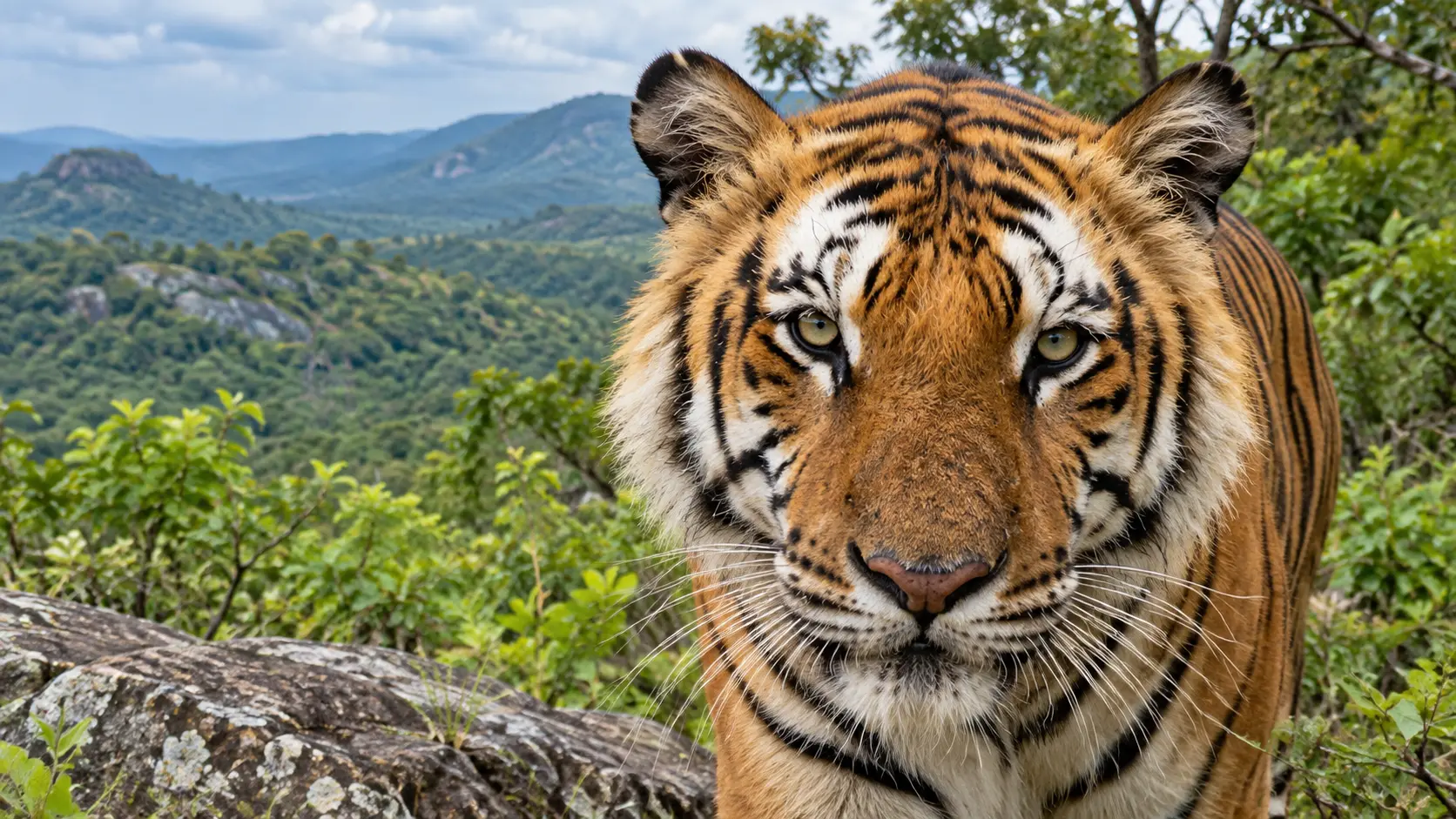
- The Royal Bengal Tiger: As one of the flagship habitats of Project Tiger, Bandipur supports a thriving population of over 140 tigers within the tiger reserve landscape. The mosaic of open dry deciduous forests and well-maintained forest department waterholes significantly enhances predator visibility compared to the impenetrable rainforests of the Western Ghats.
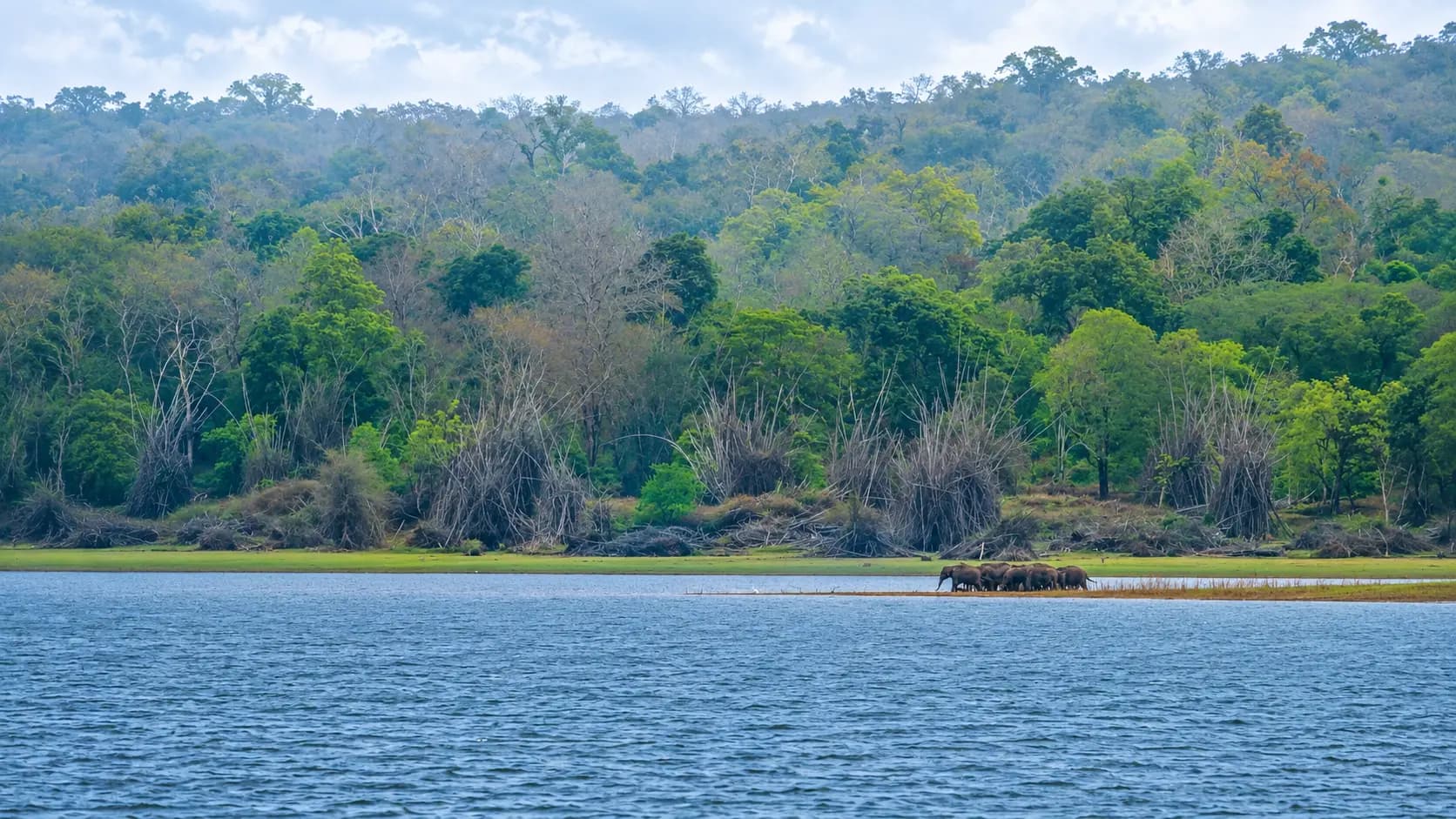
- The Asian Elephant Stronghold: Forming the heart of Project Elephant's Elephant Reserve No. 7, Bandipur is home to thousands of wild elephants. During the dry winter and summer months, matriarchal breeding herds numbering twenty to fifty individuals regularly emerge along forest riverbanks, roadside marshes, and reservoir margins, providing unforgettable viewing opportunities.
- The Enormous Indian Gaur (Bison): Bandipur is home to some of the largest herds of gaur in southern India. These magnificent wild cattle, weighing up to a ton with striking muscular frames and white-stockinged legs, graze peacefully in open meadows (hadlus) alongside herds of chital (spotted deer) and sambar.
- The Co-existence of Carnivores: In addition to tigers, Bandipur supports high densities of Indian leopards (Panthera pardus) and packs of dholes (Asiatic wild dogs, Cuon alpinus). Observing a disciplined pack of dholes hunting through the teak forest or spotting a leopard draped lazily across the horizontal bough of an axlewood tree are common safari highlights.
2. The Ecological Heart of the Nilgiri Biosphere
To visit Bandipur is to witness conservation on a trans-boundary, landscape-level scale:
- Trans-State Corridors: Because Bandipur shares unfenced, natural ecological boundaries with Tamil Nadu's Mudumalai and Kerala's Wayanad, wildlife moves freely across state lines in response to seasonal rainfall and forage availability. Elephants migrate south toward the Nilgiri foothills when northern streams dry up, while tigers establish overlapping cross-border territorial ranges.
- The Deep Moyar River Canyon: Marking the southern boundary of the national park is the spectacular Moyar River, which carves the dramatic Moyar Gorge (known locally as the Mysore Ditch), a steep natural ravine separating the Karnataka plateau from the Blue Mountains of the Nilgiris.
3. A Rich Birding Sanctuary
Bandipur is an exceptional haven for ornithologists and birdwatchers, harboring more than two hundred documented avian species:
- Raptors: The skies above Bandipur are patrolled by formidable birds of prey, including the crested serpent eagle, changeable hawk-eagle, black-winged kite, white-eyed buzzard, and the endangered white-rumped vulture.
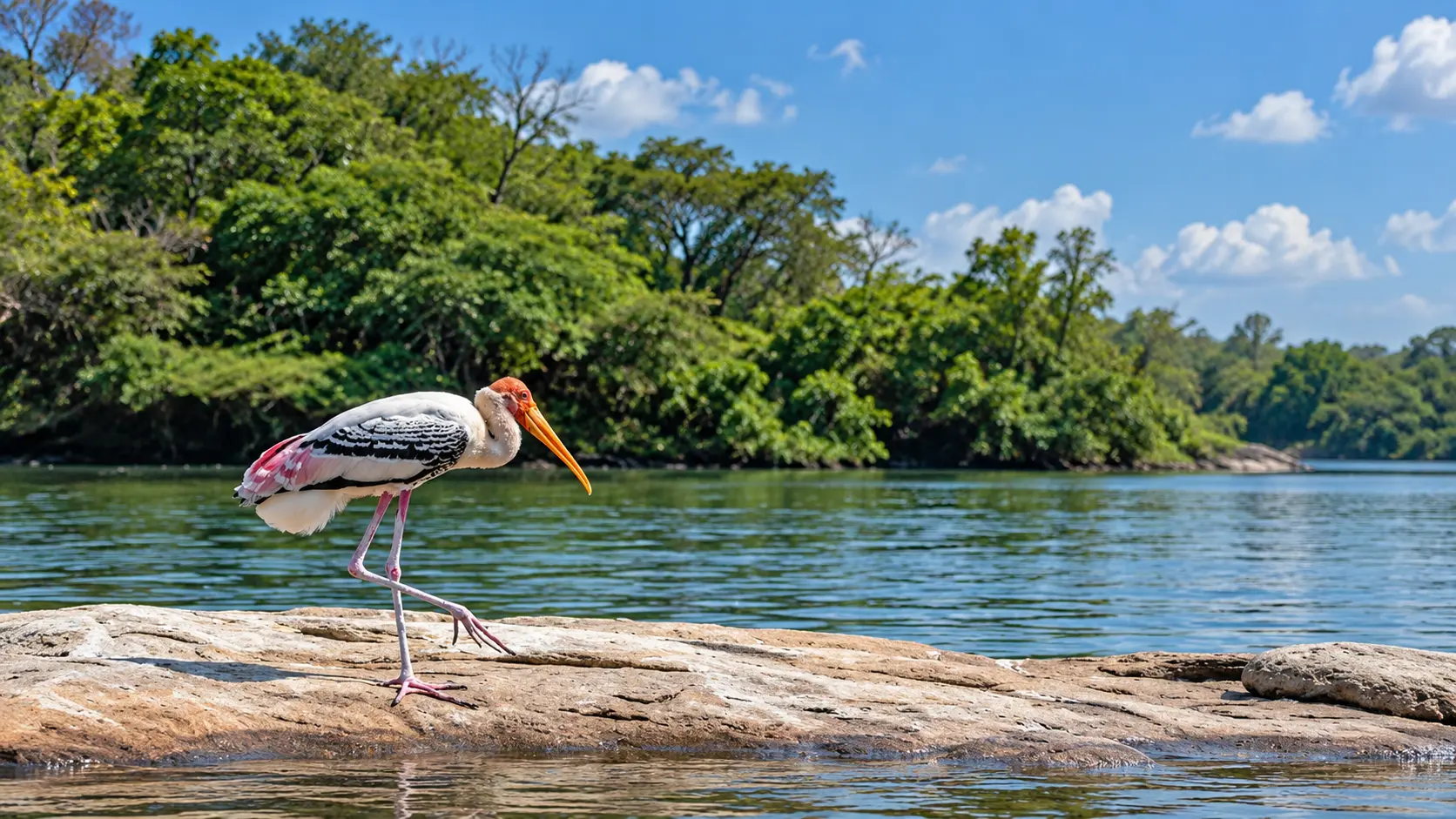
- Woodland & Water Birds: Safari drives regularly turn up the dazzling plumage of the Indian pitta, Malabar trogon, Asian paradise flycatcher, Malabar pied hornbill, grey junglefowl, brown fish owl, painted stork, and woolly-necked stork foraging near forest tanks and streams.
What to expect
Visiting Bandipur National Park combines the thrill of open-vehicle safari game drives with the strict, tranquil…Explore detailsClose details
Visiting Bandipur National Park combines the thrill of open-vehicle safari game drives with the strict, tranquil discipline of a protected forest reserve. Because the national park is managed with rigorous conservation priorities by the Karnataka Forest Department, human activity within the core forest is confined strictly to designated safari routes and forest reception zones.
+----------------------------------------------------------------------------------------------------+
|                                    BANDIPUR SAFARI EXPERIENCE AT A GLANCE                          |
|                                                                                                    |
|  Feature              | Details & Practical Expectations                                           |
|  ---------------------+--------------------------------------------------------------------------- |
|  Safari Shifts        | Morning: 06:15 to 09:00 | Evening: 15:30 to 18:00 daily                    |
|  Safari Vehicles      | Open 4x4 Gypsy (JLR / Special KFD booking) and 20-seat Canter Safari Bus    |
|  Safari Route Network | Specific rotational tourism tracks designated by forest department         |
|  Flora & Scenery      | Teak, rosewood, bamboo thickets, lantana understory, dry scrub clearings   |
|  Weather (Winter)     | Misty, brisk mornings (12°C-15°C); warm, sunny afternoons (25°C-28°C)      |
|  Weather (Summer)     | Arid, hot afternoons (32°C-36°C); golden dry foliage; waterhole focus      |
|  Key Highway Rule     | Strict 21:00 to 06:00 Night Traffic Ban on NH-766 across the core reserve  |
+----------------------------------------------------------------------------------------------------+
The Safari Game Drive Routine
Safaris in Bandipur operate in two distinct daily shifts - an early morning drive and a late afternoon drive:
- The Morning Safari (06:15 to 09:00): Vehicles depart into the core zone as the morning sun filters through the canopy. Thick blankets of fog often hang over the low-lying grasslands, lifting slowly to reveal herds of spotted deer grazing on dew-drenched shoots. Predators are frequently active during the cool first hour, walking along forest dirt tracks to avoid the wet underbrush or drinking at natural water reservoirs.
- The Evening Safari (15:30 to 18:00): As the heat of the afternoon dissipates, animal activity revives. Herds of gaur move into open clearings, while elephants emerge from dense bamboo thickets to forage on fresh grasses and mud-bathe at forest ponds. The golden light of the late afternoon provides exceptional conditions for wildlife photography, concluding as vehicles exit the forest gates promptly at sunset.
Safari Vehicle Options
The Karnataka Forest Department and its ecotourism partner, Jungle Lodges & Resorts (JLR), offer two primary modes of safari exploration:
- Department Canter Bus Safari: These sturdy, open-sided 20-to-25-seat minibuses offer an elevated viewing platform that allows passengers to see over roadside lantana scrub. Tickets can be booked on the spot at the Melukamanahalli safari counter or online via the forest department portal. It is an economical, family-friendly option.
- Open 4x4 Gypsy Safari: Highly preferred by wildlife photographers and discerning travelers, open Maruti Gypsy jeeps carry up to six guests accompanied by an authorized forest department naturalist-driver. Jeeps offer maneuverability, eye-level photography perspectives, and access to deeper, specialized forest tracks. Gypsy seats are predominantly reserved for guests staying at the state-owned Bandipur Safari Lodge (Jungle Lodges & Resorts), with limited daily quotas made available to the general public via online forest booking.
Best time to visit
The experience of Bandipur National Park varies dramatically with the rhythm of the monsoons and seasonal…Explore detailsClose details
The experience of Bandipur National Park varies dramatically with the rhythm of the monsoons and seasonal temperature shifts in southern Karnataka.
+----------------------------------------------------------------------------------------------------+
|                                    ANNUAL SEASONAL & WILDLIFE CALENDAR                             |
|                                                                                                    |
|  Season               | Months         | Temperature Range | Forest Character & Wildlife Trends    |
|  ---------------------+----------------+-------------------+-------------------------------------- |
|  Winter (Post-Monsoon)| Oct - Feb      | 14°C to 28°C      | Lush greenery, misty mornings, cool   |
|                       |                |                   | weather, high birdlife, deer herds    |
|  Summer (Dry Season)  | Mar - May      | 24°C to 36°C      | Dried vegetation, superior visibility,|
|                       |                |                   | megafauna congregates at waterholes   |
|  Monsoon (Green Season| Jun - Sep      | 20°C to 30°C      | Heavy rain, lush emerald jungle,      |
|                       |                |                   | breeding birds; dense scrub lowers vis|
+----------------------------------------------------------------------------------------------------+
Summer and Pre-Monsoon (March to May): The Prime Predator Window
For wildlife photographers and enthusiasts prioritizing big cat sightings, summer is widely considered the most productive season. As the deciduous trees drop their leaves and undergrowth dries out, forest visibility increases exponentially. Natural streams and shallow forest puddles dry up, compelling tigers, leopards, wild dogs, and massive elephant herds to congregate reliably around the remaining permanent waterholes, artificial forest department water troughs, and the margins of the Kabini and Moyar rivers. Daytime temperatures can be warm (reaching 32°C to 36°C), but early morning and late afternoon game drives remain comfortable.
Winter and Post-Monsoon (October to February): Peak Tourism and Pleasant Climates
Winter is the most comfortable and visually scenic time to visit Bandipur. Daytime temperatures hover pleasantly between 22°C and 28°C under clear blue skies, while nights and early mornings are crisp and cool (12°C to 15°C), requiring light woolens or fleece jackets during open-top safaris. The forest retains its rich post-monsoon green mantle, forest tanks are brimming with water, and migratory winter birds arrive in large numbers. While dense foliage can make spotting solitary predators slightly more challenging than in summer, overall wildlife activity - including massive herds of deer, gaur, and grazing elephants - is exceptionally high. Advance booking for weekends and holiday periods during this season is vital.
Monsoon (June to September): The Verdant Rejuvenation
Between June and September, the southwest monsoon brings substantial rainfall (900 mm to 1,200 mm) to Bandipur. The parched dry deciduous landscape transforms miraculously within weeks into a lush, emerald-green jungle blanketed in wildflowers. While safaris continue to operate, heavy downpours can occasionally cause muddy track conditions, and the thick, dense undergrowth provides deep cover for wildlife, making predators harder to spot. However, the monsoon is an enchanting time for travelers seeking solitude, landscape photography, dramatic cloudscapes over the Nilgiri Hills, and vibrant frog and bird activity.
How to reach
Bandipur National Park is one of the most accessible wildlife reserves in southern India, benefiting from…Explore detailsClose details
Bandipur National Park is one of the most accessible wildlife reserves in southern India, benefiting from excellent multi-lane highway connectivity that links it to major metropolitan hubs and hill stations.
+----------------------------------------------------------------------------------------------------+
|                                    ROAD APPROACH ROUTES TO BANDIPUR                                |
|                                                                                                    |
|  [Route 1: Bengaluru to Bandipur via Mysuru]                                                       |
|  Bengaluru ---> Bengaluru-Mysuru Expressway (NH-275) ---> Mysuru Ring Road                         |
|  Mysuru ---> Nanjangud ---> Gundlupet ---> NH-766 ---> Bandipur Forest Reception                   |
|  Distance: ~220 km | Driving Time: 4.5 to 5 hours | Fully 4-lane expressway to Mysuru              |
|                                                                                                    |
|  [Route 2: Ooty to Bandipur via Mudumalai]                                                         |
|  Ooty (Nilgiris) ---> Kalhatty Ghats (36 hairpins) OR Gudalur ---> Mudumalai (Theppakadu)          |
|  Mudumalai ---> Kakkanallah Border Checkpost ---> Bandipur Reception Centre                        |
|  Distance: ~50 km (via Kalhatty) or ~80 km (via Gudalur) | Driving Time: 1.5 to 2.5 hours          |
|                                                                                                    |
|  [Route 3: Wayanad / Kerala to Bandipur]                                                           |
|  Sultan Bathery ---> NH-766 Corridor ---> Gundlupet Junction ---> Bandipur                         |
|  Distance: ~55 km | Driving Time: 1.5 hours through border forest valleys                          |
+----------------------------------------------------------------------------------------------------+
Approach from Bengaluru (220 km)
The drive from Bengaluru to Bandipur is remarkably smooth:
- Travelers take the ten-lane Bengaluru-Mysuru Access-Controlled Expressway (NH-275), covering the 140-kilometer stretch between Bengaluru and Mysuru in approximately ninety minutes.
- From the Mysuru southern ring road, vehicles take National Highway 766 (NH-766) south through the temple town of Nanjangud to the commercial junction town of Gundlupet (60 km).
- At Gundlupet, NH-766 continues straight south for twenty kilometers, passing scenic sunflower and marigold fields before entering the forested perimeter of Bandipur Tiger Reserve at Melukamanahalli, where the forest department safari complex, reception center, and major resorts are located.
Approach from Mysuru (80 km)
Mysuru serves as the immediate rail and domestic flight gateway to Bandipur. The 80-kilometer journey south along NH-766 takes approximately ninety minutes to two hours via Nanjangud and Gundlupet. Frequent Karnataka State Road Transport Corporation (KSRTC) intercity and express buses run between the Mysuru Central Bus Stand and Gundlupet/Ooty, dropping passengers directly at the Bandipur forest reception gate.
Approach from Ooty and Mudumalai (Tamil Nadu)
Bandipur is situated just fifty to eighty kilometers north of the famous hill station of Udhagamandalam (Ooty) in the Nilgiri Hills:
- Via Kalhatty Ghat Road (50 km): A thrilling, steep descent featuring thirty-six hairpin switchbacks down the northern Nilgiri escarpment directly into Mudumalai (Theppakadu), followed by a short ten-kilometer drive across the state border at Kakkanallah into Bandipur. (Note: This steep ghat road is strictly restricted for commercial vehicles and downhill tourist traffic; check current police advisories).
- Via Gudalur (80 km): The gentler, standard national highway route descending from Ooty through Pykara and Gudalur, joining NH-766 at Theppakadu and crossing into Bandipur.
Rail and Air Connections
- Nearest Railway Station: Mysuru Junction (MYS), located 80 kilometers north. Mysuru is connected by high-speed Vande Bharat and Shatabdi express trains to Bengaluru, Chennai, and other southern cities. Pre-paid taxis and rental vehicles are readily available outside the station.
- Nearest Airports:
- Mysuru Airport (MYQ): Located 75 kilometers north, offering domestic regional flights to Chennai, Hyderabad, and Goa.
- Coimbatore International Airport (CJB): Located approximately 140 kilometers south via Mettupalayam and Ooty.
- Kempegowda International Airport Bengaluru (BLR): Located 260 kilometers northeast, offering comprehensive international and domestic flight connectivity.
Entry, timings and permissions
Fees, visiting hours and entry rules may change.Explore detailsClose details
Fees, visiting hours and entry rules may change. Confirm the latest details with the official operator or local authority before travelling.
Access to Bandipur National Park is strictly regulated under the Wildlife Protection Act, 1972, and the National Tiger Conservation Authority (NTCA) guidelines to ensure that human presence does not disrupt wildlife habitats.
+----------------------------------------------------------------------------------------------------+
|                                    PERMIT & ENTRY FEE STRUCTURE                                    |
|                                                                                                    |
|  Category             | Indian Nationals                    | Foreign Nationals                    |
|  ---------------------+-------------------------------------+------------------------------------- |
|  Canter Bus Safari    | Approx. ₹350 - ₹500 per seat        | Approx. ₹1,500 per seat              |
|  Open Gypsy 4x4 Safari| Approx. ₹2,500 - ₹4,500 per seat    | Approx. ₹4,500 - ₹7,000 per seat     |
|  Camera Fee (DSLR)    | ₹100 - ₹500 depending on lens focal | ₹100 - ₹500 depending on lens focal  |
|  Core Forest Entry    | Strictly prohibited in private cars | Strictly prohibited in private cars  |
|  Night Driving NH-766 | Strictly banned: 21:00 to 06:00     | Strictly banned: 21:00 to 06:00      |
+----------------------------------------------------------------------------------------------------+
The Statutory Night Traffic Ban on NH-766
One of the most crucial legal regulations governing Bandipur is the mandatory night traffic ban enforced along National Highway 766 (between Gundlupet and Sultan Bathery) and the highway toward Ooty:
- Operating Hours: The forest department gates at Melukamanahalli (Karnataka entry) and Kakkanallah (Tamil Nadu border) close promptly at 21:00 (9:00 PM) and do not reopen until 06:00 (6:00 AM) the following morning.
- Zero Private Vehicle Passage: Under direct orders from the High Court of Karnataka and the Supreme Court of India, absolutely no private cars, commercial trucks, or two-wheelers are permitted to transit through the national park during these nine hours. The rule was instituted to eliminate the rampant roadkill of nocturnal wildlife, including leopards, elephants, and deer.
- Strict Exceptions: Only emergency medical ambulances and a strictly limited quota of scheduled state government transport buses (escorted in controlled convoys) are granted night passage. Travelers driving from Bengaluru or Mysuru toward Wayanad or Ooty must plan their departure to ensure they clear the forest gates well before 21:00.
Safari Booking and Departmental Permits
- Advance Online Booking: Visitors are strongly advised to book safari slots several weeks in advance through the official Karnataka Forest Department wildlife ecotourism portal (
https://aranya.gov.in/). Weekend quotas fill rapidly, especially during winter holidays and summer vacations. - On-the-Spot Booking: A designated physical ticket counter operates at the Melukamanahalli Safari Reception Centre. For morning safaris, tokens are distributed from approximately 05:45 AM; for evening safaris, the counter opens around 02:30 PM. Tickets are issued on a first-come, first-served basis for available canter bus seats.
- Strict Prohibition on Private Vehicles: Private tourist vehicles are strictly forbidden from leaving the paved national highway to enter inner forest tracks, fire lines, or safari trails. Driving off designated roads is a punishable non-bailable offense under the Wildlife Protection Act.
Forest Conduct and Code of Ethics
While inside Bandipur National Park, visitors must comply with essential conservation rules:
- Never disembark from safari vehicles inside the core forest under any circumstances.
- Maintain low voice levels; shouting, honking, playing music, or making sudden erratic movements to attract animal attention is strictly prohibited.
- Wear muted, earthy-colored clothing (shades of khaki, olive green, brown, and beige); bright fluorescent colors (red, yellow, neon) alarm wild animals and cause them to flee.
- Single-use plastic bags, bottles, and snack wrappers are strictly banned; all personal trash must be retained in vehicles and disposed of in municipal bins outside the forest.
- Smoking, consuming alcohol, and lighting open fires within the tiger reserve boundary are criminal offenses subject to immediate arrest and heavy fines.
Nearby places to consider
Bandipur sits at the center of an extraordinary wildlife and cultural circuit in the borderlands of Karnataka…Explore detailsClose details
Bandipur sits at the center of an extraordinary wildlife and cultural circuit in the borderlands of Karnataka, Tamil Nadu, and Kerala. Travelers can easily combine Bandipur with nearby high-altitude hill peaks, river sanctuaries, and adjacent national parks.
+----------------------------------------------------------------------------------------------------+
|                                    NEARBY DESTINATIONS NETWORK                                     |
|                                                                                                    |
|  [Kabini Reservoir & Nagarhole: 70 km]           [Himavad Gopalaswamy Betta: 18 km]                |
|  (Famous Black Panther & Boat Safaris)           (Highest Peak in Bandipur; 1,454 m; Temple)       |
|         ^                                              ^                                           |
|          \                                            /                                            |
|           \                                          /                                             |
|  [BANDIPUR RECEPTION CENTRE] <-----------------------+                                             |
|           /                                          \                                             |
|          /                                            \                                            |
|         v                                              v                                           |
|  [Mudumalai Tiger Reserve: 12 km]                [Biligirirangana Hills (BR Hills): 85 km]         |
|  (Theppakadu Elephant Camp; Tamil Nadu)          (Ecological Bridge between Ghats; Temple)         |
+----------------------------------------------------------------------------------------------------+
Himavad Gopalaswamy Betta (1,454 m)
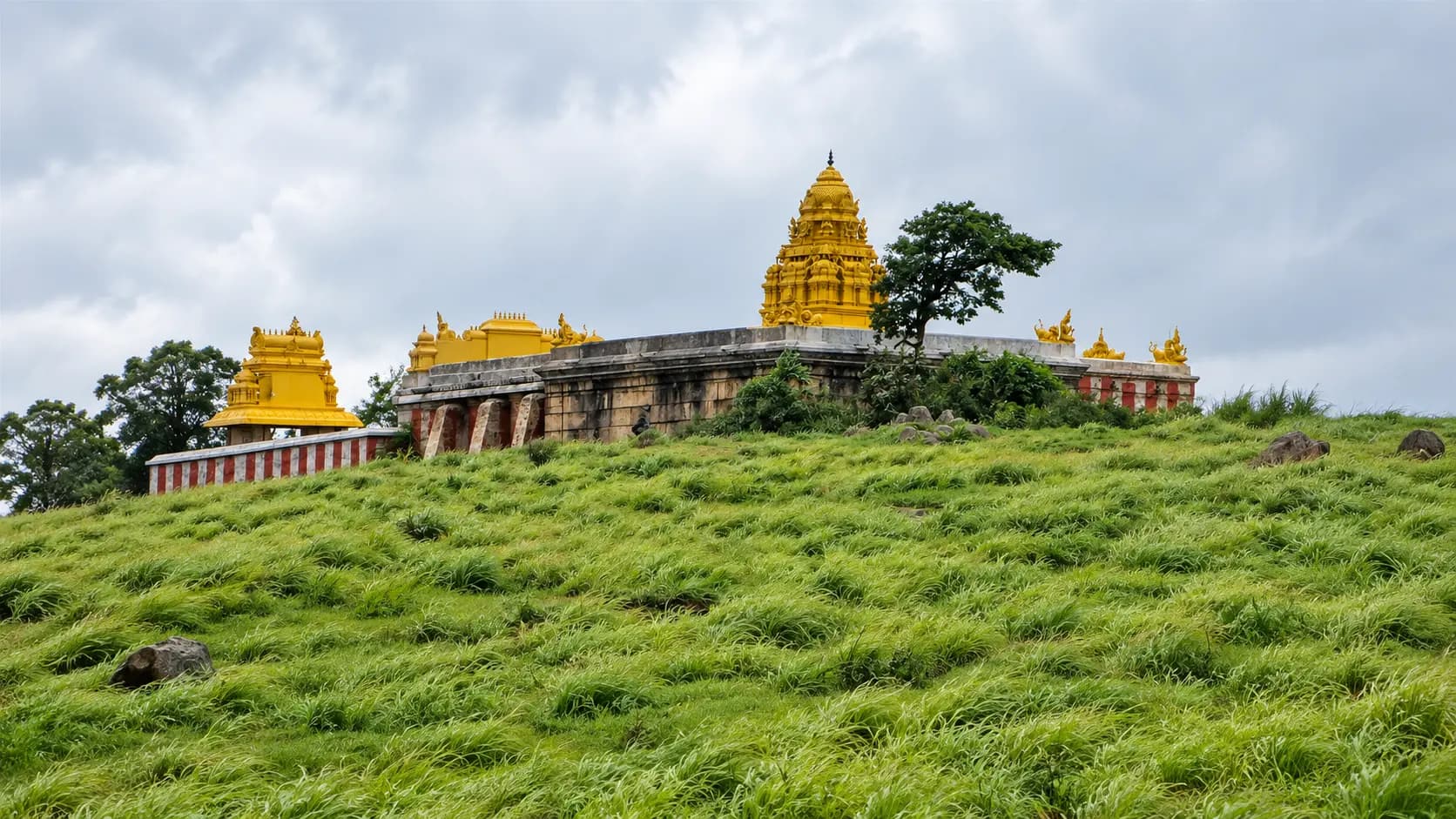
Located just eighteen kilometers northwest of the Bandipur reception center, Himavad Gopalaswamy Betta is the highest peak in Bandipur National Park, rising to an elevation of 1,454 meters. Crowned by the historic fourteenth-century Venugopala Swamy Temple dedicated to Lord Krishna, the peak is perpetually cloaked in swirling white mist (Himavad means "enveloped in snow/mist"). The summit offers panoramic views across the rolling hills and deep green forests of the tiger reserve, where wild elephants are frequently seen grazing in the grassy valleys below. To preserve the fragile ecology, private vehicles are banned beyond the base at Hangala; visitors board dedicated KSRTC electric or eco-friendly shuttle buses to reach the summit shrine.
Mudumalai National Park and Theppakadu Elephant Camp (Tamil Nadu)
Extending seamlessly south of Bandipur across the state border at Kakkanallah, Mudumalai National Park forms the Tamil Nadu sector of the Nilgiri Biosphere Reserve. Situated twelve kilometers south of Bandipur, the forest settlement of Theppakadu houses the historic Theppakadu Elephant Camp - one of the oldest Asian elephant care centers in India, established in 1910. Visitors can observe domesticated temple elephants during their morning and evening feeding sessions and embark on Mudumalai forest department safaris exploring the Moyar River gorge.
Kabini River and Nagarhole Tiger Reserve
Located approximately seventy kilometers west of Bandipur via Gundlupet and H.D. Kote, the Kabini River reservoir forms the shared boundary between Bandipur and Nagarhole National Park. Kabini is world-renowned for its boat safaris, which cruise along the backwaters where hundreds of wild elephants, herds of gaur, and mugger crocodiles congregate during the dry summer months. Kabini is also famous as one of the premier locations in Asia for sightings of the rare melanistic leopard (black panther).
Biligirirangana Hills (BR Hills / BRT Wildlife Sanctuary)
Situated eighty-five kilometers northeast of Bandipur in Chamarajanagar District, the BRT Wildlife Sanctuary sits atop a jagged mountain range that acts as the vital ecological bridge connecting the Western Ghats with the Eastern Ghats. Rising to 1,800 meters, BR Hills is home to ancient champak trees, wild tigers, elephants, and the indigenous Soliga tribal community, offering pristine trekking routes and panoramic viewpoints.
In pictures
The practical bits
Before you go.
Plan ahead
Maximizing a wildlife trip to Bandipur requires disciplined scheduling, appropriate safari gear, and strict…Explore detailsClose details
Maximizing a wildlife trip to Bandipur requires disciplined scheduling, appropriate safari gear, and strict respect for forest transit deadlines.
Night Highway Arrival Buffer
Check the current visiting hours and permitted access with the site operator before departure; ceremonies…Explore detailsClose details
Check the current visiting hours and permitted access with the site operator before departure; ceremonies, closures and visitor sessions can affect access.
Multiple Safari Scheduling
Book a minimum of three distinct safari game drives across a two-night stay - combining both early morning…Explore detailsClose details
Book a minimum of three distinct safari game drives across a two-night stay - combining both early morning (06:15) and late afternoon (15:30) shifts - to dramatically increase your statistical probability of tracking elusive apex predators and observing varied megafauna behavior.
Neutral Clothing and Weather Layering
Pack loose-fitting, breathable clothing in earthy tones of khaki, beige, and olive green to avoid startling…Explore detailsClose details
Pack loose-fitting, breathable clothing in earthy tones of khaki, beige, and olive green to avoid startling wildlife, and carry a windproof fleece jacket and warm beanie for open-top morning safaris, which encounter brisk, wind-chilled forest air before sunrise.
Camera Gear and Dust Protection
Equip telephoto lenses ranging between 100mm and 400mm or 600mm for wildlife photography, bring spare camera…Explore detailsClose details
Equip telephoto lenses ranging between 100mm and 400mm or 600mm for wildlife photography, bring spare camera batteries that deplete rapidly in cool morning air, and pack protective dust covers or silicone wraps to shield delicate camera sensors from the fine red soil churned up along dry safari trails.
Perimeter Resort Selection
Select authorized eco-resorts or government properties such as the Bandipur Safari Lodge (Jungle Lodges &…Explore detailsClose details
Select authorized eco-resorts or government properties such as the Bandipur Safari Lodge (Jungle Lodges & Resorts) located in the Melukamanahalli cluster along the northern fringe, ensuring proximity to the morning safari departure gates and avoiding late-night transit stress.
+----------------------------------------------------------------------------------------------------+
|                                  SUGGESTED 2-DAY BANDIPUR WILDLIFE ITINERARY                       |
|                                                                                                    |
|  Day 1: Arrival & The Afternoon Game Drive                                                         |
|  - 12:30 PM: Arrive at Melukamanahalli resort base via Mysuru (NH-766). Check-in and lunch.        |
|  - 02:45 PM: Assemble at Safari Reception Centre; verify safari permits and camera passes.        |
|Check the current visiting hours and permitted access with the site operator before departure; ceremonies, closures and visitor sessions can affect access. Focus on elephant herds,         |
|    gaur feeding along grasslands, and predator activity around waterholes.                         |
|  - 07:30 PM: Wildlife documentary screening and naturalist briefing at resort; early dinner.       |
|                                                                                                    |
|  Day 2: Morning Tracking & Cultural Excursions                                                     |
|  - 05:45 AM: Wake-up call; hot tea/coffee; assemble at the forest departure bay.                  |
|  - 06:15 AM to 09:00 AM: Morning Safari 2. Track big cats via fresh pugmarks and alarm calls      |
|    of chital and langurs in misty teak clearings. Excellent birding opportunities.                 |
|  - 09:30 AM: Full breakfast at resort. Rest during the warm midday heat.                          |
|  - 01:30 PM: Short excursion to the scenic Gopalaswamy Betta hill peak (1,454 m) via KSRTC bus.   |
|  - 03:30 PM to 06:00 PM: Afternoon Safari 3 (Alternative sector). Track leopards along rocky      |
|    kopjes and watch sunset over the Nilgiri escarpment.                                            |
|  - 08:00 PM: Campfire dinner and overnight stay.                                                   |
+----------------------------------------------------------------------------------------------------+
A few things you might wonder
Common questions about visiting Bandipur National Park. Fees, visiting hours and ceremonies are researched details that may change; confirm current arrangements with the operator before travelling.
What is the best time to see tigers and elephants in Bandipur National Park?
What is the night traffic ban on NH-766 through Bandipur, and what are its timings?
How do I book a safari in Bandipur, and what are the vehicle options?
Are private cars allowed to drive inside the forest for sightseeing?
What are the official safari timings in Bandipur?
Can tourists stay inside Bandipur National Park?
What clothing and gear should visitors bring for safaris?
How far is Bandipur from Bengaluru and Mysuru, and what is the travel time?
Explore more in Bandipur Kabini
Discover other destinations around this hub
More Hubs in Karnataka
Continue exploring other travel hubs in this state
Planning a trip to Bandipur Kabini?