Rock Fort Temple (Trichy)
Comprehensive visitor guide to Rock Fort Temple (Malaikkottai) in Trichy. Climb 437 steps to Ucchi Pillayar, explore Thayumanaswamy shrine, timings & history.
Location
Thanjavur & Trichy, Tamil Nadu
A closer look
Your visit, at a glance.
Thanjavur Trichy, Tamil Nadu
GET TO KNOW THE PLACE
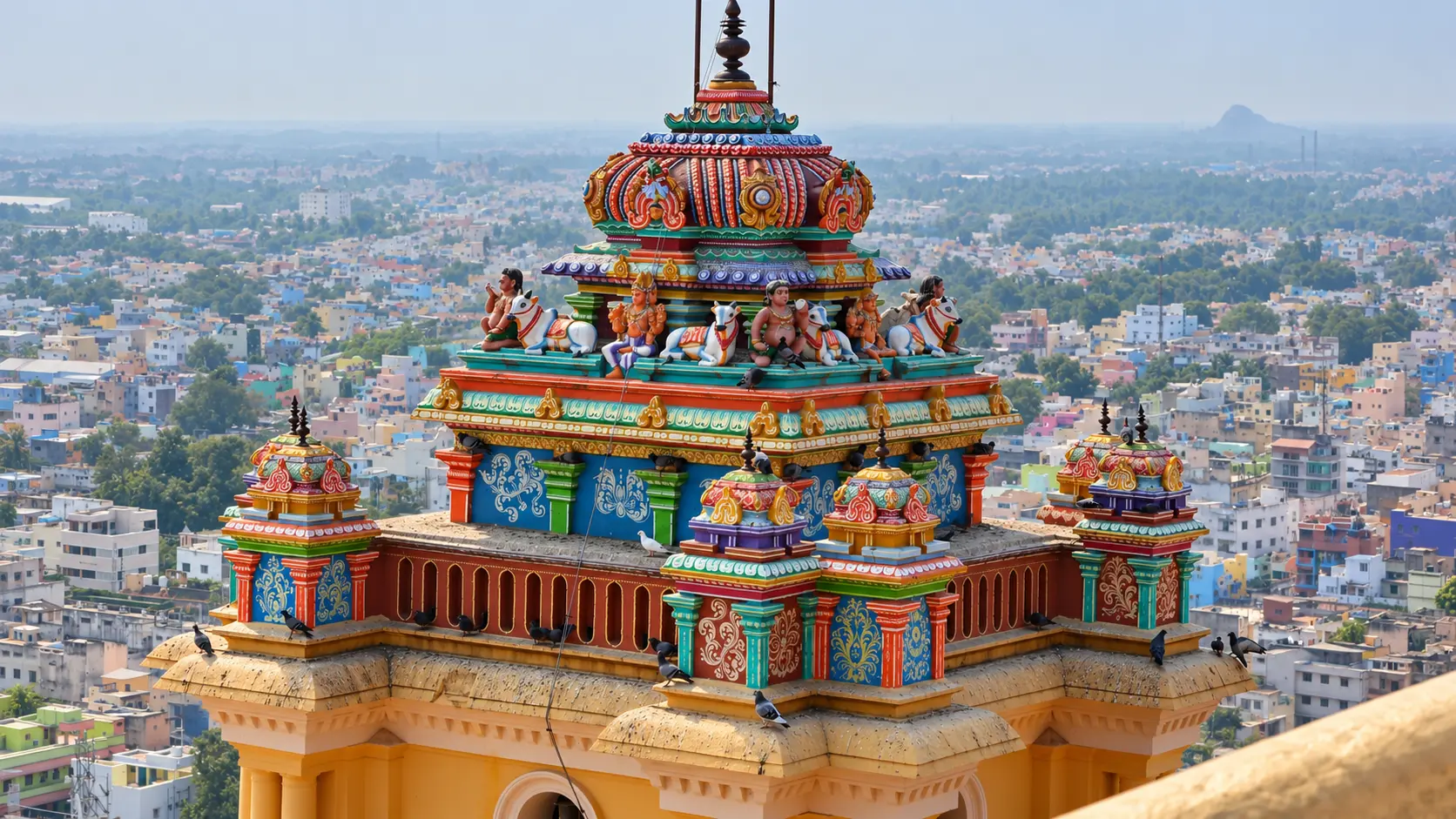
Dominating the skyline of Tiruchirappalli (Trichy) in central Tamil Nadu, the Rock Fort Temple - known across the Tamil country as Malaikkottai - is an extraordinary landmark…
The story of Rock Fort Temple (Trichy)
Dominating the skyline of Tiruchirappalli (Trichy) in central Tamil Nadu, the Rock Fort Temple - known across the Tamil country as Malaikkottai - is an extraordinary landmark where primordial earth history, sacred Hindu mythology, rock-cut cave art, and dramatic military fortresses collide. The temple complex is built upon and inside an immense geological monolith of solid Precambrian charnockite-gneiss that rises 83 metres (272 feet) sheer above the alluvial delta of the Cauvery River. Scientifically certified by the Geological Survey of India as dating back more than 3.8 billion years, this ancient rock was already ancient when the first dinosaurs roamed the earth, and vastly predates the tectonic uplift of the Himalayan mountains.
For over a millennium and a half, human devotion and military genius have sculpted this colossal natural citadel. Reaching the summit requires scaling a continuous flight of 437 stone steps carved directly into the living granite bedrock. As pilgrims ascend through cool, cavernous stone-roofed tunnels, they encounter multiple historical and architectural layers spanning four major South Indian dynasties: the Pallavas, the Cholas, the Madurai Nayakas, and the Vijayanagara Empire.
The vertical complex encompasses three distinct sacred destinations. At the base stands the Manikka Vinayakar Temple, where devotees offer their initial prayers. Halfway up the cliff face lies the magnificent Thayumanaswamy Temple, an expansive structural and rock-cut complex dedicated to Lord Shiva, celebrated in Tamil Shaivite literature for the tender miracle wherein Shiva assumed the physical form of a devoted mother to deliver a child amidst devastating river floods. Near this mid-level shrine are the 7th-century rock-cut cave temples of Pallava King Mahendravarman I, adorned with the famous Gangadhara panel. Finally, at the breeze-whipped pinnacle sits the Ucchi Pillayar Temple, an open-air shrine to Lord Ganesha offering sweeping 360-degree panoramic views across the Cauvery River, the emerald island of Srirangam, and the sprawling delta plains.
Start here. Open a tile for the full details.
Why goRead details
- Prehistoric Geological Marvel: Standing atop a 3.8-billion-year-old Archean rock formation is an exhilarating encounter with deep geological time. The smooth, weather-sculpted granite cliff faces provide a dramatic physical contrast to the flat surrounding river plains.
- The Thrilling 437-Step Climb: Climbing the 437 stone stairs cut through the core of the mountain is a legendary South Indian pilgrimage experience. Transitioning from sheltered, echoing stone tunnels illuminated by brass lamps into open cliffside walkways with expanding vistas makes the ascent deeply rewarding.
- Masterful 7th-Century Pallava Cave Art: Maintained by the Archaeological Survey of India (ASI), the Upper Rock-Cut Cave Temple excavated by Pallava King Mahendravarman I (c. 610 - 630 CE) features the world-renowned Gangadhara bas-relief panel, showing Shiva calmly bearing the torrential descent of the River Ganges in a single lock of his matted hair, accompanied by imperial Grantha inscriptions.
- The Touching Legend of Thayumanaswamy: Visiting the mid-level Shiva temple connects travelers to one of Tamil Nadu's most tender religious stories. Shiva is revered here as Thayumanavar ("He who became also a mother"), celebrating divine compassion, maternal love, and obstetric protection.
- Unrivalled 360-Degree Panoramic Views: The open terrace of the Ucchi Pillayar Temple at the summit provides the finest vantage point in central Tamil Nadu. Visitors can look down upon the geometric grid of Trichy's bustling bazaar streets, gaze across the glittering waters of the Cauvery and Kollidam rivers, and spot the towering 73-metre Rajagopuram of Sri Ranganathaswamy Temple rising above the palm canopy on Srirangam island.
- Historic Carnatic War Battleground: The ramparts, bastions, and magazine storehouses surrounding the rock played a pivotal role in the 18th-century Carnatic Wars, where British forces under Robert Clive and French forces under Dupleix fought decisive sieges for control of South India.
When to visitRead details
Visiting Rock Fort Temple requires consideration of temperature, sunlight, and the physical exertion of climbing 437 steps:
Entry & permissionsRead details
Fees, visiting hours and entry rules may change. Confirm the latest details with the official operator or local authority before travelling.
- Operating Hours: The temple complex is open daily across two main liturgical sessions:
- Morning Session: 06:00 to 12:00
- Evening Session: 16:00 to 20:00 (the summit Ucchi Pillayar shrine often remains accessible until 20:30 PM)
- The sanctum sanctorum of Thayumanaswamy Temple closes between 12:00 PM and 16:00 PM for deity rest and daily maintenance.
- Admission Charges: General admission to the temple complex, rock staircase, and summit is completely free for all visitors.
- Camera Fees: A nominal municipal fee of ₹5 for still cameras and ₹20 for video cameras is collected at the base counter.
- Footwear Regulations: Shoes, sandals, and leather footwear must be removed at the footwear stand outside the Manikka Vinayakar entrance before starting the climb. While barefoot climbing is customary, visitors are permitted to wear clean cotton socks, which provide helpful grip and thermal insulation against hot stone steps.
- Prohibitions: Drones and aerial videography are strictly prohibited over Rock Fort and the surrounding city center due to proximity to security zones, religious sanctity, and heritage conservation regulations.
Plan your visitRead details
Rock Fort Temple is situated in the historical downtown commercial district of Tiruchirappalli, approximately 4.5 kilometres north of Tiruchirappalli Junction Railway Station.
Explore the full guide - choose a topic below.
Why visit?
Prehistoric Geological Marvel: Standing atop a 3.8-billion-year-old Archean rock formation is an exhilarating…Explore detailsClose details
- Prehistoric Geological Marvel: Standing atop a 3.8-billion-year-old Archean rock formation is an exhilarating encounter with deep geological time. The smooth, weather-sculpted granite cliff faces provide a dramatic physical contrast to the flat surrounding river plains.
- The Thrilling 437-Step Climb: Climbing the 437 stone stairs cut through the core of the mountain is a legendary South Indian pilgrimage experience. Transitioning from sheltered, echoing stone tunnels illuminated by brass lamps into open cliffside walkways with expanding vistas makes the ascent deeply rewarding.
- Masterful 7th-Century Pallava Cave Art: Maintained by the Archaeological Survey of India (ASI), the Upper Rock-Cut Cave Temple excavated by Pallava King Mahendravarman I (c. 610 - 630 CE) features the world-renowned Gangadhara bas-relief panel, showing Shiva calmly bearing the torrential descent of the River Ganges in a single lock of his matted hair, accompanied by imperial Grantha inscriptions.
- The Touching Legend of Thayumanaswamy: Visiting the mid-level Shiva temple connects travelers to one of Tamil Nadu's most tender religious stories. Shiva is revered here as Thayumanavar ("He who became also a mother"), celebrating divine compassion, maternal love, and obstetric protection.
- Unrivalled 360-Degree Panoramic Views: The open terrace of the Ucchi Pillayar Temple at the summit provides the finest vantage point in central Tamil Nadu. Visitors can look down upon the geometric grid of Trichy's bustling bazaar streets, gaze across the glittering waters of the Cauvery and Kollidam rivers, and spot the towering 73-metre Rajagopuram of Sri Ranganathaswamy Temple rising above the palm canopy on Srirangam island.
- Historic Carnatic War Battleground: The ramparts, bastions, and magazine storehouses surrounding the rock played a pivotal role in the 18th-century Carnatic Wars, where British forces under Robert Clive and French forces under Dupleix fought decisive sieges for control of South India.
What to expect
Approaching Rock Fort, visitors navigate the vibrant, narrow streets of China Bazaar and NSB Road, where stalls…Explore detailsClose details
Approaching Rock Fort, visitors navigate the vibrant, narrow streets of China Bazaar and NSB Road, where stalls overflow with colorful flowers, brass lamps, silk sarees, and aromatic snacks. The grand stone entrance gate opens onto the banks of the historic Teppakulam, a massive square temple tank with an elegant 16-pillared mandapa resting on an island in the center.
At the base of the rock, visitors remove their shoes at the municipal footwear custody counter before offering an inaugural prayer at the Manikka Vinayakar Temple. The ascent begins immediately: a wide stone staircase flanked by heavy granite pillars and carved ceilings leads upward into the cool, dark interior of the rock. Carved relief figures of dancers, warriors, and deities line the tunnel walls, while electric fans and natural mountain ventilation keep the air circulating.
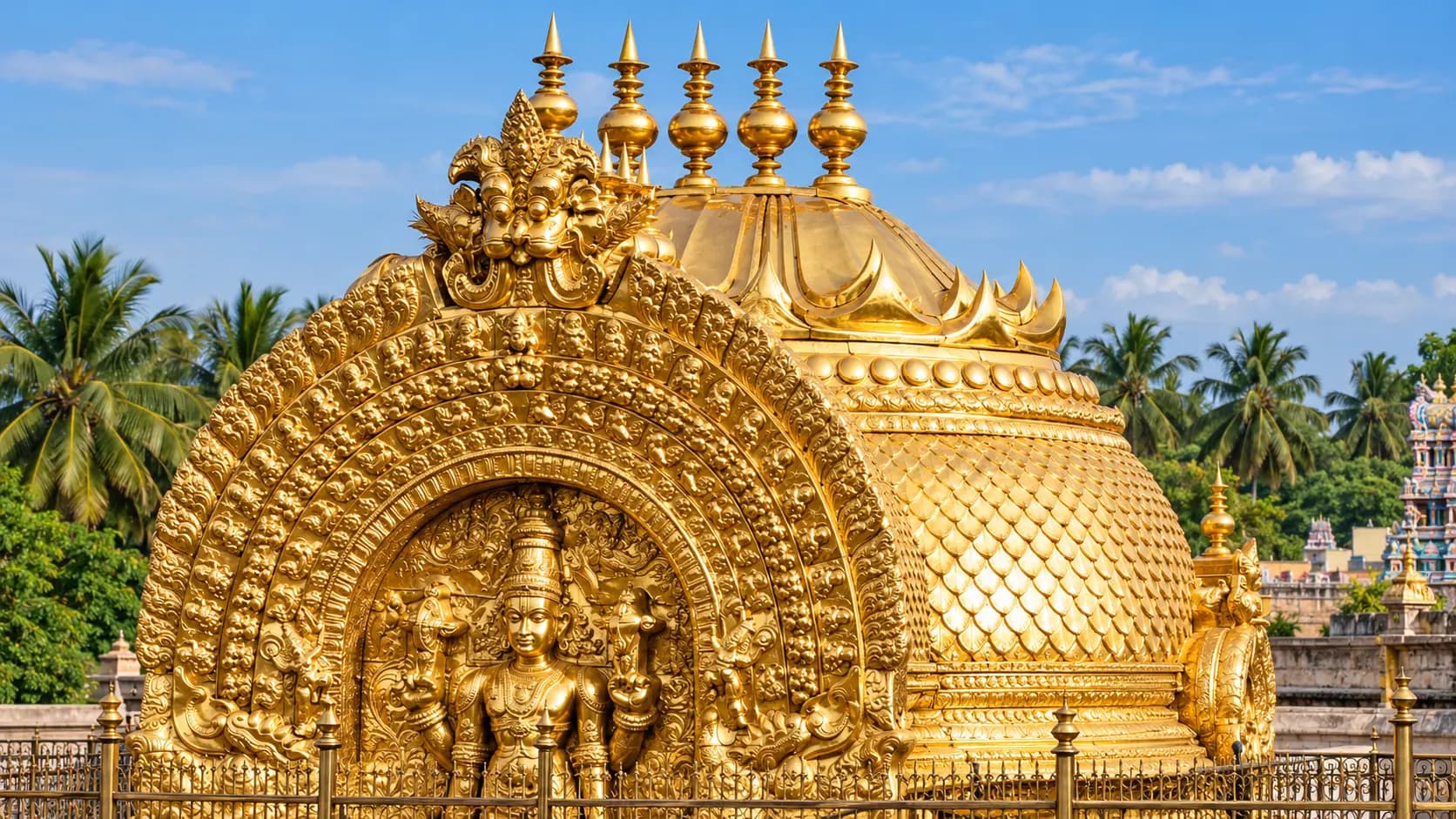
Roughly 200 steps up, the staircase opens into the expansive compound of the Thayumanaswamy Temple. Built against the vertical rock face, this complex contains a 100-pillared hall, a golden vimana over the Shiva Lingam, and shrines to Goddess Mattuvar Kuzhali Amman. In the inner sanctum, hereditary priests perform traditional Vedic pujas, filling the hall with the sound of ringing bells and Sanskrit chants. Nearby, the ASI-protected Pallava Rock-Cut Cave can be viewed, showcasing monumental dwarapalakas and pristine 7th-century epigraphical records.
Leaving the mid-level complex, the final 200 steps climb out onto the exposed western and northern flanks of the rock. The staircase becomes steeper and narrower, protected by sturdy steel safety railings. As you emerge onto the breeze-swept rocky platform at the summit, the entire city unfolds below. The small, open Ucchi Pillayar Temple enshrines Lord Ganesha in a rustic stone pavilion. Cool, gusting winds buffet the platform, and pilgrims sit along the rock ledges watching the sunset bathe the Cauvery valley in shades of crimson and violet.
Best time to visit
Visiting Rock Fort Temple requires consideration of temperature, sunlight, and the physical exertion of climbing…Explore detailsClose details
Visiting Rock Fort Temple requires consideration of temperature, sunlight, and the physical exertion of climbing 437 steps:
- October to March (Post-Monsoon & Winter - Best Visiting Season): This is the ideal window to visit Trichy. Daytime temperatures range comfortably from 22°C to 30°C, and morning and evening breezes are cool and refreshing. Climbing the stone stairs without shoes is thoroughly comfortable, and clear skies afford panoramic visibility reaching several dozen kilometres.
- April to June (Summer Season - Severe Heat): Summer in Tiruchirappalli is notoriously hot, with daytime temperatures routinely reaching 38°C to 42°C. Check the current visiting hours and permitted access with the site operator before departure; ceremonies, closures and visitor sessions can affect access. If visiting in summer, schedule your climb strictly between 06:00 and 08:00 AM or after 05:00 PM.
- October to December (Northeast Monsoon - Dramatic Clouds): While the coastal and delta plains receive substantial rainfall during this period, the initial 300 steps of the climb are enclosed under stone roofing and remain completely dry. The open summit steps can be slick during showers, so visitors should grip the steel handrails carefully.
- Optimal Time of Day: Dawn (06:00 to 07:30 AM) and Sunset (17:00 to 18:30 PM) are unquestionably the best times. An early morning climb lets you watch the sunrise over the Cauvery River in peaceful contemplation. An evening climb allows you to enjoy the cool twilight winds, watch city lights flicker on below, and admire the illuminated towers of Srirangam.
How to reach
Rock Fort Temple is situated in the historical downtown commercial district of Tiruchirappalli, approximately 4.5…Explore detailsClose details
Rock Fort Temple is situated in the historical downtown commercial district of Tiruchirappalli, approximately 4.5 kilometres north of Tiruchirappalli Junction Railway Station.
- From Tiruchirappalli Junction Railway Station (4.5 km): Trichy Junction (TPJ) is a major Southern Railway divisional headquarters connecting directly to Chennai, Madurai, Bengaluru, Coimbatore, Kochi, and Hyderabad. Frequent city buses operate from the station directly to "Chathiram Bus Stand" or "Main Guard Gate" (adjacent to Rock Fort). Taxis and auto-rickshaws reach the temple base in approximately 15 minutes.
- From Tiruchirappalli Fort Railway Station (1 km): A smaller passenger station on the mainline situated within comfortable walking distance or a 3-minute auto-rickshaw ride to the temple entrance.
- From Tiruchirappalli International Airport (8 km): Trichy Airport (TRZ) operates direct international flights to Singapore, Dubai, Sharjah, Kuala Lumpur, and Colombo, as well as domestic flights to Chennai and Bengaluru. Prepaid taxis take roughly 20 to 25 minutes to reach Rock Fort via National Highway 336.
- From Central Bus Stand (5 km): Long-distance express buses from across Tamil Nadu terminate at Central Bus Stand. City buses (Route 1 series) run continuously to Chathiram Bus Stand / Main Guard Gate.
- Local Navigation and Parking: The streets surrounding Rock Fort (NSB Road and China Bazaar) are heavily pedestrianized and congested with market shoppers. Visitors arriving by private car or tour van should park at designated municipal parking areas near Chathiram Bus Stand or the Teppakulam parking lot and walk the remaining 200 metres to the entrance.
Entry, timings and permissions
Fees, visiting hours and entry rules may change.Explore detailsClose details
Fees, visiting hours and entry rules may change. Confirm the latest details with the official operator or local authority before travelling.
- Operating Hours: The temple complex is open daily across two main liturgical sessions:
- Morning Session: 06:00 to 12:00
- Evening Session: 16:00 to 20:00 (the summit Ucchi Pillayar shrine often remains accessible until 20:30 PM)
- The sanctum sanctorum of Thayumanaswamy Temple closes between 12:00 PM and 16:00 PM for deity rest and daily maintenance.
- Admission Charges: General admission to the temple complex, rock staircase, and summit is completely free for all visitors.
- Camera Fees: A nominal municipal fee of ₹5 for still cameras and ₹20 for video cameras is collected at the base counter.
- Footwear Regulations: Shoes, sandals, and leather footwear must be removed at the footwear stand outside the Manikka Vinayakar entrance before starting the climb. While barefoot climbing is customary, visitors are permitted to wear clean cotton socks, which provide helpful grip and thermal insulation against hot stone steps.
- Prohibitions: Drones and aerial videography are strictly prohibited over Rock Fort and the surrounding city center due to proximity to security zones, religious sanctity, and heritage conservation regulations.
Nearby places to consider
Sri Ranganathaswamy Temple, Srirangam (5 km): The largest functioning Hindu temple complex in the world, covering…Explore detailsClose details
- Sri Ranganathaswamy Temple, Srirangam (5 km): The largest functioning Hindu temple complex in the world, covering 156 acres across seven concentric walled enclosures with 21 magnificent gopurams.
- Jambukeswarar Temple, Thiruvanaikaval (4 km): An ancient Chola temple dedicated to Shiva as the element of Water (Appu Lingam), where a natural subterranean spring perpetually bubbles up around the sanctum Lingam.
- Teppakulam (At Base): The historic 16th-century temple tank built by the Nayakas, surrounded by bustling bazaars and featuring a picturesque stone island pavilion.
- St. Joseph's Church and College (500 m): A historic 19th-century Jesuit educational campus featuring a grand neo-Gothic church with towering spires, located right beside Teppakulam.
- Kallanai Dam / Grand Anicut (15 km): Built by Chola King Karikalan in the 2nd century CE across the Cauvery River, this is one of the oldest operational water-diversion dams in the world.
In pictures
The practical bits
Before you go.
Physical Preparation for the 437-Step Climb
Climbing 437 stone steps is physically demanding, especially in tropical humidity.Explore detailsClose details
Climbing 437 stone steps is physically demanding, especially in tropical humidity. Take your time, maintain a steady rhythm, and pause to rest at the wide stone landings every 50 to 100 steps. Benches are available inside the covered tunnel sections. Travelers with heart conditions, severe asthma, knee problems, or acute mobility limitations should consult a physician before attempting the summit climb.
Timing for Sunset and Twilight Views
To experience the peak visual drama of Rock Fort, begin your ascent around 16:30 or 17:00 PM.Explore detailsClose details
To experience the peak visual drama of Rock Fort, begin your ascent around 16:30 or 17:00 PM. This timing allows you to explore the Thayumanaswamy sanctum and Pallava cave without rushing, reach the Ucchi Pillayar summit as the afternoon heat dissipates, and watch the sun set over the Cauvery River. As night falls, the cool breezes atop the rock are profoundly refreshing.
Navigating the Crowded Bazaar at the Base
The streets around the base of the rock - especially Big Bazaar Street and NSB Road - are the commercial…Explore detailsClose details
The streets around the base of the rock - especially Big Bazaar Street and NSB Road - are the commercial heartbeat of Trichy. Keep an eye on your personal belongings in crowded areas, and take time after your descent to explore the vibrant market, famous for authentic brassware, traditional bronze lamps, handloom cottons, and freshly prepared Trichy filter coffee.
Combine with Srirangam Ranganathaswamy Temple
Rock Fort and Srirangam are culturally and geographically intertwined.Explore detailsClose details
Rock Fort and Srirangam are culturally and geographically intertwined. Because Srirangam is located just 5 kilometres north across the Cauvery River, the two sites form a classic full-day Trichy itinerary. Visit Srirangam in the morning to explore its vast courtyards and 21 gopurams, take a midday break, and climb Rock Fort in the late afternoon.
A few things you might wonder
Common questions about visiting Rock Fort Temple (Trichy). Fees, visiting hours and ceremonies are researched details that may change; confirm current arrangements with the operator before travelling.
How many steps are there to the top of Rock Fort Temple?
How old is the rock of Trichy Rock Fort?
Is there an elevator or lift facility to reach the summit?
What is the religious significance of the Thayumanaswamy Temple?
Who is worshipped at the Ucchi Pillayar Temple?
Can elderly people climb Rock Fort?
What are the daily opening hours of the temple?
Is photography allowed at Rock Fort?
Explore more in Thanjavur Trichy
Discover other destinations around this hub
More Hubs in Tamil Nadu
Continue exploring other travel hubs in this state
Planning a trip to Thanjavur Trichy?