Gangaikonda Cholapuram
Essential visitor guide to UNESCO-listed Gangaikonda Cholapuram in Ariyalur. Discover Rajendra Chola's 55m curved vimana, Chandesa relief, lion well & timings.
Location
Thanjavur & Trichy, Tamil Nadu
A closer look
Your visit, at a glance.
Thanjavur Trichy, Tamil Nadu
GET TO KNOW THE PLACE
Standing serenely amidst quiet rural farmlands and tamarind groves in Ariyalur District, Tamil Nadu, the Brihadisvara Temple at Gangaikonda Cholapuram is one of the supreme…
The story of Gangaikonda Cholapuram
Standing serenely amidst quiet rural farmlands and tamarind groves in Ariyalur District, Tamil Nadu, the Brihadisvara Temple at Gangaikonda Cholapuram is one of the supreme achievements of imperial Chola art and architecture. Built between 1023 and 1035 CE under the patronage of the formidable Chola Emperor Rajendra Chola I, this majestic granite sanctuary served as the spiritual and political core of a new imperial capital that governed the vast maritime trade networks and territories of South India, Sri Lanka, and Southeast Asia for roughly two and a half centuries. Inscribed by UNESCO on the World Heritage List in 2004 as an integral member of the "Great Living Chola Temples", Gangaikonda Cholapuram stands as an eternal monument to an empire that pushed its military reach all the way to the banks of the sacred River Ganges.
The founding of the city and its great temple was born of imperial triumph. After assuming the throne following his father Rajaraja I's death, Rajendra I launched an audacious northern military expedition around 1022 - 1023 CE. Leading his armies through Vengi, Odisha, and Bengal, the Cholas defeated Mahipala, the Pala ruler of Bengal, and reached the waters of the sacred Ganges River. Rather than claiming territorial annexation, Rajendra ordered defeated northern kings to carry pots of holy Ganges water on their heads back to the south. Upon his return, Rajendra assumed the proud imperial title Gangaikonda Chola ("The Chola who brought the Ganges") and founded a magnificent new capital named Gangaikonda Cholapuram ("The City of the Chola who brought the Ganges"), relocating the royal court and administrative machinery away from Thanjavur.
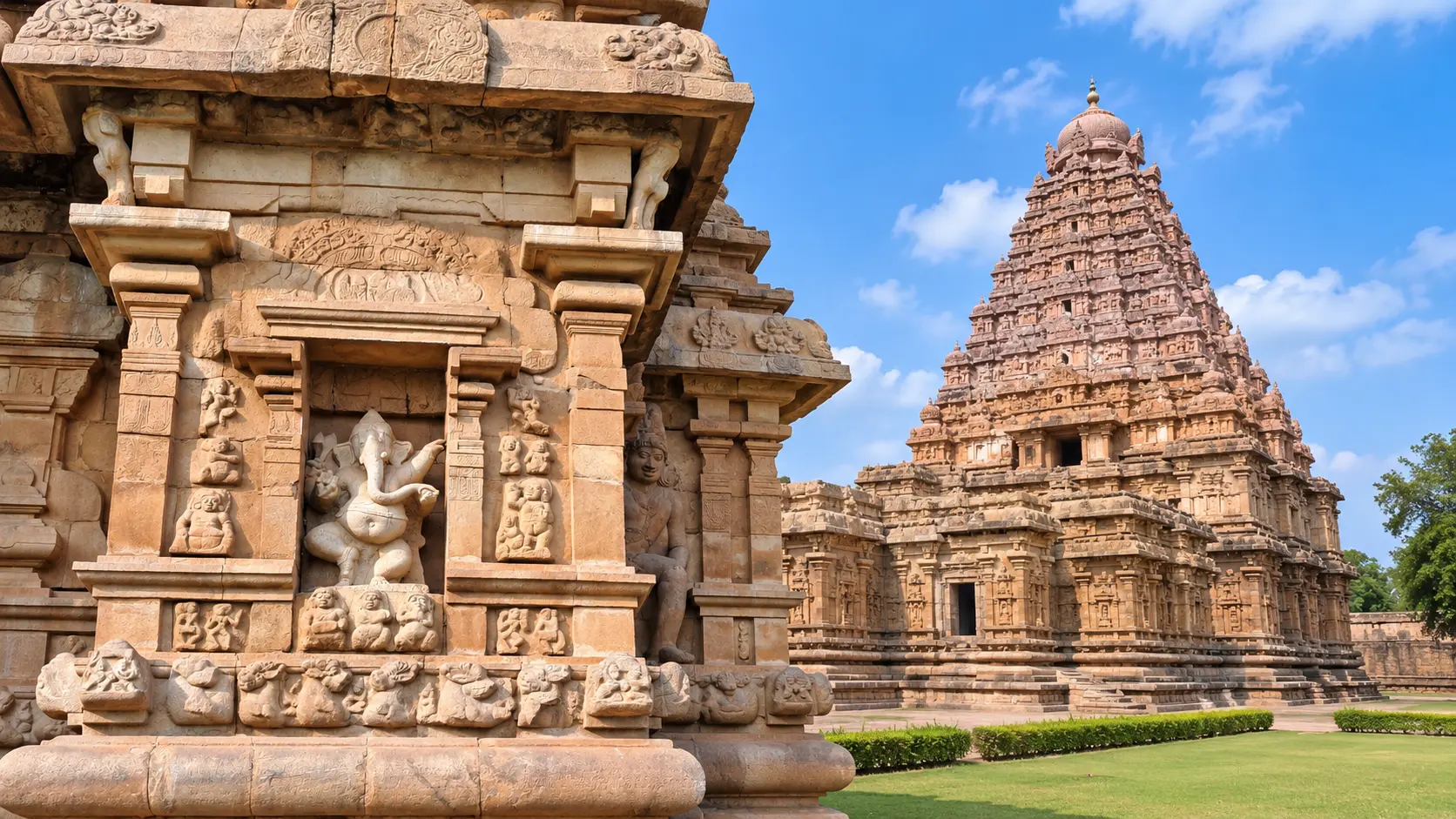
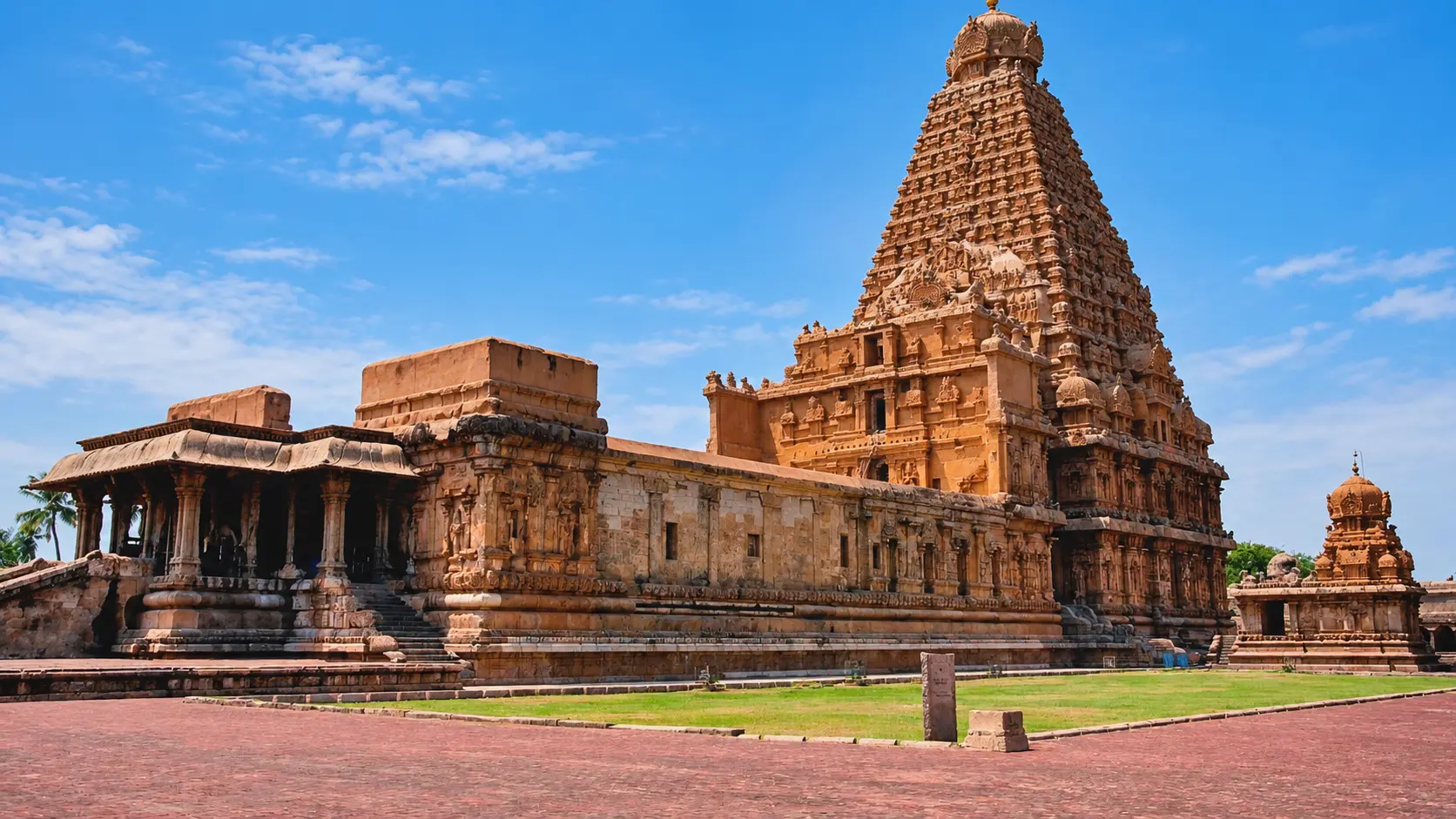
Architecturally, the temple was designed to both emulate and intentionally differentiate itself from his father's Big Temple at Thanjavur. While Thanjavur's 66-metre tower rises in a rigid, straight-sided, masculine pyramid, Rajendra's master architects engineered the 55-metre (182-foot) vimana at Gangaikonda Cholapuram with an elegant, concave, inward-curving contour. This delicate curvature imparts a fluid, feminine grace and lyrical movement to the colossal stone structure. Surrounded by manicured lawns maintained by the Archaeological Survey of India (ASI), enshrining South India's largest monolithic Shiva Lingam, and housing world-renowned sculptures like the Chandesa Anugraha Murti and the enigmatic Simhakinar (Lion Well), Gangaikonda Cholapuram provides travelers with an unhurried, contemplative encounter with high medieval Indian civilization.
Start here. Open a tile for the full details.
Why goRead details
- UNESCO World Heritage Chola Masterpiece: Along with Thanjavur and Darasuram, Gangaikonda Cholapuram forms the triad of the Great Living Chola Temples, celebrating the height of Dravidian granite engineering and living Shaivite devotion.
- The Lyrical Curving Vimana: Rising across nine stepped storeys to a height of 55 metres, the temple tower features an exquisite inward-curving profile that art historians praise for its grace, architectural balance, and sculptural delicacy. It represents the creative zenith of Chola architects striving to outshine earlier monuments.
- The Largest Monolithic Shiva Lingam in South India: Inside the cool, dim sanctum sanctorum stands a colossal granite Lingam rising 4.0 metres (13.5 feet) high from a circular pedestal (avudaiyar) measuring nearly 18 metres (60 feet) in circumference. The scale of the deity is overwhelming and deeply inspiring.
- World-Famous "Chandesa Anugraha Murti" Sculpture: Carved into a northern wall alcove is one of the most celebrated sculptures in world art history. It depicts Lord Shiva and Goddess Parvati seated tenderly, tying a victory flower garland around the head of the devoted young saint Chandesa. In Chola royal iconography, this intimate scene is widely interpreted as an allegorical coronation of Emperor Rajendra Chola himself receiving the divine garland of victory.
- The Mysterious Simhakinar (Lion Well): In the northern courtyard sits a subterranean well entered through the open, roaring mouth of a colossal stone lion. Historical records indicate that Rajendra Chola consecrated holy water brought from the Ganges River into this well so that sacred water was perpetually available for the daily ritual baths of the deity.
- Peaceful, Uncrowded Atmosphere: Unlike the bustling urban setting of Thanjavur's Big Temple, Gangaikonda Cholapuram sits in a tranquil rural environment surrounded by green fields. Visitors can sit peacefully on the expansive green lawns, study intricate niche carvings without jostling crowds, and experience deep spiritual solitude.
When to visitRead details
Visiting Gangaikonda Cholapuram is governed by the tropical inland climate of the Cauvery-Vellar river basin:
Entry & permissionsRead details
Fees, visiting hours and entry rules may change. Confirm the latest details with the official operator or local authority before travelling.
- Operating Hours: The temple is open daily from 06:00 to 12:00 in the morning and from 16:00 to 20:00 in the evening. The inner sanctum sanctorum closes strictly at 12:00 PM for midday rituals and maintenance, reopening at 16:00 PM. The ASI garden grounds remain open during daylight hours.
- Admission Fees: Entry to the temple complex and gardens is completely free for all domestic and international visitors. There are no entrance ticketing booths.
- Photography Regulations: Non-commercial photography of the temple exterior, gardens, and niche sculptures using smartphones and handheld cameras is permitted free of charge. However, photography, flash, and video recording are strictly prohibited inside the inner sanctum sanctorum.
- Drone Restrictions: Operating drones or unmanned aerial vehicles (UAVs) is strictly forbidden across all ASI Centrally Protected Monuments under the Ancient Monuments Act.
- Temple Decorum: As an active place of Hindu worship, visitors must remove footwear at the shoe counter outside the entrance, dress modestly (covering shoulders and knees), and refrain from bringing food or smoking within the holy precinct.
Plan your visitRead details
Gangaikonda Cholapuram is situated in Jayankondam Taluk of Ariyalur District, approximately 35 kilometres north of Kumbakonam, 70 kilometres northeast of Thanjavur, and 100 kilometres northeast of Tiruchirappalli.
Explore the full guide - choose a topic below.
Why visit?
UNESCO World Heritage Chola Masterpiece: Along with Thanjavur and Darasuram, Gangaikonda Cholapuram forms the…Explore detailsClose details
- UNESCO World Heritage Chola Masterpiece: Along with Thanjavur and Darasuram, Gangaikonda Cholapuram forms the triad of the Great Living Chola Temples, celebrating the height of Dravidian granite engineering and living Shaivite devotion.
- The Lyrical Curving Vimana: Rising across nine stepped storeys to a height of 55 metres, the temple tower features an exquisite inward-curving profile that art historians praise for its grace, architectural balance, and sculptural delicacy. It represents the creative zenith of Chola architects striving to outshine earlier monuments.
- The Largest Monolithic Shiva Lingam in South India: Inside the cool, dim sanctum sanctorum stands a colossal granite Lingam rising 4.0 metres (13.5 feet) high from a circular pedestal (avudaiyar) measuring nearly 18 metres (60 feet) in circumference. The scale of the deity is overwhelming and deeply inspiring.
- World-Famous "Chandesa Anugraha Murti" Sculpture: Carved into a northern wall alcove is one of the most celebrated sculptures in world art history. It depicts Lord Shiva and Goddess Parvati seated tenderly, tying a victory flower garland around the head of the devoted young saint Chandesa. In Chola royal iconography, this intimate scene is widely interpreted as an allegorical coronation of Emperor Rajendra Chola himself receiving the divine garland of victory.
- The Mysterious Simhakinar (Lion Well): In the northern courtyard sits a subterranean well entered through the open, roaring mouth of a colossal stone lion. Historical records indicate that Rajendra Chola consecrated holy water brought from the Ganges River into this well so that sacred water was perpetually available for the daily ritual baths of the deity.
- Peaceful, Uncrowded Atmosphere: Unlike the bustling urban setting of Thanjavur's Big Temple, Gangaikonda Cholapuram sits in a tranquil rural environment surrounded by green fields. Visitors can sit peacefully on the expansive green lawns, study intricate niche carvings without jostling crowds, and experience deep spiritual solitude.
What to expect
Approaching Gangaikonda Cholapuram along State Highway 27, the towering stone vimana emerges majestically above…Explore detailsClose details
Approaching Gangaikonda Cholapuram along State Highway 27, the towering stone vimana emerges majestically above the tree line. Visitors enter the complex through the ruins of the eastern gateway, surrounded by the remnants of massive ancient brick and laterite fortifications that once protected the imperial palace city.
Crossing the threshold, you step onto an expansive, emerald-green lawn meticulously manicured by the ASI. The temple itself rises from a massive rectangular stone platform. In the forecourt, beneath an open tin canopy, sits a grand recumbent Nandi bull carved from brick and lime stucco facing the sanctum.
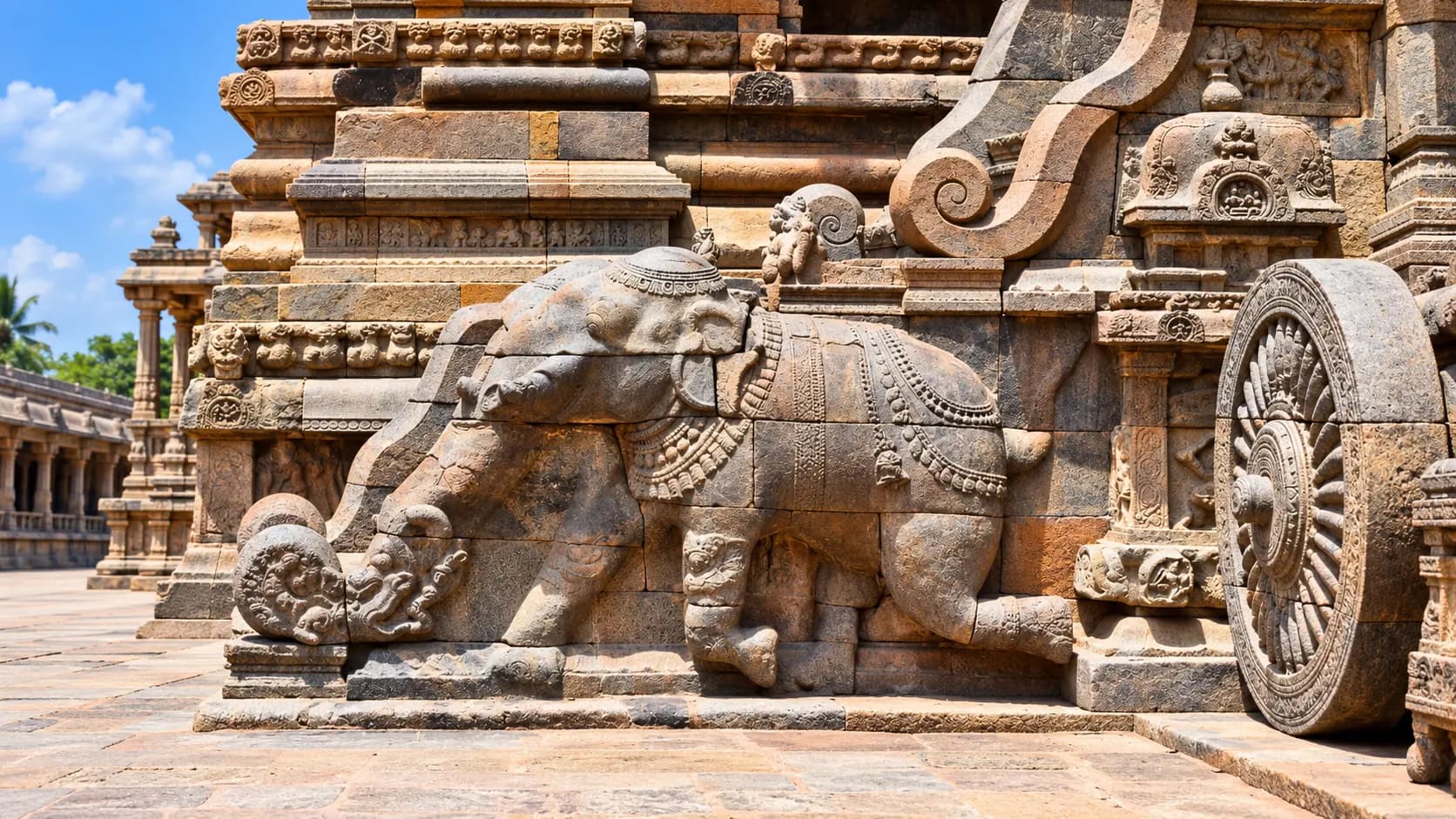
Ascending the wide stone stairway into the elevated ardhamandapa, the quality of Chola stone sculpting becomes immediately apparent. In deep exterior wall alcoves, master sculptors carved life-sized deities from single blocks of hard granite with astonishing fluidity: a dynamic four-armed dancing Ganesha, an exquisitely balanced Ardhanarishvara displaying masculine strength on one half and feminine grace on the other, an austere Nataraja dancing the cosmic tandava, and a serene Saraswati holding palm-leaf manuscripts.
Entering the cavernous, columned maha-mandapa supported by rows of heavy stone pillars, the air turns cool and scented with sandalwood and camphor. devouts queue for darshan before the towering sanctum lingam, illuminated by flickering brass oil lamps. The sheer verticality of the inner sanctum chamber, extending upward into the hollow stone interior of the vimana, creates a solemn, mystical resonance.
Outside the main shrine, visitors can explore the ruined foundations of the northern Amman temple, the Chandikesvara shrine, and walk over to the Simhakinar, where steps descend through the lion's body into the water table below. Across the road from the temple complex, travelers can visit the small ASI Site Museum, which houses inscribed stone slabs, ancient coins, excavated pottery, weapons, and architectural fragments unearthed during excavations of the Chola royal palace at nearby Maligaimedu.
Best time to visit
Visiting Gangaikonda Cholapuram is governed by the tropical inland climate of the Cauvery-Vellar river basin: -…Explore detailsClose details
Visiting Gangaikonda Cholapuram is governed by the tropical inland climate of the Cauvery-Vellar river basin:
- October to March (Post-Monsoon & Winter - Best Visiting Months): This is by far the most comfortable season for travelers. Daytime temperatures range pleasantly between 22°C and 30°C, and refreshing breezes blow across the rural fields. The stone courtyard is cool enough to walk across barefoot comfortably, and clear blue skies provide stunning natural light for photographing the granite vimana.
- April to June (Summer Season - Extreme Heat): Summer across Ariyalur is intensely hot, with temperatures routinely soaring to 38°C - 42°C. Check the current visiting hours and permitted access with the site operator before departure; ceremonies, closures and visitor sessions can affect access. If visiting in summer, schedule your visit strictly between 06:30 and 08:30 AM or after 04:30 PM, and bring thick cotton socks to protect your feet.
- October to December (Northeast Monsoon - Refreshing Rains): The Northeast monsoon brings the majority of the region's annual precipitation. While heavy downpours can occur, the temple's ancient granite stormwater channels and sloping lawns drain water quickly into the perimeter moat. The dark granite stones look magnificent when wet, glistening against overcast grey skies.
- Optimal Time of Day: Early morning (06:30 to 09:30 AM) and late afternoon (16:00 to 18:30 PM) are the finest times to visit. Early mornings are peaceful with only local villagers offering prayers, while late afternoon bathes the curving western and northern facades of the vimana in rich golden sunlight.
How to reach
Gangaikonda Cholapuram is situated in Jayankondam Taluk of Ariyalur District, approximately 35 kilometres north…Explore detailsClose details
Gangaikonda Cholapuram is situated in Jayankondam Taluk of Ariyalur District, approximately 35 kilometres north of Kumbakonam, 70 kilometres northeast of Thanjavur, and 100 kilometres northeast of Tiruchirappalli.
- By Road from Kumbakonam (35 km): Kumbakonam is the primary transit gateway for most visitors. Travel north along State Highway 27 crossing the Coleroon (Kollidam) River bridge via Anaikkarai. The drive takes approximately 45 to 55 minutes through lush rural countryside. Frequent government and private buses operate between Kumbakonam and Jayankondam, stopping right at the Gangaikonda Cholapuram temple gate.
- By Road from Thanjavur (70 km): From Thanjavur, motorists drive northeast via Kumbakonam or through Tiruvaiyaru and Jayankondam. Travel time by private car or taxi is approximately 1 hour 45 minutes.
- By Road from Chennai (250 km): For travelers driving from Chennai, Gangaikonda Cholapuram is easily accessible via the GST Road (NH 45) to Tindivanam, Vikravandi, Panruti, Neyveli, and Vridhachalam, continuing south to Jayankondam.
- By Train:
- Kumbakonam Railway Station (35 km): Major railway junction with express trains connecting to Chennai, Trichy, Coimbatore, and Bengaluru.
- Ariyalur Railway Station (45 km): Located on the Chennai-Trichy-Madurai chord line, connected by regular express trains. Taxis and local buses connect Ariyalur station with Jayankondam and Gangaikonda Cholapuram.
- By Air: The nearest airport is Tiruchirappalli International Airport (TRZ), situated approximately 102 kilometres southwest (approx. 2.5 hours by road via NH 81).
- Parking Facilities: A dedicated parking area maintained by the ASI is situated directly outside the entrance gates, accommodating cars, tour vans, and private coaches.
Entry, timings and permissions
Fees, visiting hours and entry rules may change.Explore detailsClose details
Fees, visiting hours and entry rules may change. Confirm the latest details with the official operator or local authority before travelling.
- Operating Hours: The temple is open daily from 06:00 to 12:00 in the morning and from 16:00 to 20:00 in the evening. The inner sanctum sanctorum closes strictly at 12:00 PM for midday rituals and maintenance, reopening at 16:00 PM. The ASI garden grounds remain open during daylight hours.
- Admission Fees: Entry to the temple complex and gardens is completely free for all domestic and international visitors. There are no entrance ticketing booths.
- Photography Regulations: Non-commercial photography of the temple exterior, gardens, and niche sculptures using smartphones and handheld cameras is permitted free of charge. However, photography, flash, and video recording are strictly prohibited inside the inner sanctum sanctorum.
- Drone Restrictions: Operating drones or unmanned aerial vehicles (UAVs) is strictly forbidden across all ASI Centrally Protected Monuments under the Ancient Monuments Act.
- Temple Decorum: As an active place of Hindu worship, visitors must remove footwear at the shoe counter outside the entrance, dress modestly (covering shoulders and knees), and refrain from bringing food or smoking within the holy precinct.
Nearby places to consider
Anaikkarai / Lower Anicut (10 km): A scenic river barrage built across the Kollidam River with lush islands…Explore detailsClose details
- Anaikkarai / Lower Anicut (10 km): A scenic river barrage built across the Kollidam River with lush islands, tree-shaded picnic spots, and roadside fresh fish stalls.
- Maligaimedu Chola Palace Excavation Site (3 km): The archaeological site where the Archaeological Survey of India and the Tamil Nadu State Archaeology Department excavated the underground brick foundations, stone pillars, and courtyard floors of Rajendra Chola's imperial palace.
- Airavatesvara Temple, Darasuram (35 km): The exquisite 12th-century Chola UNESCO temple built by Rajaraja II, famous for its chariot-shaped mandapa and stone musical steps.
- Kumbakonam Historic Temples (35 km): The ancient temple city featuring Sarangapani Temple, Adi Kumbeswarar Temple, and the holy Mahamaham Tank.
- Brihadeeswara Temple, Thanjavur (70 km): The original Big Temple built by Rajendra's father, Rajaraja Chola I, featuring the towering 66-metre vimana and 80-tonne monolithic cupola.
In pictures
The practical bits
Before you go.
Mind the Midday Sanctum Closure
Plan your transit so that you do not arrive during the 12:00 PM to 16:00 PM closure window if you wish to see the…Explore detailsClose details
Plan your transit so that you do not arrive during the 12:00 PM to 16:00 PM closure window if you wish to see the colossal 4-metre sanctum Lingam. An ideal itinerary arrives by 09:30 AM to explore the sanctum and grounds, or arrives around 16:00 PM to enjoy the afternoon light.
Explore the Archaeological Site Museum
Do not leave without visiting the small ASI Archaeological Site Museum located just across the main road from the…Explore detailsClose details
Do not leave without visiting the small ASI Archaeological Site Museum located just across the main road from the temple complex. The museum houses rare excavated artifacts from the nearby Chola royal palace at Maligaimedu, including decorated roof tiles, terracotta figurines, medieval Chinese celadon pottery shards (proving extensive Chola-Song Dynasty trade), and inscribed stone slabs.
Visit the Historic Ponneri (Cholagangam) Reservoir
Located roughly 2 kilometres west of the temple lies Ponneri lake, the modern remnant of Emperor Rajendra Chola's…Explore detailsClose details
Located roughly 2 kilometres west of the temple lies Ponneri lake, the modern remnant of Emperor Rajendra Chola's colossal 16-km artificial reservoir Cholagangam. While centuries of siltation have reduced its historical size, standing on its massive earthen embankment offers an appreciation of the grand water-management systems created to sustain the imperial capital.
Pairing with Anaikkarai & Lower Anicut
When traveling between Kumbakonam and Gangaikonda Cholapuram, make a brief stop at Anaikkarai (Lower Anicut)…Explore detailsClose details
When traveling between Kumbakonam and Gangaikonda Cholapuram, make a brief stop at Anaikkarai (Lower Anicut), where the mighty Kollidam River divides into multiple irrigation canals through a historic 19th-century masonry dam engineered by Sir Arthur Cotton. The river banks are famous for fresh, hot river fish fry and scenic water views.
A few things you might wonder
Common questions about visiting Gangaikonda Cholapuram. Fees, visiting hours and ceremonies are researched details that may change; confirm current arrangements with the operator before travelling.
Who built Gangaikonda Cholapuram and why?
What is the meaning of the name Gangaikonda Cholapuram?
How does Gangaikonda Cholapuram differ from the Big Temple in Thanjavur?
What is the significance of the Chandesa Anugraha Murti sculpture?
What is the Simhakinar (Lion Well)?
Is there an entry fee to visit the temple?
What are the temple's daily visiting hours?
How far is Gangaikonda Cholapuram from Kumbakonam and how can I travel there?
Explore more in Thanjavur Trichy
Discover other destinations around this hub
More Hubs in Tamil Nadu
Continue exploring other travel hubs in this state
Planning a trip to Thanjavur Trichy?