Airavatesvara Temple (Darasuram)
Comprehensive visitor guide to Airavatesvara Temple in Darasuram, Thanjavur. Discover UNESCO Chola stone carving, musical steps, chariot mandapa & timings.
Location
Thanjavur & Trichy, Tamil Nadu
A closer look
Your visit, at a glance.
Thanjavur Trichy, Tamil Nadu
GET TO KNOW THE PLACE
Standing serenely amidst the verdant agricultural plains of the Cauvery River delta in Thanjavur District, Tamil Nadu, the Airavatesvara Temple at Darasuram is an exquisite…
The story of Airavatesvara Temple (Darasuram)
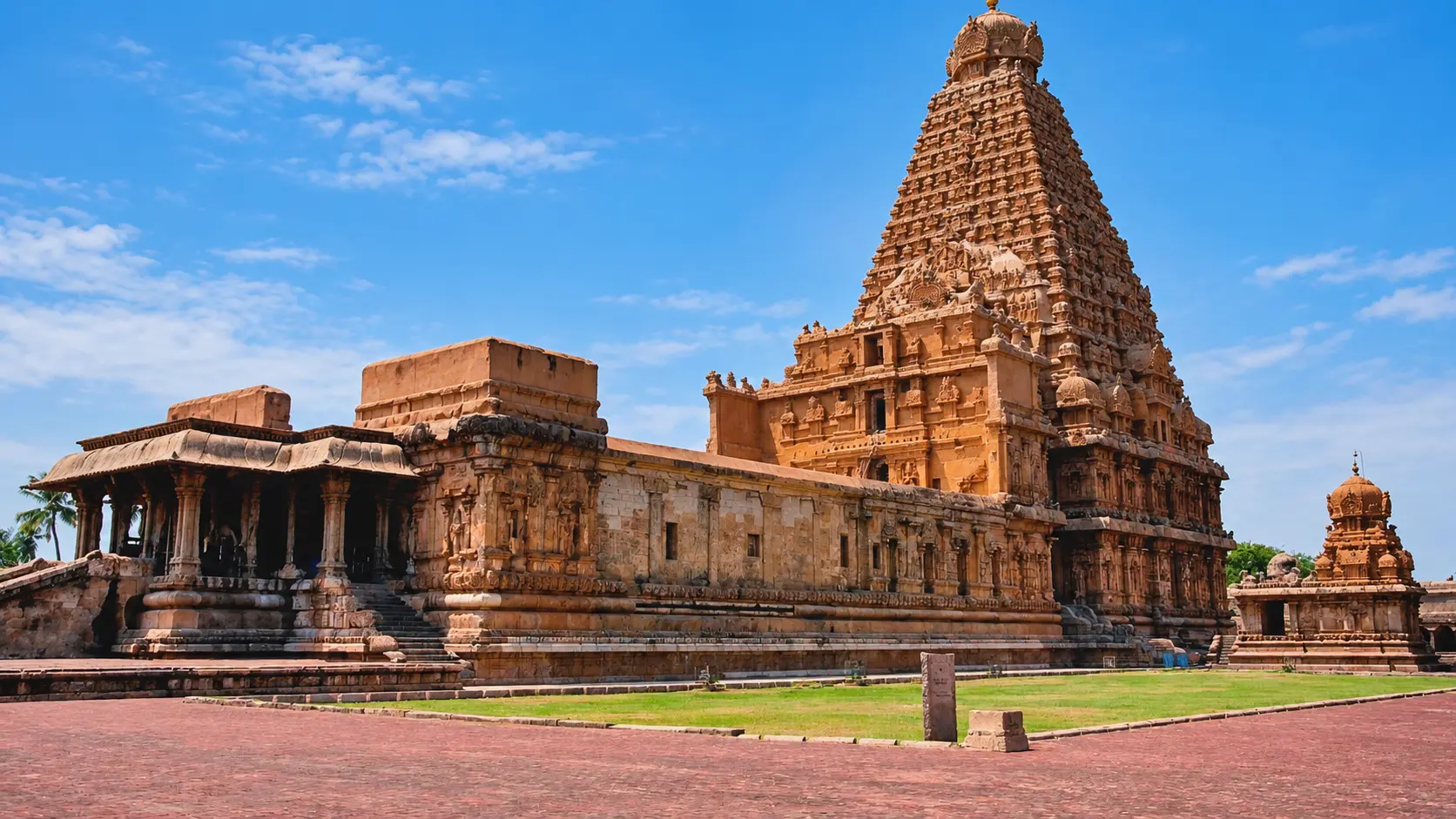
Standing serenely amidst the verdant agricultural plains of the Cauvery River delta in Thanjavur District, Tamil Nadu, the Airavatesvara Temple at Darasuram is an exquisite crowning jewel of late Chola dynasty architecture. While the immense Brihadeeswara Temple at Thanjavur exemplifies majestic scale and monumental mass, Airavatesvara Temple is renowned throughout the art world for its astonishing delicacy, miniaturized stone filigree, and sculptural perfection. Inscribed by UNESCO in 2004 as an extension to the "Great Living Chola Temples" World Heritage Site, this 12th-century monument remains both an active Hindu sanctuary and a timeless open-air museum of medieval Dravidian sculpture.
Constructed between 1166 and 1172 CE under the patronage of Chola Emperor Rajaraja II, the temple was dedicated to Lord Shiva under the divine name Airavatesvara. In regional Shaivite mythology, Airavata, the celestial multi-tusked white elephant belonging to Indra (King of the Devas), was cursed by the irascible Sage Durvasa for letting a sacred garland fall to the ground. The curse stripped Airavata of his radiant white pigmentation, turning his skin mottled and dark. In deep remorse, the divine elephant traveled across the earthly realm before arriving at Darasuram, where he worshipped a Shiva Lingam and bathed in the sacred temple tank, miraculously regaining his celestial pure white skin.
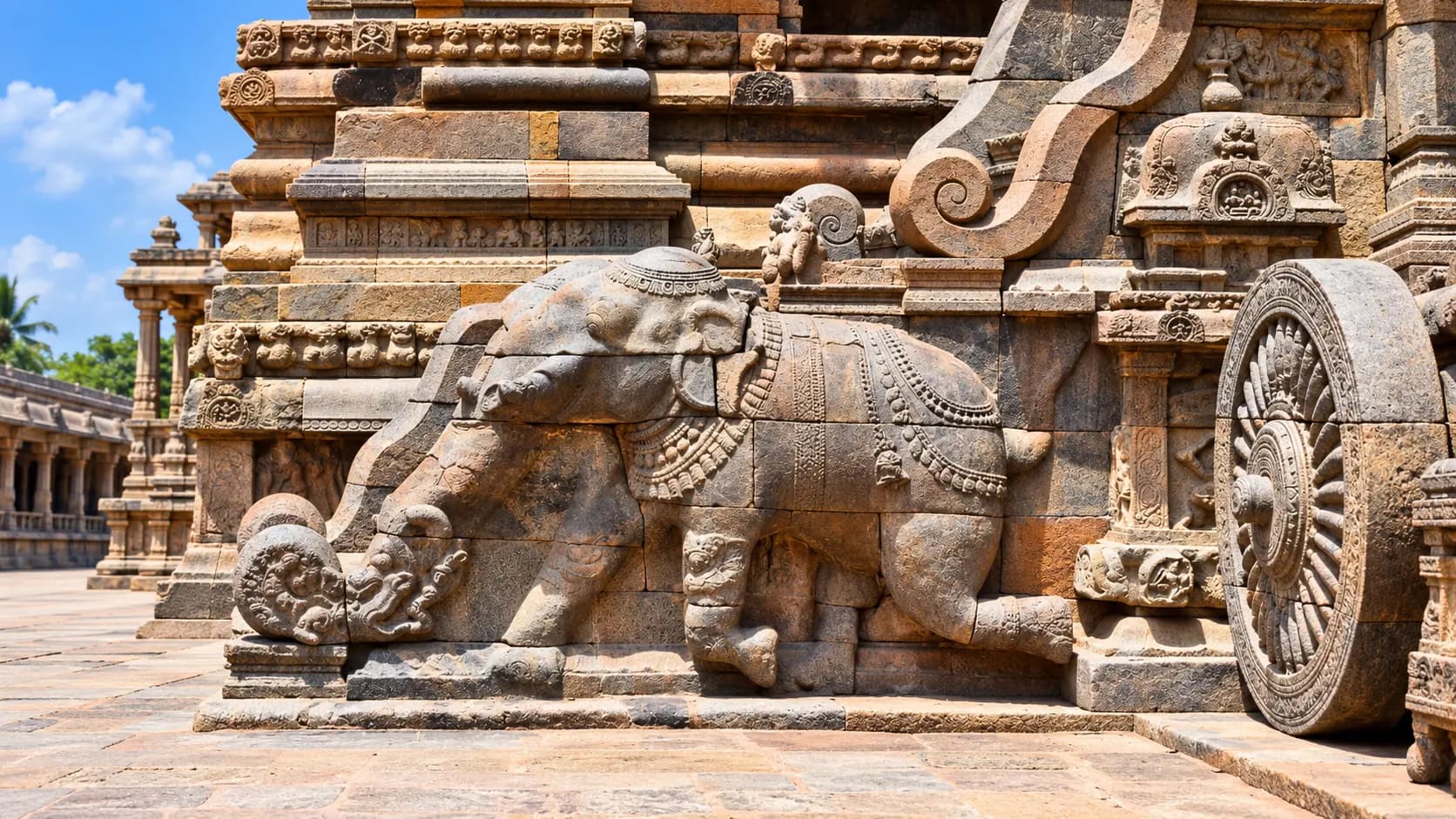
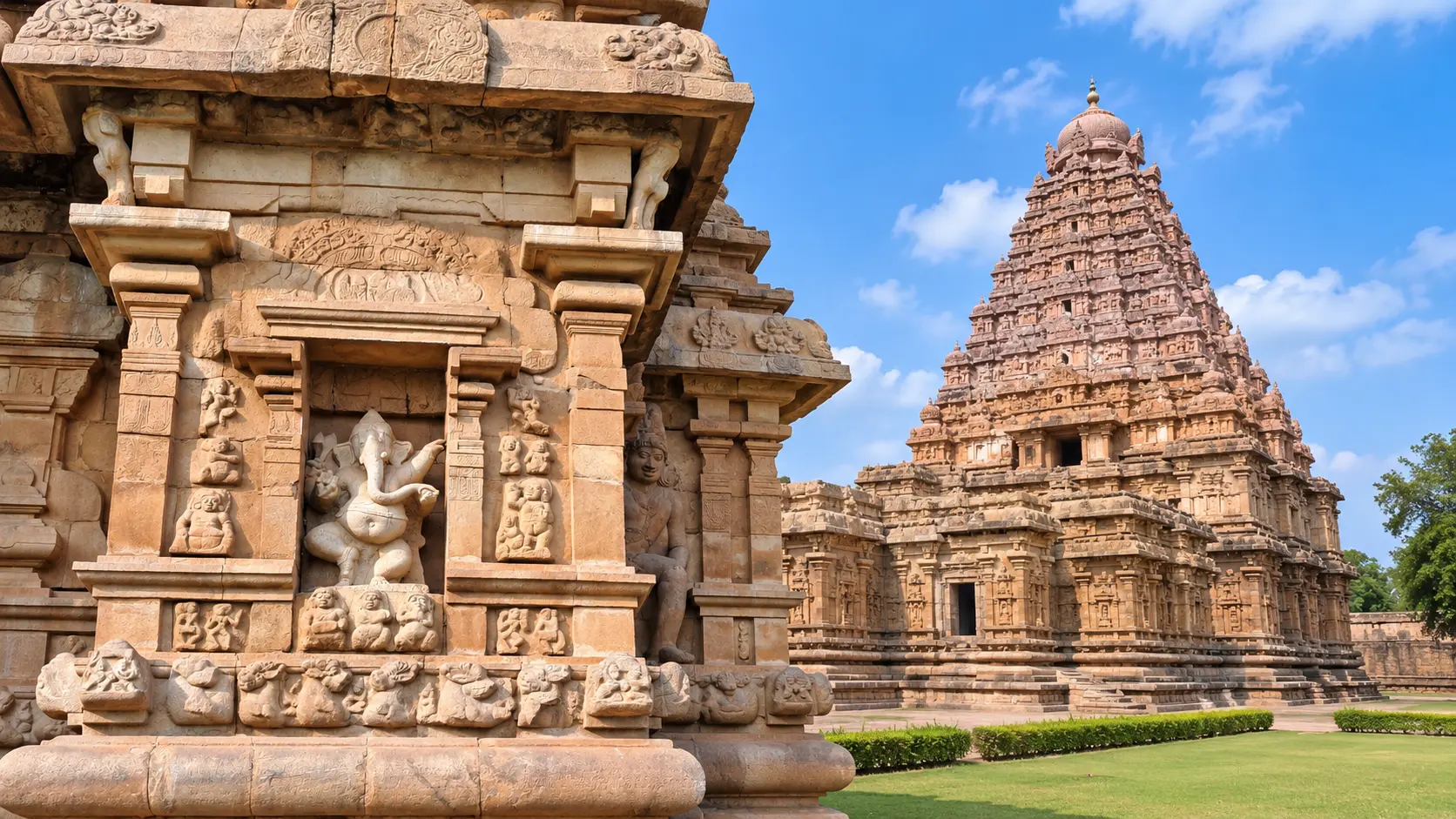
Architecturally, Airavatesvara Temple represents a revolutionary stage in Chola design. While retaining the classic vimana (temple tower) rising 24 metres (80 feet) over the sanctum sanctorum, the architects introduced dynamic new forms that would later inspire the grand Vijayanagara and Nayaka styles. Foremost among these is the Rajagambhiran Tirumandapam - a pillared porch intricately carved to resemble a majestic celestial war chariot (ratha) mounted on finely sculpted stone wheels and pulled by rearing horses and battle elephants. With its famed "musical steps" that resonate with the seven notes of Indian classical music, detailed friezes capturing the legends of all 63 Shaivite Nayanmars, and dynamic reliefs of classical Bharatanatyam dance postures, Airavatesvara offers an intimate and unforgettable journey into the golden age of South Indian artistic expression.
Start here. Open a tile for the full details.
Why goRead details
- UNESCO World Heritage Masterpiece: As an integral part of the Great Living Chola Temples alongside Thanjavur and Gangaikonda Cholapuram, Airavatesvara is internationally recognized for its outstanding universal cultural value and architectural integrity.
- The Stone Chariot (Rajagambhiran Tirumandapam): The front hall of the temple is sculpted as a massive ceremonial chariot with spoke-detailed stone wheels, hub caps, and axle details, pulled by animated stone horses and elephants. The realism and dynamic energy carved into the hard granite are unmatched in medieval Indian art.
- The Famous "Musical Steps": A small flight of stone steps leading to the balipeetham (altar platform) beside the Nandi mandapa was carved with varying densities and thickness so that each step produces one of the seven classical musical notes (Sapthaswaras) when lightly struck. While protected by an iron grill to ensure conservation, seeing this acoustical engineering marvel is a highlight of the visit.
- Complete Narrative of the 63 Nayanmars: Along the outer base of the sanctum corridor runs a continuous series of 108 stone relief panels depicting the stories, sacrifices, and miracles of the 63 Nayanmars (Tamil Shaivite poet-saints). Each panel is labeled with contemporary 12th-century Chola Tamil inscriptions, providing an invaluable historical and religious chronicle.
- Miniature Sculptural Artistry: Unlike the imposing, towering granite blocks of Thanjavur, every square inch of Airavatesvara's pillars, cornices, and plinths is covered in delicate miniature bas-reliefs illustrating mythological creatures (yalis), celestial musicians (gandharvas), acrobats, and dancers performing the 108 karanas (dance postures) of the Natya Shastra.
When to visitRead details
Visiting Airavatesvara is governed by the tropical climate of the Cauvery delta:
Entry & permissionsRead details
Fees, visiting hours and entry rules may change. Confirm the latest details with the official operator or local authority before travelling.
- Operating Hours: The temple is open daily from 06:00 to 12:00 in the morning session, and from 16:00 to 20:00 in the evening session. The temple sanctum and inner mandapas close promptly at 12:00 PM for deity rest and maintenance, reopening at 16:00 PM.
- Admission Charges: Admission to the temple and grounds is completely free for all domestic and international visitors. There are no ticket counters.
- Photography and Camera Charges: Casual mobile phone and non-commercial still photography of the architecture, lawns, and external carvings is allowed free of charge. However, photography is strictly forbidden inside the inner sanctum sanctorum (garbhagriha) and during the performance of religious aarti rituals.
- Prohibitions: Drones and unmanned aerial vehicles (UAVs) are strictly prohibited across all ASI centrally protected monuments. Footwear must be deposited at the shoe counter outside the temple gate. Visitors must wear modest attire that covers shoulders and knees in accordance with active Hindu temple traditions.
Plan your visitRead details
Airavatesvara Temple is located in the town panchayat of Darasuram, approximately 4 kilometres southwest of Kumbakonam and 36 kilometres northeast of Thanjavur.
Granite Floor Heat Precaution
If you visit between March and July, the bare stone courtyard becomes scorching by 10:30 AM. Because you must remove your shoes at the entrance, walking across the unshaded courtyard can be painful. Wear thick cotton socks, which are permitted inside the temple complex and provide valuable thermal insulation against hot granite.
Explore the full guide - choose a topic below.
Why visit?
UNESCO World Heritage Masterpiece: As an integral part of the Great Living Chola Temples alongside Thanjavur and…Explore detailsClose details
- UNESCO World Heritage Masterpiece: As an integral part of the Great Living Chola Temples alongside Thanjavur and Gangaikonda Cholapuram, Airavatesvara is internationally recognized for its outstanding universal cultural value and architectural integrity.
- The Stone Chariot (Rajagambhiran Tirumandapam): The front hall of the temple is sculpted as a massive ceremonial chariot with spoke-detailed stone wheels, hub caps, and axle details, pulled by animated stone horses and elephants. The realism and dynamic energy carved into the hard granite are unmatched in medieval Indian art.
- The Famous "Musical Steps": A small flight of stone steps leading to the balipeetham (altar platform) beside the Nandi mandapa was carved with varying densities and thickness so that each step produces one of the seven classical musical notes (Sapthaswaras) when lightly struck. While protected by an iron grill to ensure conservation, seeing this acoustical engineering marvel is a highlight of the visit.
- Complete Narrative of the 63 Nayanmars: Along the outer base of the sanctum corridor runs a continuous series of 108 stone relief panels depicting the stories, sacrifices, and miracles of the 63 Nayanmars (Tamil Shaivite poet-saints). Each panel is labeled with contemporary 12th-century Chola Tamil inscriptions, providing an invaluable historical and religious chronicle.
- Miniature Sculptural Artistry: Unlike the imposing, towering granite blocks of Thanjavur, every square inch of Airavatesvara's pillars, cornices, and plinths is covered in delicate miniature bas-reliefs illustrating mythological creatures (yalis), celestial musicians (gandharvas), acrobats, and dancers performing the 108 karanas (dance postures) of the Natya Shastra.
What to expect
Approaching the temple through the quiet town of Darasuram, visitors enter an immaculate, sunken courtyard…Explore detailsClose details
Approaching the temple through the quiet town of Darasuram, visitors enter an immaculate, sunken courtyard maintained with manicured green lawns by the Archaeological Survey of India (ASI). Because centuries of silt deposition from the Arasalaru river raised the surrounding ground level, the temple sits below road level, surrounded by an ancient stone prakara (perimeter wall) crested with recumbent Nandi bulls.
Before entering the main temple, visitors pass a stone Nandi pavilion and the carved balipeetham containing the renowned musical singing steps. The steps are enclosed behind an iron mesh railing to prevent physical wear, but their fine stone balustrade carving remains clearly visible. Footwear must be removed at the footwear stand outside the main pavilion.
Stepping into the Rajagambhiran Tirumandapam, the quality of craftsmanship is breathtaking. The hall is supported by exquisitely detailed granite columns adorned with intricate circular medallions. In these medallions, master Chola artisans carved complex compositions: Shiva dancing on the demon Apasmara, Ravana lifting Mount Kailash, Vishnu as Mohini, and the cosmic duel between Shiva as Sarabhamurti and Vishnu as Narasimha. Looking down at the wheels of the chariot hall, you will observe stone hubs so precisely sculpted that even the axle pins and decorative wheel spokes appear lifelike.
Proceeding into the inner ardhamandapa and the garbhagriha (sanctum sanctorum), the atmosphere shifts from architectural admiration to solemn religious devotion. The massive granite Shiva Lingam is actively worshipped today with traditional Vedic rituals, oil lamps, and floral offerings managed by local hereditary priests under the Tamil Nadu HR&CE Department. Outside the main sanctum, a sheltered circumambulatory cloister contains shrines dedicated to the various manifestations of Shiva, Ganesha, Subrahmanya, and the Matrikas (Seven Mother Goddesses). Approximately 50 metres to the north, within a separate walled enclosure, stands the contemporaneous Periya Nayaki Amman Temple, dedicated to Shiva's divine consort, Parvati.
Best time to visit
Visiting Airavatesvara is governed by the tropical climate of the Cauvery delta: - October to March (Post-Monsoon…Explore detailsClose details
Visiting Airavatesvara is governed by the tropical climate of the Cauvery delta:
- October to March (Post-Monsoon & Winter - Best Visiting Window): These months offer the most pleasant weather across the Thanjavur region. Daytime temperatures range comfortably from 22°C to 30°C, and morning breezes across the delta are refreshing. Most importantly, walking barefoot across the open granite flagstone courtyard is completely comfortable, unlike the scorching summer months.
- April to June (Summer Season - Extreme Heat): The delta plains experience intense, blistering heat during summer, with temperatures routinely exceeding 38°C to 42°C. The bare granite stone courtyard absorbs heat rapidly, making it virtually impossible to walk barefoot between 11:00 AM and 04:00 PM without scorching your feet. If visiting during summer, plan your arrival strictly between 06:30 and 08:30 AM or after 04:30 PM.
- July to September (Southwest Monsoon Interlude): Characterized by warm temperatures and intermittent light rains, this is an enjoyable, uncrowded season to visit. The dark granite stones look dramatic when washed clean by brief rain showers.
- October to December (Northeast Monsoon - Rainy Season): The coastal delta receives the bulk of its annual rainfall from the Northeast monsoon. While showers can be heavy, the temple's ancient Chola stormwater drainage system - consisting of subterranean stone channels and open granite spouts - functions effectively, keeping the courtyard free from flooding.
- Optimal Time of Day: Early morning (06:30 to 09:00 AM) and late afternoon (04:00 to 06:00 PM) offer the best photographic light. The low golden sunlight highlights the fine relief carvings on the chariot wheels and pillar medallions, creating stunning shadow contrasts.
How to reach
Airavatesvara Temple is located in the town panchayat of Darasuram, approximately 4 kilometres southwest of…Explore detailsClose details
Airavatesvara Temple is located in the town panchayat of Darasuram, approximately 4 kilometres southwest of Kumbakonam and 36 kilometres northeast of Thanjavur.
- By Road from Kumbakonam (4 km): Kumbakonam is the main transit hub for the region. Auto-rickshaws, private taxis, and town buses run constantly between Kumbakonam Central Bus Stand / Railway Station and Darasuram along State Highway 22 (Kumbakonam-Thanjavur Road). The auto-rickshaw ride takes barely 10 to 12 minutes.
- By Road from Thanjavur (36 km): From Thanjavur, drive northeast along State Highway 22 past Papanasam. The drive takes approximately 45 to 55 minutes through scenic delta countryside lined with emerald paddy fields and coconut groves. Frequent express buses connecting Thanjavur with Kumbakonam stop on request at the Darasuram temple junction.
- By Train:
- Darasuram Railway Station (1 km): A small passenger halt on the Thanjavur-Mayiladuthurai railway line. Several local passenger shuttles stop here.
- Kumbakonam Railway Station (4 km): A major junction on the Southern Railway main line, connecting directly to Chennai Egmore, Tiruchirappalli, Madurai, Coimbatore, and Bengaluru via regular express trains.
- By Air: The nearest airport is Tiruchirappalli International Airport (TRZ), situated approximately 88 kilometres southwest (approx. 2 hours by road). Chennai International Airport (MAA) is located approximately 290 kilometres to the north.
- Parking: A dedicated vehicle parking area managed by the town panchayat and ASI is situated outside the eastern gopuram entrance, accommodating cars, tourist vans, and buses.
Entry, timings and permissions
Fees, visiting hours and entry rules may change.Explore detailsClose details
Fees, visiting hours and entry rules may change. Confirm the latest details with the official operator or local authority before travelling.
- Operating Hours: The temple is open daily from 06:00 to 12:00 in the morning session, and from 16:00 to 20:00 in the evening session. The temple sanctum and inner mandapas close promptly at 12:00 PM for deity rest and maintenance, reopening at 16:00 PM.
- Admission Charges: Admission to the temple and grounds is completely free for all domestic and international visitors. There are no ticket counters.
- Photography and Camera Charges: Casual mobile phone and non-commercial still photography of the architecture, lawns, and external carvings is allowed free of charge. However, photography is strictly forbidden inside the inner sanctum sanctorum (garbhagriha) and during the performance of religious aarti rituals.
- Prohibitions: Drones and unmanned aerial vehicles (UAVs) are strictly prohibited across all ASI centrally protected monuments. Footwear must be deposited at the shoe counter outside the temple gate. Visitors must wear modest attire that covers shoulders and knees in accordance with active Hindu temple traditions.
Nearby places to consider
Kumbakonam Historic Temples (4 km): Known as the "Temple Town" of Tamil Nadu, Kumbakonam features several…Explore detailsClose details
- Kumbakonam Historic Temples (4 km): Known as the "Temple Town" of Tamil Nadu, Kumbakonam features several magnificent medieval temples, including the towering Sarangapani Temple, Kumbeswarar Temple, Ramaswamy Temple, and the holy Mahamaham Tank.
- Brihadeeswara Temple, Thanjavur (36 km): The colossal 11th-century architectural marvel built by Rajaraja I, featuring a soaring 66-metre vimana topped by an 80-ton granite dome.
- Gangaikonda Cholapuram (35 km): The majestic imperial capital temple constructed by Rajendra Chola I to commemorate his victorious military expedition to the Ganges River.
- Swamimalai Murugan Temple (5 km): One of the six sacred abodes (Arupadaiveedu) of Lord Murugan, perched atop a sacred hillock, famous for its ancient lost-wax bronze casting foundries.
- Papanasam Palaivananathar Temple (16 km): A historic Chola-era temple featuring ancient stone granaries (Nellukal) used by Chola rulers to store grain reserves during droughts.
In pictures
The practical bits
Before you go.
Mind the Midday Closure
Because Airavatesvara is an active temple adhering to traditional Shaivite liturgical hours, the inner sanctum…Explore detailsClose details
Because Airavatesvara is an active temple adhering to traditional Shaivite liturgical hours, the inner sanctum and mandapas close between 12:00 PM and 04:00 PM. Ensure your itinerary places your visit either in the early morning (07:00 to 10:30 AM) or late afternoon (04:00 to 06:30 PM).
Granite Floor Heat Precaution
If you visit between March and July, the bare stone courtyard becomes scorching by 10:30 AM.Explore detailsClose details
If you visit between March and July, the bare stone courtyard becomes scorching by 10:30 AM. Because you must remove your shoes at the entrance, walking across the unshaded courtyard can be painful. Wear thick cotton socks, which are permitted inside the temple complex and provide valuable thermal insulation against hot granite.
Combine with the Great Chola Temple Circuit
To appreciate the architectural evolution of the Chola Empire, pair Airavatesvara with the other two Great Living…Explore detailsClose details
To appreciate the architectural evolution of the Chola Empire, pair Airavatesvara with the other two Great Living Chola Temples. Start your morning at Brihadeeswara Temple in Thanjavur (built by Rajaraja I in 1010 CE), visit Airavatesvara at Darasuram (built by Rajaraja II in 1172 CE) in the afternoon, and continue to Gangaikonda Cholapuram (built by Rajendra I in 1035 CE) the following morning.
Explore the Silk Weaving Workshops of Darasuram
Darasuram is renowned not only for its temple, but also as an important traditional handloom silk-weaving center.Explore detailsClose details
Darasuram is renowned not only for its temple, but also as an important traditional handloom silk-weaving center. After exploring the temple, take a short stroll down the adjacent weaver streets (Saliya weavers) to watch master artisans operate traditional wooden pit looms, weaving intricate gold zari borders into pure Mulberry silk sarees.
A few things you might wonder
Common questions about visiting Airavatesvara Temple (Darasuram). Fees, visiting hours and ceremonies are researched details that may change; confirm current arrangements with the operator before travelling.
Who built Airavatesvara Temple and why is it named so?
Is Airavatesvara Temple a UNESCO World Heritage Site?
Can visitors play the musical steps today?
Is there an entry fee to visit Airavatesvara Temple?
What is the dress code for Airavatesvara Temple?
How does Airavatesvara compare to the Big Temple in Thanjavur?
What are the temple's daily visiting hours?
How far is the temple from Kumbakonam and how do I get there?
Explore more in Thanjavur Trichy
Discover other destinations around this hub
More Hubs in Tamil Nadu
Continue exploring other travel hubs in this state
Planning a trip to Thanjavur Trichy?