Ramanathaswamy Temple
Essential visitor guide to Ramanathaswamy Temple in Rameswaram. Explore the Jyotirlinga, world's longest corridor, 22 theerthams, timings, darshan & rules.
Location
Madurai & Rameswaram, Tamil Nadu
A closer look
Your visit, at a glance.
Madurai Rameswaram, Tamil Nadu
GET TO KNOW THE PLACE
Rising like an eternal stone citadel along the sacred Coromandel coastline of Pamban Island in Ramanathapuram District, Tamil Nadu, Arulmigu Ramanathaswamy Temple is one of the…
The story of Ramanathaswamy Temple
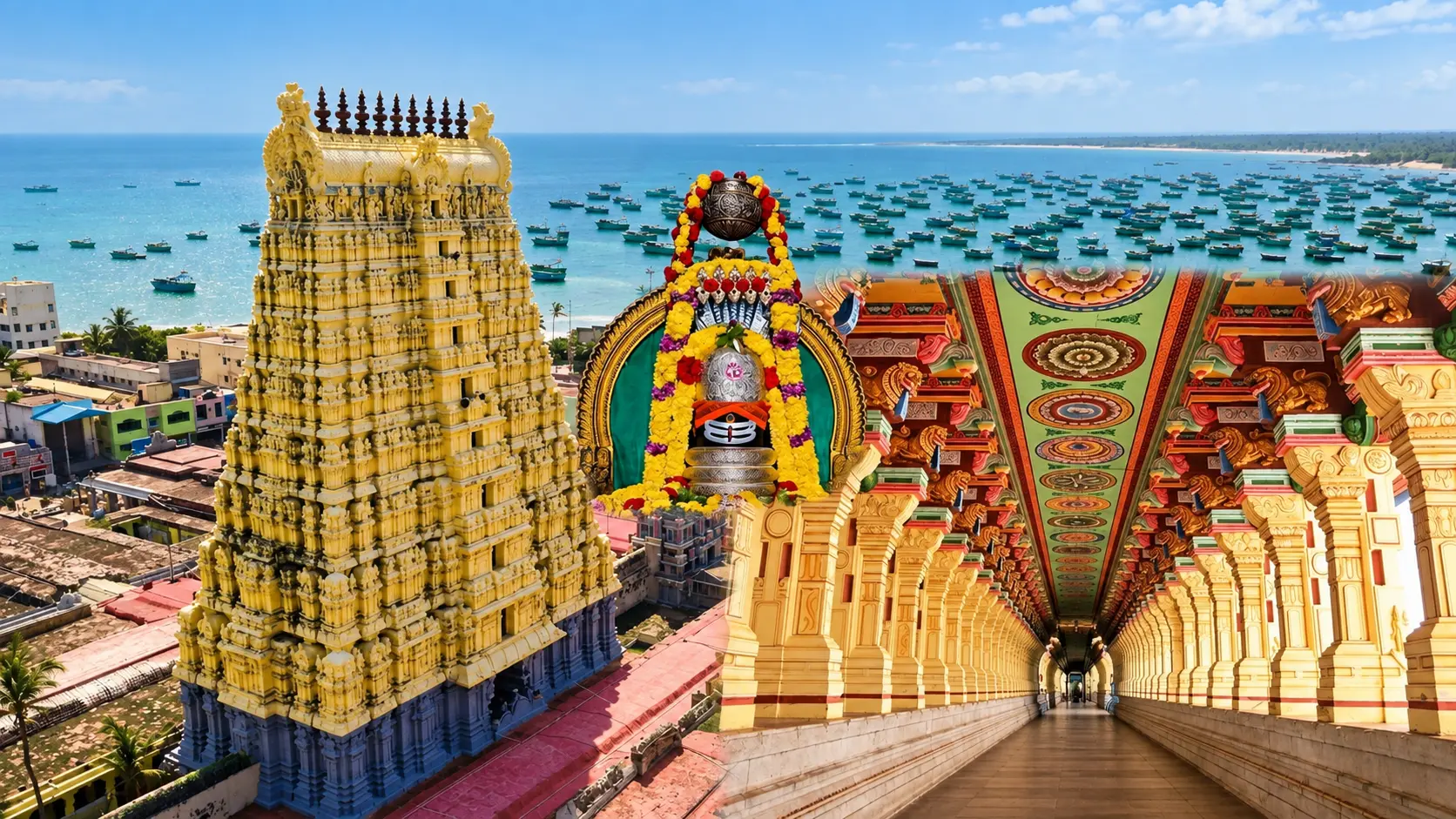
Rising like an eternal stone citadel along the sacred Coromandel coastline of Pamban Island in Ramanathapuram District, Tamil Nadu, Arulmigu Ramanathaswamy Temple is one of the most revered, historically celebrated, and architecturally monumental pilgrimage destinations in the world. As one of the twelve sacred Jyotirlingas of Lord Shiva and the supreme southern anchor of India's prestigious Char Dham circuit - alongside Badrinath in the Himalayas, Dwarka in Gujarat, and Jagannath Puri in Odisha - a pilgrimage to Rameswaram represents the spiritual zenith of a lifetime for devout Hindus across the subcontinent.
The temple's origins are woven directly into the sacred fabric of the Ramayana, enshrining the very lingam of Lord Shiva consecrated by Prince Rama and Goddess Sita to atone for the slaying of the demon king Ravana. Beyond its deep mythological resonance, Ramanathaswamy Temple is an engineering and artistic wonder of epic proportions. It boasts the longest temple corridor in the world - a colossal third corridor measuring an astonishing 1,212 metres (3,850 feet) in outer length, supported by 1,212 intricately sculpted monolithic granite pillars - alongside 22 sacred freshwater bathing wells (theerthams) whose mineral-rich waters have cleansed spiritual seekers for centuries. Whether you arrive before dawn to witness the sacred crystal Spatika Linga illuminated by camphor lamps, undergo the purifying ritual immersion in the 22 wells, or marvel at the vast hypostyle corridors that stretch toward infinity, Ramanathaswamy Temple offers an unforgettable encounter with the sublime majesty of ancient South Indian faith.
Start here. Open a tile for the full details.
Why goRead details
When to visitRead details
- Winter Season (October to March): This is unequivocally the most pleasant and comfortable season to visit Ramanathaswamy Temple. Daytime temperatures range between 22°C and 30°C, accompanied by refreshing, cool oceanic breezes. Walking barefoot across the stone corridors and courtyard flagstones is comfortable throughout the day.
- Summer Season (April to June): Summer days are hot and humid, with temperatures frequently reaching 38°C to 40°C. While the indoor stone corridors of the temple remain relatively cool, the outdoor stone pavements can become scorching under the midday sun. Check the current visiting hours and permitted access with the site operator before departure; ceremonies, closures and visitor sessions can affect access.
- Monsoon Season (October to December): Rameswaram receives significant rainfall from the Northeast Monsoon. Heavy coastal showers and tropical squalls are common. While the rain cools the island, pilgrims bathing at Agniteertham beach should follow coastal police safety flags during rough sea alerts.
Entry & permissionsRead details
Fees, visiting hours and entry rules may change. Confirm the latest details with the official operator or local authority before travelling.
Operating Schedule
- Daily Sessions:
- Morning Darshan: 05:00 to 13:00
- Evening Darshan: 15:00 to 21:00
- Midday Sanctum Closure: 13:00 to 15:00 daily.
- Special Ritual Schedules:
- Spatika Linga Darshan: Daily from 05:00 to 06:00 AM (Main Sanctum).
- 22 Theertham Bathing: Daily from 05:30 to 12:30 and 15:30 to 19:30.
- Nightly Bedchamber Palanquin Ceremony: Daily at approximately 20:30 to 20:45 PM.
Darshan Fees and Activity Charges
- General Free Public Darshan (Dharma Darshanam): Completely free of charge. Typical queue wait times range from 30 minutes to 1.5 hours on normal weekdays, and 2 to 4 hours on weekends, festival days, and auspicious new-moon (Amavasya) days.
- Special Fast-Track Darshan Tokens (HR&CE Regulated):
- ₹50 Special Darshan Ticket: Moderately accelerated queue corridor.
- ₹100 Quick Darshan Ticket: Fast-track lane directly approaching the sanctum barriers.
- ₹200 Super-Fast / VIP Darshan Ticket: Nearest entry corridor to the sanctum.
- 22 Theertham Bathing Pass: ₹25 per person (official ticket purchased inside the temple entrance).
- Electronic Cloakroom Token: ₹10 to ₹20 per locker for safe deposit of mobile phones, smartwatches, and luggage.
Complete Mobile Phone and Electronics Ban
By order of the Hon'ble Madras High Court and state temple security directives, all mobile phones, cameras, smartwatches, and electronic recording devices are strictly banned inside the entire temple complex. Visitors must surrender all electronic devices at the computerized cloakroom counters situated outside the four gopuram gates before joining the security lines. Security commando screening and metal detector arches are strictly enforced at every entrance; carrying a concealed mobile phone inside carries heavy fines and immediate device confiscation.
Strict Dress Code Regulations
Under official HR&CE Department directives, conservative traditional attire is mandatory:
- Men: Must wear a traditional dhoti (veshti), pyjama, or formal pants. Shirts, vests, and upper garments must be removed and draped over the shoulder upon entering the inner sanctum enclosures of Ramanathaswamy and Parvathavarthini. Western shorts, Bermudas, lungis, and torn jeans are strictly barred.
- Women: Must wear a traditional saree, half-saree (dhavani), or salwar kameez / churidar with a properly pinned dupatta. Western shorts, miniskirts, sleeveless tops, and tight leggings are strictly prohibited.
- Theertham Bathing Attire: When taking the 22 theertham bath, pilgrims must wear modest clothes (men in dhotis or shorts with t-shirts; women in sarees or salwar kameez). Following the bath, pilgrims must change into dry, traditional formal attire before entering the main sanctum for darshan. Changing rooms are provided on site.
Plan your visitRead details
Explore the full guide - choose a topic below.
Why visit?
In the vast landscape of Indian sacred geography, Ramanathaswamy Temple occupies a singular, preeminent position.Explore detailsClose details
The Sacred Confluence of Jyotirlinga and Char Dham
In the vast landscape of Indian sacred geography, Ramanathaswamy Temple occupies a singular, preeminent position. It is simultaneously one of the twelve divine Jyotirlingas (where Shiva is worshipped as a column of radiant, formless cosmic light) and the southern guardian of the pan-Indian Char Dham circuit established by the 8th-century philosopher Adi Shankaracharya. According to ancient tradition, a Hindu’s pilgrimage to Kashi (Varanasi) in Northern India remains spiritually incomplete until they travel south to Rameswaram, perform ritual ancestral ablutions at the confluence of the seas at Dhanushkodi, and offer sacred holy water from the Ganges River onto the lingam of Lord Ramanathaswamy.
The Ramayana Legend of the Twin Lingams
The temple enshrines a fascinating dual sanctum born of profound devotion and divine love:
- The Ramalingam: Following the defeat of Ravana, Lord Rama returned to Rameswaram with Sita and his army. Seeking to absolve himself of Brahmahatya dosha (the spiritual burden of slaying Ravana, who despite his wickedness was a master of the Vedas and a devout Brahmin), Rama resolved to worship Lord Shiva by installing a consecrated lingam. He dispatched Hanuman to Mount Kailash to fetch a lingam from Shiva himself. However, as the predetermined auspicious astrological hour (muhurtham) drew near with no sign of Hanuman, Goddess Sita lovingly shaped a lingam from the fine golden sands of the beach with her own hands. Rama consecrated this sand icon as the Ramalingam, which remains the principal sanctum deity.
- The Vishwalingam (Hanumadlingam): When Hanuman finally returned from Kailash carrying two sacred lingams, he was deeply disheartened to discover that a sand lingam had already been consecrated. Attempting to dislodge Sita's sand lingam with his powerful monkey tail to replace it with his own, Hanuman found that the sand icon was miraculously immovable, leaving visible tail grooves on the stone. Moved by Hanuman’s grief and loyalty, Lord Rama placed one of Hanuman’s Kailash lingams directly beside the main sanctum, naming it the Vishwalingam. Furthermore, Rama decreed an eternal spiritual ordinance: to honour Hanuman's supreme devotion, all pilgrims and priests must worship the Vishwalingam first before offering prayers to the Ramalingam - a sacred ritual sequence strictly followed by millions of devotees to this day.
The World-Record Third Corridor (Munram Prakaram)
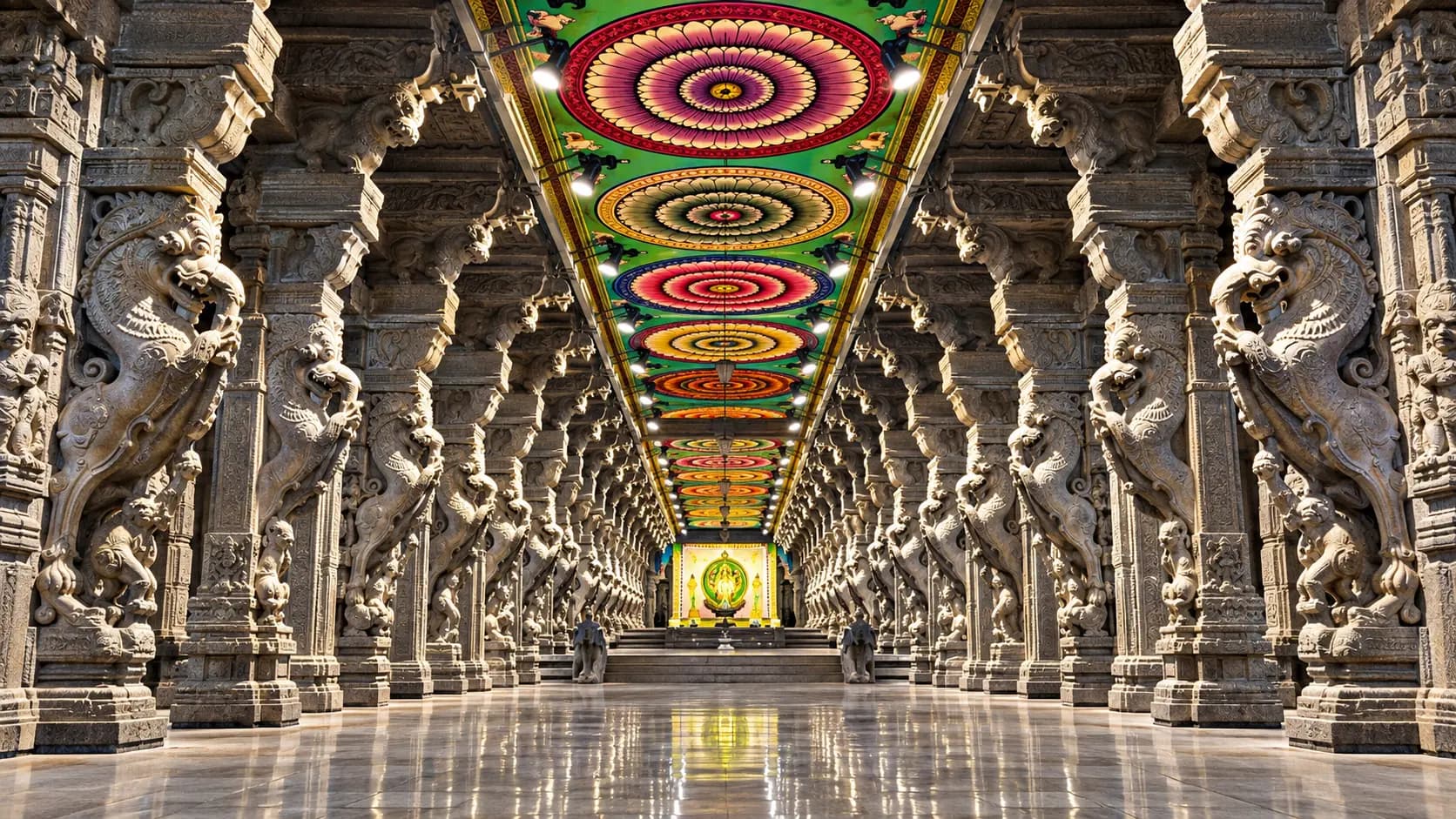
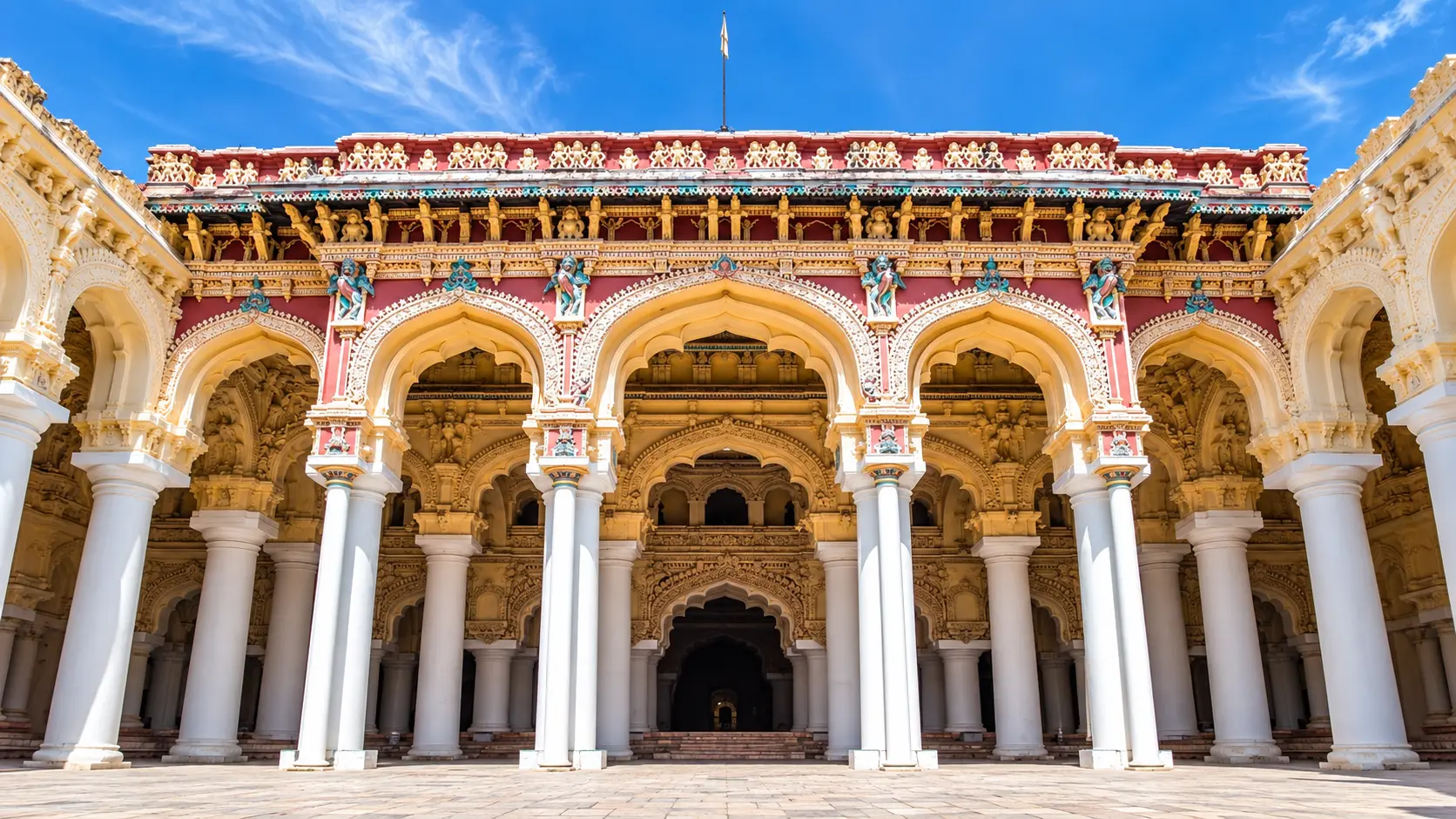
The architectural glory of Ramanathaswamy Temple is its colossal Third Corridor (Munram Prakaram), constructed between 1740 and 1770 CE by Muthuramalinga Sethupathi, King of Ramnad. It is internationally recognized as the longest temple corridor in the world:
- The outer perimeter stretches for approximately 1,212 metres (3,850 feet).
- The eastern and western corridors measure an incredible 690 feet in length, while the northern and southern corridors span 435 feet.
- The corridor is supported by exactly 1,212 monolithic sandstone pillars, each rising 22.75 feet high and sculpted from a single solid block of grey granite.
- Each pillar is carved with lifelike statues of Yalis (mythical leonine beasts) with polished stone balls rotating inside their open jaws, riders mounted on rearing stallions, and classical dancers.
- The high vaulted ceiling is adorned with vibrant 18th-century vegetable-dye frescoes illustrating the 64 miracles of Shiva and scenes from the Ramayana, creating a breathtaking stone colonnade that seems to recede into eternity.
The Ritual Purification of the 22 Sacred Theerthams
One of the most unique and spiritually transformative experiences in Hinduism is undergoing the 22 Theertham Bathing Ritual within the temple complex. Spread throughout the inner corridors and courtyards are 22 sacred freshwater wells (theerthams), each bearing a distinct name, mineral composition, temperature, and taste - remarkably yielding sweet, potable fresh water despite being situated just metres from the salty waves of the Bay of Bengal. Pilgrims begin by taking an auspicious dip in the sea at Agniteertham beach, then enter the temple in wet clothes, where authorized temple attendants draw buckets of water from all 22 wells in sacred sequence (beginning with Mahalakshmi Theertham and ending with Kodi Theertham), pouring a vessel of holy water over each pilgrim's head to cleanse spiritual impurities.
The Ethereal Dawn Spatika Linga Darshan
Check the current visiting hours and permitted access with the site operator before departure; ceremonies, closures and visitor sessions can affect access. Priests enter the inner sanctum to perform sacred morning ablutions over a pure, translucent quartz crystal lingam (Spatika Lingam), traditionally gifted to the shrine by Adi Shankaracharya. Illuminated by the warm, flickering glow of multi-tiered camphor lamps (deepams), the quartz crystal acts as a natural optical prism, radiating divine golden and rainbow light through the darkened sanctum while Vedic chants echo through the ancient corridors - an unforgettable, deeply peaceful experience.
What to expect
Pilgrims traditionally begin their journey at Agniteertham, the sacred beach located directly outside the…Explore detailsClose details
Arrival and Agniteertham Seafront
Pilgrims traditionally begin their journey at Agniteertham, the sacred beach located directly outside the colossal Eastern Gopuram of the temple. The waters of the Bay of Bengal here are exceptionally calm and free of large breaking waves. At sunrise, thousands of devotees take a ceremonial dip in the ocean, perform ancestor rites (Tharpanam) on the sand with Vedic priests, and collect small containers of sea water before proceeding toward the soaring 10-tiered Eastern Gopuram.
Entering the 22 Theertham Bathing Circuit
Confirm the current charge and what it includes with the operator or service provider. Visitor admission, vehicles, parking, activities and accommodation can have separate charges. The 22 wells are numbered and marked with brass signboards:
- Mahalakshmi Theertham (bestows wealth)
- Savitri Theertham
- Gayatri Theertham
- Saraswati Theertham (bestows learning and wisdom)
- Setu Madhava Theertham ...culminating at the 22nd well, Kodi Theertham, whose waters are considered equivalent to bathing in the holy Ganges River. Friendly temple attendants pour a refreshing bucket of cool, clear well water over each pilgrim at every station. Following the final bath, pilgrims proceed to clean, dedicated changing rooms where they change into fresh, dry traditional clothes before entering the sanctum queues.
The Inner Sanctum Corridor and Deity Darshan
After drying off, devotees enter the inner sanctum enclosure. The temple possesses an expansive, cool granite atmosphere, scented with the fragrance of crushed basil, camphor, pure sandalwood paste, and burning ghee lamps. Devotees first queue before the Vishwalingam shrine (fulfilling Lord Rama's decree to honour Hanuman), followed by the grand sanctum of Sri Ramanathaswamy (the Ramalingam). The sanctum is illuminated entirely by flickering brass oil lamps, revealing the ancient sand-carved lingam adorned in pure silver and gold sheaths, crowned by a protective golden serpent (Nagabharanam). Adjacent to the Shiva sanctum lies the magnificent golden-vimana shrine of Goddess Parvathavarthini (Parvati), depicted as a radiant, benevolent queen adorned in silks and diamond crowns.
Security Checkpoints and Electronic Device Deposit
Because of strict court security orders, all visitors must pass through automated metal detector arches and physical frisking booths operated by Tamil Nadu Police commandos at all four gateway entrances. Before entering, visitors must deposit all mobile phones, cameras, smartwatches, and electronic recording devices at computerized luggage cloakrooms situated outside the gopurams.
Best time to visit
Rameswaram sits on a low-lying coral island surrounded by the sea, experiencing a warm maritime tropical climate…Explore detailsClose details
Seasonal Weather Patterns
Rameswaram sits on a low-lying coral island surrounded by the sea, experiencing a warm maritime tropical climate year-round.
- Winter Season (October to March): This is unequivocally the most pleasant and comfortable season to visit Ramanathaswamy Temple. Daytime temperatures range between 22°C and 30°C, accompanied by refreshing, cool oceanic breezes. Walking barefoot across the stone corridors and courtyard flagstones is comfortable throughout the day.
- Summer Season (April to June): Summer days are hot and humid, with temperatures frequently reaching 38°C to 40°C. While the indoor stone corridors of the temple remain relatively cool, the outdoor stone pavements can become scorching under the midday sun. Check the current visiting hours and permitted access with the site operator before departure; ceremonies, closures and visitor sessions can affect access.
- Monsoon Season (October to December): Rameswaram receives significant rainfall from the Northeast Monsoon. Heavy coastal showers and tropical squalls are common. While the rain cools the island, pilgrims bathing at Agniteertham beach should follow coastal police safety flags during rough sea alerts.
Ideal Hours of the Day
- The Dawn Window (05:00 to 07:30 AM): The supreme time to experience the temple. Check the current visiting hours and permitted access with the site operator before departure; ceremonies, closures and visitor sessions can affect access. The temple is quiet, peaceful, and cool, and you can proceed directly to the 22 theerthams with minimal waiting lines.
- The Evening Session (16:30 to 20:30 PM): A vibrant, visually magnificent time. Thousands of brass oil lamps illuminate the third corridor, evening pujas fill the halls with the resonant music of the nadaswaram and thavil, and you can witness the grand nightly bedtime palanquin procession around 20:30.
- Midday Closure Warning: The main sanctum doors close promptly at 13:00 and do not reopen until 15:00 daily. Plan your morning activities to conclude before 12:30.
Major Festivals
- Maha Shivaratri (February/March): A 10-day grand festival culminating in an all-night vigil, special abhishekams, and the grand chariot procession (Ther Thiruvizha), drawing over 200,000 pilgrims.
- Thirukalyanam (July/August - Tamil month of Aadi): The celestial wedding festival of Goddess Parvathavarthini and Lord Ramanathaswamy, celebrated with immense pomp, music, and golden chariot processions.
- Aadi Amavasya & Thai Amavasya: Highly auspicious new-moon days when hundreds of thousands of pilgrims gather at Agniteertham beach to perform ancestral rites and bathe in the 22 theerthams.
How to reach
Ramanathaswamy Temple is located in the centre of Rameswaram town on Pamban Island, Ramanathapuram District…Explore detailsClose details
Geographic Orientation
Ramanathaswamy Temple is located in the centre of Rameswaram town on Pamban Island, Ramanathapuram District, Tamil Nadu (pin code 623526). It lies approximately 1.5 km east of Rameswaram Railway Station and 2 km east of the central bus depot.
By Train
Rameswaram Railway Station (RMM) is a premier rail terminus on the Southern Railway network, situated just 1.5 km west of the temple. Confirm the current charge and what it includes with the operator or service provider. Visitor admission, vehicles, parking, activities and accommodation can have separate charges. Frequent express trains connect Rameswaram to:
- Chennai Central / Egmore (daily Rameswaram Express, Sethu Express)
- Madurai Junction (frequent daily passenger and express services)
- Coimbatore, Tiruchirappalli, and Tirunelveli
- Bengaluru (Bangalore)
- Varanasi / Ayodhya (the holy Kashi-Rameswaram express routes)
By Road and Intercity Bus
Rameswaram Island is connected to mainland India by the spectacular four-lane National Highway 87, traversing the 2.34-km Annai Indira Gandhi Road Bridge (Pamban road bridge):
- Tamil Nadu State Transport Corporation (TNSTC) & SETC Buses: Continuous luxury sleeper and express buses run day and night from Madurai (Arapalayam/Mattuthavani), Chennai (CMBT), Coimbatore, Tiruchirappalli, Kanyakumari, and Thanjavur to the Rameswaram Central Bus Stand (~2 km west of the temple).
- By Private Taxi or Self-Drive: The drive from Madurai Airport takes approximately 3.5 hours along the smooth, four-lane NH 87 highway, passing through Ramanathapuram and crossing the ocean bridge onto the island.
By Air
- Madurai International Airport (IXM): The primary commercial gateway, located approximately 175 km northwest. A 3.5-hour taxi drive along NH 87 connects the airport directly to the temple gates.
- Tuticorin Airport (TCR): Located approximately 190 km southwest (about 4 hours drive).
Entry, timings and permissions
Fees, visiting hours and entry rules may change.Explore detailsClose details
Fees, visiting hours and entry rules may change. Confirm the latest details with the official operator or local authority before travelling.
Operating Schedule
- Daily Sessions:
- Morning Darshan: 05:00 to 13:00
- Evening Darshan: 15:00 to 21:00
- Midday Sanctum Closure: 13:00 to 15:00 daily.
- Special Ritual Schedules:
- Spatika Linga Darshan: Daily from 05:00 to 06:00 AM (Main Sanctum).
- 22 Theertham Bathing: Daily from 05:30 to 12:30 and 15:30 to 19:30.
- Nightly Bedchamber Palanquin Ceremony: Daily at approximately 20:30 to 20:45 PM.
Darshan Fees and Activity Charges
- General Free Public Darshan (Dharma Darshanam): Completely free of charge. Typical queue wait times range from 30 minutes to 1.5 hours on normal weekdays, and 2 to 4 hours on weekends, festival days, and auspicious new-moon (Amavasya) days.
- Special Fast-Track Darshan Tokens (HR&CE Regulated):
- ₹50 Special Darshan Ticket: Moderately accelerated queue corridor.
- ₹100 Quick Darshan Ticket: Fast-track lane directly approaching the sanctum barriers.
- ₹200 Super-Fast / VIP Darshan Ticket: Nearest entry corridor to the sanctum.
- 22 Theertham Bathing Pass: ₹25 per person (official ticket purchased inside the temple entrance).
- Electronic Cloakroom Token: ₹10 to ₹20 per locker for safe deposit of mobile phones, smartwatches, and luggage.
Complete Mobile Phone and Electronics Ban
By order of the Hon'ble Madras High Court and state temple security directives, all mobile phones, cameras, smartwatches, and electronic recording devices are strictly banned inside the entire temple complex. Visitors must surrender all electronic devices at the computerized cloakroom counters situated outside the four gopuram gates before joining the security lines. Security commando screening and metal detector arches are strictly enforced at every entrance; carrying a concealed mobile phone inside carries heavy fines and immediate device confiscation.
Strict Dress Code Regulations
Under official HR&CE Department directives, conservative traditional attire is mandatory:
- Men: Must wear a traditional dhoti (veshti), pyjama, or formal pants. Shirts, vests, and upper garments must be removed and draped over the shoulder upon entering the inner sanctum enclosures of Ramanathaswamy and Parvathavarthini. Western shorts, Bermudas, lungis, and torn jeans are strictly barred.
- Women: Must wear a traditional saree, half-saree (dhavani), or salwar kameez / churidar with a properly pinned dupatta. Western shorts, miniskirts, sleeveless tops, and tight leggings are strictly prohibited.
- Theertham Bathing Attire: When taking the 22 theertham bath, pilgrims must wear modest clothes (men in dhotis or shorts with t-shirts; women in sarees or salwar kameez). Following the bath, pilgrims must change into dry, traditional formal attire before entering the main sanctum for darshan. Changing rooms are provided on site.
Nearby places to consider
Located directly outside the Eastern Tower of the temple, this sacred beach is the traditional starting point of…Explore detailsClose details
Agniteertham Beach
Located directly outside the Eastern Tower of the temple, this sacred beach is the traditional starting point of the Rameswaram pilgrimage. Pilgrims take an auspicious purifying dip in the gentle waters of the Bay of Bengal and perform ancestral rites (Tharpanam) on the shore.
Pamban Bridge (Rail and Road Bridges)
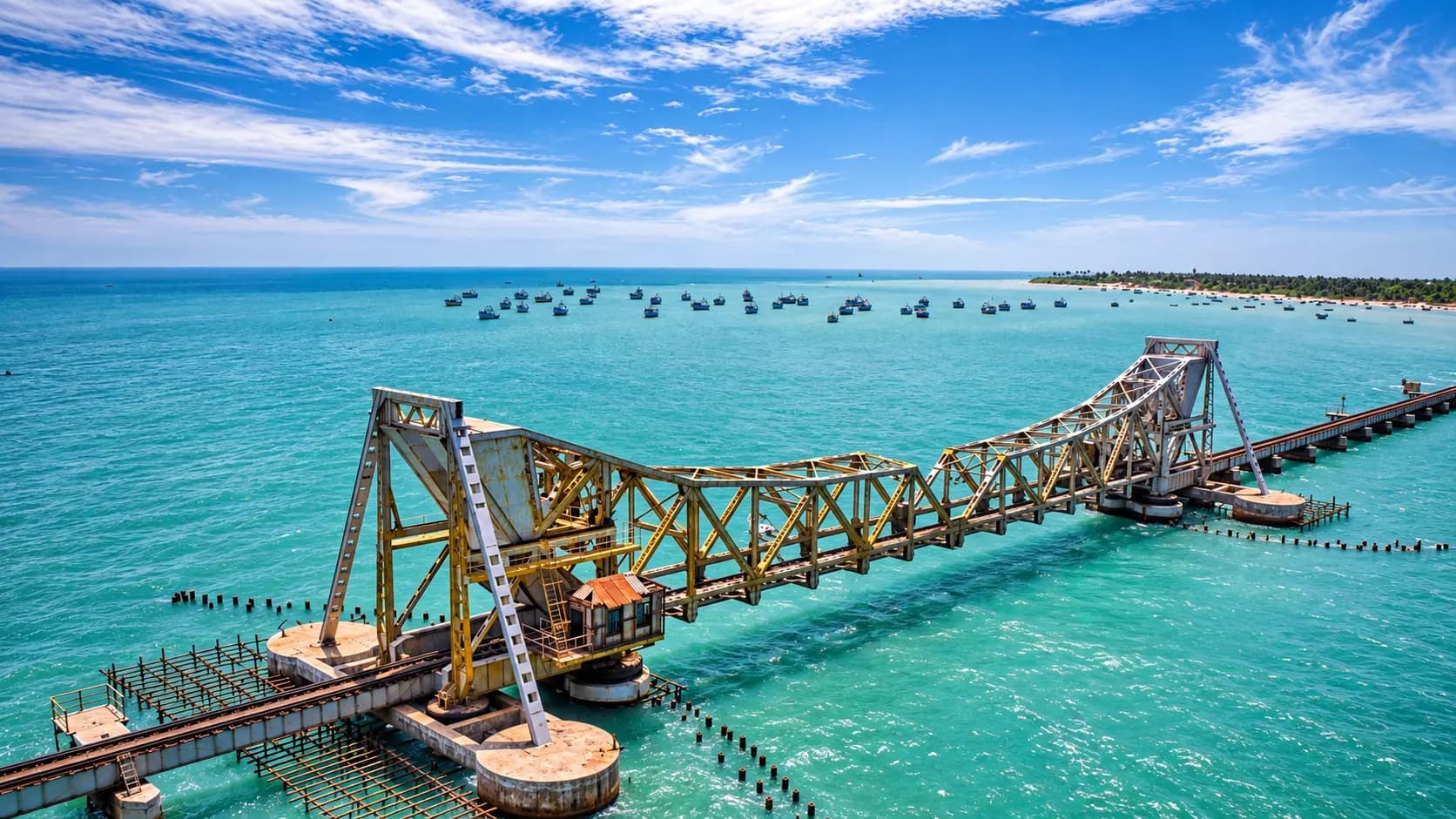
Located 12 km west connecting Rameswaram Island to the Indian mainland, this legendary marine crossing features the historic 1914 railway bridge with its Scherzer rolling lift bascule, the 1988 Annai Indira Gandhi road bridge (28-metre elevated viewing walkway), and the new 2024 automated vertical-lift rail bridge.
Dhanushkodi Ghost Town and Arichal Munai
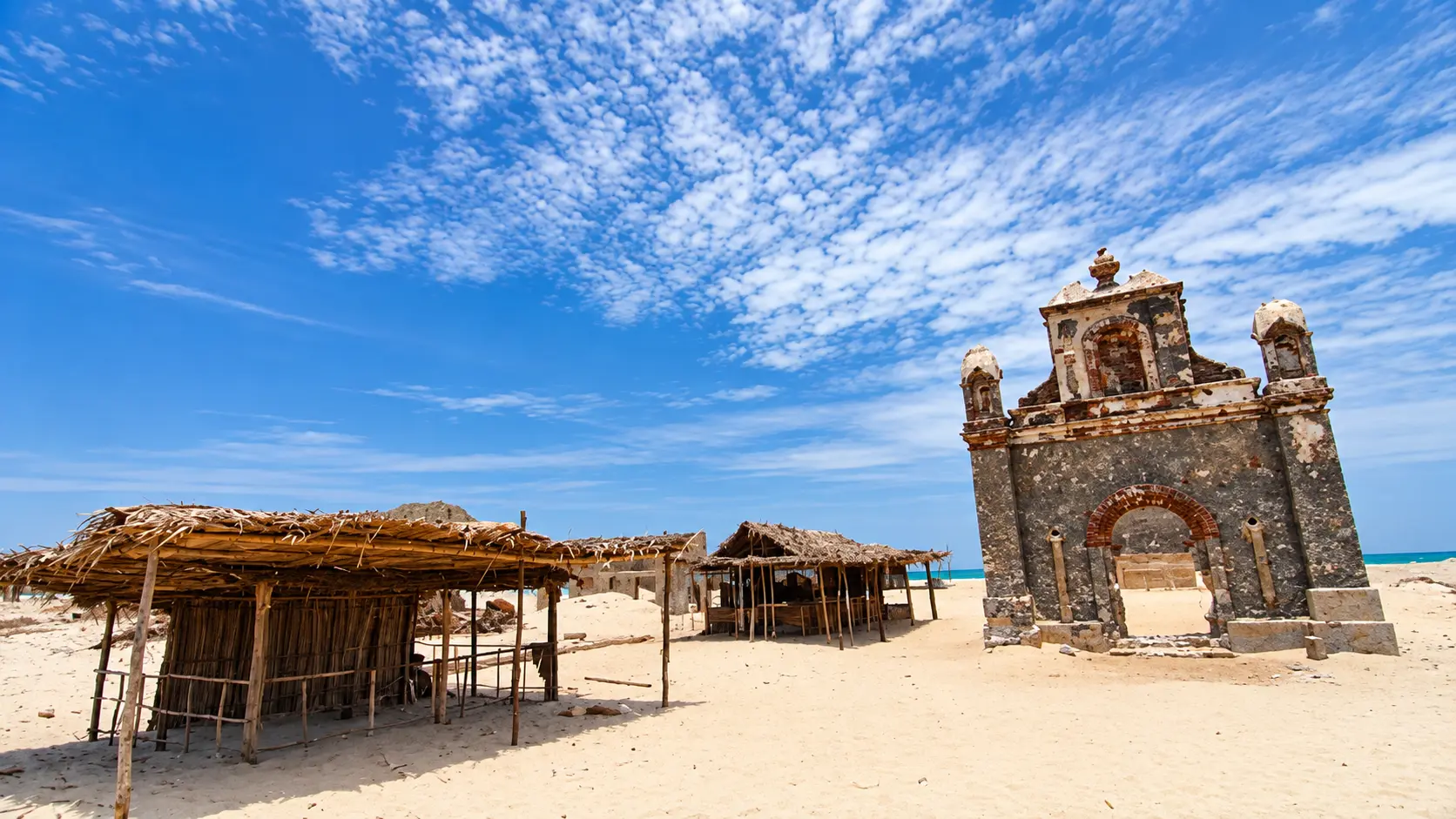
Situated 20 km southeast at the extreme tip of the island, Dhanushkodi is the haunting, sand-swept town destroyed in the 1964 cyclone. A scenic drive along NH 87 brings you past the ruined church and railway water tank to Arichal Munai, the southernmost highway terminus in India, just 24 km across the sea from Sri Lanka.
Dr. A.P.J. Abdul Kalam National Memorial
Located 4 km west in Pei Karumbu, this magnificent memorial honours India’s 11th President and beloved missile scientist. It houses an inspiring museum exhibiting Dr. Kalam’s personal belongings, scientific models of Agni and SLV rockets, and paintings chronicling his remarkable life.
Gandhamadhana Parvatham (Rama Padam)
Located 3 km north of the temple on the highest natural elevation on Pamban Island, this two-storey hill shrine enshrines the sacred imprinted footprints (padam) of Lord Rama on a stone chakra. From the upper rooftop terrace, visitors enjoy commanding 360-degree panoramic views of the entire island, the temple gopurams, and the surrounding ocean.
In pictures
The practical bits
Before you go.
The Authentic Pilgrimage Sequence (Step-by-Step)
To experience the full spiritual and traditional power of Rameswaram, follow the time-honoured sequence practiced…Explore detailsClose details
To experience the full spiritual and traditional power of Rameswaram, follow the time-honoured sequence practiced by pilgrims for centuries: 1.
05:00 AM - Spatika Linga Darshan
Check the current visiting hours and permitted access with the site operator before departure; ceremonies…Explore detailsClose details
Check the current visiting hours and permitted access with the site operator before departure; ceremonies, closures and visitor sessions can affect access. 2.
06:00 AM - Agniteertham Sea Bath
Walk out to Agniteertham beach directly in front of the East Gate, take a purifying dip in the calm waters of the…Explore detailsClose details
Walk out to Agniteertham beach directly in front of the East Gate, take a purifying dip in the calm waters of the Bay of Bengal, and perform personal prayers. 3.
06:30 AM - The 22 Theerthams
Confirm the current charge and what it includes with the operator or service provider.Explore detailsClose details
Confirm the current charge and what it includes with the operator or service provider. Visitor admission, vehicles, parking, activities and accommodation can have separate charges. 4.
07:30 AM - Change into Dry Attire
Use the temple changing rooms to change into clean, dry traditional clothing (ensure men remove shirts and women…Explore detailsClose details
Use the temple changing rooms to change into clean, dry traditional clothing (ensure men remove shirts and women have pinned dupattas). 5.
08:00 AM - The Twin Sanctums
Pray first at the Vishwalingam (Hanuman's lingam), then proceed to the principal Ramalingam sanctum, and conclude…Explore detailsClose details
Pray first at the Vishwalingam (Hanuman's lingam), then proceed to the principal Ramalingam sanctum, and conclude at the shrine of Goddess Parvathavarthini. 6.
09:00 AM - Marvel at the Third Corridor
Spend an unhurried 45 minutes walking through the world-record 1,212-metre Third Corridor, admiring the 1,212…Explore detailsClose details
Spend an unhurried 45 minutes walking through the world-record 1,212-metre Third Corridor, admiring the 1,212 sculpted pillars and ceiling frescoes.
Managing Mobile Phones and Belongings
The simplest way to comply with the complete mobile phone ban is to leave your phones, smartwatches, cameras, and…Explore detailsClose details
The simplest way to comply with the complete mobile phone ban is to leave your phones, smartwatches, cameras, and excess electronics locked in your hotel room safe or in your vehicle. Only carry essential cash, photo ID, a dry change of clothes in a plastic bag, and a towel. Traveling light saves you from waiting in 30-minute cloakroom queues outside the gopurams during peak morning hours.
Footwear Management
Footwear is strictly prohibited throughout the entire temple and surrounding car streets.Explore detailsClose details
Footwear is strictly prohibited throughout the entire temple and surrounding car streets. Free and paid shoe counters are available outside all four gopuram gates. However, because the walk between Agniteertham beach and the temple entrance can be hot on sunny afternoons, leave your footwear at a shop near the East Gate or in your hotel if staying within walking distance.
Free Annadhanam Meals
The temple serves free, freshly cooked, delicious South Indian vegetarian meals (sambar rice, rasam, kootu, and…Explore detailsClose details
The temple serves free, freshly cooked, delicious South Indian vegetarian meals (sambar rice, rasam, kootu, and payasam) daily between 11:30 and 15:30 under the Tamil Nadu HR&CE Annadhanam scheme in a massive, clean dining hall near the North Gopuram, feeding thousands of pilgrims daily.
A few things you might wonder
Common questions about visiting Ramanathaswamy Temple. Fees, visiting hours and ceremonies are researched details that may change; confirm current arrangements with the operator before travelling.
What is the historical and spiritual significance of Ramanathaswamy Temple?
Why does the temple enshrine two primary lingams?
How does the 22 Theertham bathing ritual work?
What is the Spatika Linga Darshan and when does it take place?
Are mobile phones and cameras allowed inside the temple?
What is the dress code for entering Ramanathaswamy Temple?
What are the temple opening and closing hours?
How far is the temple from Rameswaram Railway Station and bus stand?
Explore more in Madurai Rameswaram
Discover other destinations around this hub
More Hubs in Tamil Nadu
Continue exploring other travel hubs in this state
Planning a trip to Madurai Rameswaram?