Pamban Bridge
Essential visitor guide to Pamban Bridge connecting mainland India to Rameswaram. Explore the 1914 Scherzer rail bascule, 1988 road bridge & new vertical lift.
Location
Madurai & Rameswaram, Tamil Nadu
A closer look
Your visit, at a glance.
Madurai Rameswaram, Tamil Nadu
GET TO KNOW THE PLACE
Leaping across the sparkling turquoise waters of the Palk Strait to unite the mainland of Tamil Nadu with the sacred sands of Pamban Island, Pamban Bridge is one of the most…
The story of Pamban Bridge
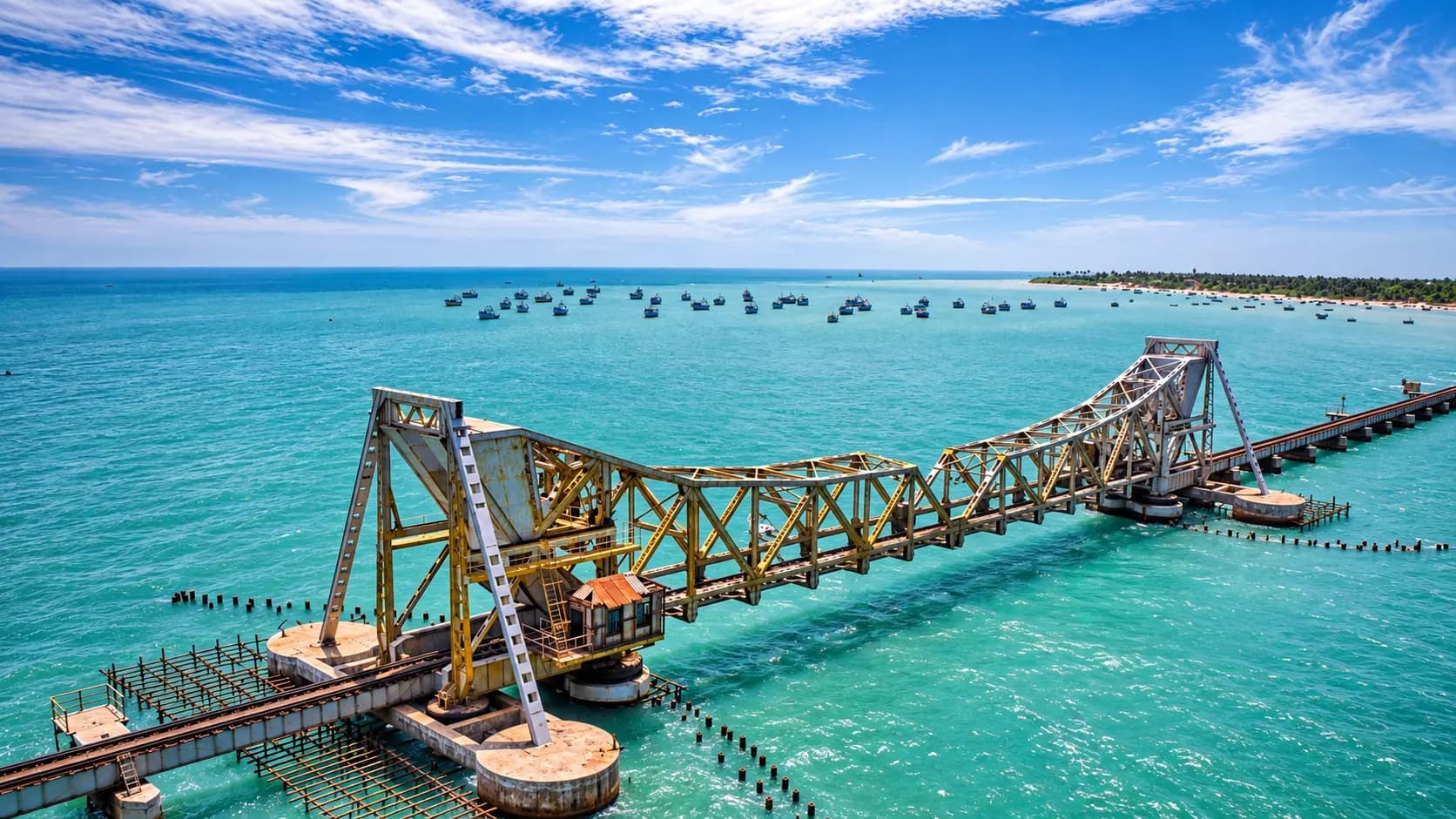
Leaping across the sparkling turquoise waters of the Palk Strait to unite the mainland of Tamil Nadu with the sacred sands of Pamban Island, Pamban Bridge is one of the most iconic, awe-inspiring, and heroic feats of marine engineering in South Asian history. Located in Ramanathapuram District, this legendary marine crossing is not merely a piece of transit infrastructure, but a magnificent triumvirate of structural triumphs spanning over a century of technological innovation: the historic 1914 Pamban Railway Bridge (India's very first sea bridge, celebrated for its double-leaf Scherzer rolling lift bascule), the soaring 1988 Annai Indira Gandhi Road Bridge (rising 28 metres above the ocean to provide world-class elevated viewing terraces), and the newly engineered New Pamban Rail Bridge constructed by Rail Vikas Nigam Limited (RVNL) featuring India's first automated vertical lift span.
Whether you gaze down from the road bridge at sunrise as local wooden fishing catamarans navigate the jade-green channel beneath the concrete cantilevers, observe the mechanical marvel of the bridge spans opening to allow a coastal naval vessel to clear, or take in the sweeping panoramic vistas where the gentle shallows of the Gulf of Mannar meet the churning surf of the Palk Strait, Pamban Bridge offers travellers an unforgettable encounter with human ingenuity set against the boundless power of the ocean.
Start here. Open a tile for the full details.
Why goRead details
When to visitRead details
- Winter Season (October to March): This is unequivocally the most pleasant and rewarding season to visit. Daily temperatures range between 22°C and 30°C, accompanied by refreshing, invigorating sea breezes. The skies are generally clear and sunny, offering transparent visibility across the channel and ideal lighting for photographing the bridges and the ocean.
- Summer Season (April to June): Summer days along the coast are hot, with midday temperatures regularly climbing past 37°C. Check the current visiting hours and permitted access with the site operator before departure; ceremonies, closures and visitor sessions can affect access. If visiting during summer, plan your bridge walk strictly for the early morning (06:00 to 08:30) or late afternoon (16:30 to 18:30).
- Monsoon Season (October to December): The Northeast Monsoon brings heavy coastal downpours, towering storm clouds, and gusting gale-force winds to the Pamban Channel. While the stormy sea creates a dramatic, cinematic backdrop, strong crosswinds on the road bridge can make walking uncomfortable, and police may enact vehicular speed restrictions during severe weather advisories.
Entry & permissionsRead details
Fees, visiting hours and entry rules may change. Confirm the latest details with the official operator or local authority before travelling.
Operating Schedule and Public Access
- Road Bridge Sidewalks: Open to the public 24 hours daily, 365 days a year.
- Admission Charges: Completely free. There is no ticket or entrance fee to walk along the pedestrian sidewalks of the Annai Indira Gandhi Road Bridge.
- Viewing Windows: Unrestricted public viewing; best experienced during daylight hours between 06:00 and 18:30.
Essential Highway and Railway Safety Regulations
- Strict Vehicle Parking Ban on Bridge Span: Parking cars, vans, or two-wheelers on the road bridge deck or stopping in traffic lanes to take photographs is strictly prohibited by the Tamil Nadu Highway Patrol Police. Stopping on the elevated bridge creates severe traffic bottlenecks and presents extreme rear-end collision hazards on high-speed highway curves. Highway police regularly patrol the bridge and issue immediate e-challan fines to offending vehicles. Always park your vehicle in the designated open parking lots at the Mandapam or Pamban bridge approaches and walk onto the bridge.
- Zero Trespassing on Rail Bridges: Walking, standing, or climbing onto the historic 1914 railway bridge or the new vertical-lift railway bridge is strictly illegal under Section 147 of the Indian Railways Act, punishable by immediate arrest, heavy fines, and imprisonment. The rail bridge has no pedestrian walkway, and track girders are exposed directly above deep, turbulent ocean currents.
- Safety Railing Discipline: Visitors on the road bridge must remain on the raised pedestrian walkways at all times. Do not climb onto the outer concrete parapet, sit on safety railings, or lean dangerously over the edge. Strong, sudden ocean wind gusts can catch visitors off guard.
- Drone Regulations: Flying consumer camera drones over the Pamban railway bridges, shipping channel, and road viaduct is strictly prohibited without formal prior written security clearance from the Ministry of Railways, Indian Coast Guard, and local police administration. Pamban Channel is a sensitive coastal security zone near the international maritime boundary.
Plan your visitRead details
Sun Protection and Wind Caution
The road bridge is completely open to the elements with no overhead shelter. The tropical sun can be intense between 10:00 and 15:30; wear a wide-brimmed sun hat, sunglasses, and sunscreen, and carry a refillable water bottle. Secure loose accessories - such as caps, lightweight scarves, and eyeglasses - as sudden highland-to-sea wind drafts whistling across the strait can easily blow items off the bridge into the ocean.
Explore the full guide - choose a topic below.
Why visit?
Until Mumbai's Bandra-Worli Sea Link opened in 2010, the Pamban Railway Bridge stood uncontested for nearly a…Explore detailsClose details
India's Historic First Sea Bridge
Until Mumbai's Bandra-Worli Sea Link opened in 2010, the Pamban Railway Bridge stood uncontested for nearly a century as India's longest and most celebrated sea bridge. Commissioned on February 24, 1914, by the South Indian Railway under British engineers William Donald Scherzer and Neville Priestley, this 2,065-metre (2.06 km / 6,776 feet) viaduct rests upon 143 massive stone-and-concrete piers anchored directly into the shallow, coral-strewn seabed. Prior to its construction, pilgrims visiting the sacred Ramanathaswamy Temple in Rameswaram had to endure perilous, unpredictable boat journeys across the treacherous Pamban Channel. The opening of the rail bridge transformed Rameswaram from an isolated island sanctuary into an accessible national pilgrimage destination, functioning as a vital link in the legendary Boat Mail express route between Madras and Ceylon (Sri Lanka).
The Mechanical Marvel of the Scherzer Bascule
The crowning jewel of the 1914 railway bridge is its central Scherzer rolling lift bascule span. Designed by the renowned German-American bridge engineer William Donald Scherzer, this 65.23-metre (214-foot) double-leaf steel truss section was fabricated in Chicago and assembled on-site across the deep navigational shipping channel. When a coastal cargo ship, oil tanker, Coast Guard cutter, or large motorized fishing trawler needs to transit between the Palk Strait to the north and the Gulf of Mannar to the south, railway mechanics operate an intricate system of counterweights and gears that rolls the two balanced bridge leaves backward on curved steel tracks. The leaves swing upward into the sky like colossal open jaws, creating an unobstructed gap through which vessels can glide. Watching the bascule open - a rare spectacle witnessed by thousands of tourists looking down from the road bridge above - remains one of India's most thrilling mechanical displays.
The 1964 Cyclone Restoration Miracle of E. Sreedharan
Pamban Bridge is imbued with an inspiring story of human resilience. On the tragic night of December 22 - 23, 1964, when a catastrophic super-cyclone flattened neighbouring Dhanushkodi, monstrous tidal waves swept across the Pamban Channel, washing away 126 of the 145 steel spans of the rail bridge and leaving only the central Scherzer bascule standing amidst the devastation. While senior British and Indian consultants estimated that rebuilding the bridge would take at least six months to a year, a dynamic 32-year-old railway executive engineer named Dr. E. Sreedharan (who would later become legendary as India’s "Metro Man" for constructing the Konkan Railway and Delhi Metro) took charge of the crisis. Mobilizing local fishermen and traditional pearl divers, Sreedharan salvaged sunken steel girders from the ocean floor, repaired damaged masonry piers, and restored the railway line in a breathtaking 46 days - a monumental accomplishment celebrated with the Railway Minister’s Award and etched permanently into Indian engineering lore.
The New Pamban Vertical Lift Railway Bridge
Adding a glorious contemporary chapter to this historic site is the New Pamban Rail Bridge, engineered by Rail Vikas Nigam Limited (RVNL) parallel to the 1914 bridge. Spanning 2.07 kilometres across 100 spans, this state-of-the-art viaduct features India’s first automated vertical lift span. Instead of rolling open on hinges like the historic Scherzer bascule, the new 72.5-metre central steel truss span - weighing an astonishing 550 tonnes - is lifted straight up into the air by high-powered electromechanical motors, rising 17 metres vertically to provide a generous 22-metre navigational clearance for large container ships. Designed to accommodate electrified 25 kV AC traction and operating speeds of 80 km/h, the bridge stands as a shining symbol of 21st-century Indian railway modernization.
Elevated Panoramas from the Annai Indira Gandhi Road Bridge
Opened on October 2, 1988, by Prime Minister Rajiv Gandhi, the Annai Indira Gandhi Road Bridge (measuring 2,345 metres / 2.34 km) runs parallel to the rail line, carrying National Highway 87. Designed as a sweeping prestressed concrete box-girder viaduct supported by 79 piers, its central navigation span arches gracefully to an elevation of 28 metres (92 feet) above the water. Equipped with wide, secure pedestrian walkways on both sides, the road bridge serves as a world-class viewing gallery. From its summit, visitors enjoy an uninterrupted bird’s-eye panorama: watching the ribbon of the rail bridge below, observing the vivid color boundary where the dark blue Palk Strait meets the turquoise Gulf of Mannar, and admiring fleets of colourful fishing boats bobbing near the mangrove shores of Mandapam.
What to expect
Travelling southeast from Ramanathapuram along National Highway 87, the road approaches the coastal fishing town…Explore detailsClose details
The Approaching Viaduct from Mainland Mandapam
Travelling southeast from Ramanathapuram along National Highway 87, the road approaches the coastal fishing town of Mandapam. The highway ascends onto a long, straight marine embankment before curving upward onto the Annai Indira Gandhi Road Bridge. As your vehicle climbs the gentle incline, the landscape transforms dramatically: the land falls away, and you find yourself suspended high above a vast expanse of shimmering turquoise ocean, with refreshing sea breezes streaming through your vehicle windows.
Walking the Pedestrian Sidewalks
The most rewarding way to experience Pamban Bridge is on foot. Visitors can park their vehicles at designated roadside parking bays situated at either the Mandapam (western) or Pamban (eastern) ends of the bridge and walk along the elevated concrete sidewalks. The walkways are protected by sturdy waist-high concrete parapets and steel railings. As you walk toward the central crest of the bridge, the height above the ocean increases dramatically, giving you a thrilling, aerial perspective. Looking over the northern railing, you gaze out across the choppy, wind-ruffled waves of the Palk Strait; looking over the southern railing, you see the tranquil coral reef lagoons of the Gulf of Mannar Marine National Park, studded with tiny emerald mangrove islets.
Inspecting the Rail Viaducts Below
Positioned just 50 metres south of the road bridge, the historic 1914 railway bridge and the new RVNL vertical-lift bridge run parallel across the channel. From the road bridge's viewing height, you can clearly trace the construction details: the weathered stone masonry piers of the 1914 viaduct with its dark iron Scherzer bascule gears, juxtaposed with the pristine white concrete piers and gleaming orange-painted vertical lift towers of the new bridge. Looking down through the crystal-clear water near the shore, you can often see sandy coral patches, schools of small fish, and submerged rock formations.
Marine Life and Avian Activity
The Pamban Channel is a biological corridor within the Gulf of Mannar Biosphere Reserve, renowned for its rich marine biodiversity. Observant walkers on the bridge often spot seabirds - such as gull-billed terns, brown-headed gulls, and brahminy kites - diving into the water to catch fish. During calm early-morning hours, it is not uncommon to see pods of sea dolphins surfacing briefly in the outer channel, or sea turtles paddling through the shallows.
Bridge Abutment Bazaars and Refreshments
At both ends of the bridge (Mandapam on the mainland and Pamban on the island), small clusters of roadside stalls offer authentic local refreshments. Enjoy freshly cut tender coconut water (elaneer), sliced tropical fruits sprinkled with rock salt and chilli, hot cups of tea, and freshly prepared fried fish (meen varuval) caught that morning by local fishermen. Local artisans display decorative seashells, conches (sangu), and coral stone curios harvested from coastal beaches.
Best time to visit
Because Pamban Bridge is an open maritime structure completely exposed to ocean winds and tropical sunlight…Explore detailsClose details
Seasonal Weather Dynamics
Because Pamban Bridge is an open maritime structure completely exposed to ocean winds and tropical sunlight, timing your visit carefully will ensure maximum comfort and safety.
- Winter Season (October to March): This is unequivocally the most pleasant and rewarding season to visit. Daily temperatures range between 22°C and 30°C, accompanied by refreshing, invigorating sea breezes. The skies are generally clear and sunny, offering transparent visibility across the channel and ideal lighting for photographing the bridges and the ocean.
- Summer Season (April to June): Summer days along the coast are hot, with midday temperatures regularly climbing past 37°C. Check the current visiting hours and permitted access with the site operator before departure; ceremonies, closures and visitor sessions can affect access. If visiting during summer, plan your bridge walk strictly for the early morning (06:00 to 08:30) or late afternoon (16:30 to 18:30).
- Monsoon Season (October to December): The Northeast Monsoon brings heavy coastal downpours, towering storm clouds, and gusting gale-force winds to the Pamban Channel. While the stormy sea creates a dramatic, cinematic backdrop, strong crosswinds on the road bridge can make walking uncomfortable, and police may enact vehicular speed restrictions during severe weather advisories.
Best Time of Day
- Sunrise (06:00 to 07:30 AM): By far the most breathtaking hour. As the sun rises out of the Palk Strait to the east, its golden rays illuminate the steel trusses of the railway bridges, bathing the ocean in radiant gold and pink hues. The morning air is cool, and local fishing boats head out to sea under the bridge in peaceful procession.
- Sunset and Twilight (17:00 to 18:30 PM): The golden hour casts long, dramatic shadows across the water. Watching the sun dip behind the mainland of Mandapam while cool offshore winds blow through the channel is an extraordinarily peaceful experience.
- Night-time Viewing: After dark, the road bridge is illuminated by streetlights, and the new railway bridge features architectural security lighting, creating lovely golden reflections across the dark water.
How to reach
Pamban Bridge spans the Pamban Channel in Ramanathapuram District, Tamil Nadu (pin code 623519).Explore detailsClose details
Geographic Orientation
Pamban Bridge spans the Pamban Channel in Ramanathapuram District, Tamil Nadu (pin code 623519). It connects the mainland port town of Mandapam to the village of Pamban on Pamban (Rameswaram) Island. It is situated 12 km west of Rameswaram town, 40 km east of Ramanathapuram, and 165 km southeast of Madurai.
Road Transit via National Highway 87
All road vehicles travelling to Rameswaram Island must cross the Annai Indira Gandhi Road Bridge:
- By Private Taxi or Car: The four-lane National Highway 87 connects Madurai smoothly to Ramanathapuram and Mandapam. The drive from Madurai Airport takes approximately 3 to 3.5 hours. Confirm the current charge and what it includes with the operator or service provider. Visitor admission, vehicles, parking, activities and accommodation can have separate charges.
- By Intercity and Town Buses: Every government bus (TNSTC and SETC) running between mainland Tamil Nadu (Madurai, Chennai, Coimbatore, Trichy) and Rameswaram crosses the road bridge. Local town buses running between Mandapam and Rameswaram bus stands cross the bridge continuously throughout the day; passengers can request the driver to drop them at the bridge approach stops.
Nearest Railway Gateways
- Mandapam Railway Station (MMM): Located just 1.5 km west of the bridge on the mainland, serviced by local passenger and express trains running on the Madurai-Rameswaram line.
- Pamban Railway Station: Located roughly 1 km east of the bridge on the island.
- Rameswaram Railway Station (RMM): Situated 12 km east in Rameswaram town centre, handling nationwide express trains from Chennai, Bengaluru, Mumbai, and Varanasi.
Nearest Airport Gateway
Madurai International Airport (IXM) is the closest commercial airport, located approximately 165 km northwest. A 3-hour drive via the well-paved NH 87 highway connects the airport terminal directly to Pamban Bridge and Rameswaram Island.
Entry, timings and permissions
Fees, visiting hours and entry rules may change.Explore detailsClose details
Fees, visiting hours and entry rules may change. Confirm the latest details with the official operator or local authority before travelling.
Operating Schedule and Public Access
- Road Bridge Sidewalks: Open to the public 24 hours daily, 365 days a year.
- Admission Charges: Completely free. There is no ticket or entrance fee to walk along the pedestrian sidewalks of the Annai Indira Gandhi Road Bridge.
- Viewing Windows: Unrestricted public viewing; best experienced during daylight hours between 06:00 and 18:30.
Essential Highway and Railway Safety Regulations
- Strict Vehicle Parking Ban on Bridge Span: Parking cars, vans, or two-wheelers on the road bridge deck or stopping in traffic lanes to take photographs is strictly prohibited by the Tamil Nadu Highway Patrol Police. Stopping on the elevated bridge creates severe traffic bottlenecks and presents extreme rear-end collision hazards on high-speed highway curves. Highway police regularly patrol the bridge and issue immediate e-challan fines to offending vehicles. Always park your vehicle in the designated open parking lots at the Mandapam or Pamban bridge approaches and walk onto the bridge.
- Zero Trespassing on Rail Bridges: Walking, standing, or climbing onto the historic 1914 railway bridge or the new vertical-lift railway bridge is strictly illegal under Section 147 of the Indian Railways Act, punishable by immediate arrest, heavy fines, and imprisonment. The rail bridge has no pedestrian walkway, and track girders are exposed directly above deep, turbulent ocean currents.
- Safety Railing Discipline: Visitors on the road bridge must remain on the raised pedestrian walkways at all times. Do not climb onto the outer concrete parapet, sit on safety railings, or lean dangerously over the edge. Strong, sudden ocean wind gusts can catch visitors off guard.
- Drone Regulations: Flying consumer camera drones over the Pamban railway bridges, shipping channel, and road viaduct is strictly prohibited without formal prior written security clearance from the Ministry of Railways, Indian Coast Guard, and local police administration. Pamban Channel is a sensitive coastal security zone near the international maritime boundary.
Nearby places to consider
Located 12 km east in the centre of Rameswaram town, this world-renowned 12th-century Dravidian temple is one of…Explore detailsClose details
Ramanathaswamy Temple (Rameswaram)
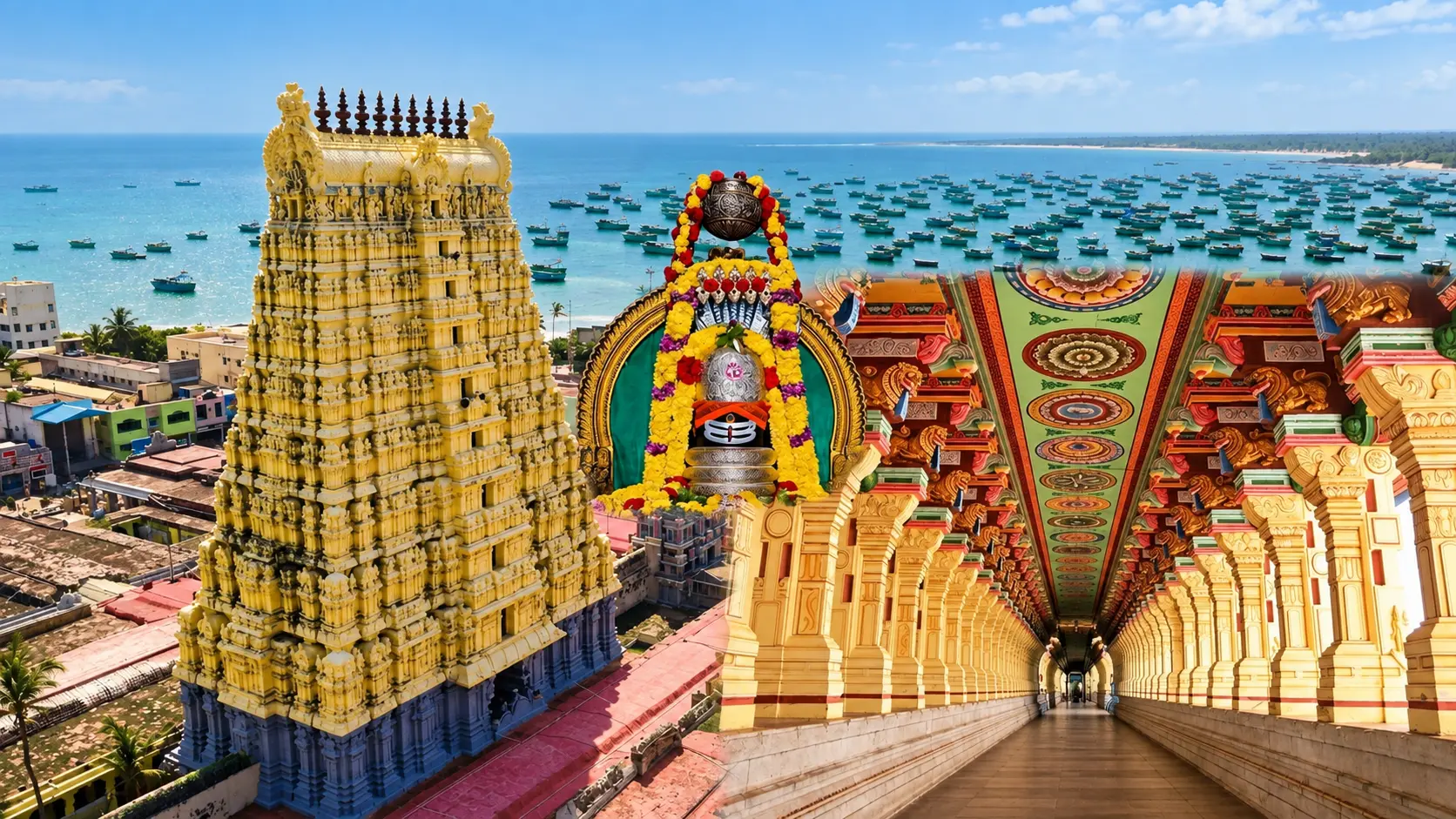
Located 12 km east in the centre of Rameswaram town, this world-renowned 12th-century Dravidian temple is one of the twelve sacred Jyotirlingas of Lord Shiva. Admire its world-record third corridor measuring 1,212 metres in length supported by 1,212 carved pillars, and participate in the purifying ritual bath across its 22 sacred temple tanks (theerthams).
Gulf of Mannar Marine National Park (Mandapam)
Situated near the mainland approach at Mandapam, this core zone of the Gulf of Mannar Biosphere Reserve encompasses 21 pristine uninhabited coral islands, extensive seagrass beds, and mangrove estuaries. The Marine Interpretation Centre at Mandapam offers fascinating educational exhibits on sea cows (dugongs), sea turtles, live corals, and marine biodiversity.
Mandapam Beach and Fishing Harbour
Located just 2 km west of the bridge on the mainland, Mandapam’s active fishing harbour is a vibrant spectacle of coastal commerce. Hundreds of brightly painted mechanized trawlers unload daily catches of kingfish, seer fish, crabs, and tiger prawns, while the adjacent shoreline features soft sand and gentle waves suitable for quiet walks.
Dr. A.P.J. Abdul Kalam National Memorial
Located 8 km east of Pamban Bridge along NH 87 in Pei Karumbu, this impressive national memorial pays homage to India’s beloved missile scientist and 11th President, Dr. A.P.J. Abdul Kalam. Built on the site where he was laid to rest, it houses an evocative museum showcasing his personal artifacts, scientific models of ISRO rockets, and rare photographs.
Dhanushkodi Ghost Town and Arichal Munai
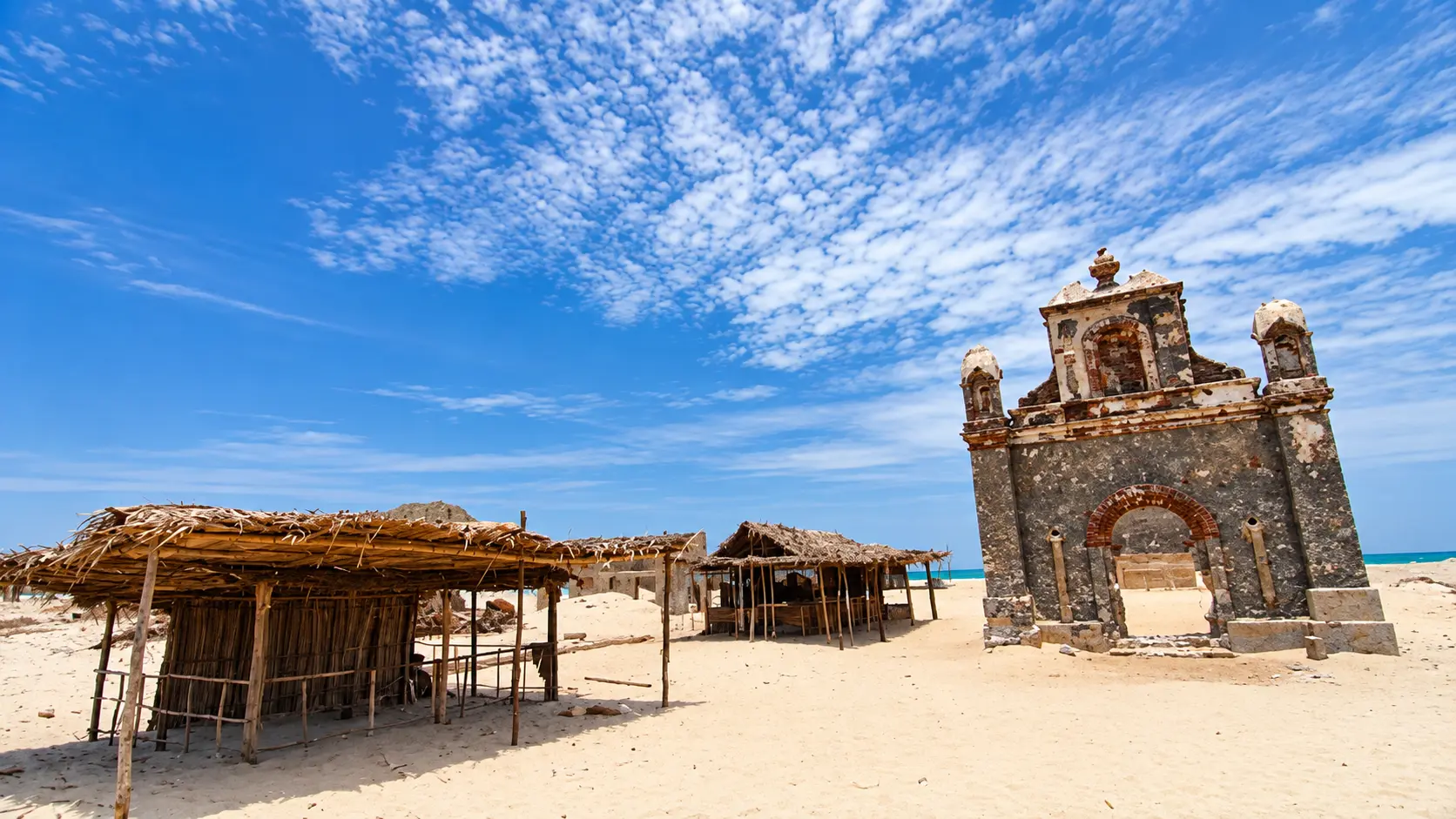
Located 32 km southeast at the extreme tip of Pamban Island, Dhanushkodi is the haunting ruined town destroyed in the 1964 cyclone. A scenic drive along NH 87 brings you past the ruined church and railway water tank to Arichal Munai, the southernmost road terminus in India, situated just 24 km across the marine shelf from Sri Lanka.
In pictures
The practical bits
Before you go.
Where to Park Your Vehicle
When visiting Pamban Bridge for sightseeing, do not attempt to stop on the bridge itself.Explore detailsClose details
When visiting Pamban Bridge for sightseeing, do not attempt to stop on the bridge itself.
- If arriving from the mainland (Madurai/Ramanathapuram), park in the open public parking area near the Mandapam bridge abutment (near the Forest Department and marine police post).
- If arriving from Rameswaram Island, park in the wide parking bay near the Pamban town bridge approach (near the Pamban police checkpost). From either parking area, you can safely step onto the raised pedestrian walkway and walk up to the central cantilever summit at your own pace.
Pacing Your Walk
A round-trip walk from either bridge approach to the central high-cantilever span (where the best views of the…Explore detailsClose details
A round-trip walk from either bridge approach to the central high-cantilever span (where the best views of the rail bridges and Scherzer bascule are located) covers approximately 1.5 to 2 kilometres and takes between 45 minutes and 1.25 hours. Wear comfortable, supportive walking shoes or sandals with good grip, as you will be walking on concrete pavement.
Sun Protection and Wind Caution
The road bridge is completely open to the elements with no overhead shelter.Explore detailsClose details
The road bridge is completely open to the elements with no overhead shelter. The tropical sun can be intense between 10:00 and 15:30; wear a wide-brimmed sun hat, sunglasses, and sunscreen, and carry a refillable water bottle. Secure loose accessories - such as caps, lightweight scarves, and eyeglasses - as sudden highland-to-sea wind drafts whistling across the strait can easily blow items off the bridge into the ocean.
Photographing the Rail Viaduct
For the best photographic compositions of the historic and new rail bridges, walk along the southern pedestrian…Explore detailsClose details
For the best photographic compositions of the historic and new rail bridges, walk along the southern pedestrian sidewalk of the Annai Indira Gandhi Road Bridge. This sidewalk faces directly toward the rail lines and the open waters of the Gulf of Mannar. A telephoto lens (70 - 200mm) will allow you to capture intimate close-ups of the Scherzer bascule gearing and the vertical lift towers, while a wide-angle lens (16 - 35mm) will capture the full sweeping curve of the bridge stretching into the horizon.
A few things you might wonder
Common questions about visiting Pamban Bridge. Fees, visiting hours and ceremonies are researched details that may change; confirm current arrangements with the operator before travelling.
Can visitors walk on Pamban Bridge?
Can you stop your car or taxi on the road bridge to take photos?
What is the Scherzer rolling lift bascule?
What is the New Pamban Rail Bridge?
How did E. Sreedharan restore the bridge in 46 days after the 1964 cyclone?
How far is Pamban Bridge from Rameswaram town and temple?
Can I see ships passing through the bridge?
Are drones allowed to film Pamban Bridge?
Explore more in Madurai Rameswaram
Discover other destinations around this hub
More Hubs in Tamil Nadu
Continue exploring other travel hubs in this state
Planning a trip to Madurai Rameswaram?