Khiching Temple
Complete visitor guide to Maa Kichakeswari Temple in Khiching, Mayurbhanj, Odisha. Explore the 100-foot black chlorite rekha deula, Bhanja history & museum.
Location
Similipal & North Odisha, Odisha
Duration
Allow time for worship, carvings and the museum where available.
Best Time
Choose comfortable weather and confirm temple and museum access for your date.
Difficulty
Check steps and accessibility with the site before visiting; step-free access is not confirmed.
A closer look
Your visit, at a glance.
Similipal & North Odisha, Odisha
GET TO KNOW THE PLACE
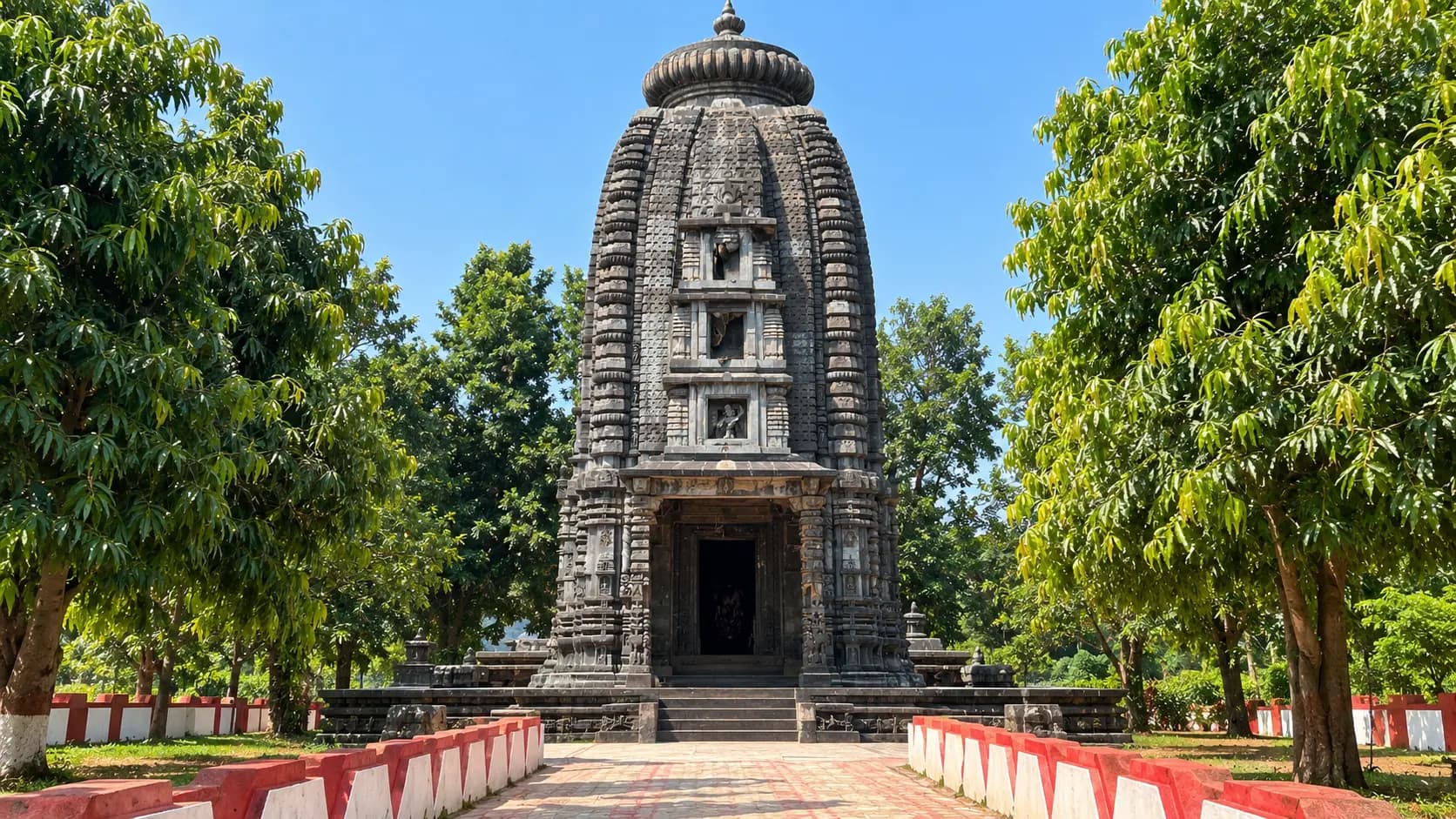
Standing in majestic isolation amidst the rural landscapes of Sukruli Block in western Mayurbhanj District, Northern Odisha, Khiching Temple (formally dedicated to Maa…
The story of Khiching Temple
Standing in majestic isolation amidst the rural landscapes of Sukruli Block in western Mayurbhanj District, Northern Odisha, Khiching Temple (formally dedicated to Maa Kichakeswari) represents one of the most astonishing triumphs of medieval Indian stone architecture and 20th-century archaeological reconstruction. Celebrated as the ancient fortified capital of the early Bhanja dynasty - known in epigraphic copper-plate grants and medieval chronicles as Khijjinga Kota or Khijjingakotta - Khiching served as a flourishing political, commercial, and religious center between the 8th and 12th centuries CE.
While the celebrated stone temples of Bhubaneswar and Puri were constructed out of sandstone or porous khondalite, Khiching’s monumental 100-foot (30-metre) rekha deula is unique across the entire Indian subcontinent: it is built entirely out of fine-grained, midnight-black chlorite stone (muguni pathara). This dense, silken-smooth volcanic rock allowed ancient Bhanja sculptors to achieve an astonishing level of sculptural precision, carving expressive celestial maidens (alasakanyas), intricate floral scrolls, and fierce tantric deities with the delicacy of ivory carvings. Following centuries of neglect and a devastating structural collapse, the temple was resurrected between 1934 and 1942 through one of the earliest and most daring feats of pure architectural anastylosis in Asia, meticulously executed under the visionary patronage of the Mayurbhanj royal house.
Start here. Open a tile for the full details.
Why goRead details
For art historians, spiritual seekers, and travelers exploring the cultural frontiers of Odisha, Khiching offers an unforgettable encounter with medieval craftsmanship:
When to visitRead details
Khiching experiences the distinct continental climate of northern Odisha’s inland plateau, making seasonal timing an important factor.
Entry & permissionsRead details
Fees, visiting hours and entry rules may change. Confirm the latest details with the official operator or local authority before travelling.
Visiting Khiching Temple is straightforward, visitor-friendly, and free of bureaucratic hurdles:
- Temple Complex Hours:
- The outer complex gates are open daily from 06:00 AM to 20:00 PM.
- Sanctum Timings: The inner sanctum of Maa Kichakeswari is open for darshan from 06:00 AM to 12:00 PM, and reopens in the afternoon from 15:00 PM to 20:00 PM. Between 12:00 and 15:00, the sanctum remains closed while the priests perform the sacred midday food offering (madhyanha dhupa) and ritual resting of the goddess.
- Archaeological Museum Hours & Fees:
- Open Tuesday through Sunday from 10:00 AM to 17:00 PM.
- Closed on Mondays and state government public holidays.
- Admission Fee: ₹10 per adult; entry is free for school students and children under 12.
- Admission and Permits:
- Admission to the main temple complex, Kutaitundi, and courtyard gardens is completely free of charge.
- No advance permits or security clearances are needed.
- Temple Decorum & Photography Rules:
- Footwear & Leather: All shoes, sandals, and leather belts must be left at the designated shoe counter outside the inner temple plinth.
- Sanctum Photography Ban: Photography and videography are strictly prohibited inside the inner sanctum of Maa Kichakeswari to respect religious sanctity.
- Outdoor Photography: Casual photography of temple exteriors, carvings, and surrounding gardens using mobile phones and handheld cameras is permitted and encouraged.
Plan your visitRead details
Khiching is situated in the western panhandle of Mayurbhanj District, close to the Keonjhar district border, and enjoys good highway connectivity.
Explore the full guide - choose a topic below.
Why visit?
For art historians, spiritual seekers, and travelers exploring the cultural frontiers of Odisha, Khiching offers…Explore detailsClose details
For art historians, spiritual seekers, and travelers exploring the cultural frontiers of Odisha, Khiching offers an unforgettable encounter with medieval craftsmanship:
- India’s Only Monumental All-Black Chlorite Temple: Towering 100 feet above the manicured lawns of the archaeological enclosure, the temple's dark, polished chlorite facade glints in the sunlight with an oily, obsidian luster found nowhere else in Kalinga architecture.
- The Living Sanctum of Maa Kichakeswari: Enshrined within the cool, dark sanctum sits the revered ten-armed idol of Goddess Chamunda / Kichakeswari, the ancestral tutelary deity (ishta-devi) of the Bhanja Maharajas of Mayurbhanj. Worshipped continuously for over a millennium, the goddess draws thousands of devotees seeking blessings for protection, courage, and prosperity.
- A 20th-Century Archaeological Wonder (Anastylosis): The story of Khiching’s modern resurrection is as extraordinary as its ancient origin. Reduced to a vast, tumbled mound of thousands of black stone boulders by the late 19th century, the temple was reassembled stone-by-stone without using mortar or modern cement between 1934 and 1942 under the direction of famed archaeologist Rai Bahadur Ramaprasad Chanda.
- Pristine 10th-Century Subsidiary Temples: Beside the reconstructed main spire stand original medieval structures that never fell, including the Kutaitundi Temple - a flawless 10th-century Kalinga rekha shrine dedicated to Lord Shiva that preserves its original curvilinear tower, amalaka crowning disc, and exquisite external carvings.
- The Khiching Archaeological Museum: Situated directly inside the temple gardens, this museum houses an exceptional collection of excavated medieval chlorite sculptures, including world-famous masterpieces like the life-sized Ardhanarisvara, Uma-Maheshvara, and rare Mahayana Buddhist and Jain Tirthankara icons.
What to expect
Visiting Khiching is a serene, contemplative heritage experience set within a quiet rural township surrounded by…Explore detailsClose details
Visiting Khiching is a serene, contemplative heritage experience set within a quiet rural township surrounded by emerald paddy fields and distant hills.
Entering the Archaeological Compound
The temple complex is enclosed within high stone boundary walls entered through an arched gateway. Inside, visitors are greeted by expansive, meticulously manicured green lawns, flowerbeds, and shaded stone walkways maintained by the Odisha State Archaeology Department and local temple authorities.
Before proceeding to the temple plinth, visitors deposit their footwear and leather belts at the complimentary shoe stand near the entrance. The paved flagstone courtyards are impeccably clean. Because chlorite stone absorbs heat rapidly, during sunny afternoons it is advisable to walk along the jute coir mats laid across the courtyard to protect bare feet.
The Main Shikhara and Sanctum
The main Kichakeswari Temple rises dramatically on an elevated stone terrace. The tower (gandi) follows the classic tri-ratha design of early Kalinga architecture, soaring gracefully toward a heavy, fluted amalaka and a crowning sacred waterpot (kalasha).
The outer walls of the temple are adorned with masterfully carved chlorite sculptures. Life-sized figures of alasakanyas (indolent maidens) applying vermilion, tying ankle-bells, or playing musical instruments seem to emerge seamlessly from the lustrous stone. The doorway to the sanctum features intricately carved jambs displaying river goddesses Ganga and Yamuna standing atop their makara and tortoise vehicles, framed by cascading creepers and guardian dvarapalas.
Inside the garbhagriha (inner sanctum), the atmosphere is deeply mystical. Lit by flickering brass oil lamps and fragrant with camphor and burning incense, the ten-armed image of Goddess Kichakeswari sits enshrined in royal dignity, adorned with crimson hibiscus garlands, silk saris, and silver crowns. The temple priests (sevayats) chant ancient Vedic and Shakta mantras, offering sacred holy water (charanamrita) and sweet batasha prasad to visiting pilgrims.
Kutaitundi and the Subsidiary Shrines
Stepping away from the main temple, visitors can explore several auxiliary shrines dotted across the courtyard:
- Kutaitundi Temple: Located a short walk to the north, this compact stone rekha deula is dedicated to Lord Shiva. Miraculously surviving intact through centuries while the main shrine collapsed, Kutaitundi provides an authentic window into 10th-century Kalinga architectural proportions, complete with miniature chaitya motifs and carved lintel reliefs.
- Chandrasekhar and Hara-Gauri Shrines: Positioned near the perimeter, these smaller chlorite shrines enshrine sacred shivalingas and intimate sculptures of Shiva and Parvati seated in loving embrace.
Exploring the Archaeological Museum
Located within the shady northwestern corner of the complex, the single-story Khiching Archaeological Museum is an essential stop for every visitor. Open Tuesday through Sunday, the museum displays dozens of monumental chlorite sculptures excavated from the ruins of ancient Khijjingakotta:
- The Ardhanarisvara: A celebrated sculptural masterpiece of ancient Odisha, seamlessly uniting the male attributes of Lord Shiva (trident, matted locks, tiger skin) on the right with the graceful feminine forms of Goddess Parvati (mirror, earring, delicate drapery) on the left.
- Multi-Faith Diversity: Statues of Buddha in bhumisparsha mudra, Bodhisattva Avalokiteshvara, and Jain Tirthankaras like Rishabhanatha and Parshvanatha, testifying to the religious tolerance and cosmopolitan culture of the Bhanja empire.
Best time to visit
Khiching experiences the distinct continental climate of northern Odisha’s inland plateau, making seasonal timing…Explore detailsClose details
Khiching experiences the distinct continental climate of northern Odisha’s inland plateau, making seasonal timing an important factor.
Seasonal Breakdown
- Winter (October to March) - Peak Touring Season: Winter is undeniably the most comfortable and rewarding time to visit Khiching. Days are pleasantly warm and sunny, with temperatures ranging from 14°C to 27°C, accompanied by dry, refreshing breezes. Nights are crisp and cool (10°C to 14°C). The absence of intense heat makes exploring the outdoor stone courtyards and studying the detailed exterior carvings an absolute pleasure.
- Monsoon (July to September) - Lush Surroundings & Washing Rains: The southwest monsoon brings frequent downpours that transform the surrounding countryside into lush green tapestries. The black chlorite of the temples, washed clean by monsoon showers, takes on a deep, shimmering obsidian shine that looks spectacular in photographs. However, courtyard flagstones can become wet, requiring careful walking.
- Summer (April to June) - Intense Midday Heat: Inland Mayurbhanj experiences severe summer conditions, with midday temperatures soaring between 38°C and 42°C. The unshaded black chlorite stones and paved courtyards become scorching hot to walk on barefoot between 11:00 AM and 16:00 PM. If traveling in summer, plan your temple visit exclusively during the cool early morning hours (06:00 to 09:30 AM) or after 17:00 PM.
Notable Festivals
- Maha Shivaratri (February / March): The grandest festival at Khiching. Tens of thousands of devotees from Mayurbhanj, Keonjhar, and neighboring Jharkhand assemble for an all-night vigil, lighting thousands of earthen oil lamps around the temples until the sacred Mahadipa lamp is hoisted atop the Kutaitundi shikhara at midnight.
- Durga Puja & Navaratri (September / October): As the supreme Shakti shrine of the district, special Tantric and Vedic rituals, animal-substitute grain offerings, and elaborate aarti ceremonies take place daily for nine nights in honor of Goddess Kichakeswari.
How to reach
Khiching is situated in the western panhandle of Mayurbhanj District, close to the Keonjhar district border, and…Explore detailsClose details
Khiching is situated in the western panhandle of Mayurbhanj District, close to the Keonjhar district border, and enjoys good highway connectivity.
By Air
- Biju Patnaik International Airport, Bhubaneswar (BBI): Situated approximately 240 kilometres south. Travelers can hire private taxis or take express buses north along NH-16 and NH-20 via Keonjhar and Karanjia to Khiching (approx. 5 to 6 hours drive).
- Birsa Munda Airport, Ranchi (IXR): Situated roughly 220 kilometres northwest across the Jharkhand border. Travelers arriving in Ranchi can drive south along NH-20 and NH-320 via Chaibasa to Khiching (approx. 4.5 to 5 hours).
By Train
- Keonjhargarh Railway Station (KDJR): The closest major railhead, located roughly 55 kilometres southwest of Khiching. It connects by daily passenger and express services to Bhubaneswar, Puri, and Chakradharpur. Taxis and local buses from Keonjhar take about 1.5 hours to reach Khiching via Champua.
- Balasore Railway Station (BLS): Located approximately 140 kilometres east, this major junction on the Howrah - Chennai mainline offers direct high-speed train connections from Kolkata, New Delhi, and Chennai.
- Baripada Railway Station (BPI): Situated roughly 150 kilometres east, connecting to the eastern half of the district.
By Road & Public Transit
- From Jashipur (approx. 50 km / 1 hour): Travelers exploring Similipal National Park can drive west along National Highway 49 to Raruan and turn south on the well-paved state road directly to Khiching.
- From Karanjia (approx. 25 km / 35 minutes): Karanjia is the main subdivisional commercial center. Frequent auto-rickshaws, shared taxis, and public buses run throughout the day between Karanjia bus stand and Khiching.
- From Baripada (approx. 150 km / 3.5 hours): Follow SH-19 west via Bangriposi, Jashipur, and Karanjia.
- Road Conditions: The approach roads are fully paved two-lane asphalt highways in excellent condition, suitable for all types of hatchbacks, sedans, and tourist coaches.
Entry, timings and permissions
Fees, visiting hours and entry rules may change.Explore detailsClose details
Fees, visiting hours and entry rules may change. Confirm the latest details with the official operator or local authority before travelling.
Visiting Khiching Temple is straightforward, visitor-friendly, and free of bureaucratic hurdles:
- Temple Complex Hours:
- The outer complex gates are open daily from 06:00 AM to 20:00 PM.
- Sanctum Timings: The inner sanctum of Maa Kichakeswari is open for darshan from 06:00 AM to 12:00 PM, and reopens in the afternoon from 15:00 PM to 20:00 PM. Between 12:00 and 15:00, the sanctum remains closed while the priests perform the sacred midday food offering (madhyanha dhupa) and ritual resting of the goddess.
- Archaeological Museum Hours & Fees:
- Open Tuesday through Sunday from 10:00 AM to 17:00 PM.
- Closed on Mondays and state government public holidays.
- Admission Fee: ₹10 per adult; entry is free for school students and children under 12.
- Admission and Permits:
- Admission to the main temple complex, Kutaitundi, and courtyard gardens is completely free of charge.
- No advance permits or security clearances are needed.
- Temple Decorum & Photography Rules:
- Footwear & Leather: All shoes, sandals, and leather belts must be left at the designated shoe counter outside the inner temple plinth.
- Sanctum Photography Ban: Photography and videography are strictly prohibited inside the inner sanctum of Maa Kichakeswari to respect religious sanctity.
- Outdoor Photography: Casual photography of temple exteriors, carvings, and surrounding gardens using mobile phones and handheld cameras is permitted and encouraged.
Nearby places to consider
A trip to Khiching allows you to discover the rich cultural, natural, and archaeological landscape of…Explore detailsClose details
A trip to Khiching allows you to discover the rich cultural, natural, and archaeological landscape of North-Western Odisha:
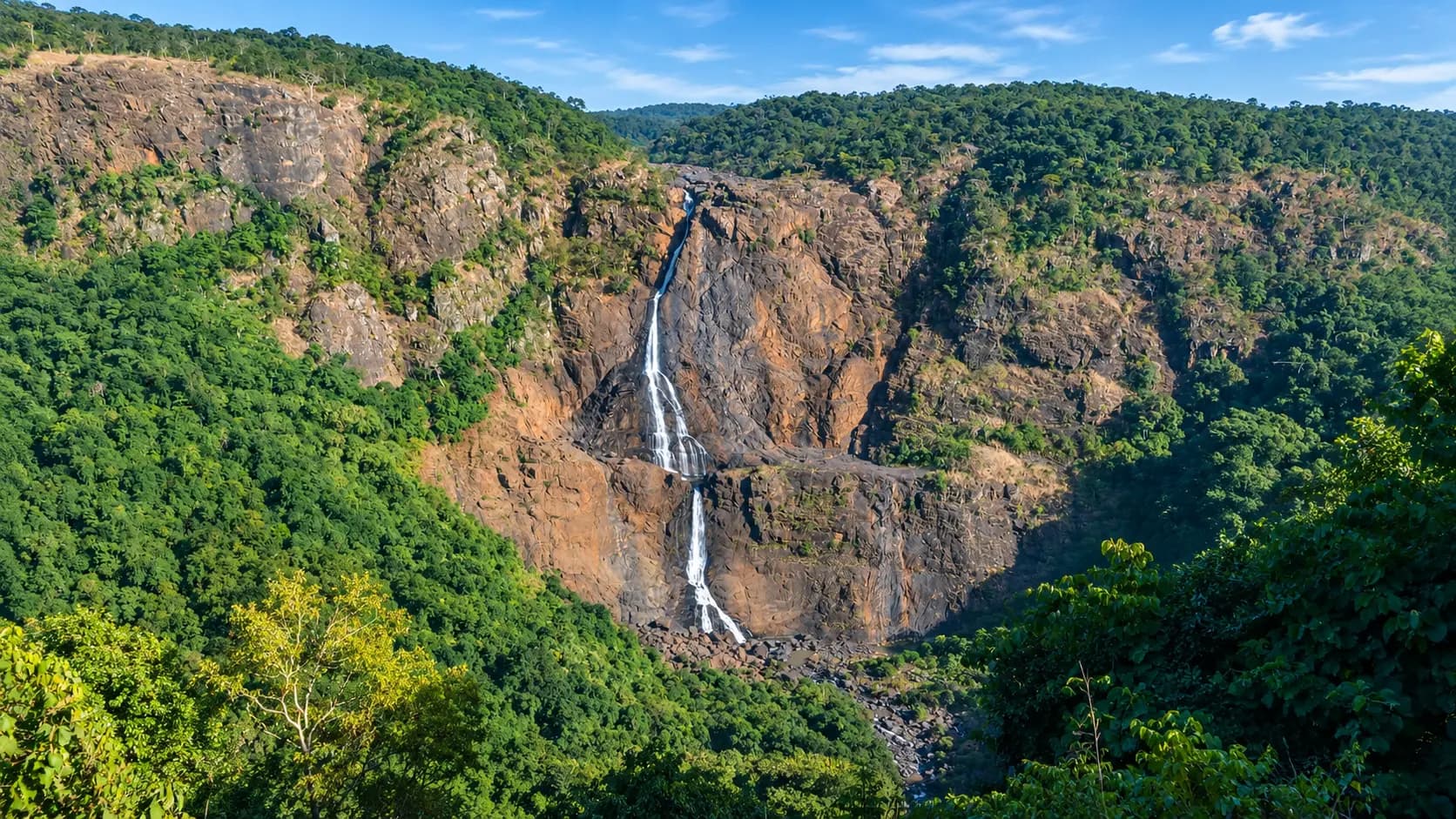
- Similipal National Park & Tiger Reserve (approx. 50 km east to Jashipur gate): Odisha's grandest wildlife biosphere, celebrated for its 181m Joranda Waterfall, 399m Barehipani Waterfall, wild elephants, and melanistic royal Bengal tigers.
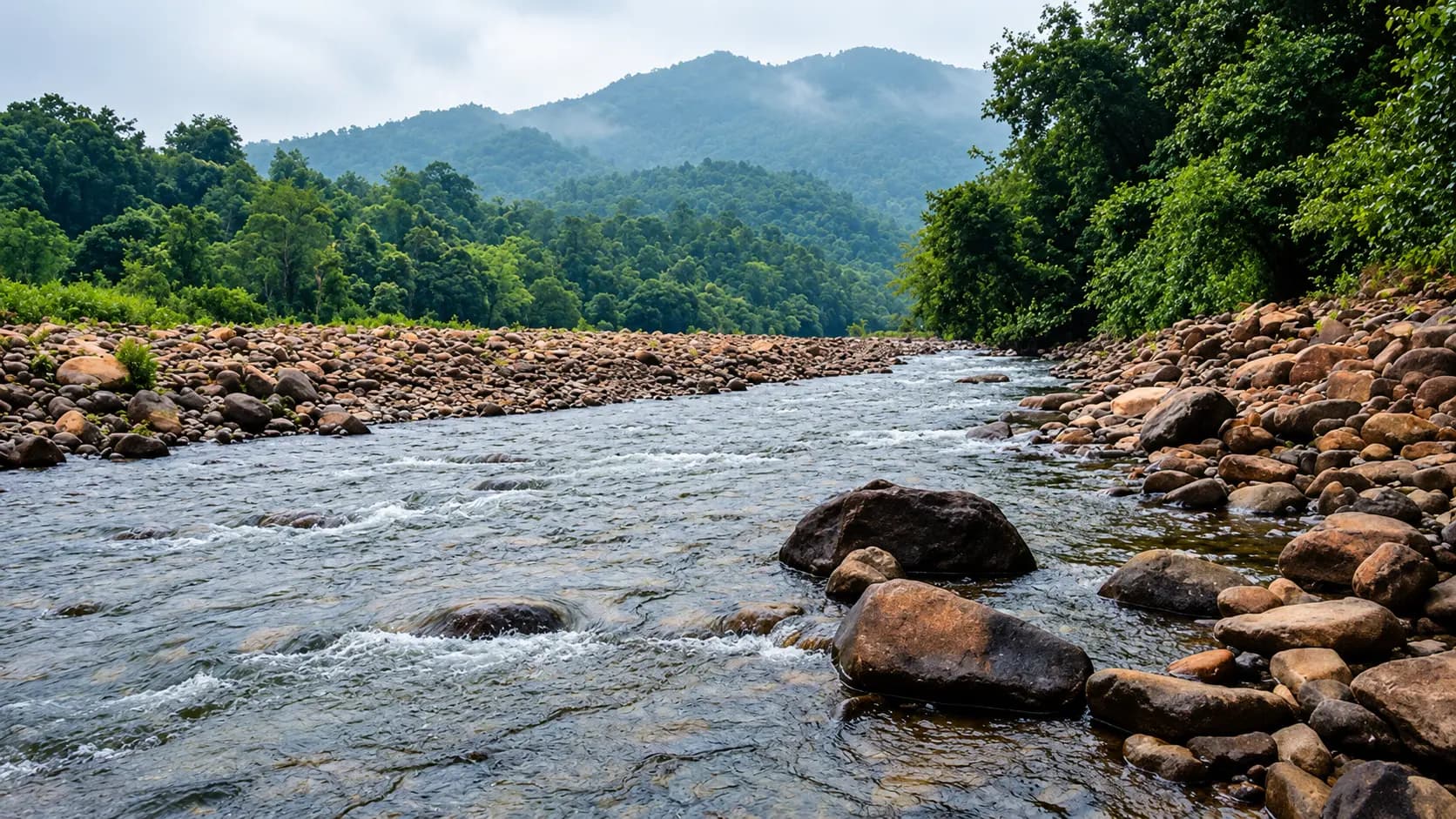
- Gudgudia Nature Camp (approx. 70 km northeast): A scenic forest eco-tourism village on the edge of Similipal along the Khairi river, famous for pine plantations, river walking trails, and eco-cottages.
- Sanaghagara & Badaghagara Waterfalls (approx. 60 km southwest): Twin perennial cascades nestled among forested mountain gorges near Keonjhar town, featuring picnic gardens and scenic viewpoints.
- Sitabinji Fresco Painting & Rock Shelters (approx. 85 km southwest): An ancient 5th-century Gupta-era archaeological site in Keonjhar featuring the famous painted rock shelter of Ravanachhaya, depicting a royal procession on horseback.
- Baripada Town (approx. 150 km east): The royal seat of the Mayurbhanj dynasty, famous for the magnificent 1904 Belgadia Palace, the historic Haribaldev Jew Temple, and traditional Mayurbhanj Chhau dance troupes.
In pictures
The practical bits
Before you go.
Plan ahead
To make the most of your excursion to Khiching Temple, keep the following practical guidelines in mind:Explore detailsClose details
To make the most of your excursion to Khiching Temple, keep the following practical guidelines in mind:
Mind the Midday Sanctum Closure
Because the sanctum doors close precisely at 12:00 PM and do not reopen until 15:00 PM, plan your travel schedule…Explore detailsClose details
Because the sanctum doors close precisely at 12:00 PM and do not reopen until 15:00 PM, plan your travel schedule to arrive either during the morning session (between 08:30 and 11:30 AM) or late afternoon. Check the current visiting hours and permitted access with the site operator before departure; ceremonies, closures and visitor sessions can affect access.
Protect Your Feet on Sunny Days
The polished black chlorite stones and sandstone flagstones of the courtyard absorb heat rapidly under direct…Explore detailsClose details
The polished black chlorite stones and sandstone flagstones of the courtyard absorb heat rapidly under direct sunlight. On sunny days between October and March, midday stone surfaces can be uncomfortably warm for bare feet. Utilize the woven coir runners placed along the main walkways, or carry clean white cotton socks in your pocket to wear while walking on the stone terrace.
Pair with Similipal or Keonjhar Heritage
Because exploring Khiching takes approximately 2 to 3 hours, consider pairing your trip with other regional…Explore detailsClose details
Because exploring Khiching takes approximately 2 to 3 hours, consider pairing your trip with other regional attractions. If staying in Jashipur for a Similipal safari, Khiching makes an easy afternoon cultural excursion. Alternatively, combine Khiching with a trip into neighboring Keonjhar District to visit the ancient rock art of Sitabinji Fresco Caves or the scenic cascades of Sanaghagara and Badaghagara Waterfalls.
Support Local Black Stone Carvers
Khiching is surrounded by traditional artisan hamlets where master stone carvers continue the ancient Bhanja…Explore detailsClose details
Khiching is surrounded by traditional artisan hamlets where master stone carvers continue the ancient Bhanja tradition of sculpting black chlorite stone. Several artisan workshops line the approach road to the temple, offering hand-carved miniature chlorite shivalingas, statues of deities, and decorative bowls. Purchasing directly from these local craftsmen helps preserve an endangered Odishan art form.
A few things you might wonder
Common questions about visiting Khiching Temple. Fees, visiting hours and ceremonies are researched details that may change; confirm current arrangements with the operator before travelling.
Where is Khiching Temple located and what is its historical importance?
Why is the architecture of Khiching Temple considered unique in India?
How was the collapsed temple reconstructed in the 20th century?
What is the name of the presiding deity in Khiching Temple?
What are the opening timings of the temple and the Archaeological Museum?
What are the entry ticket prices for visiting Khiching?
What can visitors see in the Khiching Archaeological Museum?
What is the best way to travel to Khiching from Baripada or Keonjhar?
Explore more in Similipal
Discover other destinations around this hub
More Hubs in Odisha
Continue exploring other travel hubs in this state
Planning a trip to Similipal & North Odisha?