Devkund Waterfall
Complete visitor guide to Devkund Waterfall near Udala in Mayurbhanj, Odisha. Discover the 5 sacred pools, cliffside Maa Ambika Temple, forest trek & timings.
Location
Similipal & North Odisha, Odisha
Duration
Allow time for the permitted approach, temple visit and return; confirm walking requirements locally.
Best Time
Choose daylight and check current forest access and rainfall conditions. A winter recommendation does not establish that the site is open.
Difficulty
Walking and steps may be involved. The previous exact trail length and step count have not been confirmed.
A closer look
Your visit, at a glance.
Similipal & North Odisha, Odisha
GET TO KNOW THE PLACE
Tucked away in the emerald, forested foothills along the southeastern periphery of the Similipal Biosphere Reserve, Devkund Waterfall (often transcribed as Deokund or Debakunda)…
The story of Devkund Waterfall
Tucked away in the emerald, forested foothills along the southeastern periphery of the Similipal Biosphere Reserve, Devkund Waterfall (often transcribed as Deokund or Debakunda) is one of Northern Odisha’s most revered eco-spiritual sanctuaries. Situated in Udala Block of Mayurbhanj District, roughly 28 kilometres from Udala town, 60 kilometres from Baripada, and 85 kilometres from Balasore, Devkund is an enchanting retreat where dramatic Eastern Ghats mountain geology blends seamlessly with living Shakta devotional heritage.
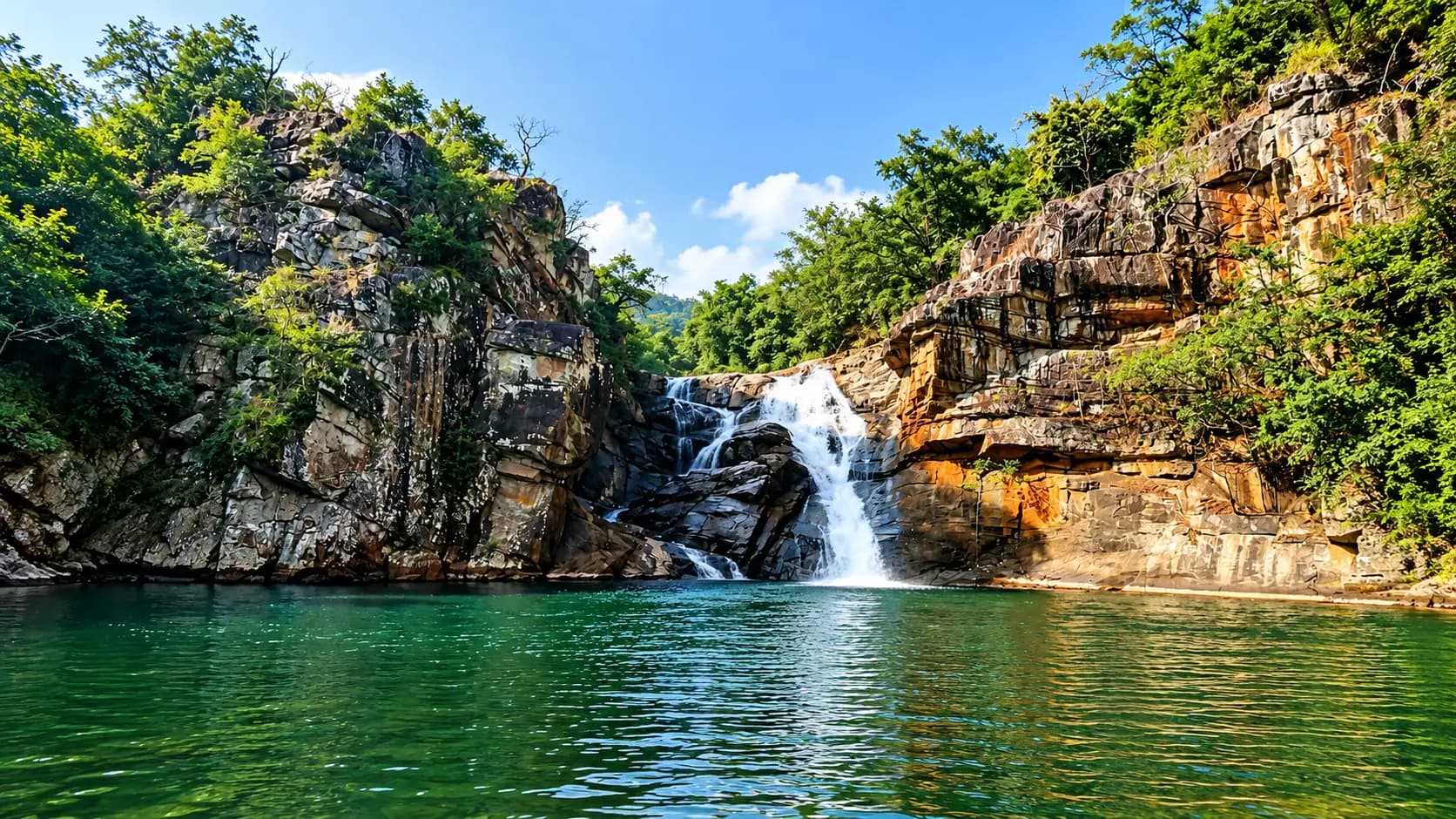
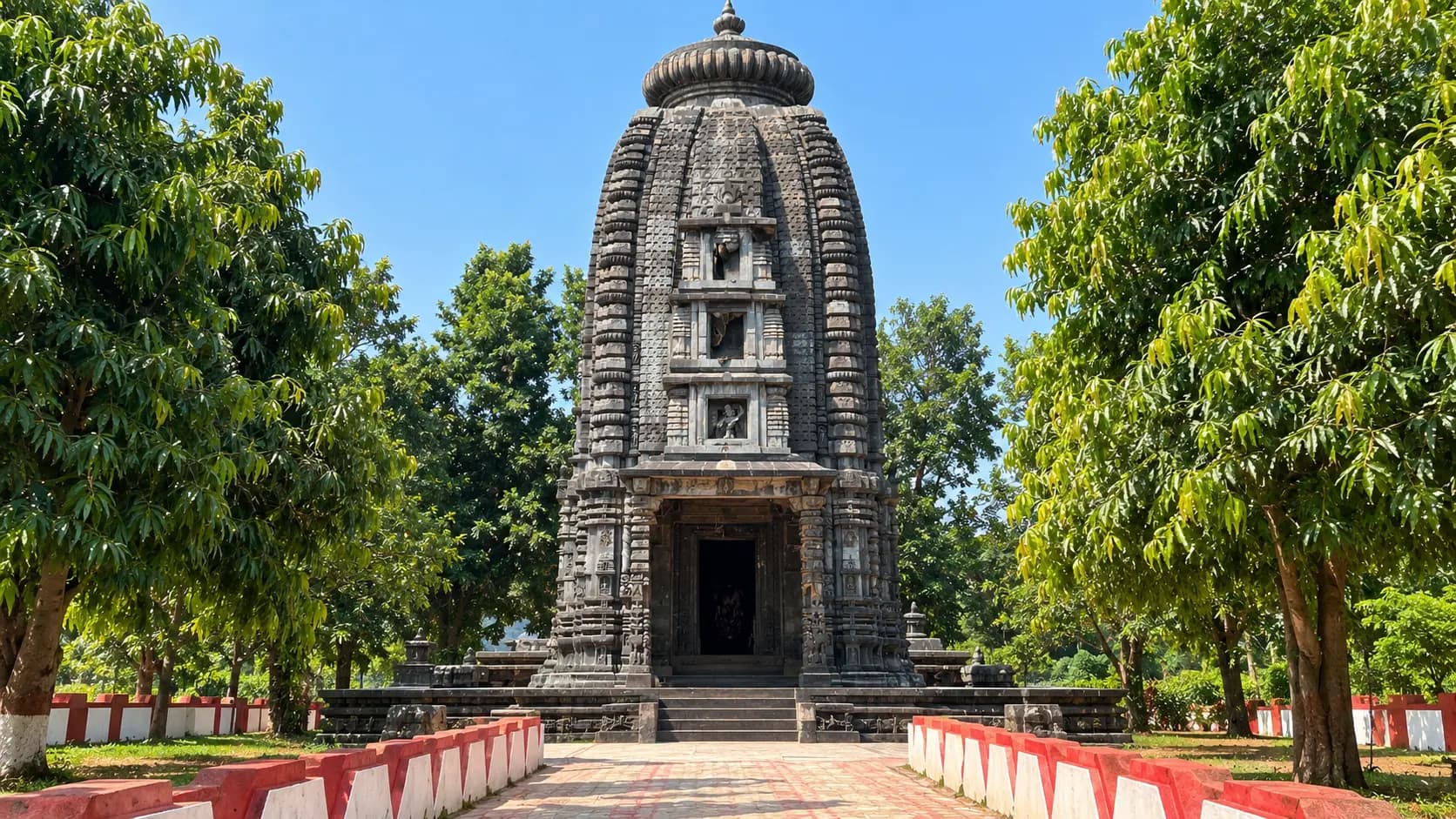
The name Devkund carries deep mythological resonance in the Odia language: formed from Deba (god or celestial deity) and Kunda (a natural pool, bowl, or bathing pond), it translates directly to the "Bathing Pond of the Gods." According to ancient lore, this secluded forest ravine is where celestial beings assemble to bathe in the crystal-clear mountain waters. The perennial stream cascades down a natural amphitheatre of water-sculpted granite rock, passing through five sacred natural rock reservoirs - celebrated collectively as the Pancha Kunda - before taking a final 50-foot plunge into the vast, emerald-green waters of the main Devkund pool. Perched atop the granite cliff directly above the roaring waters stands the revered Maa Ambika Temple, established in 1940 by the royal Bhanja dynasty of Mayurbhanj, creating a sacred pilgrimage and hiking haven enveloped by pristine sal and bamboo wilderness.
Start here. Open a tile for the full details.
Why goRead details
Whether drawn by spiritual devotion to the divine Mother Goddess, a passion for mountain hiking, or the desire to witness a pristine forest waterfall, Devkund offers a deeply fulfilling excursion:
When to visitRead details
Devkund’s foothill climate and perennial stream ensure that it is an attractive destination across much of the year, though seasonal weather changes alter the character of the site.
Entry & permissionsRead details
Fees, visiting hours and entry rules may change. Confirm the latest details with the official operator or local authority before travelling.
A visit to Devkund Waterfall is simple, affordable, and well-managed by forest authorities:
- Admission Charges:
- Collected at the Forest Department entry checkpost:
- Entry Fee: ₹20 per person (children under 5 enter free).
- Vehicle Parking Fees: Two-wheelers ₹10; Auto-rickshaws and Cars/SUVs ₹30; Tourist Mini-buses ₹50.
- Operating Hours:
- The forest entry gate opens daily at 07:00 AM and closes for incoming visitors at 14:30 PM.
- All visitors must commence their return walk from the waterfall by 16:00 PM, with complete exit through the outer forest barrier by 16:30 to 17:00 PM.
- Strict Daylight Rule: Visitors are not permitted inside the forest after dark. The reserve is home to wild elephants and leopards that begin moving along the river valley at twilight.
- Permit Requirements:
- No advance online permits are needed for day visitors; entry tickets are purchased on arrival at the forest gate.
- Unlike the core zone of Similipal, non-4WD standard cars and private vehicles can easily reach the parking clearing.
- Safety Rules and Code of Conduct:
- Zero Swimming in Deep Chutes: Bathing is permitted only in the shallow, calm edges of the stream. Venturing into the deep, central whirlpool basin or swimming directly beneath the falling water curtain is strictly prohibited due to severe undertows and submerged granite rocks.
- No Alcohol or Glass Bottles: The consumption of alcohol and bringing glass bottles or beer cans into the forest is strictly banned under district police orders and punishable by fines.
- Respect Temple Protocols: Shoes, leather belts, and footwear must be removed at the bottom of the temple terrace before entering the sanctum courtyard of Maa Ambika.
Plan your visitRead details
Devkund is located in the southeastern corner of Mayurbhanj District and is easily accessible by road from major cities in Northern Odisha and coastal West Bengal.
Footwear and Staircase Safety
Because your visit involves a 1.2-kilometre woodland trail followed by an ascent of nearly 200 stone steps to the temple, wear comfortable, closed-toe walking shoes or trekking sandals with strong rubber grip. Smooth-soled slippers or high-heeled footwear can easily cause slips on stone steps, particularly in areas damp from waterfall spray. If you plan to wade in the stream, bring a lightweight towel and an extra pair of dry socks.
Explore the full guide - choose a topic below.
Why visit?
Whether drawn by spiritual devotion to the divine Mother Goddess, a passion for mountain hiking, or the desire to…Explore detailsClose details
Whether drawn by spiritual devotion to the divine Mother Goddess, a passion for mountain hiking, or the desire to witness a pristine forest waterfall, Devkund offers a deeply fulfilling excursion:
- The Mythological Wonder of the Pancha Kunda: Devkund is unique among Odisha's cascades for its succession of five stepped rock reservoirs carved into the granite riverbed over millennia. From the upper mountain ledges down to the main gorge basin, the water flows through Bhudarkunda, Tailakunda, Haridrakunda (with its golden sand bed), Devikunda, and Debakunda. Dipping one's hands into these cool, spring-fed pools while watching schools of wild mountain fish swim over the polished bedrock is a revitalizing experience.
- The Historic Cliffside Maa Ambika Temple: Commissioned in 1940 by Rajkumar Prafulla Chandra Bhanja Deo of the Mayurbhanj royal dynasty, the temple honors Goddess Ambika (a fierce yet protective manifestation of Goddess Durga). Reached by climbing a flight of stone steps up the side of the mountain gorge, the temple terrace offers breathtaking aerial views looking down upon the plunging waterfall, the jade-green pool, and the endless canopy of Similipal's sal forest.
- A Scenic, Shaded Forest Trail Walk: Unlike roadside tourist attractions, reaching Devkund requires walking a peaceful 1.2-kilometre level dirt trail from the vehicular forest barrier. Meandering through towering Sal, Mahua, and wild mango trees alongside the gurgling mountain stream, the walk is a meditative prelude filled with birdsong, fluttering forest butterflies, and fresh mountain air.
- An Accessible Gateway to Similipal's Wilderness: While entering the core tiger reserve zone of Similipal requires specialized 4WD vehicles and all-day safari commitments, Devkund is located in the outer reserve buffer. It is easily accessible via standard paved roads from Balasore or Baripada, making it an ideal half-day nature excursion for families, elders, and casual weekend travelers.
- Vibrant Local Cultural and Tribal Traditions: The surrounding hills are inhabited by indigenous Santhal, Kolha, and Bathudi tribal communities. During the annual festivals of Makar Sankranti, Raja Parba, and Durga Puja, thousands of pilgrims dressed in traditional festive attire gather at Devkund to offer prayers, bathe in the sacred stream, and celebrate regional folk traditions.
What to expect
Visiting Devkund Waterfall is an active, outdoor experience that combines a gentle woodland walk, a sacred…Explore detailsClose details
Visiting Devkund Waterfall is an active, outdoor experience that combines a gentle woodland walk, a sacred mountain staircase climb, and relaxing beside a serene forest pool.
Arrival and the Forest Barrier
The road from Udala terminates at an open forest clearing managed by the Baripada Forest Division. Here, visitors find organized parking clearings, basic public conveniences, and small village stalls selling hot tea, roasted peanuts, puffed rice snacks (mudhi), seasonal wild fruits, and offerings for the temple (incense, red marigolds, and earthen lamps).
After purchasing a nominal entry ticket at the forest checkpoint, visitors cross the bamboo barrier on foot. All private vehicles and tourist taxis remain parked here; the final approach to the waterfall is entirely pedestrian, preserving the clean air and tranquility of the forest.
The 1.2-Kilometre Nature Trail
The walk to Devkund covers approximately 1.2 kilometres along a wide, flat dirt pathway. The trail hugs the bank of the mountain stream, crossing over rustic wooden footbridges and shaded gravel paths under a vaulted ceiling of ancient Sal, Kendu, and bamboo trees.
Along the way, the peaceful murmur of the river accompanies every step. Troops of common langurs and rhesus macaques swing through the branches overhead, while forest birds such as the Indian paradise flycatcher, emerald dove, and red junglefowl rustle in the leaf litter. The path is well-shaded and level, making it a comfortable 20 to 25-minute stroll even for seniors and young children.
The Waterfall Basin and the Main Kunda
The forest trail terminates at the entrance of a dramatic, enclosed rock amphitheatre. Before you lies the main Debakunda pool - a wide, circular natural basin approximately 30 metres across, filled with luminous, deep jade-green water.
At the far end of the basin, the mountain river bursts through a smooth granite cleft, plunging roughly 50 feet in a shimmering white curtain of water that crashes into the pool with a soothing, rhythmic roar. The spray from the waterfall cools the ambient air, creating a refreshing microclimate. Polished grey and pink granite boulders surround the water's edge, offering natural stone benches where visitors can sit, relax, and dip their feet into the clear, cool shallows.
Ascending to Maa Ambika Temple
To the right of the pool, a flight of approximately 150 to 200 stone steps ascends steeply up the sheer rocky cliff face. The staircase is fitted with sturdy iron handrails and shaded resting platforms as it climbs through bamboo thickets and granite overhangs.
At the summit of the cliff stands the Maa Ambika Temple. The compact stone shrine is whitewashed in traditional Odishan style and crowned with a trident (trishula) and colorful religious banners. Inside the cool, incense-scented sanctum rests the ancient rock-cut idol of Goddess Ambika, adorned with red vermilion, fresh hibiscus garlands, and silver ornaments. Outside the temple courtyard, an open stone parapet provides a dizzying, bird's-eye view looking straight down onto the top of the waterfall as the river leaps over the precipice into the emerald pool below.
Best time to visit
Devkund’s foothill climate and perennial stream ensure that it is an attractive destination across much of the…Explore detailsClose details
Devkund’s foothill climate and perennial stream ensure that it is an attractive destination across much of the year, though seasonal weather changes alter the character of the site.
Seasonal Breakdown
- Winter (October to March) - The Golden Season: Winter is by far the finest and most comfortable period to visit Devkund. Daytime temperatures remain pleasant and sunny, averaging between 18°C and 26°C with refreshing forest breezes. Nights are crisp and cool (10°C to 15°C). The mountain stream flows with crystalline clarity, the plunge pool takes on its iconic deep green hue, and the forest trail is dry and effortless to walk. This is the prime season for nature excursions, family picnics, and temple pilgrimages.
- Monsoon (July to September) - Swollen Waters & Dramatic Power: During the southwest monsoon, heavy rainfall across the Similipal hills transforms the gentle 50-foot cascade into a roaring, mud-tinted torrent. The waterfall spreads across the entire cliff face, and the volume of water creates immense spray. However, monsoons carry significant challenges: the stone steps leading to the Ambika temple become dangerously slick with green algae, the forest trail can be muddy and crossed by swift runoff, and sudden upstream flash floods can occur. The Forest Department periodically closes access during peak rainfall events for visitor safety.
- Summer (April to June) - Hot Days, Refreshing Mountain Water: Summer in Mayurbhanj is hot and dry, with midday temperatures reaching 38°C to 41°C. While the shady forest trail offers some respite from the sun, the volume of the waterfall shrinks to a narrower ribbon. If visiting in summer, plan your trip during the early morning hours (between 07:00 and 10:30) to complete the walk and temple stair climb before the midday heat becomes intense.
Key Festivals and Special Days
- Makar Sankranti (January): A major regional celebration in Mayurbhanj. Thousands of tribal and non-tribal devotees gather at Devkund at dawn to take ritual holy dips in the sacred mountain stream before climbing to Maa Ambika Temple with offerings of newly harvested rice, molasses, and sesame sweets.
- Raja Parba (June): Celebrated across Odisha as the agrarian festival honoring Mother Earth, attracting local families in colorful traditional clothing for festive day outings.
- Navaratri & Durga Puja (September / October): Spanning nine days, special Tantric and Vedic rituals are performed at the Ambika Temple, accompanied by the clanging of brass bells, conch shells, and evening aarti.
How to reach
Devkund is located in the southeastern corner of Mayurbhanj District and is easily accessible by road from major…Explore detailsClose details
Devkund is located in the southeastern corner of Mayurbhanj District and is easily accessible by road from major cities in Northern Odisha and coastal West Bengal.
By Air
- Biju Patnaik International Airport, Bhubaneswar (BBI): The primary airport within Odisha, located approximately 250 kilometres south of Devkund. Bhubaneswar connects via regular direct flights to all major Indian metropolitan hubs. From Bhubaneswar, travelers can drive north via NH-16 past Cuttack and Chandikhol to Balasore, then turn west via Sergarh and Udala to Devkund (approx. 5 to 6 hours drive).
- Netaji Subhash Chandra Bose International Airport, Kolkata (CCU): Located approximately 260 kilometres northeast. Travelers arriving at Kolkata can take the four-lane NH-16 highway south via Kharagpur and Jaleswar to Balasore and Udala (approx. 5 to 5.5 hours).
By Train
- Baripada Railway Station (BPI): Situated approximately 60 kilometres northeast of Devkund. Baripada is the district headquarters and is connected by daily passenger and express train services to Balasore and Bhubaneswar.
- Balasore Railway Station (BLS): The most practical, premier railway junction for reaching Devkund, located roughly 85 kilometres east. Balasore lies on the Howrah - Chennai mainline of the East Coast Railway and is served by dozens of premier superfast trains (including Vande Bharat, Shatabdi, and Rajdhani Expresses) from Kolkata, New Delhi, Chennai, and Bengaluru. From Balasore railway station, private tourist cabs and auto-rickshaws take about 2 to 2.5 hours to reach Devkund via Nilagiri and Udala.
By Road
- From Udala Town (approx. 28 km / 45 minutes): Udala is the immediate commercial hub. From Udala, drive west along the well-paved rural highway towards Kaptipada and Podadiha, following the clear Odisha Tourism signboards to the Devkund forest gate.
- From Baripada (approx. 60 km / 1.5 hours): Head south along State Highway 19 via Badasahi and Dukura to Udala, then proceed west to Devkund.
- From Balasore (approx. 85 km / 2 hours): Drive west via Sergarh, Mitrapur, and Nilagiri to Udala, then continue along the forest approach road.
- Public Bus Services: Frequent government (OSRTC) and private buses run between Baripada, Balasore, and Udala throughout the day. From Udala bus stand, local auto-rickshaws and shared taxis can be hired to take you directly to the Devkund forest barrier.
Entry, timings and permissions
Fees, visiting hours and entry rules may change.Explore detailsClose details
Fees, visiting hours and entry rules may change. Confirm the latest details with the official operator or local authority before travelling.
A visit to Devkund Waterfall is simple, affordable, and well-managed by forest authorities:
- Admission Charges:
- Collected at the Forest Department entry checkpost:
- Entry Fee: ₹20 per person (children under 5 enter free).
- Vehicle Parking Fees: Two-wheelers ₹10; Auto-rickshaws and Cars/SUVs ₹30; Tourist Mini-buses ₹50.
- Operating Hours:
- The forest entry gate opens daily at 07:00 AM and closes for incoming visitors at 14:30 PM.
- All visitors must commence their return walk from the waterfall by 16:00 PM, with complete exit through the outer forest barrier by 16:30 to 17:00 PM.
- Strict Daylight Rule: Visitors are not permitted inside the forest after dark. The reserve is home to wild elephants and leopards that begin moving along the river valley at twilight.
- Permit Requirements:
- No advance online permits are needed for day visitors; entry tickets are purchased on arrival at the forest gate.
- Unlike the core zone of Similipal, non-4WD standard cars and private vehicles can easily reach the parking clearing.
- Safety Rules and Code of Conduct:
- Zero Swimming in Deep Chutes: Bathing is permitted only in the shallow, calm edges of the stream. Venturing into the deep, central whirlpool basin or swimming directly beneath the falling water curtain is strictly prohibited due to severe undertows and submerged granite rocks.
- No Alcohol or Glass Bottles: The consumption of alcohol and bringing glass bottles or beer cans into the forest is strictly banned under district police orders and punishable by fines.
- Respect Temple Protocols: Shoes, leather belts, and footwear must be removed at the bottom of the temple terrace before entering the sanctum courtyard of Maa Ambika.
Nearby places to consider
Devkund is surrounded by an appealing mix of heritage, coastal, and wildlife destinations across North Odisha: -…Explore detailsClose details
Devkund is surrounded by an appealing mix of heritage, coastal, and wildlife destinations across North Odisha:
- Similipal Tiger Reserve & National Park (adjoining core forest): The premier wildlife sanctuary of Odisha, famed for its 399-metre Barehipani Waterfall, 181-metre Joranda Falls, wild Asian elephants, and the rare melanistic royal Bengal tigers.
- Nilagiri Royal Palace & Jagannath Temple (approx. 55 km southeast): A historic princely state capital nestled at the foot of the Swarnachuda hills, famous for its 18th-century Jagannath temple, ancient palace ruins, and the sacred Kuldiha Wildlife Sanctuary gateway.
- Kuldiha Wildlife Sanctuary (approx. 60 km south): A dense mixed deciduous forest sanctuary contiguous with Similipal, celebrated for large breeding herds of wild Asian elephants, leopards, giant squirrels, and diverse birdlife.
- Baripada Town (approx. 60 km northeast): The cultural capital of Mayurbhanj, celebrated worldwide for the ancient Haribaldev Jew Temple (hosting the famous "Second Puri" Rath Yatra, where women pull the chariot of Goddess Subhadra) and the historic Belgadia Palace.
- Chandipur Beach (approx. 95 km east): A unique, world-famous beach on the Bay of Bengal near Balasore, where the sea recedes by up to 5 kilometres during low tide twice a day, allowing visitors to walk on the exposed sea floor.
In pictures
The practical bits
Before you go.
Plan ahead
To ensure a seamless, enjoyable visit to Devkund Waterfall and the Ambika Temple, keep the following structured…Explore detailsClose details
To ensure a seamless, enjoyable visit to Devkund Waterfall and the Ambika Temple, keep the following structured planning guidelines in mind:
Footwear and Staircase Safety
Because your visit involves a 1.2-kilometre woodland trail followed by an ascent of nearly 200 stone steps to the…Explore detailsClose details
Because your visit involves a 1.2-kilometre woodland trail followed by an ascent of nearly 200 stone steps to the temple, wear comfortable, closed-toe walking shoes or trekking sandals with strong rubber grip. Smooth-soled slippers or high-heeled footwear can easily cause slips on stone steps, particularly in areas damp from waterfall spray. If you plan to wade in the stream, bring a lightweight towel and an extra pair of dry socks.
Temple Ascent Physical Considerations
The stone staircase leading up to Maa Ambika Temple is steep and continuous.Explore detailsClose details
The stone staircase leading up to Maa Ambika Temple is steep and continuous. While handrails are provided along the outer edge, the climb can be strenuous for elderly visitors or individuals with chronic knee or heart issues. Take frequent pauses on the shaded landings, sip water, and enjoy the views of the forest gorge during the ascent.
Mind the Rhesus Macaques
Troops of rhesus macaques inhabit the forest canopy along the trail and around the temple staircase.Explore detailsClose details
Troops of rhesus macaques inhabit the forest canopy along the trail and around the temple staircase. They are accustomed to human presence and can be bold. Keep food items, prasad packets, and snacks concealed inside your backpack; carrying open plastic polythene bags or holding fruits in your hand invites monkeys to snatch them. Never tease, provoke, or attempt to feed the monkeys.
Combine with Nilagiri and Chandipur
Devkund can easily be paired with other attractions in the Balasore - Mayurbhanj circuit.Explore detailsClose details
Devkund can easily be paired with other attractions in the Balasore - Mayurbhanj circuit. Consider combining a morning visit to Devkund with an afternoon trip to the historic Nilagiri Jagannath Temple (famous for its Jagannath heritage and royal palace) or continuing eastward to the unique receding tides of Chandipur Beach for a wonderful evening sunset.
A few things you might wonder
Common questions about visiting Devkund Waterfall. Fees, visiting hours and ceremonies are researched details that may change; confirm current arrangements with the operator before travelling.
Where is Devkund Waterfall located and what does the name mean?
What is the height of Devkund Waterfall and what are the Pancha Kundas?
Who built the Maa Ambika Temple atop the waterfall and when was it established?
How far do visitors have to walk to reach Devkund Waterfall?
Is it safe to swim in the pool at Devkund Waterfall?
What are the opening hours and entry fees for Devkund?
How far is Devkund from Balasore and Baripada?
When is the best time of year to visit Devkund?
Explore more in Similipal
Discover other destinations around this hub
More Hubs in Odisha
Continue exploring other travel hubs in this state
Planning a trip to Similipal & North Odisha?