Barehipani Waterfall
Complete visitor guide to Barehipani Waterfall in Similipal National Park, Odisha. Discover India's 2nd-highest waterfall (399m), safari permits, gates & timings.
Location
Similipal & North Odisha, Odisha
Duration
Visit duration depends on the authorised route, gate and booking.
Best Time
Check the reserve’s current access and seasonal notices before booking. Water flow and visibility vary.
Difficulty
Confirm the permitted viewing route, walking surface and accessibility with the reserve; no step-free or all-ages-safety guarantee is provided.
A closer look
Your visit, at a glance.
Similipal & North Odisha, Odisha
GET TO KNOW THE PLACE
Hidden deep in the core wilderness of the world-famous Similipal National Park and Biosphere Reserve in Mayurbhanj District, Northern Odisha, Barehipani Waterfall is one of the…
The story of Barehipani Waterfall
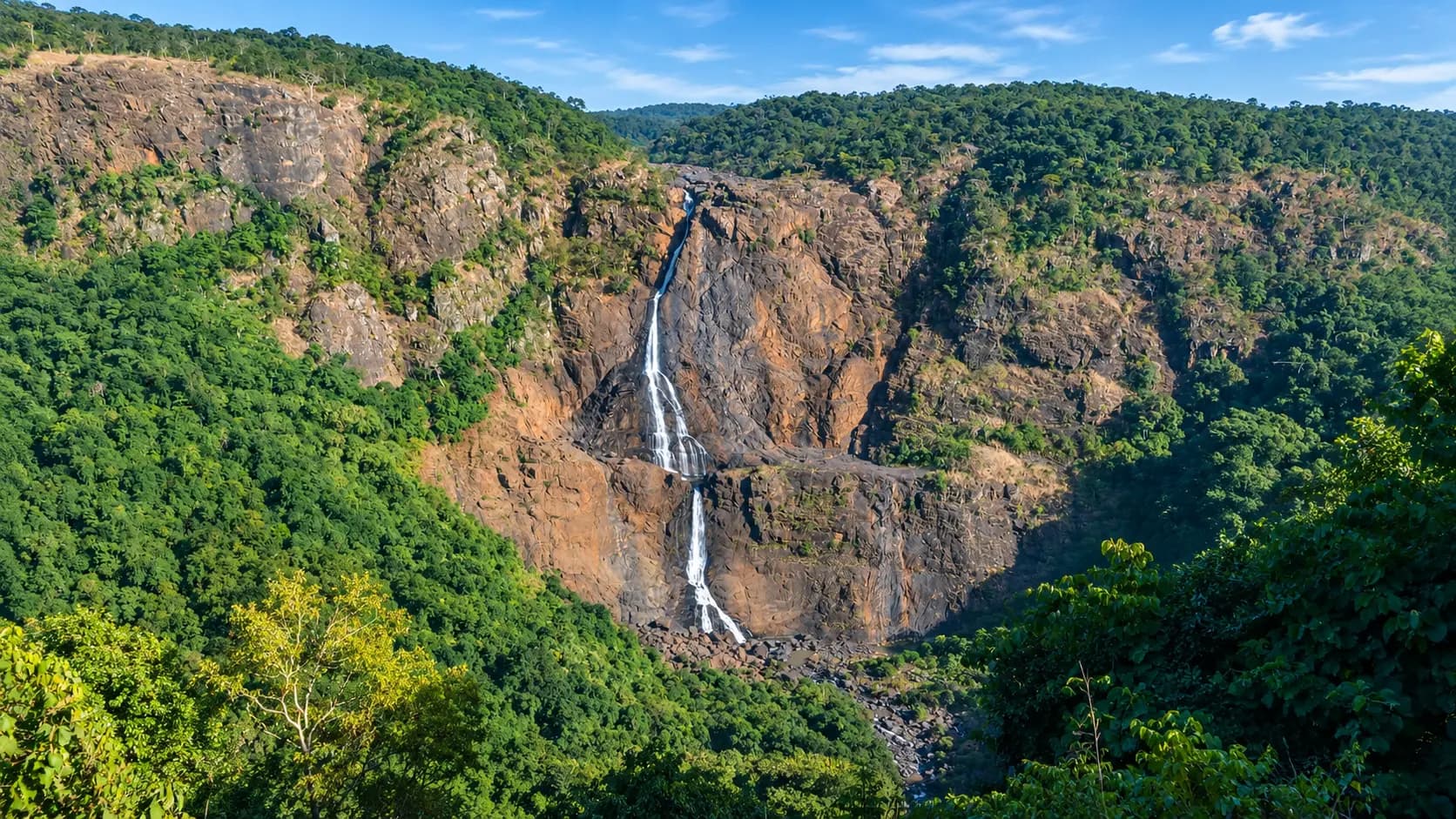
Hidden deep in the core wilderness of the world-famous Similipal National Park and Biosphere Reserve in Mayurbhanj District, Northern Odisha, Barehipani Waterfall is one of the most awe-inspiring natural landmarks on the Indian subcontinent. Plunging a colossal total height of 399 metres (1,309 feet), Barehipani is recognized as the highest waterfall in Odisha and the second-highest waterfall in all of India.
Formed by the perennial waters of the Budhabalanga River (historically known as the Burhabalang) as it surges across the elevated Meghasani mountain plateau of the Eastern Ghats, the river leaps off a sheer, amphitheatre-like wall of dark Precambrian rock in two monumental tiers. The waterfall’s evocative name derives from local forest terminology: barehi refers to the thick, multi-ply hemp rope traditionally spun by local forest dwellers to tether timber and work elephants; seen from the observation terrace across the canyon, the continuous, shimmering white ribbon of water twisting down the vertical rock face resembles a colossal rope suspended in the green forest abyss (barehi-pani = "rope-like water"). Framed by ancient virgin canopies of Sal, Asan, and Mahua trees that harbor wild Asian elephants, Indian gaur, and the planet's only wild population of pseudo-melanistic royal Bengal tigers, Barehipani is a masterpiece of raw hydrological power and ecological majesty.
Start here. Open a tile for the full details.
Why goRead details
Barehipani Waterfall is an iconic, bucket-list expedition for serious wildlife enthusiasts, landscape photographers, and nature travelers. Here is why this legendary cascade commands a visit:
When to visitRead details
Because Barehipani is located in a protected National Park with strict seasonal operating rules, planning your visit in alignment with the park calendar is essential.
Entry & permissionsRead details
Fees, visiting hours and entry rules may change. Confirm the latest details with the official operator or local authority before travelling.
Visiting Barehipani Waterfall is subject to strict National Tiger Reserve rules and entry tariffs:
- Sanctuary Entry Tariffs (collected at Kalikaprasad or Pithabata Gate):
- Indian Citizens: ₹100 per adult per day; children (3 to 12 years) ₹50.
- Foreign Nationals: ₹1,000 per person per day.
- Four-Wheeler Vehicle Entry Fee: ₹200 per vehicle per day.
- Mandatory Eco-Guide Fee: ₹300 to ₹500 per day per vehicle (paid to the assigned local community guide).
- Still Camera Fee: ₹100; Professional Video Camera: ₹500.
- Gate Hours and Entry Window:
- Entry permits are issued exclusively between 06:00 and 09:00 AM. No vehicles are admitted into the reserve after 09:00 AM under any circumstances.
- All day-trip vehicles must exit the reserve gates by 16:30 to 17:00.
- Nature Camp Accommodations:
- Visitors wishing to stay overnight inside the core reserve can book Barehipani Nature Camp (located near the waterfall ridge), Chahala Nature Camp, Jamuani Nature Camp, or Gurguria Eco-Camp.
- All bookings must be completed in advance online through the official government portal (ecotourodisha.com).
- Camp tariffs range from ₹3,500 to ₹6,000 per cottage per night, covering comfortable lodging, three hot meals, morning/evening tea, and sanctuary entry formalities.
- Tiger Reserve Code of Conduct:
- Zero Alcohol & Single-Use Plastic: Bringing liquor, beer bottles, disposable polythene bags, or non-biodegradable food containers into Similipal is an offense under the Wildlife Protection Act and attracts heavy fines.
- Stay Inside Vehicles & Viewing Zones: Except at designated rest stops like Barehipani pavilion, Chahala lodge, and Gurguria, stepping out of vehicles inside the core jungle is strictly forbidden.
- No Drones or Loud Music: Drones, audio speakers, and vehicle honking are completely prohibited to prevent disturbing nesting raptors and wild elephant herds.
Plan your visitRead details
Reaching Barehipani Waterfall requires traveling to Mayurbhanj District in Northern Odisha and entering the reserve through authorized forest gateways.
Explore the full guide - choose a topic below.
Why visit?
Barehipani Waterfall is an iconic, bucket-list expedition for serious wildlife enthusiasts, landscape…Explore detailsClose details
Barehipani Waterfall is an iconic, bucket-list expedition for serious wildlife enthusiasts, landscape photographers, and nature travelers. Here is why this legendary cascade commands a visit:
- India’s Second-Highest Waterfall: Dropping a staggering 399 metres (1,309 feet) in two clean, thunderous stages - the upper plunge descending 259 metres (850 feet) onto an intermediate granite shelf, followed by a second 140-metre (459-foot) leap into the hidden plunge pool below - Barehipani represents one of the greatest sheer-drop spectacles in Asia.
- Set Inside a UNESCO Biosphere Reserve: Unlike waterfalls situated beside commercial highways or urban centers, Barehipani lies protected within the core of the UNESCO World Network of Biosphere Reserves and Similipal Tiger Reserve. Visiting the falls requires traversing deep, unpaved forest safari tracks through primeval sal jungles where wild megafauna roam completely undisturbed.
- The World’s Only Melanistic Tiger Habitat: Similipal is globally unique as the only natural habitat on Earth harboring wild pseudo-melanistic royal Bengal tigers - magnificent big cats characterized by unusually wide, merged black stripes caused by a rare genetic mutation. The dense river valleys and bamboo ravines around Barehipani form an active core territory for these rare felines, alongside leopards, Asiatic wild dogs (dholes), and sloth bears.
- Dramatic Amphitheatre Topography & Safe Grandstand Viewing: The Forest Department has developed a sturdy stone-and-timber viewing pavilion perched on the high mountain rim directly across the valley from the waterfall. From this vantage point, visitors enjoy an uninterrupted, eye-level panoramic view across the deep chasm, capturing both tiers of the waterfall, the swirling mist clouds rising from the plunge basin, and the towering mountain ridges beyond.
- Rewarding Safari Drives and Eco-Camp Hospitality: A visit to Barehipani is part of an integrated, full-day wildlife safari across Similipal. Travelers drive past herds of spotted deer and wild elephants, visit the companion waterfall of Joranda (181 m), and can stay overnight at community-managed eco-camps such as Barehipani Nature Camp, falling asleep to the nocturnal calls of owls, nightjars, and barking deer.
What to expect
Visiting Barehipani Waterfall is an authentic, rugged wilderness safari that begins early in the morning and…Explore detailsClose details
Visiting Barehipani Waterfall is an authentic, rugged wilderness safari that begins early in the morning and unfolds across hours of bumpy forest tracks, ancient woodlands, and dramatic canyon views.
The Early Morning Entry Gate Ritual
Access to Barehipani requires entering Similipal Tiger Reserve through one of its two designated tourist gates: Kalikaprasad Gate near Jashipur (on the northern side, along NH-49) or Pithabata Gate near Baripada (on the eastern side).
Permit counters at both gates operate strictly between 06:00 and 09:00 AM. Arriving early is essential; private vehicles and tourist jeeps queue up as forest officers verify vehicle documents, issue sanctuary permits, collect entry fees, and assign a mandatory local tribal eco-guide to every vehicle. Vehicles must be high-clearance four-wheel-drive SUVs or safari jeeps; standard city hatchbacks and sedans are turned away for their own safety.
Journey Through the Primeval Sal Jungle
Once past the entry gate, the journey to Barehipani covers roughly 50 to 65 kilometres of rugged, unpaved dirt tracks cutting through the heart of the tiger reserve. The drive takes between 2.5 and 3.5 hours, traversing dense, vaulted canopies of towering Sal trees, crossing crystal-clear perennial streams via stony fords, and ascending steep mountain ridges.
Along the way, the forest feels ancient and alive. Herds of spotted deer (chital) graze peacefully in forest meadows (maidans), troops of common langurs leap through the bamboo, and wild Indian peafowl scurry across the track. At several stream crossings, travelers can spot the fresh, dinner-plate-sized footprints of wild Asian elephants or the pugmarks of leopards.
The Observation Pavilion and Gorge Overlook
Arriving at the Barehipani forest clearing, vehicles park in an organized dirt clearing surrounded by tall trees. A short, level flagstone walkway leads to the cliffside observation complex. The Forest Department has erected secure stone boundary walls and iron railings along the precipice to ensure visitor safety.
Stepping up to the railing, the sudden panorama of the gorge takes your breath away. The opposite mountain wall - a sheer, near-vertical cliff of dark Precambrian quartzite and ironstone - drops straight down into a vast, forested amphitheatre. Down the center of this colossal rock wall surges the Budhabalanga River. The upper drop shoots out of a narrow forest notch at the summit, plunging 259 metres through open air like a roaring pillar of white spray before crashing onto a massive mid-level rock terrace. From this shelf, the water gathers and leaps off the second precipice, plunging another 140 metres down into a deep, jade-green pool buried in the shadowy depths of the canyon floor.
The acoustic roar of the waterfall reverberates continuously across the valley. Flocks of swifts and swallows dart through the rising mist, while raptors like crested serpent eagles and black eagles soar effortlessly on thermals rising from the gorge.
Strict Conservation Boundaries
It is important for visitors to understand that descending into the canyon floor to reach the base of the waterfall is strictly prohibited. The cliffs are lethally steep, loose rock scree poses extreme hazards, flash floods can surge without warning, and the dense forest floor below is an inviolate core sanctuary for wild tigers and breeding elephant herds. All viewing takes place safely and responsibly from the designated rim terrace.
Best time to visit
Because Barehipani is located in a protected National Park with strict seasonal operating rules, planning your…Explore detailsClose details
Because Barehipani is located in a protected National Park with strict seasonal operating rules, planning your visit in alignment with the park calendar is essential.
Seasonal Operating Calendar
- Open Season (November 1 to Mid-June): The Similipal Tiger Reserve is officially open for tourism during this 7.5-month window.
- Winter (November to February) - The Prime Period: The finest months to visit. Daytime temperatures are delightfully mild and sunny (18°C to 24°C), making long safari drives very comfortable. Mornings and nights in the high mountain valleys are crisp and cold (8°C to 12°C), with ethereal fog rolling through the Sal canopy. The Budhabalanga River maintains a robust, crystalline flow, and sunny afternoons offer perfect lighting for waterfall photography.
- Early Summer (March to May) - Superior Wildlife Sightings: As the weather warms up, temperatures in the valleys climb between 28°C and 35°C. The forest trees shed their leaves, significantly increasing visibility through the undergrowth. Wild elephants, gaur, and deer frequently congregate around waterholes and stream crossings along the safari tracks. While the volume of Barehipani shrinks slightly compared to winter, the twin white cascades remain perennial and magnificent.
- Monsoon Closure (Mid-June to October 31): The entire Similipal Tiger Reserve is completely closed to all tourists and private vehicles. Torrential monsoon rains (often exceeding 2,500 mm) flood interior river crossings, wash out forest tracks, trigger landslides on the ghat passes, and support the critical breeding season for big cats and elephants.
Crucial Daily Timing Guidelines
- Gate Entry Window (06:00 to 09:00 AM): Check the current visiting hours and permitted access with the site operator before departure; ceremonies, closures and visitor sessions can affect access. Gates strictly close to incoming vehicles at 09:00 sharp; no exceptions are made.
- Waterfall Arrival Deadline (by 14:00): You should plan to reach Barehipani by 13:00 to 14:00 at the latest. This allows 45 to 60 minutes to absorb the views, take photographs, and have lunch before commencing the long return drive.
- Mandatory Reserve Exit (16:30 to 17:00): All day visitors must cross back out through the sanctuary exit gates before 17:00. Driving inside the core tiger reserve after dusk is illegal and hazardous due to wild elephant movements.
How to reach
Reaching Barehipani Waterfall requires traveling to Mayurbhanj District in Northern Odisha and entering the…Explore detailsClose details
Reaching Barehipani Waterfall requires traveling to Mayurbhanj District in Northern Odisha and entering the reserve through authorized forest gateways.
By Air
- Netaji Subhash Chandra Bose International Airport, Kolkata (CCU): Located approximately 250 kilometres northeast of Baripada. Kolkata operates extensive domestic and international flights. From Kolkata, travelers can reach Baripada via the four-lane NH-16 / NH-18 highway in approximately 4.5 to 5 hours by private taxi or train.
- Biju Patnaik International Airport, Bhubaneswar (BBI): Situated approximately 270 kilometres south. Bhubaneswar provides comprehensive flight connections across India. From Bhubaneswar, drive north along NH-16 via Cuttack and Balasore to Baripada, or take NH-55/NH-49 via Keonjhar to Jashipur.
By Train
- Baripada Railway Station (BPI): The administrative headquarters of Mayurbhanj district, located roughly 65 kilometres east of Barehipani. Baripada is connected by daily passenger and express trains to Balasore, Bhubaneswar, and Shalimar (Kolkata).
- Balasore Railway Station (BLS): The most practical major rail junction, situated approximately 120 kilometres southeast on the Howrah - Chennai mainline. Balasore receives dozens of premier express and superfast trains daily from New Delhi, Kolkata, Chennai, and Bengaluru. From Balasore, private tourist cabs take about 1.5 hours to reach Baripada.
By Road and Safari Vehicle Requirements
- Northern Route via Jashipur (Kalikaprasad Gate): Located along National Highway 49 (NH-49), roughly 55 kilometres northwest of Barehipani. Jashipur is the ideal entry point for travelers arriving from Keonjhar, Rourkela, Ranchi, or western West Bengal. From the Kalikaprasad checkpost, the safari drive to Barehipani covers roughly 55 km of scenic forest road via Gurguria.
- Eastern Route via Baripada (Pithabata Gate): Located roughly 18 kilometres west of Baripada town. From the Pithabata checkpost, the safari track ascends the ghats and winds 65 km through dense forest via Lulung and Chahala to Barehipani.
- Vehicle Mandate: The Forest Department strictly enforces a high ground-clearance vehicle rule. Only 4x4 SUVs, Mahindra Boleros, Scorpios, Tata Safaris, or forest-registered tourist jeeps are permitted. Private hatchbacks and sedans cannot negotiate the rocky riverbeds and unpaved mountain gradients. Visitors without suitable vehicles can easily hire authorized safari jeeps and certified drivers at Jashipur or Baripada.
Entry, timings and permissions
Fees, visiting hours and entry rules may change.Explore detailsClose details
Fees, visiting hours and entry rules may change. Confirm the latest details with the official operator or local authority before travelling.
Visiting Barehipani Waterfall is subject to strict National Tiger Reserve rules and entry tariffs:
- Sanctuary Entry Tariffs (collected at Kalikaprasad or Pithabata Gate):
- Indian Citizens: ₹100 per adult per day; children (3 to 12 years) ₹50.
- Foreign Nationals: ₹1,000 per person per day.
- Four-Wheeler Vehicle Entry Fee: ₹200 per vehicle per day.
- Mandatory Eco-Guide Fee: ₹300 to ₹500 per day per vehicle (paid to the assigned local community guide).
- Still Camera Fee: ₹100; Professional Video Camera: ₹500.
- Gate Hours and Entry Window:
- Entry permits are issued exclusively between 06:00 and 09:00 AM. No vehicles are admitted into the reserve after 09:00 AM under any circumstances.
- All day-trip vehicles must exit the reserve gates by 16:30 to 17:00.
- Nature Camp Accommodations:
- Visitors wishing to stay overnight inside the core reserve can book Barehipani Nature Camp (located near the waterfall ridge), Chahala Nature Camp, Jamuani Nature Camp, or Gurguria Eco-Camp.
- All bookings must be completed in advance online through the official government portal (ecotourodisha.com).
- Camp tariffs range from ₹3,500 to ₹6,000 per cottage per night, covering comfortable lodging, three hot meals, morning/evening tea, and sanctuary entry formalities.
- Tiger Reserve Code of Conduct:
- Zero Alcohol & Single-Use Plastic: Bringing liquor, beer bottles, disposable polythene bags, or non-biodegradable food containers into Similipal is an offense under the Wildlife Protection Act and attracts heavy fines.
- Stay Inside Vehicles & Viewing Zones: Except at designated rest stops like Barehipani pavilion, Chahala lodge, and Gurguria, stepping out of vehicles inside the core jungle is strictly forbidden.
- No Drones or Loud Music: Drones, audio speakers, and vehicle honking are completely prohibited to prevent disturbing nesting raptors and wild elephant herds.
Nearby places to consider
Barehipani Waterfall is situated in the heart of a breathtaking network of wildlife and heritage destinations in…Explore detailsClose details
Barehipani Waterfall is situated in the heart of a breathtaking network of wildlife and heritage destinations in North Odisha:
- Joranda Waterfall (approx. 25 km northwest inside Similipal): Similipal’s other great waterfall, where a mountain river plunges 181 metres (594 feet) in a single sheer, unbroken vertical drop into a misty, black-rock gorge. It is routinely visited on the same day-circuit as Barehipani.
- Chahala Nature Camp & Animal Salt Lick (approx. 40 km north inside Similipal): A historic colonial wooden hunting lodge set in an open meadow featuring a renowned natural salt lick, where wild Asian elephants, Indian gaur (bison), sambar deer, and wild boars gather daily to lick mineral-rich soil.
- Gurguria Eco-Tourism Centre (approx. 35 km northwest inside Similipal): Located on the banks of the clear Khairi river, featuring a picturesque pine plantation, indigenous orchidarium, and herbal research garden.
- Devkund Waterfall (approx. 65 km southeast via Udala): A sacred natural cascade and plunge pool at the outer southeastern edge of the Similipal hills, famous for the historic hilltop shrine of Goddess Ambika (Devi Durga).
- Khiching Kichakeswari Temple (approx. 50 km west of Jashipur): The ancient capital of the early medieval Bhanja dynasty, renowned for its magnificent 10th-century temple built entirely of polished black chlorite stone, dedicated to Goddess Kichakeswari.
In pictures
The practical bits
Before you go.
Plan ahead
Because a journey into the heart of Similipal is an all-day wilderness expedition, careful logistical preparation…Explore detailsClose details
Because a journey into the heart of Similipal is an all-day wilderness expedition, careful logistical preparation is crucial:
Vehicle Preparation and Fuel Security
Ensure your vehicle is in pristine mechanical condition.Explore detailsClose details
Ensure your vehicle is in pristine mechanical condition. Check engine coolant, tire pressure, and ensure your spare tire and jack are fully functional. There are no petrol pumps, electric charging stations, or automobile mechanics inside the core reserve. You must fill your fuel tank completely at Baripada or Jashipur before passing through the forest gate.
Pack Food and Drinking Water
Inside the vast tiger reserve, there are no commercial restaurants, fast-food stalls, or snack shops.Explore detailsClose details
Inside the vast tiger reserve, there are no commercial restaurants, fast-food stalls, or snack shops. While the Barehipani Nature Camp has a dining mess for overnight resident guests, day visitors must carry their own packed dry lunches, fresh fruits, energy bars, and at least 3 to 4 litres of drinking water per person. Carry all garbage back out of the park in your vehicle.
Warm Layering for Open Vehicles
If traveling in an open safari jeep during the winter months (November to February), early morning winds across…Explore detailsClose details
If traveling in an open safari jeep during the winter months (November to February), early morning winds across the mountain ghats can be bitterly cold (under 10°C). Dress in warm thermal layers, fleece jackets, woollen beanies, and windbreakers. As the midday sun warms the forest canopy, you can peel off outer layers.
Binoculars and Telephoto Lenses
Because the observation deck stands across the deep valley from the waterfall, a good pair of binoculars (8x42 or…Explore detailsClose details
Because the observation deck stands across the deep valley from the waterfall, a good pair of binoculars (8x42 or 10x42) brings the swirling mist, nesting falcons, and textured rock strata into breathtaking focus. For photographers, a telephoto zoom lens (minimum 70 - 200mm or 100 - 400mm) is ideal for isolating dramatic vertical compositions of the two cascade tiers.
A few things you might wonder
Common questions about visiting Barehipani Waterfall. Fees, visiting hours and ceremonies are researched details that may change; confirm current arrangements with the operator before travelling.
How tall is Barehipani Waterfall and where does it rank in India?
Which river forms Barehipani Waterfall?
What does the name "Barehipani" mean?
Can visitors hike down to the base or swim in the plunge pool of Barehipani?
What are the gate timings for entering Similipal to see Barehipani?
When is the best season to visit Barehipani Waterfall?
What kind of vehicle is required to visit Barehipani?
Can tourists stay overnight inside Similipal near Barehipani?
Explore more in Similipal
Discover other destinations around this hub
More Hubs in Odisha
Continue exploring other travel hubs in this state
Planning a trip to Similipal & North Odisha?